Memorial of Saint Elizabeth of Hungary, Religious – Lectionary: 498
The Guest Who Will Not Walk Past
Picture a knock at the door on an ordinary Tuesday, and the voice on the other side already knows your name. That is the scene the Church sets before the faithful on November 17th, the Memorial of Saint Elizabeth of Hungary, as the weekday readings of the Thirty-Third Week in Ordinary Time continue with Lectionary 498. The central theme uniting the readings is simple and searching: Christ sees past every reputation, knocks at the door of the heart, and brings salvation to the house of anyone who opens to Him in honest, concrete repentance.
In The Book of Revelation, the risen Lord dictates letters to two congregations in Roman Asia. Sardis has a name for being alive but is spiritually dead, and Laodicea is wealthy, comfortable, and lukewarm. Both receive the same medicine: wake up, repent, and let the One who stands at the door come inside. Psalm 15 then describes the kind of person who may dwell on God’s holy mountain, someone with a truthful heart, a clean tongue, and honest money. Finally, The Gospel of Luke shows all of this unfolding in a single afternoon in Jericho, where a rich chief tax collector climbs a tree, hears his own name, opens his house, and gives away his fortune.
Saint Elizabeth of Hungary makes a fitting companion for such a day. A princess who could have lived like Laodicea chose instead to live like Zacchaeus. Pope Benedict XVI recalled that she refused to eat food unless she knew it came from her husband’s legitimate possessions, and she poured her wealth into the poor and the sick until her death at age 24 in 1231. The lukewarm heart and the open door are not abstractions; they are two possible answers to the same knock.
First Reading — Revelation 3:1-6, 14-22
Two Churches, One Knock: The Lord Who Sees Through Reputations
These are the fifth and seventh of the seven letters Christ dictates to Saint John. Sardis was the old Lydian capital, with an acropolis so steep it seemed unconquerable, yet the city fell twice to surprise night attacks when sentries slept, once to the Persians around 547 BC and again to Antiochus III in 214 BC. The lesson stuck: Sardis was the city that slept. Laodicea sat on a trade route in the Lycus valley and grew rich on banking, a prized glossy black wool, and a medical school known for eye ointment. Commentators often add that its aqueduct water arrived tepid, unlike the hot springs of nearby Hierapolis. Christ speaks to each church in the language of its own civic pride, and in both cases the remedy is identical: repent, and open the door.
Revelation 3:1-6, 14-22
I, John, heard the Lord saying to me:
“To the angel of the Church in Sardis, write this:“‘The one who has the seven spirits of God
and the seven stars says this: “I know your works,
that you have the reputation of being alive, but you are dead.
Be watchful and strengthen what is left, which is going to die,
for I have not found your works complete in the sight of my God.
Remember then how you accepted and heard; keep it, and repent.
If you are not watchful, I will come like a thief,
and you will never know at what hour I will come upon you.
However, you have a few people in Sardis
who have not soiled their garments;
they will walk with me dressed in white,
because they are worthy.“‘The victor will thus be dressed in white,
and I will never erase his name from the book of life
but will acknowledge his name in the presence of my Father
and of his angels.“‘Whoever has ears ought to hear what the Spirit says to the churches.’”“
“To the angel of the Church in Laodicea, write this:
“‘The Amen, the faithful and true witness,
the source of God’s creation, says this:
“I know your works;
I know that you are neither cold nor hot.
I wish you were either cold or hot.
So, because you are lukewarm, neither hot nor cold,
I will spit you out of my mouth.
For you say, ‘I am rich and affluent and have no need of anything,’
and yet do not realize that you are wretched,
pitiable, poor, blind, and naked.
I advise you to buy from me gold refined by fire so that you may be rich,
and white garments to put on
so that your shameful nakedness may not be exposed,
and buy ointment to smear on your eyes so that you may see.
Those whom I love, I reprove and chastise.
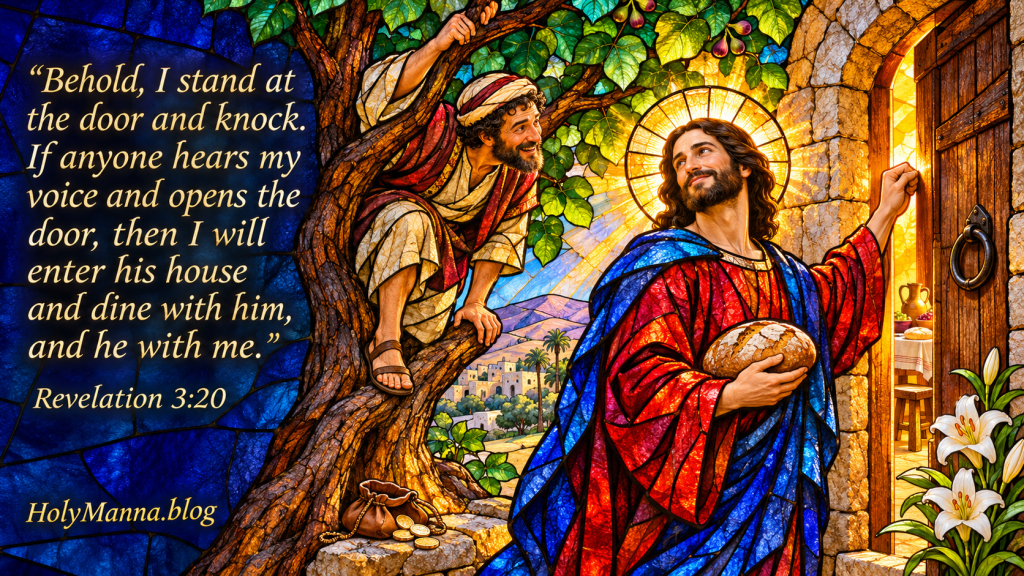
Be earnest, therefore, and repent.“‘Behold, I stand at the door and knock.
If anyone hears my voice and opens the door,
then I will enter his house and dine with him,
and he with me.
I will give the victor the right to sit with me on my throne,
as I myself first won the victory
and sit with my Father on his throne.“‘Whoever has ears ought to hear
what the Spirit says to the churches.’”
Detailed Exegesis
Verse 1: To the angel of the Church in Sardis, write this: The one who has the seven spirits of God and the seven stars says this: I know your works, that you have the reputation of being alive, but you are dead.
The seven spirits signify the fullness of the Holy Spirit (Revelation 1:4; cf. Isaiah 11:2), and the seven stars are the angels of the churches (Revelation 1:20).
Verse 2: Be watchful and strengthen what is left, which is going to die, for I have not found your works complete in the sight of my God.
The call to watchfulness would have stung a city that fell because its guards slept, and works judged incomplete describe appearance without substance.
Verse 3: Remember then how you accepted and heard; keep it, and repent. If you are not watchful, I will come like a thief, and you will never know at what hour I will come upon you.
Three commands follow in order: remember, keep, repent. The thief image comes from the Lord’s own preaching (Luke 12:39).
Verse 4: However, you have a few people in Sardis who have not soiled their garments; they will walk with me dressed in white, because they are worthy.
A faithful remnant remains, and the white robe anticipates the baptismal garment and the robes of the saints (Revelation 7:14).
Verse 5: The victor will thus be dressed in white, and I will never erase his name from the book of life but will acknowledge his name in the presence of my Father and of his angels.
The book of life recalls Exodus 32:32 and Philippians 4:3. Christ’s promise to acknowledge the victor’s name echoes His words in Luke 12:8.
Verse 6: Whoever has ears ought to hear what the Spirit says to the churches.
The closing formula widens the letter to every church in every age.
Verse 14: To the angel of the Church in Laodicea, write this: The Amen, the faithful and true witness, the source of God’s creation, says this:
Amen is a title drawn from Isaiah 65:16, where God is the God of truth. Christ is the faithful witness (Revelation 1:5) and the origin of all creation (Colossians 1:15-18; cf. Colossians 4:16).
Verse 15: I know your works; I know that you are neither cold nor hot. I wish you were either cold or hot.
The Lord does not prefer coldness to lukewarmness; He is naming a church that serves no purpose at all.
Verse 16: So, because you are lukewarm, neither hot nor cold, I will spit you out of my mouth.
The Greek verb is closer to vomit; lukewarm faith nauseates the Lord.
Verse 17: For you say, ‘I am rich and affluent and have no need of anything,’ and yet do not realize that you are wretched, pitiable, poor, blind, and naked.
Laodicea rebuilt itself after the earthquake of AD 60 without imperial aid, as Tacitus records. Self-sufficiency had become a spiritual disease, and five adjectives strip away the illusion.
Verse 18: I advise you to buy from me gold refined by fire so that you may be rich, and white garments to put on so that your shameful nakedness may not be exposed, and buy ointment to smear on your eyes so that you may see.
Each remedy answers a point of civic pride: true gold instead of the banks, white garments instead of black wool, and divine sight instead of the eye salve. The invitation to buy without money recalls Isaiah 55:1.
Verse 19: Those whom I love, I reprove and chastise. Be earnest, therefore, and repent.
The line cites Proverbs 3:12 and is echoed in Hebrews 12:6. Rebuke is proof of love, and the word translated earnest means zealous, the exact opposite of lukewarm.
Verse 20: Behold, I stand at the door and knock. If anyone hears my voice and opens the door, then I will enter his house and dine with him, and he with me.
The harshest letter contains the tenderest image. The Lord does not break the door down; He waits for consent, and the shared meal carries overtones of the Eucharist (cf. Song of Songs 5:2).
Verse 21: I will give the victor the right to sit with me on my throne, as I myself first won the victory and sit with my Father on his throne.
Christ won His victory through the cross and shares His throne with those who follow Him there.
Verse 22: Whoever has ears ought to hear what the Spirit says to the churches.
The letters end as they began, with a summons to listen.
Teachings
The Catechism of the Catholic Church names the Laodicean condition among the sins against the love of God: lukewarmness is hesitation or negligence in responding to divine love; it can imply refusal to give oneself over to the prompting of charity (CCC 2094). On the title of verse 14 it teaches: Jesus Christ himself is the “Amen.” He is the definitive “Amen” of the Father’s love for us. He takes up and completes our “Amen” to the Father (CCC 1065).
Saint Bede the Venerable, a Doctor of the Church, said of Laodicea that it was neither fervent in faith, nor entirely unbelieving, and of verse 20 he put these words on the lips of Christ: I knock, indeed, at the door of thy heart with the right hand of exhortation, and if thou receive it willingly, thou shalt be deemed worthy of My dwelling with thee (Explanation of the Apocalypse). On the watchfulness demanded of Sardis, the Catechism teaches that Vigilance is “custody of the heart” and that The Holy Spirit constantly seeks to awaken us to keep watch (CCC 2849).
Reflection
Lukewarmness rarely feels like sin; it feels like being busy, comfortable, and fine. The Lord looks instead at whether the door is open. This week, make an honest examination of conscience built on verse 17 and ask whether comfort has quietly replaced hunger for God. Then answer the knock concretely by scheduling Confession or returning to daily prayer. Where in your life have you settled for a reputation of being alive? What would it look like to buy gold refined by fire this week? When was the last time you heard the knock and opened the door?
Responsorial Psalm — Psalm 15:2-5
The Guest List for God’s Tent
Psalm 15 is an entrance liturgy. The first verse, which the Lectionary omits, asks who may sojourn in the Lord’s tent and dwell on His holy mountain, and the verses sung today are the answer. What makes the answer striking is that it says nothing about sacrifices, ritual washings, or pedigree. The ticket into God’s presence is an honest heart, a clean tongue, and money that has not been used as a weapon. The Lectionary sharpens the point by borrowing its refrain from Revelation 3:21, so that the person the psalm describes becomes the victor Christ seats beside Himself. The psalm also quietly prepares the Gospel: a man who refuses unjust gain and protects the innocent is exactly the man Zacchaeus becomes by the end of the afternoon.
Psalm 15:2-5
R. (Rev. 3: 21) I will seat the victor beside me on my throne.
He who walks blamelessly and does justice;
who thinks the truth in his heart
and slanders not with his tongue.
R. I will seat the victor beside me on my throne.
Who harms not his fellow man,
nor takes up a reproach against his neighbor;
By whom the reprobate is despised,
while he honors those who fear the LORD.
R. I will seat the victor beside me on my throne.
Who lends not his money at usury
and accepts no bribe against the innocent.
He who does these things
shall never be disturbed.
R. I will seat the victor beside me on my throne.
Detailed Exegesis
Verse 2: He who walks blamelessly and does justice; who thinks the truth in his heart
The psalm begins with the whole person, not a list of rules. To walk blamelessly describes a direction of life, and to do justice means giving God and neighbor what is owed. Thinking truth in the heart goes deeper than honest speech; it describes a person whose inner life matches the outer one, the exact opposite of Sardis.
Verse 3: and slanders not with his tongue. Who harms not his fellow man, nor takes up a reproach against his neighbor;
Three sins of speech and conduct are excluded: slander, harm, and the readiness to pick up and repeat an accusation. The crowd in Jericho that grumbled about Zacchaeus took up a reproach against a neighbor; the psalmist’s righteous man refuses to do so.
Verse 4: By whom the reprobate is despised, while he honors those who fear the LORD.
This verse describes moral clarity rather than contempt for persons. The righteous man refuses to admire wickedness simply because it is successful or popular, and he gives honor to those whose lives are oriented toward God, whatever their social standing.
Verse 5: Who lends not his money at usury and accepts no bribe against the innocent. He who does these things shall never be disturbed.
The Law forbade charging interest to a brother in need (Exodus 22:24; Leviticus 25:36-37) and condemned bribes that pervert judgment (Exodus 23:8). The psalm ends with a promise rather than a threat: stability. The one who lives this way will not be shaken, which is the Old Testament way of saying what Revelation 3:5 says about a name never erased.
Teachings
Saint Augustine, commenting on this psalm, warned that truthfulness must reach the heart: For some have truth on their lips, and not in their heart (Expositions on the Psalms, Psalm 15). The Catechism defines the virtue the psalm celebrates: Justice is the moral virtue that consists in the constant and firm will to give their due to God and neighbor (CCC 1807). On the sins of the tongue in verse 3, the Church teaches that Respect for the reputation of persons forbids every attitude and word likely to cause them unjust injury, and it names rash judgment, detraction, and calumny as the ways that respect is violated (CCC 2477). The money of verse 5 is not a footnote in Catholic moral teaching. Under the Fifth Commandment the Catechism states that Those whose usurious and avaricious dealings lead to the hunger and death of their brethren in the human family indirectly commit homicide, which is imputable to them (CCC 2269).
Saint Elizabeth of Hungary lived verse 5 with unusual seriousness. Pope Benedict XVI, drawing on the testimony of her maids, recalled that She did not eat any food before ascertaining that it came from her husband’s property or legitimate possessions (General Audience, October 20th, 2010). A princess who audited her own dinner table understood that the holy mountain has an entrance requirement.
Reflection
The psalm reads like a checklist, and it can be prayed like one. Walk through the verses slowly and let each line become a question about this week: whether the truth lived in the heart or only on the lips, whether a reproach about someone was repeated at lunch, whether money was handled in a way that could be set before God without embarrassment. Then pick the one line that stung the most and make it the focus of a concrete act of repair: an apology, a correction of a half-truth, a debt paid, or a kindness toward someone who was treated with contempt. Which line of this psalm would be hardest to pray honestly today? Is there a reproach you have taken up against a neighbor that needs to be put down?
Holy Gospel — Luke 19:1-10
The Short Man, the Tall Tree, and the God Who Looks Up
Jericho was an oasis city on the road up to Jerusalem, home to Herod’s winter palace, a thriving balsam trade, and a customs post that made it a goldmine for tax farmers. Zacchaeus is called a chief tax collector, a title that appears nowhere else in the New Testament, meaning he ran the operation. His name comes from a Hebrew root meaning pure or innocent. This is the last encounter Saint Luke records before Jesus enters Jerusalem to die, and it follows directly after the healing of a blind beggar outside the same city (Luke 18:35-43). One man could not see because he was blind; the next could not see because of the crowd and his own stature. Both are seen first by Jesus. The story is the living commentary on the First Reading.
Luke 19:1-10
At that time Jesus came to Jericho and intended to pass through the town.
Now a man there named Zacchaeus,
who was a chief tax collector and also a wealthy man,
was seeking to see who Jesus was;
but he could not see him because of the crowd,
for he was short in stature.
So he ran ahead and climbed a sycamore tree in order to see Jesus,
who was about to pass that way.
When he reached the place, Jesus looked up and said,
“Zacchaeus, come down quickly,
for today I must stay at your house.”
And he came down quickly and received him with joy.
When they saw this, they began to grumble, saying,
“He has gone to stay at the house of a sinner.”
But Zacchaeus stood there and said to the Lord,
“Behold, half of my possessions, Lord, I shall give to the poor,
and if I have extorted anything from anyone
I shall repay it four times over.”
And Jesus said to him,
“Today salvation has come to this house
because this man too is a descendant of Abraham.
For the Son of Man has come to seek
and to save what was lost.”
Detailed Exegesis
Verse 1: At that time Jesus came to Jericho and intended to pass through the town.
Jesus has a destination, and it is Jerusalem. Jericho was supposed to be a pass-through, and grace often arrives on the way to somewhere else.
Verse 2: Now a man there named Zacchaeus, who was a chief tax collector and also a wealthy man,
Saint Luke gives three facts: his name, his job, and his money. In first-century Jewish eyes the second and third together meant collaborator, extortioner, and public sinner.
Verse 3: was seeking to see who Jesus was; but he could not see him because of the crowd, for he was short in stature.
The verb for seeking is the same one Jesus will use in verse 10. Zacchaeus is seeking before he knows that he is being sought.
Verse 4: So he ran ahead and climbed a sycamore tree in order to see Jesus, who was about to pass that way.
A wealthy official running and climbing a tree was humiliating behavior for a grown man of standing. The sycamore fig has low, wide branches and large leaves, easy to climb and easy to hide in. Saint Augustine saw in this tree a figure of the cross.
Verse 5: When he reached the place, Jesus looked up and said, “Zacchaeus, come down quickly, for today I must stay at your house.”
Jesus looks up at a sinner, a physical reversal of every expectation. He calls him by name without introduction, and the word must signals divine necessity. The word today is one of Saint Luke’s favorites (Luke 2:11; 4:21; 23:43): salvation is not a future project but a present arrival.
Verse 6: And he came down quickly and received him with joy.
The response is immediate and joyful. Zacchaeus does exactly what Laodicea was asked to do in Revelation 3:20: he hears the voice and opens the door.
Verse 7: When they saw this, they began to grumble, saying, “He has gone to stay at the house of a sinner.”
The grumbling repeats the complaint of Luke 15:2 that triggered the parables of mercy. The crowd that blocked his view now blocks his welcome.
Verse 8: But Zacchaeus stood there and said to the Lord, “Behold, half of my possessions, Lord, I shall give to the poor, and if I have extorted anything from anyone I shall repay it four times over.”
The Law required restitution plus a fifth for ordinary fraud (Leviticus 5:24; Numbers 5:7), and fourfold repayment only for a stolen sheep (Exodus 21:37). Zacchaeus chooses the harshest standard and adds half his wealth on top. Conversion here is measured in money because money was the shape of his sin.
Verse 9: And Jesus said to him, “Today salvation has come to this house because this man too is a descendant of Abraham.”
Salvation comes to the house, the family and household, not merely the individual. Jesus publicly restores Zacchaeus to the people of Israel, exactly as He restored the bent woman as a daughter of Abraham (Luke 13:16).
Verse 10: For the Son of Man has come to seek and to save what was lost.
The sentence is a summary of the whole Gospel and an echo of God’s promise to shepherd His flock Himself: The lost I will search out (Ezekiel 34:16). The seeker in the tree discovers that he was the one being sought.
Teachings
The Catechism cites this Gospel directly when it teaches the duty of restitution: In virtue of commutative justice, reparation for injustice committed requires the restitution of stolen goods to their owner: Jesus blesses Zacchaeus for his pledge: “If I have defrauded anyone of anything, I restore it fourfold” (CCC 2412). It also sees in the meal at his house the pattern of every reconciliation: During his public life Jesus not only forgave sins, but also made plain the effect of this forgiveness: he reintegrated forgiven sinners into the community of the People of God from which sin had alienated or even excluded them (CCC 1443).
Saint Augustine preached on the sycamore as the cross that the world finds foolish: The reason you cannot see Jesus is that you are ashamed to climb the sycamore tree. Let Zacchaeus grasp the sycamore tree, and let the humble person climb the cross (Sermon 174). Pope Benedict XVI, reflecting on this passage at the Angelus on October 31st, 2010, named the order of grace precisely: Zacchaeus accepted Jesus and was converted because Jesus accepted him first! He did not condemn him, but met his desire for salvation. Pope Francis, preaching to more than a million young people at World Youth Day in Kraków on July 31st, 2016, identified three obstacles Zacchaeus had to overcome, smallness of stature, the paralysis of shame, and the grumbling of the crowd, and then reminded the crowd of the deepest truth of the story: God loves us the way we are, and no sin, fault or mistake of ours makes him change his mind. Saint Elizabeth of Hungary shows what Zacchaeus looks like over a lifetime. Benedict XVI summarized her witness: In St Elizabeth we see how faith and friendship with Christ create a sense of justice, of the equality of all, of the rights of others and how they create love, charity (General Audience, October 20th, 2010).
Reflection
Zacchaeus did three things that anyone can do this week. He went looking, even at the cost of looking ridiculous, so find your sycamore, whether it is Adoration, a daily Gospel reading, or a Mass on a weekday. He came down quickly, so when a prompting to pray, forgive, or confess arrives, act on it the same day rather than filing it for later. And he let conversion cost him something concrete, so examine where repair is owed and make it, whether that means a repaid debt, a returned favor, or a generous gift to the poor in honor of Saint Elizabeth. What is the crowd that keeps you from seeing Jesus clearly? If Jesus said He must stay at your house today, what would need to change before dinner? Where is restitution still owed in your life?
Come Down Quickly
The day began with a knock and ends with a dinner. In Sardis and Laodicea the Lord stood outside congregations that had everything except the one thing He wanted, an open door. He did not flatter them, and He did not leave. He named their reputation, their comfort, and their blindness, and then He said the most surprising sentence in the whole book: that He was standing there, knocking, ready to dine with anyone who would answer. Psalm 15 sketched the kind of person who ends up at that table, someone whose heart, tongue, and wallet tell the same honest story. Then Saint Luke showed what it looks like when the knock is answered. A despised little man climbed a tree out of curiosity, heard his name spoken with love, came down in a hurry, and opened his house. By the end of the meal his fortune was half gone, his victims were being repaid fourfold, and salvation had taken up residence under his roof.
Saint Elizabeth of Hungary heard the same knock from inside a castle. She could have been Laodicea, rich and in need of nothing. Instead she took off her crown in front of the crucifix, checked that her bread was honestly earned, and spent the rest of her short life carrying it to the poor. She is proof that Zacchaeus was not a one-afternoon miracle but a way of living.
The invitation of November 17th is not complicated. Stop settling for a reputation of being alive. Find the tree, climb it, and when the voice calls your name, come down quickly. The Son of Man is still passing through town, still looking up, still seeking what was lost. The only question left is whether the door is open.
Engage With Us!
The readings of November 17th have a way of landing differently for every reader, so please share your reflections in the comments below. Whether Laodicea stung, the psalm became a prayer, or Zacchaeus felt uncomfortably familiar, the HolyManna.blog community would love to hear how the Word met you today.
- In Revelation 3:1-6 and 14-22, Christ calls Sardis dead and Laodicea lukewarm. Which of those two warnings speaks more directly to your own spiritual life right now, and what would it mean to be earnest and repent?
- Psalm 15:2-5 describes the person who may dwell with God as someone who thinks the truth in the heart, slanders not, and refuses unjust gain. Which of those three areas, heart, tongue, or money, needs the most attention this week?
- In Luke 19:1-10, Zacchaeus overcomes the crowd, his own smallness, and his shame to see Jesus, and then responds with concrete restitution. What obstacle keeps you from seeing Jesus clearly, and what concrete step would show that salvation has come to your house?
- Taken together, these readings present Christ standing at the door and knocking, and a sinner who opens the door with joy. What door in your life is Christ knocking on today, and what is holding it shut?
Living a life of faith is rarely about grand gestures. It is about hearing a knock and answering it, climbing a tree when curiosity stirs, and coming down quickly when your name is called. Saint Elizabeth did it with bread in her apron, and Zacchaeus did it with a ledger in his hand. Go and do likewise this week, doing everything with the love and mercy Jesus taught, and let the Lord dine at your house today.
Sacred Heart of Jesus, we trust in You!
Immaculate Heart of Mary, pray for us!
Saint Michael the Archangel, defend us in battle!
Follow us on YouTube, TikTok, Instagram and Facebook for more insights and reflections on living a faith-filled life.


Leave a Reply