Feast of the Dedication of the Lateran Basilica in Rome – Lectionary: 671
The Day the Church Celebrates a Building
Nobody expects a birthday party for a building, and yet that is exactly what the Catholic world throws on November 9th. The building is the Lateran Basilica, the cathedral of the Pope as Bishop of Rome and the oldest public church in the city. Tradition holds that Pope Sylvester I dedicated it in 324, on land the Emperor Constantine handed over soon after the Edict of Milan ended the persecutions. An inscription on its façade still calls it the mother and head of all the churches of the city and of the world. Pope Benedict XVI explained that the feast was kept only in Rome until 1565, when it was extended to the whole Roman rite as an expression of love for the Church of Rome and unity with the Successor of Peter.
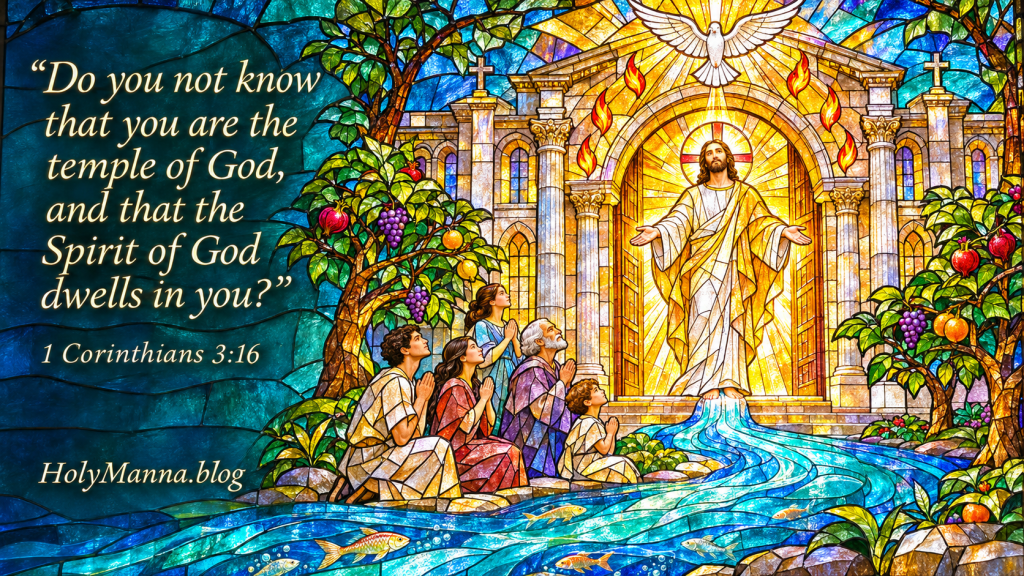
The readings make it clear that stone and marble are only the beginning of the story. The central theme that unites them is this: God chooses to dwell among his people, and the dwelling he chooses is the Body of Christ, from which life pours out into the world. Ezekiel sees water leave the temple threshold and turn a dead sea fresh. Psalm 46 sings of a stream that gladdens the city where God lives. Saint Paul tells the Corinthians that they themselves are God’s building and God’s temple. And in The Gospel of John, Jesus clears the temple courts and says the unthinkable: the real temple is his own Body, and it will be raised in three days.
Saint Caesarius of Arles, preaching at a sixth-century church dedication, captured the feast in one line the Church still reads in the Office of Readings: “We, however, ought to be the true and living temple of God.” The readings are an invitation to become what the building signifies.
First Reading — Ezekiel 47:1-2, 8-9, 12
A Trickle at the Threshold That Becomes a River of Life
Ezekiel was a priest who never got to serve in the temple he was trained for. Deported to Babylon in 597 BC, he learned in exile that Jerusalem had fallen and the temple of Solomon had burned in 586 BC. The final section of his book, Ezekiel 40-48, is a long vision of a new and perfect temple, dated to the twenty-fifth year of the exile, when any hope of going home looked foolish. Today’s passage is the climax of that vision. An angel who has measured everything shows the prophet something no architect designed: water seeping out from under the threshold of the sanctuary. It flows east, down through the Arabah, the deep rift valley, toward the Dead Sea, the lowest place on earth, where salt kills everything that falls in. The vision fits the feast because it shows that a temple is not meant to hoard God’s presence but to pour it out.
Ezekiel 47:1-2, 8-9, 12
The angel brought me
back to the entrance of the temple,
and I saw water flowing out
from beneath the threshold of the temple toward the east,
for the façade of the temple was toward the east;
the water flowed down from the southern side of the temple,
south of the altar.
He led me outside by the north gate,
and around to the outer gate facing the east,
where I saw water trickling from the southern side.
He said to me,
“This water flows into the eastern district down upon the Arabah,
and empties into the sea, the salt waters, which it makes fresh.
Wherever the river flows,
every sort of living creature that can multiply shall live,
and there shall be abundant fish,
for wherever this water comes the sea shall be made fresh.
Along both banks of the river, fruit trees of every kind shall grow;
their leaves shall not fade, nor their fruit fail.
Every month they shall bear fresh fruit,
for they shall be watered by the flow from the sanctuary.
Their fruit shall serve for food, and their leaves for medicine.”
Detailed Exegesis
Verse 1
“The angel brought me back to the entrance of the temple, and I saw water flowing out from beneath the threshold of the temple toward the east, for the façade of the temple was toward the east; the water flowed down from the southern side of the temple, south of the altar.”
The water comes from the holiest point of the complex, out past the altar of sacrifice, which places sacrifice and life in the same current. The Church has always heard an echo here of the blood and water that flowed from the pierced side of Jesus in John 19:34. The ancient Easter antiphon Vidi aquam sings exactly this: “I saw water flowing from the right side of the temple, alleluia; and all to whom that water came were saved.”
Verse 2
“He led me outside by the north gate, and around to the outer gate facing the east, where I saw water trickling from the southern side.”
Outside the walls, the great river is only a trickle. Grace almost always begins small, a drop of water on an infant’s head at baptism, a quiet moment of prayer, and the prophet is taught to trust what he cannot yet measure.
Verse 8
“He said to me, ‘This water flows into the eastern district down upon the Arabah, and empties into the sea, the salt waters, which it makes fresh.’”
The Dead Sea is the symbol of everything barren and beyond repair, and the river makes it fresh. God’s life does not avoid the dead places; it heads straight for them.
Verse 9
“Wherever the river flows, every sort of living creature that can multiply shall live, and there shall be abundant fish, for wherever this water comes the sea shall be made fresh.”
Life follows the water, and the abundant fish recall the call to be fishers of men in Matthew 4:19. The Church spreads wherever the water of baptism reaches.
Verse 12
“Along both banks of the river, fruit trees of every kind shall grow; their leaves shall not fade, nor their fruit fail. Every month they shall bear fresh fruit, for they shall be watered by the flow from the sanctuary. Their fruit shall serve for food, and their leaves for medicine.”
Eden is back. Genesis 2:10 tells of a river flowing out of the garden, and Revelation 22:1-2 picks up Ezekiel almost word for word, with the river of life flowing from the throne of God and the Lamb. Fruit every month means a grace that never goes out of season.
Teachings
The Catechism explains why the Church reads Ezekiel’s river as a prophecy of the Holy Spirit poured out through the sacraments: “Thus the Spirit is also personally the living water welling up from Christ crucified as its source and welling up in us to eternal life” (CCC 694). On the origin of baptism it teaches: “The blood and water that flowed from the pierced side of the crucified Jesus are types of Baptism and the Eucharist, the sacraments of new life” (CCC 1225). The temple of Ezekiel’s vision is the Body of Christ, and the river is the sacramental life that flows from it. It is no accident that Constantine built a great baptistery beside the Lateran, where for centuries the people of Rome were baptized at the Easter Vigil. At its root, the feast of the mother church is a feast of baptism.
Reflection
Think about the salt places in your own life, the relationship that seems past saving, the habit that has not budged in years, the grief that has not softened. Ezekiel’s vision says that God’s river is headed there on purpose. The practical question is whether you are standing near the water. Go to Confession this week if it has been a while, since that sacrament is one of the river’s channels. Renew your baptismal promises by blessing yourself with holy water and meaning it. Where in your life have you quietly decided that nothing could grow? Which small trickle of grace have you been ignoring because it did not look big enough to matter?
Responsorial Psalm — Psalm 46:2-3, 5-6, 8-9
The Stream That Gladdens the City God Will Not Let Fall
Psalm 46 is one of the Songs of Zion, attributed to the sons of Korah, the temple singers. It has a curious detail at its heart: it speaks of a river gladdening the city of God, and Jerusalem has no river, only the Gihon spring and the tunnel Hezekiah cut to bring its water inside the walls. A tradition links this psalm to the deliverance of Jerusalem from the Assyrian army of Sennacherib in 701 BC, which cannot be confirmed from the text, but the setting fits: a besieged city, a trembling people, and a confidence that rests on God alone. The river, then, is not geography but theology. It is the life of God welling up in the midst of his people, exactly what Ezekiel saw flowing from the temple.
Psalm 46:2-3, 5-6, 8-9
R. (5) The waters of the river gladden the city of God, the holy dwelling of the Most High!
God is our refuge and our strength,
an ever-present help in distress.
Therefore, we fear not, though the earth be shaken
and mountains plunge into the depths of the sea.
R. The waters of the river gladden the city of God, the holy dwelling of the Most High!
There is a stream whose runlets gladden the city of God,
the holy dwelling of the Most High.
God is in its midst; it shall not be disturbed;
God will help it at the break of dawn.
R. The waters of the river gladden the city of God, the holy dwelling of the Most High!
The LORD of hosts is with us;
our stronghold is the God of Jacob.
Come! behold the deeds of the LORD,
the astounding things he has wrought on earth.
R. The waters of the river gladden the city of God, the holy dwelling of the Most High!
Detailed Exegesis
Verse 2
“God is our refuge and our strength, an ever-present help in distress.”
The psalm opens with the only foundation that will hold. Everything that follows about earthquakes and tumbling mountains is bearable because of this first line.
Verse 3
“Therefore, we fear not, though the earth be shaken and mountains plunge into the depths of the sea.”
Mountains were the most permanent things ancient people knew. The psalmist imagines even those collapsing and still refuses fear, because God’s people do not draw their stability from the world.
Verse 5
“There is a stream whose runlets gladden the city of God, the holy dwelling of the Most High.”
Saint Augustine, preaching on this verse, asked what the river could be and answered that God “signified the Holy Spirit, by ‘the streams of the river make glad the City of God.’” The little channels are the many gifts and sacraments through which one Spirit reaches every corner of the Church.
Verse 6
“God is in its midst; it shall not be disturbed; God will help it at the break of dawn.”
The city stands because of who is inside it. Christians have long heard in the break of dawn the morning of the Resurrection, the help that came when the night seemed total.
Verse 8
“The LORD of hosts is with us; our stronghold is the God of Jacob.”
The Lord of hosts commands the armies of heaven, and he is also the God of Jacob, who keeps a promise to a flawed and struggling family.
Verse 9
“Come! behold the deeds of the LORD, the astounding things he has wrought on earth.”
The psalm ends with an invitation to look. Faith is not a feeling conjured in the dark but a response to what God has actually done.
Teachings
The Catechism draws together the psalm and the feast when it describes what a church building really is: “Our visible churches, holy places, are images of the holy city, the heavenly Jerusalem, toward which we are making our way on pilgrimage” (CCC 1198). It also insists that such buildings “are not simply gathering places but signify and make visible the Church living in this place, the dwelling of God with men reconciled and united in Christ” (CCC 1180). The Lateran survived a ninth-century earthquake and two devastating fourteenth-century fires while the popes were absent in Avignon, and each time it was rebuilt. The building has lived out the psalm. The city of God is shaken, but it is not moved, because God is in its midst.
Reflection
The psalm does not promise that the earth will stop shaking. It promises a refuge in the middle of the shaking. A concrete way to live this is to pray the psalm’s first verse slowly whenever news, work, or family life feels like mountains plunging into the sea. Another is to spend a few minutes before the tabernacle this week, since the stream that gladdens the city is physically present there. When your world shakes, where do you actually run first? What would change if your first instinct were the refuge the psalm names?
Second Reading — 1 Corinthians 3:9-11, 16-17
You Are the Building, and Christ Is the Only Foundation
Saint Paul wrote this letter from Ephesus around the year 56 to a church he had founded in Corinth, a wealthy, cosmopolitan port where the Christians had begun splitting into fan clubs. Some claimed Paul, others Apollos, others Cephas. Paul’s answer is to change the picture entirely. The Corinthians are not an audience choosing a favorite preacher; they are a construction site, and the building belongs to God. The word he uses for temple in verse 16 is naos, the inner sanctuary where the divine presence dwelt, not merely the outer courts, and the “you” is plural. The community itself is the holy of holies. For a feast about a cathedral, nothing could be more fitting than the apostle insisting that the people are the real building.
1 Corinthians 3:9-11, 16-17
Brothers and sisters:
You are God’s building.
According to the grace of God given to me,
like a wise master builder I laid a foundation,
and another is building upon it.
But each one must be careful how he builds upon it,
for no one can lay a foundation other than the one that is there,
namely, Jesus Christ.Do you not know that you are the temple of God,
and that the Spirit of God dwells in you?
If anyone destroys God’s temple,
God will destroy that person;
for the temple of God, which you are, is holy.
Detailed Exegesis
Verse 9
“Brothers and sisters: You are God’s building.”
Paul had just called them God’s field; now they are God’s building. Both images stress that the Church is God’s work, not any preacher’s achievement.
Verse 10
“According to the grace of God given to me, like a wise master builder I laid a foundation, and another is building upon it. But each one must be careful how he builds upon it,”
Paul claims nothing for himself except grace, and he warns that every later builder, every catechist, parent, priest, and friend, will answer for what they add.
Verse 11
“for no one can lay a foundation other than the one that is there, namely, Jesus Christ.”
There is one foundation, and it is already laid. Every movement, program, or personality in the Church is judged by whether it rests on Christ.
Verse 16
“Do you not know that you are the temple of God, and that the Spirit of God dwells in you?”
The question expects a yes. By baptism the Corinthians have become what the Jerusalem temple foreshadowed: the place where the Spirit of God lives.
Verse 17
“If anyone destroys God’s temple, God will destroy that person; for the temple of God, which you are, is holy.”
The same verb is used for destroying and being destroyed. Factions, scandal, and sin against the community are not minor failings; they attack the dwelling of God.
Teachings
The Second Vatican Council gathered Paul’s images into a single teaching that the Catechism repeats: “Often, too, the Church is called the building of God. The Lord compared himself to the stone which the builders rejected, but which was made into the corner-stone. On this foundation the Church is built by the apostles and from it the Church receives solidity and unity” (CCC 756, citing Lumen Gentium 6). The same paragraph adds that this temple, “symbolized in places of worship built out of stone, is praised by the Fathers and, not without reason, is compared in the liturgy to the Holy City, the New Jerusalem.” Saint Caesarius of Arles preached the practical consequence: “Whenever we come to church, we must prepare our hearts to be as beautiful as we expect this church to be.” Pope Benedict XVI, on this feast in 2008, urged the faithful to “resolve to become living stones, constantly growing into a holy Temple in the Lord.”
Reflection
If you are God’s building, then the way you treat your body, your mind, and your parish community is a matter of sacred architecture. A concrete step is to examine how you build on the foundation in the lives of others: the words you use about priests and fellow parishioners, the example you set at home, the patience you show online. Another is to guard the temple you are through Sunday Mass without exception and honesty in Confession. Which faction or personality have you let take Christ’s place as the foundation of your faith? What is one thing you are building into someone else’s life this week that will survive the fire?
Holy Gospel — John 2:13-22
The Whip of Cords and the Temple That Would Be Raised in Three Days
John places the cleansing of the temple at the start of Jesus’ public ministry, while the other Gospels place it in Holy Week. Many Fathers held that it happened twice, and either way John’s purpose is theological: before any other sign in Jerusalem, Jesus declares who he is. The scene is the Court of the Gentiles at Passover, packed with pilgrims who needed animals for sacrifice and Tyrian silver for the temple tax, since Roman coins carried the emperor’s image. The trade was necessary; the problem was where it had crept. Herod the Great began rebuilding the temple around 20 BC, so forty-six years places this Passover around the year 27 or 28. It was the most magnificent building these people had ever seen, and Jesus calls it a figure of something greater.
John 2:13-22
Since the Passover of the Jews was near,
Jesus went up to Jerusalem.
He found in the temple area those who sold oxen, sheep, and doves,
as well as the money-changers seated there.
He made a whip out of cords
and drove them all out of the temple area, with the sheep and oxen,
and spilled the coins of the money-changers
and overturned their tables,
and to those who sold doves he said,
“Take these out of here,
and stop making my Father’s house a marketplace.”
His disciples recalled the words of Scripture,
Zeal for your house will consume me.
At this the Jews answered and said to him,
“What sign can you show us for doing this?”
Jesus answered and said to them,
“Destroy this temple and in three days I will raise it up.”
The Jews said,
“This temple has been under construction for forty-six years,
and you will raise it up in three days?”
But he was speaking about the temple of his Body.
Therefore, when he was raised from the dead,
his disciples remembered that he had said this,
and they came to believe the Scripture
and the word Jesus had spoken.
Detailed Exegesis
Verse 13
“Since the Passover of the Jews was near, Jesus went up to Jerusalem.”
Jesus keeps the Law and goes up for the feast. The Catechism notes that “Jesus went up to the Temple as the privileged place of encounter with God” (CCC 584).
Verse 14
“He found in the temple area those who sold oxen, sheep, and doves, as well as the money-changers seated there.”
Saint Augustine observed that “that temple was still a figure, and yet the Lord cast out of it all that sought their own.”
Verse 15
“He made a whip out of cords and drove them all out of the temple area, with the sheep and oxen, and spilled the coins of the money-changers and overturned their tables,”
Augustine turned the whip into an examination of conscience: “For indeed every man twists for himself a rope by his sins.” Sin added to sin becomes the cord that drives a person out of God’s house.
Verse 16
“and to those who sold doves he said, ‘Take these out of here, and stop making my Father’s house a marketplace.’”
Jesus calls the temple his Father’s house. The claim of divine sonship is already on the table, and it drives the confrontation that follows.
Verse 17
“His disciples recalled the words of Scripture, Zeal for your house will consume me.”
The line is from Psalm 69:10, and zeal for the house will cost Jesus his life. Augustine prayed that “every Christian among the members of Christ be eaten up with zeal of God’s house.”
Verse 18
“At this the Jews answered and said to him, ‘What sign can you show us for doing this?’”
The authorities ask for credentials, and Jesus will give them the only sign that matters.
Verse 19
“Jesus answered and said to them, ‘Destroy this temple and in three days I will raise it up.’”
Jesus does not threaten to destroy anything; their violence will be the occasion, and his resurrection will be the sign. John’s word here shifts from the temple area to the sanctuary itself, the naos.
Verse 20
“The Jews said, ‘This temple has been under construction for forty-six years, and you will raise it up in three days?’”
Augustine commented, “Flesh they were, fleshly things they minded; but He was speaking spiritually.” He also taught that the Greek letters of the name Adam add up to forty-six, so the temple stood for the humanity Christ took and raised.
Verse 21
“But he was speaking about the temple of his Body.”
This is the hinge of the feast. The Catechism teaches that Jesus “even identified himself with the Temple by presenting himself as God’s definitive dwelling-place among men” (CCC 586).
Verse 22
“Therefore, when he was raised from the dead, his disciples remembered that he had said this, and they came to believe the Scripture and the word Jesus had spoken.”
Understanding came after Easter. That is still how the Church reads Scripture, and it is why the Lateran is dedicated first to the Most Holy Savior.
Teachings
The Catechism is careful to say that Jesus was no enemy of the temple: “Like the prophets before him Jesus expressed the deepest respect for the Temple in Jerusalem” (CCC 583). The point is fulfillment, not rejection. “Christ is the true temple of God, ‘the place where his glory dwells’; by the grace of God, Christians also become temples of the Holy Spirit, living stones out of which the Church is built” (CCC 1197). Worship in the new covenant “is not tied exclusively to any one place” (CCC 1179), which is why a basilica in Rome can mother a parish anywhere on earth. Saint Caesarius said it plainly: “Just as you enter this church building, so God wishes to enter into your soul.”
Reflection
The cleansing of the temple is uncomfortable because the temple is now you. Let Jesus walk through your inner courts and ask what has become a marketplace: the phone that fills every silence, the resentment kept as a trade, the faith practiced for appearances. Pick one table to let him overturn this week. Then show zeal for his house in the plain sense too, by arriving early to Mass, kneeling in silence, and treating the church as the Father’s house and not a lobby. What have you allowed to set up shop in the temple that you are? When Jesus asks for a sign of your faith, is the Resurrection the one you point to?
The River Still Flows from the Threshold
The feast of the Lateran Basilica begins with a building and ends with a Body. Ezekiel saw water leave the temple threshold and turn a dead sea alive. The psalmist sang of a stream gladdening the city God will not let fall. Paul told a divided church that they themselves were God’s sanctuary. And Jesus, standing in the most magnificent temple in the world, pointed to his own Body as the dwelling of God, destroyed by human hands and raised on the third day.
The Lateran has been burned, shaken, abandoned, and rebuilt, and it still stands as the cathedral of the Bishop of Rome. Pope Benedict XVI saw in that stone temple a symbol of the living Church, and he closed his reflection on this feast by asking Mary to help the faithful become, as she was, a “house of God”, a living temple of his love. That is the invitation. Every baptized person carries the river. Every parish is the city of God in miniature. Every heart has courts that need clearing and a foundation that must be Christ alone.
The way to celebrate the birthday of the mother church is the way Caesarius asked, by becoming the true and living temple of God: going to Mass aware that the water from the sanctuary is flowing outward, letting the whip of cords do its work, and letting the Spirit make fresh what was salt. The building in Rome will one day crumble like every building. The temple of Christ’s Body never will, and by grace, every baptized Catholic is part of it.
Engage With Us!
Share your reflections in the comments below. The feast of the Lateran Basilica touches every Catholic, because every one of the faithful is a living stone in the same house, and the HolyManna community would love to hear how these readings landed in your life.
- In Ezekiel 47:1-2, 8-9, 12, the water from the temple makes the salt sea fresh. What dead or barren place in your life are you asking God’s river to reach this month?
- In Psalm 46:2-3, 5-6, 8-9, the city of God is not disturbed because God is in its midst. Where do you run first when the earth shakes, and how can prayer become that first refuge?
- In 1 Corinthians 3:9-11, 16-17, Saint Paul says you are God’s building and God’s temple. What are you building into the lives of others that rests on Christ as the only foundation?
- In John 2:13-22, Jesus clears the temple and reveals that the true temple is his Body. Which table in your inner courts needs to be overturned so that your heart can be the Father’s house again?
- Across all four readings, God chooses to dwell among his people and pour life out through the Body of Christ. How will you live this week as a living stone through which the river of grace reaches someone else?
Keep going. A life of faith is built one stone and one day at a time, on the foundation that is already laid. Do everything with the love and mercy Jesus taught, let zeal for his house consume you gently and persistently, and trust that wherever his water flows, something is about to live.
Sacred Heart of Jesus, we trust in You!
Immaculate Heart of Mary, pray for us!
Saint Michael the Archangel, defend us in battle!
Follow us on YouTube, TikTok, Instagram and Facebook for more insights and reflections on living a faith-filled life.


Leave a Reply