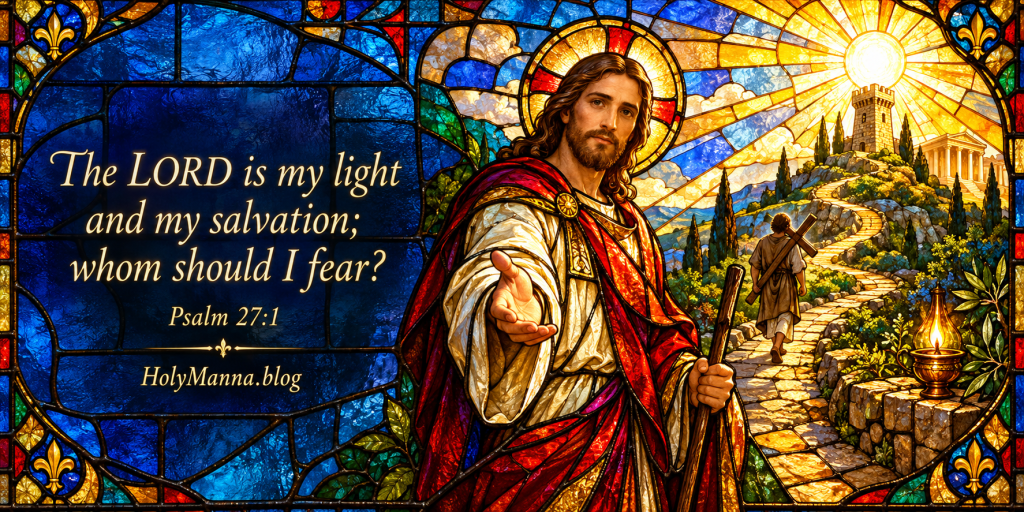
Memorial of Saint Charles Borromeo, Bishop – Lectionary: 487
The Day Jesus Did the Math Out Loud
Somewhere on the dusty road to Jerusalem, Jesus stopped walking, turned to face an enormous crowd, and told everyone exactly what it would cost to keep following him. That startling moment sits at the center of the Mass readings for November 4th, the Memorial of Saint Charles Borromeo, and the pairing could hardly be more fitting. Borromeo was born into one of the wealthiest noble families of sixteenth-century Italy, was made a cardinal at 22 by his uncle, Pope Pius IV, and could have coasted through life in silk and comfort. Instead, he counted the cost, renounced his comfort, helped bring the Council of Trent to completion, reformed the vast Archdiocese of Milan, and personally fed and nursed plague victims when nearly every other official fled the city. He chose a single motto for his coat of arms, Humilitas, humility.
The central theme uniting these readings is this: discipleship costs everything, and God himself supplies what it costs. In Philippians 2:12-18, Saint Paul commands believers to work out their salvation with fear and trembling, then immediately reveals the secret, which is that God is already at work within them, producing both the desire and the deed. Psalm 27 gives the disciple’s answer, asking for one thing only, to dwell with the Lord, and waiting for him with courage. In The Gospel of Luke, Jesus demands that a disciple sit down, calculate honestly, and renounce whatever competes with him. The arithmetic looks terrifying until grace enters the equation. These readings walk through that math, step by step, with Saint Charles as living proof that the sum works out.
First Reading — Philippians 2:12-18
Grace Carries the Weight, but Nobody Gets Carried
Philippi was no ordinary town. It was a proud Roman colony populated largely by retired soldiers, the first city in Europe where Saint Paul preached the Gospel, around the year 50, as recorded in Acts 16. Roughly a decade later, Paul wrote this letter from prison, probably in Rome, to the community he loved most tenderly. This passage lands immediately after the magnificent Christ hymn of Philippians 2:6-11, where Christ empties himself, becomes obedient unto death on a cross, and is exalted by the Father. Everything Paul now asks of the Philippians flows from that hymn. Because Christ obeyed completely, his people can obey completely, and because God raised him, God can be trusted to finish what he begins in them. That is precisely the day’s central theme. The cost of discipleship is total, and God himself underwrites it from within.
Phiippians 2:12-18
My beloved, obedient as you have always been,
not only when I am present but all the more now when I am absent,
work out your salvation with fear and trembling.
For God is the one who, for his good purpose,
works in you both to desire and to work.
Do everything without grumbling or questioning,
that you may be blameless and innocent,
children of God without blemish
in the midst of a crooked and perverse generation,
among whom you shine like lights in the world,
as you hold on to the word of life,
so that my boast for the day of Christ may be
that I did not run in vain or labor in vain.
But, even if I am poured out as a libation
upon the sacrificial service of your faith,
I rejoice and share my joy with all of you.
In the same way you also should rejoice and share your joy with me.
Detailed Exegesis
Verse 12: “My beloved, obedient as you have always been, not only when I am present but all the more now when I am absent, work out your salvation with fear and trembling.” Paul is not teaching salvation by human effort; he is teaching that the salvation already received in baptism must be lived out to completion. The Greek verb carries the sense of bringing a work to its finish. Saint John Chrysostom, in his eighth homily on this letter, catches the nuance perfectly: “Work out your own salvation with fear and trembling: he says not work, but work out, i.e. with much earnestness, with much diligence.” The fear in question is reverent awe before the living God, not servile terror. Paul also removes himself from the picture. The Philippians must obey when no apostle is watching, because obedience aimed at an audience is performance, not faith.
Verse 13: “For God is the one who, for his good purpose, works in you both to desire and to work.” Here is the astonishing resolution of the paradox. The very desire to please God is itself God’s gift, and so is the strength to act on it. Grace reaches all the way down, beneath the will itself. This verse protects the believer from both presumption and despair, since nobody earns salvation alone and nobody fights for it alone.
Verse 14: “Do everything without grumbling or questioning.” The word for grumbling deliberately echoes Israel’s murmuring in the wilderness in Exodus 16 and Numbers 14, where complaint against Moses was really complaint against God. Grumbling is the quiet solvent of faith; it corrodes communities from the inside while looking harmless.
Verse 15: “That you may be blameless and innocent, children of God without blemish in the midst of a crooked and perverse generation, among whom you shine like lights in the world.” Paul borrows the phrase “crooked and perverse generation” from the Song of Moses in Deuteronomy 32:5, where it described unfaithful Israel, and reverses it. Now the baptized stand as God’s faithful children inside a crooked world, shining like the heavenly luminaries of Daniel 12:3. Holiness is meant to be visible, the way stars are visible, without shouting.
Verse 16: “As you hold on to the word of life, so that my boast for the day of Christ may be that I did not run in vain or labor in vain.” The word of life is both clung to and held out to others. Paul speaks like an athlete who has staked his whole race on his converts’ perseverance, looking ahead to the day of Christ, the final judgment, when every labor is weighed.
Verse 17: “But, even if I am poured out as a libation upon the sacrificial service of your faith, I rejoice and share my joy with all of you.” In the Temple ritual described in Numbers 15, a libation of wine was poured over a sacrifice as its crowning gesture. Paul pictures the Philippians’ faith as the sacrifice and his own possible execution as the wine poured over it. He is describing martyrdom as liturgy, and he uses the same image again near his death in 2 Timothy 4:6.
Verse 18: “In the same way you also should rejoice and share your joy with me.” Joy is the keynote of the whole letter, and it is commanded, not merely wished. Shared sacrifice produces shared joy; that is the Gospel’s strange economics.
Teachings
The Catechism places this exact passage at the foundation of the moral life. CCC 1949 teaches: “Called to beatitude but wounded by sin, man stands in need of salvation from God. Divine help comes to him in Christ through the law that guides him and the grace that sustains him: ‘Work out your own salvation with fear and trembling; for God is at work in you, both to will and to work for his good pleasure.’” Likewise, CCC 308 affirms: “The truth that God is at work in all the actions of his creatures is inseparable from faith in God the Creator. God is the first cause who operates in and through secondary causes: ‘For God is at work in you, both to will and to work for his good pleasure.’” Saint Augustine compressed the whole mystery into one sentence, quoted in CCC 1847: “God created us without us: but he did not will to save us without us.” Saint Charles Borromeo preached the same cooperation with grace to his clergy in the sermon the Church reads on his memorial: “Be sure that you first preach by the way you live. If you do not, people will notice that you say one thing, but live otherwise, and your words will bring only cynical laughter and a derisive shake of the head.” Shining like lights in the world, in other words, is not optional decoration on the Christian life. It is the proof that God’s inner work is real.
Reflection
Start small and start today. Pick the one complaint that most often leaves your mouth, at work, at home, or online, and retire it for a week, replacing it with a short prayer of thanksgiving each time it rises. Make a morning offering so that the hidden, unglamorous duties of the day become the raw material God works with. Then do one good thing this week that absolutely no one will see, since obedience in secret is where fear of the Lord matures into love. Where does grumbling quietly leak the light out of your witness? If God is truly at work in you, both to desire and to act, what desire has he been placing in your heart that you keep postponing? What would it change to treat the most ordinary task of tomorrow as part of working out your salvation?
Responsorial Psalm — Psalm 27:1, 4, 13-14
One Thing Is Worth Everything
Psalm 27 is attributed to David and moves in two great breaths: serene confidence in verses 1 through 6, then urgent pleading in verses 7 through 14, before landing on a final act of brave trust. The liturgy selects the confident frame, and for good reason on this day. The readings around it ask for total renunciation and fearless perseverance, and this psalm supplies the only possible motive for either. Calling the Lord “my light” is strikingly rare in the Old Testament, which makes the phrase shine all the brighter here, and the Church has always heard in it an anticipation of Christ, who declares in The Gospel of John that he is the light of the world. A disciple can afford to renounce everything precisely because the one thing the psalmist asks for is worth more than everything renounced.
Psalm 27:1, 4, 13-14
R. (1a) The Lord is my light and my salvation.
The LORD is my light and my salvation;
whom should I fear?
The LORD is my life’s refuge;
of whom should I be afraid?
R. The Lord is my light and my salvation.
One thing I ask of the LORD;
this I seek:
To dwell in the house of the LORD
all the days of my life,
That I may gaze on the loveliness of the LORD
and contemplate his temple.
R. The Lord is my light and my salvation.
I believe that I shall see the bounty of the LORD
in the land of the living.
Wait for the LORD with courage;
be stouthearted, and wait for the LORD.
R. The Lord is my light and my salvation.
Detailed Exegesis
Verse 1: “The LORD is my light and my salvation; whom should I fear? The LORD is my life’s refuge; of whom should I be afraid?” Three titles pile up in a single verse: light, salvation, refuge. Light scatters the darkness where fear breeds, salvation rescues from real danger, and refuge shelters for the long siege. The two rhetorical questions expect the answer “no one,” not because threats are imaginary but because God is greater than every threat. Saint Augustine, commenting on this psalm, which he numbered as Psalm 26 following the Greek tradition, writes: “Christ’s young soldier speaks, on his coming to the faith.” He continues: “The Lord will give me both knowledge of Himself, and salvation: who shall take me from Him?” For Augustine, this is the voice of every newly committed believer stepping onto the battlefield of discipleship.
Verse 4: “One thing I ask of the LORD; this I seek: To dwell in the house of the LORD all the days of my life, That I may gaze on the loveliness of the LORD and contemplate his temple.” Here is the psalm’s beating heart, and the perfect bridge to today’s Gospel. The psalmist has narrowed every desire down to one: God’s presence, God’s beauty, God’s house. Jesus praises the same single-heartedness when he tells Martha in The Gospel of Luke that only one thing is necessary. A divided heart finds renunciation impossible; a heart that wants one thing finds it almost natural.
Verse 13: “I believe that I shall see the bounty of the LORD in the land of the living.” This is faith talking back to despair. The psalmist does not claim the trouble is over; he claims that God’s goodness will prove visible within real history, and Christian hope stretches the phrase “land of the living” all the way into eternal life, where the vision of God’s loveliness becomes permanent.
Verse 14: “Wait for the LORD with courage; be stouthearted, and wait for the LORD.” The Hebrew idea behind waiting is not passive sitting but taut expectation, like a stretched cord. The command to wait brackets the command to take courage, because waiting is usually the harder assignment. God’s timing tests disciples far more often than God’s demands do.
Teachings
The psalmist’s single desire is, according to the Church, the deepest truth about every human being. CCC 27 teaches: “The desire for God is written in the human heart, because man is created by God and for God; and God never ceases to draw man to himself. Only in God will he find the truth and happiness he never stops searching for.” The courage the psalm commands is the virtue of fortitude, which CCC 1808 defines: “Fortitude is the moral virtue that ensures firmness in difficulties and constancy in the pursuit of the good. It strengthens the resolve to resist temptations and to overcome obstacles in the moral life. The virtue of fortitude enables one to conquer fear, even fear of death, and to face trials and persecutions.” Saint Charles Borromeo lived verse 4 in a crowded, demanding life, and he insisted that contemplation is what keeps a laborer for God from burning out. In the sermon read on his memorial he says: “My brothers, you must realize that for us churchmen nothing is more necessary than meditation.” A man who gazed on the loveliness of the Lord each day found the stoutheartedness to face famine, plague, and even an assassination attempt without abandoning his post.
Reflection
Try praying verse 1 as a weapon this week. Name the specific fear that has the most leverage over you right now, money, health, loneliness, the future, and answer it out loud with the psalmist’s words: the Lord is my light and my salvation. Then imitate verse 4 concretely by scheduling 15 unhurried minutes before the Blessed Sacrament, or simply inside a quiet church, with no requests, only gazing. Finally, practice waiting on purpose: choose one unresolved situation and consciously hand God the timeline instead of forcing one. Whom, or what, are you actually afraid of, and what does that fear reveal about where your trust lives? If you could ask the Lord for only one thing, would it honestly be his presence? Where is God asking you to wait with courage rather than act with anxiety?
Holy Gospel — Luke 14:25-33
Jesus Turns Around and Names His Price
This scene unfolds inside the great travel narrative of The Gospel of Luke, which begins at Luke 9:51 when Jesus resolutely sets his face toward Jerusalem, toward the cross. His popularity is at a high point; crowds swell around a miracle worker and master storyteller. Most teachers would ride that wave. Jesus does the opposite. He turns, faces the crowd, and deliberately thins it, because he is not recruiting admirers for a parade but disciples for a crucifixion. Three times in nine verses he repeats the sobering refrain that whoever will not pay the price cannot be his disciple, and he illustrates the point with two parables found only in Luke, a builder and a king, both of whom sit down to do honest math before committing. On the memorial of a nobleman who gave up a fortune to serve plague victims, these words stop sounding theoretical.
Luke 14:25-33
Great crowds were traveling with Jesus,
and he turned and addressed them,
“If anyone comes to me without hating his father and mother,
wife and children, brothers and sisters,
and even his own life,
he cannot be my disciple.
Whoever does not carry his own cross and come after me
cannot be my disciple.
Which of you wishing to construct a tower
does not first sit down and calculate the cost
to see if there is enough for its completion?
Otherwise, after laying the foundation
and finding himself unable to finish the work
the onlookers should laugh at him and say,
‘This one began to build but did not have the resources to finish.’
Or what king marching into battle would not first sit down
and decide whether with ten thousand troops
he can successfully oppose another king
advancing upon him with twenty thousand troops?
But if not, while he is still far away,
he will send a delegation to ask for peace terms.
In the same way,
everyone of you who does not renounce all his possessions
cannot be my disciple.”
Detailed Exegesis
Verse 25: “Great crowds were traveling with Jesus, and he turned and addressed them.” Luke distinguishes carefully between crowds and disciples. Crowds travel near Jesus; disciples travel with him on his terms. The physical turn is a dramatic gesture, the Master stopping traffic to ask whether anyone has thought this through.
Verse 26: “If anyone comes to me without hating his father and mother, wife and children, brothers and sisters, and even his own life, he cannot be my disciple.” The word “hating” is Semitic hyperbole, a deliberate exaggeration meaning to love less, to prefer against. The parallel in Matthew 10:37 makes the meaning explicit: whoever loves father or mother more than Jesus is not worthy of him. Saint Gregory the Great raised the obvious objection, as gathered in the Catena Aurea of Saint Thomas Aquinas on this passage: “But it may be asked, how are we bid to hate our parents and our relations in the flesh, who are commanded to love even our enemies?” His resolution is that the disciple loves family rightly by refusing to obey them whenever they would block the way to God. The fourth commandment stands untouched; the first commandment simply stands first. Even one’s own life must yield, which points directly at martyrdom.
Verse 27: “Whoever does not carry his own cross and come after me cannot be my disciple.” First-century listeners had watched condemned men carry crossbeams to execution. Jesus is saying that discipleship means walking, publicly and daily, the road of self-surrender that he himself is walking toward Jerusalem at that very moment.
Verse 28: “Which of you wishing to construct a tower does not first sit down and calculate the cost to see if there is enough for its completion?” The tower was likely a vineyard watchtower or farm building, a serious family investment. Notice the posture: sit down and calculate. Faith is not an impulse purchase; it is a deliberate, examined commitment.
Verse 29: “Otherwise, after laying the foundation and finding himself unable to finish the work the onlookers should laugh at him.” In the honor culture of the ancient Mediterranean, public ridicule was a genuine catastrophe. A half-built tower stood visible for years, a monument to poor discernment.
Verse 30: “‘This one began to build but did not have the resources to finish.’” The mockery lands on the gap between beginning and finishing. An abandoned Christian life scandalizes the watching world the same way; the world laughs hardest not at those who never believed but at those who quit.
Verse 31: “Or what king marching into battle would not first sit down and decide whether with ten thousand troops he can successfully oppose another king advancing upon him with twenty thousand troops?” The second parable raises the stakes from embarrassment to survival. The disciple faces opposition twice his own strength, the world, the flesh, and the devil, and sentimental optimism is not a strategy.
Verse 32: “But if not, while he is still far away, he will send a delegation to ask for peace terms.” Jesus allows only two honest options: total commitment or honest surrender. What he excludes is the fantasy middle ground where a person marches out underequipped and improvises.
Verse 33: “In the same way, everyone of you who does not renounce all his possessions cannot be my disciple.” Here is the conclusion both parables were building toward. The Greek verb for renounce means to say farewell, to take leave of. Luke returns to this theme constantly, from selling belongings in Luke 12:33 to the rich official in Luke 18:22. For some, Christ asks literal renunciation; for all, he commands the detachment of heart that holds every possession with open hands.
Teachings
The Catechism treats this verse as binding on every believer. CCC 2544 teaches: “Jesus enjoins his disciples to prefer him to everything and everyone, and bids them ‘renounce all that [they have]’ for his sake and that of the Gospel. Shortly before his passion he gave them the example of the poor widow of Jerusalem who, out of her poverty, gave all that she had to live on. The precept of detachment from riches is obligatory for entrance into the Kingdom of heaven.” On carrying the cross, CCC 1435 says: “Taking up one’s cross each day and following Jesus is the surest way of penance.” And CCC 618 preserves the blunt wisdom of Saint Rose of Lima: “Apart from the cross there is no other ladder by which we may get to heaven.” Saint Charles Borromeo is this Gospel in biography form. Heir to nobility and showered with lucrative offices as the pope’s nephew, he sat down, counted the cost, and chose reform, austerity, and his flock. During the famine of 1570 and the devastating plague that struck Milan in 1576, he sold his own possessions, including household furnishings, to feed the starving, and he personally visited the sick and dying when many civil leaders had fled. He finished the tower he began, serving until his death on November 3rd, 1584, at only 46 years old. He was canonized in 1610 by Pope Paul V.
Reflection
Do what the builder did: sit down this week and calculate. Take 20 quiet minutes with three honest lists, where your money actually goes, where your hours actually go, and which relationships or ambitions actually set your decisions. Whatever ranks above Christ on those lists is the possession verse 33 is talking about. Then practice one small, concrete renunciation, give away something you like rather than something you were discarding, fast from the app that owns your attention, or yield in an argument you could win. Detachment, like a muscle, grows by use. Which possession, habit, or relationship is quietly competing with Jesus for first place in your heart? If following Christ cost you real reputation this year, would you keep building? What would it mean for you to carry your cross daily rather than occasionally?
The Saint Who Finished His Tower
Picture the two towers standing side by side. One is half-built and abandoned, the punchline of the neighborhood. The other rises finished against the sky because its builder sat down, counted the cost, and paid it. Saint Charles Borromeo built the second kind of life. He weighed a cardinal’s luxuries against a shepherd’s burdens and chose the burdens, feeding the starving, nursing the plague-stricken, reforming a Church that badly needed it, and preaching first by the way he lived. He finished.
The readings of this memorial explain how such a life is even possible. Jesus names the price in The Gospel of Luke: everything, every rival love, every clutched possession, every excuse. Saint Paul reveals the hidden subsidy in Philippians 2: God himself works within the believer, supplying both the desire and the strength, so that working out salvation is really cooperating with a power already in motion. And Psalm 27 hands the disciple the only prayer that makes the whole venture sane, asking for one thing, the Lord himself, and waiting for him with courage.
So here is the invitation of November 4th. Sit down, like the builder. Do the honest math on what currently owns your heart. Then hand the ledger to God, who has never yet left a surrendered life unfinished. Go to Mass and receive the Eucharist, bring the clutter of attachments to Confession, and ask Saint Charles Borromeo to intercede for the courage to begin. The tower will cost everything. The view from the top, the loveliness of the Lord in the land of the living, is worth infinitely more.
Engage With Us!
This conversation should not end here. Share your reflections in the comments below, because testimonies of ordinary discipleship encourage fellow readers more than any polished essay ever could. To get the discussion started, here are a few questions drawn from today’s readings:
- Philippians 2:12-18: Where is God asking you to stop grumbling and start shining this week, and what hidden act of obedience could you offer him when no one is watching?
- Psalm 27:1, 4, 13-14: What fear would lose its grip on you if you truly believed the Lord is your light and your salvation, and how might you wait for him with courage instead of anxiety?
- Luke 14:25-33: If you sat down today and calculated honestly, which possession, habit, or relationship would you find competing with Jesus for first place, and what small renunciation could you make this week?
- For the readings as a whole: Knowing that discipleship costs everything and that God himself supplies what it costs, what is one concrete step you can take today toward finishing the tower God has begun in you?
However you answer, take heart. The God who worked mightily in a reluctant young cardinal from Milan is the same God at work in you, both to desire and to act. Live this day with the love and mercy Jesus taught, do the next right thing without grumbling, and trust him with the rest. He never starts a tower he does not intend to finish.
Sacred Heart of Jesus, we trust in You!
Immaculate Heart of Mary, pray for us!
Saint Michael the Archangel, defend us in battle!
Follow us on YouTube, TikTok, Instagram and Facebook for more insights and reflections on living a faith-filled life.


Leave a Reply