Monday of the Thirtieth Week in Ordinary Time – Lectionary: 479
When Grace Straightens What Life Has Bent
Everyone knows what it feels like to walk through a season bent over. Maybe it is an old wound that never quite healed, a habit that keeps winning, or a weight of worry that curves the shoulders a little more each year. Today’s readings speak directly into that experience, and they carry one luminous promise: God does not merely pardon His children; He raises them up to stand straight and walk in the light.
The central theme uniting this Monday of the Thirtieth Week in Ordinary Time is liberation unto likeness. In The Letter to the Ephesians, Saint Paul tells converts living in the shadow of the great pagan Temple of Artemis that they were once darkness but are now light in the Lord, called to imitate the very God who forgave them. The Church then places Psalm 1 on the lips of the faithful, with an antiphon drawn straight from Ephesians 5:1, painting the portrait of the upright life: a tree planted near running water, stable, fruitful, and watched over by the Lord. Finally, in The Gospel of Luke, Jesus acts out the theme in flesh and blood. He sees a daughter of Abraham whom Satan has bound for eighteen years, bent completely toward the ground, and with a word and a touch she stands erect and glorifies God.
First-century Ephesus and a first-century synagogue may feel far away, yet the human condition they reveal has not changed. Sin stoops the soul. Grace unbends it. The readings invite every reader to let Christ straighten what is crooked within and then to live upright, in love, as His very dear children. What in your own life has been bent over far too long?
First Reading — Ephesians 4:32–5:8
Beloved Children Learn the Family Resemblance
Ephesus was no quiet backwater. It was one of the great cities of the Roman world, a wealthy port in Asia Minor dominated by the Temple of Artemis, counted among the wonders of the ancient world. The Acts of the Apostles records that the city was so steeped in magic and the occult that new believers publicly burned their spell books after their conversion, and that the silversmiths who profited from idol shrines rioted against Paul’s preaching. The Christians who first heard this letter were surrounded by idolatry, sexual immorality, and crude pagan entertainment. Tradition holds that Saint Paul wrote The Letter to the Ephesians during his Roman imprisonment, around the years 60 to 62. After three chapters unfolding the glory of what God has done in Christ, Paul turns to how the baptized must now live, and this passage sits at the heart of that moral instruction. It fits the day’s central theme perfectly: people who have been forgiven and brought out of darkness are called to stand upright and resemble their Father.
Ephesians 4:32–5:8
Brothers and sisters:
Be kind to one another, compassionate,
forgiving one another as God has forgiven you in Christ.Be imitators of God, as beloved children, and live in love,
as Christ loved us and handed himself over for us
as a sacrificial offering to God for a fragrant aroma.
Immorality or any impurity or greed must not even be mentioned among you,
as is fitting among holy ones,
no obscenity or silly or suggestive talk, which is out of place,
but instead, thanksgiving.
Be sure of this, that no immoral or impure or greedy person,
that is, an idolater,
has any inheritance in the Kingdom of Christ and of God.Let no one deceive you with empty arguments,
for because of these things
the wrath of God is coming upon the disobedient.
So do not be associated with them.
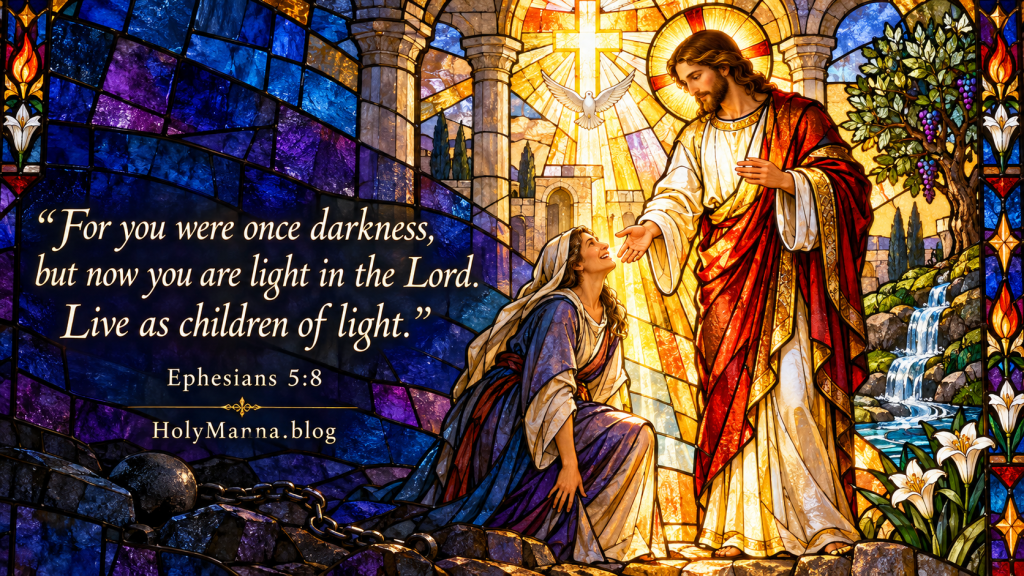
For you were once darkness,
but now you are light in the Lord.
Live as children of light.
Detailed Exegesis
Verse 32: “Be kind to one another, compassionate, forgiving one another as God has forgiven you in Christ.”
Paul grounds Christian kindness not in natural niceness but in divine mercy already received. The little word “as” carries the whole weight of the verse. God’s forgiveness in Christ is both the reason believers forgive and the pattern for how they forgive: freely, completely, and at personal cost. Forgiveness is not optional decoration on the Christian life; it is the family trait of the redeemed.
Verse 1: “Be imitators of God, as beloved children, and live in love,”
This is the only place in all of Scripture where the faithful are commanded, in so many words, to imitate God Himself. The command would be crushing if it stood alone, but Paul anchors it in identity: “as beloved children.” Children imitate their parents naturally, by watching, by closeness, by love. Adoption comes first; imitation flows from it. The Lectionary antiphon for today’s psalm is drawn from this very verse.
Verse 2: “as Christ loved us and handed himself over for us as a sacrificial offering to God for a fragrant aroma.”
Paul reaches back to the language of Leviticus, where the burnt offerings rose to God as a pleasing odor. Christ on the Cross is the true and final sacrifice that every Temple offering foreshadowed. Love, in the Christian sense, is defined here once and for all: it hands itself over. The measure of love is not feeling but self-gift.
Verse 3: “Immorality or any impurity or greed must not even be mentioned among you, as is fitting among holy ones,”
In a city where temple prostitution and commerce in idols were ordinary civic life, Paul sets a startling standard. The baptized are “holy ones,” saints, set apart for God, and certain things simply do not belong among them, not even as casual conversation. Notice that greed stands beside sexual sin; both treat persons and things as objects to be consumed.
Verse 4: “no obscenity or silly or suggestive talk, which is out of place, but instead, thanksgiving.”
Paul is remarkably practical. Holiness reaches all the way down into humor and small talk. The remedy he prescribes is not grim silence but thanksgiving. A grateful tongue has no appetite for filth. Where crude speech cheapens God’s gifts, gratitude receives them rightly.
Verse 5: “Be sure of this, that no immoral or impure or greedy person, that is, an idolater, has any inheritance in the Kingdom of Christ and of God.”
Here Paul names the deepest diagnosis: impurity and greed are idolatry, the worship of pleasure and possessions in place of God. The language of inheritance recalls that believers are children; an inheritance belongs to heirs. Grave sin, freely chosen and unrepented, forfeits that inheritance. This is a sober word of love, not a scare tactic.
Verse 6: “Let no one deceive you with empty arguments, for because of these things the wrath of God is coming upon the disobedient.”
Every age produces smooth voices insisting that sin is harmless, natural, or even liberating. Paul calls these “empty arguments.” The wrath of God is not a divine temper tantrum; it is the settled opposition of perfect holiness to everything that destroys His children.
Verse 7: “So do not be associated with them.”
Christians live in the world and love its people, yet they must not become partners in its darkness. The verse warns against the slow drift of compromise, the friendships and habits that quietly pull a soul back into what it has renounced.
Verse 8: “For you were once darkness, but now you are light in the Lord. Live as children of light.”
Paul does not say the Ephesians were merely in darkness; they were darkness. And now, in the Lord, they are light. Baptism does not simply improve a person; it changes what a person is. The command follows the gift: become in daily conduct what grace has already made you.
Teachings
Saint John Chrysostom, Doctor of the Church and the golden-mouthed preacher of the fourth century, devoted his seventeenth homily on this letter to these verses. On forgiveness as imitation of God he taught, “Forgive another, and you are imitating God, you are made like God. It is more our duty to forgive trespasses than debts of money; for if you forgive debts, you have not imitated God; whereas if you shall forgive trespasses, you are imitating God” (Homilies on Ephesians, Homily 17). On the Cross as the fragrant offering he added, “Do you see that to suffer for one’s enemies is a sweet-smelling savor, and an acceptable sacrifice? This it is to imitate God” (Homilies on Ephesians, Homily 17).
The Catechism quotes this very passage when it describes the Christian moral life. It teaches, “Incorporated into Christ by Baptism, Christians are ‘dead to sin and alive to God in Christ Jesus’ and so participate in the life of the Risen Lord. Following Christ and united with him, Christians can strive to be ‘imitators of God as beloved children, and walk in love’ by conforming their thoughts, words and actions to the ‘mind . . . which is yours in Christ Jesus,’ and by following his example” (CCC 1694). And on how such imitation is even possible, the Church teaches, “It is impossible to keep the Lord’s commandment by imitating the divine model from outside; there has to be a vital participation, coming from the depths of the heart, in the holiness and the mercy and the love of our God” (CCC 2842). Imitation of God is not performance; it is participation in His own life through grace.
Reflection
This reading lands first in the small places. Begin with forgiveness: call to mind one person whose offense still stings, and offer one deliberate prayer for that person today, by name. Then guard the tongue: notice this week how often conversation drifts toward crude jokes, gossip, or cynicism, and quietly redirect it toward gratitude, even with a single sentence of thanks. Finally, examine the modern idols of the heart, since greed now wears the respectable clothes of endless scrolling, shopping, and status. Confession is the place where darkness is traded for light, and a good examination of conscience built on this passage would be a worthy practice before the week ends. Who in your life is still waiting for the forgiveness God has already given you? What would change in your speech if thanksgiving truly replaced complaint? Which comfort or possession has quietly started to receive the attention that belongs to God alone?
Responsorial Psalm — Psalm 1:1-4, 6
Two Roads, One Tree, and a Choice Every Soul Must Make
Psalm 1 is the doorway to the entire Psalter. The ancient editors of Israel’s prayer book placed it first on purpose, as a kind of threshold inscription: before a soul can pray the other 149 psalms well, it must choose which of the two ways it will walk. This is classic wisdom literature, kin to Proverbs, built on the sharp contrast between the just and the wicked that the earliest Christians inherited in the famous “two ways” teaching of the Didache. The imagery comes straight from the land of Judea, where a tree survives the scorching dry season only if it is deliberately planted beside an irrigation channel, and where grain is threshed on exposed hilltops so the wind can carry off the worthless chaff. The Church today sings this psalm with an antiphon lifted from Ephesians 5:1, “Behave like God as his very dear children,” explicitly binding the psalm to the First Reading. The blessed man of Psalm 1 is the child of light of Ephesians 5, and he is a portrait of what a soul looks like when grace has straightened it.
Psalm 1:1-4, 6
R. (see Eph. 5:1) Behave like God as his very dear children.
Blessed the man who follows not
the counsel of the wicked
Nor walks in the way of sinners,
nor sits in the company of the insolent,
But delights in the law of the LORD
and meditates on his law day and night.
R. Behave like God as his very dear children.
He is like a tree
planted near running water,
That yields its fruit in due season,
and whose leaves never fade.
Whatever he does, prospers.
R. Behave like God as his very dear children.
Not so the wicked, not so;
they are like chaff which the wind drives away.
For the LORD watches over the way of the just,
but the way of the wicked vanishes.
R. Behave like God as his very dear children.
Detailed Exegesis
Verse 1: “Blessed the man who follows not the counsel of the wicked, Nor walks in the way of sinners, nor sits in the company of the insolent,”
The psalm opens with the word “blessed,” the same note on which Jesus will open the Beatitudes. Notice the downward progression: following counsel, then walking in the way, then sitting in the company. Sin rarely conquers in a single leap. It begins with listening to the wrong voices, becomes a pattern of behavior, and finally hardens into settled residence among scoffers. Blessedness begins with what a soul refuses.
Verse 2: “But delights in the law of the LORD and meditates on his law day and night.”
The blessed man is not defined mainly by avoidance but by love. The Hebrew word behind “law,” torah, means far more than legal code; it is God’s whole instruction, His revealed mind. And the word for meditating suggests murmuring the sacred words aloud, turning them over constantly, the way a person hums a beloved song. Delight, not duty, is the engine of holiness.
Verse 3: “He is like a tree planted near running water, That yields its fruit in due season, and whose leaves never fade. Whatever he does, prospers.”
Here is the central image of the psalm, and it answers the bent woman of today’s Gospel point for point. A tree planted by running water stands upright, drinks from a hidden source, and bears fruit on God’s schedule, in due season rather than on demand. Prosperity here is not wealth but fruitfulness, the deep flourishing of a life rooted in God through every drought.
Verse 4: “Not so the wicked, not so; they are like chaff which the wind drives away.”
The Hebrew text repeats the negation for emphasis, and the Lectionary preserves that urgency. Chaff is the husk stripped from the grain, weightless, rootless, and useless. The contrast is devastating: the just man is a living tree with roots and fruit; the wicked are dead debris with neither. A life built apart from God has no substance to resist the first strong wind.
Verse 6: “For the LORD watches over the way of the just, but the way of the wicked vanishes.”
The psalm ends not with human effort but with God’s gaze. The deepest security of the just is not their own discipline; it is that the Lord personally watches over their way. The way of the wicked does not need to be punished so much as it simply vanishes, because a road leading away from the Author of life leads, by definition, nowhere.
Teachings
Saint Augustine, Doctor of the Church, opened his monumental Expositions on the Psalms with this psalm, and he read the tree as a prophecy of Christ Himself. He taught, “That tree then, that is, our Lord, from the running streams of water, that is, from the sinful people’s drawing them by the way into the roots of His discipline, will bring forth fruit, that is, will establish Churches; in His season, that is, after He has been glorified by His Resurrection and Ascension into heaven” (Expositions on the Psalms, Psalm 1). For Augustine, only one Man ever perfectly refused the counsel of the wicked, and every baptized soul becomes a fruitful tree by being grafted onto Him.
The psalm’s call to meditate on God’s word day and night is echoed in the Church’s constant teaching on Scripture. The Catechism, quoting the Second Vatican Council and Saint Jerome, teaches, “The Church ‘forcefully and specifically exhorts all the Christian faithful . . . to learn the surpassing knowledge of Jesus Christ, by frequent reading of the divine Scriptures. Ignorance of the Scriptures is ignorance of Christ’” (CCC 133). Saint Jerome, the great fourth-century translator of the Bible, spent decades in a cave in Bethlehem doing exactly what Psalm 1 describes, murmuring the sacred text day and night, and the Church has never stopped holding up that pattern.
Reflection
The psalm asks for an honest audit of inputs. Every person meditates on something day and night; the only question is what. For many, the default torah is a news feed, a group chat, or the counsel of influencers who sit comfortably in the seat of the insolent. A concrete step for this week: trade the first ten minutes of morning phone time for ten minutes with the daily Mass readings, and let one verse travel through the day like a hummed melody. Another step: plant roots deliberately by choosing a regular holy hour, a weekly Rosary with others, or a Scripture group, since trees do not plant themselves near the water. Whose counsel shapes your decisions most, and would you be at peace saying so out loud in prayer? What would meditating on God’s law day and night realistically look like in your schedule? Where is God asking you to wait patiently for fruit in due season instead of demanding it now?
Holy Gospel — Luke 13:10-17
Eighteen Years Bent Over, and One Word of Freedom
This scene is a turning point that is easy to miss. It is the last time The Gospel of Luke shows Jesus teaching in a synagogue. He is on His long journey to Jerusalem, and opposition from the religious leadership is hardening into open hostility. Sabbath conflicts run through all four Gospels, because by the first century the simple commandment to rest had been wrapped in layers of rabbinic regulation defining exactly which actions counted as forbidden work. Yet the same tradition sensibly permitted untying and watering animals on the sabbath, a detail Jesus will use with devastating effect. Into this charged setting walks a woman who has spent eighteen years staring at the ground, bent double, likely pushed to the margins of the assembly. Nobody brings her to Jesus. Nobody asks on her behalf. He simply sees her. The Gospel acts out the entire theme of the day: the God who commands His children to stand as light first stoops down to raise them up Himself.
Luke 13:10-17
Jesus was teaching in a synagogue on the sabbath.
And a woman was there who for eighteen years
had been crippled by a spirit;
she was bent over, completely incapable of standing erect.
When Jesus saw her, he called to her and said,
“Woman, you are set free of your infirmity.”
He laid his hands on her,
and she at once stood up straight and glorified God.
But the leader of the synagogue,
indignant that Jesus had cured on the sabbath,
said to the crowd in reply,
“There are six days when work should be done.
Come on those days to be cured, not on the sabbath day.”
The Lord said to him in reply, “Hypocrites!
Does not each one of you on the sabbath
untie his ox or his ass from the manger
and lead it out for watering?
This daughter of Abraham,
whom Satan has bound for eighteen years now,
ought she not to have been set free on the sabbath day
from this bondage?”
When he said this, all his adversaries were humiliated;
and the whole crowd rejoiced at all the splendid deeds done by him.
Detailed Exegesis
Verse 10: “Jesus was teaching in a synagogue on the sabbath.”
Luke notes that teaching in the synagogue on the sabbath was Jesus’ custom from the beginning of His ministry. The Word made flesh honors the structures of Israel’s worship even as He prepares to reveal their deepest meaning. The sabbath, the day commemorating God’s rest and Israel’s liberation from slavery, is about to become the stage for a new exodus in miniature.
Verse 11: “And a woman was there who for eighteen years had been crippled by a spirit; she was bent over, completely incapable of standing erect.”
Eighteen years is long enough to stop hoping. Luke, whom tradition remembers as a physician, describes her condition with clinical precision, yet he attributes it to “a spirit,” signaling that behind physical suffering lies a deeper bondage at work in the world since the fall. She is a living image of humanity under sin: still present in the assembly, still faithful, yet unable to look up.
Verse 12: “When Jesus saw her, he called to her and said, ‘Woman, you are set free of your infirmity.’”
Every verb matters. He saw her, when others had long since stopped seeing. He called her, drawing her from the margins to the center. And He declared her free, using the language of release, the same note Jesus struck in Nazareth when He announced liberty to captives. She asks for nothing. The initiative belongs entirely to divine mercy.
Verse 13: “He laid his hands on her, and she at once stood up straight and glorified God.”
Jesus touches a woman the culture would have kept at a distance, and the healing is instantaneous. Her first upright act is worship. That detail is the whole Gospel in a single line: God straightens the human person precisely so that the human person can finally look up and glorify Him. Grace restores posture, and posture becomes praise.
Verse 14: “But the leader of the synagogue, indignant that Jesus had cured on the sabbath, said to the crowd in reply, ‘There are six days when work should be done. Come on those days to be cured, not on the sabbath day.’”
The leader cannot deny the miracle, so he attacks the timing, and he lacks the courage to confront Jesus directly, lecturing the crowd instead. His religion has become a system to administer rather than a God to encounter. Eighteen years of suffering move him less than one deviation from his schedule.
Verse 15: “The Lord said to him in reply, ‘Hypocrites! Does not each one of you on the sabbath untie his ox or his ass from the manger and lead it out for watering?’”
Luke pointedly calls Jesus “the Lord” at the moment He defends the sabbath’s true meaning, for He is the Lord of the sabbath. His argument is simple and unanswerable: the leader’s own practice permits loosing a thirsty animal on the sabbath. If mercy toward livestock is lawful, mercy toward a suffering person cannot be sin.
Verse 16: “This daughter of Abraham, whom Satan has bound for eighteen years now, ought she not to have been set free on the sabbath day from this bondage?”
Jesus gives her a title found nowhere else in Scripture: daughter of Abraham. In one phrase He restores her dignity before the whole assembly, naming her an heir of the covenant, not a burden or a curiosity. He also unmasks the real enemy, Satan, and reframes the sabbath itself: the day celebrating liberation from Egypt is precisely the right day to break chains.
Verse 17: “When he said this, all his adversaries were humiliated; and the whole crowd rejoiced at all the splendid deeds done by him.”
Luke ends with a divided house. The adversaries are put to shame, while the crowd rejoices. Every reader of this passage eventually stands in one of those two groups, and the Gospel leaves the choice open on purpose.
Teachings
Saint Cyril of Alexandria, Doctor of the Church, preached through The Gospel of Luke in the fifth century, and his comments on this passage survive in fragments preserved in collections such as the Catena Aurea compiled by Saint Thomas Aquinas. On the synagogue leader he taught, “Now the ruler of the synagogue is convicted a hypocrite, in that he leads his cattle to watering on the Sabbath-day, but this woman, not more by birth than by faith the daughter of Abraham, he thought unworthy to be loosed from the chain of her infirmity” (Commentary on the Gospel of Saint Luke, on Luke 13).
The Catechism addresses these sabbath controversies directly. It teaches, “The Gospel reports many incidents when Jesus was accused of violating the sabbath law. But Jesus never fails to respect the holiness of this day. He gives this law its authentic and authoritative interpretation: ‘The sabbath was made for man, not man for the sabbath.’ With compassion, Christ declares the sabbath for doing good rather than harm, for saving life rather than killing. The sabbath is the day of the Lord of mercies and a day to honor God. ‘The Son of Man is lord even of the sabbath’” (CCC 2173). And on the deeper purpose of every healing, the Church teaches, “By freeing some individuals from the earthly evils of hunger, injustice, illness, and death, Jesus performed messianic signs. Nevertheless he did not come to abolish all evils here below, but to free men from the gravest slavery, sin, which thwarts them in their vocation as God’s sons and causes all forms of human bondage” (CCC 549). The bent woman’s straightened spine is a sign pointing to the greater liberation Christ accomplishes in every confessional.
Reflection
The first invitation of this Gospel is honesty about bondage. Eighteen years can pass quickly: an old resentment, an addiction managed rather than surrendered, a shame that keeps the eyes on the ground. Jesus still sees, still calls, and still sets free, above all through the Sacrament of Reconciliation, which is His hands laid on a bound soul. A concrete step: get to Confession within the next two weeks, especially if years have passed, and name the oldest chain first. A second step: imitate the gaze of Christ by noticing one overlooked person this week, the coworker nobody greets or the relative nobody calls, and move toward them deliberately. A third step: guard Sunday as a day of mercy and worship rather than errands, letting the Lord’s Day actually unbend the week. What has kept you bent over, and how long have you quietly accepted it as permanent? When the Lord looks at the assembly, are you closer to the rejoicing crowd or the indignant leader? Whose dignity could you restore this week simply by seeing and naming them with love?
Stand Up Straight and Walk Toward the Light
Picture the end of that sabbath day in the synagogue. A woman who arrived staring at the dust walks home looking at the sky, and a crowd walks home rejoicing. That is what an encounter with Jesus Christ does, and today’s readings trace the whole arc of it. Saint Paul reminds the Ephesians, and every baptized soul after them, that they were once darkness but are now light in the Lord, children so beloved that their family calling is nothing less than imitating God Himself. Psalm 1 shows what that upright life looks like when it takes root: a tree planted beside running water, steady through drought, fruitful in due season, watched over personally by the Lord. And in The Gospel of Luke, Jesus does for one daughter of Abraham what He longs to do for everyone: He sees, He calls, He touches, and He sets free, until a bent body stands straight and breaks into praise.
The order of those scenes matters. Grace comes first. Nobody unbends alone, and nobody becomes light by trying harder in the dark. The woman did not climb her way to healing; she received it, and then she stood. Forgiveness received becomes forgiveness given. Freedom received becomes worship. Light received becomes a life that glows.
So here is the invitation of this Monday in Ordinary Time. Bring the oldest, most stubborn chain to Jesus this week, honestly, in prayer and in Confession, and let Him do what only He can do. Then live like someone who has been set free: forgive quickly, speak gratitude, choose the company of the just, and plant deep roots beside the running water of word and sacrament. The Father is not waiting with a lecture. He is waiting with a hand extended, eager to watch another beloved child stand up straight and glorify God.
Engage With Us!
These readings have a way of finding the exact chain each person has been dragging, and no two stories of being set free are quite alike. Please share your reflections in the comments below. Your experience of forgiveness, your season of waiting for fruit, or the moment grace finally straightened something in your life may be exactly the encouragement another reader needs today. Take a moment with these questions and let one of them travel with you through the week.
- The Letter to the Ephesians, chapter 4, verse 32 through chapter 5, verse 8, commands believers to forgive as God has forgiven them and to live as children of light. Where is God inviting you to stop imitating the culture around you and start imitating Him instead?
- Psalm 1, verses 1 through 4 and verse 6, contrasts the tree planted near running water with the chaff driven by the wind. What are you currently rooted in, and is it a source that will still be flowing when the dry season comes?
- The Gospel of Luke, chapter 13, verses 10 through 17, shows Jesus seeing, calling, and freeing a woman bound for eighteen years. If Jesus looked at you across the assembly today, what would He see bending you toward the ground, and are you willing to let Him touch it?
- Taking all the readings together as one message of liberation unto likeness, what would your daily life look like this week if you truly lived as someone already set free, already beloved, and already a child of the light?
Keep walking the way of the just, friends. The Lord watches over it personally, and He finishes what He starts. Go forward this week forgiving freely, standing tall, and doing everything with the love and mercy Jesus taught us.
Sacred Heart of Jesus, we trust in You!
Immaculate Heart of Mary, pray for us!
Saint Michael the Archangel, defend us in battle!
Follow us on YouTube, TikTok, Instagram and Facebook for more insights and reflections on living a faith-filled life.


Leave a Reply