Memorial of Saint Pius X, Pope – Lectionary: 423
When the Wind Blows Through the Valley
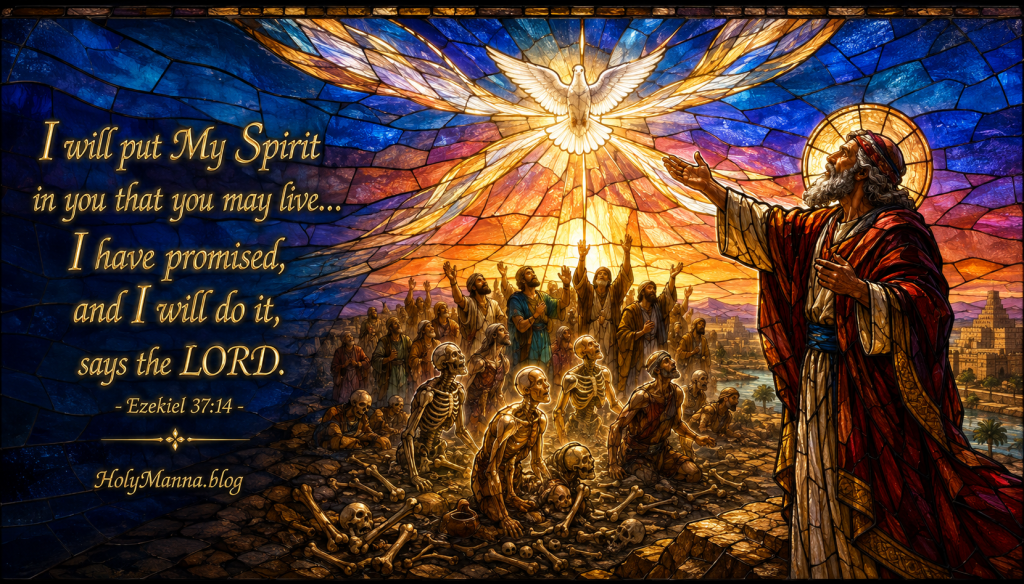
Everyone has stood in a valley of dry bones at some point. Maybe it was a marriage that seemed beyond repair, a faith that had gone quiet, or a hope that had simply run out of road. On this twenty-first day of August, the Church celebrates the Memorial of Saint Pius X, the pope whose motto was to restore all things in Christ, and the readings for this Friday feel handpicked for that mission. The central theme running through all of them is this: God’s everlasting love is a love that raises the dead. In Ezekiel 37, the prophet stands in a plain littered with bones so dry that no natural hope remains, and God breathes life into them anyway. In Psalm 107, the redeemed sing their thanks for a love that gathered them from every direction and satisfied their longing souls. In The Gospel of Matthew, Jesus reveals what a raised heart is for: loving God with everything and loving neighbor as oneself. The historical backdrop matters here. Ezekiel spoke to exiles in Babylon who had watched Jerusalem burn, and the psalmist sang for a people freshly gathered home from that same exile. Jesus spoke during Holy Week, days before His own body would lie in a grave that God would open. These are not readings for people whose lives are tidy. They are readings for people who wonder whether God can still do anything with the dust they are holding. He can, and He says so plainly: “I have promised, and I will do it, says the LORD.”
First Reading — Ezekiel 37:1-14
A Prophet, a Valley, and a Question Only God Can Answer
Ezekiel was a priest carried off to Babylon in 597 BC, about ten years before Jerusalem and its Temple were destroyed. He ministered among exiles who had lost land, worship, and future, and whose despair had hardened into a slogan God quotes back in this vision: “Our bones are dried up, our hope is lost.” Into that darkness God gives one of Scripture’s most breathtaking visions. Its engine is the Hebrew word ruah, meaning breath, wind, and spirit all at once, and its message anchors the day’s central theme, for the love of God does not merely comfort the dying; it raises the dead.
Ezekiel 37:1-14
The hand of the LORD came upon me,
and led me out in the Spirit of the LORD
and set me in the center of the plain,
which was now filled with bones.
He made me walk among the bones in every direction
so that I saw how many they were on the surface of the plain.
How dry they were!
He asked me:
Son of man, can these bones come to life?
I answered, “Lord GOD, you alone know that.”
Then he said to me:
Prophesy over these bones, and say to them:
Dry bones, hear the word of the LORD!
Thus says the Lord GOD to these bones:
See! I will bring spirit into you, that you may come to life.
I will put sinews upon you, make flesh grow over you,
cover you with skin, and put spirit in you
so that you may come to life and know that I am the LORD.
I prophesied as I had been told,
and even as I was prophesying I heard a noise;
it was a rattling as the bones came together, bone joining bone.
I saw the sinews and the flesh come upon them,
and the skin cover them, but there was no spirit in them.
Then the LORD said to me:
Prophesy to the spirit, prophesy, son of man,
and say to the spirit: Thus says the Lord GOD
From the four winds come, O spirit,
and breathe into these slain that they may come to life.
I prophesied as he told me, and the spirit came into them;
they came alive and stood upright, a vast army.
Then he said to me:
Son of man, these bones are the whole house of Israel.
They have been saying,
“Our bones are dried up,
our hope is lost, and we are cut off.”
Therefore, prophesy and say to them: Thus says the Lord GOD:
O my people, I will open your graves
and have you rise from them,
and bring you back to the land of Israel.
Then you shall know that I am the LORD,
when I open your graves and have you rise from them,
O my people!
I will put my spirit in you that you may live,
and I will settle you upon your land;
thus you shall know that I am the LORD.
I have promised, and I will do it, says the LORD.
Detailed Exegesis
Verse 1: “The hand of the LORD came upon me, and led me out in the Spirit of the LORD and set me in the center of the plain, which was now filled with bones.”
For a priest bound by purity laws concerning the dead, a plain of unburied bones is the last place Ezekiel would choose to stand, yet God sets him in its center.
Verse 2: “He made me walk among the bones in every direction so that I saw how many they were on the surface of the plain. How dry they were!”
God makes Ezekiel take the full measure of the disaster before speaking hope. Every trace of life has evaporated, and God never asks His people to pretend otherwise.
Verse 3: “He asked me: Son of man, can these bones come to life? I answered, ‘Lord GOD, you alone know that.’”
Human reason answers no, and presumption answers yes. Ezekiel answers with faith, handing the question back to the only One who can answer it.
Verse 4: “Then he said to me: Prophesy over these bones, and say to them: Dry bones, hear the word of the LORD!”
God commands His prophet to preach to an audience that cannot hear. This is the perfect picture of grace, for the word of God carries its own power.
Verse 5: “Thus says the Lord GOD to these bones: See! I will bring spirit into you, that you may come to life.”
Here ruah takes center stage, deliberately echoing Genesis 2:7, where God breathes life into the man formed from dust; the God who created life once can create it again.
Verse 6: “I will put sinews upon you, make flesh grow over you, cover you with skin, and put spirit in you so that you may come to life and know that I am the LORD.”
The promise reverses decomposition step by step and ends with its true purpose. Restoration is never merely physical; its goal is renewed covenant knowledge of the LORD.
Verse 7: “I prophesied as I had been told, and even as I was prophesying I heard a noise; it was a rattling as the bones came together, bone joining bone.”
Ezekiel obeys before he sees results, and the miracle begins while the word is still on his lips. The word of God accomplishes what it declares.
Verse 8: “I saw the sinews and the flesh come upon them, and the skin cover them, but there was no spirit in them.”
The restoration comes in two stages, and the pause is deliberate. Bodies without breath are a sobering image of religion with structure but no interior life.
Verse 9: “Then the LORD said to me: Prophesy to the spirit, prophesy, son of man, and say to the spirit: Thus says the Lord GOD: From the four winds come, O spirit, and breathe into these slain that they may come to life.”
The four winds signify totality, and the word slain reveals these were victims of the very catastrophe the exiles were mourning.
Verse 10: “I prophesied as he told me, and the spirit came into them; they came alive and stood upright, a vast army.”
A boneyard becomes an army standing on its feet, for God restores His people not to bare survival but to strength and purpose.
Verse 11: “Then he said to me: Son of man, these bones are the whole house of Israel. They have been saying, ‘Our bones are dried up, our hope is lost, and we are cut off.’”
God Himself interprets the vision. The bones are the exiles’ own despair given a shape, and the vision is His direct answer.
Verse 12: “Therefore, prophesy and say to them: Thus says the Lord GOD: O my people, I will open your graves and have you rise from them, and bring you back to the land of Israel.”
The imagery shifts from bones to graves, and twice in these verses God calls them “my people,” the covenant name that exile could not erase.
Verse 13: “Then you shall know that I am the LORD, when I open your graves and have you rise from them, O my people!”
The recognition formula returns; every act of divine rescue aims at a people who know their God not by rumor but by rescue.
Verse 14: “I will put my spirit in you that you may live, and I will settle you upon your land; thus you shall know that I am the LORD. I have promised, and I will do it, says the LORD.”
The vision closes with the promise of the indwelling Spirit, fulfilled at Pentecost, sealed by the bedrock of all hope: God keeps His word.
Teachings
The Church hears in this vision both the promise of Israel’s return and a step in God’s revelation of the resurrection of the body. The Catechism teaches in CCC 691, “The term ‘Spirit’ translates the Hebrew word ruah, which, in its primary sense, means breath, air, wind,” and in CCC 703, “The Word of God and his Breath are at the origin of the being and life of every creature.” Tertullian appealed to the vision of the dry bones in his treatise De Resurrectione Carnis to defend the fleshly reality of the resurrection, and Pope Saint Gregory the Great preached his Homilies on Ezekiel in Rome around the year 593 while Lombard armies besieged the city. Saint Irenaeus supplied the caption for the whole scene in Adversus Haereses: “For the glory of God is a living man; and the life of man consists in beholding God.”
Reflection
Every believer eventually stands in some version of that valley: a relationship gone cold, a habit of sin that seems permanent, a prayer life reduced to dust. The vision offers a path forward. Begin by naming the dry bones honestly, the way God made Ezekiel walk among them. Then speak the word of God over that situation by praying Scripture aloud. Return to the sacrament of Confession, where God opens graves in the most personal way and breathes His Spirit back into the soul. Finally, ask daily for the Holy Spirit, seeking interior life and not merely external order. What is the driest area of your life right now, and have you truly invited God into the center of it? Do you believe He can raise it, or have you quietly adopted the exiles’ slogan that hope is lost?
Responsorial Psalm — Psalm 107:1-9
The Song of the Gathered Ones
Psalm 107 opens the fifth and final book of the Psalter, and it reads like the liturgy Israel sang when Ezekiel’s promise came true. The exiles have come home. The psalm summons the redeemed to give thanks for a rescue they did not accomplish themselves, and its opening scene, wanderers starving in the wilderness, becomes a portrait of every soul before grace. Paired with the valley of dry bones, this psalm supplies the day’s response to resurrection: gratitude. The refrain says it all, for the love that raises the dead is everlasting.
Psalm 107:1-9
R. (1) Give thanks to the Lord; his love is everlasting.
Let the redeemed of the LORD say,
those whom he has redeemed from the hand of the foe
And gathered from the lands,
from the east and the west, from the north and the south.
R. Give thanks to the Lord; his love is everlasting.
They went astray in the desert wilderness;
the way to an inhabited city they did not find.
Hungry and thirsty,
their life was wasting away within them.
R. Give thanks to the Lord; his love is everlasting.
They cried to the LORD in their distress;
from their straits he rescued them.
And he led them by a direct way
to reach an inhabited city.
R. Give thanks to the Lord; his love is everlasting.
Let them give thanks to the LORD for his mercy
and his wondrous deeds to the children of men,
Because he satisfied the longing soul
and filled the hungry soul with good things.
R. Give thanks to the Lord; his love is everlasting.
Detailed Exegesis
Verses 1-3: “Give thanks to the Lord; his love is everlasting. Let the redeemed of the LORD say, those whom he has redeemed from the hand of the foe and gathered from the lands, from the east and the west, from the north and the south.”
The psalm opens with a command to speak. Redemption is not meant to stay private; the redeemed are told to say so. The gathering from the four points of the compass echoes the four winds of Ezekiel’s vision with striking precision. The same Spirit summoned from every direction to raise the slain now gathers the scattered from every direction to bring them home.
Verses 4-5: “They went astray in the desert wilderness; the way to an inhabited city they did not find. Hungry and thirsty, their life was wasting away within them.”
Before the thanksgiving comes the memory of misery. The wanderers are not merely lost; their life is draining out of them, a slower version of the death Ezekiel saw completed in the valley. Scripture consistently portrays the soul apart from God this way, not as comfortable but as starving.
Verses 6-7: “They cried to the LORD in their distress; from their straits he rescued them. And he led them by a direct way to reach an inhabited city.”
The turning point is a cry. The wanderers do not find a map, negotiate a rescue, or earn their way out; they simply cry out, and the LORD does the rest. He does not merely point toward the city. He personally leads them there by a direct way, the shepherd’s own route.
Verses 8-9: “Let them give thanks to the LORD for his mercy and his wondrous deeds to the children of men, because he satisfied the longing soul and filled the hungry soul with good things.”
The psalm names the deepest rescue last. Beyond geography, God satisfies the longing soul itself. Our Lady takes up this very line in her Magnificat in The Gospel of Luke, praising the God who has filled the hungry with good things, and every generation of the redeemed inherits the song.
Teachings
This psalm is a school of Eucharistic living, because the Church’s supreme act of thanksgiving is the Mass itself. The Catechism teaches in CCC 1360, “The Eucharist is a sacrifice of thanksgiving to the Father, a blessing by which the Church expresses her gratitude to God for all his benefits, for all that he has accomplished through creation, redemption, and sanctification.” The very word Eucharist means thanksgiving, which means every Catholic who assists at daily Mass is doing precisely what Psalm 107 commands, joining the redeemed who say so. The psalm’s portrait of the longing soul found its most famous echo in Saint Augustine, who opened his Confessions with the cry, “You have made us for yourself, O Lord, and our heart is restless until it rests in you.” Augustine had wandered his own trackless wilderness of ambition and sin before crying out to the LORD, and his entire life afterward became one long act of thanksgiving. Saint Pius X, whose memorial the Church keeps this day, lived this psalm in a pastoral key. By encouraging frequent, even daily, reception of Holy Communion and by admitting children to the Eucharist at the age of reason, he opened wide the doors of the banquet where God fills the hungry soul with good things.
Reflection
Gratitude is not a personality trait; it is a discipline of the redeemed. A practical way to live this psalm is to end each day with a brief examen, naming three concrete mercies from the day and thanking God for them aloud, since the psalm insists that the redeemed say so. Another is to arrive at Mass a few minutes early and consciously offer it as thanksgiving rather than obligation. A third is to tell one other person, this week, a specific story of something God has done, because rescue stories are meant to circulate. When God led you out of your last wilderness, did you stop to thank Him, or did you simply move on to the next request? Who in your life has never heard you say out loud what God has done for you?
Holy Gospel — Matthew 22:34-40
The Question That Reveals the Heart of Everything
The scene unfolds in Jerusalem during the final week before the Passion, in the middle of a gauntlet of hostile questions. Jesus has just silenced the Sadducees on the resurrection of the dead, a beautiful providence on a day that begins in Ezekiel’s valley. Now the Pharisees regroup and send a scholar of the law with a question the rabbis debated seriously: among the six hundred and thirteen commandments the tradition counted in the Torah, which is greatest? Jesus answers with two texts every Jew knew, Deuteronomy 6:5 and Leviticus 19:18, and welds them into one commandment of love. Here the day’s theme reaches its destination, for the God who raises dry bones tells us what raised hearts are for.
Matthew 22:34-40
When the Pharisees heard that Jesus had silenced the Sadducees,
they gathered together, and one of them,
a scholar of the law, tested him by asking,
“Teacher, which commandment in the law is the greatest?”
He said to him,
“You shall love the Lord, your God, with all your heart,
with all your soul, and with all your mind.
This is the greatest and the first commandment.
The second is like it:
You shall love your neighbor as yourself.
The whole law and the prophets depend on these two commandments.”
Detailed Exegesis
Verse 34: “When the Pharisees heard that Jesus had silenced the Sadducees, they gathered together”
The Pharisees, who believed in the resurrection, might have celebrated the defeat of the Sadducees, who denied it. Instead they close ranks against Jesus. The verse is a quiet warning about how rivalry can matter more to the human heart than truth.
Verse 35: “and one of them, a scholar of the law, tested him by asking,”
Matthew notes the motive plainly. This is a test, not a search. Yet Jesus answers the question on its merits, showing that God gives truth even to those who ask with mixed motives.
Verse 36: “Teacher, which commandment in the law is the greatest?”
The question was a live debate in the rabbinic schools, which distinguished weightier and lighter commandments. It is also a trap, since any answer could be accused of dismissing the rest of the Torah.
Verse 37: “He said to him, ‘You shall love the Lord, your God, with all your heart, with all your soul, and with all your mind.’”
Jesus answers with the Shema from Deuteronomy 6, the prayer devout Jews recited every morning and evening. The threefold all excludes every partial offering. God does not ask for a compartment of life; He asks for the whole person, affections, will, and intellect together.
Verse 38: “This is the greatest and the first commandment.”
Jesus does not hedge. Love of God holds primacy over every other obligation, because God is the source and end of everything else the law protects.
Verse 39: “The second is like it: You shall love your neighbor as yourself.”
The genius of the answer is the joining. Jesus lifts Leviticus 19:18 from a chapter of practical holiness laws and sets it beside the Shema, declaring the two loves alike. No one had authority to fuse the tradition this way, and the scholar came looking for one commandment yet leaves with two that cannot be separated.
Verse 40: “The whole law and the prophets depend on these two commandments.”
The verb depend pictures the entire Scripture hanging from these two nails. Every commandment, every prophecy, every page of revelation is an application of love of God and love of neighbor. Remove the love, and the whole structure falls.
Teachings
The Catechism places this Gospel at the very foundation of the moral life. CCC 2055 teaches, “The Decalogue must be interpreted in light of this twofold yet single commandment of charity, the fullness of the Law.” Twofold yet single is the key phrase, for the Church refuses to let anyone love God while despising a neighbor, or serve neighbors while ignoring God. The Catechism defines the virtue itself in CCC 1822: “Charity is the theological virtue by which we love God above all things for his own sake, and our neighbor as ourselves for the love of God.” Notice the order and the engine: neighbor is loved for the love of God, so the second commandment flows from the first rather than competing with it. Saint Augustine, preaching on the First Epistle of John, distilled the whole moral life into one startling sentence: “Love, and do what you will.” Augustine was not licensing sin; he was teaching that a heart genuinely governed by charity will will what God wills. Saint Pius X embodied this union of the two loves. The pope who defended doctrine with unbending firmness was the same pastor who gave away his possessions to the poor of Venice and wept over the outbreak of the First World War in the last days of his life in August 1914. Doctrine and tenderness were never rivals in him, because both flowed from the same charity.
Reflection
The two commandments resist being kept in theory; they demand a schedule. Loving God with all the heart, soul, and mind might look this week like fifteen unhurried minutes of daily prayer, one weekday Mass, and putting the phone away during both. Loving neighbor as oneself might look like performing one corporal work of mercy before Sunday, forgiving the family member whose name just came to mind, or genuinely listening to the coworker everyone else avoids. The examination is simple and searching: whatever has claimed the heart, soul, and mind lately is what is actually being loved with everything. If a stranger audited your calendar and your bank statement this month, which love would they conclude comes first in your life? Which of the two commandments is harder for you right now, and what one concrete step will you take this week to obey it?
The God Who Opens Graves and Asks for Hearts
Today’s readings tell one story from beginning to end. It opens in a valley where hope has been dead so long the bones are dry, and God asks a question no one else would dare to ask: can these bones live? It moves through the answer, a rattling, a rushing wind, and a vast army standing on its feet, and then bursts into the song of Psalm 107, where the redeemed are gathered from every direction and commanded to say out loud that His love is everlasting. Finally it arrives in Jerusalem, where Jesus explains what all that raised life is for: loving God with everything and loving neighbor as oneself. This is the full shape of the Gospel. God does not raise His people so they can stand around; He raises them so they can love. Saint Pius X understood this. His motto, to restore all things in Christ, was Ezekiel’s valley turned into a papacy, and his great gift to the Church, frequent Communion for ordinary Catholics and for children, put the Bread of Life within reach of every hungry soul. The invitation today is direct. Bring the driest thing in life to Jesus, name it honestly, and ask the Holy Spirit to breathe on it. Then get up and love someone, concretely, before the day ends. Return to Confession if it has been a while, receive the Eucharist with gratitude, and trust the promise that closes the vision, spoken by a God who has never once broken His word: “I have promised, and I will do it, says the LORD.”
Engage With Us!
The conversation does not end with the final paragraph, so please share reflections, questions, and stories in the comments below. Hearing how God is working in the lives of readers is one of the great joys of this community, and someone walking through a dry valley today may need exactly the testimony another reader has to offer. Here are some questions to pray with:
- In Ezekiel 37:1-14, God asks whether the dry bones can come to life. What area of your life feels like that valley right now, and how can you invite the Holy Spirit to breathe on it this week?
- Psalm 107:1-9 commands the redeemed of the LORD to say so. When has God led you out of a wilderness, and who in your life has never heard you tell that story out loud?
- In Matthew 22:34-40, Jesus teaches that the whole law and the prophets depend on loving God completely and loving your neighbor as yourself. Which of these two commandments is harder for you right now, and what one concrete step will you take this week?
- Looking at all of today’s readings together, where is God inviting you to trust that His everlasting love can raise something in your life that you had quietly given up for dead?
Living a life of faith does not require a perfect past; it requires a present surrendered to the God who opens graves. Walk through this day loving God with all your heart, soul, and mind, and loving every neighbor He places in your path with the love and mercy Jesus taught us. His love is everlasting, and He keeps His promises.
Sacred Heart of Jesus, we trust in You!
Immaculate Heart of Mary, pray for us!
Saint Michael the Archangel, defend us in battle!
Follow us on YouTube, TikTok, Instagram and Facebook for more insights and reflections on living a faith-filled life.

 Holy Manna!
Leave a comment