Memorial of Saint Maximilian Kolbe, Priest and Martyr – Lectionary: 417
A Love Story Written in Covenant Ink
Some days the Lectionary reads like a carefully arranged love letter, and August 14, 2026, the Memorial of Saint Maximilian Kolbe, Priest and Martyr, is one of those days. The central theme uniting these readings is covenant love that keeps its word, the fidelity of a God who binds Himself to His people and refuses to let their betrayal have the final say. In Ezekiel 16, the prophet tells Jerusalem’s story as a marriage: an abandoned newborn rescued, raised, and wedded by God Himself, a bride who breaks faith, and a Bridegroom who answers her infidelity not with divorce but with an everlasting covenant and pardon. The Responsorial Psalm, drawn from Isaiah 12, is the song the forgiven bride sings on the far side of that pardon, drawing water with joy from the fountain of salvation. Then in Matthew 19, Jesus takes this divine fidelity and plants it at the heart of human life, restoring marriage to its original permanence and blessing those who renounce marriage entirely for the sake of the Kingdom. The Church places these readings on the day she remembers a celibate Franciscan priest who stepped out of a line of prisoners at Auschwitz and offered his life so that a husband and father could return to his wife and children. Saint Maximilian Kolbe is the day’s living commentary, proof that covenant love is not a lovely metaphor but a way of life that can cost everything and still be worth it. The invitation today is simple and searching: to receive a love that never lets go, and then to love that way.
First Reading — Ezekiel 16:1-15, 60, 63
The Foundling Who Became a Queen, and the God Who Would Not Give Her Up
The Lectionary offers two options here, the fuller narrative of Ezekiel 16:1-15, 60, 63 and the shorter conclusion of Ezekiel 16:59-63. The treatment below follows the first option, which already contains the heart of the second, whose added verses deepen the same promise of a re-established covenant. Ezekiel spoke this oracle, the longest single prophecy in his book, to the exiles in Babylon around 587 BC, reaching for the most intimate image available, marriage, to explain both Israel’s idolatry and God’s impossible fidelity. In the ancient Near East, unwanted infants were sometimes exposed to die, and the welcoming birth rituals Ezekiel lists were exactly what Jerusalem never received, which makes everything that follows pure grace.
Ezekiel 16:1-15, 60, 63
The word of the LORD came to me:
Son of man, make known to Jerusalem her abominations.
Thus says the Lord GOD to Jerusalem:
By origin and birth you are of the land of Canaan;
your father was an Amorite and your mother a Hittite.
As for your birth, the day you were born your navel cord was not cut;
you were neither washed with water nor anointed,
nor were you rubbed with salt, nor swathed in swaddling clothes.
No one looked on you with pity or compassion
to do any of these things for you.
Rather, you were thrown out on the ground as something loathsome,
the day you were born.Then I passed by and saw you weltering in your blood.
I said to you: Live in your blood and grow like a plant in the field.
You grew and developed, you came to the age of puberty;
your breasts were formed, your hair had grown,
but you were still stark naked.
Again I passed by you and saw that you were now old enough for love.
So I spread the corner of my cloak over you to cover your nakedness;
I swore an oath to you and entered into a covenant with you;
you became mine, says the Lord GOD.
Then I bathed you with water, washed away your blood,
and anointed you with oil.
I clothed you with an embroidered gown,
put sandals of fine leather on your feet;
I gave you a fine linen sash and silk robes to wear.
I adorned you with jewelry: I put bracelets on your arms,
a necklace about your neck, a ring in your nose,
pendants in your ears, and a glorious diadem upon your head.
Thus you were adorned with gold and silver;
your garments were of fine linen, silk, and embroidered cloth.
Fine flour, honey, and oil were your food.
You were exceedingly beautiful, with the dignity of a queen.
You were renowned among the nations for your beauty, perfect as it was,
because of my splendor which I had bestowed on you,
says the Lord GOD.But you were captivated by your own beauty,
you used your renown to make yourself a harlot,
and you lavished your harlotry on every passer-by,
whose own you became.Yet I will remember the covenant I made with you when you were a girl,
and I will set up an everlasting covenant with you,
that you may remember and be covered with confusion,
and that you may be utterly silenced for shame
when I pardon you for all you have done, says the Lord GOD.OR
Ezekiel 16:59-63
Thus says the LORD:
I will deal with you according to what you have done,
you who despised your oath, breaking a covenant.
Yet I will remember the covenant I made with you when you were a girl,
and I will set up an everlasting covenant with you.
Then you shall remember your conduct and be ashamed
when I take your sisters, those older and younger than you,
and give them to you as daughters,
even though I am not bound by my covenant with you.
For I will re-establish my covenant with you,
that you may know that I am the LORD,
that you may remember and be covered with confusion,
and that you may be utterly silenced for shame
when I pardon you for all you have done, says the Lord GOD.
Detailed Exegesis
Verse 1: “The word of the LORD came to me:” The signature formula signals that what follows is not the prophet’s opinion but God’s own testimony about His bride.
Verse 2: “Son of man, make known to Jerusalem her abominations.” Love begins with truth, for sin must be named before mercy can heal, the pattern preserved in Confession.
Verse 3: “Thus says the Lord GOD to Jerusalem: By origin and birth you are of the land of Canaan; your father was an Amorite and your mother a Hittite.” God strips away Jerusalem’s illusions of pedigree, for her origins were pagan and her holiness was always God’s gift.
Verse 4: “As for your birth, the day you were born your navel cord was not cut; you were neither washed with water nor anointed, nor were you rubbed with salt, nor swathed in swaddling clothes.” Every customary act of welcome was withheld, a picture of humanity before grace.
Verse 5: “No one looked on you with pity or compassion to do any of these things for you. Rather, you were thrown out on the ground as something loathsome, the day you were born.” The world’s verdict on the child was worthlessness, and God’s verdict will be the opposite; the distance between the two measures divine love.
Verse 6: “Then I passed by and saw you weltering in your blood. I said to you: Live in your blood and grow like a plant in the field.” God’s first word to His people is a command to live, for He does not wait for the child to become lovable, since His love is what makes her live at all.
Verse 7: “You grew and developed, you came to the age of puberty; your breasts were formed, your hair had grown, but you were still stark naked.” The rescued child matures under God’s care, yet nakedness remains, because survival is not yet covenant.
Verse 8: “Again I passed by you and saw that you were now old enough for love. So I spread the corner of my cloak over you to cover your nakedness; I swore an oath to you and entered into a covenant with you; you became mine, says the Lord GOD.” Spreading the cloak was a betrothal gesture, the same one Ruth requests of Boaz in Ruth 3:9, so the rescue becomes a marriage and the Savior becomes a Husband.
Verse 9: “Then I bathed you with water, washed away your blood, and anointed you with oil.” Washing and anointing are bridal rites in which the Church Fathers heard the pattern of Baptism and Confirmation.
Verse 10: “I clothed you with an embroidered gown, put sandals of fine leather on your feet; I gave you a fine linen sash and silk robes to wear.” The Bridegroom dresses His bride in finery she could never afford, the fine linen that will clothe the Bride of the Lamb in Revelation 19:8.
Verse 11: “I adorned you with jewelry: I put bracelets on your arms, a necklace about your neck,” Each ornament is a gift freely given, for Jerusalem contributes nothing but the willingness to receive.
Verse 12: “a ring in your nose, pendants in your ears, and a glorious diadem upon your head.” The diadem crowns the transformation, the foundling now royalty not by birthright but by love.
Verse 13: “Thus you were adorned with gold and silver; your garments were of fine linen, silk, and embroidered cloth. Fine flour, honey, and oil were your food. You were exceedingly beautiful, with the dignity of a queen.” Fine flour, honey, and oil recall Israel’s offerings, a hint that the bride’s whole life was meant to be liturgy.
Verse 14: “You were renowned among the nations for your beauty, perfect as it was, because of my splendor which I had bestowed on you, says the Lord GOD.” The verse states the theological key plainly, that her perfection was His splendor, and every grace is borrowed glory.
Verse 15: “But you were captivated by your own beauty, you used your renown to make yourself a harlot, and you lavished your harlotry on every passer-by, whose own you became.” Here is the anatomy of idolatry, the gift admired apart from the Giver, for Jerusalem’s alliances with foreign powers and their gods were covenant adultery against her divine Husband.
Verse 60: “Yet I will remember the covenant I made with you when you were a girl, and I will set up an everlasting covenant with you,” After the indictment comes the word that changes everything, the word yet, for God’s memory of His promise outlasts betrayal, and this everlasting covenant will be sealed in the Blood of Christ.
Verse 63: “that you may remember and be covered with confusion, and that you may be utterly silenced for shame when I pardon you for all you have done, says the Lord GOD.” The oracle ends not with punishment but with pardon so overwhelming that the bride is left speechless, her shame not despair but the awed silence of one loved beyond all deserving.
Teachings
The Church reads Ezekiel’s marriage allegory as preparation for her doctrine of marriage and mercy. The Catechism teaches, “Seeing God’s covenant with Israel in the image of exclusive and faithful married love, the prophets prepared the Chosen People’s conscience for a deepened understanding of the unity and indissolubility of marriage” (CCC 1611). Ezekiel stands alongside Hosea, commanded in Hosea 1-3 to love an unfaithful wife as a sign of God’s love for Israel, a love CCC 219 calls victorious over even the worst infidelities. The everlasting covenant of verse 60 is fulfilled at the Last Supper in the chalice of the new and eternal covenant, and every Mass renews that spousal pledge.
Reflection
This reading is your own biography if you let it be. Grace found you before you could earn it and crowned you with a dignity you did not purchase, yet it remains easy to fall in love with the gifts and forget the Giver. Return to the Sacrament of Reconciliation soon, letting God’s yet be spoken over your history, and thank God daily for specific gifts by name. Where have you been captivated by your own beauty rather than by the One who bestowed it? What would change if you believed God’s covenant memory is longer than your worst failure?
Responsorial Psalm — Isaiah 12:1-6
The Song the Forgiven Sing
Today’s psalm is not from the Psalter at all. It is the hymn that closes the first major section of Isaiah, chapters 6 through 12, often called the Book of Emmanuel, and it is written as the song Israel will sing on the day of her redemption, deliberately echoing the song Moses and Israel sang after crossing the sea in Exodus 15. Salvation, Isaiah insists, is a new Exodus, and the only fitting response is music. Placed after Ezekiel’s oracle, the liturgy lets the pardoned bride find her voice: the woman left speechless with shame in Ezekiel 16:63 now sings that God has turned from His anger. The refrain and verses trace the full arc of the day’s theme, from wrath endured to mercy received to joy proclaimed among the nations.
Isaiah 12:1-6
R. (1c) You have turned from your anger.
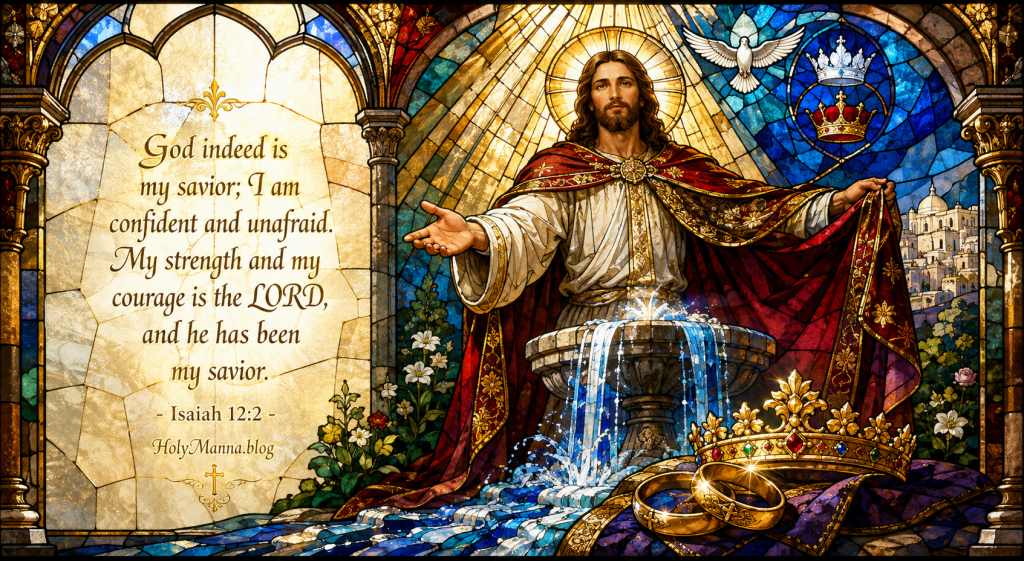
God indeed is my savior;
I am confident and unafraid.
My strength and my courage is the LORD,
and he has been my savior.
With joy you will draw water
at the fountain of salvation.
R. You have turned from your anger.
Give thanks to the LORD, acclaim his name;
among the nations make known his deeds,
proclaim how exalted is his name.
R. You have turned from your anger.
Sing praise to the LORD for his glorious achievement;
let this be known throughout all the earth.
Shout with exultation, O city of Zion,
for great in your midst
is the Holy One of Israel!
R. You have turned from your anger.
Detailed Exegesis
Verse 1: “You have turned from your anger.” The refrain, drawn from this verse, is the hinge of the whole day. Divine anger in Scripture is not a mood swing but the settled opposition of holiness to sin, and its turning is pure gift, accomplished finally on the Cross.
Verse 2: “God indeed is my savior; I am confident and unafraid. My strength and my courage is the LORD, and he has been my savior.” The redeemed soul does not say God gave salvation but that God is salvation. Confidence here rests not on circumstances but on a Person, which is why fear loses its grip.
Verse 3: “With joy you will draw water at the fountain of salvation.” This verse was sung during the joyful water-drawing rite of the Feast of Tabernacles, and it was during that very feast that Jesus cried out, “Let anyone who thirsts come to me and drink” (John 7:37). The fountain of salvation has a name and a Sacred Heart.
Verse 4: “Give thanks to the LORD, acclaim his name; among the nations make known his deeds, proclaim how exalted is his name.” Gratitude naturally becomes evangelization, for mercy received in private demands proclamation in public.
Verse 5: “Sing praise to the LORD for his glorious achievement; let this be known throughout all the earth.” Salvation is called God’s achievement, not Israel’s. Praise keeps the story straight about who did the saving.
Verse 6: “Shout with exultation, O city of Zion, for great in your midst is the Holy One of Israel!” The hymn ends with presence. The Holy One dwells in the midst of His city, a promise Catholics see fulfilled most concretely in the tabernacle of every Catholic church.
Teachings
The Church has always heard baptismal waters flowing through Isaiah’s fountain. The Catechism teaches, “The symbolism of water signifies the Holy Spirit’s action in Baptism, since after the invocation of the Holy Spirit it becomes the efficacious sacramental sign of new birth” (CCC 694). The bathing of the bride in Ezekiel 16:9 and the joyful drawing of water in Isaiah 12:3 converge at the font, where every Christian’s covenant with God begins. Saint Maximilian Kolbe lived this verse in the most unlikely place imaginable, for survivors of Auschwitz recounted that prayer and hymns rose from the starvation bunker where despair should have reigned, proof that this song can be sung anywhere.
Reflection
Joy is not a personality type; it is the fruit of remembered mercy. If your prayer has grown flat, the remedy may be recollection: name aloud, in prayer, the specific moments God has saved you, forgiven you, or carried you, and thank Him for each. Make a habit of arriving at Mass a few minutes early to sit before the tabernacle, where the Holy One is truly in your midst. When was the last time you thanked God, specifically and by name, for a mercy He has shown you? What would it look like to make known his deeds among the people in your daily life this week?
Holy Gospel — Matthew 19:3-12
Back to the Beginning: Jesus Restores What Hard Hearts Had Broken
By the first century, rabbinic schools were locked in a famous dispute over Deuteronomy 24:1, which permitted a husband to write a bill of divorce. The stricter school of Shammai allowed divorce only for serious immorality, while the school of Hillel permitted it for nearly any cause, even a badly cooked meal according to later rabbinic tradition. The Pharisees’ question is a trap, since whichever school Jesus endorses will alienate the other, and lurking behind it stands John the Baptist, beheaded for condemning Herod’s unlawful union. Jesus refuses the terms of the debate, leaping over Moses back to Genesis to reveal that marriage is not a human contract to be regulated but a divine work to be revered. Then, in a turn that stuns even His disciples, He unveils a second vocation, celibacy embraced for the Kingdom, the very path Saint Maximilian Kolbe walked all the way to Auschwitz.
Matthew 19:3-12
Some Pharisees approached Jesus, and tested him, saying,
“Is it lawful for a man to divorce his wife for any cause whatever?”
He said in reply, “Have you not read that from the beginning
the Creator made them male and female and said,
For this reason a man shall leave his father and mother
and be joined to his wife, and the two shall become one flesh?
So they are no longer two, but one flesh.
Therefore, what God has joined together, man must not separate.”
They said to him, “Then why did Moses command
that the man give the woman a bill of divorce and dismiss her?”
He said to them, “Because of the hardness of your hearts
Moses allowed you to divorce your wives,
but from the beginning it was not so.
I say to you, whoever divorces his wife
(unless the marriage is unlawful)
and marries another commits adultery.”
His disciples said to him,
“If that is the case of a man with his wife,
it is better not to marry.”
He answered, “Not all can accept this word,
but only those to whom that is granted.
Some are incapable of marriage because they were born so;
some, because they were made so by others;
some, because they have renounced marriage
for the sake of the Kingdom of heaven.
Whoever can accept this ought to accept it.”
Detailed Exegesis
Verse 3: “Some Pharisees approached Jesus, and tested him, saying, ‘Is it lawful for a man to divorce his wife for any cause whatever?’” The phrase for any cause whatever signals the permissive Hillel position, treating marriage as a legal problem where Jesus will treat it as a creation mystery.
Verse 4: “He said in reply, ‘Have you not read that from the beginning the Creator made them male and female’” Jesus answers Scripture with earlier Scripture, citing Genesis 1:27. The complementarity of male and female is not cultural scaffolding but the Creator’s deliberate design, woven into humanity from the beginning.
Verse 5: “‘and said, For this reason a man shall leave his father and mother and be joined to his wife, and the two shall become one flesh?’” Quoting Genesis 2:24, Jesus attributes these words to the Creator Himself. One flesh describes a union so real that it creates something new, a communion of persons mirroring God’s own faithful love.
Verse 6: “So they are no longer two, but one flesh. Therefore, what God has joined together, man must not separate.” Here is the thunderclap: God Himself joins every true marriage, and no human authority, not Moses, not a rabbi, not a modern court, has power over a bond God has tied.
Verse 7: “They said to him, ‘Then why did Moses command that the man give the woman a bill of divorce and dismiss her?’” The Pharisees appeal to Moses as if permission were command. They mistake a concession for an ideal, a temptation every generation repeats when it baptizes its compromises.
Verse 8: “He said to them, ‘Because of the hardness of your hearts Moses allowed you to divorce your wives, but from the beginning it was not so.’” Jesus diagnoses the Mosaic permission as damage control for sin-hardened hearts. His mission is precisely to heal that hardness, restoring the beginning rather than accommodating the fall.
Verse 9: “‘I say to you, whoever divorces his wife (unless the marriage is unlawful) and marries another commits adultery.’” The clause unless the marriage is unlawful translates the Greek word porneia, and the Church has always understood it to refer to unions that were never valid marriages in the first place. This is the scriptural root of the annulment process, which does not dissolve a marriage but declares that a true sacramental bond never existed.
Verse 10: “His disciples said to him, ‘If that is the case of a man with his wife, it is better not to marry.’” The disciples’ shock is honest and almost funny, reasoning that if marriage really is forever, the safer bet is bachelorhood, and their alarm proves how radical this restoration truly is.
Verse 11: “He answered, ‘Not all can accept this word, but only those to whom that is granted.’” Jesus does not soften the teaching; He points to grace. Both lifelong marriage and consecrated celibacy exceed unaided human strength, and both are possible only as gifts granted from above.
Verse 12: “‘Some are incapable of marriage because they were born so; some, because they were made so by others; some, because they have renounced marriage for the sake of the Kingdom of heaven. Whoever can accept this ought to accept it.’” With these words Jesus establishes celibacy for the Kingdom as a positive vocation, not a lack. The celibate renounces one covenant love to witness to the greater one, God’s own marriage with His people, which is every priest’s and religious’s true wedding.
Teachings
The Catechism gathers this Gospel into two luminous affirmations. On marriage it teaches, “By coming to restore the original order of creation disturbed by sin, he himself gives the strength and grace to live marriage in the new dimension of the Reign of God” (CCC 1615). Christ does not merely command indissolubility; He supplies the grace to live it, chiefly through the Sacrament of Matrimony. On the two vocations together it teaches, “Both the sacrament of Matrimony and virginity for the Kingdom of God come from the Lord himself. It is he who gives them meaning and grants them the grace which is indispensable for living them out in conformity with his will” (CCC 1620). Saint Maximilian Kolbe united both truths in a single act. In late July 1941, after a prisoner escaped Auschwitz, the commandant condemned ten men to die in the starvation bunker. When Franciszek Gajowniczek cried out for his wife and children, this celibate Franciscan stepped forward, and eyewitness accounts record his words: “I am a Catholic priest. I would like to take his place, because he has a wife and children.” Prisoner 16670 died on August 14, 1941, the vigil of the Assumption, and at his canonization on October 10, 1982, Saint John Paul II preached that Kolbe fulfilled in an absolutely literal manner the words of Christ, “Greater love has no man than this, that a man lay down his life for his friends” (John 15:13). A man who renounced marriage for the Kingdom gave his life so that one marriage could endure.
Reflection
Whatever your state in life, this Gospel asks for covenant-shaped love. If you are married, guard the bond: schedule unhurried time with your spouse this week, pray together even briefly, and refuse the quiet exits of resentment and comparison. If you are single, discerning, or consecrated, ask honestly whether God might be inviting you to a total gift of self, and support the priests and religious who have already made it. If you carry wounds from divorce, in your own life or your family’s, bring them to Jesus without fear; He restores hard hearts, and the Church’s annulment process exists as a ministry of truth and healing, not condemnation. What has God joined together in your life that you are being called to protect rather than renegotiate? Whose family could be strengthened this week by your sacrifice, the way Gajowniczek’s family was saved by Kolbe’s?
Love That Stays
Trace the thread one more time and watch it glow. A newborn abandoned in a field becomes a queen because God passed by and said live. A bride who shattered her vows hears not a decree of divorce but the promise of an everlasting covenant and a pardon that leaves her speechless. The forgiven learn to sing, drawing water with joy from the fountain of salvation. Then the Bridegroom Himself walks into history, and when religious experts try to trap Him in loopholes, He calmly restores love to its original, unbreakable design and blesses those who give up marriage itself to serve the Kingdom. Finally, in the darkest place the twentieth century ever built, a Polish priest steps out of line and hands his life to a stranger so that a wife will not be widowed and children will not be orphaned. Every movement of this day says the same thing: real love keeps its word, and God’s love kept its word all the way to the Cross. That love is not locked in the past. It waits in the confessional, where the yet of Ezekiel 16:60 is spoken over every penitent. It flows at the font and rests in the tabernacle, the Holy One truly in the midst of His people. It strengthens every marriage that chooses fidelity over convenience and every consecrated soul that chooses the Kingdom over comfort. Take one step today: go back to God with whatever covenant you have strained, receive His pardon, and then love someone at cost to yourself. Saint Maximilian Kolbe, martyr of charity, pray for a generation learning to love like that.
Engage With Us!
Your reflections matter here, and the comments below are open precisely for them. Share what struck you in today’s readings, how God has kept covenant with you, or how Saint Maximilian Kolbe’s witness challenges you, because your story may be the encouragement another reader needs today. To help you begin, prayerfully consider these questions:
- In Ezekiel 16:1-15, 60, 63, God recalls rescuing, adorning, and finally pardoning His unfaithful bride. Which part of that story most closely mirrors your own history with God, and how does His promise of an everlasting covenant change the way you view your past failures?
- In Isaiah 12:1-6, the redeemed sing with joy and draw water from the fountain of salvation. What specific mercy in your life deserves a song of thanksgiving, and how can you make known his deeds to someone this week?
- In Matthew 19:3-12, Jesus restores marriage to its original permanence and blesses celibacy for the sake of the Kingdom. How is God calling you, in your particular vocation, to love with a fidelity that does not renegotiate when love becomes costly?
- Taken together, these readings reveal a covenant love that keeps its word, sealed by Saint Maximilian Kolbe’s sacrifice at Auschwitz. Where is God inviting you to lay down your life, in ways large or small, so that someone else may live and flourish?
Living a life of faith means letting God’s fidelity become the pattern of your own, one promise kept at a time. Go into this day resolved to do everything with the love and mercy Jesus taught, trusting that the Bridegroom who never walks away is walking with you.
Sacred Heart of Jesus, we trust in You!
Immaculate Heart of Mary, pray for us!
Saint Michael the Archangel, defend us in battle!
Follow us on YouTube, TikTok, Instagram and Facebook for more insights and reflections on living a faith-filled life.


Leave a comment