Wednesday of the Sixth Week of Easter – Lectionary: 293
The God Who Is Closer Than We Think
Every human heart is searching for someone, even when it does not yet know His name.
Today’s readings gather us around one beautiful truth: God is not distant, silent, or unreachable. He is the Creator who gives “life and breath and everything” Acts 17:25. He is the Lord whom all creation is summoned to praise in Psalm 148. He is the Father revealed by the Son, and the Son made known through the Spirit of Truth in John 16:12-15. From Athens to the heavens, from pagan altars to the Upper Room, the Church hears the same message: the God whom humanity seeks has come near in Jesus Christ, and the Holy Spirit continues to guide His people into the fullness of truth.
Saint Paul’s speech at the Areopagus gives the day its dramatic setting. Athens was a city of learning, culture, philosophy, and religious curiosity. Its people had altars, shrines, poets, and questions. Yet among all their searching stood an altar marked “To an Unknown God” Acts 17:23. Paul does not sneer at their longing. He recognizes the ache beneath it. He sees that the human soul was made for worship, but worship must be purified by truth. The Unknown God is not an idea, a statue, or a force of nature. He is the living Lord, the Creator of heaven and earth, who raised Jesus from the dead and now calls all people to repentance.
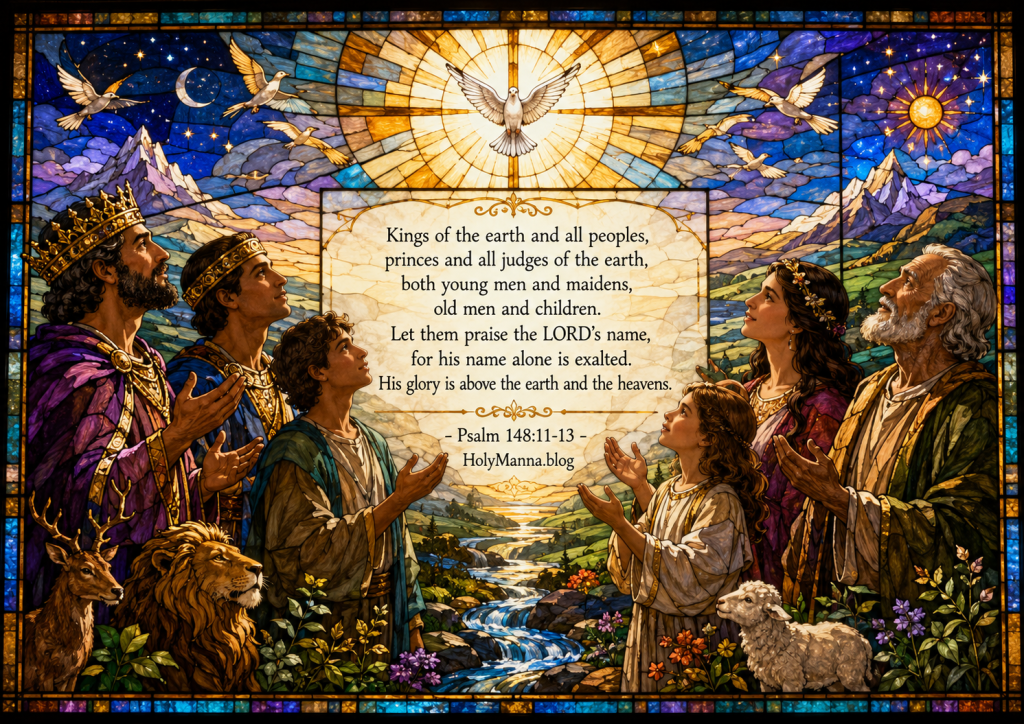
The psalm widens this vision until all creation becomes a cathedral. Angels, rulers, young men, women, the old, and the young are all summoned to praise the Lord’s name. What Paul proclaims to the Athenians, the psalm sings to the universe: everything exists because of God, and everything finds its purpose when it gives Him glory.
Then, in the Gospel, Jesus reveals how His Church will continue to know and proclaim this truth. The disciples cannot yet bear everything, but the Spirit of Truth will guide them. This is not a vague spiritual feeling. It is the living work of the Holy Spirit in the apostolic Church, guarding her in truth, deepening her understanding, and glorifying Christ.
Today’s readings invite the modern soul to look honestly at its own altars. Where is the heart still searching without naming God? Where has a created thing quietly taken the place of the Creator? Where is the Holy Spirit gently leading the soul from curiosity into conversion?
God is not far away. He is nearer than the world imagines, and He has made Himself known in Christ.
First Reading – Acts 17:15, 22-18:1
The Unknown God Who Has Made Himself Known
Saint Paul arrives in Athens alone, waiting for Silas and Timothy. It is one of the most dramatic scenes in The Acts of the Apostles. Athens was no longer the political powerhouse it had once been, but it remained a symbol of philosophy, learning, poetry, public debate, and religious curiosity. Its streets were filled with temples, statues, altars, and shrines. The Athenians were not indifferent to the divine. They were searching, but their search had become tangled in idols.
Paul does not begin by ridiculing them. He studies the city. He notices their longing. Then he finds the opening: an altar inscribed “To an Unknown God.” Acts 17:23 That altar becomes his bridge. Paul proclaims that the God they unknowingly seek is not one more deity in their religious marketplace. He is the Creator of heaven and earth, the giver of life, the Lord of history, and the Father who calls all people to repentance through the risen Christ.
This reading fits beautifully into today’s central theme: God is not far away, and He has not left the human heart without a path to truth. In Psalm 148, all creation is summoned to praise Him. In John 16:12-15, Jesus promises that the Spirit of Truth will guide the Church into all truth. Here in Athens, Paul shows what that looks like in missionary life. The Church enters a confused world, recognizes the sincere search for God, purifies it, and leads it to Jesus Christ.
Acts 17:15, 22—18:1 – New American Bible (Revised Edition)
15 After Paul’s escorts had taken him to Athens, they came away with instructions for Silas and Timothy to join him as soon as possible.
Paul’s Speech at the Areopagus. 22 Then Paul stood up at the Areopagus and said:[a]
“You Athenians, I see that in every respect you are very religious. 23 For as I walked around looking carefully at your shrines, I even discovered an altar inscribed, ‘To an Unknown God.’[b] What therefore you unknowingly worship, I proclaim to you. 24 The God who made the world and all that is in it, the Lord of heaven and earth, does not dwell in sanctuaries made by human hands, 25 nor is he served by human hands because he needs anything. Rather it is he who gives to everyone life and breath and everything. 26 He made from one[c] the whole human race to dwell on the entire surface of the earth, and he fixed the ordered seasons and the boundaries of their regions, 27 so that people might seek God, even perhaps grope for him and find him, though indeed he is not far from any one of us. 28 For ‘In him we live and move and have our being,’[d] as even some of your poets have said, ‘For we too are his offspring.’ 29 Since therefore we are the offspring of God, we ought not to think that the divinity is like an image fashioned from gold, silver, or stone by human art and imagination. 30 God has overlooked the times of ignorance, but now he demands that all people everywhere repent 31 because he has established a day on which he will ‘judge the world with justice’ through a man he has appointed, and he has provided confirmation for all by raising him from the dead.”
32 When they heard about resurrection of the dead, some began to scoff, but others said, “We should like to hear you on this some other time.” 33 And so Paul left them. 34 But some did join him, and became believers. Among them were Dionysius, a member of the Court of the Areopagus, a woman named Damaris, and others with them.
Paul in Corinth. 18:1 After this he left Athens and went to Corinth.
Detailed Exegesis
Verse 15 – “After Paul’s escorts had taken him to Athens, they came away with instructions for Silas and Timothy to join him as soon as possible.”
Paul arrives in Athens after opposition in Macedonia forced him onward. He is alone, but he is not idle. Even while waiting for his companions, he studies the city and prepares to preach. This reminds the Church that mission does not always begin when circumstances are ideal. Sometimes the Gospel is proclaimed in loneliness, uncertainty, and waiting.
Verse 22 – “Then Paul stood up at the Areopagus and said: ‘You Athenians, I see that in every respect you are very religious.’”
The Areopagus was associated with civic authority, public discussion, and intellectual seriousness. Paul is standing before educated pagans who value argument and philosophical speech. His opening is respectful but not flattering in a shallow way. He sees their religious instinct, and he begins there. Catholic evangelization does not require contempt for the people being evangelized. It requires truth spoken with charity.
Verse 23 – “For as I walked around looking carefully at your shrines, I even discovered an altar inscribed, ‘To an Unknown God.’ What therefore you unknowingly worship, I proclaim to you.”
Paul has paid attention. He has walked, observed, and understood something about their culture. The altar “To an Unknown God” reveals both humility and confusion. The Athenians sense that there may be a divine reality beyond what they have named. Paul takes that honest ignorance and turns it into a doorway for revelation. He does not say their ignorance is enough. He says the unknown God must now be proclaimed.
Verse 24 – “The God who made the world and all that is in it, the Lord of heaven and earth, does not dwell in sanctuaries made by human hands,”
Paul begins with creation. God is not a local deity trapped in a temple or dependent on a shrine. He is the Maker of all things. This is a direct challenge to pagan idolatry, but it is also a foundation for Catholic theology. Because God made everything, everything belongs to Him, and creation can point beyond itself to Him.
Verse 25 – “nor is he served by human hands because he needs anything. Rather it is he who gives to everyone life and breath and everything.”
God does not need human beings to complete Him. He is not hungry for sacrifices as if He were lacking. Instead, every breath is already His gift. This flips pagan worship upside down. True worship is not about meeting God’s needs. It is about receiving everything from Him and returning love, praise, and obedience.
Verse 26 – “He made from one the whole human race to dwell on the entire surface of the earth, and he fixed the ordered seasons and the boundaries of their regions,”
Paul now speaks about the unity of the human race. All peoples come from one source and live under the providence of one God. This would have challenged Greek cultural pride and tribal divisions. In Catholic teaching, every person has equal dignity because every person is created by God and called to communion with Him.
Verse 27 – “so that people might seek God, even perhaps grope for him and find him, though indeed he is not far from any one of us.”
This is one of the most tender lines in the reading. Humanity is pictured as groping in the dark, searching for God with incomplete knowledge. Yet God is not cruelly distant. He is near. The tragedy is not that God is absent, but that sin, ignorance, and idolatry cloud the human heart.
Verse 28 – “For ‘In him we live and move and have our being,’ as even some of your poets have said, ‘For we too are his offspring.’”
Paul quotes Greek poets to build a bridge. He uses what is true in their culture and directs it toward the fullness of revelation. This is a very Catholic instinct. The Church can recognize seeds of truth in philosophy, art, poetry, and culture, but those seeds must be brought to Christ, who is Truth Himself.
Verse 29 – “Since therefore we are the offspring of God, we ought not to think that the divinity is like an image fashioned from gold, silver, or stone by human art and imagination.”
If human beings are God’s offspring, then God cannot be reduced to a statue made by human hands. Paul exposes the irrationality of idolatry. A creature cannot manufacture the Creator. Gold, silver, and stone may be beautiful, but they become dangerous when the human heart treats them as divine.
Verse 30 – “God has overlooked the times of ignorance, but now he demands that all people everywhere repent”
Paul’s bridge now becomes a call to conversion. God has been patient with human ignorance, but the coming of Christ changes everything. The Gospel does not merely inform. It summons. To know the truth is to be responsible before the truth.
Verse 31 – “because he has established a day on which he will ‘judge the world with justice’ through a man he has appointed, and he has provided confirmation for all by raising him from the dead.”
Paul proclaims judgment and Resurrection. The appointed man is Jesus Christ, risen from the dead. This is the heart of Christian preaching. God’s justice is not an abstraction. It has been revealed through the crucified and risen Lord, who will judge the living and the dead.
Verse 32 – “When they heard about resurrection of the dead, some began to scoff, but others said, ‘We should like to hear you on this some other time.’”
The Resurrection divides the crowd. Some mock it. Others delay. Both reactions still exist today. Many people will tolerate religious language, moral advice, spirituality, and even talk of God, but the bodily Resurrection of Jesus demands a decision. It is either true or it is not. There is no comfortable middle ground forever.
Verse 33 – “And so Paul left them.”
Paul does not force belief. He bears witness and then leaves the response to grace. This is an important lesson for Catholic evangelization. The missionary must speak clearly, but conversion belongs to God. Faith cannot be manipulated into existence.
Verse 34 – “But some did join him, and became believers. Among them were Dionysius, a member of the Court of the Areopagus, a woman named Damaris, and others with them.”
The results are not massive by worldly standards, but they are real. Dionysius, Damaris, and others believe. The Gospel takes root in particular souls. The Church often grows this way, not always through dramatic crowds, but through the quiet conversion of people whose names are known to God.
Verse 1 – “After this he left Athens and went to Corinth.”
Paul continues the mission. Athens was not the end. Corinth will become another major field of evangelization, with its own challenges, sins, and graces. The Apostle keeps moving because the Gospel is meant for every city, every culture, and every wounded human heart.
Teachings: Reason, Revelation, and the Courage to Preach Christ
Paul’s speech at the Areopagus is one of the clearest biblical examples of how the Church speaks to a culture that is religious, intelligent, and confused at the same time. He begins with what reason can know: creation points to a Creator. Human beings long for God. The world is ordered by divine providence. Yet Paul also knows that reason alone cannot bring Athens to salvation. The Athenians need the revelation of Jesus Christ, especially His Resurrection.
The Catechism of the Catholic Church teaches this beautifully in CCC 27: “The desire for God is written in the human heart, because man is created by God and for God.” This is the hidden ache beneath the altar to the Unknown God. The Athenians are searching because every human heart is made for the Lord.
The Church also teaches that human reason can truly know God from creation. CCC 36 says: “Our holy mother, the Church, holds and teaches that God, the first principle and last end of all things, can be known with certainty.” Paul stands in Athens and argues from creation because creation is not meaningless. The world is a sign. The human mind can look at beauty, order, life, and existence itself and begin to understand that there must be a Creator.
Yet Paul also confronts idolatry. CCC 2113 teaches: “Idolatry not only refers to false pagan worship. It remains a constant temptation to faith.” That line matters because idolatry is not only an ancient problem involving statues of gold, silver, and stone. Modern idols can be careers, pleasure, politics, approval, money, technology, control, or even the self. The human heart was made for worship, and when it does not worship God, it will worship something smaller.
Saint John Chrysostom admired Paul’s pastoral wisdom in Athens. He noticed that Paul begins gently, calling the Athenians religious, and then slowly leads them away from false worship toward the true God. That is not compromise. It is charity with a backbone. The Apostle does not humiliate his listeners. He respects their search, then corrects their error.
Saint John Paul II also saw the Areopagus as a model for the relationship between faith and reason. Paul does not fear philosophy. He enters the place of public thought and proclaims Christ there. The Catholic tradition has always honored reason when reason remains humble before truth. Faith does not destroy reason. Faith heals it, elevates it, and leads it beyond what it could discover alone.
The most important moment, however, is Paul’s proclamation of the Resurrection. CCC 651 teaches: “The Resurrection above all constitutes the confirmation of all Christ’s works and teachings.” This is why Paul cannot stop at a generic Creator. He must preach Jesus risen from the dead. Without the Resurrection, the speech would remain religious philosophy. With the Resurrection, it becomes apostolic proclamation.
The reading also teaches the Church how to live in a pluralistic world. Paul neither hides the Gospel nor screams at the culture. He observes, listens, reasons, quotes their poets, exposes idolatry, calls for repentance, and proclaims Christ. That remains the Catholic way. Truth and charity are not enemies. They belong together.
Reflection: Finding the True God Behind Our False Altars
There is something painfully familiar about Athens. It was full of beauty, intelligence, religion, and distraction. It had shrines everywhere, but it still did not know the living God. That sounds a lot like the modern world. People may not bow before marble statues, but they still build altars. Some altars are glowing screens. Some are bank accounts. Some are bodies. Some are political identities. Some are reputations carefully edited for public approval.
Paul’s message is not only for ancient philosophers. It is for every heart that has ever chased a created thing hoping it would finally satisfy a divine hunger.
The first step is to name the altar. What receives the best energy, attention, money, imagination, and affection in daily life? That question can be uncomfortable, but it is spiritually necessary. Whatever receives the heart’s worship begins to shape the heart.
The second step is to recover wonder. Paul reminds the Athenians that God gives “life and breath and everything” Acts 17:25. Gratitude is one of the simplest ways to break the spell of idolatry. A person who receives life as gift becomes less likely to treat creation as a god.
The third step is repentance. Paul does not leave Athens with a vague spiritual affirmation. He says God “demands that all people everywhere repent” Acts 17:30. Repentance is not emotional self-hatred. It is the honest turning of the soul back toward the Father. It means bringing false worship into the light and asking Christ to reorder love.
The fourth step is courage. Some people scoff when Paul preaches the Resurrection. Others delay. Only some believe. Catholics should not be surprised when the Gospel receives mixed reactions. The task is not to control the outcome. The task is to witness faithfully.
This reading invites a very practical examination. Where is the heart still calling God “unknown” because it has not surrendered fully to Christ? Which created thing has quietly become too important? Where is the Holy Spirit asking for repentance instead of delay? Who in daily life may be waiting for a patient, clear, and charitable witness to the risen Jesus?
God is not far from any one of us. That is the mercy hidden at the center of Paul’s sermon. The Lord is closer than the idols we chase, truer than the ideas we invent, and more satisfying than the created things we try to possess. The Unknown God has made Himself known, and His name is Jesus Christ.
Responsorial Psalm – Psalm 148:1-2, 11-14
When All Creation Becomes a Choir
After Saint Paul stands in Athens and proclaims the God who made “the world and all that is in it” Acts 17:24, the Responsorial Psalm answers with a universe full of praise. Psalm 148 is one of the great “hallelujah” psalms, a hymn that summons heaven and earth, angels and rulers, young and old, to bless the name of the Lord.
This psalm is not just beautiful poetry. It is a Catholic vision of reality. Creation is not random. Humanity is not accidental. Heaven and earth are not spiritually empty. Everything that exists has received its being from God, and everything finds its purpose when it gives glory back to Him.
That makes Psalm 148 a perfect companion to today’s theme. In Acts 17, Paul tells the Athenians that God is not an idol made by human hands. In John 16, Jesus promises that the Spirit of Truth will guide the Church into all truth. Here, the psalmist shows what happens when creation is seen rightly. The world stops being a collection of things to possess and becomes a cathedral of praise.
Psalm 148:1-2, 11-14 – New American Bible (Revised Edition)
All Creation Summoned to Praise
1 Hallelujah!
Praise the Lord from the heavens;
praise him in the heights.
2 Praise him, all you his angels;
give praise, all you his hosts.11 Kings of the earth and all peoples,
princes and all who govern on earth;
12 Young men and women too,
old and young alike.
13 Let them all praise the Lord’s name,
for his name alone is exalted,
His majesty above earth and heaven.
14 He has lifted high the horn of his people;
to the praise of all his faithful,
the Israelites, the people near to him.
Hallelujah!
Detailed Exegesis
Verse 1 – “Hallelujah! Praise the Lord from the heavens; praise him in the heights.”
The psalm begins with the word “Hallelujah”, which means “Praise the Lord.” The first movement of praise begins in heaven. Before earthly kings, nations, families, and ordinary people are summoned, the highest places are called to worship. This reminds readers that praise does not begin with human effort. Heaven is already worshiping. The Church’s prayer on earth joins something much bigger than itself.
Verse 2 – “Praise him, all you his angels; give praise, all you his hosts.”
The angels and heavenly hosts are called into the song. In Catholic teaching, angels are real spiritual beings who worship God and serve His saving plan. Their praise reminds the faithful that the visible world is not the whole story. Every Mass, every prayer, every whispered “Glory be” participates in a worship that includes the angels before the throne of God.
Verse 11 – “Kings of the earth and all peoples, princes and all who govern on earth;”
The psalm now descends from heaven to the earth. Kings, peoples, princes, and rulers are all summoned to praise. No position of power is exempt from worship. Political authority, social influence, wealth, and leadership are not ultimate. Every ruler stands under the Lord. This verse quietly corrects the modern temptation to treat politics as salvation. Earthly power is good only when it remembers that God alone is God.
Verse 12 – “Young men and women too, old and young alike.”
The invitation becomes personal and universal. Young men, women, the old, and the young are all included. Praise is not reserved for monks, priests, scholars, or the spiritually advanced. It belongs to every age and vocation. The young praise God with their energy and hope. The old praise Him with wisdom and endurance. Men and women together reveal the beauty of humanity made for communion with God.
Verse 13 – “Let them all praise the Lord’s name, for his name alone is exalted, His majesty above earth and heaven.”
The reason for praise is clear: the Lord’s name alone is exalted. This verse strikes directly against idolatry. No creature, institution, personality, pleasure, possession, or achievement deserves the worship that belongs to God. His majesty is above earth and heaven. Everything else is gift. Only the Lord is supreme.
Verse 14 – “He has lifted high the horn of his people; to the praise of all his faithful, the Israelites, the people near to him. Hallelujah!”
The “horn” is a biblical image of strength, dignity, and victory. God has lifted up His people, not because they are powerful on their own, but because He has drawn near to them. Israel is called “the people near to him”, which points to covenant intimacy. For Catholics, this finds its fullness in Christ, who brings His people near through His Blood, His Church, and the sacraments. The psalm ends as it began, with “Hallelujah!” Praise is both the beginning and the destination.
Teachings: Creation Exists for the Glory of God
Psalm 148 teaches that creation is made for praise. The heavens, angels, rulers, nations, families, young people, elders, and all the faithful are gathered into one great song. This matters because Catholic faith does not see the material world as spiritually useless. Creation is good, ordered, meaningful, and capable of pointing the heart back to the Creator.
The Catechism of the Catholic Church teaches in CCC 293: “Scripture and Tradition never cease to teach and celebrate this fundamental truth: ‘The world was made for the glory of God.’” This is the heartbeat of Psalm 148. The world was not made for human ego, endless consumption, or restless distraction. It was made for God’s glory, and the human person becomes most alive when life is ordered toward that glory.
The Church also teaches in CCC 299: “Because God creates through wisdom, his creation is ordered: ‘You have arranged all things by measure and number and weight.’ The universe, created in and by the eternal Word, the ‘image of the invisible God,’ is destined for and addressed to man, himself created in the ‘image of God’ and called to a personal relationship with God.” This helps explain why the psalmist can summon creation to praise. The world is not chaos. It bears the mark of divine wisdom.
This psalm also fits beautifully with Saint Paul’s preaching in Athens. Paul tells the Athenians that God “does not dwell in sanctuaries made by human hands” Acts 17:24. The psalm replies by turning the whole universe into a sanctuary of praise. The heavens praise Him. The angels praise Him. The rulers of the earth must praise Him. The young and old must praise Him. No idol can compete with the God whose majesty is “above earth and heaven” Psalm 148:13.
Saint Augustine often taught that creation becomes praise when the human heart recognizes the Creator behind it. The sun, stars, seas, mountains, animals, and seasons do not praise God with human speech, but the faithful can give voice to their praise by receiving creation as gift. This is why gratitude is so deeply Catholic. Gratitude turns the world back into a sign of God’s love.
There is also a liturgical dimension here. At Mass, the Church does what Psalm 148 describes. Heaven and earth are joined in worship. The priest prays the Preface, and the faithful join the angels and saints in the “Holy, Holy, Holy”. The worship of the Church is never merely local or private. It is cosmic. It is heavenly. It is the praise of creation gathered into Christ and offered to the Father in the Holy Spirit.
Reflection: Learning to Hear the Hallelujah Again
Modern life can make the world feel flat. The sky becomes weather. Food becomes fuel. Work becomes stress. Beauty becomes content. People become profiles. Creation becomes something to consume, manage, edit, and scroll past.
Psalm 148 wakes the heart back up.
It tells the soul that everything is charged with meaning because everything comes from God. The morning sky is not just scenery. It is an invitation. A child’s laughter is not just noise. It is a gift. The wisdom of an elder is not outdated. It is part of the song. Even authority, youth, aging, family life, and ordinary daily work are meant to become praise.
A simple way to live this psalm is to begin the day with praise before reaching for a phone. Another way is to name three gifts from God before complaining about three problems. Another is to pause before meals, not rushing through grace, but really remembering that life, breath, food, family, and time are all received from the Lord.
This psalm also challenges the false altars of daily life. If God’s name alone is exalted, then nothing else gets to become absolute. Not success. Not politics. Not pleasure. Not anxiety. Not reputation. Not control. Every created thing must return to its proper place beneath the majesty of God.
What part of creation helps the heart remember God most easily? Where has daily life become too rushed to notice the Lord’s gifts? What created thing has become too exalted in the heart? How can ordinary responsibilities become praise today?
The psalm ends with “Hallelujah!” because praise is where the soul is meant to land. Saint Paul tells Athens that God is not far from any one of us. Psalm 148 shows that He has left reminders everywhere. Heaven is praising. The angels are praising. Creation is praising. The Church is praising. The only question is whether the human heart will join the song.
Holy Gospel – John 16:12-15
The Spirit Who Leads the Church into the Fullness of Christ
The Gospel brings us back to the Upper Room, where Jesus speaks to His Apostles on the night before His Passion. The air is heavy with love, confusion, sorrow, and mystery. The disciples have followed Him, listened to Him, watched Him heal the sick, raise the dead, forgive sinners, and confront the powers of darkness. Yet they still do not fully understand what is about to happen. The Cross is near. The Resurrection is coming. Pentecost is on the horizon. The Church is being prepared, but the Apostles are not yet strong enough to carry the full weight of what Jesus wants to reveal.
So Jesus gives them a promise. He will not abandon them to confusion. The Father and the Son will send the Holy Spirit, the Spirit of Truth, who will guide the apostolic Church into all truth.
This Gospel completes today’s theme beautifully. In Acts 17, Saint Paul tells the Athenians that the God they unknowingly seek has made Himself known. In Psalm 148, heaven and earth are summoned to praise the Lord whose majesty is above all creation. Now, in John 16:12-15, Jesus reveals how the Church will continue to know, guard, and proclaim this truth. The Holy Spirit does not invent a new message. He glorifies Christ, leads the Church deeper into Christ, and helps believers receive what they could not bear all at once.
John 16:12-15 – New American Bible (Revised Edition)
12 “I have much more to tell you, but you cannot bear it now. 13 But when he comes, the Spirit of truth, he will guide you to all truth. He will not speak on his own, but he will speak what he hears, and will declare to you the things that are coming. 14 He will glorify me, because he will take from what is mine and declare it to you. 15 Everything that the Father has is mine; for this reason I told you that he will take from what is mine and declare it to you.
Detailed Exegesis
Verse 12 – “I have much more to tell you, but you cannot bear it now.”
Jesus speaks with tenderness and realism. He does not shame the Apostles for their weakness. He knows their limits. They cannot yet bear the full meaning of the Cross, the Resurrection, the mission to the nations, the suffering of the Church, and the mystery of the Trinity. This verse reveals the patience of God. The Lord teaches according to the soul’s capacity, not because truth changes, but because human hearts often need time, grace, and purification before they can receive it.
This also helps Catholics understand the development of doctrine. The Church does not create new truth. Rather, under the guidance of the Holy Spirit, she grows in her understanding of the one revelation given fully in Christ. Like the Apostles, the Church is led deeper into what Jesus has already entrusted to her.
Verse 13 – “But when he comes, the Spirit of truth, he will guide you to all truth. He will not speak on his own, but he will speak what he hears, and will declare to you the things that are coming.”
Jesus identifies the Holy Spirit as the “Spirit of truth.” This is not a vague spiritual force, a passing emotion, or private inspiration detached from the Church. The Spirit is a divine Person, sent to guide the Apostles and the Church into the fullness of truth.
When Jesus says the Spirit “will not speak on his own,” He is revealing the unity of the Trinity. The Spirit does not compete with the Son. He does not contradict the Father. He speaks what He hears because the divine Persons live in perfect communion. The Holy Spirit guides the Church by keeping her rooted in Christ, not by leading her away from Him.
The phrase “the things that are coming” points to the unfolding mystery of Christ’s Passion, Resurrection, Ascension, Pentecost, and the Church’s mission in history. The Apostles will understand these things more fully after the Resurrection and through the gift of the Spirit.
Verse 14 – “He will glorify me, because he will take from what is mine and declare it to you.”
The Holy Spirit glorifies Jesus. This is one of the clearest ways to discern the work of the Spirit. The Spirit does not make the soul self-absorbed. He does not lead the Church into confusion. He reveals Christ, magnifies Christ, and draws hearts into communion with Christ.
The Spirit takes what belongs to Jesus and declares it to the Apostles. This means the Church’s teaching is not built on human cleverness or cultural preference. It is received. It is handed on. It is guarded. It is proclaimed. The Christian life is not about inventing a personal version of Jesus, but receiving the real Jesus through the Spirit-guided faith of the apostolic Church.
Verse 15 – “Everything that the Father has is mine; for this reason I told you that he will take from what is mine and declare it to you.”
This verse opens a window into the mystery of the Trinity. Everything the Father has belongs to the Son. The Son shares fully in the divine life of the Father. The Spirit takes what belongs to the Son and declares it to the Church. Father, Son, and Holy Spirit are distinct Persons, yet perfectly one God.
This is why the Gospel is not simply about moral advice. Jesus is revealing the inner life of God. The Christian faith is Trinitarian at its core. The Father sends the Son. The Son reveals the Father. The Spirit glorifies the Son and leads the Church into truth. The believer is invited into that communion.
Teachings: The Holy Spirit, Apostolic Truth, and the Life of the Church
This Gospel is one of the great passages for understanding the Holy Spirit’s mission in the Church. Jesus promises that the Spirit will guide the Apostles into all truth, and the Catholic Church understands this promise as living and active in the apostolic Church through Scripture, Tradition, and the Magisterium.
The Catechism of the Catholic Church teaches in CCC 243: “Before his Passover, Jesus announced the sending of ‘another Paraclete’ (Advocate), the Holy Spirit. At work since creation, having previously ‘spoken through the prophets,’ the Spirit will now be with and in the disciples, to teach them and guide them ‘into all the truth.’ The Holy Spirit is thus revealed as another divine person with Jesus and the Father.”
This teaching fits the Gospel perfectly. Jesus speaks these words before His Passion. He knows the Apostles will soon be scattered, frightened, and confused. Yet He promises them divine help. The Spirit will not merely comfort them emotionally. He will teach, guide, strengthen, and reveal the meaning of Christ.
The Catechism also teaches in CCC 91: “All the faithful share in understanding and handing on revealed truth. They have received the anointing of the Holy Spirit, who instructs them and guides them into all truth.”
This is not a permission slip for private interpretation apart from the Church. It means the whole People of God, united to the bishops in communion with the successor of Peter, share in receiving, living, and handing on the faith. The Holy Spirit keeps the Church faithful to Christ across centuries, cultures, persecutions, councils, missions, and moments of crisis.
The Fathers of the Church often reflected on this passage as a revelation of the Trinity and of the Spirit’s divine mission. Saint Augustine taught that the Spirit does not speak apart from the Father and the Son because He is not separated from them in nature, will, or truth. The Spirit’s humility in glorifying Christ does not make Him less divine. Rather, it reveals the perfect unity and love within the Trinity.
This matters because many modern people reduce the Holy Spirit to a feeling. Some think the Spirit is present only when emotions are intense, music is moving, or prayer feels powerful. Catholic faith is much deeper. The Holy Spirit works through the sacraments, the teaching Church, Scripture, Tradition, prayer, the saints, the quiet conviction of conscience, and the slow purification of the heart.
The Catechism teaches in CCC 737: “The mission of Christ and the Holy Spirit is brought to completion in the Church, which is the Body of Christ and the Temple of the Holy Spirit. This joint mission henceforth brings Christ’s faithful to share in his communion with the Father in the Holy Spirit. The Spirit prepares men and goes out to them with his grace, in order to draw them to Christ. The Spirit manifests the risen Lord to them, recalls his word to them and opens their minds to the understanding of his Death and Resurrection. He makes present the mystery of Christ, supremely in the Eucharist, in order to reconcile them, to bring them into communion with God, that they may ‘bear much fruit.’”
That is the heart of this Gospel. The Spirit draws people to Christ. He opens minds to the Cross and Resurrection. He makes Christ present, especially in the Eucharist. He brings the faithful into communion with the Father. He makes the Church fruitful.
This also connects directly to Saint Paul in Athens. Paul can proclaim the risen Christ because the Spirit has guided the Church into truth. The Athenians are searching for the Unknown God, but the Spirit-filled Church can say with confidence that God has revealed Himself in Jesus Christ.
Reflection: Letting the Spirit Teach What the Heart Is Finally Ready to Receive
There is a quiet mercy in Jesus’ words: “You cannot bear it now.” John 16:12 The Lord knows that the soul often grows slowly. Some truths that once felt too heavy can become life-giving after prayer, suffering, repentance, and grace have done their work.
A person may not understand the Cross during a season of comfort, but later, in grief, discover that Christ Crucified is not an abstract doctrine. He is the Savior who enters suffering from the inside. A person may resist the Church’s moral teachings for years, only to realize later that the Spirit was not trying to crush freedom, but heal desire. A person may treat the Holy Spirit as an occasional feeling, then slowly learn that He is the steady divine presence guiding the Church, forming conscience, and leading the soul toward holiness.
The first practical step is humility. The Apostles had to accept that they did not understand everything yet. Modern disciples need the same humility. Catholic faith is not mastered in a weekend, a podcast episode, or a few favorite verses. It is received over a lifetime through prayer, Scripture, the sacraments, study, obedience, repentance, and perseverance.
The second step is docility. The Spirit of Truth guides those who are willing to be guided. A heart that only wants confirmation will struggle to receive conversion. A heart that prays, “Come, Holy Spirit,” must also be ready to say, “Teach me what is true, even if it changes me.”
The third step is trust in the Church. Jesus did not promise the Spirit of Truth to isolated individuals as if each believer had to rebuild Christianity from scratch. He spoke to the Apostles, the foundation stones of the Church. Catholics can rest in the fact that the Holy Spirit has not abandoned the Bride of Christ.
The fourth step is patience with others. If Jesus was patient with the Apostles, Catholics should be patient with people who are still learning, still wrestling, still healing, and still coming home. Truth should never be watered down, but it should be offered with the same tenderness seen in Christ.
What truth of the faith has been difficult to bear, but may now be ready to receive? Where is the Holy Spirit asking for deeper trust in Christ and His Church? Is the heart seeking truth, or merely seeking permission? How can daily prayer become less about controlling God and more about being guided by Him?
The Spirit of Truth still guides the Church. He still glorifies Christ. He still opens minds to the meaning of the Cross and Resurrection. He still takes what belongs to Jesus and declares it to His people. The God whom Athens searched for in ignorance has made Himself known, and the Holy Spirit continues to lead the Church into the joy of that truth.
When the Unknown God Becomes the Lord We Praise
Today’s readings begin in a restless city, rise into a chorus of creation, and settle in the Upper Room with Jesus promising the Spirit of Truth. Together, they tell one story: the human heart was made to seek God, creation was made to praise God, and the Church was made to proclaim God in the fullness of truth.
Saint Paul stands in Athens and sees a people who are religious, curious, and searching. Their altar “To an Unknown God” Acts 17:23 becomes the opening for the Gospel. Paul does not leave them with vague spirituality. He proclaims the Creator, calls them to repentance, and announces the risen Christ. Psalm 148 then shows the proper response to that revelation. Heaven, earth, angels, rulers, young people, elders, and all the faithful are invited into one great “Hallelujah!” The world is not meant to become an idol. It is meant to become praise.
Then Jesus reveals how the Church will remain faithful to this truth. The disciples cannot yet bear everything, but the Holy Spirit will guide them. The Spirit does not lead away from Christ. He glorifies Christ. He takes what belongs to the Son and declares it to the Church. The God whom humanity seeks is not far away. He has made Himself known in Jesus, and He continues to lead His people through the Spirit of Truth.
This is the invitation for today. Look honestly at the altars of the heart. Notice what receives the most attention, fear, affection, and trust. Bring those places before the Lord. Let creation awaken gratitude. Let the Gospel call forth repentance. Let the Holy Spirit lead the soul from confusion into communion.
Where is God asking for deeper surrender today? What created thing needs to be returned to its proper place beneath Him? How is the Spirit of Truth inviting the heart to praise, repent, and believe more fully?
The Unknown God has a name. His name is Jesus Christ. He is not far from any one of us, and today is a beautiful day to seek Him, praise Him, and follow Him more faithfully.
Engage with Us!
Share your reflections in the comments below. Today’s readings invite a real conversation about searching for God, praising Him with our whole lives, and trusting the Holy Spirit to guide the Church into truth.
- First Reading – Acts 17:15, 22-18:1: Where do you see modern “altars” to unknown gods in daily life, and how is Saint Paul’s witness calling you to speak about Christ with both charity and courage?
- Responsorial Psalm – Psalm 148:1-2, 11-14: What part of creation most often lifts your heart to praise God, and how can you become more intentional about turning gratitude into worship?
- Holy Gospel – John 16:12-15: What truth of the faith has been difficult for you to bear, and where might the Holy Spirit be gently guiding you into deeper trust, understanding, and surrender?
May these readings help every heart seek the Lord more sincerely, praise Him more joyfully, and follow the Spirit of Truth more faithfully. Let us go into the world with steady faith, humble courage, and a desire to do everything with the love and mercy Jesus taught us.
Sacred Heart of Jesus, we trust in You!
Immaculate Heart of Mary, pray for us!
Saint Michael the Archangel, defend us in battle!
Follow us on YouTube, Instagram and Facebook for more insights and reflections on living a faith-filled life.


Leave a comment