Fourth Sunday of Easter – Lectionary: 49
The Voice That Calls Us Home
There are seasons in the Church when one image gathers everything together, and on this Fourth Sunday of Easter, that image is the Shepherd. In today’s readings, the risen Christ is not presented as distant or abstract. He is the One who calls, gathers, heals, protects, and leads His people into life. The central theme tying these passages together is simple and powerful: Jesus the Good Shepherd seeks His scattered sheep, brings them home through repentance and Baptism, and teaches them to follow Him along the path that leads to true life.
That theme would have struck the first hearers with deep force. In the world of ancient Israel, the shepherd was not a soft or sentimental image. It was the image of a king, a protector, and a guardian of vulnerable lives. Israel had long prayed with the words of Psalm 23, trusting that the Lord Himself would guide His people through danger, hunger, fear, and exile. The prophets had also warned against false shepherds who used the flock for themselves instead of caring for it. So when Jesus speaks in The Gospel of John about the shepherd, the gate, the sheepfold, and the thieves who come to steal and destroy, He is stepping into a sacred history that His listeners would have recognized immediately. He is declaring that He is the true Shepherd Israel had been waiting for.
The timing matters too. Easter is the season in which the Church lingers close to the mystery of new life. These readings come after the Resurrection, when the apostles begin preaching boldly and the Church begins to grow through the power of the Holy Spirit. In Acts of the Apostles, Peter announces that the crucified Jesus is now revealed as Lord and Messiah, and the people are “cut to the heart.” Their response leads to repentance and Baptism, which shows that the Shepherd does not merely comfort His sheep. He calls them to conversion. In The First Letter of Peter, that same Shepherd is revealed as the One who saves His flock by suffering for them. And in the Gospel, Jesus makes the promise even more personal: His sheep hear His voice, recognize Him, and follow.
This is what makes today’s readings so beautiful together. They move from proclamation to response, from wandering to return, from fear to trust, and from death to abundant life. The Lord who once led Israel through wilderness and shadow now leads His Church through Christ. He still speaks through apostolic preaching. He still restores souls. He still gathers those who have gone astray. And He still opens the only gate that leads to salvation. As these readings unfold, they invite the heart to listen closely and ask a quiet but serious question: Is the soul still listening for the voice of the Shepherd, or has it grown used to the noise of strangers?
First Reading – Acts 2:14, 36-41
Cut to the Heart at Pentecost
The First Reading drops the listener into one of the most important moments in the life of the Church. Pentecost has arrived. The Holy Spirit has descended upon the apostles, and Peter, the man who once trembled before a servant girl during the Passion, now stands before the crowds in Jerusalem with apostolic boldness. This is not just a dramatic speech. It is the public beginning of the Church’s mission after the Resurrection and Ascension of Christ.
Jerusalem at this time was full of pilgrims, many of them devout Jews gathered for the feast. They knew the promises made to Israel. They were waiting for God to act. What they did not expect was that Peter would proclaim with complete certainty that the crucified Jesus was both Lord and Messiah. That is why this reading fits so deeply into today’s theme of the Good Shepherd. In the Gospel, Jesus says His sheep hear His voice and follow Him. In Acts of the Apostles, that Shepherd’s voice is now sounding through Peter and the apostles. The flock begins to gather, not by vague inspiration, but by truth, repentance, Baptism, and the gift of the Holy Spirit.
Acts 2:14, 36-41 – New American Bible (Revised Edition)
Peter’s Speech at Pentecost. 14 Then Peter stood up with the Eleven, raised his voice, and proclaimed to them, “You who are Jews, indeed all of you staying in Jerusalem. Let this be known to you, and listen to my words.
36 Therefore let the whole house of Israel know for certain that God has made him both Lord and Messiah, this Jesus whom you crucified.”
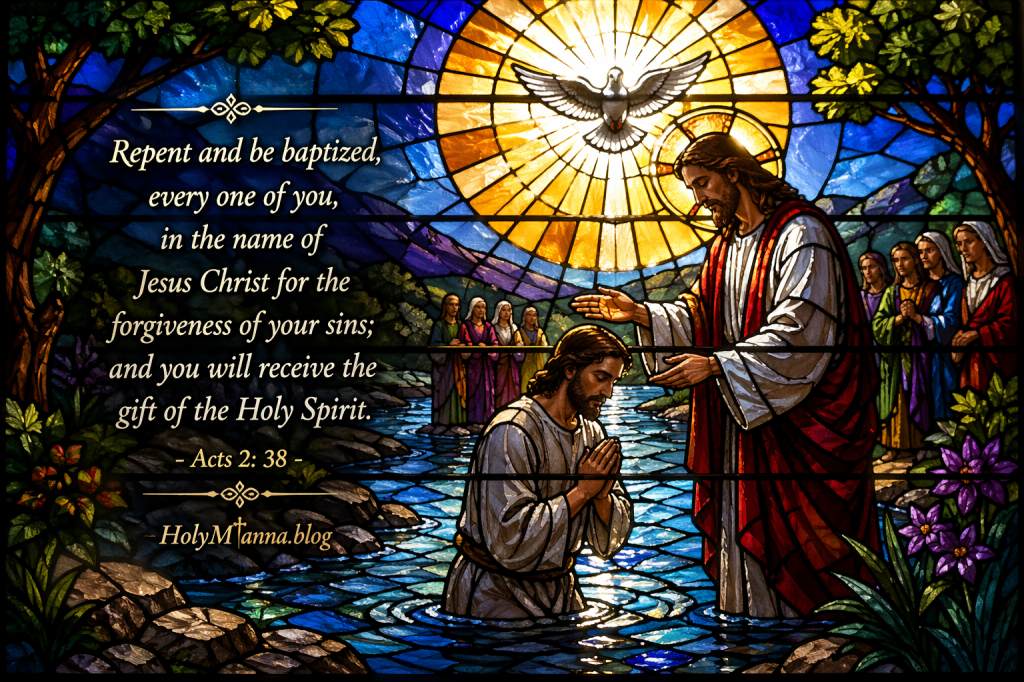
37 Now when they heard this, they were cut to the heart, and they asked Peter and the other apostles, “What are we to do, my brothers?” 38 Peter [said] to them, “Repent and be baptized, every one of you, in the name of Jesus Christ for the forgiveness of your sins; and you will receive the gift of the holy Spirit. 39 For the promise is made to you and to your children and to all those far off, whomever the Lord our God will call.” 40 He testified with many other arguments, and was exhorting them, “Save yourselves from this corrupt generation.” 41 Those who accepted his message were baptized, and about three thousand persons were added that day.
Detailed Exegesis
Verse 14 – “Then Peter stood up with the Eleven, raised his voice, and proclaimed to them, ‘You who are Jews, indeed all of you staying in Jerusalem. Let this be known to you, and listen to my words.’”
Peter stands not as a private believer sharing a personal opinion, but as the chief witness among the apostles. The phrase that he stood “with the Eleven” matters. It shows unity, apostolic authority, and the visible foundation of the Church. Peter’s preaching is public, direct, and confident because the Holy Spirit has transformed him. The same man who denied Christ now openly proclaims Him. This verse reveals that the Church’s mission begins with preaching. God gathers His people through the spoken word, and that word is entrusted to the apostles.
Verse 36 – “Therefore let the whole house of Israel know for certain that God has made him both Lord and Messiah, this Jesus whom you crucified.”
Peter brings the sermon to its sharp center. Jesus is not merely a teacher, prophet, or holy man. He is Lord and Messiah. For a Jewish audience, this is staggering. To call Jesus “Lord” reaches into the language of divine authority, while “Messiah” declares Him the long-awaited Anointed One promised in salvation history. Peter does not soften the truth by hiding their guilt. He names the reality of sin. Yet even here, grace is already at work. The accusation is not meant to crush them into hopelessness. It is meant to awaken them to the truth so that they can turn back to God.
Verse 37 – “Now when they heard this, they were cut to the heart, and they asked Peter and the other apostles, ‘What are we to do, my brothers?’”
This is one of the most beautiful lines in the New Testament because it shows what happens when grace pierces the conscience. They are cut to the heart. This is not mere emotion. It is compunction, the holy sorrow that comes when truth exposes sin and opens the soul to mercy. Their question is the question of conversion. They do not argue. They do not excuse themselves. They ask what must be done. That response shows the beginning of a real return to God. The Shepherd’s voice has reached them, and now they are ready to follow.
Verse 38 – “Peter [said] to them, ‘Repent and be baptized, every one of you, in the name of Jesus Christ for the forgiveness of your sins; and you will receive the gift of the holy Spirit.’”
Peter’s answer is precise, sacramental, and deeply Catholic. First comes repentance, a real turning away from sin and toward God. Then comes Baptism in the name of Jesus Christ for the forgiveness of sins. Peter does not present Baptism as a mere symbol or public gesture. He speaks of it as the God-given means by which sins are forgiven and the Holy Spirit is received. This is the apostolic pattern. Conversion is inward and outward, spiritual and sacramental. Grace touches the heart, and that grace is concretely given through the life of the Church.
Verse 39 – “For the promise is made to you and to your children and to all those far off, whomever the Lord our God will call.”
This verse widens the horizon. The gift being announced is not only for one crowd on one day in Jerusalem. It is for their children and for those far off. In the immediate sense, Peter is speaking of the spread of salvation beyond the moment at hand, and in the wider Christian sense, this points toward the universal mission of the Church. The Shepherd is gathering a flock that will extend through generations and across nations. God’s covenant mercy is not shrinking. It is expanding in Christ.
Verse 40 – “He testified with many other arguments, and was exhorting them, ‘Save yourselves from this corrupt generation.’”
Peter continues preaching beyond the lines recorded here. That detail is important because it reminds the reader that apostolic preaching is rich, urgent, and sustained. His exhortation to save themselves from a corrupt generation does not mean they can redeem themselves by their own power. Rather, it means they must separate themselves from the unbelief, rebellion, and hardened sin of the age by accepting the grace God is offering. The Gospel always calls people out of one way of life and into another. Christ does not merely comfort the old life. He calls people out of it.
Verse 41 – “Those who accepted his message were baptized, and about three thousand persons were added that day.”
The fruit is immediate and astonishing. About three thousand are baptized and added. This is one of the great birth scenes of the Church. The flock begins to swell because the Shepherd is gathering His own. Notice the order again. They accept the message, they are baptized, and they are added to the community. Faith, sacrament, and communion belong together. Christianity is not reduced to private spirituality. Those who receive Christ are incorporated into His Body, the Church.
Teachings
This reading shows that conversion is not an optional extra in the Christian life. It is the beginning of it. The Catechism teaches in CCC 1427: “Jesus calls to conversion. This call is an essential part of the proclamation of the kingdom: ‘The time is fulfilled, and the kingdom of God is at hand; repent, and believe in the Gospel.’ In the Church’s preaching this call is addressed first to those who do not yet know Christ and his Gospel. Also, Baptism is the principal place for the first and fundamental conversion. It is by faith in the Good News and by Baptism that one renounces evil and gains salvation, that is, the forgiveness of all sins and the gift of new life.” That paragraph could almost be placed directly beside Peter’s words in this reading. The Church teaches today what Peter preached on Pentecost.
The sacramental force of Peter’s command is also unmistakable. The Catechism says in CCC 1226: “From the very day of Pentecost the Church has celebrated and administered holy Baptism. Indeed St. Peter declares to the crowd astounded by his preaching: ‘Repent, and be baptized every one of you in the name of Jesus Christ for the forgiveness of your sins; and you shall receive the gift of the Holy Spirit.’ The apostles and their collaborators offer Baptism to anyone who believed in Jesus: Jews, the God-fearing, pagans. Always, Baptism is seen as connected with faith.” This means Pentecost is not just the day of a sermon. It is the day the Church begins to administer the saving sacrament that Christ entrusted to her.
The reading also reveals the Church’s apostolic nature. Peter does not speak as a freelance preacher. He stands with the Eleven. The risen Christ gathers His people through the apostolic ministry He established. That is why this passage has always mattered so much in Catholic life. It shows the unity of proclamation, sacrament, and ecclesial communion. The Word is preached. Hearts are pierced. Sinners repent. Baptism is given. The faithful are added to the visible people of God.
Historically, Pentecost has been understood as the public manifestation of the Church. The confusion of Babel begins to be healed as God gathers a people from many places into one faith. The fear that dominated the apostles after the Crucifixion is replaced by bold witness. Peter’s transformation itself becomes a sign of grace. The Shepherd who once restored Peter after his denial is now using Peter’s voice to call thousands home.
Reflection
This reading still feels fresh because the human heart has not changed that much. People still try to outrun conviction. People still soften sin, rename it, excuse it, or bury it under noise. But grace still works the same way. Sometimes the most merciful thing God does is allow a soul to be cut to the heart. That wound can become the place where repentance begins.
There is also something deeply comforting here. When the crowd asks, “What are we to do?” Peter gives a clear answer. The Christian path is not hidden behind spiritual fog. Turn away from sin. Receive the life Christ gives. Belong to His Church. Walk in the grace of the Holy Spirit. That same call still stands for every Catholic soul, whether at the beginning of conversion or years into the journey.
This reading invites a serious examination of conscience. Has the heart grown dull to conviction, or is it still willing to be pierced by the truth? When sin is revealed, is there defensiveness, or is there the humility to ask, “What are we to do?” Is Baptism being lived as a past event, or as a present identity that calls for daily repentance, holiness, and courage?
A practical way to live this reading is to begin with honesty before God. Name sin plainly in prayer. Make a good examination of conscience. Return to the Sacrament of Reconciliation if the soul has drifted. Remember Baptism not as a family milestone from long ago, but as the beginning of a new life that still shapes everything. Then ask for Peter’s boldness, not necessarily to preach to crowds, but to stand firmly for Christ in ordinary daily life.
The Good Shepherd is still gathering His flock. Sometimes He does it by consoling the soul. Sometimes He does it by cutting the heart first. But in both cases, He is bringing His people home.
Responsorial Psalm – Psalm 23
The Shepherd Who Stays Close in Every Valley
Few passages in Scripture feel as familiar as Psalm 23, yet the Church never gives it to the faithful as a piece of religious decoration. It is a living confession of trust. Traditionally attributed to David, the shepherd who became king, this psalm rises out of a world that knew what it meant to depend on a guide for survival. In the hills and wilderness of ancient Israel, a shepherd was not a poetic extra. He was protector, provider, and guardian of fragile lives. That is why this psalm fits so perfectly into today’s theme. In the First Reading, the scattered are gathered through Peter’s preaching. In the Gospel, Jesus reveals Himself as the Good Shepherd and the Gate. Here in the Psalm, the Church sings what the flock experiences when it truly belongs to the Lord: guidance, protection, nourishment, and a home that does not pass away.
This psalm also carries deep religious weight in Israel’s memory. The Lord had already revealed Himself as the One who led His people through the desert, fed them, defended them, and brought them toward the Promised Land. Kings were meant to shepherd the people in God’s name, though many failed that calling. So when the Church prays Psalm 23 during Easter, she hears more than a beautiful song of comfort. She hears a promise fulfilled in Christ. The Shepherd of Israel has come in person. He does not merely point out the path. He walks it with His sheep and leads them all the way home.
Psalm 23 – New American Bible (Revised Edition)
The Lord, Shepherd and Host
1 A psalm of David.
The Lord is my shepherd;
there is nothing I lack.
2 In green pastures he makes me lie down;
to still waters he leads me;
3 he restores my soul.
He guides me along right paths
for the sake of his name.
4 Even though I walk through the valley of the shadow of death,
I will fear no evil, for you are with me;
your rod and your staff comfort me.5 You set a table before me
in front of my enemies;
You anoint my head with oil;
my cup overflows.
6 Indeed, goodness and mercy will pursue me
all the days of my life;
I will dwell in the house of the Lord
for endless days.
Detailed Exegesis
Verse 1 – “The Lord is my shepherd; there is nothing I lack.”
The psalm begins with confidence, not uncertainty. David does not say the Lord is like a shepherd. He says the Lord is his shepherd. This is deeply personal and deeply covenantal. To belong to the Lord is to live under His care. The phrase “there is nothing I lack” does not mean life will contain no suffering or hardship. It means that under God’s providence, nothing essential for salvation is withheld. The soul that belongs to the Lord is not abandoned. In today’s readings, this harmonizes with the Gospel, where Jesus leads His sheep into safety and life.
Verse 2 – “In green pastures he makes me lie down; to still waters he leads me;”
This verse describes rest, nourishment, and peace. Sheep do not lie down when they are terrified. They rest when they feel secure. The green pastures and still waters are signs of a Shepherd who knows the needs of His flock and provides for them tenderly. In a land marked by dry regions and uncertainty, these images would have suggested not luxury, but merciful provision. Spiritually, the Church has long heard in these lines the peace Christ gives to the soul and the refreshment that comes from grace, prayer, and the sacraments.
Verse 3 – “He restores my soul. He guides me along right paths for the sake of his name.”
The Shepherd does not only feed. He restores. This is the language of renewal, return, and healing. The soul that has grown weary, wounded, or scattered is brought back to life by the Lord’s action. The “right paths” are the ways of righteousness, the moral and spiritual roads that align with God’s will. The reason given is beautiful: “for the sake of his name.” God remains faithful because He is faithful. His guidance springs from His own goodness and covenant love. This fits perfectly with the First Reading, where Peter calls the people to repentance and Baptism. The Shepherd restores wandering souls by drawing them back to the path of life.
Verse 4 – “Even though I walk through the valley of the shadow of death, I will fear no evil, for you are with me; your rod and your staff comfort me.”
Here the psalm grows deeper. Faith is not presented as escape from dark valleys, but as the courage to pass through them with the Lord. The valley of the shadow of death can mean mortal danger, profound suffering, or the long shadow cast by human frailty and loss. Yet fear does not have the last word because presence changes everything: “for you are with me.” The rod and staff are not threats to the sheep. They are tools of the shepherd’s care, used to defend, guide, and rescue. In Christ, this verse becomes even more luminous. The Good Shepherd does not ask His sheep to walk a road He has not walked Himself. He has passed through suffering and death and remains with His flock in every dark place.
Verse 5 – “You set a table before me in front of my enemies; You anoint my head with oil; my cup overflows.”
The imagery shifts here from shepherding in the open fields to the intimacy of hospitality. God is now seen as a gracious host who welcomes, honors, and abundantly provides for His beloved. The table prepared in the presence of enemies shows that the Lord’s blessing does not depend on the absence of opposition. He can nourish His people even while danger surrounds them. The anointing with oil suggests joy, consecration, healing, and welcome. The overflowing cup speaks of divine generosity that exceeds mere necessity. Christian tradition has often heard Eucharistic overtones in this verse. The Shepherd who feeds His flock also prepares a table, and that table points toward the communion of God with His people.
Verse 6 – “Indeed, goodness and mercy will pursue me all the days of my life; I will dwell in the house of the Lord for endless days.”
The psalm closes with assurance and longing. Goodness and mercy do not merely visit from time to time. They pursue the one who belongs to the Lord. That is a striking reversal, because it means grace is not passive. God’s faithful love follows His people through the whole journey of life. The final line lifts the eyes toward lasting communion with God. To dwell in the house of the Lord is to live in His presence, both in the worshiping life of His people and, ultimately, in eternal communion with Him. This is where today’s theme reaches its fullness. The Good Shepherd does not lead His sheep in circles. He leads them home.
Teachings
Psalm 23 is one of the clearest biblical windows into divine providence. The Lord’s care is not abstract. He leads, restores, protects, feeds, and brings His people into communion. This is why the Church reads the psalm through the light of Christ the Good Shepherd. The Catechism teaches in CCC 754: “The Church is, accordingly, a sheepfold, the sole and necessary gateway to which is Christ. It is also the flock of which God himself foretold that he would be the shepherd, and whose sheep, even though governed by human shepherds, are unfailingly nourished and led by Christ himself, the Good Shepherd and Prince of shepherds, who gave his life for his sheep.” That teaching fits today’s psalm perfectly. The one who leads beside still waters is the same Christ who says in the Gospel that His sheep hear His voice and follow Him.
The psalm also speaks powerfully to the mystery of providence. The Lord is not absent after creating the world. He remains near, active, and sustaining. The Catechism says in CCC 301: “With creation God does not abandon his creatures to themselves. He not only gives them being and existence, but also, and at every moment, upholds and sustains them in being, enables them to act and brings them to their final end.” That is the heart of Psalm 23. God is not a distant force. He is the Shepherd who remains involved at every step of the journey.
The image of the table has long invited Eucharistic reflection in the Church. The Fathers often saw here more than earthly provision. They saw the mystery of divine communion, the banquet of grace, and the nourishment of the faithful by Christ Himself. That insight rests beautifully beside the Church’s teaching on the Eucharist. CCC 1324 says: “The Eucharist is ‘the source and summit of the Christian life.’” The Shepherd who guides His people also feeds them. He does not save from afar. He draws near and gives Himself.
Saint Augustine and other Fathers frequently read this psalm as the song of Christ’s flock on pilgrimage through the world. The valley is real, suffering is real, enemies are real, but none of them can cancel the Shepherd’s fidelity. Historically, that is one reason this psalm has been prayed so often in times of persecution, grief, sickness, and death. It has comforted martyrs, mourners, priests at gravesides, and ordinary believers carrying hidden crosses. The Church keeps returning to it because the Church keeps needing the truth it sings.
Reflection
This psalm speaks to ordinary life with surprising force because most people know what it feels like to walk through valleys. Some valleys are dramatic, marked by loss, illness, betrayal, or fear. Others are quieter, marked by fatigue, dryness, temptation, or the slow ache of uncertainty. Psalm 23 does not pretend those places are unreal. Instead, it teaches the soul how to walk through them without surrendering to panic. The Lord’s presence is the turning point. The Christian does not survive by pretending everything is fine. The Christian survives by remembering who walks beside him.
This reading also invites a hard but hopeful question about trust. It is easy to say the Lord is Shepherd when life feels peaceful. It is harder when the road grows dark, prayers feel dry, or the future looks uncertain. Yet this is exactly where the psalm becomes most precious. The soul grows stronger by returning again and again to God in prayer, by letting Scripture reshape fear, by staying close to the sacraments, and by refusing to let stranger voices become louder than the Shepherd’s voice. Daily life begins to change when prayer is no longer treated as an afterthought, when Sunday Mass is received as a true encounter with the One who prepares the table, and when fear is answered not with noise, but with trust.
Where has the soul been acting as though it has no Shepherd? What valley is being walked through right now, and has it been brought honestly before the Lord? Does the heart actually believe that goodness and mercy are still pursuing it, even in weakness? This psalm asks the reader to slow down, look again, and remember that the Christian life is not a lonely search for God. It is a journey with the Shepherd who has already set His hand upon the flock and has no intention of letting it go.
Second Reading – 1 Peter 2:20-25
The Shepherd Who Heals Through His Wounds
The Second Reading carries the tenderness of the Good Shepherd, but it does so by passing straight through the mystery of the Cross. Saint Peter is writing to Christians who knew what it meant to be misunderstood, mistreated, and pressured by a world that did not share their faith. In that setting, he does not offer them a shallow encouragement or a sentimental slogan. He gives them Christ. He reminds them that the Shepherd of their souls is also the Suffering Servant, the innocent One who bore sin, endured injustice, and transformed suffering into a path of redemption.
This reading fits beautifully into today’s theme because it answers an important question: what kind of Shepherd is Jesus? He is not a distant leader who gives commands from safety. He is the Shepherd who enters the wounds of His flock. He walks ahead of them through rejection, pain, and sacrifice. He does not merely gather wandering sheep. He lays down His life to bring them home. In these verses, Saint Peter teaches that Christians are not only rescued by Christ’s suffering, but also called to follow Him in the same pattern of meekness, trust, and righteousness.
1 Peter 2:20-25 – New American Bible (Revised Edition)
20 But what credit is there if you are patient when beaten for doing wrong? But if you are patient when you suffer for doing what is good, this is a grace before God. 21 For to this you have been called, because Christ also suffered for you, leaving you an example that you should follow in his footsteps.
22 “He committed no sin,
and no deceit was found in his mouth.”23 When he was insulted, he returned no insult; when he suffered, he did not threaten; instead, he handed himself over to the one who judges justly. 24 He himself bore our sins in his body upon the cross, so that, free from sin, we might live for righteousness. By his wounds you have been healed. 25 For you had gone astray like sheep, but you have now returned to the shepherd and guardian of your souls.
Detailed Exegesis
Verse 20 – “But what credit is there if you are patient when beaten for doing wrong? But if you are patient when you suffer for doing what is good, this is a grace before God.”
Saint Peter begins with moral clarity. Not all suffering is the same. There is no spiritual glory in enduring the consequences of one’s own wrongdoing. But when a person suffers for doing what is right and bears it patiently, something holy is taking place. Saint Peter calls this “a grace before God.” In other words, such suffering becomes a place where divine favor is at work. The Christian is being invited to participate in the pattern of Christ Himself, who suffered not because He was guilty, but because He was righteous.
Verse 21 – “For to this you have been called, because Christ also suffered for you, leaving you an example that you should follow in his footsteps.”
This verse is both challenging and beautiful. Christians are called not only to believe in Christ, but to follow Him. The word “called” matters. This is not accidental. Patient endurance in doing good belongs to Christian discipleship. Yet the foundation is not mere imitation. Christ first suffered “for you.” He suffered on behalf of His people, in love, and for their salvation. Because He has done that, His life becomes the pattern for those who belong to Him. The Shepherd does not ask the flock to walk anywhere He has refused to go.
Verse 22 – “He committed no sin, and no deceit was found in his mouth.”
Saint Peter draws here from the language of Isaiah’s suffering servant. Christ’s innocence is total. He is free from sinful action and free from falsehood in speech. This matters profoundly because it reveals that His suffering was wholly undeserved. Jesus is not a victim of His own moral failure. He is the spotless Lamb. That innocence gives His suffering its redemptive power. Only the sinless One can bear the sins of the guilty in a way that heals and saves.
Verse 23 – “When he was insulted, he returned no insult; when he suffered, he did not threaten; instead, he handed himself over to the one who judges justly.”
Here Saint Peter opens the interior posture of Christ during His Passion. Jesus does not answer insult with insult. He does not retaliate. He does not threaten. His silence is not weakness, and His patience is not indifference. It is radical trust in the Father. He entrusts Himself to the One who judges justly. This is one of the most striking marks of Christian holiness. The disciple does not deny injustice, but refuses to let injustice turn the heart bitter, violent, or vengeful. Christ remains righteous even while being treated unrighteously.
Verse 24 – “He himself bore our sins in his body upon the cross, so that, free from sin, we might live for righteousness. By his wounds you have been healed.”
This is the heart of the passage. Christ did not merely endure pain as an example of courage. He bore “our sins” in His body upon the cross. Saint Peter is proclaiming the mystery of redemption. Jesus takes upon Himself what belongs to fallen humanity so that humanity may receive what belongs to Him. The purpose is transformation: “so that, free from sin, we might live for righteousness.” Salvation is not simply forgiveness in the abstract. It is liberation from sin for a new life. Then comes the unforgettable line: “By his wounds you have been healed.” The wounds of Christ are not empty scars. They are the means by which healing enters the world.
Verse 25 – “For you had gone astray like sheep, but you have now returned to the shepherd and guardian of your souls.”
Saint Peter closes by bringing the reading directly into today’s shepherd theme. Humanity apart from Christ is like sheep gone astray. That is not romantic language. It is the language of helpless wandering, danger, and loss. But now, through Christ’s Passion, the scattered have returned. Jesus is called both Shepherd and Guardian of souls. He does not simply find the sheep and point them in a direction. He keeps watch over them. He guards what is most precious. The Good Shepherd of the Gospel is the crucified and risen Lord who brings the lost back into communion with God.
Teachings
This reading reveals the Catholic understanding of redemptive suffering with great force. Christ’s suffering is unique because it is saving, innocent, and offered in love for sinners. The Catechism teaches in CCC 618: “The cross is the unique sacrifice of Christ, the ‘one mediator between God and men.’ But because in his incarnate divine person he has in some way united himself to every man, ‘the possibility of being made partners, in a way known to God, in the paschal mystery’ is offered to all men. He calls his disciples to ‘take up [their] cross and follow [him],’ for ‘Christ also suffered for [us], leaving [us] an example so that [we] should follow in his steps.’ In fact Jesus desires to associate with his redeeming sacrifice those who were to be its first beneficiaries.” This paragraph shows exactly what Saint Peter is teaching. Christ’s suffering saves, and the Christian is invited to participate in that mystery by following Him.
The reading also speaks directly to the meaning of Christ’s Passion as atonement for sin. The Catechism says in CCC 602: “Consequently, St. Peter can formulate the apostolic faith in the divine plan of salvation in this way: ‘You were ransomed from the futile ways inherited from your fathers, not with perishable things such as silver or gold, but with the precious blood of Christ, like that of a lamb without blemish or spot.’” Jesus bore our sins not as a dramatic symbol, but as the Lamb whose sacrifice truly redeems. His wounds heal because His offering is real.
This passage also teaches the moral beauty of meekness. The world often praises power that strikes back fast and loudly. Christ reveals a more divine strength. Saint Augustine, reflecting on the Passion, saw in Christ the model of patient love that defeats pride and violence by humility. The Fathers of the Church consistently taught that Christ’s silence before His persecutors was not defeat, but royal mastery. He chose obedience to the Father over the instincts of fallen man.
There is also a deeply pastoral truth here. Saint Peter, who once drew a sword in the garden and later denied the Lord in fear, now teaches the Church about patient suffering and trust. That alone is moving. The man who failed under pressure had been restored by the risen Christ and made into a shepherd of souls. His words carry the weight of personal conversion. He knows what it is to go astray and to be brought back.
Historically, these verses have strengthened the Church in times of persecution, martyrdom, and quiet daily endurance. They have been prayed by saints, prisoners, missionaries, and ordinary Catholics carrying hidden crosses. The reading does not glorify pain for its own sake. It glorifies Christ, who entered suffering and filled it with redemptive love.
Reflection
This reading touches a nerve because it speaks to one of the hardest parts of daily life: how to suffer without becoming hard. Most people are not called to public martyrdom, but almost everyone knows what it means to be misunderstood, slighted, mocked, ignored, treated unfairly, or wounded by the sins of others. Saint Peter does not tell the Christian to pretend those things do not hurt. He points to Christ and says, in effect, this is where discipleship becomes real.
There is a practical challenge here for daily life. When insult comes, the instinct is often to strike back. When treated unfairly, the temptation is to replay the offense, nurse resentment, or justify a cutting response. But Christ shows another road. He entrusts Himself to the Father. He remains truthful without becoming cruel. He suffers without surrendering to hatred. That is not natural. It is grace. It requires prayer, humility, self-command, and frequent return to the sacraments. A Catholic trying to live this reading well might begin by pausing before reacting, bringing real hurts into prayer instead of immediately into anger, receiving Confession when bitterness has taken root, and asking for the strength to answer evil with firmness and charity rather than revenge.
This passage also reminds the soul that healing begins at the Cross. There are wounds caused by sin, wounds carried from the past, wounds caused by betrayal, and wounds caused by one’s own failures. Saint Peter does not send the wounded inward to solve themselves. He sends them to Christ: “By his wounds you have been healed.” The healing may be gradual. It may involve tears, repentance, and surrender. But it is real.
Where is there still a habit of returning insult for insult? What suffering in daily life is being resisted with bitterness instead of entrusted to the Father? Has the heart truly returned to the Shepherd and Guardian of the soul, or is it still wandering into old patterns of sin and self-protection? This reading invites the Christian to look at Christ crucified and see not only what He endured, but how He endured it. The Good Shepherd did not save His flock from a distance. He carried their sins in His own body and brought them home through love.
Holy Gospel – John 10:1-10
The Voice That Knows the Heart and the Gate That Opens to Life
The Holy Gospel brings the whole day into focus. If the First Reading showed the Shepherd calling His flock through Peter’s preaching, and if the Psalm sang of the Lord’s care for His sheep, this passage reveals plainly who that Shepherd is. Jesus speaks in the language of the sheepfold, the gate, the shepherd, and the stranger. To modern ears, that may sound rustic and peaceful, but to His first listeners it carried real spiritual weight. In ancient Israel, shepherding was woven into daily life, and it had long been used in Scripture to describe kingship, spiritual leadership, and God’s care for His people. The prophets had also warned against false shepherds who exploited the flock instead of protecting it. So when Jesus speaks this way, He is not offering a random country image. He is declaring His identity and exposing the danger of every voice that does not come from God.
This passage also stands in the shadow of the conflict that came just before it in The Gospel of John. Jesus had healed the man born blind, yet many of the religious leaders refused to see what God was doing before their eyes. That tension matters. The issue is not simply who leads, but who truly sees, who truly hears, and who truly belongs to God. This is why the reading fits so beautifully into today’s theme. Jesus is the Good Shepherd, yes, but here He first presents Himself as the One through whom the sheep enter safely. He is not only the guide on the road. He is the door to salvation itself. The flock lives because it enters through Him.
John 10:1-10 – New American Bible (Revised Edition)
The Good Shepherd. 1 “Amen, amen, I say to you, whoever does not enter a sheepfold through the gate but climbs over elsewhere is a thief and a robber. 2 But whoever enters through the gate is the shepherd of the sheep. 3 The gatekeeper opens it for him, and the sheep hear his voice, as he calls his own sheep by name and leads them out. 4 When he has driven out all his own, he walks ahead of them, and the sheep follow him, because they recognize his voice. 5 But they will not follow a stranger; they will run away from him, because they do not recognize the voice of strangers.” 6 Although Jesus used this figure of speech, they did not realize what he was trying to tell them.
7 So Jesus said again, “Amen, amen, I say to you, I am the gate for the sheep. 8 All who came [before me] are thieves and robbers, but the sheep did not listen to them. 9 I am the gate. Whoever enters through me will be saved, and will come in and go out and find pasture. 10 A thief comes only to steal and slaughter and destroy; I came so that they might have life and have it more abundantly.
Detailed Exegesis
Verse 1 – “Amen, amen, I say to you, whoever does not enter a sheepfold through the gate but climbs over elsewhere is a thief and a robber.”
Jesus begins with solemn authority. The repeated “Amen, amen” signals that what follows is important and trustworthy. He immediately creates a contrast between the true way and the false way. The one who refuses the gate and climbs in another way is not a helper of the sheep, but a thief and a robber. This is strong language. Spiritually, Jesus is warning against false shepherds, false messiahs, false teachers, and every approach to God that tries to bypass the order established by Him. Salvation cannot be reached by climbing over the wall of self-will, pride, novelty, or deception.
Verse 2 – “But whoever enters through the gate is the shepherd of the sheep.”
The true shepherd comes openly and rightly. He does not deceive, manipulate, or force his way in. He enters by the gate because he has a rightful relationship to the flock. Jesus is drawing a contrast between legitimate authority and counterfeit authority. In the life of the Church, authentic shepherding is always marked by fidelity to Christ, not by self-promotion. The true shepherd belongs to the sheep because he belongs first to God’s plan.
Verse 3 – “The gatekeeper opens it for him, and the sheep hear his voice, as he calls his own sheep by name and leads them out.”
This verse is full of tenderness. The sheep hear his voice. They do not merely respond to noise. They respond to a familiar, trusted voice. Then Jesus says the shepherd calls his own sheep by name. This is one of the most personal lines in the Gospel. God’s care is not vague or anonymous. Christ knows His people individually. To be known by name in biblical language is to be known personally, lovingly, and intentionally. The shepherd then leads them out. He does not leave them trapped or directionless. He leads them into life.
Verse 4 – “When he has driven out all his own, he walks ahead of them, and the sheep follow him, because they recognize his voice.”
The shepherd does not push from a distance. He goes ahead of his flock. That detail matters. Jesus leads from the front. He does not ask His people to walk a road He has not walked Himself. The sheep follow because they recognize his voice. Christian discipleship is not merely obedience to external rules. It is the response of a heart that has learned the sound of the Master. This is why prayer, Scripture, and sacramental life matter so much. The more the soul lives with Christ, the more clearly it recognizes Him.
Verse 5 – “But they will not follow a stranger; they will run away from him, because they do not recognize the voice of strangers.”
Here Jesus shows the negative side of spiritual maturity. To know the Shepherd’s voice is also to grow wary of voices that do not belong to Him. A stranger may sound persuasive, exciting, flattering, or even religious, but the sheep that truly know the shepherd do not stay with him. This verse is a warning for every age. There are always voices that promise freedom, knowledge, fulfillment, or power apart from Christ. The faithful soul must learn not only to love the truth, but also to flee what is false.
Verse 6 – “Although Jesus used this figure of speech, they did not realize what he was trying to tell them.”
This verse reveals the spiritual blindness of Jesus’ hearers. The words were clear enough at one level, yet their deeper meaning remained hidden from those whose hearts were closed. This has always been a sobering truth in the life of faith. It is possible to hear divine words and still miss their meaning if pride, prejudice, or hardness of heart remains in control. The problem is not that Christ’s light is weak. The problem is that some refuse to receive it.
Verse 7 – “So Jesus said again, ‘Amen, amen, I say to you, I am the gate for the sheep.’”
Jesus now interprets the image directly. He does not merely speak about a gate. He says, “I am the gate.” This is one of the great “I am” statements in John, carrying both intimacy and authority. Christ Himself is the entrance into safety, salvation, and communion with God. This is a decisive statement against every attempt to reduce Jesus to one spiritual option among many. He is not one path beside others. He is the gate for the sheep.
Verse 8 – “All who came [before me] are thieves and robbers, but the sheep did not listen to them.”
Jesus is not condemning the prophets or the true servants of God who prepared the way for Him. Rather, He is exposing false claimants and corrupt leaders who sought influence without leading souls to the Father. The real flock, at the deepest level, does not belong to deception. This verse reminds the reader that spiritual history includes conflict. Not every leader is safe. Not every claim to authority is holy. The sheep must remain attentive.
Verse 9 – “I am the gate. Whoever enters through me will be saved, and will come in and go out and find pasture.”
Jesus repeats the claim and then gives the promise. Salvation comes through Him. The one who enters through Christ will be saved. The image of coming in and going out suggests freedom, security, and peace under divine protection. Finding pasture points again to nourishment and flourishing. This is not the restless freedom of the world, which often leaves a soul empty. It is the freedom of one who belongs to the Shepherd and therefore moves in safety under His care.
Verse 10 – “A thief comes only to steal and slaughter and destroy; I came so that they might have life and have it more abundantly.”
The contrast could not be sharper. The thief steals, slaughters, and destroys. False shepherds do not give life. They consume it. Sin promises much and leaves ruin behind. Christ, by contrast, comes to give life, and not in a thin or minimal way. He comes to give it abundantly. This abundant life is not merely comfort, wealth, or ease. It is participation in divine life, life in grace, life in communion with God, life that begins now and reaches fulfillment in eternity. This final verse gathers the whole Gospel passage into one luminous promise.
Teachings
This Gospel reveals one of the clearest Catholic truths about Christ and the Church: there is no true sheepfold apart from Him. The Catechism teaches in CCC 754: “The Church is, accordingly, a sheepfold, the sole and necessary gateway to which is Christ. It is also the flock of which God himself foretold that he would be the shepherd, and whose sheep, even though governed by human shepherds, are unfailingly nourished and led by Christ himself, the Good Shepherd and Prince of shepherds, who gave his life for his sheep.” That paragraph is almost a direct meditation on this Gospel. Christ is the gate. Christ is the Shepherd. And the Church is the flock gathered around Him.
This passage also speaks to the call of the individual soul. The Lord does not save humanity as a faceless crowd. He knows His sheep personally. The Catechism says in CCC 2158: “God calls each one by name.” That short line carries enormous beauty. In a world where people can feel lost in systems, noise, and confusion, Christ’s words remind the faithful that divine love is personal. The Shepherd does not lead by treating souls as numbers. He calls by name.
Saint Gregory the Great preached magnificently on the Good Shepherd and the sheep who know His voice. He said: “They hear his voice, and he calls his own sheep by name, and leads them out. He calls his own sheep by name because he knows the names of the elect. As if he were to say plainly: ‘I do not know the reprobate, because they have not wished to know me.’” Gregory’s point is piercing. To belong to Christ is not only to be known by Him, but to live in such a way that His voice is welcomed, not resisted. The Gospel is never merely about admiration. It is about belonging.
Saint Augustine also reflects beautifully on this mystery of Christ as the door. He says: “For if thou seekest by any other place, thou wilt be a thief and robber. By Christ, enter in, and thou shalt go in and out, and find pasture.” Augustine understands exactly what Jesus is saying. Any spirituality, leadership, or supposed wisdom that bypasses Christ does not liberate. It steals. Only Christ opens the way to life.
There is also a serious historical and spiritual lesson here. From the earliest centuries, the Church has read this passage not only as consolation but as discernment. False teachers, false messiahs, schisms, heresies, and corrupt leadership have all wounded the flock across history. Yet Christ remains the true gate, and the faithful remain secure when they stay close to His voice in Scripture, apostolic teaching, sacramental life, and the communion of the Church.
Reflection
This Gospel feels especially urgent in a loud age. Every day brings a flood of voices. Some are angry, some seductive, some cynical, some flattering, and some dressed up in spiritual language while quietly pulling the heart away from Christ. Jesus does not tell His disciples to become experts in every strange voice. He tells them to know His voice. That is the safer path. The soul that has grown familiar with Christ becomes harder to deceive.
That has very practical consequences. A Catholic learns the Shepherd’s voice by staying close to His words in Scripture, by listening to the teaching of the Church, by receiving the sacraments with reverence, by developing a real prayer life, and by practicing obedience when His voice challenges comfort or pride. Over time, this forms a kind of spiritual instinct. The heart begins to sense when something is off, even if it sounds attractive at first. That instinct is a grace worth asking for.
This passage also confronts the modern temptation to treat Jesus as useful but not necessary. Many people like the idea of Jesus as teacher, comforter, or moral example. But Jesus does not leave room for that reduced version. He says “I am the gate.” He presents Himself not as one option among many, but as the way into life. That is both narrow and beautiful. Narrow, because it rules out every counterfeit salvation. Beautiful, because it means the way home is not a puzzle to solve but a Person to trust.
Whose voice has been shaping the heart most lately? Are there stranger voices being entertained because they are easier than the Gospel? Is Christ being treated as the gate, or merely as one influence among many? This Gospel invites the reader to simplify life in the best possible way. Listen for the Shepherd. Stay near His Church. Walk through the gate He has opened. Reject the voices that steal peace and drain life. The One who calls by name is not trying to limit the soul. He is leading it toward the only life that is truly abundant.
Led Home by the Shepherd’s Voice
Today’s readings come together like one clear call echoing through the whole Church: the risen Jesus is the Good Shepherd who still seeks, heals, and leads His people home. In Acts of the Apostles, Peter’s preaching cuts hearts open and calls them to repentance and Baptism. In Psalm 23, the flock learns again that the Lord does not abandon His own, even in dark valleys. In The First Letter of Peter, the Shepherd saves not from a distance, but through His own suffering, bearing wounds that heal the wounds of His people. And in The Gospel of John, Jesus speaks plainly at the center of it all: “I am the gate.” He is the Shepherd who calls by name, and He is also the only entrance into the life the soul was made for.
That is the beauty of this Sunday. It is not simply about comfort. It is about conversion. The Shepherd does not only soothe the frightened sheep. He calls the wandering sheep back. He does not only protect. He leads. He does not only forgive sin. He opens the way to a new life, a life marked by trust, repentance, perseverance, and deeper communion with God. The voice of Christ still speaks through His Church, still pierces hardened hearts, still feeds the weary, and still warns against every false voice that steals peace and leads souls astray.
So this Sunday offers a gentle but serious invitation. Stay close to the Shepherd. Return quickly when the heart wanders. Listen carefully for His voice in Scripture, in prayer, in the sacraments, and in the teaching of the Church. Let the wounds of Christ heal what sin, fear, pride, or exhaustion have left bruised. Let His truth cut away whatever keeps the soul from fully belonging to Him. What would change if His voice were trusted more than every other voice competing for attention? What part of life still needs to be led back through the gate of repentance and grace? May this Fourth Sunday of Easter awaken deeper trust, stronger faith, and a renewed desire to walk closely with the One who came so that His sheep might have life, and have it abundantly.
Engage with Us!
Readers are warmly invited to share their reflections in the comments below. What stood out most in today’s readings? What word, image, or truth stayed with the heart after sitting with the Good Shepherd today?
- In the First Reading from Acts 2:14, 36-41, what does it mean to be “cut to the heart” in an honest and life-giving way, and where might God be calling for deeper repentance and renewal?
- In Psalm 23, which part of the Lord’s care speaks most powerfully right now: His guidance, His protection in the valley, His table of abundance, or His promise to bring His people home?
- In the Second Reading from 1 Peter 2:20-25, what does Christ’s example of patient suffering reveal about the way hardships, insults, or injustices can be carried with greater holiness, trust, and mercy?
- In the Holy Gospel from John 10:1-10, how can the Shepherd’s voice be recognized more clearly in daily life, and what stranger voices need to be turned away from with greater courage?
May today’s readings encourage a deeper love for Jesus Christ, the Shepherd and Guardian of souls. May every step this week be guided by faith, strengthened by trust, and filled with the love and mercy that Jesus taught by His words, His wounds, and His saving Cross.
Sacred Heart of Jesus, we trust in You!
Immaculate Heart of Mary, pray for us!
Saint Michael the Archangel, defend us in battle!
Follow us on YouTube, Instagram and Facebook for more insights and reflections on living a faith-filled life.


Leave a Reply