Memorial of Saints Basil the Great and Gregory Nazianzen, Bishops and Doctors of the Church – Lectionary: 205
Staying Close to the True Christ
There is something quietly urgent about today’s liturgy, because it speaks to the moment when faith is tested not only by hardship, but by confusion. The Word of God keeps circling back to one steady call: remain close to Jesus Christ, confess Him plainly, and refuse the subtle lies that try to replace Him with something smaller. This is not abstract theology for scholars alone. It is daily Christian survival, especially in a world that loves spiritual talk but often resists the concrete claim that Jesus is truly the Christ, the Son, and the Savior.
In 1 John 2:22-28, the Church hears a blunt warning about deception and the “antichrist,” which in this context is not a movie villain but any spirit and message that denies who Jesus really is. Saint John writes to ordinary believers living in a world where competing voices offered alternative versions of Christianity, including early errors that treated Jesus as a mere holy man or claimed to know God while rejecting the Son. The antidote is not panic or obsession, but fidelity. The command is simple and demanding: “Remain in him”. The faith received “from the beginning” is meant to stay rooted in the heart, because that truth keeps a soul anchored in the Father and the Son, and it keeps confidence alive for the Lord’s return.
That same confidence becomes joy in Psalm 98, where all the earth is called to sing because God has acted decisively. The psalm is steeped in the Old Testament language of God’s “victory,” His mercy, and His faithfulness to Israel, but it also leans outward toward the nations. This matters, because Jesus does not belong to one tribe or one time. The victory of God is meant to be seen and celebrated everywhere, and praise becomes a public confession that the Lord has done what no human strength can do.
Then the Gospel, John 1:19-28, gives a living example of what faithful confession looks like. John the Baptist stands in the religious pressure cooker of first century Judea, where people longed for deliverance and debated which figure from the Scriptures might finally appear. Priests and Levites question him, and the temptation would have been to lean into the hype, but John refuses to play the hero. He tells the truth about himself and points to the truth about Christ. His whole mission is summed up in the humility of a witness who knows his place: “I am not the Messiah”, and yet he is bold enough to say that the Lord is already present among them, even if they do not recognize Him.
All of this fits beautifully with today’s memorial of Saints Basil the Great and Gregory Nazianzen, bishops and Doctors of the Church who defended the Church’s confession of Christ when the culture and even parts of the Christian world were confused. They fought the kind of denial Saint John warns about, especially the false idea that the Son is less than the Father. Their witness reminds every Christian that clarity about Jesus is not optional, because love for Christ includes love for the truth about Christ. Today’s readings invite the heart to do what the saints did: stay steady, stay humble, stay joyful, and keep pointing to the real Jesus, not a convenient substitute.
First Reading – 1 John 2:22-28
Hold Fast to the Real Jesus When Counterfeits Get Loud
Saint John is writing late in the apostolic age, when the Church is no longer just defending the faith from the outside, but also from confusing voices on the inside. Some teachers were claiming to have deeper knowledge while denying core truths about Jesus Himself. That is why this passage sounds so direct and even confrontational. It is the voice of a spiritual father protecting his children from ideas that would quietly pull them away from salvation. Today’s broader theme is staying faithful to the true identity of Christ, and this reading shows what that fidelity looks like in practice: confess the Son clearly, reject lies that diminish Him, and remain rooted in Him with confidence.
The language of “antichrist” here is not meant to stir up fear or speculation. It names a real spiritual danger that exists whenever Christ’s identity is denied or diluted. In the early Church, this often took the form of false teachings that claimed Jesus was inspired by God but not truly divine, or that one could have a relationship with the Father while setting aside the Son. John does not negotiate with that logic. He dismantles it. He then offers the remedy, which is refreshingly simple and deeply Catholic: remain in what was handed on from the beginning, and trust the anointing received from God, which points to the Holy Spirit living and active within the baptized believer.
1 John 2:22-28 – New American Bible (Revised Edition)
22 Who is the liar? Whoever denies that Jesus is the Christ. Whoever denies the Father and the Son, this is the antichrist. 23 No one who denies the Son has the Father, but whoever confesses the Son has the Father as well.
Life from God’s Anointing. 24 Let what you heard from the beginning remain in you. If what you heard from the beginning remains in you, then you will remain in the Son and in the Father. 25 And this is the promise that he made us: eternal life. 26 I write you these things about those who would deceive you. 27 As for you, the anointing that you received from him remains in you, so that you do not need anyone to teach you. But his anointing teaches you about everything and is true and not false; just as it taught you, remain in him.
Children of God. 28 And now, children, remain in him, so that when he appears we may have confidence and not be put to shame by him at his coming.
Detailed Exegesis
Verse 22 “Who is the liar? Whoever denies that Jesus is the Christ. Whoever denies the Father and the Son, this is the antichrist.”
John wastes no words because clarity matters when souls are at risk. The central lie is not confusion about minor doctrines, but the rejection of Jesus as the Christ, the Anointed One sent by the Father. To deny the Son is to reject the way God has chosen to reveal Himself. Any spirituality that tries to keep “God” while sidelining Jesus is not neutral. It is actively opposed to the truth revealed by God Himself.
Verse 23 “No one who denies the Son has the Father, but whoever confesses the Son has the Father as well.”
This verse strikes at the heart of religious relativism. John is not describing an opinion but a spiritual reality. The Father and the Son cannot be separated without distorting both. Confessing the Son is not merely speaking words, but embracing who Jesus truly is. Communion with the Father flows through communion with the Son, because the Son reveals the Father fully.
Verse 24 “Let what you heard from the beginning remain in you. If what you heard from the beginning remains in you, then you will remain in the Son and in the Father.”
Here John points believers back to the apostolic teaching they received at baptism. Christianity is not a faith that evolves by shedding uncomfortable truths. What was proclaimed from the beginning remains the path of life. Remaining in that original proclamation is not stubbornness. It is fidelity, and it is how communion with God is preserved.
Verse 25 “And this is the promise that he made us: eternal life.”
John reminds the reader why this matters. Eternal life is not a vague reward far in the future. It is a living relationship with God that begins now and reaches fulfillment in heaven. Every false teaching about Jesus ultimately robs the believer of this promise by cutting the connection to its source.
Verse 26 “I write you these things about those who would deceive you.”
The apostle is realistic and pastoral. He does not pretend that deception only exists outside the Church. False teachers often speak from within, using Christian language while quietly emptying it of meaning. John writes not to create fear, but to sharpen discernment and strengthen trust in the truth.
Verse 27 “As for you, the anointing that you received from him remains in you, so that you do not need anyone to teach you. But his anointing teaches you about everything and is true and not false; just as it taught you, remain in him.”
This verse affirms the presence of the Holy Spirit in the believer. It does not cancel the need for Scripture, Tradition, or the teaching authority of the Church. John himself is teaching as he writes. Instead, he reminds Christians that they are not defenseless. The Spirit confirms the truth of the faith within the heart and gives the grace to recognize teachings that contradict Christ.
Verse 28 “And now, children, remain in him, so that when he appears we may have confidence and not be put to shame by him at his coming.”
John ends with eternity in view. Remaining in Christ is preparation for His return. Confidence before the Lord does not come from clever arguments or spiritual trends, but from faithful perseverance. Staying close to Christ now is what prepares the soul to stand before Him later with peace.
Teachings
The Church has always understood that denying the true identity of Christ is not a minor error, but a wound to the heart of the faith. Throughout history, especially in times of doctrinal confusion, the Church has reaffirmed that salvation depends on confessing Jesus Christ as true God and true man. This is why early councils, creeds, and saints fought so fiercely against teachings that tried to downgrade the Son.
The concept of “anointing” in this passage is especially rich. Jesus is called the Christ precisely because He is anointed by the Holy Spirit, and through baptism and confirmation, believers share in that anointing. This is not symbolic fluff. It is a real participation in the life of Christ that equips the Christian to remain faithful in truth.
The witness of Saints Basil the Great and Gregory Nazianzen fits perfectly here. Both lived in the fourth century, when false teachings claimed the Son was less than the Father. Their courage, preaching, and theological clarity defended exactly what Saint John insists on: that denying the Son is not an intellectual mistake, but a spiritual rupture. Their lives remind believers that defending truth is an act of love, because truth keeps people united to Christ.
Reflection
This reading calls for an honest look at how faith is lived day to day. Remaining in Christ is not about intensity or emotion. It is about loyalty to the real Jesus, even when that loyalty feels out of step with the surrounding culture.
A practical response is to examine which voices are shaping beliefs and instincts. When spiritual conversations constantly minimize doctrine or treat Jesus as optional, something essential is being lost. Remaining in Christ means returning often to the basics: the Creed, Scripture, the sacraments, and prayer that speaks honestly to the Lord as He truly is.
Where has the culture subtly suggested that Jesus can be admired but not obeyed?
What ideas have made it seem reasonable to talk about God while avoiding the Son?
What concrete habits help the heart remain rooted in Christ rather than drifting with the noise?
Saint John’s closing reassurance still stands. Those who remain in Christ do not need to fear His coming. They can meet Him with confidence, because they chose truth over comfort and fidelity over imitation.
Responsorial Psalm – Psalm 98:1-4
When God Acts, the World Is Meant to Sing
Psalm 98 comes from Israel’s long tradition of celebrating God as King, especially after moments of deliverance. It is the kind of psalm sung after victory, not because Israel was strong, but because the Lord acted decisively on behalf of His people. In the Old Testament, this victory language often recalled events like the Exodus, when God’s power was revealed publicly and unmistakably. Within today’s liturgy, the psalm fits perfectly with the call to remain faithful to the true Christ. The God who reveals truth about His Son is the same God who acts in history, keeps His promises, and deserves joyful, public praise. This is not quiet gratitude tucked away in the heart. It is truth breaking out into song.
The psalm also widens the horizon beyond Israel alone. God’s saving work is not meant to stay hidden or tribal. It is revealed “in the sight of the nations,” which prepares the way for the Gospel, where Christ is proclaimed to the whole world. The joy expressed here flows directly from truth recognized and victory acknowledged.
Psalm 98:1-4 – New American Bible (Revised Edition)
The Coming of God
1 A psalm.
Sing a new song to the Lord,
for he has done marvelous deeds.
His right hand and holy arm
have won the victory.
2 The Lord has made his victory known;
has revealed his triumph in the sight of the nations,
3 He has remembered his mercy and faithfulness
toward the house of Israel.
All the ends of the earth have seen
the victory of our God.4 Shout with joy to the Lord, all the earth;
break into song; sing praise.
Detailed Exegesis
Verse 1 “Sing a new song to the Lord, for he has done marvelous deeds. His right hand and holy arm have won the victory.”
The “new song” signals a fresh act of God, something so decisive that old words are no longer enough. In biblical language, God’s “right hand” and “holy arm” represent His power at work in the world. This is not symbolic encouragement. It is a declaration that the Lord Himself intervenes to save. For Christians, this verse naturally points forward to the definitive victory of Christ, where God’s power is revealed not through force, but through the Cross and Resurrection.
Verse 2 “The Lord has made his victory known; has revealed his triumph in the sight of the nations.”
God does not hide His saving work. What He does is meant to be seen, known, and proclaimed. This verse anticipates the missionary heart of the Church. The truth about God’s victory is not private property for a few insiders. It is revealed openly so that all peoples can come to know who the Lord is and what He has done.
Verse 3 “He has remembered his mercy and faithfulness toward the house of Israel. All the ends of the earth have seen the victory of our God.”
Here the psalm holds together God’s faithfulness to Israel and His plan for the whole world. God “remembering” mercy does not mean He ever forgot. It means He acts in accordance with His covenant promises. Israel’s story becomes the doorway through which the nations glimpse God’s saving power. This verse gently reminds the listener that God’s promises are reliable, even when fulfillment takes time.
Verse 4 “Shout with joy to the Lord, all the earth; break into song; sing praise.”
The psalm ends by inviting all creation into praise. Joy is not optional here. It is the proper response to recognizing God’s victory. Praise becomes a form of witness. When the world sees joyful, faithful worship, it encounters a living testimony to the truth of who God is.
Teachings
The Church has always understood the Psalms as the prayerbook of God’s people, fulfilled and elevated in Christ. This psalm’s emphasis on God’s victory finds its deepest meaning in Jesus, whose Resurrection is the ultimate revelation of divine power and mercy. The victory celebrated here is not merely political or military. It is spiritual and eternal.
Saint Augustine taught that the “new song” is the song of the new life in Christ, sung not only with the voice but with the whole manner of living. He explained that believers sing a new song when their lives reflect the grace they have received, not when they simply repeat familiar words. This teaching fits beautifully with today’s broader theme. Remaining in Christ naturally leads to praise, because truth recognized becomes joy expressed.
The universal scope of this psalm also shaped the Church’s understanding of evangelization. God’s saving work is revealed so that it can be shared. Praise is never meant to stop at personal consolation. It overflows into proclamation, inviting others to see what God has done.
Reflection
This psalm invites a serious but joyful examination of how praise fits into daily life. It is easy to treat worship as routine or obligation, especially when faith feels quiet or ordinary. Psalm 98 reminds believers that praise flows from recognizing God’s real action in the world and in personal history.
A concrete step is to reconnect praise with memory. Remembering how God has been faithful, forgiven sins, sustained difficult seasons, and kept promises naturally stirs gratitude. Another step is allowing praise to be visible. Faith that never sings, rejoices, or speaks risks shrinking into something private and fragile.
Where has gratitude grown quiet because God’s past victories were taken for granted?
What would it look like to let joy in God’s faithfulness become more visible in daily prayer and worship?
How can praise itself become a witness to the truth of Christ in a world hungry for meaning?
The psalm ends by calling the whole earth to sing, because God’s victory is real and His mercy endures. When truth is recognized and Christ is confessed, praise becomes not just fitting, but inevitable.
Holy Gospel – John 1:19-28
A Clear Witness in a Noisy World
This passage comes from the opening chapter of The Gospel of John, right as the Church begins the liturgical rhythm of the Christmas season’s aftermath, when the world has heard that the Word became flesh and now must decide what that means. In first century Judea, religious expectation was intense. The people carried centuries of longing for the Messiah, shaped by the promises made to Israel, the voice of the prophets, and the burden of Roman occupation. That longing also created confusion, because many wondered which figure would finally appear. Some expected a king like David. Others looked for Elijah’s return, based on prophetic hope. Others waited for “the Prophet,” echoing Moses and the promise of a new authoritative messenger.
Into that charged atmosphere steps John the Baptist, who refuses to draw attention to himself. He becomes a model of what today’s theme demands: faithful clarity about the true Christ. While 1 John 2:22-28 warns against those who deny Jesus, this Gospel shows what it looks like to point to Jesus truthfully before He is fully recognized. John’s whole mission is to make the Lord known by being honest about who he is and who he is not, and by preparing hearts to recognize the One already present among them.
John 1:19-28 – New American Bible (Revised Edition)
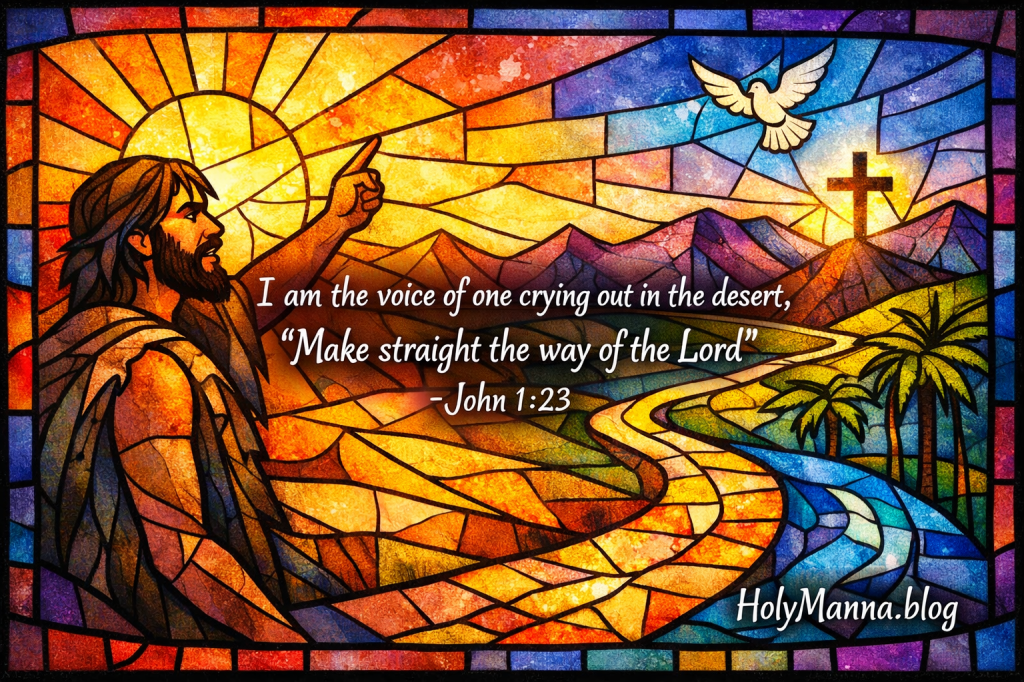
John the Baptist’s Testimony to Himself. 19 And this is the testimony of John. When the Jews from Jerusalem sent priests and Levites [to him] to ask him, “Who are you?” 20 he admitted and did not deny it, but admitted, “I am not the Messiah.” 21 So they asked him, “What are you then? Are you Elijah?” And he said, “I am not.” “Are you the Prophet?” He answered, “No.” 22 So they said to him, “Who are you, so we can give an answer to those who sent us? What do you have to say for yourself?” 23 He said:
“I am ‘the voice of one crying out in the desert,
“Make straight the way of the Lord,”’as Isaiah the prophet said.” 24 Some Pharisees were also sent. 25 They asked him, “Why then do you baptize if you are not the Messiah or Elijah or the Prophet?” 26 John answered them, “I baptize with water; but there is one among you whom you do not recognize, 27 the one who is coming after me, whose sandal strap I am not worthy to untie.” 28 This happened in Bethany across the Jordan, where John was baptizing.
Detailed Exegesis
Verse 19 “And this is the testimony of John. When the Jews from Jerusalem sent priests and Levites to him to ask him, ‘Who are you?’”
The word “testimony” signals that this is not casual conversation. It is witness language, almost courtroom language, which is important in The Gospel of John. The delegation from Jerusalem shows that John’s ministry has become impossible to ignore. Priests and Levites represent official religious scrutiny, sent to investigate whether John is claiming a role with messianic implications.
Verse 20 “He admitted and did not deny it, but admitted, ‘I am not the Messiah.’”
John’s honesty is immediate and decisive. He refuses the temptation to ride the wave of attention. This is the first lesson of authentic witness: truth includes humility. John knows his identity, and he knows Christ’s identity is greater. His clarity protects others from misplaced hope and protects his own soul from pride.
Verse 21 “So they asked him, ‘What are you then? Are you Elijah?’ And he said, ‘I am not.’ ‘Are you the Prophet?’ He answered, ‘No.’”
These questions reveal the religious landscape of the time. Elijah was expected to return as a forerunner figure, and “the Prophet” refers to the promised prophet like Moses. John answers plainly, but his words also show that the crowd’s categories are incomplete. God is fulfilling expectations, but not in a way that flatters human assumptions.
Verse 22 “So they said to him, ‘Who are you, so we can give an answer to those who sent us? What do you have to say for yourself?’”
This is the pressure of bureaucracy and reputation. They want a clear label so they can report back to authorities. John refuses the trap of self promotion. He does not define himself by a title, a brand, or a résumé. He defines himself by mission.
Verse 23 “He said: ‘I am ‘the voice of one crying out in the desert, “Make straight the way of the Lord,”’ as Isaiah the prophet said.”
John identifies himself through Isaiah, showing that his life is rooted in God’s Word. Calling himself a “voice” emphasizes that the message matters more than the messenger. The “desert” evokes Israel’s history of purification and dependence on God. “Make straight the way” is a call to repentance and readiness, because the Lord is coming to His people.
Verse 24 “Some Pharisees were also sent.”
The mention of Pharisees indicates deeper scrutiny. Pharisees were serious about the law and religious identity, and they were attentive to anything that might threaten order or introduce questionable practices. John’s ministry is now being assessed not only spiritually, but politically and socially.
Verse 25 “They asked him, ‘Why then do you baptize if you are not the Messiah or Elijah or the Prophet?’”
Baptizing in water carried religious weight. Ritual washings existed in Judaism, but John’s baptism was public, moral, and urgent. It implied that something decisive was happening, and it raised the question of authority. The Pharisees are essentially asking, “On whose authority are you calling Israel to this kind of repentance?”
Verse 26 “John answered them, ‘I baptize with water; but there is one among you whom you do not recognize.’”
John distinguishes his baptism from what is coming. Water can signify repentance and preparation, but it cannot accomplish the interior rebirth that Christ will bring through the Holy Spirit. Then John delivers a startling statement. The Messiah is already present, standing among them, and they do not recognize Him. This highlights a recurring theme in The Gospel of John: blindness can exist even among religious professionals.
Verse 27 “The one who is coming after me, whose sandal strap I am not worthy to untie.”
John expresses extreme humility, using the image of a slave’s task. He is not claiming equality with Christ. He is insisting on Christ’s surpassing holiness and authority. True witness always exalts Christ, not the self.
Verse 28 “This happened in Bethany across the Jordan, where John was baptizing.”
The location anchors the Gospel in real history and geography, reminding readers that salvation is not myth. God acts in time and space. The Jordan River also echoes Israel’s entrance into the Promised Land, which quietly signals that a new and greater passage is at hand through Christ.
Teachings
This Gospel passage teaches what authentic Christian witness looks like. It is humble, clear, and Christ centered. John the Baptist does not point to his own charisma or moral strength. He points to Jesus. That posture remains essential for every Christian, because the Church is not built on personalities, but on the Lord.
John’s testimony also shows the importance of recognizing Christ rather than merely discussing Him. It is possible to be religiously active and still miss the Lord standing nearby. The Pharisees and officials are not portrayed as careless fools. They are portrayed as serious men who still struggle to see, because they are looking for the Messiah on their own terms. This is a warning against a faith that is overly comfortable with control.
Saint Basil the Great and Saint Gregory Nazianzen help illuminate this passage, because they defended the Church’s confession of Christ’s true identity in an age of confusion. Their teaching insisted that Jesus is not a lesser divine figure or an inspired moral guide, but truly the Son. When John says the Messiah is present but unrecognized, it echoes the ongoing challenge in every age: the Lord must be confessed as He truly is, not reshaped to fit cultural comfort.
Reflection
This Gospel invites an honest look at how easily attention can drift from Christ to secondary things. John the Baptist offers a corrective by refusing to build a personal platform. He speaks truthfully, lives simply, and points away from himself. That is a helpful model for daily discipleship, especially when modern life encourages constant self presentation and approval seeking.
A practical step is to practice John’s kind of clarity in ordinary conversations. When asked about faith, it helps to speak about Jesus directly, not vaguely. Another step is to examine whether the heart expects Christ to fit a preferred script. The Pharisees had categories and questions, but they struggled to recognize the Lord already among them. That can happen today when prayer becomes more about demanding outcomes than receiving the Savior.
Where has pride or fear made it tempting to blur the truth about Jesus in order to stay comfortable?
What expectations have been placed on God that might prevent recognizing how He is already working?
How can daily prayer become more like John’s witness, pointing steadily to Christ with humility and confidence?
John the Baptist stands as a friend who speaks plainly. The Lord is real, the Lord is near, and the Lord deserves more than curiosity. The Lord deserves recognition, repentance, and a life that makes straight paths for His coming.
Keep the Way Straight and the Heart Steady
Today’s readings form a single, strong invitation: stay close to the real Jesus Christ and do not let anything replace Him. The Church does not offer a vague spirituality that can be molded to personal taste. The Church offers the Son, and with the Son comes the Father, along with the promise of eternal life. 1 John 2:22-28 speaks with the seriousness of a shepherd who knows that deception is not harmless. When Christ is denied or downsized, souls are placed at risk. The answer is not anxiety or argument for its own sake. The answer is fidelity. The call is simple and steady: remain in Him.
Psalm 98 then teaches what happens when the heart recognizes God’s truth and God’s victory. Praise becomes the natural language of faith. The Lord has done marvelous deeds, and His mercy and faithfulness are not abstract ideas. They are visible realities that deserve thanksgiving and joyful worship. This kind of praise is also a witness, because a joyful Christian life quietly tells the world that God is real and God has acted.
The Gospel, John 1:19-28, gives a living example of what faithful discipleship looks like in practice. John the Baptist refuses false identity and refuses the spotlight. He speaks clearly, lives humbly, and points directly to the One who is already present, even if the crowd does not recognize Him yet. He becomes the model for every Catholic who wants to live with integrity in a confusing age. The mission is not to be impressive. The mission is to be faithful and to make straight a path for the Lord.
This memorial of Saints Basil the Great and Gregory Nazianzen fits perfectly with that mission. They loved Christ enough to defend the truth about Him when it was unpopular and costly. Their witness reminds believers that clarity about Jesus is not a hobby for theologians. It is protection for the flock and nourishment for the soul.
A good call to action for today is to choose one concrete way to “remain in Him” and actually follow through. Return to the Creed and pray it slowly with attention. Approach the sacrament of confession with honesty and trust. Give prayer a real place in the day, even when it feels ordinary. Speak the name of Jesus without embarrassment, because He is not an accessory to life. He is Lord.
What is one lie or half truth that has tried to reshape who Jesus is?
What is one habit that will help the heart stay anchored in the Son and therefore in the Father?
What is one simple way to be a clearer witness this week, like John the Baptist, without drawing attention to the self?
The Lord is near, and the Lord is faithful. When the heart remains in Christ, it can stand firm against confusion, break into genuine praise, and live with the quiet confidence of someone who knows the Savior is real and His coming is worth preparing for.
Engage with Us!
Readers are warmly invited to share reflections in the comments below, because the Word of God is meant to be received, prayed, and lived together as a family of faith. Honest thoughts, struggles, and graces can encourage someone else more than expected, especially when they are rooted in what the Lord is revealing through today’s readings.
- First Reading, 1 John 2:22-28: Where has the heart been tempted to accept a softer version of Jesus that demands less obedience and less surrender? What does it look like today to live the command “Remain in him” with concrete habits of prayer, confession, and fidelity to the Church’s teaching?
- Responsorial Psalm, Psalm 98: What “marvelous deeds” has the Lord done that deserve fresh gratitude, even if they have been taken for granted? How can daily prayer become more joyful and more confident as the heart learns to sing again, “Sing a new song to the Lord”?
- Holy Gospel, John 1:19-28: In what areas of life is it tempting to seek attention, approval, or a flattering identity instead of quiet faithfulness? How can John the Baptist’s humility and clarity shape the way Christ is spoken about this week, especially when the world asks, “Who are you?”?
May the Lord give the grace to remain faithful, to praise Him with a joyful heart, and to witness with humble courage. A life of faith is built one day at a time, so every conversation, every sacrifice, and every act of service can be offered with the love and mercy Jesus taught, bringing His light into the ordinary places where holiness is formed.
Sacred Heart of Jesus, we trust in You!
Immaculate Heart of Mary, pray for us!
Saint Michael the Archangel, defend us in battle!
Follow us on YouTube, Instagram and Facebook for more insights and reflections on living a faith-filled life.


Leave a Reply