From Faith to Glory: Trusting in God’s Promises
Have you ever found yourself waiting on God, wondering when His promises will come to pass? Faith often requires us to trust beyond what we can see, to believe even when answers feel distant. Today’s readings invite us into a journey of faith and transformation—a path that begins with trust in God’s promises and culminates in the radiant revelation of His glory. From Abraham’s covenant with God to Christ’s transfiguration on the mountain, we see how faith leads to divine fulfillment.
The story of Abraham in Genesis reflects a moment of both faith and uncertainty. God promises him descendants as numerous as the stars, yet Abraham still asks, “How will I know that I will possess it?” (Genesis 15:8). This echoes a common human struggle—trusting in God’s plan when we long for tangible assurance. Likewise, the psalmist in Psalm 27 declares confidence in the Lord, reminding us that faith requires waiting with courage: “Wait for the Lord, take courage; be stouthearted, wait for the Lord!” (Psalm 27:14). St. Paul, in his letter to the Philippians, points us beyond earthly distractions, urging us to fix our eyes on our true citizenship in heaven. And finally, in Luke’s Gospel, we witness the Transfiguration—Jesus revealing His divine glory to Peter, James, and John. Here, the Father’s voice resounds: “This is my chosen Son; listen to Him.” (Luke 9:35). Faith does not remain stagnant; it transforms, lifting our eyes from earthly concerns to heavenly realities.
Historically, each of these readings speaks to moments of profound revelation. For Abraham, the covenant ritual was a familiar practice in the ancient world, yet God’s promise was extraordinary—it would shape salvation history. The Transfiguration, celebrated as a feast in the Church, was a pivotal moment for the disciples, giving them a glimpse of Christ’s divine nature before His Passion. The readings as a whole remind us that faith is both a journey and a gift. God calls us to trust, even in uncertainty, knowing that He is always working toward His ultimate revelation of glory. Where is God asking you to trust Him more deeply today?
First Reading – Genesis 15:5-12
Trusting in the Promise: Faith as Righteousness
In the ancient world, covenants were solemn, binding agreements, often sealed with ritual sacrifices. This was a familiar concept to Abram (later Abraham), yet what God promises in Genesis 15 is far beyond human expectation: a future as vast as the stars, a legacy that will unfold in God’s time. This moment is foundational in salvation history, as Abram’s faith is “credited to him as righteousness” (Genesis 15:6), establishing the biblical principle that righteousness comes through faith. This passage resonates deeply with today’s theme, showing how trust in God’s promises leads to transformation. Just as Abraham had to trust in God’s timing, so too are we called to believe, even when the fulfillment of God’s plan is unseen.
Genesis 15:5-12
New American Bible (Revised Edition)
5 He took him outside and said: Look up at the sky and count the stars, if you can. Just so, he added, will your descendants be. 6 Abram put his faith in the Lord, who attributed it to him as an act of righteousness.
7 He then said to him: I am the Lord who brought you from Ur of the Chaldeans to give you this land as a possession. 8 “Lord God,” he asked, “how will I know that I will possess it?” 9 He answered him: Bring me a three-year-old heifer, a three-year-old female goat, a three-year-old ram, a turtledove, and a young pigeon. 10 He brought him all these, split them in two, and placed each half opposite the other; but the birds he did not cut up. 11 Birds of prey swooped down on the carcasses, but Abram scared them away. 12 As the sun was about to set, a deep sleep fell upon Abram, and a great, dark dread descended upon him.
Detailed Exegesis
Verse 5 – “He took him outside and said: Look up at the sky and count the stars, if you can. Just so, he added, will your descendants be.”
God invites Abram to look beyond his present circumstances. At this point, Abram is an elderly man with no children, and yet God asks him to believe in an inheritance greater than he can fathom. This verse reflects the nature of divine promises: they often seem impossible by human standards but are fulfilled through faith.
Verse 6 – “Abram put his faith in the Lord, who attributed it to him as an act of righteousness.”
This is one of the most pivotal verses in Scripture. St. Paul later references this moment in Romans 4:3, emphasizing that righteousness comes through faith, not works of the law. Abram’s belief in God’s word prefigures the Christian call to live by faith in Christ. The Catechism of the Catholic Church (CCC) teaches: “Faith is man’s response to God, who reveals Himself and gives Himself to man, at the same time bringing man a superabundant light as he searches for the ultimate meaning of his life” (CCC 26).
Verse 7 – “He then said to him: I am the Lord who brought you from Ur of the Chaldeans to give you this land as a possession.”
God reminds Abram of His faithfulness. Ur was a highly developed but pagan city, and God’s calling set Abram apart for a divine purpose. This verse reinforces the theme of trust: just as God led Abram out of Ur, He leads us out of worldly attachments into His promises.
Verse 8 – “Lord God,” he asked, “how will I know that I will possess it?””
Even with faith, Abram seeks assurance. His question is not defiance but a desire for confirmation, showing that faith and human uncertainty can coexist. Similarly, we may ask, Lord, how will I know Your plan is unfolding? God does not rebuke Abram but responds with a covenant, reminding us that He meets us in our doubts.
Verse 9-10 – “He answered him: Bring me a three-year-old heifer, a three-year-old female goat, a three-year-old ram, a turtledove, and a young pigeon. He brought him all these, split them in two, and placed each half opposite the other; but the birds he did not cut up.”
This reflects an ancient covenant ritual where two parties would walk between sacrificed animals, symbolizing that breaking the covenant would result in a fate like the slain animals. But later in this chapter, only God (symbolized by a torch and smoking fire pot) passes through, signifying that the fulfillment of the promise depends solely on Him.
Verse 11 – “Birds of prey swooped down on the carcasses, but Abram scared them away.”
The birds of prey symbolize obstacles to God’s promises—perhaps doubts, fears, or even demonic forces trying to disrupt the covenant. Abram’s action foreshadows the vigilance needed to protect one’s faith.
Verse 12 – “As the sun was about to set, a deep sleep fell upon Abram, and a great, dark dread descended upon him.”
The darkness signifies the weight of the covenant and the trials ahead for Abram’s descendants. This prefigures the oppression of Israel in Egypt and reminds us that God’s promises often come with trials before fulfillment.
Teachings of the Church
Abram’s faith being “credited as righteousness” is a key biblical teaching on justification. The Catechism of the Catholic Church explains: “Believing in Jesus Christ and in the One who sent him for our salvation is necessary for obtaining that salvation… without faith it is impossible to please God.” (CCC 161). This faith is not mere intellectual assent but a lived trust, an abandonment to divine providence.
The covenant ritual in this passage foreshadows the New Covenant in Christ. Just as God alone passed through the sacrificial offerings, Christ took upon Himself the fulfillment of the covenant through His Passion. St. Augustine reflects on this, stating: “The New Testament lies hidden in the Old, and the Old Testament is unveiled in the New.” This shows that Abraham’s story is not just history but a revelation of God’s salvific plan leading to Christ.
Historically, this passage was foundational for Israel’s understanding of their identity as God’s chosen people. It was often recalled during times of trial, reinforcing the belief that God would remain faithful to His promises. This same faith is called for in the Church today, especially as we navigate personal and collective uncertainties.
Reflection
Faith is not always easy. Like Abram, we sometimes struggle with doubt and ask for signs. But today’s reading reassures us that God is faithful even when His promises seem distant. Trusting in God does not mean we will always understand His timing, but it does mean we can be confident that He is at work.
Where in your life is God calling you to deeper trust? Are you waiting for a promise to unfold? Are you struggling with fear or doubt? Take a moment to reflect on Abram’s journey—his faith did not mean he had all the answers, but it meant he believed in the One who did. Let this reading encourage you to surrender your uncertainties to God and walk forward in faith, knowing that His promises are true.
Responsorial Psalm – Psalm 27:1, 7-9, 13-14
The Lord is My Light: Confidence in God’s Presence
Psalm 27 is a psalm of unwavering trust in God, often attributed to King David during a time of distress. Historically, this psalm was likely composed during a period of war or exile, when David faced both physical enemies and spiritual trials. Despite the darkness surrounding him, he proclaims, “The Lord is my light and my salvation; whom should I fear?” (Psalm 27:1). This psalm fits beautifully into today’s theme of faith and transformation. Just as Abram trusted in God’s promise, and as the disciples witnessed Christ’s glory on the mountain, the psalmist teaches us that trust in God dispels fear and grants courage. Faith is not simply belief—it is the foundation of our security, our guiding light through darkness.
Psalm 27:1, 7-9, 13-14
New American Bible (Revised Edition)
Trust in God
1 Of David.
The Lord is my light and my salvation;
whom should I fear?
The Lord is my life’s refuge;
of whom should I be afraid?
7 Hear my voice, Lord, when I call;
have mercy on me and answer me.
8 “Come,” says my heart, “seek his face”;
your face, Lord, do I seek!
9 Do not hide your face from me;
do not repel your servant in anger.
You are my salvation; do not cast me off;
do not forsake me, God my savior!
13 I believe I shall see the Lord’s goodness
in the land of the living.
14 Wait for the Lord, take courage;
be stouthearted, wait for the Lord!
Detailed Exegesis
Verse 1 – “The Lord is my light and my salvation; whom should I fear? The Lord is my life’s refuge; of whom should I be afraid?”
Light is a powerful biblical image, symbolizing God’s presence, guidance, and truth. In a world filled with uncertainty, the psalmist declares that God alone is his security. This verse echoes Jesus’ words: “I am the light of the world” (John 8:12), reminding us that faith in Christ removes all fear. The Catechism states: “Faith is the beginning of eternal life” (CCC 163), emphasizing that when we trust in God, our souls are already living in His light.
Verse 7 – “Hear my voice, Lord, when I call; have mercy on me and answer me.”
Here, the psalm shifts from a declaration of trust to a plea for God’s presence. This reflects the reality of faith—it is not always easy, and there are moments when we cry out, longing for assurance. This verse resonates with Abram’s question in Genesis: “Lord God, how will I know?” Faith does not eliminate struggles, but it keeps us turning to God in our need.
Verse 8 – “Come,” says my heart, “seek his face”; your face, Lord, do I seek!”
In biblical language, seeking God’s face symbolizes longing for His presence. In the Old Testament, seeing God’s face was considered too glorious for man to behold (Exodus 33:20), yet the psalmist expresses a deep desire for intimacy with God. This foreshadows the fulfillment found in Christ, who reveals the Father’s face to us. As Jesus says, “Whoever has seen me has seen the Father” (John 14:9).
Verse 9 – “Do not hide your face from me; do not repel your servant in anger. You are my salvation; do not cast me off; do not forsake me, God my savior!”
Even in faith, the psalmist fears abandonment. This is a profoundly human experience—feeling distant from God in trials. Yet, Scripture assures us, “I will never forsake you or abandon you” (Hebrews 13:5). The plea in this verse invites us to trust that God’s apparent silence is not absence, but an invitation to deeper faith.
Verse 13 – “I believe I shall see the Lord’s goodness in the land of the living.”
This is a bold statement of hope. The psalmist does not wait for heaven to witness God’s faithfulness—he expects it now. This echoes St. Paul’s message in Philippians: our true home is in heaven, but we glimpse God’s glory even here.
Verse 14 – “Wait for the Lord, take courage; be stouthearted, wait for the Lord!”
Waiting is one of the hardest aspects of faith. Like Abram, who waited for the promise of descendants, and like the disciples, who would later wait for the resurrection, we are called to be patient. Trusting in God’s timing requires courage. St. Augustine reflects on this beautifully: “If God seems slow in responding, it is because He is preparing a better gift. He will not deny us. He has promised it.”
Teachings of the Church
The Church teaches that faith is not passive but an active trust in God. The Catechism affirms: “Faith is a personal adherence of man to God. It is a free assent to the whole truth that God has revealed.” (CCC 150). The psalmist models this trust—his faith is not just a belief but a commitment to seeking and waiting on God.
The theme of divine light in this psalm also connects to Christ. The Second Vatican Council states: “Christ is the light of nations… He has come as a light into the world, so that whoever believes in Him may not remain in darkness.” This psalm, then, is not only about David’s experience but points us directly to Jesus, who is our refuge and salvation.
This psalm has also been a source of strength for persecuted Christians throughout history. Many martyrs clung to these words, finding courage in the face of death. St. Thomas More, before his execution, wrote to his daughter: “Nothing can come but what God wills. And I make myself very sure that whatever that be, it shall indeed be the best.” His faith mirrored the confidence of this psalm.
Reflection
Fear is a natural human emotion, but faith teaches us to replace fear with trust. Psalm 27 is an invitation to make God our refuge, our light in the darkness. Like Abram, we may ask, Lord, how will I know? But faith calls us to wait in hope, believing in His goodness.
Are you struggling with fear or uncertainty? Where is God asking you to trust in Him more deeply? Spend time in prayer with this psalm. Let its words become your own. As you wait on the Lord, take courage—He is always faithful.
Second Reading – Philippians 3:17-4:1
Citizens of Heaven: Standing Firm in Faith
The letter to the Philippians is often called Paul’s “Letter of Joy,” yet it was written from a Roman prison. Despite his suffering, Paul’s words radiate confidence and hope, urging believers to focus not on earthly struggles but on their true home in heaven. In today’s passage, he contrasts those who live for worldly pleasures with those who await Christ’s return, calling the faithful to imitate his example and stand firm in the Lord. This fits beautifully with today’s theme—just as Abram trusted in God’s unseen promise and the disciples witnessed Jesus’ glory, Paul reminds us that faith transforms our perspective, lifting our hearts from temporary concerns to eternal truths.
Philippians 3:17-4:1
New American Bible (Revised Edition)
17 Join with others in being imitators of me, brothers, and observe those who thus conduct themselves according to the model you have in us. 18 For many, as I have often told you and now tell you even in tears, conduct themselves as enemies of the cross of Christ. 19 Their end is destruction. Their God is their stomach; their glory is in their “shame.” Their minds are occupied with earthly things. 20 But our citizenship is in heaven, and from it we also await a savior, the Lord Jesus Christ. 21 He will change our lowly body to conform with his glorified body by the power that enables him also to bring all things into subjection to himself.
Live in Concord. 1 Therefore, my brothers, whom I love and long for, my joy and crown, in this way stand firm in the Lord, beloved.
Detailed Exegesis
Verse 17 – “Join with others in being imitators of me, brothers, and observe those who thus conduct themselves according to the model you have in us.”
Paul presents himself as a model of Christian living—not because he is perfect, but because he follows Christ. Imitation of holy examples is a key theme in the spiritual life. The Catechism states: “The way of Christ leads to life; a contrary way leads to destruction.” (CCC 1696). Paul urges the Philippians to stay on the right path by following those who live faithfully.
Verse 18 – “For many, as I have often told you and now tell you even in tears, conduct themselves as enemies of the cross of Christ.”
Paul expresses deep sorrow over those who reject Christ. This reflects Jesus’ warning that some will choose the broad road to destruction (Matthew 7:13). Being an “enemy of the cross” means refusing the call to self-denial and sacrifice. In Lent, we are reminded that discipleship requires embracing the cross.
Verse 19 – “Their end is destruction. Their God is their stomach; their glory is in their ‘shame.’ Their minds are occupied with earthly things.”
Here, Paul critiques those who live only for pleasure and self-indulgence. The phrase “their God is their stomach” refers to those consumed by material desires. This warning is relevant today, where consumerism and self-gratification often replace spiritual priorities. Jesus himself says, “Do not store up for yourselves treasures on earth” (Matthew 6:19).
Verse 20 – “But our citizenship is in heaven, and from it we also await a savior, the Lord Jesus Christ.”
This is the heart of Paul’s message. While we live in this world, our true home is heaven. This echoes Jesus’ words: “My kingdom is not of this world” (John 18:36). St. Augustine reflected on this truth, writing: “You have made us for Yourself, O Lord, and our hearts are restless until they rest in You.”
Verse 21 – “He will change our lowly body to conform with his glorified body by the power that enables him also to bring all things into subjection to himself.”
Paul points to the resurrection, where our mortal bodies will be transformed like Christ’s. This reminds us that faith is not just about endurance—it leads to glory. The Catechism teaches: “Christ, ‘the firstborn from the dead,’ shows us the way to our own resurrection.” (CCC 655).
Chapter 4, Verse 1 – “Therefore, my brothers, whom I love and long for, my joy and crown, in this way stand firm in the Lord, beloved.”
Paul ends with a call to perseverance. Like Abram, who trusted despite uncertainty, and the disciples, who glimpsed Christ’s glory on the mountain, we are called to stand firm in faith, knowing our future is secure in Christ.
Teachings of the Church
The Church teaches that our ultimate destiny is union with God in heaven. The Catechism states: “Heaven is the ultimate end and fulfillment of the deepest human longings, the state of supreme, definitive happiness.” (CCC 1024). Paul’s message reminds us that while we live on earth, our hearts must be set on eternity.
St. John Chrysostom reflects on this passage, emphasizing that Christians must live differently from the world: “He who is noble and wise, though he be in a foreign land, still regards his own country; so too, we must live on earth as citizens of heaven.” This means making choices that reflect our eternal identity, resisting sin, and seeking holiness.
Historically, this passage encouraged early Christians facing persecution. Many believers were tempted to renounce their faith to avoid suffering, but Paul’s words reminded them that their trials were temporary. Even today, in a world that often opposes Christian values, we are called to remain steadfast, keeping our eyes on Christ’s coming glory.
Reflection
This passage challenges us to examine our hearts. Are we living as citizens of heaven, or are we too focused on earthly concerns? Lent is a time to realign our priorities, to let go of attachments that pull us away from God.
Paul’s words also remind us that faith transforms not only our hearts but our future. We do not suffer or strive in vain—Christ will return, and we will be glorified with Him. This should fill us with hope. Do you live with this confidence? Do you see your struggles in light of eternity?
As we continue through Lent, let us stand firm in faith, trusting in God’s promises and living with our eyes fixed on heaven.
Holy Gospel – Luke 9:28-36
The Transfiguration: A Glimpse of Glory
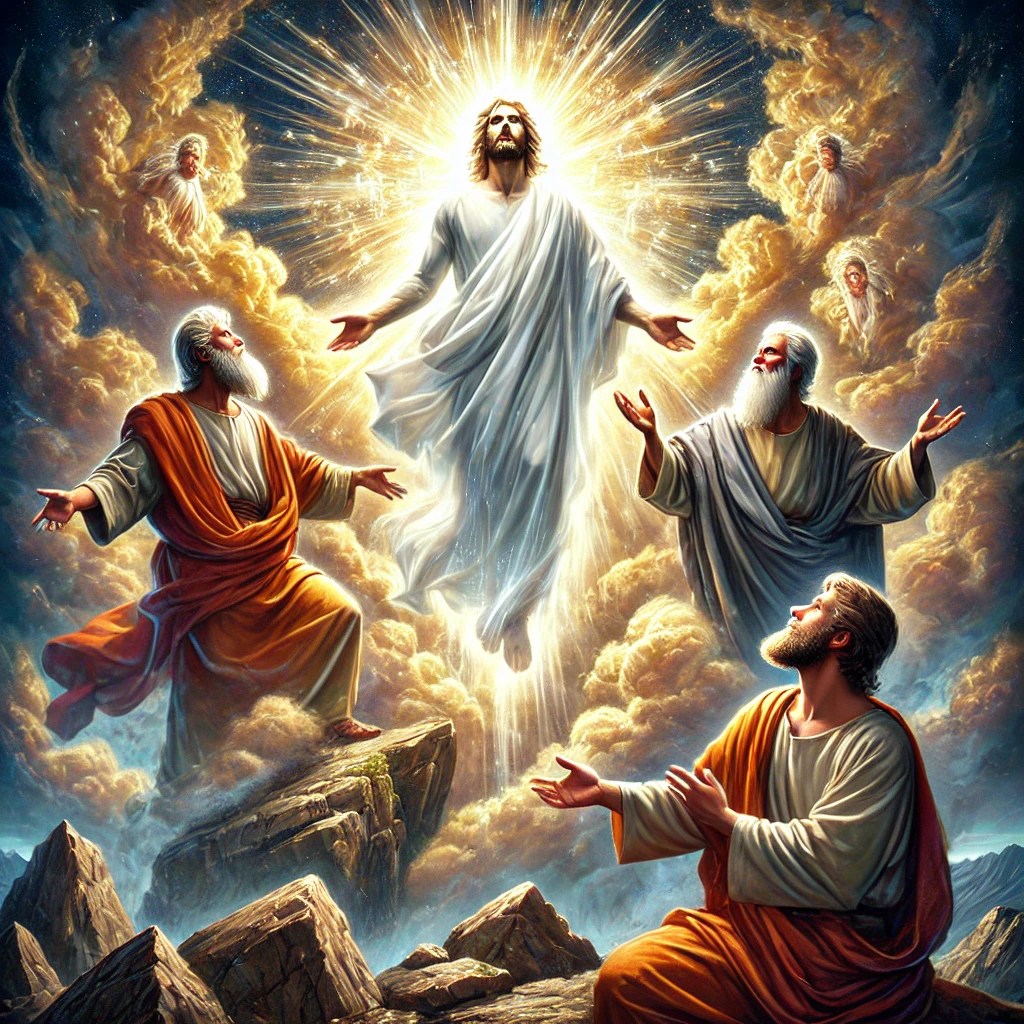
The Transfiguration of Jesus is one of the most profound moments in the Gospels, revealing Christ’s divine nature to His closest disciples. Occurring shortly before His Passion, this event reassures Peter, James, and John that Jesus is not just the suffering Messiah but also the glorified Son of God. In Jewish tradition, mountaintops were places of divine encounter—Moses received the Law on Mount Sinai, and Elijah experienced God’s presence on Mount Horeb. Now, on another mountain, Jesus stands with these two great figures, showing that He is the fulfillment of both the Law and the Prophets. This passage fits perfectly into today’s theme of faith and transformation, reminding us that while we must trust in God’s promises amid trials, there is always a greater glory to come.
Luke 9:28-36
New American Bible (Revised Edition)
28 About eight days after he said this, he took Peter, John, and James and went up the mountain to pray. 29 While he was praying his face changed in appearance and his clothing became dazzling white. 30 And behold, two men were conversing with him, Moses and Elijah, 31 who appeared in glory and spoke of his exodus that he was going to accomplish in Jerusalem. 32 Peter and his companions had been overcome by sleep, but becoming fully awake, they saw his glory and the two men standing with him. 33 As they were about to part from him, Peter said to Jesus, “Master, it is good that we are here; let us make three tents, one for you, one for Moses, and one for Elijah.” But he did not know what he was saying. 34 While he was still speaking, a cloud came and cast a shadow over them, and they became frightened when they entered the cloud. 35 Then from the cloud came a voice that said, “This is my chosen Son; listen to him.” 36 After the voice had spoken, Jesus was found alone. They fell silent and did not at that time tell anyone what they had seen.
Detailed Exegesis
Verse 28 – “About eight days after he said this, he took Peter, John, and James and went up the mountain to pray.”
The phrase “after he said this” refers to Jesus’ prediction of His Passion and the cost of discipleship (Luke 9:22-27). The Transfiguration serves as a confirmation that suffering will lead to glory. Jesus chooses Peter, James, and John—His inner circle—just as He will later invite them to witness His agony in Gethsemane.
Verse 29 – “While he was praying his face changed in appearance and his clothing became dazzling white.”
Prayer is the context for transformation. This recalls Moses, whose face shone after encountering God (Exodus 34:29), but here, Jesus is not reflecting God’s light—He is the source. The dazzling white clothing symbolizes divine glory, a foreshadowing of the Resurrection. The Catechism states: “Christ’s Transfiguration aims at strengthening the apostles’ faith in anticipation of his Passion” (CCC 568).
Verse 30-31 – “And behold, two men were conversing with him, Moses and Elijah, who appeared in glory and spoke of his exodus that he was going to accomplish in Jerusalem.”
Moses and Elijah represent the Law and the Prophets, testifying to Jesus’ mission. The word “exodus” connects Jesus’ upcoming Passion with Israel’s deliverance from slavery, showing that His death and resurrection will bring the ultimate liberation.
Verse 32 – “Peter and his companions had been overcome by sleep, but becoming fully awake, they saw his glory and the two men standing with him.”
The disciples struggle to stay awake, similar to Gethsemane (Luke 22:45-46), showing the weakness of human nature in moments of divine revelation. Their awakening signifies a deeper spiritual insight—when they see Jesus’ glory, they recognize more fully who He is.
Verse 33 – “As they were about to part from him, Peter said to Jesus, ‘Master, it is good that we are here; let us make three tents, one for you, one for Moses, and one for Elijah.’ But he did not know what he was saying.”
Peter’s reaction is human—he wants to hold onto the moment. The mention of tents recalls the Feast of Tabernacles, which celebrated God dwelling among His people. However, Peter’s misunderstanding shows that the Transfiguration is not the final glory; the Cross must come first.
Verse 34 – “While he was still speaking, a cloud came and cast a shadow over them, and they became frightened when they entered the cloud.”
The cloud represents God’s presence, just as it did in the Old Testament—leading Israel through the desert (Exodus 40:34-38) and descending upon the Temple (1 Kings 8:10-11). Fear is a natural response to encountering God’s majesty.
Verse 35 – “Then from the cloud came a voice that said, ‘This is my chosen Son; listen to him.’”
This echoes the voice at Jesus’ baptism (Luke 3:22), affirming His divine Sonship. The command “listen to him” connects to Deuteronomy 18:15, where Moses prophesies that God will raise up a prophet like him. Jesus is the fulfillment of that prophecy.
Verse 36 – “After the voice had spoken, Jesus was found alone. They fell silent and did not at that time tell anyone what they had seen.”
The vision ends, but its meaning lingers. The disciples remain silent, likely overwhelmed and unsure of how to comprehend what they have witnessed. Only after the Resurrection will they fully understand.
Teachings of the Church
The Transfiguration reveals Christ’s divine nature and prepares the disciples for His Passion. The Catechism teaches: “The Transfiguration gives us a foretaste of Christ’s glorious coming, when he ‘will change our lowly body to be like his glorious body.’” (CCC 556). This event is a bridge between Jesus’ suffering and His future triumph.
St. Thomas Aquinas reflects on the significance of Moses and Elijah’s presence, stating: “Moses represents the Law, and Elijah the Prophets, because the grace of the Gospel had to be attested to by both.” This shows that Jesus is the culmination of all God’s revelations throughout salvation history.
Historically, the Transfiguration has been a source of encouragement for Christians undergoing persecution. In times of suffering, this passage reassures us that beyond trials, there is divine glory. St. John Paul II included the Transfiguration as one of the Luminous Mysteries of the Rosary, emphasizing its role in deepening our contemplation of Christ’s mission.
Reflection
The Transfiguration challenges us to see beyond our immediate struggles and trust in God’s greater plan. Are there areas in your life where you need to trust that suffering will lead to transformation? Like Peter, we may want to stay in moments of spiritual consolation, but faith requires us to walk through the trials ahead.
Jesus reveals His glory to strengthen the disciples before His Passion. Similarly, God gives us moments of clarity and grace to prepare us for challenges. Have you had moments where you’ve seen God’s presence more clearly? How can you hold onto those in difficult times?
As we continue through Lent, let this passage remind us that the Cross is not the end of the story. Beyond the sacrifice is resurrection, beyond suffering is glory. May we have the faith to trust in the promise of transformation.
From Faith to Glory: Embracing the Promise
Today’s readings invite us on a journey of faith—one that begins with trust, deepens in perseverance, and culminates in the glory of God. From Abram’s covenant in Genesis to Paul’s call to focus on our heavenly citizenship, and ultimately to the radiant revelation of Christ’s divinity in the Gospel of Luke, we are reminded that faith is not just believing in God’s promises but actively walking toward them, even when the road is uncertain. Like Abram, we may ask, Lord, how will I know? Like the psalmist, we may cry out, Do not hide your face from me! And like Peter, we may long to hold onto moments of clarity while avoiding the trials ahead. But through it all, God assures us: “This is my chosen Son; listen to Him.” (Luke 9:35).
Faith is transformative. Abram was not just promised descendants—he was transformed into Abraham, the father of nations. The disciples were not merely given a vision of Christ’s glory—they were being prepared to carry their own crosses and proclaim His resurrection. And we, too, are not called to passively wait for heaven but to live as citizens of it even now. This is the essence of Lent: a time to surrender our doubts, renew our trust, and allow Christ to change us.
Where is God calling you to deeper trust? Are you holding onto fears that keep you from stepping forward in faith? Are you living as a citizen of heaven, or are you still clinging to the comforts of this world? The path of faith is not always easy, but as today’s readings remind us, it always leads to something greater. So take courage. Stand firm. Keep your eyes on the promise. And know that beyond the trials, beyond the waiting, beyond the cross—glory awaits.
Engage with Us!
We’d love to hear how today’s readings speak to your heart! Share your reflections in the comments below—whether it’s a personal insight, a moment where God has called you to deeper faith, or a challenge you’re facing in trusting His promises. Let’s journey together as we grow in faith and encourage one another in Christ.
Reflection Questions:
First Reading (Genesis 15:5-12) – Abram believed in God’s promise even when he had no proof. What is one area in your life where God is asking you to trust Him more deeply? How can you strengthen your faith when doubts arise?
Responsorial Psalm (Psalm 27:1, 7-9, 13-14) – The psalmist declares, “The Lord is my light and my salvation; whom should I fear?” Are there fears in your life that are keeping you from fully trusting God? How can you replace fear with confidence in His love?
Second Reading (Philippians 3:17-4:1) – Paul reminds us that our true citizenship is in heaven. Are you living as a citizen of heaven, or are you too focused on earthly concerns? What practical steps can you take to fix your heart more firmly on God’s kingdom?
Gospel (Luke 9:28-36) – The disciples saw Jesus’ glory but still had to walk through the trials ahead. Have you had a “mountaintop” experience with God that strengthened your faith? How can you hold onto that faith in times of struggle?
May we live each day with the trust of Abraham, the confidence of the psalmist, the perseverance of Paul, and the hope of the disciples. As we walk through Lent, may our faith be transformed, leading us closer to the love and mercy of Jesus.
Keep trusting, keep seeking, and keep shining His light in the world!
Follow us on Instagram and Facebook for more insights and reflections on living a faith-filled life.


 Holy Manna!
Leave a reply to Saint oluwabunmi Ogundiran Cancel reply