A Legacy of Radical Generosity and Faith
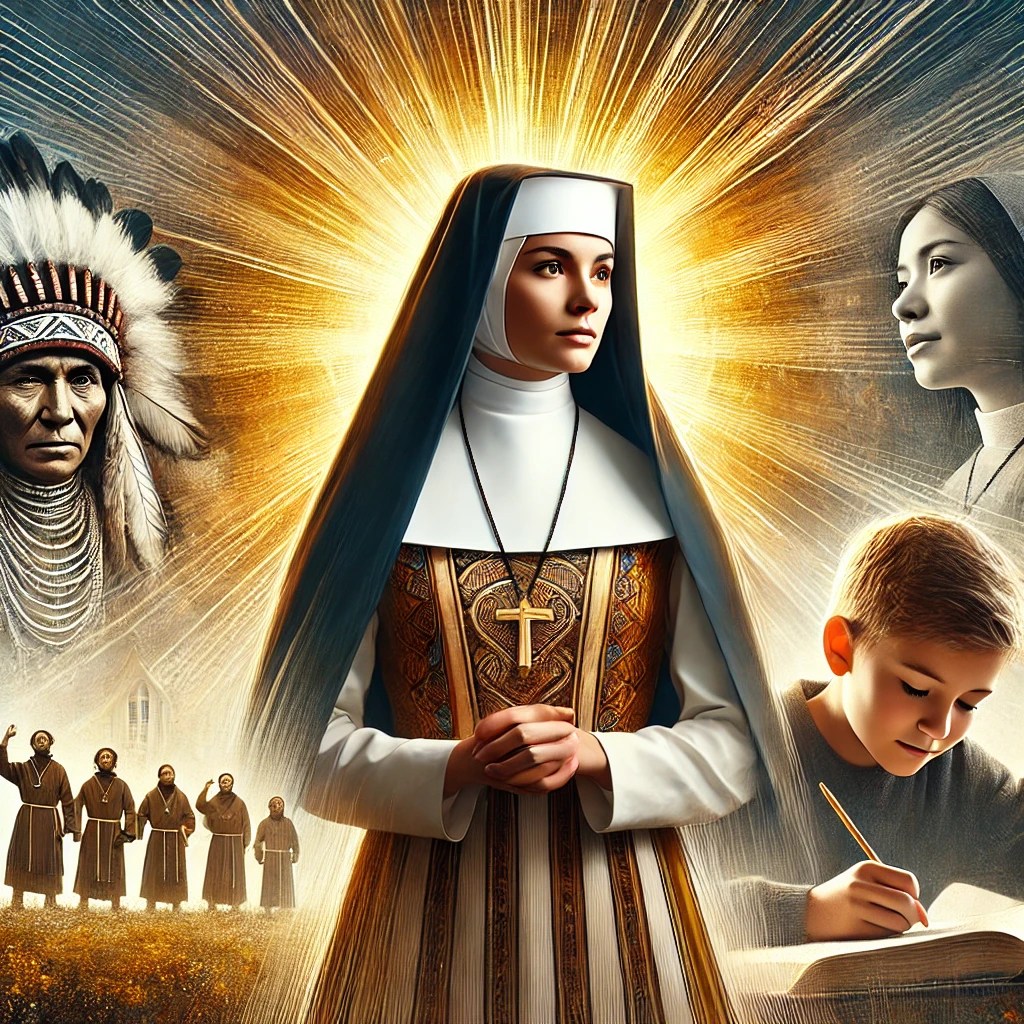
Saint Katharine Drexel stands as one of the most inspiring figures in American Catholic history. A woman of immense wealth and privilege, she could have lived a comfortable life, enjoying the luxuries of high society. Instead, she gave it all away—her fortune, her time, and her very life—to serve God through the most vulnerable in society. Katharine Drexel was a pioneer in education and racial justice, dedicating herself to the upliftment of Native Americans and African Americans through the foundation of schools, missions, and social programs. In an era of deep racial division and inequality, she stood firm in her faith, working tirelessly to ensure that those who were marginalized had access to both quality education and the love of Christ. She was canonized in 2000 by Pope John Paul II, making her only the second American-born saint to be recognized by the Church. Her life is a testament to the power of faith in action—a call to use the gifts God has given us to serve those in need.
From Heiress to Humble Servant of Christ
Katharine Drexel was born on November 26, 1858, in Philadelphia, Pennsylvania, into one of the wealthiest families in America. Her father, Francis Anthony Drexel, was a successful banker, and her mother, Hannah Langstroth Drexel, was known for her deep compassion and philanthropy. When Katharine was just a few weeks old, her mother passed away, and her father later remarried Emma Bouvier, who raised Katharine and her sisters in a home centered on both faith and generosity. The Drexel family was known for their charitable works; their home was open to the poor several times a week, and their wealth was consistently used to fund projects that helped the needy.
Despite her privileged upbringing, Katharine was profoundly aware of the suffering around her. Her travels across the United States exposed her to the appalling conditions in which many Native Americans and African Americans lived. The systemic injustices they faced deeply moved her, sparking a desire to do more than just offer financial aid. In 1887, during a private audience with Pope Leo XIII, she asked him to send missionaries to serve Native Americans. His response changed her life: “Why not become a missionary yourself?” These words became the seed of her vocation. She made the radical decision to give up her inheritance and enter religious life. In 1891, she founded the Sisters of the Blessed Sacrament, an order dedicated to serving Native Americans and African Americans, and spent the rest of her life championing education, racial justice, and the dignity of every human person.
The Miracle of Education and Social Change
Saint Katharine Drexel’s impact extended far beyond her financial generosity. Through her tireless efforts, she founded over 60 schools across the United States, providing quality education to those who had been systematically denied it. Her most well-known institution, Xavier University of Louisiana, became the first and remains the only historically Black Catholic university in the country. Her belief was simple yet profound: education was the key to breaking cycles of poverty and oppression.
Although she was not known for performing miraculous healings during her lifetime, her work itself was a miracle—transforming lives, breaking barriers, and giving hope to those whom society had cast aside. She fearlessly fought against racial segregation in education, ensuring that African American and Native American children received the same opportunities as their white counterparts. Her ability to inspire change in an era of deep racial divisions was nothing short of extraordinary.
Facing Opposition with Faith and Perseverance
Katharine’s mission was not without opposition. Many resented her work, seeing her advocacy for African Americans and Native Americans as a challenge to the status quo. Some of the schools she established were vandalized, and her order was often met with hostility. But rather than backing down, she remained steadfast, placing her trust in God’s will. Her strength came from the Eucharist, which was at the center of her spirituality. She knew that the work she was doing was not hers alone—it was God’s mission, and she was merely His instrument.
In 1935, at the age of 77, she suffered a severe heart attack, which forced her to step away from her active ministry. While she could no longer physically continue her work, she embraced this time as a period of deep prayer and contemplation, offering her sufferings for the success of her order. She remained devoted to her mission until her passing on March 3, 1955, at the age of 96.
Miracles That Led to Sainthood
Even after her death, Saint Katharine Drexel continued to intercede for those in need. Two miraculous healings were attributed to her, leading to her beatification and canonization. The first involved Robert Gutherman, a teenager who had suffered complete hearing loss in one ear. His family prayed for Katharine’s intercession, and miraculously, his hearing was fully restored. The second miracle was the healing of Amy Wall, a young girl born profoundly deaf. After her family sought the intercession of Saint Katharine, Amy’s hearing was inexplicably restored, baffling medical professionals.
Today, the National Shrine of Saint Katharine Drexel in Philadelphia serves as a place of pilgrimage, where the faithful gather to honor her legacy and seek her intercession. Her life continues to inspire countless people to serve the marginalized, live out their faith boldly, and trust in the providence of God.
A Call to Live Generously and Fearlessly
Saint Katharine Drexel’s life challenges us to ask ourselves: Are we using our gifts, resources, and time to serve those in need? She did not hoard her wealth or use it for personal gain—she used it to glorify God and uplift the oppressed. While most of us are not born into vast fortunes, we all have something to give. Whether it’s our time, our talents, or our prayers, we are all called to be generous with what we have.
Her unwavering commitment to racial justice is also a call to action. In a world that still struggles with racial and social inequalities, how can we be agents of change in our own communities? It might be through education, advocacy, or simply standing in solidarity with those who are marginalized.
Finally, her profound Eucharistic devotion reminds us of the power of prayer and total surrender to God’s will. Even when she faced opposition, even when her health declined, she never wavered in her faith. Let her example inspire us to trust in God’s plan, even when it requires sacrifice. May we, like Saint Katharine, have the courage to say “yes” to God’s call, no matter where it leads us.
Engage with Us!
We invite you to share your thoughts and reflections on Saint Katharine Drexel’s inspiring life. How does her example resonate with you? In what ways can you contribute to social justice in your community? Let’s support each other in our faith journeys, striving to embody the love and mercy that Jesus exemplified.
Reflection Questions:
- How can you utilize your personal resources to support marginalized communities in your area?
- What steps can you take to educate yourself and others about racial and social injustices?
- In what ways can you deepen your devotion to the Eucharist and allow it to inspire your daily actions?
May Saint Katharine Drexel’s example inspire us to live out our faith with courage, compassion, and unwavering commitment to justice.
Saint Katharine Drexel, pray for us!
Follow us on Instagram and Facebook for more insights and reflections on living a faith-filled life.


Leave a Reply