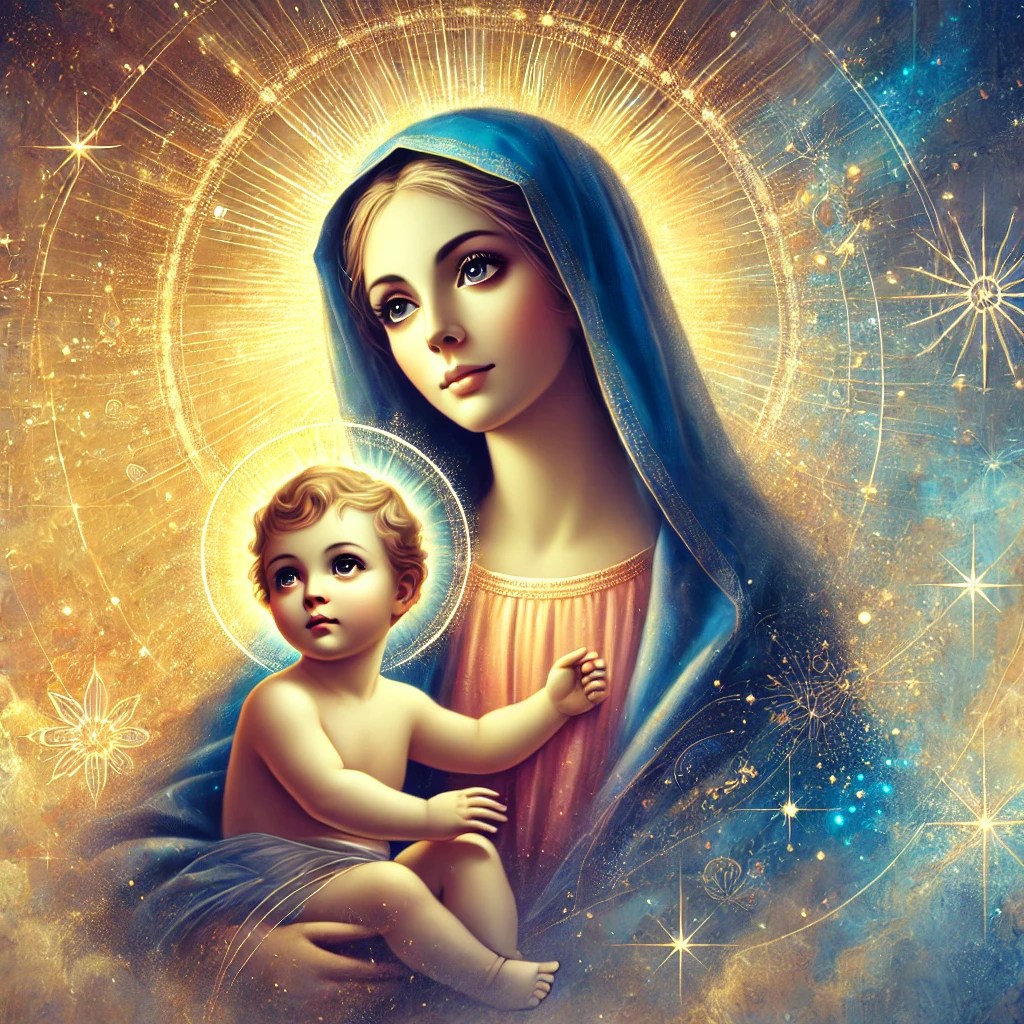
Embracing Mary, Mother of God
The Solemnity of Mary, the Mother of God, celebrated on January 1st, stands as one of the most significant feast days in the liturgical calendar. This solemnity honors Mary’s divine motherhood, affirming her as Theotokos, the “God-bearer,” a title proclaimed at the Council of Ephesus in 431 AD. This feast highlights her unique role in salvation history as the mother of Jesus Christ, fully God and fully man. By celebrating this solemnity, the Church not only acknowledges Mary’s profound role but also reflects on the mystery of the Incarnation, where God became man to redeem humanity.
This feast marks the beginning of the new year with a focus on Mary’s maternal care for the Church and her intercessory role in our lives. It invites the faithful to ponder her obedience to God, her unwavering faith, and her unique position as the Mother of God and the Mother of the Church. Through this celebration, the Church calls us to reflect on our own journey of faith and to seek Mary’s guidance as we strive to grow closer to her Son.
The Story Behind the Feast
The title “Mother of God” emerged in response to early theological debates concerning the nature of Christ. In the 5th century, Nestorius, the Patriarch of Constantinople, argued that Mary should be called Christotokos, meaning “Christ-bearer,” to emphasize her role as the mother of Jesus’ human nature. This position implied a separation between Christ’s divine and human natures, a view that was rejected by the Church. The Council of Ephesus in 431 AD addressed this controversy, affirming that Jesus Christ is one person with two natures—fully divine and fully human—and declaring Mary as Theotokos, the “God-bearer” or “Mother of God.”
This declaration upheld the doctrine of the Incarnation, emphasizing that Jesus’ divine and human natures are inseparably united in one person. By recognizing Mary as Theotokos, the Church affirmed her unique role in God’s plan of salvation and her intimate connection to the mystery of Christ. This title has since become a cornerstone of Marian devotion, reminding the faithful of Mary’s singular dignity and her role as a model of faith and obedience.
Marian Apparitions
While the title “Mother of God” itself is not directly associated with a specific apparition, Mary’s role as an intercessor and model of faith is evident in countless ways throughout Church history. Apparitions such as Our Lady of Guadalupe, Our Lady of Lourdes, and Our Lady of Fatima reveal her ongoing maternal care for humanity. In these appearances, Mary often delivers messages of hope, calls for repentance, and encourages prayer, particularly through the Rosary.
For example, at Lourdes, Mary appeared to St. Bernadette Soubirous, affirming her Immaculate Conception and offering healing waters as a sign of God’s grace. At Fatima, Mary called for prayer and penance, urging the world to turn back to God. These events demonstrate her unwavering commitment to leading the faithful closer to her Son and her powerful role as an intercessor. Through her maternal interventions, Mary continues to inspire the Church, deepening our understanding of her mission and her relationship with Jesus and the faithful.
Theological Significance
The Solemnity of Mary, Mother of God, is deeply rooted in the Church’s Marian doctrines. By proclaiming Mary as Theotokos, the Church emphasizes her unique role in the mystery of the Incarnation. This title reflects her intimate relationship with the Trinity: chosen by the Father, she became the Mother of the Son through the power of the Holy Spirit. Her perpetual virginity, upheld in Church tradition, underscores her total dedication to God’s plan and her singular role in salvation history.
The Catechism of the Catholic Church (CCC 495) states: “Called in the Gospels ‘the mother of Jesus,’ Mary is acclaimed by Elizabeth, at the prompting of the Spirit and even before the birth of her son, as ‘the mother of my Lord.’” This title reveals her integral role in God’s salvific plan, connecting her divine motherhood to Christ’s mission of redemption. Her role as the Mother of God extends to the entire Church, as she is also recognized as the Mother of the Church, guiding believers to her Son with maternal care and love.
Devotion and Pilgrimage
Devotion to Mary under the title “Mother of God” is expressed in countless ways across the Catholic world. Shrines dedicated to Mary, such as the Basilica of the Annunciation in Nazareth and the Basilica of the National Shrine of the Immaculate Conception in Washington, D.C., attract pilgrims who seek her intercession and guidance. These holy sites offer opportunities for prayer, reflection, and spiritual renewal, drawing believers closer to Mary and, through her, to Christ.
The Rosary is a central devotion that honors Mary and contemplates the mysteries of her life and her Son’s life. On this solemnity, the faithful often recite the Rosary, meditate on the Joyful Mysteries, and seek Mary’s guidance for the year ahead. These devotions foster a deeper relationship with Mary, encouraging believers to emulate her virtues and to entrust their lives to her maternal care.
Cultural Impact and Celebration
The Solemnity of Mary, Mother of God, is celebrated with great devotion and cultural richness across the globe. In Italy, the faithful participate in processions and Masses, often offering flowers to Marian statues as a sign of love and reverence. In the Philippines, as this feast coincides with New Year’s Day, they blend Marian devotion with prayers for peace and blessings in the year ahead. Hymns such as “Ave Maria” and “Hail Holy Queen” are often sung during liturgies, expressing the Church’s deep love for Mary.
These celebrations reflect the universal appeal of Mary’s motherhood, uniting people from diverse cultures and backgrounds in their devotion to her. By honoring Mary as the Mother of God, the Church celebrates her unique role in salvation history and her ongoing presence in the lives of the faithful.
Lessons from Mary’s Role
Mary’s life offers profound lessons in faith, humility, and obedience. Her fiat, or “yes” to God, demonstrates complete trust in His plan, even when faced with uncertainty and hardship. As the Mother of God, she embodies perfect discipleship, showing us how to surrender our lives to God’s will and to trust in His providence. Her maternal care reminds us of the importance of seeking her guidance and intercession as we navigate the challenges of life.
Reflecting on Mary’s example encourages us to embrace humility, to cultivate a spirit of prayer, and to grow in our relationship with Christ. Her unwavering faith inspires us to remain steadfast in our own faith journeys, trusting that God’s grace will sustain us.
Engage with Us!
We invite you to share your experiences and devotions related to this Marian feast in the comments below. How has Mary, as Mother of God, influenced your spiritual journey? In what ways do you seek her intercession in your life? Let us come together to grow in faith under the guidance of our Blessed Mother.
Reflection Questions:
- How does Mary’s role as an intercessor help you grow in your faith?
- What can you learn from Mary’s example of humility and trust in God?
- How does this feast inspire you to deepen your devotion to Jesus through Mary?
As we honor Mary, the Mother of God, let us strive to emulate her virtues, seeking to live lives of faith, humility, and obedience. May her intercession guide us closer to her Son, Jesus Christ, and may we always find in her a model of perfect discipleship.
Blessed Virgin Mary, pray for us!
Follow us on Instagram and Facebook for more insights and reflections on living a faith-filled life.


Leave a Reply