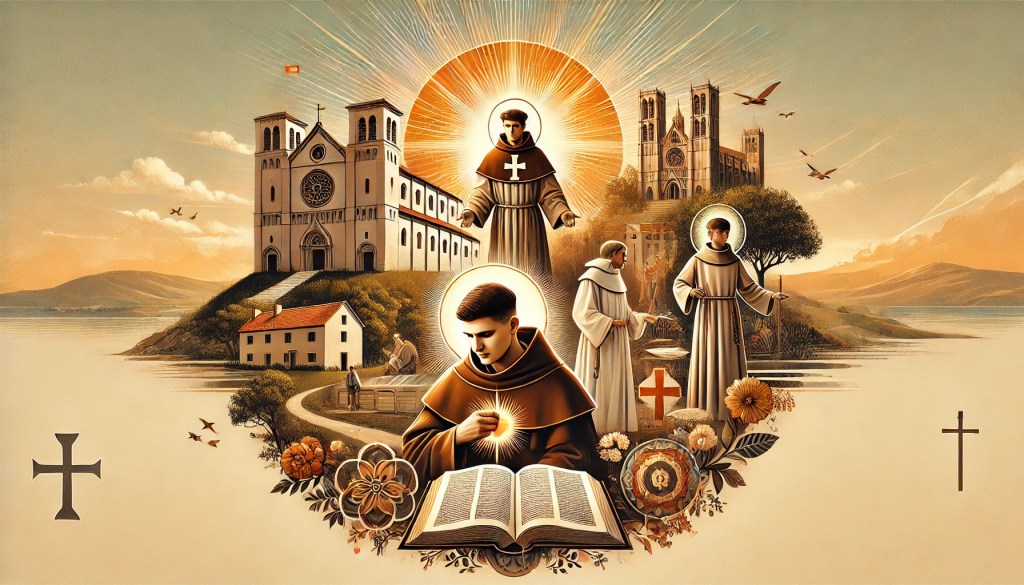
A Noble Heart Turned to God
Saint Francis Borgia (1510–1572) is a powerful example of a nobleman who renounced wealth, power, and status to follow Christ through a life of humility, service, and deep devotion. As a member of the infamous Borgia family, he was born into a life of privilege, but after a profound personal conversion, he chose to dedicate his life to God and became one of the most significant figures of the Jesuit order. His journey from worldly prominence to spiritual poverty symbolizes the transformative power of grace, a journey that has inspired countless Christians throughout history. He is celebrated for his role in reforming the Church during the tumultuous period of the Protestant Reformation and for his dedication to serving the poor and marginalized. His feast day is October 10th, and he remains a model of humility, prayer, and complete trust in God.
From Duke to Disciple: A Radical Turn
Francis Borgia was born on October 28, 1510, in the city of Gandía, Spain, into the illustrious and controversial Borgia family. His father, Juan Borgia, was the third Duke of Gandía, and his mother, Juana of Aragon, was related to King Ferdinand II of Aragon, which further elevated Francis’ status in European society. He was destined for a life of great political influence, holding positions of power at an early age. Educated in the Spanish court, Francis became a close companion to Emperor Charles V, eventually rising to become the Viceroy of Catalonia. In 1529, Francis married Eleanor de Castro, a Portuguese noblewoman, with whom he had eight children. His early life was filled with courtly duties, military service, and political leadership, where he enjoyed both honor and wealth.
Despite his prominent place in the royal court, Francis was also deeply religious from a young age, but it wasn’t until the death of Empress Isabella of Portugal in 1539 that his heart underwent a major transformation. As part of his duties, Francis accompanied her body to its burial place. When the coffin was opened for verification, Francis was confronted with the sight of her decomposed remains. Struck by the impermanence of worldly beauty and status, he famously remarked, “I will never serve a master who can die.” This encounter with death shook him to his core, setting the stage for his complete conversion.
Though his heart was turned toward God, Francis did not immediately renounce his worldly status. It wasn’t until the death of his wife Eleanor in 1546 that he made the final decision to leave the court and embrace religious life. He settled his affairs, ensured his children were provided for, and, to the shock of many, gave up his noble titles. In 1551, Francis entered the Society of Jesus, the Jesuits, and was ordained a priest. This decision was revolutionary for a man of his stature, signaling a profound personal transformation, where he abandoned his former life of luxury for one of poverty, service, and devotion to God.
Faith Moves Mountains: Miracles of Grace
While Saint Francis Borgia is not traditionally remembered for extraordinary miracles during his lifetime, his very conversion and his example of living out the Gospel are often considered miraculous. Francis’ deep devotion to Christ and his ability to inspire others through his words and actions led many to experience spiritual renewal. His counsel was sought by kings and nobles, yet he always maintained his humility, never seeking worldly recognition for his efforts.
One of the more extraordinary miracles associated with him during his life occurred while he was on a mission. It is said that he was once blocked by a dangerously swollen river, preventing him from crossing to minister to people in need. After praying for God’s help, the river is said to have miraculously parted, allowing Francis to pass safely. This act not only reflected his deep faith but also symbolized the divine assistance he frequently relied upon throughout his ministry.
In addition to this, many people came to him for healing, and though there are no detailed accounts of dramatic physical healings, Francis often brought peace and spiritual healing to those who were distressed or troubled. His calming presence, combined with his ability to guide others through spiritual struggles, left a lasting impact on the many souls who sought his advice.
A Crown of Thorns: Trials of a Humble Soul
Though Saint Francis Borgia did not face physical martyrdom, his life was marked by many spiritual and emotional hardships. His decision to renounce his noble titles and wealth to join the Jesuits was met with bewilderment, criticism, and even opposition from his aristocratic peers. Many could not comprehend why a man of such high status would choose a life of poverty, chastity, and obedience. Some even questioned his motives, doubting whether someone so used to luxury could fully embrace the Jesuit way of life.
As the third Superior General of the Society of Jesus, a position he assumed in 1565, Francis bore the weight of great responsibility. The Jesuits were rapidly expanding across Europe and the missions in Asia and the Americas, and Francis had to oversee this growth amidst the chaos of the Protestant Reformation. The political and religious upheaval of the time placed enormous pressure on the Church, and as a key figure in the Counter-Reformation, Francis was charged with guiding the Jesuits in their efforts to strengthen Catholic education, evangelization, and spiritual formation.
Despite these external pressures, Francis led with humility and perseverance. He often fasted, engaged in rigorous prayer, and mortified his body as a way of uniting his sufferings with Christ. Though he held one of the most powerful roles in the Catholic Church at the time, he lived a life of simplicity and service. His hardships were not merely external but also internal, as he grappled with the enormity of the task placed before him and his deep desire to remain faithful to the vows he had made.
Legacy of Grace: Miracles Beyond the Grave
Following his death on September 30, 1572, many miracles were attributed to Saint Francis Borgia’s intercession. Almost immediately after his passing, reports of healings and divine interventions began to circulate. The faithful would invoke his name in prayer, and those suffering from various ailments would experience miraculous recoveries. One such story involved a nobleman whose son was on the brink of death. After prayers to Saint Francis and the application of a relic, the boy miraculously recovered, a testimony to the power of Francis’ intercession.
His tomb, located in the Church of the Sacred Heart in Madrid, became a site of pilgrimage. People flocked to venerate his relics, and many reported miracles of healing and consolation after visiting his resting place. The Church officially recognized the miracles attributed to him, and he was canonized by Pope Clement X in 1671. To this day, pilgrims continue to seek his intercession, and his relics are revered as a source of healing and spiritual strength.
Lessons from a Saint: Walking the Path of Humility
Saint Francis Borgia’s life offers profound lessons for anyone who struggles with balancing worldly success and spiritual aspirations. His journey from one of the most privileged members of society to a humble servant of God is a powerful reminder that material wealth and power cannot provide true fulfillment. His life challenges us to examine our own attachment to the things of this world. Do we allow our pursuit of success, status, or recognition to eclipse our relationship with God?
Francis’ humility is an example we can all strive to emulate. He teaches us that true greatness comes from serving others, from surrendering our will to God’s plan, and from embracing humility in all aspects of life. Even in moments of hardship and struggle, his unwavering trust in God offers hope that, through faith, we can overcome our trials.
Engage with Us!
We invite you to share your thoughts and reflections on the life of Saint Francis Borgia.
Reflection Questions:
- In what ways are you seeking fulfillment in worldly achievements rather than in your relationship with God?
- How can you embrace humility in your everyday life, following the example of Saint Francis Borgia?
- What areas of your life might you need to surrender more fully to God’s will?
Join the conversation in the comments below and let’s support one another on our faith journey, always striving to live with the same humility, courage, and faith that Saint Francis Borgia demonstrated!
Follow us on Instagram and Facebook for more insights and reflections on living a faith-filled life.


Leave a Reply