Tuesday of the First Week of Lent – Lectionary: 225
When Heaven Waters the Heart
There is a certain kind of dryness that shows up in the first week of Lent. It is not always dramatic, but it is real. It is the quiet ache of realizing that the soul cannot live on distraction, willpower, or religious noise. Today’s readings speak to that dryness with one unified message: God does not merely talk to people, God transforms them. The central theme tying everything together is this: the Word of God falls like rain, prayer receives it like fertile soil, and mercy proves whether the heart is truly alive in God.
Isaiah 55:10-11 comes from a moment when Israel knew what it meant to feel cut off, humbled, and hungry for restoration. In that setting, God promises that His Word is never wasted, never performative, and never empty. “So shall my word be that goes forth from my mouth; it shall not return to me empty.” The Word does not float above real life. The Word sinks into it, softens it, and makes it fruitful, like rain turning dirt into a field that can finally feed a family.
Psalm 34 answers the natural question that follows: what does it look like when that Word lands in a wounded human heart? The psalm is not a victory lap. It is a rescue story told from the ground level. “This poor one cried out and the Lord heard.” In other words, prayer is not a performance for the impressive. Prayer is the cry of the needy who finally stop pretending they can save themselves.
Then The Gospel of Matthew brings it all home by placing the Church’s most familiar prayer on the lips of ordinary believers and calling it real. Jesus does not hand over a technique for manipulating heaven. He gives a pattern of belonging. “Our Father in heaven.” That single phrase changes everything, because it means prayer is not begging from a distance. It is speaking as a child who has been brought close. And Jesus immediately presses the hardest part, because He knows where spiritual life either matures or collapses. “If you forgive others their transgressions, your heavenly Father will forgive you.” In Lent, the test of prayer is not how many words can be piled up. The test is whether grace is being received deeply enough to make a person merciful.
What would change today if prayer stopped being a religious habit and became the place where God’s Word actually takes root and bears fruit through forgiveness?
First Reading – Isaiah 55:10-11
When God Speaks, Something Grows
In the first week of Lent, the Church puts a simple image in front of the imagination: rain and snow falling from heaven. In the ancient world, that image carried weight. Life depended on the seasons, the soil, and the gift of water that no farmer could manufacture. Israel knew what drought felt like, not only in the fields but in the soul, especially in seasons of exile, repentance, and longing for restoration. Isaiah 55 belongs to the part of The Book of Isaiah that speaks hope to a people who have been humbled and are being called back to trust. God is not selling optimism. God is making a promise about His own reliability. Today’s theme is that the Word of God falls like rain, prayer receives it like fertile soil, and mercy becomes the fruit. This first reading lays the foundation by insisting that God’s Word is never wasted, never powerless, and never empty.
Isaiah 55:10-11 – New American Bible (Revised Edition)
10 Yet just as from the heavens
the rain and snow come down
And do not return there
till they have watered the earth,
making it fertile and fruitful,
Giving seed to the one who sows
and bread to the one who eats,
11 So shall my word be
that goes forth from my mouth;
It shall not return to me empty,
but shall do what pleases me,
achieving the end for which I sent it.
Detailed Exegesis
Verse 10 “Yet just as from the heavens the rain and snow come down And do not return there till they have watered the earth, making it fertile and fruitful, Giving seed to the one who sows and bread to the one who eats,”
This verse begins with an ordinary miracle. Rain and snow come “from the heavens,” not because the sky is sentimental, but because creation is ordered to receive. The image is deliberately practical: water does not fall for decoration. It falls to soak in, soften what is hard, and make growth possible. Notice the chain of fruitfulness. The watered earth becomes fertile. Fertility becomes fruit. Fruit becomes seed for the sower and bread for the eater. God is describing an economy of grace where nothing is wasted and everything is ordered toward life. In Lent, that matters because the heart often feels like dry ground. The reading quietly challenges the assumption that God’s Word is merely information. God’s Word is nourishment. God’s Word is cultivation. God’s Word produces a harvest that feeds others, not only the one who receives it.
Verse 11 “So shall my word be that goes forth from my mouth; It shall not return to me empty, but shall do what pleases me, achieving the end for which I sent it.”
Here the metaphor becomes the point. God’s Word is compared to rain because it is effective. When God speaks, something happens. This is the opposite of the modern temptation to treat words as cheap and flexible. God’s Word “goes forth” with purpose. It “shall not return empty,” meaning it never fails to accomplish God’s will. That does not mean every person welcomes it. It means God’s Word always remains true, always reveals, always calls, always judges, always heals when it is received, and always advances God’s saving plan even when it is resisted. Lent teaches the difference between hearing and receiving. The Word can fall on hardened ground and still be the Word, but the tragedy is that hardened ground does not bloom. This verse invites a serious kind of hope. If God has spoken a call to repentance, a promise of mercy, and a path of life, then that Word has the power to bring about what it commands, especially when it is received through prayer and lived out through mercy.
Teachings
The Church reads Scripture with confidence because God is faithful, not because the reader is brilliant. The living God speaks through human language, and His speech is meant to convert and save. The Catechism teaches, “In the sacred books, the Father who is in heaven comes lovingly to meet his children, and talks with them.” CCC 104. This reading from Isaiah shows what that “meeting” does. It is not merely a comforting thought. It is a real encounter that changes the interior landscape.
The Church also insists that God’s Word is not a dead letter trapped in the past. The same Catechism says, “The Church has always venerated the Scriptures as she venerates the Lord’s Body.” CCC 103. That is a striking standard. It means the Word is treated as holy because God uses it to communicate Himself. When Isaiah says God’s Word does not return empty, the Church hears a promise: the Word proclaimed in the liturgy is meant to bear fruit in conversion, faith, and perseverance, especially in a penitential season like Lent.
Saints often describe this reading in the language of spiritual cultivation. The Christian life is not self-invention. It is cooperation. The heart is not a machine that runs on motivation. It is soil that needs to be watered. That is why the Church places this reading next to the Lord’s Prayer today. The Word falls from heaven, and prayer is the posture that receives it with humility. When the Word is truly received, it begins to produce “seed and bread,” meaning it forms a disciple who can bear fruit for others through charity, patience, and forgiveness.
Reflection
Lent is a season for asking whether the heart has become dry without noticing. It is easy to keep doing religious habits while the interior life slowly turns into dust. This reading offers a different story. God does not abandon dry ground. God sends rain. The practical question is whether the heart is open enough to absorb what God sends.
A simple step is to give God the first words of the day. Five minutes with Isaiah 55:10-11 can do more than an hour of anxious thinking, because God’s Word does not return empty. Another step is to stop treating Scripture like a message for “someone else.” The rain falls on real dirt, not ideal dirt. God’s Word is meant for the actual state of the heart today, including weakness, distraction, and sin.
This reading also invites patience. Rain does not force fruit in a moment. The Word works over time. A person can feel unchanged after prayer and still be receiving grace that is quietly breaking up hard soil. The question is not whether emotions rise. The question is whether the heart is being made fertile.
Where has the soul become hard, defensive, or closed off, like ground packed down by fear or pride?
What would it look like to let God’s Word sink in slowly, instead of demanding instant results?
Who needs “bread” from this life, meaning real charity, encouragement, or forgiveness that can only grow if God’s Word is allowed to do its work first?
Responsorial Psalm – Psalm 34:4-7, 16-19
The Cry That Reaches Heaven
In the world of ancient Israel, the psalms were not private poems tucked into a journal. They were the prayerbook of God’s people, sung in worship, remembered in suffering, and repeated when the heart could not find its own words. Psalm 34 carries the voice of someone who has been pressed hard, someone who has learned that fear can shrink the soul and that deliverance is not theoretical. This psalm fits today’s theme like a key fits a lock. If Isaiah teaches that God’s Word falls like rain and never returns empty, then Psalm 34 shows what happens when that Word is received by a person who is needy, honest, and humble. The “poor one” cries out, and God does not turn away. Lent is the season when the Church teaches believers to stop performing and start praying. This psalm is the sound of real prayer.
Psalm 34:4-7, 16-19 – New American Bible (Revised Edition)
4 Magnify the Lord with me;
and let us exalt his name together.5 I sought the Lord, and he answered me,
delivered me from all my fears.
6 Look to him and be radiant,
and your faces may not blush for shame.
7 This poor one cried out and the Lord heard,
and from all his distress he saved him.16 The eyes of the Lord are directed toward the righteous
and his ears toward their cry.
17 The Lord’s face is against evildoers
to wipe out their memory from the earth.
18 The righteous cry out, the Lord hears
and he rescues them from all their afflictions.
19 The Lord is close to the brokenhearted,
saves those whose spirit is crushed.
Detailed Exegesis
Verse 4 “Magnify the Lord with me; and let us exalt his name together.”
This verse begins with a surprising move. It does not begin with complaining, even though the rest of the psalm makes clear that distress is real. It begins with worship, and not a lonely worship at that. The psalmist invites communion: “with me” and “together.” In Scripture, praise is not denial of pain. Praise is a decision to put God back in the center so fear does not take the throne. In Lent, this is crucial. If prayer becomes only self-analysis, the soul can spiral. Praise anchors the heart in truth: God is God, and the story is not over.
Verse 5 “I sought the Lord, and he answered me, delivered me from all my fears.”
The psalmist does not claim to have eliminated every problem. The text says deliverance from “fears,” because fear is often the first enemy that has to be defeated. Fear can make a person hide, lie, lash out, or numb out. The psalm points to a simple spiritual principle: seeking God is not wasted effort. God answers. In Catholic life, this seeking is not vague spirituality. It includes prayer, sacramental life, repentance, and trusting obedience. Lent trains the heart to seek God instead of seeking escape.
Verse 6 “Look to him and be radiant, and your faces may not blush for shame.”
This verse connects fear with shame. Shame makes people look down. Shame makes people avoid God, as if God is disgusted by weakness. The psalm says the opposite. Looking to the Lord makes a person “radiant,” not because life becomes easy, but because shame loses its grip. Radiance here is the fruit of trust. When the face no longer “blushes for shame,” it suggests a person who is no longer hiding. Lent is meant to heal this exact wound. The Church does not call sinners to hide better. The Church calls sinners to come into the light through repentance and mercy.
Verse 7 “This poor one cried out and the Lord heard, and from all his distress he saved him.”
This is the beating heart of the psalm. The “poor one” is not only someone with empty pockets. In the biblical sense, the poor are the humble, the afflicted, the ones who know they need help. The key action is not sophistication but crying out. God hears. God saves. This is why the psalms belong to Lent. They teach a believer how to pray when strength is low. They also teach that God’s attention is not earned by polish. God’s attention is given to the humble.
Verse 16 “The eyes of the Lord are directed toward the righteous and his ears toward their cry.”
This verse adds intimacy. God sees. God hears. The “righteous” here are not the self-righteous. In the Old Testament, the righteous are those who live in covenant fidelity, those who seek God and walk in His ways, even through struggle. God’s eyes and ears are turned toward them. This is covenant language. It describes a God who is personally attentive, not distant. That matters in Lent, because a person can falsely assume that God is watching with disappointment. The psalm insists that God watches with care.
Verse 17 “The Lord’s face is against evildoers to wipe out their memory from the earth.”
This verse is sharp, and it is meant to be. Evil is not a harmless hobby. It corrodes persons and communities. The psalm shows God’s justice as protection for the vulnerable and a boundary against what destroys. The phrase about wiping out memory is not petty vengeance. It is biblical language for the collapse of the false glory of wickedness. Evil does not get the last word. Lent is not only about comfort. It is also about truth, because healing requires honesty about sin.
Verse 18 “The righteous cry out, the Lord hears and he rescues them from all their afflictions.”
The psalm returns to the same pattern: cry, hearing, rescue. It repeats because people forget. Afflictions can be many: external trouble, interior darkness, temptation, grief, anxiety, regret. The psalm does not pretend afflictions are not real. It says the Lord rescues. Sometimes rescue looks like circumstances changing. Sometimes rescue looks like strength, endurance, clarity, and hope. Either way, God is active. This matches today’s theme perfectly. God’s Word does not return empty, and God’s attention is not absent.
Verse 19 “The Lord is close to the brokenhearted, saves those whose spirit is crushed.”
This verse is one of Scripture’s most tender promises. God is “close” to the brokenhearted. That is not sentimental language. It is covenant closeness, the presence of God near the ones who feel like they have nothing left. The “crushed spirit” describes a person flattened by sorrow, sin, or suffering. The psalm says God saves them. Lent often reveals broken places that were covered up. This verse says that revelation is not humiliation. It is an opportunity for God to draw near and save.
Teachings
This psalm gives the Church a vocabulary for prayer that is both honest and confident. The Catechism teaches that prayer is not first a technique, but a relationship rooted in humility. It says, “Humility is the foundation of prayer.” CCC 2559. That line fits Psalm 34 like it was written as commentary. The “poor one” cries out, not because the poor one has a strategy, but because the poor one is humble enough to admit need.
The psalm also harmonizes with what the Church teaches about contrition and repentance, especially in Lent. When shame tries to convince a person to hide from God, the Church responds with the logic of mercy. The Catechism says, “The human heart is heavy and hardened. God must give man a new heart.” CCC 1432. A crushed spirit and a broken heart are not obstacles to God. They are often the place where God begins to give that “new heart,” especially through prayer, conversion, and the sacraments.
Historically, Psalm 34 has been beloved in times of persecution and hardship because it insists that God is not indifferent. It forms believers to praise God in community, to seek God in fear, and to cry out with trust. That is the kind of spiritual realism Lent is meant to rebuild.
Reflection
This psalm teaches that the most dangerous habit in spiritual life is pretending. Pretending everything is fine. Pretending fear is not there. Pretending shame is normal. Lent is a season to bring what is real into the light, because God is close to the brokenhearted, not to the masked.
A practical step for today is to pray this psalm slowly and personally. The psalm can become a script for the heart. If fear is loud, then verse 5 becomes a plea: “I sought the Lord, and he answered me, delivered me from all my fears.” If shame is heavy, then verse 6 becomes a challenge: “Look to him and be radiant.” If sorrow is crushing, then verse 19 becomes a lifeline: “The Lord is close to the brokenhearted.”
This psalm also invites a deeper kind of praise. Praise does not require perfect circumstances. Praise is a decision to magnify the Lord so the problem does not become the only thing seen. That decision is easier when it becomes communal, which is why verse 4 matters. Worship with the Church, pray with the Church, and do not isolate.
What fear has been steering decisions lately, even if it is disguised as “being realistic”?
Where has shame made the soul look away from God instead of toward Him?
What would change if the heart cried out plainly, without performing, and trusted that God truly hears?
Holy Gospel – Matthew 6:7-15
The Prayer That Forms the Heart
In the first week of Lent, the Church places believers right inside the Sermon on the Mount, where Jesus is not handing out religious tips but rebuilding the interior life from the ground up. In a world filled with public displays of piety, repetitive incantations, and anxious attempts to get a god’s attention, Jesus teaches something radically simple and deeply Jewish: the living God is not a distant force to be manipulated, but a Father to be trusted. That is why today’s Gospel fits perfectly with the day’s theme. Isaiah promises that God’s Word never returns empty. The psalm shows the “poor one” crying out and being heard. Now The Gospel of Matthew reveals the posture that receives God’s Word like rain into soil: humble, confident prayer that is proven true by mercy, especially forgiveness.
Matthew 6:7-15 – New American Bible (Revised Edition)
7 In praying, do not babble like the pagans, who think that they will be heard because of their many words. 8 Do not be like them. Your Father knows what you need before you ask him.
The Lord’s Prayer. 9 “This is how you are to pray:
Our Father in heaven,
hallowed be your name,
10 your kingdom come,
your will be done,
on earth as in heaven.
11 Give us today our daily bread;
12 and forgive us our debts,
as we forgive our debtors;
13 and do not subject us to the final test,
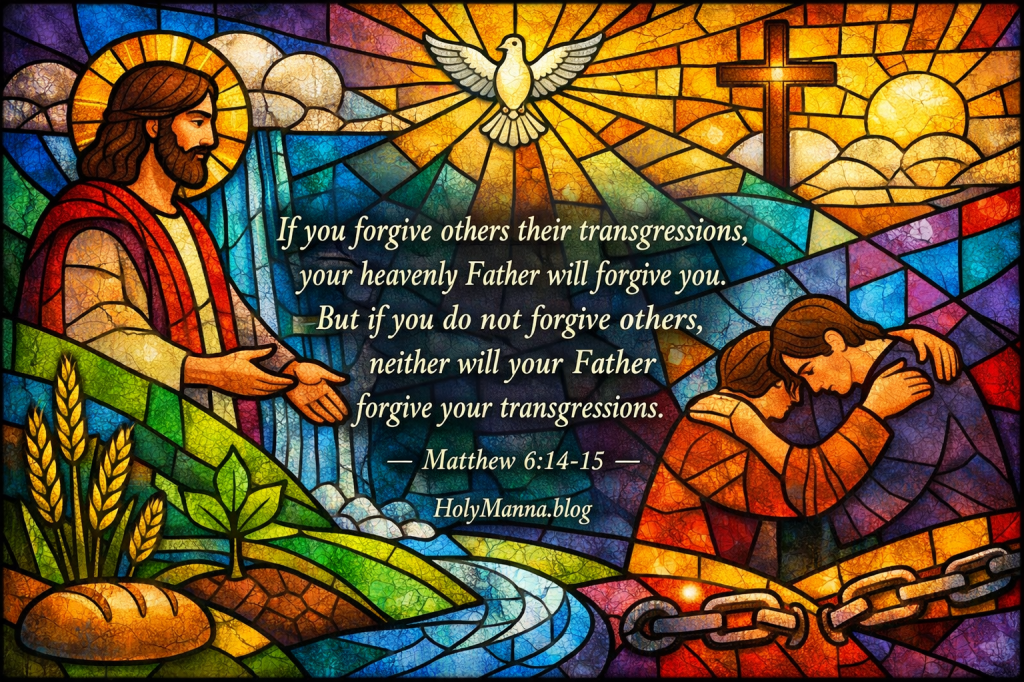
but deliver us from the evil one.14 If you forgive others their transgressions, your heavenly Father will forgive you. 15 But if you do not forgive others, neither will your Father forgive your transgressions.
Detailed Exegesis
Verse 7 “In praying, do not babble like the pagans, who think that they will be heard because of their many words.”
Jesus is not condemning long prayer or repeated prayer, because Scripture itself praises perseverance in prayer. Jesus is condemning a pagan mindset that treats prayer like a technique. “Many words” become a substitute for trust, as if God can be pressured by volume. Lent challenges this same temptation when people try to replace conversion with spiritual noise.
Verse 8 “Do not be like them. Your Father knows what you need before you ask him.”
This line is meant to calm the soul. God is not ignorant. God is not reluctant. God is Father. Prayer is not information for God, but communion with God. Jesus is teaching believers to pray from relationship, not anxiety. The Father’s knowledge does not cancel asking. It purifies asking, so requests become honest and trusting instead of frantic and controlling.
Verse 9 “This is how you are to pray: Our Father in heaven, hallowed be your name,”
Jesus gives the Church a pattern, not merely words. “Our” immediately places prayer inside communion, not individualism. “Father” reveals intimacy, adoption, and belonging. “In heaven” reminds the heart that God is transcendent, not a projection of human wishes. “Hallowed be your name” is not a polite greeting. It is a desire that God be honored as holy in worship, in the Church, and in daily life.
Verse 10 “your kingdom come, your will be done, on earth as in heaven.”
The prayer turns the heart outward and upward. It trains believers to desire God’s reign, not merely personal comfort. The “kingdom” is God’s saving action breaking into the world, and “your will be done” is the core of Christian obedience. Lent is the season when that obedience becomes concrete, especially when it costs pride, comfort, or resentment.
Verse 11 “Give us today our daily bread;”
This petition is humble and realistic. It admits dependence. It also forms trust, because it asks for “today,” not the illusion of total control over tomorrow. In the Church’s life, this line naturally points beyond ordinary bread to the Bread God gives in a unique way, because the Christian does not live by bread alone but by every word from God and by the Eucharistic gift of Christ.
Verse 12 “and forgive us our debts, as we forgive our debtors;”
The prayer moves into the most personal and painful territory: mercy. “Debts” names a real moral weight. Sin is not a vibe. Sin is a rupture that needs forgiveness. But Jesus binds the request to a condition that exposes the heart. This is not bargaining with God. This is spiritual reality: a heart that refuses mercy becomes unable to receive mercy.
Verse 13 “and do not subject us to the final test, but deliver us from the evil one.”
This is a sober petition, not a nervous one. It recognizes spiritual battle and human weakness. The “final test” points to moments of trial when faith is pressured and temptation intensifies. The prayer asks for protection and perseverance, and it names the enemy plainly. Evil is not only an abstract concept. The Christian asks to be rescued from the Evil One and from the traps that lead away from God.
Verse 14 “If you forgive others their transgressions, your heavenly Father will forgive you.”
After teaching the prayer, Jesus highlights forgiveness as the key. This is not an optional spiritual extra. It is a mark of belonging to the Father. Forgiveness is the family resemblance of God’s children. Lent is a privileged time for this teaching because resentment often hides beneath the surface until prayer and fasting bring it into the light.
Verse 15 “But if you do not forgive others, neither will your Father forgive your transgressions.”
Jesus speaks with shocking clarity because the stakes are eternal. This is not God being petty. This is God revealing what hardness of heart does. Refusing forgiveness is not merely holding a grudge. It is rejecting the very mercy being requested. The line is meant to awaken repentance, not to provoke despair.
Teachings
The Church teaches that the Lord’s Prayer is not simply one prayer among many. It is the prayer Jesus places in the heart of the Church as a school of trust, worship, and conversion. The Catechism states, “The Lord’s Prayer is truly the summary of the whole gospel.” CCC 2761. That is why Lent returns to it so quickly. If the Gospel is being received, then this prayer becomes familiar in the best sense, like a path worn smooth by faithful feet.
Jesus also reveals that real prayer begins with humility and childlike confidence, not with performance. The Catechism teaches, “Humility is the foundation of prayer.” CCC 2559. This directly confronts the “babbling” Jesus warns about. The issue is not length but posture. A humble heart prays to be with God. A proud heart prays to control outcomes.
When Jesus commands forgiveness, the Church does not soften His words. The Catechism explains why forgiveness is the hinge of the spiritual life: “Now and this is daunting, this outpouring of mercy cannot penetrate our hearts as long as we have not forgiven those who have trespassed against us.” CCC 2840. The problem is not that God runs out of mercy. The problem is that an unforgiving heart becomes sealed shut. Mercy is offered, but it cannot enter where the door is bolted from the inside.
The Lord’s Prayer also teaches believers to ask for protection in temptation without blaming God for temptation. The Church clarifies the meaning of this petition: “This petition implores the Spirit of discernment and strength; it requests the grace of vigilance and final perseverance.” CCC 2849. Lent is a season of vigilance, because temptation often increases when a person is trying to grow. Jesus teaches the Church to ask for what is needed: discernment, strength, and perseverance.
Reflection
This Gospel invites a different kind of prayer, the kind that sounds less impressive but changes a life. It calls believers to stop using prayer as a way to manage anxiety and start using prayer as a way to belong to the Father. The Lord’s Prayer is short enough to memorize, but deep enough to spend a lifetime unpacking. The key is to pray it slowly and honestly, letting each line search the heart.
A practical way to live this today is to pray the Our Father without rushing, pausing after each petition, and allowing that petition to become a mirror. “Hallowed be your name” challenges speech, habits, and priorities. “Your will be done” challenges obedience in the ordinary duties of the day. “Give us today our daily bread” challenges self-reliance and invites gratitude. Then the prayer hits the nerve: forgiveness.
Forgiveness does not mean calling evil good. Forgiveness means refusing to let someone else’s sin become the ruler of the soul. Sometimes forgiveness includes reconciliation, but reconciliation requires truth, safety, and conversion. Forgiveness, however, is always a Christian duty, because it is a decision to hand the debt to God and to reject the poison of resentment. Lent is the time to take that decision seriously, especially through confession, prayer, and concrete acts of mercy.
Where has prayer turned into rushed religious noise instead of trusting conversation with the Father?
Which line of the Lord’s Prayer feels hardest to say with sincerity, and what does that reveal about the heart right now?
Who needs to be forgiven, not because they earned it, but because refusing to forgive is hardening the soul against the mercy it needs?
Let the Rain Sink In and Let Mercy Show
Today’s readings tell one clear story, and it is the kind of story Lent was made for. God speaks, and His Word is never wasted. In Isaiah 55:10-11, the Lord promises that His Word falls like rain and snow, not to impress the sky, but to change the ground. “It shall not return to me empty.” That means grace is not fragile, and God’s plan is not dependent on human moods. When the Word is received, it produces real fruit, the kind that becomes “seed” for the sower and “bread” for the hungry.
Psalm 34 shows what receiving looks like in real life. It sounds like a cry from the heart, not a polished performance. “This poor one cried out and the Lord heard.” It reminds every tired believer that God is not distant from the mess. “The Lord is close to the brokenhearted.” In Lent, that promise matters because the season often exposes weakness that was easy to ignore. The psalm insists that honesty is not a setback. Honesty is the doorway to rescue.
Then The Gospel of Matthew 6:7-15 takes that same honesty and teaches it how to pray. Jesus strips away the pagan habit of babbling, the anxious attempt to earn attention with many words, and He gives the Church a prayer that is both simple and severe. “Our Father in heaven.” The Lord’s Prayer is the path of a child who trusts, a disciple who seeks God’s kingdom first, and a sinner who knows mercy is needed daily. But Jesus makes one point impossible to miss. Forgiveness is not optional. “If you forgive others their transgressions, your heavenly Father will forgive you.” Lent becomes real when prayer becomes real, and prayer becomes real when mercy becomes real.
The call to action is simple, but it is not easy. Let God’s Word be the rain that soaks the heart instead of bouncing off a hardened surface. Pray the Our Father slowly enough to mean it. Then prove that prayer is not empty by choosing mercy, especially toward the person who feels hardest to forgive. A heart that receives the Word becomes fertile. A fertile heart bears fruit. And the fruit God is looking for is not religious noise, but a life that looks like the Father, steady in trust, serious about repentance, and generous in forgiveness.
What would change this week if the day began with God’s Word, the day was guided by the Lord’s Prayer, and the day ended with one concrete act of forgiveness?
Engage with Us!
Readers are invited to share reflections in the comments below, because God often strengthens faith through the witness and wisdom of others. Here are some questions to spark thoughtful conversation and help today’s Word sink in deeply.
- First Reading – Isaiah 55:10-11: Where has God’s Word been landing on “hard ground” lately, and what would it look like to make space for it to actually sink in and bear fruit?
- Responsorial Psalm – Psalm 34:4-7, 16-19: What fear, shame, or distress needs to be brought to God honestly, trusting the promise that “the Lord is close to the brokenhearted”?
- Holy Gospel – Matthew 6:7-15: Which line of the Lord’s Prayer challenges the heart the most right now, and who is the one person that needs to be forgiven so mercy can flow freely?
Keep going with Lent in a steady, faithful way, even when feelings are inconsistent or life feels heavy. God’s Word does not return empty, and a heart that chooses prayer, repentance, and forgiveness will slowly become the kind of heart Jesus can use to pour His love and mercy into the world.
Sacred Heart of Jesus, we trust in You!
Immaculate Heart of Mary, pray for us!
Saint Michael the Archangel, defend us in battle!
Follow us on YouTube, Instagram and Facebook for more insights and reflections on living a faith-filled life.

 Holy Manna!
Leave a comment