Wednesday of the Fourth Week in Ordinary Time – Lectionary: 325
The Mercy That Meets a Humble Heart
Some days in the spiritual life feel like standing at a crossroads. One path is paved with control, familiarity, and the quiet pride that says everything is already understood. The other path is marked by trust, repentance, and the kind of faith that leaves room for God to surprise. Today’s readings place that crossroads right in the middle of ordinary life, where a king wants certainty, a crowd wants explanations, and the Lord keeps offering mercy to anyone willing to receive it.
The central theme tying these passages together is simple and searching: God’s mercy flows where humility and faith open the door, but pride and closed hearts can block the very grace that is being offered. In 2 Samuel 24:2, 9-17, King David orders a census, not because Israel needs a statistic, but because a subtle temptation has crept in. Strength begins to look like something that can be measured, counted, and controlled. When David realizes what has happened, his repentance is immediate and raw: “I have sinned grievously in what I have done.” 2 Sam 24:10. The story reminds readers that leadership is never private and that sin always has consequences that spill outward. Yet even in chastisement, David chooses the only safe place a sinner can choose: “Let us fall into the hand of God, whose mercy is great.” 2 Sam 24:14.
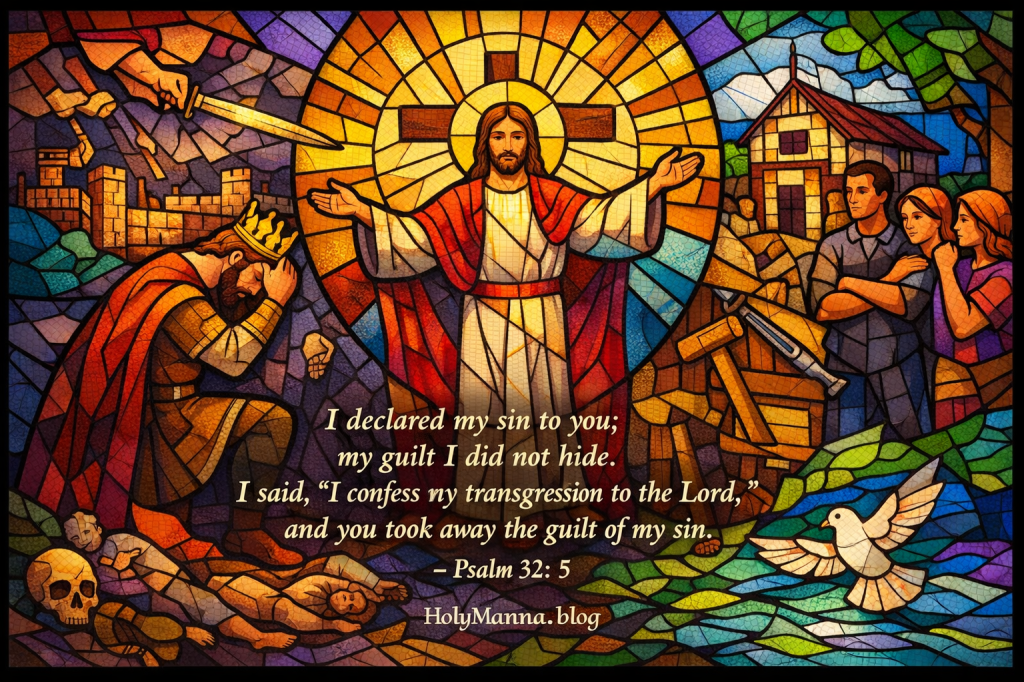
Then the liturgy puts Psalm 32:1-2, 5-7 on the tongue like a healing medicine. David’s sorrow becomes the Church’s song, and the path forward becomes clear: the blessed life is not the life of denial, but the life of confession. “Then I declared my sin to you; my guilt I did not hide.” Ps 32:5. This psalm does not romanticize failure. It reveals the relief of truth, the peace that comes when the soul stops performing and starts returning.
Finally, The Gospel of Mark 6:1-6 shows what happens when hearts close for a different reason. Jesus returns to Nazareth, teaches in the synagogue, and the people cannot get past what feels too familiar. Their questions sound reasonable until they turn into rejection: “Is he not the carpenter?” Mk 6:3. In a culture where honor and status shaped how people judged authority, Nazareth struggles to receive a Messiah who looks ordinary, speaks with unsettling authority, and refuses to fit the hometown box. The tragedy is not that Jesus lacks power, but that their lack of faith leaves little room for His mighty deeds.
These readings belong together because they expose the same spiritual danger in two different disguises. David is tempted to trust in what can be counted. Nazareth is tempted to dismiss what feels too common. Both temptations lead to the same dead end: a heart that stops receiving. Yet the psalm sings the way home, and the day quietly invites a decision. Where has faith been replaced with control, or wonder been replaced with familiarity?
First Reading – 2 Samuel 24:2, 9-17
A King Counts His Strength, and Mercy Counts the Cost
By the time this story unfolds, King David has already seen God do the impossible. He has watched the Lord raise up a shepherd boy, topple giants, unify tribes, and establish a kingdom that no human strategy could have engineered. That is why this passage lands with such weight. The temptation here is not blatant idolatry. It is the quieter drift into self-reliance, where security starts to feel like something that can be measured, managed, and controlled.
In the ancient world, a census was never just a spreadsheet. Counting fighting men meant military confidence, political leverage, taxation power, and the kind of centralized control kings loved. Israel, however, was not meant to operate like the nations around her. The people belonged to the Lord by covenant, and the king was meant to shepherd them in humility, not treat them like an inventory. That is why this reading fits today’s theme so perfectly. When the heart closes in pride, grace gets resisted. When the heart opens in repentance, mercy rushes in.
2 Samuel 24:2, 9-17 – New American Bible (Revised Edition)
2 The king therefore said to Joab and the leaders of the army who were with him, “Tour all the tribes of Israel from Dan to Beer-sheba and register the people, that I may know their number.”
9 Joab then reported the census figures to the king: of men capable of wielding a sword, there were in Israel eight hundred thousand, and in Judah five hundred thousand.
10 Afterward, however, David regretted having numbered the people. David said to the Lord: “I have sinned grievously in what I have done. Take away, Lord, your servant’s guilt, for I have acted very foolishly.” 11 When David rose in the morning, the word of the Lord came to the prophet Gad, David’s seer, saying: 12 Go, tell David: Thus says the Lord: I am offering you three options; choose one of them, and I will give you that. 13 Gad then went to David to inform him. He asked: “Should three years of famine come upon your land; or three months of fleeing from your enemy while he pursues you; or is it to be three days of plague in your land? Now consider well: what answer am I to give to him who sent me?” 14 David answered Gad: “I am greatly distressed. But let us fall into the hand of God, whose mercy is great, rather than into human hands.” 15 Thus David chose the plague. At the time of the wheat harvest it broke out among the people. The Lord sent plague over Israel from morning until the time appointed, and from Dan to Beer-sheba seventy thousand of the people died. 16 But when the angel stretched forth his hand toward Jerusalem to destroy it, the Lord changed his mind about the calamity, and said to the angel causing the destruction among the people: Enough now! Stay your hand. The angel of the Lord was then standing at the threshing floor of Araunah the Jebusite. 17 When David saw the angel who was striking the people, he said to the Lord: “It is I who have sinned; it is I, the shepherd, who have done wrong. But these sheep, what have they done? Strike me and my father’s family!”
Detailed Exegesis
Verse 2 “The king therefore said to Joab and the leaders of the army who were with him, ‘Tour all the tribes of Israel from Dan to Beer-sheba and register the people, that I may know their number.’”
David’s command sounds practical, but Scripture is exposing a spiritual motive. “Dan to Beer-sheba” is a way of saying the whole land, top to bottom. The king wants to know his strength in a way that risks turning trust in God into trust in numbers. This is how temptation often works. It presents itself as “wisdom,” but it quietly shifts the heart from dependence to possession.
Verse 9 “Joab then reported the census figures to the king: of men capable of wielding a sword, there were in Israel eight hundred thousand, and in Judah five hundred thousand.”
The report is focused on military capacity. That detail matters. The text is not interested in demographics for celebration. It is interested in strength for power. Even Joab, who is not exactly a moral hero elsewhere in Scripture, seems uneasy about the census in the wider story, which hints that something in David’s command feels spiritually off.
Verse 10 “Afterward, however, David regretted having numbered the people. David said to the Lord: ‘I have sinned grievously in what I have done. Take away, Lord, your servant’s guilt, for I have acted very foolishly.’”
This is the first mercy in the passage, because God gives David a conscience that still works. David does not excuse himself. He names sin as sin and calls his choice “foolish.” That is the beginning of conversion. Repentance begins when a person stops defending the ego and starts telling the truth before God.
Verse 11 “When David rose in the morning, the word of the Lord came to the prophet Gad, David’s seer, saying”
God’s correction comes through a prophet, which is a gift, not a humiliation. The Lord does not abandon David to vague guilt. He addresses him directly, through the established spiritual authority of Israel. Even here, God is acting like a Father who disciplines in order to heal.
Verse 12 “Go, tell David: Thus says the Lord: I am offering you three options; choose one of them, and I will give you that.”
The seriousness of sin is not denied. Choices have consequences. Yet the very fact that David is given options reveals that God is not treating him like a disposable servant. The Lord engages David’s freedom, which is part of how God restores a wounded heart.
Verse 13 “Gad then went to David to inform him. He asked: ‘Should three years of famine come upon your land; or three months of fleeing from your enemy while he pursues you; or is it to be three days of plague in your land? Now consider well: what answer am I to give to him who sent me?’”
Each option touches a different kind of human fear. Famine threatens stability. Enemies threaten honor and survival. Plague threatens helplessness, because it cannot be outmaneuvered. The choices press David to confront what he trusts when control is stripped away.
Verse 14 “David answered Gad: ‘I am greatly distressed. But let us fall into the hand of God, whose mercy is great, rather than into human hands.’”
This line is the heartbeat of the entire reading. David is afraid, but his fear does not become cynicism. He chooses to entrust himself to God’s mercy, even under judgment. David knows what human hands can do when power is threatened. He also knows that God’s chastisement is never detached from love.
Verse 15 “Thus David chose the plague. At the time of the wheat harvest it broke out among the people. The Lord sent plague over Israel from morning until the time appointed, and from Dan to Beer-sheba seventy thousand of the people died.”
The wheat harvest is usually a season of gratitude, but sin has turned the moment bitter. The scale of the loss is meant to shock, because sin is never merely private. A king’s interior choices can wound an entire people. Scripture is not suggesting that the dead were “worse sinners.” It is showing that leadership without humility becomes a disaster for the flock.
Verse 16 “But when the angel stretched forth his hand toward Jerusalem to destroy it, the Lord changed his mind about the calamity, and said to the angel causing the destruction among the people: Enough now! Stay your hand. The angel of the Lord was then standing at the threshing floor of Araunah the Jebusite.”
God’s mercy interrupts judgment. The “threshing floor” detail is not random. A threshing floor is where wheat is separated from chaff, and Scripture loves that image. This becomes a place where sin is exposed, pride is separated from trust, and mercy stops the destruction. It is a quiet hint that God will later make this area a place of sacrifice, prayer, and restoration for Israel.
Verse 17 “When David saw the angel who was striking the people, he said to the Lord: ‘It is I who have sinned; it is I, the shepherd, who have done wrong. But these sheep, what have they done? Strike me and my father’s family!’”
David speaks like a true shepherd here. He accepts responsibility and offers himself. This moment points forward, like so many moments in the Old Testament, to the Son of David who truly will stand in the place of the flock. David cannot finally save his people by his own suffering, but his posture reveals what repentance is supposed to look like: humble, honest, and protective of others.
Teachings
This passage teaches that sin is real, repentance is possible, and mercy is greater than pride. It also teaches that human choices are never isolated. A father’s sin wounds a family. A leader’s sin wounds a nation. That is not fatalism. It is a sober description of how spiritual reality works.
The Catechism describes sin as more than rule-breaking. It is a rupture in love, and it spreads. “Sin creates a proclivity to sin; it engenders vice by repetition of the same acts.” CCC 1865. That line fits David’s story because the census is not merely a mistake in governance. It reveals a heart pulled toward control, and control always wants more control.
At the same time, this reading refuses despair. David’s confession is immediate, and God’s response, even when corrective, is not cruelty. The Catechism also teaches the heart of conversion in words that sound like Psalm 32 put into doctrine: “Conversion is first of all a work of the grace of God who makes our hearts return to him.” CCC 1432. David’s regret is not just human guilt. It is grace pulling him back.
Saint Augustine loved to press this point because it saves people from both pride and hopelessness. A sinner can run from God or run to God, and only one of those paths ends in peace. Augustine’s pastoral wisdom can be summed up in a simple, faithful principle: confession is not the end of dignity, but the beginning of healing. That is exactly what happens here. David tells the truth, and mercy begins to move.
There is also a powerful historical and religious thread woven into the location named in verse 16. The angel stops at the threshing floor of Araunah the Jebusite. In the broader biblical story, that site becomes tied to Israel’s worship and sacrifice. God teaches His people that mercy is not a vague feeling. Mercy gathers around repentance, sacrifice, and a renewed relationship with the Lord. Ultimately, that trajectory points to Jesus Christ, whose sacrifice truly does what David can only desire in verse 17: to bear the weight of sin for the sake of the flock.
Reflection
This reading has a way of feeling uncomfortably modern. The census is ancient, but the instinct is current. People still count what makes them feel safe. Numbers can become a substitute for trust. A bank account can become a false savior. Influence can become a crutch. Even spiritual success can become a quiet pride, as if holiness were a personal achievement instead of a gift received.
David’s repentance shows a better way. He does not negotiate with the truth. He confesses quickly and plainly. He chooses to fall into God’s hands because God’s mercy is greater than human harshness and greater than self-condemnation. That is the invitation for ordinary life too. When a mistake is made, the soul does not have to spiral into excuses or shame. The faithful response is to return, confess, and trust the Lord who heals.
Where has security started to come more from what can be measured than from God’s providence?
When sin becomes clear, does the heart move quickly toward repentance, or does it waste time defending itself?
Is there a hidden place where other people are paying for one person’s pride, impatience, or selfishness, especially in the home?
A practical step emerges from David’s example. The day can begin with an honest inventory that is spiritual, not numerical. It can include naming one area where control has replaced trust, confessing it directly to the Lord in prayer, and choosing one concrete act of humility that breaks the spell of self-reliance. Mercy loves to enter through small doors. A sincere confession, a repaired relationship, a humble apology, and a return to prayer are often the places where the angel hears the Lord say, “Enough now! Stay your hand.” 2 Sam 24:16
Responsorial Psalm Psalm 32:1-2, 5-7
The Relief of Coming Clean
After the heavy drama of David’s census and the plague that follows, the liturgy does something wise and pastoral. It does not leave the soul stuck in shock or fear. It places a psalm on the lips that sounds like a door opening after a long, suffocating night. Psalm 32 is traditionally linked to David and is often called a penitential psalm, not because it wallows in guilt, but because it teaches the freedom of confession and the happiness of forgiveness.
In Israel’s worship, psalms like this were not private journaling. They were sung publicly, forming the conscience of the people. That matters for today’s theme. David’s story shows what happens when pride and self-reliance creep in. This psalm shows what happens when humility tells the truth and lets mercy do its work. It fits perfectly between the readings like a bridge, because it answers the question a sinner always asks: What happens after failure, once the heart finally admits the truth?
Psalm 32:1-2, 5-7 – New American Bible (Revised Edition)
Remission of Sin
1 Of David. A maskil.
Blessed is the one whose fault is removed,
whose sin is forgiven.
2 Blessed is the man to whom the Lord imputes no guilt,
in whose spirit is no deceit.5 Then I declared my sin to you;
my guilt I did not hide.
I said, “I confess my transgression to the Lord,”
and you took away the guilt of my sin.
Selah
6 Therefore every loyal person should pray to you
in time of distress.
Though flood waters threaten,
they will never reach him.
7 You are my shelter; you guard me from distress;
with joyful shouts of deliverance you surround me.
Selah
Detailed Exegesis
Verse 1 “Blessed is the one whose fault is removed, whose sin is forgiven.”
“Blessed” here is not sentimental. It describes a solid, grounded happiness that comes from being restored to right relationship with God. The psalm begins with a promise that runs against modern instincts. Real joy does not come from hiding weakness. Real joy comes from being forgiven. “Fault removed” and “sin forgiven” both point to God as the actor. The sinner does not erase guilt by effort. The Lord removes it by mercy.
Verse 2 “Blessed is the man to whom the Lord imputes no guilt, in whose spirit is no deceit.”
This verse ties forgiveness to interior honesty. “No deceit” does not mean a life without temptation. It means a heart that stops lying to itself and stops pretending before God. The psalm teaches that self-deception is spiritually deadly, because it blocks healing. Forgiveness is not only about legal pardon. It is about a restored heart that can finally live in truth.
Verse 5 “Then I declared my sin to you; my guilt I did not hide. I said, ‘I confess my transgression to the Lord,’ and you took away the guilt of my sin.”
This is the turning point of the entire psalm. The movement is simple and profound. The sin is declared, not excused. The guilt is not hidden, not renamed, not rebranded. Confession happens, and God responds. The line does not say that the psalmist “earned” relief. It says the Lord “took away the guilt”. That is grace. This verse also shows why confession is such a threat to pride. It requires the humility to speak plainly, and it requires the faith to believe God actually forgives.
Verse 6 “Therefore every loyal person should pray to you in time of distress. Though flood waters threaten, they will never reach him.”
Once forgiveness is received, prayer becomes the instinct again. “Time of distress” can mean external trials, but it also includes the inner distress of temptation, shame, and anxiety. The “flood waters” image evokes chaos and judgment, the kind of overwhelming fear that makes a person feel swept away. The psalm promises that the one who clings to God will not be destroyed by those waters. This is not a guarantee of a trouble-free life. It is a promise of spiritual safety, because God does not abandon the repentant.
Verse 7 “You are my shelter; you guard me from distress; with joyful shouts of deliverance you surround me.”
The tone shifts from confession to praise. God is no longer approached like an enemy. He is confessed as “shelter.” That is what mercy does. It turns fear into trust and isolation into belonging. The image of being “surrounded” is important. Sin isolates. Forgiveness restores communion, not only with God but with the whole life of grace. Deliverance becomes something the soul can actually celebrate, not just hope for.
Teachings
Psalm 32 is one of the clearest biblical portraits of repentance and forgiveness, and it harmonizes directly with the Church’s teaching on conversion and the sacrament of Reconciliation. This psalm is not content with vague regret. It insists on confession, truth, and God’s merciful action.
The Catechism describes conversion as both God’s work and man’s response. It says, “Conversion is first of all a work of the grace of God who makes our hearts return to him.” CCC 1432. That line belongs beside verse 5 because the psalm shows the same reality. The sinner confesses, and God removes guilt. Grace moves first, but the human heart still must open.
The Church also teaches that this conversion takes shape in concrete ways. The Catechism says, “Jesus’ call to conversion and penance, like that of the prophets before him, does not aim first at outward works, ‘sackcloth and ashes,’ but at the conversion of the heart, interior conversion.” CCC 1430. That connects with verse 2, because “no deceit” is an interior reality. A clean spirit is not a performance. It is honesty before God.
Then the Church gets very practical about how God heals. The Catechism teaches, “It is called the sacrament of confession, since the disclosure or confession of sins to a priest is an essential element of this sacrament.” CCC 1424. This is the New Covenant expression of verse 5. God still forgives, and He still requires truth, but now He has given the Church a sacramental way to receive mercy with certainty and humility.
Saint Augustine preached frequently on the psalms and returned again and again to this basic spiritual law: the confession of sin is not meant to inform God, but to free the sinner. Augustine’s point was that God already knows the wound, but the soul is healed when it stops hiding and starts agreeing with God about the truth. That is why the psalm pairs forgiveness with “no deceit.” The heart that lies cannot rest. The heart that confesses can breathe again.
Historically, this psalm has been beloved by Christians precisely because it describes what happens when shame loses its grip. It gives language to the experience of coming out of hiding. It is not just a text for the guilty. It is a song for the redeemed.
Reflection
This psalm speaks to everyday life because most people do not struggle with the idea of sin as much as they struggle with the fear of being exposed. That fear can drive a person into silence, distraction, and a double life. It can also drive a person into a cold form of religion that never really becomes intimacy with God.
Psalm 32 tells a different story. It says that the blessed life begins when the truth is spoken. It says peace is not found in hiding, but in confession. It says the Lord is not waiting to crush the repentant, but to become their shelter.
A practical way to live this psalm is to practice honest examination at the end of the day, not like a courtroom drama, but like a child returning home. It means naming the sin plainly, asking the Lord for mercy, and taking a concrete step toward repentance, whether that is repairing a relationship, removing a temptation, or preparing for a good confession. The soul should not wait for emotions to feel holy. The psalm does not say, “When feelings improve, confess.” It says, “Then I declared my sin to you; my guilt I did not hide.” Ps 32:5.
Where has deceit crept in, not only in words, but in the way the heart hides from God?
What burden keeps getting carried because it has not been brought into the light?
If the Lord truly is a shelter, what would change if mercy were trusted more than shame?
This psalm does not ask for perfection. It asks for honesty. And it promises that honesty, offered to God in humility, leads to the kind of deliverance that can actually be celebrated.
Holy Gospel – Mark 6:1-6
When the Messiah Feels Too Familiar
Nazareth is not a grand stage. It is the kind of small town where everybody knows everybody, where reputations stick, and where a man’s trade and family name tend to define him. Jesus returns there with His disciples, not to put on a show, but to teach on the Sabbath in the synagogue, the heartbeat of Jewish religious life. In that setting, Scripture is read, explained, and applied to the people. That is why the scene carries real spiritual tension. The Word made flesh stands up to open the word of God, and the town that watched Him grow up has to decide whether it will receive Him in faith or reduce Him to something manageable.
This Gospel fits today’s theme with painful clarity. David’s census shows what happens when a heart leans on what it can measure and control. Nazareth shows what happens when a heart leans on what it thinks it already knows. In both cases, pride closes the door. Mercy and miracles are not rejected because God is stingy, but because the soul refuses to be moved from familiarity into faith.
Mark 6:1-6 – New American Bible (Revised Edition)
The Rejection at Nazareth. 1 He departed from there and came to his native place, accompanied by his disciples. 2 When the sabbath came he began to teach in the synagogue, and many who heard him were astonished. They said, “Where did this man get all this? What kind of wisdom has been given him? What mighty deeds are wrought by his hands! 3 Is he not the carpenter, the son of Mary, and the brother of James and Joses and Judas and Simon? And are not his sisters here with us?” And they took offense at him. 4 Jesus said to them, “A prophet is not without honor except in his native place and among his own kin and in his own house.” 5 So he was not able to perform any mighty deed there, apart from curing a few sick people by laying his hands on them. 6 He was amazed at their lack of faith.
The Mission of the Twelve. He went around to the villages in the vicinity teaching.
Detailed Exegesis
Verse 1 “He departed from there and came to his native place, accompanied by his disciples.”
Jesus does not stay where He is celebrated. He goes home, where the hardest audience often lives. The presence of the disciples matters because it shows that Jesus is not returning as a private citizen. He is returning as a rabbi with followers, which invites the town to see Him in a new light. Nazareth must decide whether it will cling to old categories or receive the new reality God is revealing.
Verse 2 “When the sabbath came he began to teach in the synagogue, and many who heard him were astonished. They said, ‘Where did this man get all this? What kind of wisdom has been given him? What mighty deeds are wrought by his hands!’”
The people are not bored. They are astonished. They recognize wisdom and they have heard of mighty deeds. The problem is not lack of evidence. The problem is what happens next, when amazement turns into resistance. Astonishment without surrender can become a spiritual dead end, because the mind can admire while the heart refuses to kneel.
Verse 3 “Is he not the carpenter, the son of Mary, and the brother of James and Joses and Judas and Simon? And are not his sisters here with us? And they took offense at him.”
This is the turning point. They label Him “the carpenter,” a working man, a builder, someone ordinary. They name His mother and His relatives, grounding Him in the local network of family and familiarity. Then the line lands like a slammed door: “And they took offense at him.” Offense is more than doubt. It is the refusal to receive. It is pride disguised as common sense, because it cannot accept that God might come close, speak plainly, and choose the ordinary as the vehicle of the extraordinary.
Verse 4 “Jesus said to them, ‘A prophet is not without honor except in his native place and among his own kin and in his own house.’”
Jesus names a pattern that repeats throughout salvation history. Familiarity can breed contempt, and contempt makes the heart deaf. Prophets are often honored at a distance because distance feels safe. Close-up holiness is uncomfortable because it demands a response, not just an opinion.
Verse 5 “So he was not able to perform any mighty deed there, apart from curing a few sick people by laying his hands on them.”
This line does not mean Jesus lacks power. It reveals how God respects human freedom and how miracles function as signs. Jesus does not force the hardened heart open. He still heals, because mercy is His instinct, but the town’s closed posture blocks the wider outpouring that might have awakened many more. The tragedy is not that Jesus is weak. The tragedy is that unbelief can refuse the gifts that are being offered.
Verse 6 “He was amazed at their lack of faith. He went around to the villages in the vicinity teaching.”
Jesus’ amazement reveals the seriousness of what is happening. The living God stands in their synagogue, and they choose offense. Then Jesus moves on, not in bitterness, but in mission. The Word continues to be preached. The Kingdom continues to advance. A closed heart does not stop God’s plan, but it does impoverish the one who refuses to receive.
Teachings
This Gospel teaches that faith is not mere curiosity and it is not mere admiration. Faith is a surrender to who Jesus is. When Nazareth reduces Him to a label, it refuses that surrender. The Church’s teaching on the Incarnation helps explain why this passage stings. God did not save the world from a safe distance. He entered real human life, with a real family, a real hometown, and real work.
The Catechism teaches that miracles are signs of the Kingdom and invitations to faith, not tricks meant to overpower freedom. “The signs worked by Jesus attest that the Father has sent him. They invite belief in him.” CCC 548. That single line explains why Nazareth’s posture matters. If miracles invite belief, then the refusal to believe blocks the very purpose for which signs are given.
The Church also teaches that Jesus’ miracles are ordered to salvation, especially the liberation from sin, which is the deepest sickness. “By freeing some individuals from the earthly evils of hunger, injustice, illness and death, Jesus performed messianic signs. Nevertheless he did not come to abolish all evils here below, but to free men from the gravest slavery, sin.” CCC 549. Nazareth wants to categorize Jesus. Jesus wants to free them, not only from illness, but from sin and unbelief. That is why rejecting Him is so catastrophic. It is not rejecting a hometown carpenter. It is rejecting the Savior.
This passage also touches a point that often confuses readers, and the Church speaks clearly about it. When Mark mentions Jesus’ “brothers” and “sisters,” Sacred Scripture is using the language of kinship common in that culture, not making a claim that Mary had other children. The Catechism explains the Church’s understanding plainly. “Against this doctrine the objection is sometimes raised that the Bible mentions brothers and sisters of Jesus. The Church has always understood these passages as not referring to other children of the Virgin Mary. In fact James and Joseph, ‘brothers of Jesus,’ are the sons of another Mary, a disciple of Christ, whom St. Matthew significantly calls ‘the other Mary.’ They are close relations of Jesus, according to an Old Testament expression.” CCC 500. That teaching protects the truth about Mary and it also reinforces the deeper point of the Gospel. The people of Nazareth are leaning on natural categories, family networks, and hometown assumptions. They are trying to interpret Jesus without faith. The Church insists that Jesus must be understood through revelation, not reduced to whatever fits a familiar box.
Reflection
This Gospel is not only about Nazareth. It is about what happens when faith gets stale. A person can be around holy things for years and still miss the Lord because the heart has quietly decided it already knows Him. That is a terrifying possibility, because it can look like normal life. It can look like routine prayer with no expectation. It can look like Mass without wonder. It can look like hearing the Gospel and treating it like background noise.
Nazareth offers a warning and a remedy. The warning is that offense often begins as overconfidence, the kind that says, “This is ordinary, this is predictable, this is not going to change anything.” The remedy is to ask for the humility to be taught again, even by what seems familiar. Jesus still teaches in ordinary places. He still lays hands on the sick. He still moves through “hometowns,” not only geographic ones, but the inner hometown of habit, ego, and assumption.
A practical step is simple but powerful. The next time Scripture is heard, the heart can pause and ask for a fresh hearing, as if the Lord is speaking for the first time. Another step is to identify the one area where Jesus has been quietly reduced to a label, whether that label is “nice teacher,” “religious tradition,” or “someone already understood.” That label can be surrendered in prayer, because Jesus is not a category. Jesus is the living Lord.
Where has familiarity replaced awe, so that the soul listens without expecting to be changed?
What is the hidden offense, the quiet resistance, that keeps Jesus at arm’s length even while remaining “close” to Him externally?
If Jesus returned to the ordinary routines of this week, what would it look like to receive Him with faith instead of assumptions?
This Gospel leaves the reader with a sober truth and a hopeful invitation. Unbelief can shrink what God wants to do. Faith can make room for grace. The difference is not intelligence or background. The difference is whether the heart will open and receive the Lord who comes close.
When Mercy Finds the Door Unlocked
Today’s readings tell one story from three angles, and it is the kind of story that can change a week if it is allowed to sink in. In the First Reading, David reaches for security that can be counted, and the consequences spread wider than he ever intended. Yet the most important moment is not the failure. The most important moment is the turning back, when David refuses to hide and instead confesses with a broken, honest heart: “I have sinned grievously in what I have done.” 2 Sam 24:10. In the Psalm, that confession becomes a song the whole Church can pray, because the blessed life is not the life of pretending, but the life of forgiveness received: “Then I declared my sin to you; my guilt I did not hide.” Ps 32:5. In the Gospel, Nazareth stands in the opposite posture. The Lord comes close, speaks with wisdom, and carries the power to heal, but familiarity hardens into offense, and the heart closes itself to grace: “And they took offense at him.” Mk 6:3.
Put together, the message is clear and surprisingly practical. God’s mercy is not rare, and God’s power is not limited, but the human heart can resist both through pride, control, or contempt. David shows what it looks like when sin is owned and surrendered. The Psalm shows what it feels like when guilt is lifted and the soul can breathe again. Nazareth shows what it costs when the Lord is reduced to something manageable, ordinary, and safely dismissible.
The call to action is not complicated, but it is demanding in the right way. It begins with a decision to stop hiding and stop managing appearances, because the Lord cannot heal what a person insists on protecting from the light. It continues with a decision to approach Jesus with fresh faith, even if He feels familiar, because the living God is never merely routine. The simplest next step is also the most powerful. Tell the truth to God in prayer, ask for a heart without deceit, and choose one concrete act of humility this week that breaks the habit of self-reliance. The Lord still delights to be a shelter, and He still surrounds the repentant with deliverance. A closed heart stays stuck. An open heart discovers that mercy has been waiting at the door the whole time.
Engage with Us!
Readers are invited to share reflections in the comments below, because the Word of God comes alive when it is prayed, discussed, and lived with sincerity. Here are a few questions to help spark thoughtful conversation and deeper prayer, using each reading in the order the Church gives them.
- First Reading, 2 Samuel 24:2, 9-17: Where has trust quietly shifted from God’s providence to something that can be measured, controlled, or counted? What would it look like to imitate David’s humility by admitting sin quickly and choosing to fall into God’s merciful hands?
- Responsorial Psalm, Psalm 32:1-2, 5-7: What is one area of life where “hiding guilt” has created inner distress or spiritual dryness? How might honest confession, both in prayer and in the Sacrament of Reconciliation, open the door to the peace described in this psalm?
- Holy Gospel, The Gospel of Mark 6:1-6: Where has familiarity with Jesus or the faith become a kind of routine that blocks wonder and real trust? What is one practical way to approach Scripture and the Mass this week with a more open, believing heart?
May today’s readings lead every heart toward deeper faith, steadier humility, and a more confident trust in God’s mercy. Life is meant to be lived in the light, with courage and sincerity, doing everything with the love and mercy Jesus taught and embodied.
Sacred Heart of Jesus, we trust in You!
Immaculate Heart of Mary, pray for us!
Saint Michael the Archangel, defend us in battle!
Follow us on YouTube, Instagram and Facebook for more insights and reflections on living a faith-filled life.

 Holy Manna!
Leave a comment