Friday of the Third Week of Ordinary Time – Lectionary: 321
The Seeds No One Sees
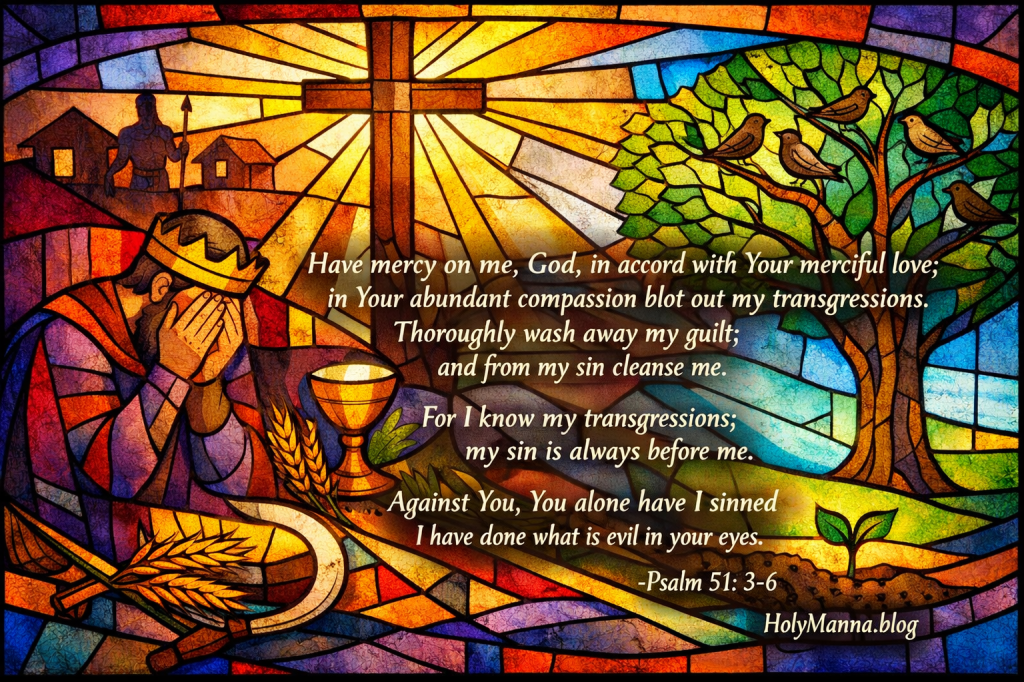
There are days when the Church places the Word of God in front of the heart like a mirror, not to shame, but to heal. Today’s readings all turn on what happens in the hidden places of life, because what is planted in secret eventually bears fruit in the open. David’s private choice becomes a public tragedy in 2 Sm 11:1-10, 13-17, the Church teaches contrition in Psalm 51, and Jesus reveals in Mk 4:26-34 that the Kingdom grows quietly, steadily, and powerfully, even when the human eye cannot track the process. The central theme tying everything together is simple and bracing: the heart is a field, and whatever is sown there will grow, either toward sin and death or toward grace and life.
A little background helps these passages land. David is not just any man in The Second Book of Samuel. He is the anointed king, the covenant leader, the one entrusted with shepherding God’s people, and his fall shows how sin becomes especially destructive when it is joined to power and comfort. Ancient Israel’s world was marked by honor, warfare, and loyalty, so Uriah’s integrity and David’s manipulation sting even more sharply. Then the Church responds with Psalm 51, the great penitential prayer traditionally linked to David’s repentance, and it sounds the Catholic note that never changes: sin is real, but mercy is more real, because God desires conversion, not despair. As The Catechism puts it, “Interior repentance is a radical reorientation of our whole life” CCC 1431, and that reorientation begins when the truth is finally spoken to God.
That sets up the Gospel perfectly. Jesus speaks to an agrarian crowd that understands seed, soil, seasons, and patience, and He uses that everyday world to describe the Kingdom’s mysterious growth. The same hiddenness that makes sin dangerous also makes grace hopeful, because God is working even when progress feels slow, and small fidelity can become shelter for many. The Catechism reminds believers that Jesus uses parables to invite people into the Kingdom while revealing the secrets of that Kingdom to those willing to follow Him, “He calls his hearers to conversion and faith” CCC 546. Where has the heart been planting seed lately, and what kind of harvest has been growing in the dark?
First Reading – Second Samuel 11:1-10, 13-17
When a King Stops Watching His Heart
This passage drops readers into a real historical moment of Israel’s monarchy, when King David’s army is campaigning against the Ammonites and besieging Rabbah. In the ancient world, kings were expected to lead, to protect, and to embody justice, because their personal integrity shaped the moral health of the whole people. That is why the opening detail is so chilling: David stays behind in Jerusalem when kings go to war. What follows is not merely a personal failure; it is a tragedy that spreads outward, because sin planted in secret rarely remains private.
Today’s theme comes into sharp focus here. The heart is a field, and whatever is sown there grows. David’s glance becomes desire, desire becomes action, action demands concealment, and concealment demands violence. The reading prepares the soul to hear Psalm 51 as a lifeline of repentance and to receive the Gospel’s hope that God can also grow something holy in hidden ways, if the heart yields to grace instead of compromise.
2 Samuel 11:1-10, 13-17 – New American Bible (Revised Edition)
David’s Sin. 1 At the turn of the year, the time when kings go to war, David sent out Joab along with his officers and all Israel, and they laid waste the Ammonites and besieged Rabbah. David himself remained in Jerusalem. 2 One evening David rose from his bed and strolled about on the roof of the king’s house. From the roof he saw a woman bathing; she was very beautiful. 3 David sent people to inquire about the woman and was told, “She is Bathsheba, daughter of Eliam, and wife of Uriah the Hittite, Joab’s armor-bearer.” 4 Then David sent messengers and took her. When she came to him, he took her to bed, at a time when she was just purified after her period; and she returned to her house. 5 But the woman had become pregnant; she sent a message to inform David, “I am pregnant.”
6 So David sent a message to Joab, “Send me Uriah the Hittite.” Joab sent Uriah to David. 7 And when he came, David asked him how Joab was, how the army was, and how the war was going, and Uriah answered that all was well. 8 David then said to Uriah, “Go down to your house and bathe your feet.” Uriah left the king’s house, and a portion from the king’s table was sent after him. 9 But Uriah slept at the entrance of the king’s house with the other officers of his lord, and did not go down to his own house. 10 David was told, “Uriah has not gone down to his house.” So he said to Uriah, “Have you not come from a journey? Why, then, did you not go down to your house?”
13 David summoned him, and he ate and drank with David, who got him drunk. But in the evening he went out to sleep on his bed among his lord’s servants, and did not go down to his house. 14 The next morning David wrote a letter to Joab which he sent by Uriah. 15 This is what he wrote in the letter: “Place Uriah up front, where the fighting is fierce. Then pull back and leave him to be struck down dead.” 16 So while Joab was besieging the city, he assigned Uriah to a place where he knew the defenders were strong. 17 When the men of the city made a sortie against Joab, some officers of David’s army fell, and Uriah the Hittite also died.
Detailed Exegesis
Verse 1 – “At the turn of the year, the time when kings go to war, David sent out Joab along with his officers and all Israel, and they laid waste the Ammonites and besieged Rabbah. David himself remained in Jerusalem.”
David’s first failure is not sexual, but spiritual vigilance. Leadership is avoided, duty is delegated, and comfort becomes the atmosphere where temptation finds room to breathe. Sin often begins when responsibility is replaced by indulgence, because the heart grows lazy when it is not anchored in mission.
Verse 2 – “One evening David rose from his bed and strolled about on the roof of the king’s house. From the roof he saw a woman bathing; she was very beautiful.”
The scene is ordinary, which makes it dangerous. This is not a battlefield temptation, but a quiet moment with no one watching. The gaze is not neutral, because it becomes the doorway to desire, and desire is never content to stay small unless it is disciplined.
Verse 3 – “David sent people to inquire about the woman and was told, ‘She is Bathsheba, daughter of Eliam, and wife of Uriah the Hittite, Joab’s armor-bearer.’”
The inquiry confirms that she is married, and that should have ended the story. Instead, the heart chooses self over covenant. Uriah being a Hittite also highlights something noble, because a foreigner shows fidelity while Israel’s anointed king begins to betray it.
Verse 4 – “Then David sent messengers and took her. When she came to him, he took her to bed, at a time when she was just purified after her period; and she returned to her house.”
The verbs move fast, because sin accelerates once consent is given. The mention of purification quietly reminds readers that Israel’s law cared about holiness and bodily life, yet David violates holiness at its root by treating a person as a possession. What is framed as private pleasure is already an assault on marriage, dignity, and justice.
Verse 5 – “But the woman had become pregnant; she sent a message to inform David, ‘I am pregnant.’”
Consequences arrive, and fear often follows. Sin promises secrecy but delivers exposure. At this point, repentance is still possible, but David chooses strategy over surrender.
Verse 6 – “So David sent a message to Joab, ‘Send me Uriah the Hittite.’ Joab sent Uriah to David.”
David begins to use his authority to manage appearances. The king who should protect a faithful soldier pulls him into a plan designed to hide sin rather than confess it. This is how sin spreads, because it recruits others into the lie.
Verse 7 – “And when he came, David asked him how Joab was, how the army was, and how the war was going, and Uriah answered that all was well.”
The conversation is polite, almost normal, and that is part of the ugliness. David speaks like a leader while acting like a coward. Uriah’s straightforward report highlights his integrity, and it indirectly exposes David’s divided heart.
Verse 8 – “David then said to Uriah, ‘Go down to your house and bathe your feet.’ Uriah left the king’s house, and a portion from the king’s table was sent after him.”
David’s plan is to manufacture an alibi by sending Uriah home. Even the royal gift is used as bait, which shows how power can be twisted into manipulation. The king is trying to cover sin with generosity, but generosity becomes counterfeit when it serves deception.
Verse 9 – “But Uriah slept at the entrance of the king’s house with the other officers of his lord, and did not go down to his own house.”
Uriah refuses comfort out of solidarity with the soldiers in the field. His restraint is a quiet witness to fidelity and sacrifice. The irony is painful: the man being betrayed acts with honor worthy of a king.
Verse 10 – “David was told, ‘Uriah has not gone down to his house.’ So he said to Uriah, ‘Have you not come from a journey? Why, then, did you not go down to your house?’”
David is now irritated that righteousness is interfering with his cover up. Sin resents virtue because virtue disrupts the lie. The question reveals David’s mindset: comfort is assumed, rather than earned or restrained for the sake of love.
Verse 13 – “David summoned him, and he ate and drank with David, who got him drunk. But in the evening he went out to sleep on his bed among his lord’s servants, and did not go down to his house.”
David escalates from suggestion to intoxication. This is not only deceit, but corruption, because David tries to weaken Uriah’s conscience through alcohol. Uriah still does not yield, which makes David’s next choice even darker.
Verse 14 – “The next morning David wrote a letter to Joab which he sent by Uriah.”
The sin now becomes chillingly calculated. David makes Uriah carry his own death order, which shows how far the heart can fall when it refuses repentance. Sin does not stay one sin; it multiplies to protect itself.
Verse 15 – “This is what he wrote in the letter: ‘Place Uriah up front, where the fighting is fierce. Then pull back and leave him to be struck down dead.’”
This is murder disguised as military policy. David tries to keep his hands clean, but the moral object is clear: an innocent man must die to preserve the king’s reputation. It is the ugliest kind of leadership, because it sacrifices the faithful to protect the unfaithful.
Verse 16 – “So while Joab was besieging the city, he assigned Uriah to a place where he knew the defenders were strong.”
Joab complies, and the web of sin widens. David’s private act now creates public injustice, and another leader participates in the wrongdoing. This is why Scripture treats sin as socially destructive, not merely personal.
Verse 17 – “When the men of the city made a sortie against Joab, some officers of David’s army fell, and Uriah the Hittite also died.”
The cost is not only Uriah’s life. Others die too, which is how sin often works when it gains momentum: it drags neighbors into consequences they did not choose. The harvest has come, and it is bitter.
Teachings
This reading is a sober catechesis on how sin grows when it is protected instead of confessed. The Catechism describes sin with blunt clarity: “Sin is an offense against reason, truth, and right conscience; it is failure in genuine love for God and neighbor caused by a perverse attachment to certain goods. It wounds the nature of man and injures human solidarity.” CCC 1849 This is exactly what happens here, because David’s perverse attachment begins as desire, then wounds Bathsheba, violates Uriah, and injures the wider community through death and deceit.
The pattern also illustrates how sin multiplies when it is repeated and defended. The Catechism explains this interior dynamic: “Sin creates a proclivity to sin; it engenders vice by repetition of the same acts. This results in perverse inclinations which cloud conscience and corrupt the concrete judgment of good and evil. Thus sin tends to reproduce itself and reinforce itself, but it cannot destroy the moral sense at its root.” CCC 1865 David’s choices move from lust to manipulation to murder because the conscience, once resisted, becomes easier to silence.
David’s adultery is not treated as a private romance, because it violates the covenant of marriage and the dignity of persons. The Catechism defines it plainly: “Adultery refers to marital infidelity. When two partners, of whom at least one is married to another party, have sexual relations even transient ones they commit adultery.” CCC 2380 The story also underscores that interior motives do not rescue an act. The moral reality of David’s actions is not improved by his status or his fear. The Catechism gives a simple framework that exposes self-justification: “The morality of human acts depends on: the object chosen; the end in view or the intention; the circumstances of the action.” CCC 1750 David’s intention to hide shame does not change the object of adultery, deceit, and murder, and it certainly does not excuse the collateral harm.
The saints read David’s fall as both warning and hope. St. Augustine, preaching on Psalm 51 in the shadow of this very story, refuses despair for sinners and offers a line worth carrying into prayer: “If from you sin could not be excluded, be not hope of pardon excluded.” St. Augustine, Exposition on Psalm 51 David’s life proves that even grave sin does not have the final word when repentance is real, because God’s mercy is not fragile. That is why the Church places Psalm 51 right beside this reading, so the heart does not stop at horror but moves toward contrition and conversion.
Reflection
David’s story is uncomfortable because it is realistic. Temptation usually does not start with a dramatic rebellion. It often starts with avoiding duty, feeding comfort, and letting the eyes and imagination roam without discipline. The heart then tries to manage consequences through secrecy, half-truths, and control, but that strategy always extracts a price. Today’s reading invites a different path: honesty before God, humility before truth, and the courage to cut off sin early before it demands a wider sacrifice.
A practical step is to take seriously the first small compromise, because the beginning is often where victory is won. Another concrete step is to build habits that keep the heart awake, like prayer at a consistent time, accountability with a trusted Catholic friend, and frequent confession, because grace does not merely forgive, it strengthens. It also helps to practice custody of the eyes and custody of the imagination, not out of fear of the world, but out of love for purity of heart and reverence for persons made in God’s image.
Where has comfort been replacing vigilance, especially when responsibility feels inconvenient?
What habit, screen, relationship dynamic, or private pattern has been treated as harmless even though it keeps growing roots?
If Uriah’s integrity exposed David’s lie, what honest voice or boundary could help expose a lie before it hardens into tragedy?
What would change this week if the heart chose truth and repentance quickly, instead of waiting until consequences force the issue?
Responsorial Psalm – Psalm 51:3-7, 10-11
Mercy Is the Only Way Back
This psalm is not a generic prayer for a rough day. Psalm 51 is the Church’s great penitential song, traditionally linked to David’s repentance after the disaster that began with Bathsheba and ended in Uriah’s death. In Israel’s worship, psalms were the prayerbook of God’s people, sung in the Temple and carried into daily life, forming hearts in truth, reverence, and hope. That background matters because this is not simply David venting feelings. This is a sinner standing before the living God with no excuses left.
That is why the Church places Psalm 51 right beside 2 Sm 11:1-10, 13-17. The First Reading shows sin growing in secret until it explodes into public harm. The Psalm shows what must happen next if a heart wants to be healed instead of hardened. It fits today’s theme perfectly because it teaches that hidden sin cannot be managed, but it can be confessed, cleansed, and transformed by mercy.
Psalm 51:3-7, 10-11 – New American Bible (Revised Edition)
3 Have mercy on me, God, in accord with your merciful love;
in your abundant compassion blot out my transgressions.
4 Thoroughly wash away my guilt;
and from my sin cleanse me.
5 For I know my transgressions;
my sin is always before me.
6 Against you, you alone have I sinned;
I have done what is evil in your eyes
So that you are just in your word,
and without reproach in your judgment.
7 Behold, I was born in guilt,
in sin my mother conceived me.10 You will let me hear gladness and joy;
the bones you have crushed will rejoice.11 Turn away your face from my sins;
blot out all my iniquities.
Detailed Exegesis
Verse 3 – “Have mercy on me, God, in accord with your merciful love; in your abundant compassion blot out my transgressions.”
The prayer begins with mercy, not self-defense. David appeals to who God is, not to who David pretends to be. Mercy here is not God ignoring evil, but God choosing to heal the sinner who returns. This is the logic of covenant love: God is faithful even when the human heart has been faithless.
Verse 4 – “Thoroughly wash away my guilt; and from my sin cleanse me.”
The imagery is purification. Sin is not treated as a minor smudge but as something that stains and needs washing. In Israel’s religious imagination, washing signaled a return to worship and communion. This verse trains the heart to desire cleansing, not merely relief from consequences.
Verse 5 – “For I know my transgressions; my sin is always before me.”
This is the pain of conscience waking up. The sin is “before” David, meaning it cannot be outrun by distraction or busyness. This is also a grace, because a dulled conscience is far more dangerous than a wounded one. When sin is faced honestly, repentance becomes possible.
Verse 6 – “Against you, you alone have I sinned; I have done what is evil in your eyes. So that you are just in your word, and without reproach in your judgment.”
This verse can sound confusing because David’s sins harmed Bathsheba, Uriah, and others. The point is not that neighbor does not matter. The point is that every sin is ultimately a rupture with God, because God is the source of the moral law and the dignity of every person harmed by sin. David is admitting that God would be completely just to judge, and that the sinner has no standing to argue with the verdict.
Verse 7 – “Behold, I was born in guilt, in sin my mother conceived me.”
David is not insulting his mother. He is acknowledging that sin is not merely “out there” in society, but “in here” in the human condition. This verse opens the door to the Church’s teaching on original sin, the wounded nature inherited by all, and the need for divine rescue rather than self-improvement.
Verse 10 – “You will let me hear gladness and joy; the bones you have crushed will rejoice.”
After confession comes hope. The “crushed bones” image expresses deep interior consequence, the heaviness that sin brings to the whole person, body and soul. David trusts that God can restore joy, not a shallow happiness, but the kind of joy that comes from reconciliation.
Verse 11 – “Turn away your face from my sins; blot out all my iniquities.”
The request is for God to remove sin from His sight, meaning to remove the barrier that sin creates in relationship. David is asking for real forgiveness, not denial. The phrase “blot out” returns to the opening line and frames forgiveness as God actively erasing the record of sin when the sinner returns with contrition.
Teachings
This psalm is a masterclass in Catholic repentance. It shows contrition, confession, and confidence in mercy. The Catechism defines interior repentance in a way that matches David’s posture exactly: “Interior repentance is a radical reorientation of our whole life, a return, a conversion to God with all our heart, an end of sin, a turning away from evil, with repugnance toward the evil actions we have committed.” CCC 1431 David is not negotiating. David is turning.
The Psalm also supports the Church’s teaching on the wounded human condition. When David says he was born into sin, he is expressing something the Church later articulates carefully: “Original sin does not have the character of a personal fault in any of Adam’s descendants. It is a deprivation of original holiness and justice, but human nature has not been totally corrupted: it is wounded in the natural powers proper to it, subject to ignorance, suffering and the domination of death, and inclined to sin.” CCC 405 This verse does not excuse personal sin, but it explains why salvation must be grace, not merely good intentions.
This psalm has been cherished by saints and used constantly in the Church’s prayer precisely because it is honest and hopeful at the same time. St. Augustine, preaching on this psalm, presses a point that keeps souls from despair when shame feels suffocating: “If from you sin could not be excluded, be not hope of pardon excluded.” St. Augustine, Exposition on Psalm 51 In other words, the presence of sin in a life is not proof that mercy is impossible. The refusal to repent is what hardens the heart, but repentance opens the door to healing.
Historically, the Church has also woven Psalm 51 into the penitential life of Christians, especially in seasons like Lent and in the daily prayer of the Church, because Catholics do not treat repentance as an emergency-only practice. Repentance is meant to become a rhythm, because the heart is always either drifting or returning.
Reflection
This psalm teaches what to do when sin is exposed, whether that exposure comes through consequences, conscience, or the quiet conviction of the Holy Spirit. A wise next step is to stop pretending that control can fix what only mercy can heal. The psalm does not model self-hatred, and it does not model self-justification. It models humility that trusts God’s character. That is the posture that leads naturally into the Sacrament of Confession, where God’s mercy is not an idea but a real encounter with Christ’s healing.
It also helps to pray this psalm slowly and specifically. It is easy to say “forgive me” in general and keep favorite sins untouched. This psalm pushes for clarity, because David says, “I know my transgressions.” When the heart names what it did, why it did it, and what it cost, the heart becomes ready to change. That kind of prayer also heals the instinct to hide, because hiding is the fuel of sin’s growth, while confession is the beginning of freedom.
What would change if mercy became the first response instead of defensiveness when failure is recognized?
Where has shame been used as an excuse to avoid confession, instead of letting shame become the doorway to humility and healing?
Which line of this psalm needs to become a daily habit so that small compromises do not have time to grow into large disasters?
Holy Gospel – Mark 4:26-34
Grace Grows Quietly
These parables come from a section of The Gospel of Mark where Jesus is forming disciples by teaching them how to see reality the way heaven sees it. First-century Galilee was agricultural, so Jesus’ listeners knew seed, soil, seasons, patience, and the frustration of waiting. That cultural backdrop is not incidental. Jesus uses the most ordinary image in their world to explain the most extraordinary reality: the Kingdom of God is real, active, and advancing, even when it is not loud.
This Gospel fits today’s theme by offering a hopeful contrast to the First Reading. David shows how sin grows in secret when it is protected and fed. Jesus shows how the Kingdom grows in secret when the Word is received and tended with faith. Psalm 51 teaches repentance as the way back when the wrong seed has been planted. The Gospel then shows that God is not only willing to forgive, but also eager to grow something new, strong, and sheltering in a heart that cooperates with grace.
Mark 4:26-34 – New American Bible (Revised Edition)
Seed Grows of Itself. 26 He said, “This is how it is with the kingdom of God; it is as if a man were to scatter seed on the land 27 and would sleep and rise night and day and the seed would sprout and grow, he knows not how. 28 Of its own accord the land yields fruit, first the blade, then the ear, then the full grain in the ear. 29 And when the grain is ripe, he wields the sickle at once, for the harvest has come.”
The Mustard Seed. 30 He said, “To what shall we compare the kingdom of God, or what parable can we use for it? 31 It is like a mustard seed that, when it is sown in the ground, is the smallest of all the seeds on the earth. 32 But once it is sown, it springs up and becomes the largest of plants and puts forth large branches, so that the birds of the sky can dwell in its shade.” 33 With many such parables he spoke the word to them as they were able to understand it. 34 Without parables he did not speak to them, but to his own disciples he explained everything in private.
Detailed Exegesis
Verse 26 – “He said, ‘This is how it is with the kingdom of God; it is as if a man were to scatter seed on the land.’”
Jesus describes the Kingdom as something planted, not manufactured. The seed is ultimately God’s gift, and the man’s role is real but limited. This immediately humbles pride and discouragement at the same time, because the Kingdom does not depend on human brilliance, yet it does call for human cooperation.
Verse 27 – “And would sleep and rise night and day and the seed would sprout and grow, he knows not how.”
The line “he knows not how” is the heart of the parable. The farmer is not ignorant in a childish way; he is limited in a human way. Growth is mysterious. God works beneath the surface, often outside the believer’s ability to measure progress. This is a gentle rebuke to the desire to control outcomes, especially the desire to control God.
Verse 28 – “Of its own accord the land yields fruit, first the blade, then the ear, then the full grain in the ear.”
The Kingdom has stages. Jesus normalizes gradual sanctification. The soul grows by steps, not by instant perfection, and those steps are real even when they feel slow. This verse also teaches patience with spiritual development, both in personal conversion and in the growth of the Church in the world.
Verse 29 – “And when the grain is ripe, he wields the sickle at once, for the harvest has come.”
The harvest signals fulfillment and judgment. God’s patience is not indifference. There is a real moment when time is complete and the fruit is gathered. This points to the final consummation of the Kingdom and reminds the heart that daily choices matter because they are forming a harvest.
Verse 30 – “He said, ‘To what shall we compare the kingdom of God, or what parable can we use for it?’”
Jesus invites listeners to think, not to passively consume. The Kingdom does not fit ordinary categories, so Jesus stretches the imagination through parable. The question also reveals His pedagogy, because He is drawing people into relationship and deeper understanding.
Verse 31 – “It is like a mustard seed that, when it is sown in the ground, is the smallest of all the seeds on the earth.”
The Kingdom begins small. Jesus is not romanticizing weakness; He is teaching realism. The beginnings of grace can look unimpressive: a first confession after years away, a first serious prayer, a small decision to forgive, a first step toward chastity, a quiet return to Sunday Mass without fanfare. The seed looks small, but the life inside it is real.
Verse 32 – “But once it is sown, it springs up and becomes the largest of plants and puts forth large branches, so that the birds of the sky can dwell in its shade.”
The small becomes sheltering. The branches and birds echo Old Testament images of kingdoms that become places of refuge. Jesus is saying that His Kingdom will grow beyond expectations and provide shelter, not only for insiders, but for many. This is also a picture of the Church’s mission, because the Church is meant to be a home where sinners are healed and saints are formed.
Verse 33 – “With many such parables he spoke the word to them as they were able to understand it.”
Jesus accommodates human capacity. He teaches gradually, not because truth is weak, but because the human heart needs time to receive it. This verse encourages patience with learning the faith and also a humble awareness that discipleship is a process.
Verse 34 – “Without parables he did not speak to them, but to his own disciples he explained everything in private.”
There is a public proclamation and a deeper formation. Jesus invites everyone, but He also forms disciples more intimately. This hints at the difference between simply hearing and truly following. The disciple stays close enough to ask, to listen, and to be taught.
Teachings
This Gospel teaches Catholic hope about sanctification and the Church’s mission. The Kingdom is God’s work first, not a human project. At the same time, God dignifies human cooperation through faith, prayer, and obedience. The Catechism explains why Jesus teaches this way: “Jesus calls to conversion and faith. The proclamation of the Kingdom of God is the central message of Jesus’ mission.” CCC 546 These parables are not cute farming stories. They are an urgent invitation to receive God’s reign and let it take root.
The parable of the seed growing “he knows not how” also speaks to how grace operates. The interior life is often hidden. A person can be changing deeply even when emotions are flat and external circumstances are unchanged. That is why the Church talks about sanctifying grace as a real supernatural life in the soul. The Catechism describes grace as more than divine assistance. It is a participation in God’s life: “Grace is a participation in the life of God. It introduces us into the intimacy of Trinitarian life.” CCC 1997 When that life is planted in a soul, growth follows, sometimes quietly, but truly.
The mustard seed image also helps explain the Church’s historical reality. The Kingdom began with Christ and a small band of disciples, looked fragile, and yet spread through persecution, martyrdom, and mission into a worldwide communion. The Church has always read this parable as reassurance that God’s plan advances even when it seems outmatched by empires, trends, or hostility. It is also a personal reassurance: holiness often begins with something tiny that looks insignificant, but God can turn it into shelter for others.
Saints and Doctors of the Church frequently emphasize that this growth requires patience and humility. St. Gregory the Great, reflecting on Gospel images of seed and growth, often highlights that God works invisibly in hearts and that virtues mature over time through perseverance. The lesson is consistent with Catholic spiritual tradition: grace is free, but it is not magic, because it calls for cooperation, endurance, and trust.
Reflection
This Gospel is a relief for anyone tempted to panic about slow progress. The Kingdom does not grow on the schedule of impatience. It grows at the pace of truth. A solid daily practice is to focus on sowing faithful seed rather than obsessing over results. That means prayer even when it feels dry, repentance even when it feels humbling, and obedience even when no one applauds. Over time, God produces fruit that could not have been forced.
This Gospel also challenges the desire to control spiritual outcomes. The seed grows “he knows not how,” which means the heart is invited to trust God’s hidden work. That trust is not passive. It is active faith that keeps showing up, keeps praying, keeps going to confession, keeps choosing virtue, and keeps returning to the Lord after failure. Small daily choices matter because they are planting something that will become a harvest.
It also helps to connect this to the First Reading. David’s tragedy began with a private compromise that seemed manageable. Jesus is teaching that private fidelity, even when it seems small, also grows. A quiet choice to shut down temptation, a humble confession, a restrained tongue, a decision to serve when comfort is calling, these are mustard seeds that become branches.
What small act of obedience has been dismissed as pointless even though it might be the seed God wants to grow?
Where has impatience been pressuring the soul to force outcomes instead of trusting God’s steady pace?
If the heart is a field, what is being watered daily, and what kind of harvest is forming beneath the surface?
Choose the Seed, Trust the Harvest
Today’s readings land like a loving warning and a stronger promise. 2 Sm 11:1-10, 13-17 shows what happens when the heart stops being watchful and starts feeding secret compromise. David’s fall is not a random scandal; it is a clear picture of how sin grows when it is protected, how it spreads when it is concealed, and how it eventually demands a higher price than anyone planned to pay. Then the Church puts the right response on the lips in Psalm 51. Repentance is not self-pity or vague regret. It is honest confession before God, a real turning back, and a trust that mercy is stronger than shame.
The Gospel completes the day with hope. In Mk 4:26-34, Jesus teaches that hidden things grow in both directions. Sin grows in the dark when it is indulged, but grace also grows in the dark when the Word is received and the soul cooperates with God’s pace. The seed of the Kingdom might look small at first, but God can turn small fidelity into real fruit, and He can turn a humble beginning into shelter for many.
The call to action is simple and concrete. Let today be the day to stop managing appearances and start pursuing holiness with sincerity. Make room for prayer that tells the truth. Choose one clear act of obedience that plants a better seed than yesterday planted. If there is serious sin being carried, do not negotiate with it or hide it. Bring it into the light through repentance and confession, because God does not humiliate the repentant sinner, and God does not abandon the one who returns.
What would change if mercy became the first place the heart ran, instead of the last resort after everything else fails? What small mustard seed of faithfulness needs to be planted today, trusting that God can grow it into a harvest that blesses others?
Engage with Us!
Readers are invited to share their reflections in the comments below, because God often encourages someone else through the honest insight He gives in prayer.
- First Reading, 2 Sm 11:1-10, 13-17: Where has comfort or distraction been weakening vigilance, and what boundary or habit could help protect the heart before temptation gains momentum?
- Responsorial Psalm, Psalm 51:3-7, 10-11: Which line of this psalm needs to become a personal prayer this week, and what would change if repentance became immediate instead of delayed?
- Holy Gospel, Mk 4:26-34: What small “mustard seed” act of obedience is God asking for right now, and how can patience be practiced while trusting Him to bring real growth and fruit?
Keep walking forward with confidence, because God never wastes a humble return, and every day is a new chance to live by faith and do everything with the love and mercy Jesus taught us.
Sacred Heart of Jesus, we trust in You!
Immaculate Heart of Mary, pray for us!
Saint Michael the Archangel, defend us in battle!
Follow us on YouTube, Instagram and Facebook for more insights and reflections on living a faith-filled life.

 Holy Manna!
Leave a comment