Memorial of Saint Francis de Sales, Bishop and Doctor of the Church – Lectionary: 316
When Love Looks Like Lament and Perseverance
There is a kind of holiness that does not feel dramatic at all, but it is the kind that saves souls in real life. Today’s readings invite attention to a quiet, stubborn love that refuses to become cynical when life is painful or confusing, and that keeps honoring God even when the heart feels raw.
The central theme tying everything together is faithful love under pressure. In the First Reading from 2 Samuel 1:1-4, 11-12, 19, 23-27, David receives news that should have cleared his path to power, because Saul and Jonathan are dead. Instead of celebrating, David mourns. He tears his garments, fasts, and sings a public lament that honors the fallen, even Saul, the king who had hunted him. This is not political spin, and it is not sentimental weakness. It is reverence for God’s anointing, respect for the people of Israel, and a heart trained to love what is true even when emotions are complicated.
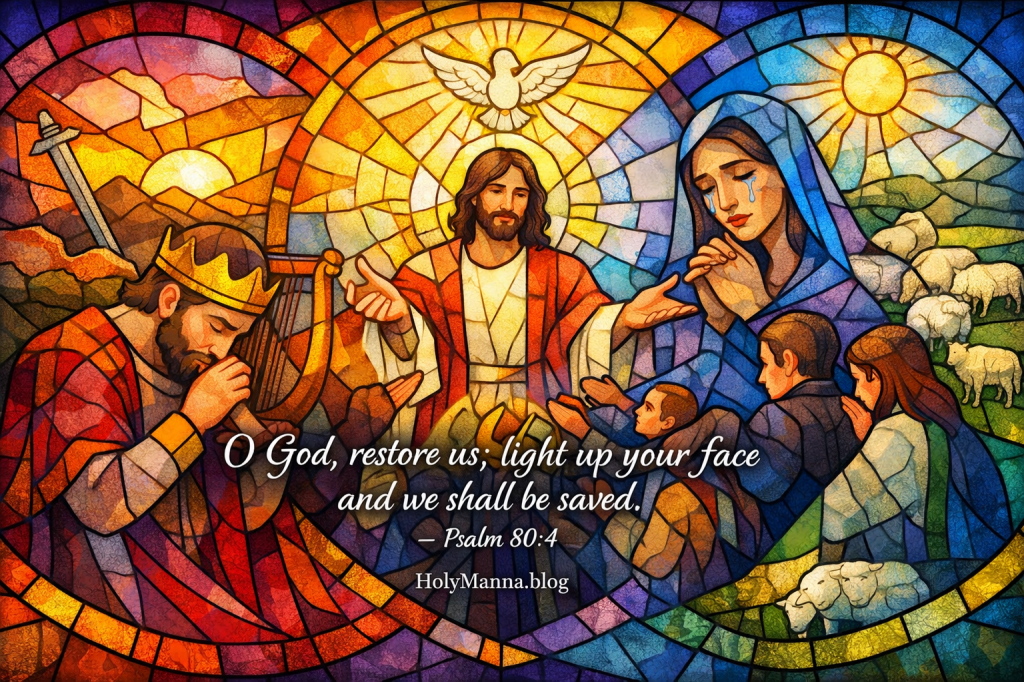
That same pressure carries into the cry of Psalm 80:2-7, where God’s people feel battered and humiliated, begging the Lord to restore them. The psalm does not pretend the suffering is small. It speaks of tears as daily bread, and it pleads for God’s face to shine again. This is covenant prayer, the language of a people who believe the Lord is still their Shepherd even when everything looks like loss.
Then the Gospel in Mark 3:20-21 brings the pressure right into the home. Jesus is so consumed with mission that He cannot even eat, and His own relatives misunderstand what they see and try to restrain Him. The Lord does not stop being faithful because the people closest to Him do not get it. He keeps moving forward in obedience to the Father, showing that love sometimes means enduring misread motives and staying steady anyway.
All of this lands beautifully on the Memorial of Saint Francis de Sales, a bishop and doctor who is famous for spiritual realism and gentleness. He lived in a time of sharp division, and he learned that hearts are rarely won by force, but they are often won by patient charity and steady truth. His witness helps set the tone for the day: grief can become prayer, misunderstanding can be met with calm fidelity, and the Lord can still restore what feels broken. What would change today if love stopped being a mood and became a decision rooted in God’s presence?
First Reading – 2 Samuel 1:1-4, 11-12, 19, 23-27
When a Holy Heart Refuses to Gloat
This reading drops into one of the most emotionally charged moments in 2 Samuel. Saul, Israel’s first king, has died in battle, along with Jonathan, his son and David’s closest friend. David is not just a private citizen receiving bad news. David is the anointed successor who has been chased, slandered, and threatened by Saul for years. If politics were running the show, this would be the moment for relief and celebration. Instead, the Spirit shows something deeper: a man after God’s heart grieving the fall of a king and the suffering of God’s people.
Historically, this happens during Israel’s early monarchy, when the tribes are still learning what it means to be one people under God’s covenant. A king in Israel is not only a political leader. The king represents stability, protection, and the nation’s public fidelity to the Lord. That is why Saul’s fall is not only a personal tragedy. It is a national wound. David’s response fits today’s theme of faithful love under pressure, because love is being tested in the place where many people fail: the moment when an enemy falls and pride whispers, “Finally.”
2 Samuel 1:1-4, 11-12, 19, 23-27 – New American Bible (Revised Edition)
Report of Saul’s Death. 1 After the death of Saul, David returned from his victory over the Amalekites and stayed in Ziklag two days. 2 On the third day a man came from the field of battle, one of Saul’s people, with his garments torn and his head covered with dirt. Going to David, he fell to the ground in homage. 3 David asked him, “Where have you come from?” He replied, “From the Israelite camp: I have escaped.” 4 “What happened?” David said. “Tell me.” He answered that the soldiers had fled the battle and many of them had fallen and were dead; and that Saul and his son Jonathan were dead.
11 David seized his garments and tore them, and so did all the men who were with him. 12 They mourned and wept and fasted until evening for Saul and his son Jonathan, and for the people of the Lord and the house of Israel, because they had fallen by the sword.
19 Alas! the glory of Israel,
slain upon your heights!
How can the warriors have fallen!23 Saul and Jonathan, beloved and dear,
separated neither in life nor death,
swifter than eagles, stronger than lions!
24 Women of Israel, weep over Saul,
who clothed you in scarlet and in finery,
covered your clothing with ornaments of gold.
25 How can the warriors have fallen
in the thick of battle!
Jonathan—slain upon your heights!
26 I grieve for you, Jonathan my brother!
Most dear have you been to me;
More wondrous your love to me
than the love of women.
27 How can the warriors have fallen,
the weapons of war have perished!
Detailed Exegesis
Verse 1 – “After the death of Saul, David returned from his victory over the Amalekites and stayed in Ziklag two days.”
David is coming off victory, which matters because triumph often makes the heart careless. The text quietly sets a contrast between David’s military success and the grief that is about to interrupt it. Ziklag also signals David’s liminal position. He is not yet enthroned in Jerusalem, and he is still living with the instability of a man in transition. God often does serious heart work in seasons like that.
Verse 2 – “On the third day a man came from the field of battle, one of Saul’s people, with his garments torn and his head covered with dirt. Going to David, he fell to the ground in homage.”
The torn garments and dirt are visible signs of mourning and disaster. The man’s homage shows that David’s reputation and destiny are already known, even if the crown is not yet on his head. This creates tension: will David receive homage as personal victory, or will he receive the news as a servant of the Lord who loves Israel?
Verse 3 – “David asked him, ‘Where have you come from?’ He replied, ‘From the Israelite camp: I have escaped.’”
David’s first move is not celebration but discernment. He asks for the source. This is how a wise man acts when high-stakes news arrives. The phrase “I have escaped” signals that Israel’s army has been shattered. The tragedy is already bigger than Saul alone.
Verse 4 – “‘What happened?’ David said. ‘Tell me.’ He answered that the soldiers had fled the battle and many of them had fallen and were dead; and that Saul and his son Jonathan were dead.”
The report is layered: defeat, death, and then the names that change everything. Saul’s death ends a reign. Jonathan’s death pierces David personally. The order matters because Scripture is showing both dimensions at once: the fall of leadership and the breaking of a friendship. Love under pressure now becomes love under grief.
Verse 11 – “David seized his garments and tore them, and so did all the men who were with him.”
This is not performance. In the ancient world, tearing garments was a public sign of lament, humility, and grief. David’s men join him, which reveals something important: David is forming a community that will not build its future on contempt. Even when a leader has failed, the fall is still sorrowful because the damage touches everyone.
Verse 12 – “They mourned and wept and fasted until evening for Saul and his son Jonathan, and for the people of the Lord and the house of Israel, because they had fallen by the sword.”
Fasting turns grief into prayer. David mourns for Saul, for Jonathan, and for the people, which keeps the focus where it belongs. Israel is called “the people of the Lord,” which is covenant language. The tragedy is not only military. It is spiritual and communal. This verse also shows moral clarity: David will not let personal history cancel reverence for God’s people and God’s anointed office.
Verse 19 – “Alas! the glory of Israel, slain upon your heights! How can the warriors have fallen!”
This begins the lament, a poetic cry meant to be remembered. “The glory of Israel” does not mean Saul was flawless. It means Israel’s honor and strength have been brought low. The repeated question, “How can the warriors have fallen,” is the language of shock, not denial. It is grief processing reality.
Verse 23 – “Saul and Jonathan, beloved and dear, separated neither in life nor death, swifter than eagles, stronger than lions!”
David speaks generously, which is the mark of a heart not chained to resentment. He highlights the bond between Saul and Jonathan, and he recognizes their strength. The point is not to rewrite Saul’s failures. The point is to refuse a cheap, bitter narrative. Charity does not lie, but it also does not delight in humiliation.
Verse 24 – “Women of Israel, weep over Saul, who clothed you in scarlet and in finery, covered your clothing with ornaments of gold.”
David invites the nation into communal mourning. He also acknowledges the real goods that came through Saul’s reign, including prosperity and protection that touched ordinary life. This is mature gratitude. It can name blessings without denying wounds.
Verse 25 – “How can the warriors have fallen in the thick of battle! Jonathan, slain upon your heights!”
Now the lament becomes personal. Jonathan is named and honored. The repetition of “your heights” echoes Israel’s battlefield terrain and also the sense of public tragedy. Jonathan’s death is not only private heartbreak. It is a loss for Israel.
Verse 26 – “I grieve for you, Jonathan my brother! Most dear have you been to me; more wondrous your love to me than the love of women.”
This is covenant friendship spoken with full intensity. Jonathan protected David, bound himself to him in loyalty, and stood for what was right even when it cost him. David’s words show that chaste friendship can be profound and sacrificial. Scripture is not embarrassed by deep affection expressed in purity and loyalty.
Verse 27 – “How can the warriors have fallen, the weapons of war have perished!”
The lament ends with both grief and symbolism. The weapons stand for Israel’s strength and defense, now broken. It is the language of devastation, but it is also the beginning of rebuilding, because honest lament is a doorway to renewal.
Teachings
This passage teaches that holiness is revealed in how someone reacts when an opponent falls. David had every human reason to feel vindicated, yet he chose mourning, fasting, and honor. That restraint is not weakness. It is spiritual strength rooted in reverence for God’s providence and God’s people. A Catholic heart should recognize the same principle: even when leaders fail, the faithful do not feed on contempt, because contempt corrodes the soul.
The Church’s moral tradition warns against taking pleasure in another’s suffering. It also calls for charity in judgment, especially when emotions are heated. The Catechism of the Catholic Church teaches, “To avoid rash judgment, everyone should be careful to interpret insofar as possible his neighbor’s thoughts, words, and deeds in a favorable way.” CCC 2478. This matters here because David refuses to reduce Saul to a villain in a moment of national grief. David’s lament does not deny Saul’s faults. It refuses to turn Saul’s death into entertainment.
The reading also illuminates a biblical way of grieving that is fully compatible with Catholic life. David weeps and fasts. That is not stoic suppression. It is prayerful lament. The Church trains the faithful to bring loss into worship and to let sorrow become intercession. The psalms do this constantly, and this reading shows the same spirit in narrative form.
Finally, David’s words about Jonathan witness to the dignity of faithful friendship. In a culture that often cannot imagine love without confusion, Scripture shows that love can be deep, loyal, and pure. Jonathan’s love is expressed through protection, covenant loyalty, and sacrifice, and David honors that without embarrassment.
Reflection
This reading invites a simple but demanding examination of the heart. It asks what happens internally when someone who caused pain finally falls apart. The world often calls gloating justice, but David shows that the righteous response is grief for the damage sin causes, even when the sinner was personally harmful.
A practical step is to practice holy restraint in speech. When bad news breaks about a public figure, a boss, a family member, or an old enemy, it is easy to join the crowd that mocks. David tears his garments and fasts. That is a challenge to replace commentary with prayer. A good daily habit is to say one short prayer for the person who fell and one prayer for those harmed by their leadership, even if emotions are still messy.
Another step is to reclaim lament as a Catholic strength. Many people either explode or numb out. David mourns, weeps, and fasts, and then he gives words to grief. That is a reminder to bring sorrow into prayer, especially through the psalms and through a sincere offering at Mass.
This reading also speaks to friendship. Jonathan’s loyal love strengthened David’s vocation. Every person needs at least one or two relationships like that, grounded in truth, sacrifice, and prayer. Who has been a Jonathan in this life, and what would it look like to thank God for that friendship instead of taking it for granted? Where is the temptation to gloat or gossip, and what concrete act of prayer or silence could replace it today?
Responsorial Psalm – Psalm 80:2-7
When Tears Become a Prayer for Restoration
This psalm is a communal lament, the kind Israel prayed when life felt like it was unraveling and God seemed painfully quiet. The imagery is deeply religious and liturgical. The Lord is invoked as the Shepherd of Israel, and also as the One enthroned upon the cherubim, which recalls the Ark of the Covenant and the place of God’s presence in the sanctuary. The mention of Ephraim, Benjamin, and Manasseh signals a people crying out as tribes, not as isolated individuals, because suffering rarely stays private in the life of God’s covenant family.
That context fits perfectly with today’s theme of faithful love under pressure. David mourns the fall of Saul and Jonathan instead of gloating, and Jesus is misunderstood even by His own relatives, yet He continues the Father’s work. This psalm gives words for the moment when grief, confusion, and spiritual dryness collide, and the only honest thing left to say is a plea for God to restore what feels broken.
Psalm 80:2-7 – New American Bible (Revised Edition)
2 O Shepherd of Israel, lend an ear,
you who guide Joseph like a flock!
Seated upon the cherubim, shine forth
3 upon Ephraim, Benjamin, and Manasseh.
Stir up your power, and come to save us.
4 O God, restore us;
light up your face and we shall be saved.5 Lord of hosts,
how long will you smolder in anger
while your people pray?
6 You have fed them the bread of tears,
made them drink tears in great measure.
7 You have left us to be fought over by our neighbors;
our enemies deride us.
Detailed Exegesis
Verse 2 – “O Shepherd of Israel, lend an ear, you who guide Joseph like a flock! Seated upon the cherubim, shine forth”
Calling God the Shepherd is not sentimental. It is covenant language. Israel belongs to the Lord, and the Lord is responsible for His people in mercy and power. The phrase about being seated upon the cherubim evokes the holiness of God’s presence and reminds the praying community that the Lord is not a distant idea. The Lord is real, enthroned, and able to act, even when the people cannot feel Him.
Verse 3 – “upon Ephraim, Benjamin, and Manasseh. Stir up your power, and come to save us.”
These tribal names make the prayer concrete. The psalm is not vague spirituality. It is a cry from real people with a real history. The plea to stir up divine power is bold, but it is also humble, because it admits that salvation cannot be manufactured by human effort. It also teaches that asking God for rescue is not a lack of faith. It is a confession that God alone is Savior.
Verse 4 – “O God, restore us; light up your face and we shall be saved.”
This is one of the most important lines in the whole selection. In Scripture, God’s face shining is a sign of favor, blessing, and renewed communion. When God’s face seems hidden, life feels unstable. The psalm teaches that the deepest restoration is not simply changing circumstances. The deepest restoration is being brought back into the light of God’s presence, because that is where salvation becomes more than survival.
Verse 5 – “Lord of hosts, how long will you smolder in anger while your people pray?”
This is honest prayer, not irreverence. The psalm does not deny God’s holiness or the reality of judgment. It admits the pain of a season when prayer feels unanswered. Many believers have lived this tension, including the saints. The key is that the psalm stays in relationship. It argues with God while still calling Him Lord, which is a sign of faith that refuses to quit.
Verse 6 – “You have fed them the bread of tears, made them drink tears in great measure.”
This is the language of prolonged sorrow. Tears become daily bread and daily drink, which is a poetic way of saying that grief is not occasional. It is constant. Scripture refuses to minimize that experience. It also quietly teaches that even tears can be brought into worship, offered to God, and turned into intercession rather than despair.
Verse 7 – “You have left us to be fought over by our neighbors; our enemies deride us.”
Shame and mockery are part of the suffering here. The community feels exposed, vulnerable, and publicly humiliated. That makes the earlier plea even more urgent: restoration is not only internal comfort. It is God defending His people and revealing His saving presence again in a way that silences derision.
Teachings
This psalm teaches that pleading with God is not childish faith. It is biblical faith. The Church has always understood the psalms as a privileged school of prayer because they give the faithful words that are both honest and reverent, especially in seasons when the heart cannot improvise. That is why the Church can pray grief without being ruled by it.
The Catechism gives a simple, sturdy definition that fits this psalm perfectly: The Catechism of the Catholic Church teaches, “Prayer is the raising of one’s mind and heart to God or the requesting of good things from God.” CCC 2559. Psalm 80 does both at once. It raises the heart toward the Shepherd enthroned in glory, and it requests the good thing the people most need: restoration through the light of God’s face.
Saint Francis de Sales also helps frame this psalm on his memorial. He consistently taught that perseverance matters more than emotional ease, and that prayer should remain faithful even when consolation is absent. This psalm models that spiritual maturity. It brings the hard truth to God instead of turning away from God. It also shows why lament is not opposed to hope. Lament is often the form hope takes when life is heavy, because it keeps asking God to save.
Reflection
This psalm is a gift for anyone who feels tired of pretending that everything is fine. It invites a return to a more honest Catholic prayer life, where sorrow is not hidden, but brought into the presence of the Shepherd who guides His flock. A practical way to live this today is to pray the refrain slowly, with attention, especially when the day feels chaotic or emotionally flat: “O God, restore us; light up your face and we shall be saved.” That line can become a steady anchor, not because it magically removes pain, but because it keeps the heart facing God.
It also helps to notice what the psalm does not do. It does not numb the pain with distractions, and it does not let pain become a reason to stop praying. It keeps praying while hurting, which is exactly the kind of faithful love that shows up in David’s mourning and in Christ’s perseverance through misunderstanding.
Where has prayer started to feel like background noise instead of a real cry from the heart? What would change if sorrow was brought to God immediately, before it turns into bitterness, sarcasm, or spiritual laziness? When life serves the bread of tears, this psalm teaches a simple path forward: keep asking the Shepherd to come close, keep asking for His face to shine, and keep trusting that restoration is possible because the Lord still saves.
Holy Gospel – Mark 3:20-21
When Holiness Gets Misread at Home
This brief Gospel scene sits early in The Gospel of Mark, right as Jesus’ public ministry is accelerating and the crowds are growing intense. In the ancient world, family was not only about affection. Family was also about identity, reputation, and social stability. When someone’s behavior looked disruptive or dangerous, relatives often felt responsible to step in, not only out of concern, but to protect the family’s honor and safety.
That makes this moment especially sharp. Jesus is not misunderstood by strangers first. He is misunderstood by His own relatives. That fits today’s theme of faithful love under pressure. David refuses to gloat when Saul falls, and Israel prays through tears for restoration. Now Jesus keeps doing the Father’s work even when the people closest to Him interpret His mission in the worst possible way.
Mark 3:20-21 – New American Bible (Revised Edition)
Blasphemy of the Scribes. 20 He came home. Again [the] crowd gathered, making it impossible for them even to eat. 21 When his relatives heard of this they set out to seize him, for they said, “He is out of his mind.”
Detailed Exegesis
Verse 20 – “He came home. Again [the] crowd gathered, making it impossible for them even to eat.”
Jesus returns “home,” which in Mark often means a house setting where teaching and healing continue. The detail about not being able to eat shows how relentless the demand is. This is not staged heroism. It is the daily weight of a mission carried in a real human body. Jesus does not reject the crowd because He is irritated, and He does not abandon the mission because it is inconvenient. The Gospel quietly shows both Christ’s true humanity and His steadfast charity. It also prepares the reader to understand why outsiders might think something is “off,” because a life poured out for God can look unreasonable to people measuring everything by comfort.
Verse 21 – “When his relatives heard of this they set out to seize him, for they said, ‘He is out of his mind.’”
The phrase “set out to seize him” is strong. It suggests restraint, as if they intend to take control of the situation. Their conclusion, that He is “out of his mind,” reveals a painful kind of misunderstanding: they interpret zeal and self-gift as instability. In a culture where family bore collective responsibility, their impulse may include worry and embarrassment. Spiritually, though, it reveals a common temptation that still exists: when God calls someone to radical fidelity, the people nearby may label it extreme or unhealthy because it disrupts familiar patterns. Jesus does not build His identity from their reaction. He remains faithful to the Father, even when it costs Him in the most intimate place.
Teachings
This Gospel teaches that discipleship will sometimes be misread, even by good people who mean well. Following Christ can unsettle routines, expose priorities, and challenge a comfortable version of religion. The Lord’s response is not to lash out or to become bitter. The Lord continues the mission with patient strength, which is exactly the kind of steady love highlighted throughout today’s readings.
The passage also warns against a sin that feels socially acceptable: quick judgment. It is easy to call someone “crazy” when their devotion convicts the conscience or interrupts expectations. The Catechism of the Catholic Church gives a clear standard for guarding charity in the mind and on the tongue: “To avoid rash judgment, everyone should be careful to interpret insofar as possible his neighbor’s thoughts, words, and deeds in a favorable way.” CCC 2478. This is not naive optimism. It is a deliberate spiritual discipline that protects unity, humility, and truth.
On the Memorial of Saint Francis de Sales, this Gospel also harmonizes with the Church’s instinct that firmness and gentleness belong together. The Lord does not quit His mission, and He also does not let misunderstanding turn Him harsh. That combination is one of the most needed forms of Catholic maturity, especially in family life.
Reflection
This Gospel speaks to anyone who has tried to take faith seriously and felt misunderstood for it. Sometimes the misunderstanding comes from hostile critics, but often it comes from people who love deeply and still do not see what God is doing. The temptation in that moment is to either hide discipleship to keep the peace, or to push back with sarcasm and pride. Jesus chooses another way. He remains faithful without becoming nasty, and He keeps serving without demanding to be applauded.
A practical step is to examine how the tongue speaks about zeal, both in others and in oneself. When someone begins praying more, attending Mass more faithfully, or choosing chastity, sobriety, and repentance, the easy reaction is to mock it as “too much.” This Gospel calls for a more reverent approach: assume there is grace at work, and respond with patience rather than suspicion.
Another step is to practice quiet consistency at home. Family life is where virtue is tested most. If prayer, Sunday Mass, confession, and moral clarity are treated like optional hobbies, it helps to return to simple fidelity without dramatics. That steadiness often speaks louder than arguments.
Where has discipleship been watered down just to avoid being judged by family or friends? Who has been labeled too quickly, and what would it look like to practice the charity of interpretation instead of the habit of suspicion?
Let the Shepherd Restore What Pressure Reveals
Today’s readings land like a steady hand on the shoulder. They do not pretend life is tidy, and they do not treat holiness like a personality type. They show that faithful love is proven precisely when pressure hits, when grief is real, and when the heart is tempted to react like the world.
In the First Reading from 2 Samuel 1:1-4, 11-12, 19, 23-27, David models a love that refuses to gloat. Saul is gone, and David could have treated it as a personal victory, but he chooses mourning, fasting, and honor. That is a hard kind of righteousness, because it demands control of the tongue and purity of motive. It also teaches that lament is not a spiritual failure. Lament is often the first honest act of faith in a season of loss.
The Responsorial Psalm in Ps 80:2-7 gives language for the same season. It names the “bread of tears” without shame and still dares to ask for salvation. The refrain carries the whole day: “O God, restore us; light up your face and we shall be saved.” This is what God’s people do when they cannot fix the situation. They turn sorrow into prayer and keep asking the Shepherd to come close.
Then the Holy Gospel in Mk 3:20-21 brings the test of love into the most intimate space. Jesus is misunderstood by His relatives, and they try to restrain Him as if fidelity to the Father is instability. The Lord does not collapse into people-pleasing, and He does not become bitter. He continues the mission with quiet strength. That is a powerful reminder that sometimes the cost of discipleship is being misread, even by those who are close.
This is a day for choosing the steady path. It is a day to refuse the cheap thrill of gossip and contempt. It is a day to pray honestly when tears are the daily bread. It is a day to keep doing the right thing when others do not understand it. The call to action is simple and demanding: bring the heart back under the Shepherd’s care. Pray the psalm slowly. Offer a small fast or a small act of restraint from harsh speech. Honor what is honorable, even when emotions are complicated. Stay faithful in the hidden places, especially at home, where holiness is tested most.
What would change if today’s first reaction to pressure was prayer instead of commentary? What would change if the heart chose restoration over resentment, and fidelity over fear of being misunderstood?
Engage with Us!
Readers are invited to share reflections in the comments below, because faith grows when the Word is prayed, lived, and talked about with humility and sincerity.
- First Reading, 2 Samuel 1:1-4, 11-12, 19, 23-27: Where is there a temptation to gloat when someone who caused pain falls, and what would it look like to choose honor, restraint, and prayer instead?
- Responsorial Psalm, Ps 80:2-7: Where has life felt like the “bread of tears,” and how can this prayer become a daily refrain that keeps the heart turned toward God’s restoring presence?
- Holy Gospel, Mk 3:20-21: Where has discipleship been softened to avoid misunderstanding, and what simple act of steady fidelity can be practiced this week without bitterness or drama?
May this day’s Word form a heart that stays faithful under pressure, prays honestly through sorrow, and walks forward with quiet courage. Let everything be done with the love and mercy Jesus taught, so that ordinary life becomes a real witness of the Gospel.
Sacred Heart of Jesus, we trust in You!
Immaculate Heart of Mary, pray for us!
Saint Michael the Archangel, defend us in battle!
Follow us on YouTube, Instagram and Facebook for more insights and reflections on living a faith-filled life.

 Holy Manna!
Leave a comment