Second Sunday in Ordinary Time – Lectionary: 64
When God’s Glory Looks Like a Lamb
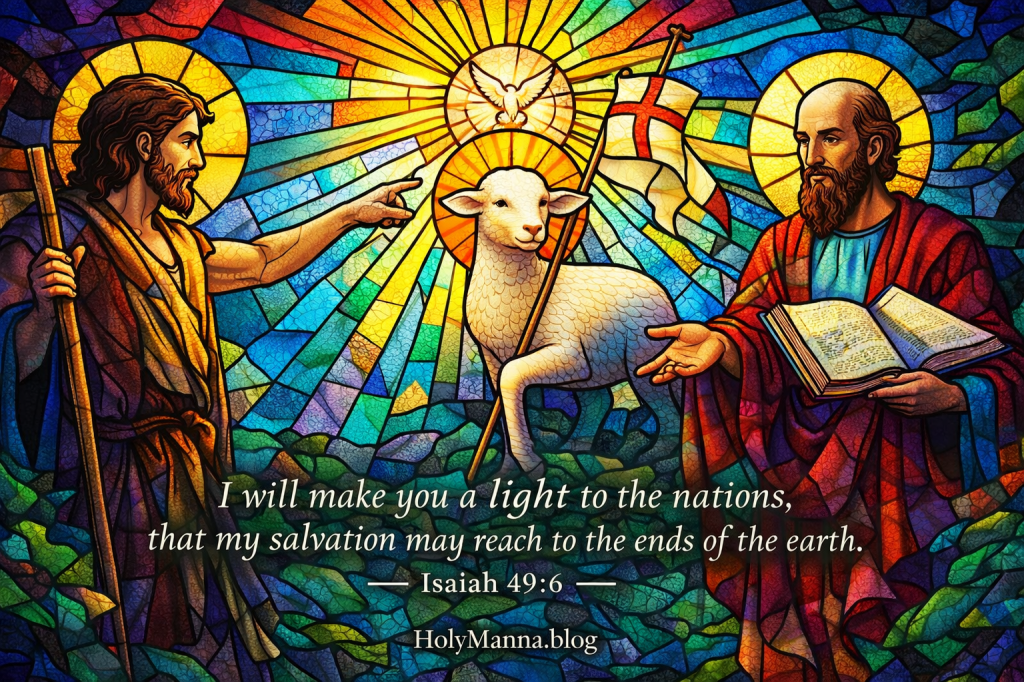
There are days when Scripture feels like a spotlight, and today is one of them. The Word of God invites hearts to slow down and notice the way the Lord reveals His glory, because it often looks nothing like the world expects. God’s saving power appears through a Servant who is formed from the womb, through a humble obedience that replaces empty ritual, through a Church called to holiness in the middle of a messy city, and through a Messiah identified not by fanfare but by sacrifice. The central theme tying every reading together is simple and demanding: God’s salvation comes through the obedient Servant, Jesus Christ, the Lamb of God, and that salvation is meant to radiate outward until it reaches the ends of the earth.
This theme fits the season perfectly. Ordinary Time is not a spiritual offseason, and the Church does not treat these Sundays as filler. Ordinary Time is where the Lord trains ordinary people to recognize Him, follow Him, and carry His light into ordinary life. That is why the readings move like a single procession. Isaiah speaks from the tradition of Israel’s hope, announcing a Servant whose mission begins with gathering God’s people and then expands to the nations. That promise was born in a world of exile, restoration, and longing, where Israel learned that God’s glory is not limited to borders or temples. The psalm answers with the voice of a faithful heart that has learned something deeper than outward sacrifice, because true worship is a life that says yes to the Lord’s will from the inside. Then Paul greets the Corinthians with a reminder that holiness is not a private hobby, because the baptized are sanctified in Christ and called to be holy with believers everywhere. Finally, John the Baptist points to Jesus and names Him with words that still echo at every Mass: “Behold, the Lamb of God, who takes away the sin of the world.” In that moment, everything comes into focus. The Servant is not just an idea, and salvation is not just a concept. Salvation has a face, and it walks toward sinners with mercy strong enough to carry their sin and holiness strong enough to transform their lives.
What would change if the heart learned to see God’s glory where John points, and to trust that the Lamb of God is strong enough to take away real sin, not just religious guilt?
First Reading – Isaiah 49:3, 5-6
God’s Servant who becomes light for the whole world.
Isaiah speaks into a wounded moment in Israel’s story, when the Lord’s people have tasted exile, loss, and the temptation to believe that the covenant has failed. In this part of Isaiah, the Church hears the voice of the Lord’s Servant, a figure who somehow represents Israel and yet also stands out from Israel, because his mission is to gather Israel back and then carry God’s salvation outward to the nations. That is why this reading fits today’s theme so perfectly. God’s glory does not appear as political domination or national pride. God’s glory appears as faithful service, humble obedience, and a saving mission that refuses to stop at the border of one people. The Church proclaims this on the Second Sunday in Ordinary Time because ordinary time is where disciples learn that Jesus is not only the Lamb who takes away sin, but also the Servant who sends His people to become light in a dark world.
Isaiah 49:3, 5-6 – New American Bible (Revised Edition)
3 He said to me, You are my servant,
in you, Israel, I show my glory.5 For now the Lord has spoken
who formed me as his servant from the womb,
That Jacob may be brought back to him
and Israel gathered to him;
I am honored in the sight of the Lord,
and my God is now my strength!
6 It is too little, he says, for you to be my servant,
to raise up the tribes of Jacob,
and restore the survivors of Israel;
I will make you a light to the nations,
that my salvation may reach to the ends of the earth.
Detailed Exegesis
Verse 3: “He said to me, You are my servant, in you, Israel, I show my glory.”
This verse sets the tone with a surprising claim. God’s glory is revealed through a servant. In the biblical imagination, “glory” is not simply brightness or fame, because it is the weight and splendor of God’s presence made known in history. Here, the Lord says that His glory is shown “in” His servant, and that servant is called “Israel.” This is the mystery of vocation. God chooses a people, not because they are the strongest, but because He wants to display His faithfulness through them. In a deeper and final way, the Church hears this fulfilled in Jesus, the true Servant, who embodies Israel’s calling perfectly by loving the Father without compromise and loving sinners without fear.
Verse 5: “For now the Lord has spoken who formed me as his servant from the womb, That Jacob may be brought back to him and Israel gathered to him; I am honored in the sight of the Lord, and my God is now my strength!”
The Servant speaks with the confidence of someone who knows he belongs to God. Being “formed from the womb” is not sentimental language. It is a claim that the mission is not self-invented, and it is not based on personal ambition. The Servant is shaped by God’s initiative, and his first task is restorative: to bring Jacob back and gather Israel. This is what the Lord always does when His people scatter through sin, fear, compromise, or despair. He gathers. He restores. He brings home. The Servant also admits a human need that every disciple recognizes. Strength does not come from personal grit alone. The Servant says, in effect, that honor comes from God’s gaze, and strength comes from God’s help.
Verse 6: “It is too little, he says, for you to be my servant, to raise up the tribes of Jacob, and restore the survivors of Israel; I will make you a light to the nations, that my salvation may reach to the ends of the earth.”
This is the moment when the horizon explodes. Restoring Israel is real, but it is “too little” for God’s heart. The Lord intends something universal. The Servant will be “a light to the nations,” so that salvation reaches “to the ends of the earth.” This verse exposes a common spiritual mistake. It is easy to imagine that God’s work is small, private, and contained, especially when life feels exhausted and faith feels pressured. God thinks bigger than that. God’s mercy is not meant to stay trapped inside a religious bubble. It is meant to shine outward, first by restoring God’s people from within, and then by drawing outsiders in. In the light of the Gospel, this becomes unmistakably Christ-centered. Jesus is the true Light who enters the world, and His Church shares in His mission by grace, not by bragging rights.
Teachings
This reading teaches that God’s plan is both personal and universal. The Servant is chosen intimately, even from the womb, and yet the mission is never merely private. God restores His people so that His salvation can be offered to all peoples. That is why the Church consistently reads the Servant passages as a prophetic preparation for Christ. Jesus does not simply bring Israel back from exile in a political sense. He brings humanity back from the deeper exile of sin by offering Himself in obedient love, and then He sends His disciples to carry that light to the nations.
This also teaches what authentic “glory” looks like in Catholic life. Glory is not self-display. Glory is God’s goodness made visible through fidelity. The Servant does not announce personal greatness. The Servant announces God’s saving purpose, and then accepts the cost of serving that purpose. That is exactly what is seen in Jesus, and it is exactly what John the Baptist points to in the Gospel when he identifies Jesus as the Lamb who takes away the sin of the world. The Lamb and the Servant belong together. The Lamb shows how salvation happens through sacrifice, and the Servant shows how God’s glory is revealed through obedience.
This is also where the Church’s missionary identity becomes unavoidable. The Lord does not only want “survivors” restored. The Lord wants the nations illumined. The Church receives that same impulse, because Baptism does not only cleanse the soul, it also commissions the soul. A Christian is never only a rescued sinner. A Christian is also someone sent, called to let Christ’s light reach family life, workplaces, friendships, and the public square with both truth and charity.
A simple line from St. Augustine captures the gathering heart of God’s mission with unforgettable clarity. St. Augustine writes in Confessions, “You have made us for yourself, O Lord, and our heart is restless until it rests in you.” This is what the Servant’s mission accomplishes in the deepest sense. God gathers scattered hearts back to Himself, and then He uses those gathered hearts as living lamps for a world that does not know where to rest.
Reflection
This reading challenges the instinct to make faith small. It is tempting to reduce Christianity to private comfort, personal therapy, or a weekend ritual that stays safely contained. Isaiah refuses that reduction. The Lord gathers His people back because He loves them, and He also gathers them back because He intends to send them out as light. That means daily life becomes a place of mission, even when the days feel ordinary and unimpressive.
A practical place to start is the heart’s posture. When anxiety rises, when resentment simmers, or when discouragement settles in, it helps to name what the Servant names. God is strength. God is the One who gathers. God is not finished with anyone who feels scattered. Then the next move is to let light become concrete. Light looks like truth spoken calmly instead of sarcasm. Light looks like fidelity to promises when it would be easier to drift. Light looks like choosing purity, patience, and courage, not because it feels heroic, but because it reflects the character of Christ.
Where has life become scattered in ways that need God’s gathering mercy right now? Who has been placed nearby that needs the light of steady Catholic witness, not a lecture, but a faithful presence marked by prayer, honesty, and charity? What would change this week if the heart believed that God’s mission is bigger than survival, and that the Lord still wants salvation to reach further through ordinary discipleship?
Responsorial Psalm – Psalm 40:2, 4, 7-10
Real worship is a listening heart that answers God with obedient love.
Psalm 40 is the voice of a faithful Israelite who has learned that the Lord is not impressed by performance, but He is deeply moved by trust, humility, and obedience. In ancient Israel, sacrifice was part of covenant worship, and the temple liturgy shaped the people’s imagination about holiness. Yet the prophets and the psalms repeatedly warned against a dangerous substitute for holiness, which is offering religious activity without offering the heart. That is why this psalm fits today’s theme so well. Isaiah reveals the Servant who exists to do the Lord’s will and become light to the nations, and the Gospel reveals Jesus as the Lamb of God who takes away sin through perfect obedience. Psalm 40 stands right in the middle and teaches what the Lord desires from His people: a heart that listens, a life that says yes, and lips that publicly praise the God who saves.
Psalm 40:2, 4, 7-10 – New American Bible (Revised Edition)
2 Surely, I wait for the Lord;
who bends down to me and hears my cry,4 And puts a new song in my mouth,
a hymn to our God.
Many shall look on in fear
and they shall trust in the Lord.7 Sacrifice and offering you do not want;
you opened my ears.
Holocaust and sin-offering you do not request;
8 so I said, “See; I come
with an inscribed scroll written upon me.
9 I delight to do your will, my God;
your law is in my inner being!”
10 When I sing of your righteousness
in a great assembly,
See, I do not restrain my lips;
as you, Lord, know.
Detailed Exegesis
Verse 2: “Surely, I wait for the Lord; who bends down to me and hears my cry,”
This verse begins with patience and confidence. Waiting for the Lord in Scripture is not passive resignation, because it is active trust that refuses to panic. The psalmist believes something stunning about God’s character, which is that the Lord “bends down” to listen. That is the posture of a Father toward a child. It also prepares the soul for the Gospel, because the God who bends down to hear cries is the same God who bends down even further by sending His Son to enter human suffering and carry human sin.
Verse 4: “And puts a new song in my mouth, a hymn to our God. Many shall look on in fear and they shall trust in the Lord.”
The “new song” is a classic biblical sign of a new act of salvation. God saves, and praise follows. This is not only personal, because the psalmist expects witnesses. Others will “look on” and learn reverent fear, which is the awe that recognizes God is real, holy, and worth trusting. This verse is missionary in spirit, which connects it to Isaiah’s promise of light for the nations. When God changes a life, the praise that rises from that life becomes a signpost for others.
Verse 7: “Sacrifice and offering you do not want; you opened my ears. Holocaust and sin-offering you do not request;”
This line can sound confusing if it is read too quickly. The psalm is not rejecting the worship God commanded. It is rejecting empty ritual that replaces conversion. The key phrase is “you opened my ears,” which points to obedience and receptivity. The Lord wants hearts that listen. In Catholic terms, this is the difference between external religion and interior faith. The Lord wants worship that springs from charity, humility, and a desire to do His will.
Verse 8: “so I said, ‘See; I come with an inscribed scroll written upon me.”
The psalmist responds like a servant reporting for duty. The “scroll” suggests the law of God and the covenant story, which shapes identity and mission. The believer does not show up empty, because he shows up formed by God’s Word. This prepares for the way the Church speaks about Christ. Jesus does not improvise salvation. He fulfills what was written. He comes in continuity with God’s plan, carrying it to completion.
Verse 9: “I delight to do your will, my God; your law is in my inner being!”
This is the heart of the psalm. Obedience is not meant to be mere compliance. It is meant to become delight, because love changes the way duty feels. “Your law is in my inner being” signals an interiorization of God’s commands, which the prophets longed for and which the New Covenant achieves by grace. This verse harmonizes beautifully with the Gospel portrait of Jesus. He is the obedient Son whose whole life says yes to the Father, and that yes becomes the remedy for the world’s no.
Verse 10: “When I sing of your righteousness in a great assembly, See, I do not restrain my lips; as you, Lord, know.”
The psalm ends publicly. Faith is personal, but it is not private. The psalmist praises God in the “great assembly,” which evokes liturgical worship. This is the basic shape of Catholic life. God saves, the heart answers, and the Church proclaims. The psalmist refuses to restrain his lips, because God’s righteousness is not something to hide. It is something to announce, especially when others need hope.
Teachings
Psalm 40 teaches that God desires obedience rooted in love. External sacrifice without interior conversion becomes spiritual theater. This is not a new lesson, because it runs through the Old Testament and reaches its fullness in Christ. The Church reads this psalm in a profoundly Christ-centered way, because the Letter to the Hebrews places similar language on the lips of Jesus to reveal the meaning of His incarnation and sacrifice. In other words, Jesus becomes the definitive “Here I am,” offering Himself to the Father so that humanity can be healed and sanctified.
This also connects directly to the Catholic understanding of worship. The Mass is not a performance and it is not mere symbolism. The Mass is the perfect offering of Christ made present sacramentally, and the faithful are drawn into that offering so that life becomes a living sacrifice of praise. This is why interior participation matters. God wants the ears opened. God wants the heart engaged. God wants a real yes.
St. Augustine captures the inner logic of this psalm with a simple but cutting insight. He writes in Sermons, “For you He does not seek what is yours, but you.” That is exactly what Psalm 40 is saying. God is not bargaining for religious tokens. God is calling for the person, the heart, the will, and the whole life offered in love.
Reflection
This psalm is a reality check for modern Catholic life. It is easy to substitute busyness for holiness. It is easy to attend Mass physically while the heart is elsewhere, distracted by resentment, lust, anxiety, or the endless noise of the week. Psalm 40 gently insists that God can handle the cry, but God wants the listening. The Lord bends down, but the soul must also bend in humility.
A practical way to live this psalm is to build a habit of intentional listening. Before speaking, it helps to pause and ask what the Lord is asking. Before reacting, it helps to check whether the reaction flows from pride or charity. Before receiving Holy Communion, it helps to renew the inner offering. The heart can say, with real seriousness, that it wants to delight in God’s will and not merely tolerate it.
Where has religious routine replaced a listening heart lately? What would change if the day began with a simple act of waiting on the Lord instead of rushing into noise and control? Is the heart willing to let God open the ears, even if it means hearing a hard truth that leads to repentance, confession, and real freedom?
Second Reading – 1 Corinthians 1:1-3
The Lamb forms one sanctified people for the whole world.
Paul’s greeting to Corinth looks short, but it is loaded with identity, mission, and Catholic realism. Corinth was a thriving port city, wealthy, loud, and morally confused, and it was famous for status games, public rivalries, and a kind of spirituality that often served ego more than truth. Into that environment, the Lord planted a real Church through the preaching of the apostles. That is why Paul begins the letter the way he does. Before correcting divisions and scandals, he reminds them who they are in Christ. This fits today’s theme perfectly. Isaiah reveals a Servant sent to gather God’s people and become light to the nations, Psalm 40 shows that real worship is a listening, obedient heart, and the Gospel will identify Jesus as the Lamb who takes away the sin of the world. Paul shows what happens when the Lamb’s saving work takes root. A sanctified community is formed, called to holiness, united with believers everywhere, and sent to live grace and peace in the real world.
1 Corinthians 1:1-3 – New American Bible (Revised Edition)
Greeting. 1 Paul, called to be an apostle of Christ Jesus by the will of God, and Sosthenes our brother, 2 to the church of God that is in Corinth, to you who have been sanctified in Christ Jesus, called to be holy, with all those everywhere who call upon the name of our Lord Jesus Christ, their Lord and ours. 3 Grace to you and peace from God our Father and the Lord Jesus Christ.
Detailed Exegesis
Verse 1: “Paul, called to be an apostle of Christ Jesus by the will of God, and Sosthenes our brother,”
Paul begins with vocation, not personality. He is “called,” and that calling is “by the will of God.” This matters, because apostolic authority is not self-appointed. In the Catholic understanding, the apostles are chosen by Christ and entrusted with a mission that includes teaching, sanctifying, and governing in His name. Paul’s insistence on being called is not ego. It is a reminder that the Gospel is not a personal brand. It is a divine mission. Sosthenes is named as “brother,” which also sets the tone. Authority in the Church is meant to build communion, not create a celebrity culture.
Verse 2: “to the church of God that is in Corinth, to you who have been sanctified in Christ Jesus, called to be holy, with all those everywhere who call upon the name of our Lord Jesus Christ, their Lord and ours.”
Paul calls them “the church of God,” not Paul’s church and not Corinth’s club. Even in a messy local community, the Church belongs to God. Then he gives two truths that hold together. They “have been sanctified in Christ Jesus,” which means holiness is first a gift received through Christ, not a trophy earned. Yet they are also “called to be holy,” which means the gift becomes a demanding vocation that must be lived. Finally, Paul stretches their horizon beyond their city. They are united “with all those everywhere” who invoke Jesus as Lord. That is a Catholic instinct before the word “Catholic” becomes common language. The Church is universal, not because it flattens cultures, but because it shares one Lord, one faith, and one baptism that gathers every people into communion.
Verse 3: “Grace to you and peace from God our Father and the Lord Jesus Christ.”
This is not a polite wish. It is a theological proclamation. “Grace” is God’s undeserved gift, His life poured into the soul. “Peace” is not merely calm feelings, because it is reconciliation, right relationship with God, and harmony that flows from truth. Paul names the Father and the Lord Jesus Christ together because Christian life is Trinitarian at its roots, and because the peace Paul preaches is the fruit of Christ’s saving work. This connects to today’s Gospel in a direct way. The Lamb takes away sin, and when sin is taken away, peace with God becomes possible.
Teachings
This reading teaches that Christian identity begins with God’s initiative and continues as a lived vocation. The Church is not a volunteer association. It is the “church of God,” formed by Christ and held together by grace. The Catechism describes the Church as catholic, meaning universal, because she is sent on a mission to the whole human race and because Christ is present in her, giving her the fullness of the means of salvation. The Catechism states, “The Church is catholic because Christ is present in her. ‘Where there is Christ Jesus, there is the Catholic Church.’” CCC 830.
It also teaches that holiness is both gift and call. Sanctification is not only moral improvement. It is participation in the life of Christ through grace. At the same time, the baptized must actually live what they have received. The Catechism expresses the universal call to holiness with clarity and force. It states, “All Christians in any state or walk of life are called to the fullness of Christian life and to the perfection of charity.” CCC 2013.
The saints echo Paul’s logic by insisting that holiness is meant to overflow into communion. St. Cyprian puts it in a way that is simple and unforgettable. He writes in On the Unity of the Catholic Church, “He can no longer have God for his Father, who has not the Church for his mother.” That line is not about winning arguments. It is about the reality that grace draws souls into a family, and that family is meant to be visibly united around the apostolic faith, the sacraments, and legitimate shepherds.
Historically, this greeting also stands at the front door of a letter that will address division, sexual immorality, lawsuits among believers, confusion about worship, and misuse of spiritual gifts. Paul begins with sanctification because Catholic realism does not deny sin, but it refuses to let sin define identity. The Corinthian Christians are a reminder that a Church can be both truly sanctified and still in need of serious conversion. That is not hypocrisy. That is the normal battlefield of sanctification.
Reflection
This reading is a strong medicine for individualism. The culture loves private spirituality, curated beliefs, and a faith that never demands accountability. Paul opens by reminding the Church that believers belong to God and they belong to each other. A Catholic cannot be spiritually independent in the way modern instincts often prefer, because sanctification is personal, but it is never private. The Lord forms a people, and that people is meant to be a light to the nations.
Daily life offers plenty of chances to live this. When temptation comes, the heart can remember that it has been sanctified in Christ, which means it does not need to obey old habits. When discouragement rises, the soul can remember that holiness is a calling, which means growth is expected and grace is available. When pride flares up in family life or parish life, this greeting invites humility, because the Church is God’s, not anyone’s personal territory. When anxiety dominates, Paul’s words “grace” and “peace” can become a simple prayer that asks the Father to apply the Lamb’s victory again today.
Is holiness treated like a private self-improvement plan, or is it embraced as a call to belong more deeply to the Church and serve more faithfully in daily life? Where is grace needed right now so that peace can become real, especially in relationships marked by tension, resentment, or silence? If the Lamb of God truly takes away sin, what would change if the day began with the confidence that sanctification is already given, and that today’s task is to live like it is true?
Holy Gospel – John 1:29-34
The Church learns how to see Jesus.
John the Baptist stands at a turning point in salvation history. Israel has waited centuries for the Messiah, the sacrifices of the temple have shaped the people’s sense of sin and atonement, and the prophets have kept hope alive through exile, foreign rule, and spiritual dryness. Now the long silence is breaking. John has been sent as the forerunner, preaching repentance and baptizing with water to prepare hearts for the One who is coming. In the Gospel of John, this moment is not presented as a private revelation. It is public testimony. John points to Jesus and gives Him a title that the Church will place on her lips at every Mass before Holy Communion. Today’s theme comes into sharp focus here. Isaiah promised a Servant who would be light to the nations, Psalm 40 taught that true worship is obedient listening, and Paul reminded believers that they are sanctified and called to be holy. Now John names the center: Jesus is the Lamb of God who takes away the sin of the world, and the Spirit remains on Him so that He can baptize with the Holy Spirit and form a holy people.
John 1:29-34 – New American Bible (Revised Edition)
John the Baptist’s Testimony to Jesus. 29 The next day he saw Jesus coming toward him and said, “Behold, the Lamb of God, who takes away the sin of the world. 30 He is the one of whom I said, ‘A man is coming after me who ranks ahead of me because he existed before me.’ 31 I did not know him, but the reason why I came baptizing with water was that he might be made known to Israel.” 32 John testified further, saying, “I saw the Spirit come down like a dove from the sky and remain upon him. 33 I did not know him, but the one who sent me to baptize with water told me, ‘On whomever you see the Spirit come down and remain, he is the one who will baptize with the holy Spirit.’ 34 Now I have seen and testified that he is the Son of God.”
Detailed Exegesis
Verse 29: “The next day he saw Jesus coming toward him and said, ‘Behold, the Lamb of God, who takes away the sin of the world.’”
John begins with “Behold,” because the first act of faith is learning to look at Jesus with clarity. Calling Jesus “the Lamb of God” draws on the whole sacrificial world of Israel. Lambs were offered in temple worship, and the Passover lamb marked liberation and covenant identity. John’s claim goes even deeper. This Lamb does not merely symbolize innocence. This Lamb “takes away” sin, and not only the sins of Israel. John says “the sin of the world,” which matches Isaiah’s promise that salvation will reach the ends of the earth. In Catholic life, these words are not only remembered. They are prayed at Mass to prepare the soul for Communion, because the Lamb who takes away sin is the One who feeds His people with His own life.
Verse 30: “He is the one of whom I said, ‘A man is coming after me who ranks ahead of me because he existed before me.’”
John explains the paradox of Jesus. Jesus appears after John in time, yet He ranks ahead of John in dignity because He existed before John. This is a clear witness to Christ’s preexistence. Jesus is not only a prophet. He is the eternal Son who has entered history. John’s humility here matters. John refuses to compete with Jesus, and he refuses to build a movement around himself. He exists to point away from himself toward the One who alone can save.
Verse 31: “I did not know him, but the reason why I came baptizing with water was that he might be made known to Israel.”
John repeats that he did not know Jesus in the sense of not fully recognizing His identity until God revealed it. His mission is revelation. John’s baptism is a preparation, not the destination. He is washing the outside as a sign calling for an interior change of heart, so that when Christ is revealed, Israel can recognize Him. This also teaches something practical. God often prepares a soul through repentance and discipline before granting deeper clarity and intimacy.
Verse 32: “John testified further, saying, ‘I saw the Spirit come down like a dove from the sky and remain upon him.’”
The descent of the Spirit “like a dove” echoes biblical signs of new creation and peace. The key word here is “remain.” In the Gospel of John, “remaining” is a sign of stable, living communion. The Spirit does not simply touch Jesus and depart. The Spirit remains on Him, revealing that Jesus is the anointed One in the fullest sense. This is also a promise. The same Spirit who remains on Christ is the Spirit Christ gives to His Church.
Verse 33: “I did not know him, but the one who sent me to baptize with water told me, ‘On whomever you see the Spirit come down and remain, he is the one who will baptize with the holy Spirit.’”
John emphasizes that his testimony is not guesswork. It is obedience to a divine commission. The sign is precise. The Spirit’s descent and remaining identifies Jesus as the One who baptizes with the Holy Spirit. This is the difference between preparation and fulfillment. Water can symbolize cleansing and repentance, but only Christ can pour divine life into the soul. The Church understands this as the heart of Christian initiation. Baptism is not merely a human declaration. It is a sacrament that truly communicates grace, because Christ Himself acts through it.
Verse 34: “Now I have seen and testified that he is the Son of God.”
John’s testimony reaches its summit. Jesus is the Son of God. This is not poetic language. It is a revelation of identity. The Lamb is not merely a victim. The Lamb is divine. The One who takes away sin is the eternal Son who has entered the world to rescue it. This verse also shows what Christian witness should look like. John does not offer vague spirituality. He testifies to a specific Person and a specific truth.
Teachings
This Gospel teaches that Jesus is both sacrifice and Savior, both Lamb and Son. The Catechism speaks plainly about the meaning of Christ’s sacrifice and its power over sin. It states, “Jesus atoned for our faults and made satisfaction for our sins to the Father.” CCC 615. That is what John announces in seed form when he says Jesus takes away the sin of the world. The Lamb is not an inspirational mascot. The Lamb is the Redeemer who bears sin and destroys it through obedient love.
The Catechism also connects Jesus to the Passover lamb and explains why the Church speaks this language so confidently. It states, “Christ’s death is both the Paschal sacrifice that accomplishes the definitive redemption of men, through ‘the Lamb of God, who takes away the sin of the world,’ and the sacrifice of the New Covenant, which restores man to communion with God.” CCC 613. That is why the Church places the words “Lamb of God” at the center of her worship. The Mass is not a separate story from Calvary. It is the one sacrifice of Christ made present sacramentally so that its saving power is applied to souls across time.
The dove and the Spirit “remaining” also point to the sacramental life. The Catechism teaches that the Holy Spirit prepares for Baptism, that Baptism unites the believer to Christ, and that the Spirit is given as the gift of new life so that the baptized can live as sons in the Son. This is why John’s testimony matters for Catholic discipleship. The Christian life is not willpower alone. It is grace given through Christ, who baptizes with the Holy Spirit.
St. John Chrysostom preaches on John the Baptist’s humility with a sharp edge that still stings. He praises John for refusing to keep disciples for himself and for directing everyone to Christ, because that is what a true servant does. Chrysostom’s point is simple. When Christ is present, no one else gets to be the center. That is a needed correction in an age that constantly tempts people to build identity around personalities, tribes, and platforms.
Reflection
This Gospel is an invitation to stop managing faith like a side project and start treating Jesus like the center of everything. John’s first word is “Behold,” because most spiritual problems begin with not seeing Jesus clearly. When Christ is reduced to a teacher, sin becomes therapy talk. When Christ is seen as the Lamb of God, sin becomes something deadly and real, and mercy becomes something costly and powerful.
A good daily step is to practice John’s posture. It is a posture of humility and honesty. It is a willingness to repent, a willingness to be made clean, and a willingness to point away from self. Another practical step is to treat the Mass like the place where this Gospel becomes personal. When the words are heard, “Behold the Lamb of God,” the heart can answer with real faith, because the same Jesus who came toward John comes toward His people in the Eucharist. He comes to take away sin, not to tolerate it. He comes to give the Spirit, not merely advice.
What competes with Jesus for the center of attention in daily life right now, and what would it look like to step aside the way John stepped aside? Is there a sin being managed instead of surrendered, even though the Lamb of God has the power to take it away through confession, grace, and real conversion? How would family life, work life, and interior peace change if the day began with this truth spoken slowly and believed deeply: “Behold, the Lamb of God, who takes away the sin of the world.”?
Behold the Lamb, Then Become the Light
Today’s readings land like one clear message spoken in four voices. God’s glory is revealed through the Servant who saves, and that salvation is meant to spread outward until it reaches the ends of the earth. Isaiah shows the Lord’s heart for a mission that starts with restoring His people and then refuses to stay contained, because God wants a light for the nations. Psalm 40 teaches what that mission looks like on the inside, because the Lord is not satisfied with outward religion that never reaches the will. God wants listening hearts, obedient lives, and praise that is not embarrassed to speak His righteousness aloud. St. Paul opens 1 Corinthians by reminding the Church that holiness is not a private hobby, because believers are sanctified in Christ and called to be holy together with all who call on the Lord’s name. Then the Gospel brings the center into focus when John points to Jesus and says, “Behold, the Lamb of God, who takes away the sin of the world.” Everything else becomes clearer once that sentence is believed.
The call to action is simple, but it is not easy. This week can be lived like John the Baptist lived, with a steady refusal to put the spotlight on anything smaller than Christ. That begins with repentance that is honest, because the Lamb does not take away imaginary sins. It continues with worship that is real, because God wants the heart and not only religious routine. It grows into daily obedience, because love is proven in concrete choices when no one is clapping. It finally becomes mission, because the Lord does not gather His people only to keep them safe, but to make them light in a world that is starving for truth and mercy.
What would change if each morning began with a quiet act of faith that says, “Jesus is the Lamb of God, and He is strong enough to take away sin today”? Let that simple truth shape the week. Let it push toward confession when sin needs to be surrendered. Let it pull toward the Mass with greater attention and gratitude. Let it soften speech, strengthen purity, steady patience, and renew courage. The Lord is still forming servants, still opening ears, still sanctifying His people, and still sending light to the nations.
Engage with Us!
Share reflections in the comments below, because the Word of God is meant to be received personally and lived publicly, and it helps to hear how the Lord is working in one another’s lives. Use these questions to pray, journal, or discuss with family and friends, and let the readings move from the page into real choices this week.
- First Reading Isaiah 49:3, 5-6: Where does life feel scattered right now, and what would it look like to let the Lord gather it back to Himself? How can God’s light shine through ordinary daily faithfulness in a way that quietly reaches beyond personal comfort and becomes a blessing for others?
- Responsorial Psalm Psalm 40:2, 4, 7-10: Is worship becoming routine without a listening heart, and what needs to change so that obedience becomes real? What is one specific way to practice trust this week by waiting on the Lord instead of rushing into control or distraction?
- Second Reading 1 Corinthians 1:1-3: Do the words “sanctified in Christ” shape identity more than moods, failures, or social pressure? Where is the Lord calling for greater holiness through deeper unity, humility, and charity in the home, the parish, or the workplace?
- Holy Gospel John 1:29-34: What sin is being managed instead of surrendered, even though Jesus is truly the Lamb of God who takes away the sin of the world? How can the heart practice John the Baptist’s humility this week by pointing away from self and making Christ the center through prayer, confession, and reverent participation in the Mass?
Keep going with confidence. Live a life of faith with steady repentance, honest prayer, and courageous charity, and do everything with the love and mercy Jesus taught, because the Lamb of God is still taking away sin and still making His people a light for the world.
Sacred Heart of Jesus, we trust in You!
Immaculate Heart of Mary, pray for us!
Saint Michael the Archangel, defend us in battle!
Follow us on YouTube, Instagram and Facebook for more insights and reflections on living a faith-filled life.

 Holy Manna!
Leave a comment