Tuesday of the First Week in Ordinary Time – Lectionary: 306
When God Speaks, the Lowly Rise and the Darkness Flees
Sometimes the heart is carrying a burden that words cannot handle, and that is exactly where today’s readings begin. A wounded woman prays in silence, misunderstood by a priest, yet heard perfectly by God. Then the liturgy moves from a mother’s tears to a song of praise, and finally to Jesus speaking in a synagogue with an authority that makes evil panic. The central theme tying everything together is simple and strong: the Lord hears the cry of the humble, lifts up the lowly, and acts with holy authority to save.
This is the world behind the readings. In ancient Israel, Hannah’s barrenness was not only painful but also socially humiliating, and her family is worshiping at Shiloh, where the Lord was honored before the Temple in Jerusalem existed. Shiloh was a sacred center, and Eli the priest represented official religious life, which makes the moment even sharper when he misreads Hannah’s prayerful distress. Hannah does not fight for her reputation. She fights for her soul, and she teaches what real prayer looks like when life hurts. Her vow shows that her desire is not just to possess a gift, but to offer the gift back to God, because everything belongs to Him. Her story quietly introduces Samuel, the prophet who will help turn Israel from a scattered people into a nation shaped by obedience, warning, and worship.
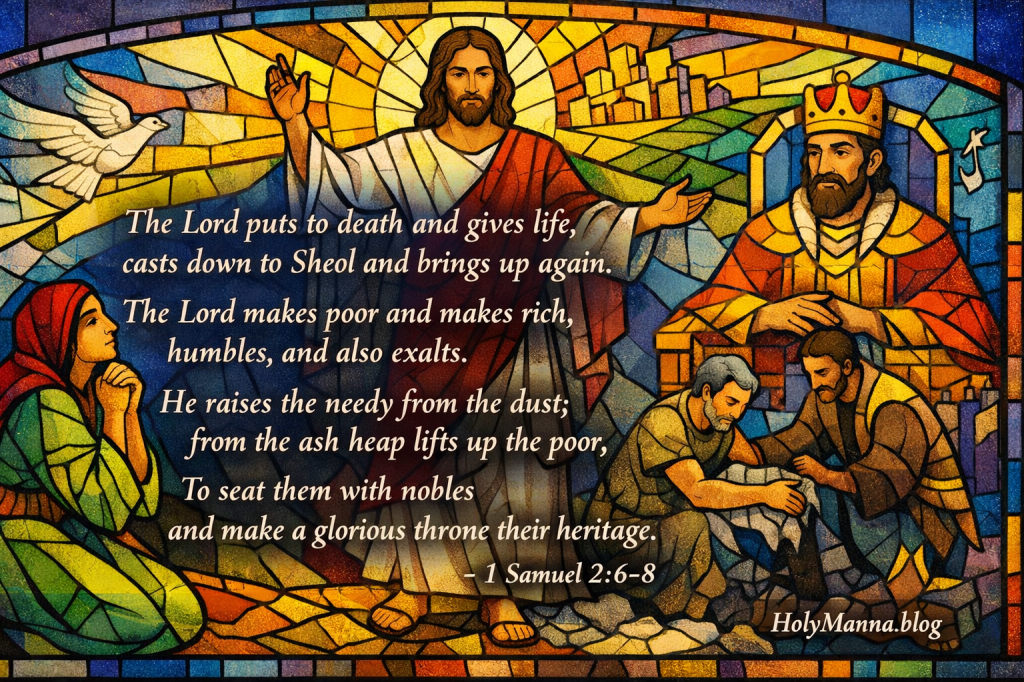
Then Hannah’s psalm widens the lens. Her personal miracle becomes a proclamation about God’s character, the God who breaks human pride and rescues the poor. The lines are not sentimental, because they are forged in suffering and answered hope, especially when Hannah prays “The Lord makes poor and makes rich, humbles, and also exalts.” This is the Lord’s pattern throughout salvation history, and it prepares the heart to recognize the same pattern when Jesus appears.
In the Gospel, Jesus enters the synagogue at Capernaum, not as a commentator, but as the One who speaks with divine weight. The people recognize the difference immediately because His teaching carries authority, and authority is proven by what obeys it. An unclean spirit cries out, and Jesus answers with a command that cannot be negotiated. The same God who “remembers” Hannah now stands in the flesh, and His presence exposes what is hidden and liberates what is bound. The humble are lifted up, and the darkness is driven out, because the Lord does not merely observe human misery. The Lord acts.
First Reading – 1 Samuel 1:9-20
When Silent Tears Become a Loud Prayer
Today’s theme is already burning bright in Hannah’s story: the Lord hears the cry of the humble, and the Lord acts with saving authority. This scene takes place at Shiloh, an early center of Israel’s worship before the Temple was built in Jerusalem. Eli the priest sits near the sanctuary, which signals that this is not private devotion in a corner of the world. This is covenant prayer offered in the presence of God, in the place where Israel brought sacrifices and sought the Lord’s guidance.
Hannah’s suffering is not only emotional. In the ancient world, infertility carried a public weight that could easily become shame, isolation, and mockery. That cultural pressure helps explain why Scripture describes her as bitter, weeping, and deeply afflicted. Yet Hannah does not lash out, manipulate, or collapse into despair. She pours out her heart and makes a vow that reveals something pure about her desire. She wants the gift, but she wants it for God. That is why this reading fits so perfectly with today’s Gospel, where Jesus speaks with authority and drives out what is unclean. The same God who listens to Hannah’s silent prayer will later step into the synagogue and command darkness to obey. God’s holiness does not crush the lowly. God’s holiness raises them up.
1 Samuel 1:9-20 – New American Bible (Revised Edition)
Hannah’s Prayer. 9 Hannah rose after one such meal at Shiloh, and presented herself before the Lord; at the time Eli the priest was sitting on a chair near the doorpost of the Lord’s temple. 10 In her bitterness she prayed to the Lord, weeping freely, 11 and made this vow: “O Lord of hosts, if you look with pity on the hardship of your servant, if you remember me and do not forget me, if you give your handmaid a male child, I will give him to the Lord all the days of his life. No razor shall ever touch his head.” 12 As she continued praying before the Lord, Eli watched her mouth, 13 for Hannah was praying silently; though her lips were moving, her voice could not be heard. Eli, thinking she was drunk, 14 said to her, “How long will you make a drunken spectacle of yourself? Sober up from your wine!” 15 “No, my lord!” Hannah answered. “I am an unhappy woman. I have had neither wine nor liquor; I was only pouring out my heart to the Lord. 16 Do not think your servant a worthless woman; my prayer has been prompted by my deep sorrow and misery.” 17 Eli said, “Go in peace, and may the God of Israel grant you what you have requested.” 18 She replied, “Let your servant find favor in your eyes,” and left. She went to her quarters, ate and drank with her husband, and no longer appeared downhearted. 19 Early the next morning they worshiped before the Lord, and then returned to their home in Ramah. When they returned Elkanah had intercourse with his wife Hannah, and the Lord remembered her.
Hannah Bears a Son. 20 She conceived and, at the end of her pregnancy, bore a son whom she named Samuel. “Because I asked the Lord for him.”
Detailed Exegesis
Verse 9 – “Hannah rose after one such meal at Shiloh, and presented herself before the Lord; at the time Eli the priest was sitting on a chair near the doorpost of the Lord’s temple.”
Hannah chooses to stand up and go to God instead of staying trapped in her sorrow. Shiloh represents the religious heart of Israel at this stage, and Eli’s presence near the sanctuary shows that this is sacred ground. Hannah is stepping into worship, not to impress anyone, but to place her pain where it actually belongs.
Verse 10 – “In her bitterness she prayed to the Lord, weeping freely,”
This is honest prayer, not polished performance. The bitterness is not rebellion against God. It is the ache of longing carried into God’s presence. Scripture does not shame her tears. It honors them by showing that the Lord receives them.
Verse 11 – “and made this vow: ‘O Lord of hosts, if you look with pity on the hardship of your servant, if you remember me and do not forget me, if you give your handmaid a male child, I will give him to the Lord all the days of his life. No razor shall ever touch his head.’”
Hannah addresses God as Lord of hosts, which highlights God’s sovereign power over all things, earthly and spiritual. She also calls herself servant and handmaid, which is the posture of humility that fits today’s theme. Her vow is not a business deal. It is worship shaped like surrender. The line about no razor points to a Nazirite style consecration, a sign that the child will belong to God in a special way.
Verse 12 – “As she continued praying before the Lord, Eli watched her mouth,”
Hannah persists. She does not offer one quick sentence and leave. She stays before the Lord. Eli notices her, and the stage is set for a painful misunderstanding that many faithful people recognize from experience.
Verse 13 – “for Hannah was praying silently; though her lips were moving, her voice could not be heard. Eli, thinking she was drunk,”
Silent prayer can confuse observers, especially when someone is visibly emotional. Hannah’s prayer is real enough to move her lips, but hidden enough to be misread. This shows that deep prayer does not always look “normal” to others.
Verse 14 – “said to her, ‘How long will you make a drunken spectacle of yourself? Sober up from your wine!’”
Eli speaks harshly and wrongly. This moment is important because it reveals that religious authority can make mistakes in judgment. Hannah is not crushed by this, and she does not become cynical. She responds with humility and clarity, which is a quiet sign of spiritual strength.
Verse 15 – “‘No, my lord!’ Hannah answered. ‘I am an unhappy woman. I have had neither wine nor liquor; I was only pouring out my heart to the Lord.’”
This line is one of the purest descriptions of authentic prayer in all of Scripture. Hannah names her suffering without drama and without blame shifting. She brings the truth of her interior life directly to God. This matches the Church’s understanding of prayer as an act of the heart, not merely a set of words.
Verse 16 – “‘Do not think your servant a worthless woman; my prayer has been prompted by my deep sorrow and misery.’”
Hannah defends her dignity without becoming defensive. She calls herself servant again, which keeps her grounded in humility, even while she corrects Eli’s misunderstanding. She also shows that sorrow can become fuel for prayer, not an obstacle to prayer.
Verse 17 – “Eli said, ‘Go in peace, and may the God of Israel grant you what you have requested.’”
Eli shifts from accusation to blessing. Even though his first judgment was wrong, God still works through the priestly blessing. This is a reminder that God’s grace is not fragile. God can bring good even out of messy human moments.
Verse 18 – “She replied, ‘Let your servant find favor in your eyes,’ and left. She went to her quarters, ate and drank with her husband, and no longer appeared downhearted.”
Something changes before anything changes. Hannah receives peace. She eats and drinks, and the heaviness lifts. This does not mean she is pretending. It means she has placed her burden into God’s hands, and that act of trust begins to heal her.
Verse 19 – “Early the next morning they worshiped before the Lord, and then returned to their home in Ramah. When they returned Elkanah had intercourse with his wife Hannah, and the Lord remembered her.”
The next morning begins with worship, which shows that Hannah’s life is reoriented toward God, not toward anxiety. Then comes the key phrase: the Lord remembered her. In Scripture, God “remembering” signals covenant faithfulness moving into action. God is not distant. God is attentive and personally involved.
Verse 20 – “She conceived and, at the end of her pregnancy, bore a son whom she named Samuel. ‘Because I asked the Lord for him.’”
The child’s name becomes a testimony. Hannah’s life now carries a visible sign that prayer is not wasted. Samuel will grow into a decisive figure in Israel’s history, bridging the time of the judges and the rise of kings. God answers Hannah’s hidden prayer with a gift that will bless the whole people.
Teachings
Hannah’s prayer reveals what Catholic life is supposed to look like when suffering hits. Prayer is not a spiritual trick for controlling outcomes. Prayer is a relationship where sorrow is brought into the presence of God with humility, faith, and perseverance. The Church gives a clear definition that fits Hannah perfectly. CCC 2559 teaches, “Prayer is the raising of one’s mind and heart to God or the requesting of good things from God.” Hannah does both. She lifts her heart, and she requests a good gift, but she does it as a servant, not as an entitled customer.
Her vow also teaches something important about offering. Hannah is not trying to use God. She is trying to honor God. A vow, when made with reverence, is an act of worship that places a person, or a gift, under God’s lordship. Hannah’s promise, that the child will belong to the Lord all his days, points to a specifically biblical pattern: God often raises up leaders through consecration, not through self promotion. Samuel’s future mission will not be built on personal ambition. It will be built on belonging to God.
This reading also carries a gentle warning about rash judgment. Eli assumes the worst, and Hannah becomes the one who models patience and dignity. That is a reminder that holy places are still filled with imperfect people, and that the faithful are called to respond with charity and truth rather than bitterness. Hannah refuses to let misunderstanding steal her prayer. That is a deeply Catholic posture, because the goal is not to win social approval. The goal is communion with God.
Finally, the phrase that the Lord remembered her should shape the heart today. God’s timing often feels slow, but God is never absent. In Scripture, divine remembrance means God’s mercy enters history in a concrete way. Hannah’s story prepares the heart for the Gospel because it trains the reader to expect this pattern: the lowly cry out, God responds, and God’s response changes more than one life.
Reflection
Hannah’s life speaks to anyone who has prayed for something good and felt overlooked, misunderstood, or tired of waiting. Her example is not complicated, but it is demanding. She goes to worship. She pours out her heart without pretending. She stays in prayer. She receives peace, even before she receives the answer. That is what mature faith looks like in real life.
A practical way to live this reading is to bring one specific burden to the Lord with Hannah’s honesty. It helps to name it clearly in prayer, not vaguely, and to hold nothing back. It also helps to surrender the outcome, because Hannah’s vow shows that answered prayer is not meant to turn a person inward. Answered prayer is meant to turn a person outward, back toward God in gratitude and obedience.
This reading also invites a check of the heart when it comes to judging others. Eli misread Hannah because he looked at the surface and assumed a story. Many people carry hidden battles, and many prayers are silent. Charity begins when judgment stops.
Where has the heart grown bitter, and is it willing to bring that bitterness to God instead of letting it harden into resentment?
What is being asked of the Lord right now, and is the heart also willing to say, “If You give this gift, it belongs to You”?
When misunderstanding shows up, is the soul more interested in defending pride, or in protecting prayer?
Responsorial Psalm – 1 Samuel 2:1, 4-8
A Victory Song for the Humble and the Forgotten
This Responsorial Psalm is Hannah’s canticle, a prayer that rises after the Lord has heard her silent tears. It is not a private diary entry, and it is not sentimental gratitude that ends with personal relief. It is worship that expands outward into a bold proclamation about who God is and how God acts in history. In the world Hannah lived in, honor and status were treated like proof of worth, and barrenness could be treated like disgrace. Hannah’s song flips that entire mindset and teaches a central truth that ties today’s readings together: the Lord lifts up the lowly, humbles pride, and saves with real authority.
That is why this psalm fits so naturally beside the Gospel. Hannah praises the God who overturns human power games, and The Gospel of Mark shows that same divine power confronting an unclean spirit and commanding it to obey. The Lord’s holiness does not exist to intimidate the humble. The Lord’s holiness exists to defend them, raise them up, and set them free.
1 Samuel 2:1, 4-8 – New American Bible (Revised Edition)
1 And Hannah prayed:
“My heart exults in the Lord,
my horn is exalted by my God.
I have swallowed up my enemies;
I rejoice in your victory.4 “The bows of the mighty are broken,
while the tottering gird on strength.
5 The well-fed hire themselves out for bread,
while the hungry no longer have to toil.
The barren wife bears seven sons,
while the mother of many languishes.6 “The Lord puts to death and gives life,
casts down to Sheol and brings up again.
7 The Lord makes poor and makes rich,
humbles, and also exalts.
8 He raises the needy from the dust;
from the ash heap lifts up the poor,
To seat them with nobles
and make a glorious throne their heritage.“For the pillars of the earth are the Lord’s,
and he has set the world upon them.
Detailed Exegesis
Verse 1 – “My heart exults in the Lord, my horn is exalted by my God. I have swallowed up my enemies; I rejoice in your victory.”
Hannah begins with praise that comes from the heart, not from circumstances alone. In Scripture, the “horn” is a symbol of strength and dignity, which means Hannah is saying that her identity and security are being restored by God, not by human approval. The line about enemies is not petty revenge. It is the spiritual experience of being delivered from shame, mockery, and oppression. This verse teaches that gratitude is not only polite. Gratitude is warfare against despair, because it names God as the true source of victory.
Verse 4 – “The bows of the mighty are broken, while the tottering gird on strength.”
This verse announces one of the Bible’s recurring patterns: God is not impressed by intimidation, and God is not limited by weakness. “Bows” represent the weapons of the powerful. God can snap what looks unstoppable. At the same time, God can strengthen those who feel like they are barely standing. This is not motivational talk. It is a confession of divine providence, which means God is actively at work, even when worldly rankings look fixed.
Verse 5 – “The well-fed hire themselves out for bread, while the hungry no longer have to toil. The barren wife bears seven sons, while the mother of many languishes.”
Hannah describes a reversal so dramatic it sounds impossible, and that is the point. The Lord is able to reorder what human society calls “normal.” The “well-fed” becoming needy exposes how fragile worldly security can be. The “hungry” being satisfied reveals God’s particular care for the afflicted. The line about seven sons uses biblical symbolism, since “seven” suggests fullness. Hannah is not only talking about biology. She is proclaiming that God can bring fruitfulness where everyone assumed there would be none.
Verse 6 – “The Lord puts to death and gives life, casts down to Sheol and brings up again.”
This verse speaks about God’s sovereignty over life and death, and it does so in a way meant to form trust, not fear. “Sheol” refers to the realm of the dead in the Old Testament imagination. Hannah is confessing that nothing is outside God’s reach. In the light of the full Gospel, this line becomes even more radiant, because the Lord who brings up from Sheol points forward to the victory over death revealed in Christ.
Verse 7 – “The Lord makes poor and makes rich, humbles, and also exalts.”
Hannah does not claim that poverty is good or that wealth is evil by itself. She is confessing that God stands above human status and can strip illusions away. God can humble the proud and lift up the lowly. This is especially important for prayer, because it warns against treating blessing as entitlement. Everything is gift, and every human being stands in need of mercy.
Verse 8 – “He raises the needy from the dust; from the ash heap lifts up the poor, to seat them with nobles and make a glorious throne their heritage.”
This is the heart of the canticle, and it is a direct proclamation of God’s preference for the lowly. “Dust” and “ash heap” evoke disgrace and poverty, the places where society expects nothing beautiful to grow. God does not merely offer sympathy. God raises, lifts, and seats. This is dignity restored, not because the poor have earned a throne, but because God delights in giving what the world refuses to give.
Verse 9 – “For the pillars of the earth are the Lord’s, and he has set the world upon them.”
Hannah ends with a confession that steadies the soul. God is not reacting anxiously to human chaos. The world rests on the Lord’s foundations. This is not poetry detached from reality. It is theology that gives stability when life feels unstable. It trains the heart to trust that even when circumstances shift, God remains Lord.
Teachings
Hannah’s canticle shows what praise really is in Catholic spirituality. Praise is not ignoring pain. Praise is recognizing God as God, even after tears, even after waiting, even after misunderstanding. The Catechism describes praise in a way that fits Hannah perfectly. CCC 2639 teaches, “Praise is the form of prayer which recognizes most immediately that God is God. It lauds God for his own sake and gives him glory, quite beyond what he does, but simply because HE IS.” Hannah praises God for the victory she received, but she also praises God for His power, His justice, and His faithfulness.
This psalm also expresses God’s ongoing love for the lowly, which is not an optional theme in Catholic life. It is a thread woven through Scripture that reaches its fullness in Christ. The Church teaches that God’s concern for the poor is not sentimental, and it is not political branding. It is a demand of the Gospel. CCC 2443 says, “God blesses those who come to the aid of the poor and rebukes those who turn away from them: ‘Give to him who begs from you, do not refuse him who would borrow from you’; ‘you received without pay, give without pay.’ It is by what they have done for the poor that Jesus Christ will recognize his chosen ones.” Hannah’s song is not only about her life. It is a revelation of God’s heart, which means it also becomes a standard for God’s people.
This canticle also prepares the ear to recognize a familiar pattern later in salvation history, because it echoes the Church’s great tradition of “holy reversals,” where God humbles pride and raises the humble. That pattern does not end in Hannah. It continues through the prophets, and it reaches a blazing clarity in the life and teaching of Jesus, whose authority in the synagogue exposes evil and liberates the oppressed. Hannah sings about the God who lifts up. Jesus arrives as the God who does it.
Reflection
Hannah’s psalm teaches that praise is not a mood. Praise is a decision rooted in truth. When life improves, it is easy to relax into comfort and move on. Hannah does the opposite. She turns her answered prayer into worship that proclaims God’s greatness, and she lets her personal story become a public testimony about the Lord’s justice and mercy.
A simple way to live this psalm is to practice praise that is not dependent on feeling strong. Praise can be prayed when the heart is still tender, because Hannah shows that a healed heart still remembers what the wound felt like. Another practical step is to examine how the heart reacts to “reversals” in daily life. When someone else gets lifted up, is there resentment, or is there joy? When pride gets humbled, is there bitterness, or is there repentance that leads to peace? When the weak are strengthened, is there disbelief, or is there renewed trust in God’s power?
This psalm also invites a serious examination of how the poor are treated, not as an abstract issue, but as real people who bear the image of God. Hannah celebrates a God who lifts the needy from the dust, which means God’s friends cannot live comfortably with indifference.
Where has the heart been chasing status or control, and is it willing to let the Lord humble what is false so that something healthier can grow?
Who is sitting on the “ash heap” nearby, and what would it look like to help lift them with patience, generosity, and respect?
When God answers prayer, does gratitude turn into praise, or does the soul quietly move on as if the gift was deserved?
Holy Gospel – Mark 1:21-28
When Jesus Speaks, Evil Has No Room to Negotiate
Today’s theme reaches its sharpest edge in the Holy Gospel: the Lord hears the lowly and acts with saving authority. Hannah’s story shows what it looks like when a wounded heart pours itself out before God and is “remembered” in mercy. In The Gospel of Mark, that same mercy steps into history in a way nobody can ignore. Jesus enters a synagogue on the Sabbath, teaches with an authority that does not depend on human credentials, and confronts an unclean spirit that immediately recognizes who He is.
The setting matters. The synagogue was a center for Scripture, prayer, and communal worship, especially in towns like Capernaum. Many teachers in Israel relied on citing earlier rabbis and respected traditions. Jesus does something different. He does not merely interpret the Word. He speaks like the Word has arrived. Then Mark shows the proof: when Jesus commands, even the unclean spirit obeys. This is not spiritual theater. This is the Kingdom of God breaking into a world where people can be bound, oppressed, and deceived, sometimes even in religious spaces. Jesus does not come to entertain the curious. Jesus comes to liberate the captive and reveal the Holy One of God.
Mark 1:21-28 – New American Bible (Revised Edition)
The Cure of a Demoniac. 21 Then they came to Capernaum, and on the sabbath he entered the synagogue and taught. 22 The people were astonished at his teaching, for he taught them as one having authority and not as the scribes. 23 In their synagogue was a man with an unclean spirit; 24 he cried out, “What have you to do with us, Jesus of Nazareth? Have you come to destroy us? I know who you are—the Holy One of God!” 25 Jesus rebuked him and said, “Quiet! Come out of him!” 26 The unclean spirit convulsed him and with a loud cry came out of him. 27 All were amazed and asked one another, “What is this? A new teaching with authority. He commands even the unclean spirits and they obey him.” 28 His fame spread everywhere throughout the whole region of Galilee.
Detailed Exegesis
Verse 21 – “Then they came to Capernaum, and on the sabbath he entered the synagogue and taught.”
Capernaum becomes a home base for Jesus’ early ministry in Galilee, and the Sabbath synagogue gathering is where faithful Jews would expect to encounter God through the Scriptures. Jesus chooses that moment and that place on purpose. He enters the rhythm of Israel’s worship, not to blend in, but to fulfill it. His presence in the synagogue shows that God is not far away from ordinary religious life. God is stepping directly into it.
Verse 22 – “The people were astonished at his teaching, for he taught them as one having authority and not as the scribes.”
The astonishment is not about style. It is about weight. The scribes often taught by referencing earlier authorities, which could be faithful and helpful, but Jesus teaches with a directness that signals divine origin. Jesus speaks as if He has the right to interpret, correct, and complete. This verse also challenges the modern habit of treating faith like personal opinion. Jesus is not offering suggestions. Jesus is revealing truth with authority.
Verse 23 – “In their synagogue was a man with an unclean spirit;”
Mark is blunt. The presence of an unclean spirit in a synagogue is a wake up call. Evil does not avoid religious places. Evil often hides where people assume they are safe. This also shows compassion in Jesus’ mission, because He does not only address ideas. He addresses bondage.
Verse 24 – “he cried out, ‘What have you to do with us, Jesus of Nazareth? Have you come to destroy us? I know who you are, the Holy One of God!’”
The unclean spirit reacts with fear because Jesus’ presence threatens its control. The phrase “What have you to do with us” expresses hostility and separation, as if to say, “Stay out of this.” The demon also speaks a terrifying truth: it recognizes Jesus’ identity. Calling Jesus “the Holy One of God” is a confession of His consecration and divine mission. This is one of Mark’s striking moments where the powers of darkness perceive what many human hearts resist. Knowledge alone is not faith. Even demons can identify Jesus, but they do not love Him or obey Him in trust.
Verse 25 – “Jesus rebuked him and said, ‘Quiet! Come out of him!’”
Jesus does not debate. Jesus does not negotiate. Jesus commands. The rebuke shows authority over evil, and the command shows that liberation is not a slow bargaining process when the Liberator is present. Jesus also silences the demon, which keeps the focus on truth revealed by God, not on testimony offered by unclean spirits.
Verse 26 – “The unclean spirit convulsed him and with a loud cry came out of him.”
Mark describes the violence of the exit to make a point: evil does not surrender politely. Liberation can look messy, but the outcome is clear. The man is freed. The loud cry is like a final protest, but it is also proof that the demon is leaving. Jesus’ authority is not theoretical. It is effective.
Verse 27 – “All were amazed and asked one another, ‘What is this? A new teaching with authority. He commands even the unclean spirits and they obey him.’”
The crowd connects the dots. Jesus’ teaching is not separated from His power. His words carry authority, and His commands reshape reality. This verse also hints at the right way to evaluate spiritual claims. In the Catholic view, authentic authority is not about charisma. Authentic authority is about truth that bears fruit, especially the fruit of freedom and healing.
Verse 28 – “His fame spread everywhere throughout the whole region of Galilee.”
Mark ends the scene with a ripple effect. When Jesus frees someone publicly, people talk. The Gospel spreads because something real happened. This also sets up the rest of Mark’s opening chapters, where Jesus’ authority continues to reveal the Kingdom through teaching, healing, and deliverance.
Teachings
This Gospel teaches that Jesus has divine authority, and that authority is revealed in two inseparable ways: He teaches the truth, and He conquers the powers that deform human life. In Catholic teaching, the reality of personal evil is not treated as superstition, and liberation is not treated as psychological symbolism. The Church is careful, sober, and grounded, but she is also clear that Christ truly defeats the Evil One and frees those under oppression.
That is why the Church explicitly speaks about exorcism and Christ’s authority continuing in the Church’s ministry. CCC 1673 says, “When the Church asks publicly and authoritatively in the name of Jesus Christ that a person or object be protected against the power of the Evil One and withdrawn from his dominion, it is called exorcism.” CCC 1673 also says, “Jesus performed exorcisms and from him the Church has received the power and office of exorcizing.” This is not about fascination with darkness. It is about confidence in Christ, who is Lord.
This passage also teaches something important about revelation. The demon “knows” who Jesus is, but that knowledge does not save. Catholic faith is not mere information. Catholic faith is surrender to the truth of Christ, lived out in obedience, worship, and conversion. Even in a synagogue, a person can be near sacred things while still needing liberation. This is why the Church insists that grace is not only an idea. Grace is a real participation in God’s life, given through Christ and nourished through the sacraments.
Finally, this Gospel teaches how Jesus brings holiness into conflict with what is unclean. The unclean spirit calls Jesus the Holy One because holiness is not neutral. Holiness is a consuming fire against evil, and a healing light for the humble. Hannah’s prayer shows the humble crying out. Jesus’ exorcism shows the humble being freed. The theme stays consistent: God does not ignore misery. God intervenes with authority that saves.
Reflection
This Gospel invites a serious, hopeful look at how authority is treated in daily life. Modern culture often treats authority as suspicious, unless it is the authority of personal feelings. Jesus flips that upside down. His authority is not oppressive. His authority is liberating. When Jesus commands, the oppressed man is not diminished. The oppressed man is restored.
A practical way to live this reading is to let Jesus have real authority in the interior life. That means refusing to negotiate with sin. It also means refusing to make peace with patterns that drag the soul into darkness, especially habits hidden behind excuses. Jesus does not ask the unclean spirit to share space. Jesus commands it to leave. That same posture belongs in Christian discipleship. Confession is a powerful place to live this Gospel, because it is where Christ’s authority meets a sinner’s honesty and produces freedom.
This reading also encourages vigilance without fear. People do not need to become obsessed with demons to take spiritual warfare seriously. The ordinary Catholic weapons remain steady and strong: prayer, sacramental life, Scripture, Eucharistic reverence, and rejection of anything occult or spiritually corrupting. The point is not to stare at darkness. The point is to stay close to Jesus, because evil trembles where Christ is welcomed.
Where has the heart been treating Jesus like a helpful adviser instead of the Lord with authority?
What would change if Christ’s command, “Quiet! Come out of him!”, became the model for how temptation is resisted today?
Is there any area of life where hidden compromise has replaced clear obedience, and is the soul willing to bring that honestly to Confession and begin again?
From Silent Prayer to Loud Freedom
Today’s readings move like one steady story, from a hidden tear to a public victory, and they all point to the same central truth: the Lord hears the humble and acts with saving authority. Hannah prays without a microphone and still reaches heaven. She is misunderstood, yet she stays faithful, and she leaves the sanctuary with peace before she ever holds the answer in her arms. Then her psalm turns that personal mercy into a bold proclamation that God is not impressed by human power games. God breaks what is proud, strengthens what is weak, and lifts the poor from the dust.
The Holy Gospel shows that this is not only a poetic idea. It is a living reality. Jesus teaches with authority, and His authority is proven by what obeys it. When darkness cries out, Jesus does not negotiate. Jesus commands. When Jesus speaks, bondage breaks, and a man is restored. That is the same God who “remembered” Hannah. God does not forget the afflicted, and God does not leave His people trapped.
This is the invitation for today. Bring real sorrow to God the way Hannah did, without pretending and without giving up. Praise God the way Hannah sang, with a faith that remembers who God is, even after suffering. Submit to Jesus the way the unclean spirit had to, not with fear, but with trust, because His authority is not meant to crush anyone. His authority is meant to free.
Let today become a simple turning point. Let prayer become more honest. Let worship become more grateful. Let obedience become more direct, especially where temptation has been treated like something to manage instead of something to reject. The Lord still hears hearts that pour themselves out. The Lord still raises the lowly. The Lord still commands darkness to leave.
Engage with Us!
Readers are invited to share their reflections in the comments below, because faith grows when the Word is prayed, lived, and talked about with honesty.
- First Reading, 1 Samuel 1:9-20: Where is the heart carrying silent pain right now, and what would it look like to pour it out to the Lord with Hannah’s honesty and humility?
- Responsorial Psalm, 1 Samuel 2:1, 4-8: Where has pride been clinging to control or status, and where is the Lord inviting trust that He can lift up what feels low and weak?
- Holy Gospel, Mark 1:21-28: What area of life needs to stop negotiating with sin and start submitting to the authority of Jesus, who commands what is unclean to leave and restores what is broken?
Keep leaning into prayer, keep showing up for the sacraments, and keep choosing obedience even when it feels costly, because a life of faith is built one yes at a time. Let everything be done with the love and mercy Jesus taught, so that the heart becomes a place where others can meet Christ through patience, truth, and charity.
Sacred Heart of Jesus, we trust in You!
Immaculate Heart of Mary, pray for us!
Saint Michael the Archangel, defend us in battle!
Follow us on YouTube, Instagram and Facebook for more insights and reflections on living a faith-filled life.

 Holy Manna!
Leave a comment