Friday after Epiphany – Lectionary: 216
Faith that Testifies
Some days in the Church’s calendar feel like a bright lamp in a dim room. This Friday after Epiphany carries that kind of clarity. Epiphany season is all about the Lord making Himself known, not only as a teacher with wise words, but as the Son of God who steps into the mess of real life and brings real salvation. The central theme running through today’s readings is simple and strong: faith in Jesus Christ receives God’s own testimony and leads to cleansing, communion, and eternal life.
The First Letter of John speaks like a spiritual father who wants believers to stop living in uncertainty and start living in confidence. It insists that the Christian’s victory over the world is not willpower or image management, but faith that clings to the truth about Jesus. John talks about testimony because faith is not built on rumors or feelings. Faith rests on God’s witness to His Son, confirmed by the Spirit, and sealed through the saving work of Christ. This is why the reading dares to speak with certainty about eternal life. It is not a vague hope floating in the future. It is a real gift given in the Son, received through belief, and guarded in the heart by grace.
The Psalm 147 widens the view and reminds readers what God has always been doing for His people. The Lord strengthens, blesses, feeds, and establishes peace, and He does it by speaking. God’s Word is not a dead letter. The Psalm says that His command runs swiftly, and that is exactly the kind of divine action on display in the Gospel. When the Lord speaks, something happens. When the Lord commands, weakness gives way to strength, and disorder gives way to peace. That is the rhythm of salvation history, and Epiphany celebrates how that saving Word is now revealed to the nations in Jesus Christ.
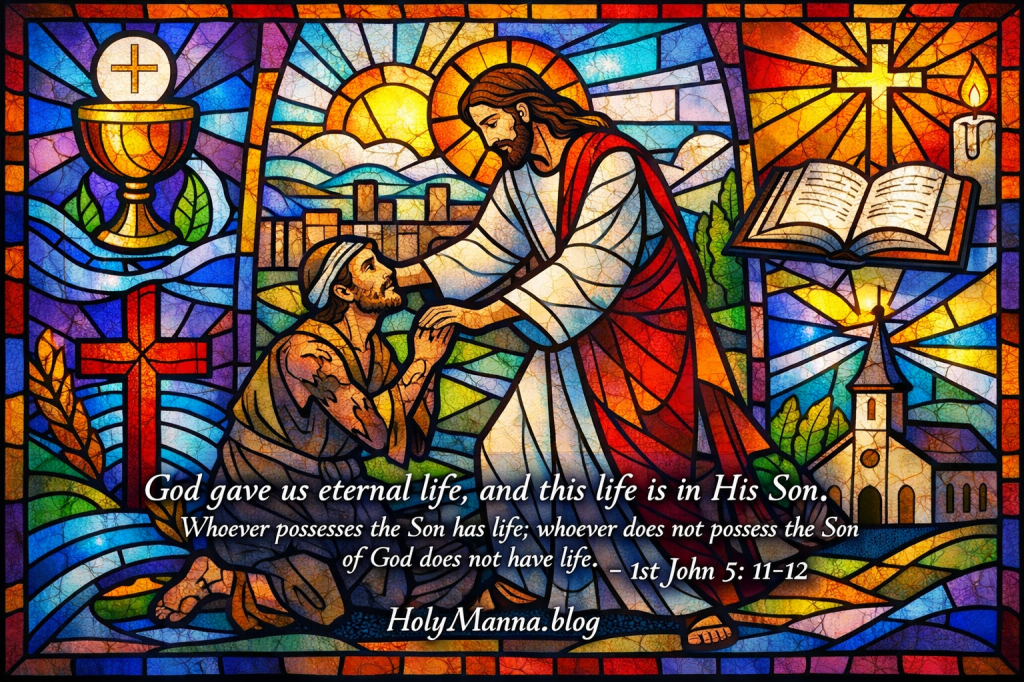
Then the Gospel brings everything down to street level, where skin and suffering and shame are all in the frame. Lepers in the ancient world were not only sick, but isolated, excluded, and treated as untouchable. Ritual impurity carried a heavy social weight, and the separation from community life and worship cut deep. That is why the leper’s posture matters so much. He falls down, he pleads, and he makes a confession of trust that is as honest as it is bold. Jesus answers with a word and a touch, showing that holiness is not fragile and mercy is not afraid. The One who is testified to by God does not stand at a safe distance. He comes close, He cleanses, and He restores a person back into communion.
Taken together, today’s readings prepare the heart for a concrete choice. Faith either trusts God’s testimony about His Son and steps into the cleansing Christ offers, or it keeps a safe distance and stays stuck in the old uncleanness. Epiphany does not let anyone reduce Jesus to a nice religious idea. It reveals Him as the Son of God who gives life, speaks peace, and touches what everyone else avoids. How does it change the way prayer is approached when it is understood that Jesus is not only able to cleanse, but willing to cleanse?
First Reading – 1 John 5:5-13
Victory That Is Not Hype, But Eternal Life
The First Letter of John was written to strengthen Christians who were living in a confusing world of competing voices. Some people were trying to reshape Jesus into a safer, softer idea, a kind of spiritual teacher without the Cross. John refuses that. He speaks like a father who wants his children grounded in what God Himself has revealed. This passage fits perfectly with today’s theme because it gives the backbone of Christian confidence. Faith in Jesus as the Son of God is not private opinion. It is trust in God’s own testimony, confirmed by the Spirit, and proven in the saving work of Christ who came through water and blood. John’s goal is not to stir up religious emotion. John wants believers to have certainty, so they can live with courage and peace even when the world pushes back.
1 John 5:5-13 – New American Bible (Revised Edition)
5 Who [indeed] is the victor over the world but the one who believes that Jesus is the Son of God?
6 This is the one who came through water and blood, Jesus Christ, not by water alone, but by water and blood. The Spirit is the one that testifies, and the Spirit is truth. 7 So there are three that testify, 8 the Spirit, the water, and the blood, and the three are of one accord. 9 If we accept human testimony, the testimony of God is surely greater. Now the testimony of God is this, that he has testified on behalf of his Son. 10 Whoever believes in the Son of God has this testimony within himself. Whoever does not believe God has made him a liar by not believing the testimony God has given about his Son. 11 And this is the testimony: God gave us eternal life, and this life is in his Son. 12 Whoever possesses the Son has life; whoever does not possess the Son of God does not have life.
Prayer for Sinners. 13 I write these things to you so that you may know that you have eternal life, you who believe in the name of the Son of God.
Detailed Exegesis
Verse 5: “Who [indeed] is the victor over the world but the one who believes that Jesus is the Son of God?”
John begins with a challenge that cuts through everything. The “world” here is not the created world that God loves. It is the pattern of life that rejects God, celebrates sin, and pressures believers to compromise. Victory does not come from being tougher than everyone else. Victory comes from believing the truth about Jesus. This is the Church’s starting point: Jesus is not merely a prophet, but the eternal Son who became man for our salvation. The Catechism teaches, “The ‘Word became flesh’ in order to be our model of holiness.” CCC 459
Verse 6: “This is the one who came through water and blood, Jesus Christ, not by water alone, but by water and blood. The Spirit is the one that testifies, and the Spirit is truth.”
John protects the full reality of Christ’s mission. Jesus came “through water and blood,” which points to the whole saving work of the Lord, from His manifestation to His sacrifice. The Christian faith is never “water only,” meaning it is never just inspiration, rituals, or a nice moral message. It is also “blood,” meaning the real Cross, the real atonement, and the real cost of love. John adds that the Spirit testifies, because the Holy Spirit is the living witness within the Church, guarding the truth about Jesus. The Catechism teaches, “The Holy Spirit, whom Christ the head pours out on his members, builds, animates, and sanctifies the Church.” CCC 747
Verse 7: “So there are three that testify,”
John is building a courtroom picture. Faith is not blind. God provides witnesses. Christianity is not built on rumors or wishful thinking. It is built on testimony.
Verse 8: “the Spirit, the water, and the blood, and the three are of one accord.”
These three witnesses do not compete or contradict. They agree. The Spirit testifies to the Son. The water points to the Lord’s saving revelation and the new birth He gives. The blood points to the Cross, where love goes all the way. The Church has long seen in water and blood a sign that Christ’s saving life reaches believers sacramentally. The Catechism teaches, “The sacraments are powers that come forth from the Body of Christ.” CCC 1116
Verse 9: “If we accept human testimony, the testimony of God is surely greater. Now the testimony of God is this, that he has testified on behalf of his Son.”
John makes a practical point. People trust human witnesses every day in courtrooms, contracts, and relationships. How much more should God be trusted. God’s testimony is greater because God cannot lie. This is why rejecting God’s witness is not a small mistake. It is a serious spiritual refusal.
Verse 10: “Whoever believes in the Son of God has this testimony within himself. Whoever does not believe God has made him a liar by not believing the testimony God has given about his Son.”
Belief is not only external agreement. The believer carries God’s testimony within, because grace changes the heart. Unbelief is not morally neutral. John says it treats God like a liar, because it rejects what God has revealed about His Son. This is why the Church treats faith as obedience to God, not as one preference among many. The Catechism teaches, “Faith is a personal adherence of the whole man to God who reveals himself.” CCC 176
Verse 11: “And this is the testimony: God gave us eternal life, and this life is in his Son.”
John states the heart of the message. Eternal life is not earned as a paycheck. It is given as a gift. It is also not separate from Jesus. Life is in the Son, meaning communion with Christ is the source of salvation. The Catechism teaches, “To believe in Jesus Christ and in the One who sent him for our salvation is necessary for obtaining that salvation.” CCC 161
Verse 12: “Whoever possesses the Son has life; whoever does not possess the Son of God does not have life.”
John speaks with loving seriousness. Life is not found in self-invention, success, or pleasure. Life is found in Christ. Possessing the Son does not mean controlling Him. It means belonging to Him through faith and living communion. Outside of Christ, the soul remains in spiritual death, even if everything looks fine on the surface.
Verse 13: “I write these things to you so that you may know that you have eternal life, you who believe in the name of the Son of God.”
John’s purpose is pastoral assurance. God does not want believers living in constant doubt and fear. He wants them to know, meaning to live with confident hope grounded in Christ. This confidence is not arrogance. It is trust in God’s promises.
Teachings
This reading teaches that Christian faith is anchored in God’s testimony, not in shifting feelings. The Church calls this the obedience of faith. The Catechism says, “By faith, man completely submits his intellect and his will to God. With his whole being man gives his assent to God the revealer.” CCC 143 That is why John speaks so strongly. Believing is not merely agreeing with facts. Believing is submitting the heart to the truth of Jesus Christ.
The threefold testimony also protects Catholic sacramental realism. God saves through the real work of Christ, applied to believers through grace. Water and blood naturally point Catholics toward Baptism and the Eucharist, because the Christian life is not just mental agreement. It is participation in Christ’s life. The Catechism says, “Holy Baptism is the basis of the whole Christian life, the gateway to life in the Spirit.” CCC 1213 It also says, “The Eucharist is ‘the source and summit of the Christian life.’” CCC 1324
Saint Augustine preached on the pierced side of Christ and saw a deep mystery for the Church’s life. He said, “The Evangelist has used a word advisedly, ‘opened,’ that thereby there might be opened unto us the gate of life, whence the sacraments of the Church have flowed out, without which there is no entering in unto the life which is true life.” St. Augustine, Tractates on the Gospel of John This matches John’s insistence that life is in the Son, and that God’s testimony is not abstract. It is revealed and poured out.
Reflection
A lot of people live as if faith is a mood, something that rises and falls depending on the week. This reading calls believers to something sturdier. Faith is victory because it holds onto Jesus when the world offers shortcuts. That means the daily fight is not only about avoiding obvious sins. It is also about refusing the quieter compromises that water down the Gospel. Real Christianity includes the Cross, because love always costs something.
A practical step is to make the confession of Verse 5 part of daily prayer. Jesus is the Son of God, and that is the foundation. Another step is to treat God’s testimony as more reliable than inner noise. When the heart accuses, when past sins haunt, when temptations say change is impossible, this reading answers with God’s promise: eternal life is in the Son, and the believer is meant to know it.
Where is the world pressuring faith to become “water only,” a Christianity without sacrifice, repentance, or courage?
Is eternal life treated like a distant prize, or is communion with Christ sought today through confession, prayer, and the Eucharist?
When doubts rise, is the response to chase feelings, or to cling to God’s testimony about His Son?
Responsorial Psalm – Psalm 147:12-15, 19-20
When God Speaks, Peace Gets Built
Psalm 147 is a hymn of praise that comes from Israel’s lived experience of being gathered, protected, and restored by the Lord. It carries the voice of a people who know what it is to have walls broken down, families threatened, and peace interrupted, and then to watch God rebuild what human strength could not repair. In the life of Israel, Jerusalem was not just a city on a map. It was the heart of worship, the place where God’s covenant love was remembered and celebrated. That is why the Psalm calls Jerusalem and Zion to glorify the Lord. This Psalm fits today’s theme because it highlights what God’s testimony and God’s Word actually do. God does not only reveal truth about His Son. God also acts, strengthens, feeds, and brings peace. The Gospel shows Jesus cleansing a man with a word and a touch, and the Psalm gives the larger frame: when God speaks, His Word runs swiftly and real-life changes.
Psalm 147:12-15, 19-20 – New American Bible (Revised Edition)
12 Glorify the Lord, Jerusalem;
Zion, offer praise to your God,
13 For he has strengthened the bars of your gates,
blessed your children within you.
14 He brings peace to your borders,
and satisfies you with finest wheat.
15 He sends his command to earth;
his word runs swiftly!19 He proclaims his word to Jacob,
his statutes and laws to Israel.
20 He has not done this for any other nation;
of such laws they know nothing.
Hallelujah!
Detailed Exegesis
Verse 12: “Glorify the Lord, Jerusalem; Zion, offer praise to your God,”
Praise is the first response of a people who recognize God’s saving action. Jerusalem and Zion represent the worshiping community gathered around the Lord. For Catholics, this naturally echoes the Church assembled for the sacred liturgy, where God is praised not only for what He did long ago, but for what He does now through Christ. The Catechism teaches, “The Church is in Christ like a sacrament or as a sign and instrument both of a very closely knit union with God and of the unity of the whole human race.” CCC 775
Verse 13: “For he has strengthened the bars of your gates, blessed your children within you.”
Gates and bars speak of security. God is praised as the One who protects a community from collapse and invasion. “Children within you” highlights fruitfulness and stability, because a city’s future lived in its families. Spiritually, this points to how grace guards the heart and how God blesses the life within the Church. Protection is not paranoia. It is providence.
Verse 14: “He brings peace to your borders, and satisfies you with finest wheat.”
Peace is not merely the absence of conflict. In the biblical sense, it is wholeness, harmony, and right order under God. God also feeds His people, and the “finest wheat” is a sign of abundance and care. This line easily prepares a Catholic heart to think Eucharistically, because Christ feeds His people with something greater than wheat. The Catechism says, “In the Most Blessed Sacrament of the Eucharist ‘the body and blood, together with the soul and divinity, of our Lord Jesus Christ and, therefore, the whole Christ is truly, really, and substantially contained.’” CCC 1374
Verse 15: “He sends his command to earth; his word runs swiftly!”
God’s Word is effective. It is sent, and it moves with purpose. This is not the word of a politician or influencer that fades by next week. This is the Word of the living God, who creates, judges, heals, and saves. It connects straight to the Gospel, where Jesus speaks and the leprosy leaves immediately. It also connects to the First Reading, where God testifies to His Son and gives life through Him. God’s Word does not crawl. It runs.
Verse 19: “He proclaims his word to Jacob, his statutes and laws to Israel.”
This verse celebrates revelation. God did not leave His people guessing about who He is or how to live. He instructed them through covenant, law, and worship. That is a gift, not a burden, because it forms a people capable of communion with Him. The Catechism teaches, “The Old Testament is an indispensable part of Sacred Scripture.” CCC 121
Verse 20: “He has not done this for any other nation; of such laws they know nothing. Hallelujah!”
This is not arrogance. It is astonishment. Israel recognizes that God chose to draw near in a unique way. In the light of Christ, this becomes even more stunning, because the same God who revealed Himself to Israel has now revealed His Son to the nations. Epiphany season celebrates that widening of mercy without denying the original gift. What began in Israel reaches the whole world in Jesus.
Teachings
This Psalm teaches that God’s relationship with His people is personal, protective, and nourishing. The Lord strengthens what must endure, blesses what must grow, and feeds what must live. Catholics should hear an echo of the Church’s worship and sacramental life. God’s Word is proclaimed, and God’s people respond with praise. The Catechism summarizes the heart of liturgy like this: “Liturgy is an ‘action’ of the whole Christ. Those who celebrate it here participate in the liturgy of heaven.” CCC 1136
The Psalm also highlights divine revelation as a mercy. God did not abandon humanity to spiritual guesswork. He spoke to Israel and prepared the world for the coming of His Son. The Catechism teaches, “By the natural light of human reason man can know God with certainty, on the basis of his works. But there is another order of knowledge, which man cannot possibly arrive at by his own powers: the order of divine Revelation.” CCC 50 That is exactly the point of this Psalm’s gratitude. God’s Word is gift, and it forms a people.
Saint Augustine often returned to the power and swiftness of God’s Word, especially when preaching on Scripture and the Church’s mission. He emphasized that God’s Word does not return empty, because it accomplishes what God intends. This lines up with the Psalm’s confidence and today’s Gospel power, where Christ’s word makes the unclean clean.
Reflection
This Psalm invites a simple but demanding shift in daily life. It calls believers to stop treating God’s Word like optional content and start treating it like a command that actually builds peace. If God’s Word runs swiftly, then it should not be met with sluggish half-attention. A practical step is to give the day a clear first moment for God, even if it is short, so the mind and heart are not trained by noise before truth. Another step is to praise God intentionally for concrete protections and provisions, because gratitude strengthens faith and weakens anxiety.
This Psalm also challenges the modern habit of searching everywhere for peace while ignoring the One who brings it. Peace is not ultimately manufactured by perfect planning. Peace is received through right order under God, and that order grows when the heart is fed by worship and the sacraments.
Where is peace most fragile right now, and what would it look like to let God’s Word rebuild those borders from the inside out?
Is God’s Word treated as a living command that moves the day, or as religious background noise that gets ignored when life feels busy?
How often is God praised for protection and provision before asking for the next thing?
Holy Gospel – Luke 5:12-16
The Clean Hands of God Touch the Untouchable
In the world of the Gospels, leprosy was not only a medical tragedy. It was a social and religious exile. A man with leprosy carried visible suffering, but he also carried the stigma of being “unclean,” which meant separation from ordinary community life and restrictions tied to Israel’s ritual law. That is why this scene is so intense. The man does not merely want relief. He wants to be restored, to be clean, to be able to belong again. This Gospel fits today’s theme perfectly because it shows what 1 John proclaims. Jesus is truly the Son of God, and God’s testimony about Him is not abstract. It becomes visible in mercy. Jesus speaks with authority, touches with compassion, and cleanses with power. The Word runs swiftly, just like the Psalm says, and the result is real peace and real reintegration.
Luke 5:12-16 – New American Bible (Revised Edition)
12 Now there was a man full of leprosy in one of the towns where he was; and when he saw Jesus, he fell prostrate, pleaded with him, and said, “Lord, if you wish, you can make me clean.” 13 Jesus stretched out his hand, touched him, and said, “I do will it. Be made clean.” And the leprosy left him immediately. 14 Then he ordered him not to tell anyone, but “Go, show yourself to the priest and offer for your cleansing what Moses prescribed; that will be proof for them.” 15 The report about him spread all the more, and great crowds assembled to listen to him and to be cured of their ailments, 16 but he would withdraw to deserted places to pray.
Detailed Exegesis
Verse 12: “Now there was a man full of leprosy in one of the towns where he was; and when he saw Jesus, he fell prostrate, pleaded with him, and said, ‘Lord, if you wish, you can make me clean.’”
Luke emphasizes the severity with the phrase “full of leprosy.” This man is not mildly afflicted. He is overwhelmed. Yet his posture is full of faith. He falls prostrate, which is worshipful humility. He calls Jesus “Lord,” which recognizes authority. He does not question Christ’s power. He trusts Christ’s freedom, saying “if you wish.” This is faith without manipulation. The Church teaches that faith is a response to God’s initiative, not an attempt to control Him. The Catechism says, “Faith is first of all a personal adherence of man to God.” CCC 150
Verse 13: “Jesus stretched out his hand, touched him, and said, ‘I do will it. Be made clean.’ And the leprosy left him immediately.”
This is one of the most striking touches in the Gospels. Jesus does not heal from a safe distance. He touches the man. In the Old Covenant, uncleanness could be “caught” in the sense that it excluded a person from worship. Jesus reverses the flow. Purity and mercy move outward from Him. The touch reveals the Incarnation in action. God is not afraid of human misery. He enters it and transforms it. The immediate healing shows divine authority. This is not gradual improvement. It is a creative command. The Catechism teaches, “Jesus accompanies his words with many ‘mighty works and wonders and signs,’ which manifest that the kingdom is present in him.” CCC 547
Verse 14: “Then he ordered him not to tell anyone, but ‘Go, show yourself to the priest and offer for your cleansing what Moses prescribed; that will be proof for them.’”
Jesus respects the law’s role in restoring a healed person to full community life. Showing himself to the priest is not red tape. It is reintegration. It is also a “proof,” because the priest’s recognition becomes a public witness that something real has happened. Jesus also tells him not to spread the news, which is a common Gospel pattern. The Lord refuses celebrity dynamics and keeps His mission focused on the Father’s will. This verse also hints at a deeper Catholic instinct. Healing and cleansing are meant to return a person to worship and communion, not to private independence.
Verse 15: “The report about him spread all the more, and great crowds assembled to listen to him and to be cured of their ailments,”
Even when Jesus asks for silence, the truth about Him tends to overflow. People are drawn for two reasons. They want to listen, and they want to be healed. That order matters. Listening comes first in the text. The Church always holds these together. Christ heals bodies, but He also heals hearts through truth. The crowds show how human need becomes a doorway to faith, because suffering has a way of stripping away pretending.
Verse 16: “but he would withdraw to deserted places to pray.”
Luke gives a quiet but essential lesson. Jesus is fully engaged in mercy, and He is fully rooted in prayer. He does not treat prayer like a hobby. He treats prayer like oxygen. He withdraws, meaning He chooses silence and solitude to remain in communion with the Father. This is not escape from mission. This is how mission remains pure. The Catechism says, “Jesus often draws apart to pray in solitude, on a mountain, preferably at night.” CCC 2602
Teachings
This Gospel teaches that Jesus is not only willing to heal. He is willing to draw near. That is a massive difference. Many people believe God is powerful, but they live as if God is distant. This passage reveals the heart of the Incarnate Son. He touches the untouchable, and His holiness is contagious in the best way.
The Church teaches that Christ’s miracles are signs of the Kingdom and reveal His mission to save the whole person. The Catechism says, “The signs worked by Jesus attest that the Father has sent him. They invite belief in him.” CCC 548 This fits with today’s theme from 1 John 5:5-13, because the miracle becomes a form of testimony. God’s witness to the Son is not only spoken. It is shown.
The command to go to the priest also supports a Catholic understanding of restored communion. God’s saving work is personal, but it is never merely private. Christ heals and then sends the healed man back into the life of worship and community. This aligns with how Christ continues to heal through the Church’s sacramental life. The Catechism teaches, “Christ now acts through the sacraments he instituted to communicate his grace.” CCC 1084 The touch of Jesus in Galilee points toward the touch of Christ through the sacraments, especially the cleansing mercy given in Confession and the strengthening communion given in the Eucharist.
Saint Augustine saw a pattern in Christ’s healings that fits this moment. He said, “Let us then also, if we are sick, draw near to Him, and let us not despair; for the Physician is at hand.” St. Augustine, Sermons The line captures the logic of the Gospel. The sick do not need to audition for the Doctor. They need to come.
Reflection
This Gospel asks for honesty and courage. The leper does not pretend he is fine. He falls down and says what is true. He believes Jesus can cleanse him, but he also surrenders the timing and the manner to the Lord’s will. That is a mature faith. It trusts God’s power and God’s wisdom at the same time.
A practical step is to bring the real wound into prayer without polishing it up. Shame often tries to keep a person hidden. This Gospel shows that Christ is not repelled by what is broken. Another step is to imitate the leper’s words in a simple daily plea, because that prayer trains the heart to trust. A third step is to let grace lead back into communion. When God heals, it is not for isolation. It is for restored worship, restored relationships, and restored peace.
This Gospel also teaches a rhythm that many people ignore. Crowds pressed in, needs multiplied, and Jesus still withdrew to pray. That means prayer is not optional when life gets intense. Prayer is most necessary when life gets intense.
What is the “leprosy” that feels too embarrassing to bring into the light, and what would change if it was placed at the feet of Jesus today?
Is Jesus treated as Someone who can help from a distance, or as the Lord who is willing to come close and touch what hurts?
Where could a real habit of withdrawing to pray be built into the week, so mercy flows from communion with the Father instead of burnout?
When God Testifies, Everything Changes
Today’s readings land in a simple place that is easy to remember and hard to fake. God does not ask anyone to build faith on feelings or trends. God gives testimony about His Son, and that testimony is meant to become a lived certainty. 1 John 5:5-13 insists that real victory over the world comes from believing that Jesus is the Son of God, and it refuses to separate Jesus from His saving work. The Son came not only with water, but with blood, which means faith must include the Cross and the truth that love costs something. The gift is not small. God gives eternal life, and that life is in His Son.
Psalm 147:12-15, 19-20 widens the view and shows what God’s Word does when it is welcomed. The Lord strengthens, blesses, feeds, and brings peace. His command is not slow or uncertain. His Word runs swiftly. That line should stick in the mind because it matches the Gospel perfectly. In Luke 5:12-16, Jesus speaks and touches, and a man who was full of leprosy becomes clean immediately. The Son of God is not a distant concept. He is the Lord who comes close enough to touch what everyone else avoids, and holy enough to cleanse without being stained.
All of it comes down to a choice that can be made today. Trust God’s testimony about Jesus, even when the world pushes disbelief, distraction, or compromise. Bring the real wound into the light, because Christ is willing to cleanse what feels untouchable. Let God’s Word set the pace of the day, because it runs swiftly and it builds peace where anxiety used to live. Then follow the rhythm of Jesus Himself, who served crowds with mercy but still withdrew to pray, because communion with the Father is where strength is renewed.
Let this be a practical invitation and not just a nice conclusion. Ask Jesus directly for what is needed, and do it with the leper’s honesty and trust. Hold tight to the truth that eternal life is not earned by perfection but received in the Son. Step back into worship and the sacramental life of the Church with a steady heart, because cleansing is meant to lead to communion. How would daily life change if the day began by believing, with full conviction, that Jesus is willing to make what is unclean clean?
Engage with Us!
Share reflections in the comments below, because the Word of God comes alive when believers listen together and encourage one another toward holiness.
- First Reading: 1 John 5:5-13
Where is the world pressuring faith to become “water only,” a Christianity without sacrifice, repentance, or courage, and what would change if God’s testimony about Jesus was trusted more than that pressure? Do you live like eternal life is a present communion with the Son of God, or do you treat it like a distant idea that does not shape daily choices? - Responsorial Psalm: Psalm 147:12-15, 19-20
Where does life feel most unprotected or unstable right now, and what would it look like for the Lord to “strengthen the bars of your gates” through prayer, Scripture, and obedience? Is God’s Word treated like a living command that “runs swiftly” and directs the day, or is it treated like religious background noise that gets pushed aside when life feels busy? - Holy Gospel: Luke 5:12-16
What is the “leprosy” that feels too embarrassing to bring into the light, and what would happen if it was placed before Jesus with the leper’s humble trust today? How can a real habit of withdrawing to pray be built into the week, so mercy flows from communion with the Father instead of burnout and distraction?
Keep walking in faith with steady confidence. Believe God’s testimony about His Son, welcome the Word that builds peace, and never be afraid to let Jesus touch what needs cleansing. Do everything with the love and mercy Jesus taught and let that mercy spill into every relationship and every ordinary moment.
Sacred Heart of Jesus, we trust in You!
Immaculate Heart of Mary, pray for us!
Saint Michael the Archangel, defend us in battle!
Follow us on YouTube, Instagram and Facebook for more insights and reflections on living a faith-filled life.

 Holy Manna!
Leave a comment