A Light That Breaks into the World
The Epiphany of the Lord is the Church’s joyful proclamation that the Child born in Bethlehem did not come for one people alone, but for every nation, language, and culture. While Christmas celebrates the astonishing humility of the Incarnation, Epiphany announces the revelation of Christ to the world. The very word “Epiphany” means manifestation, and this feast makes clear that God does not remain distant or concealed. He reveals Himself, draws near, and invites authentic worship.
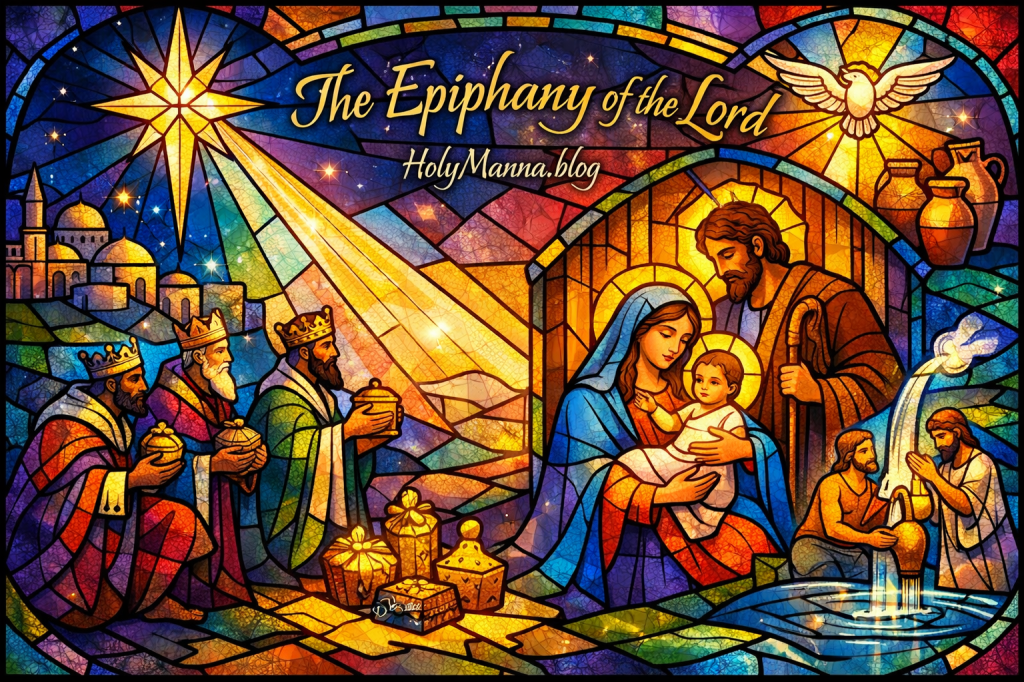
In the Latin tradition, the focus of this feast is the adoration of the Magi, the first Gentiles to recognize and worship Christ. Their arrival signals that the promises made to Israel are now opening outward to all nations. The Church also understands Epiphany more broadly as a season of revelation, encompassing the adoration of the Magi, the Baptism of the Lord, and the wedding feast at Cana. The Catechism teaches that Epiphany celebrates Jesus revealed as Messiah of Israel, Son of God, and Savior of the world (CCC 528). From the very beginning of the liturgical year, the Church announces that the Gospel is universal, public, and meant to be shared.
Following the Star to Bethlehem
The story of the Epiphany is recounted in The Gospel of Matthew (2:1–12) and unfolds with remarkable depth. The Magi were learned men from the East, likely scholars who studied the heavens and searched for meaning in the movements of the stars. When they saw a star rise, they understood it as a sign of a royal birth and set out in search of truth. Their willingness to travel great distances reveals hearts open to God’s initiative, even before they fully understood what they were seeking.
Their journey first leads them to Jerusalem, where they encounter King Herod. Herod’s reaction exposes a stark contrast between genuine seekers and those threatened by Christ’s kingship. He consults religious scholars, and the Scriptures point clearly to Bethlehem, fulfilling prophecy. The star draws the Magi forward, but the Word of God brings clarity and direction. Creation and Scripture work together, showing how God guides both reason and faith.
When the Magi finally find the Child with Mary His mother, the Gospel emphasizes worship above all else. The Gospel of Matthew records, “They prostrated themselves and did him homage.” Their gifts follow their adoration and speak volumes. Gold acknowledges His kingship, frankincense honors His divinity, and myrrh foreshadows His saving death. Even at the cradle, the mystery of the Cross is already present. Warned in a dream, the Magi return home by another way, showing that an encounter with Christ always reorients life and reshapes priorities.
Christ the Universal Savior
The Epiphany proclaims the universality of salvation. The Magi stand as representatives of the nations, the first fruits of the Gentiles who welcome Christ. The Catechism teaches that in the Magi, the Church sees the nations being gathered into God’s covenant, fulfilling the promise that all peoples would come to the light (CCC 528). This feast declares that Jesus Christ belongs to no single culture or era. He is Lord of all.
Mary’s role in this revelation is essential. She is the one who presents the Son to the nations, allowing the world to see God made flesh. The Catechism teaches that through Mary, the Holy Spirit manifests the Son of the Father now become the Son of the Virgin, making Him visible in the humility of His flesh and revealing Him to the poor and to the Gentiles (CCC 724). Epiphany is therefore not only about a star or distant travelers, but about the Holy Spirit revealing Christ through the obedience and humility of Mary.
The Church’s tradition, reflected in papal preaching and liturgical practice, emphasizes that Epiphany is a moment of divine self disclosure. In the West, the focus rests on the Magi and the revelation of Christ to the Gentiles. In the East, the feast emphasizes the Baptism of the Lord and the manifestation of the Trinity. Together, these perspectives reveal one unified truth: Jesus Christ is made known to the world, and the Church exists to continue that revelation.
Ancient Devotions and Sacred Journeys
Throughout history, Epiphany has inspired devotions that connect the mystery of Christ’s revelation to daily life. One enduring custom is the blessing of homes during the Epiphany season, often accompanied by marking the doorway with symbols invoking Christ’s protection and lordship. This practice is not rooted in superstition, but in consecration. The home is intentionally placed under the kingship of Christ, reminding families that faith belongs in ordinary spaces and everyday routines.
Pilgrimage has also long been associated with this feast. Bethlehem remains a central place of prayer, as it was there that the Magi adored the Christ Child. In the Western Church, Cologne Cathedral has become a significant pilgrimage site due to its association with the relics of the Magi. These places serve as tangible reminders that the events of salvation history are real, grounded, and worthy of reverence. Like the Magi themselves, pilgrims move physically toward Christ as a sign of their interior desire to seek and adore Him.
A Feast Celebrated Across the World
Epiphany has shaped Christian culture across continents. In many countries, January 6 is marked by joyful celebrations, family gatherings, and traditions recalling the gifts of the Magi. In parts of Europe and Latin America, children receive gifts on Epiphany rather than Christmas Day, reinforcing the connection between generosity and worship. Hymns and chants continue to echo the Church’s joy, proclaiming Christ as the Light revealed to the nations.
In Eastern Christian traditions, Epiphany is often called Theophany and centers on the Baptism of the Lord. The blessing of water plays a prominent role, highlighting Christ’s sanctification of creation and the manifestation of the Trinity. Though customs vary, the meaning remains consistent. Epiphany celebrates Christ revealed, worship offered, and creation renewed through His presence.
Living as People of the Light
Epiphany is not meant to remain a beautiful story from long ago. It calls for response and conversion. The Magi teach that authentic seeking requires movement, sacrifice, and humility. They did not remain observers of a distant sign, but acted decisively and followed where God led. Their journey challenges modern tendencies toward comfortable spirituality without commitment.
The contrast between the Magi and Herod remains relevant. When Christ is revealed, hearts must choose between worship and control. Epiphany invites believers to kneel rather than manipulate, to trust rather than grasp. The detail that the Magi returned home by another route reveals the heart of conversion. Encountering Christ changes direction, reshapes priorities, and reorders life around worship.
Living Epiphany today means honoring Christ not only in church, but also in the home, the workplace, and public life. It means praying for the nations, practicing generosity rooted in reverence, and allowing the light of Christ to guide decisions, especially in moments of uncertainty. The same Lord who guided the Magi by a star continues to guide His people by grace and truth.
Engage with Us!
Readers are invited to share their thoughts and reflections in the comments below and join the conversation as the Church celebrates this radiant feast.
- What “star” has God placed in life to draw the heart closer to Christ?
- How can the example of the Magi inspire greater courage in living the faith publicly?
- In what ways can the home become a place where Christ is clearly recognized as King?
May the Epiphany of the Lord strengthen faith, deepen trust, and renew the desire to seek Christ in all things. May every word, action, and decision be shaped by the love and mercy Jesus taught us, so that His light may continue to shine through the world.
Jesus, our Lord and Savior, we trust in You!
Blessed Virgin Mary, pray for us!
Saint Joseph, pray for us!
Follow us on YouTube, Instagram and Facebook for more insights and reflections on living a faith-filled life.

 Holy Manna!
Leave a comment