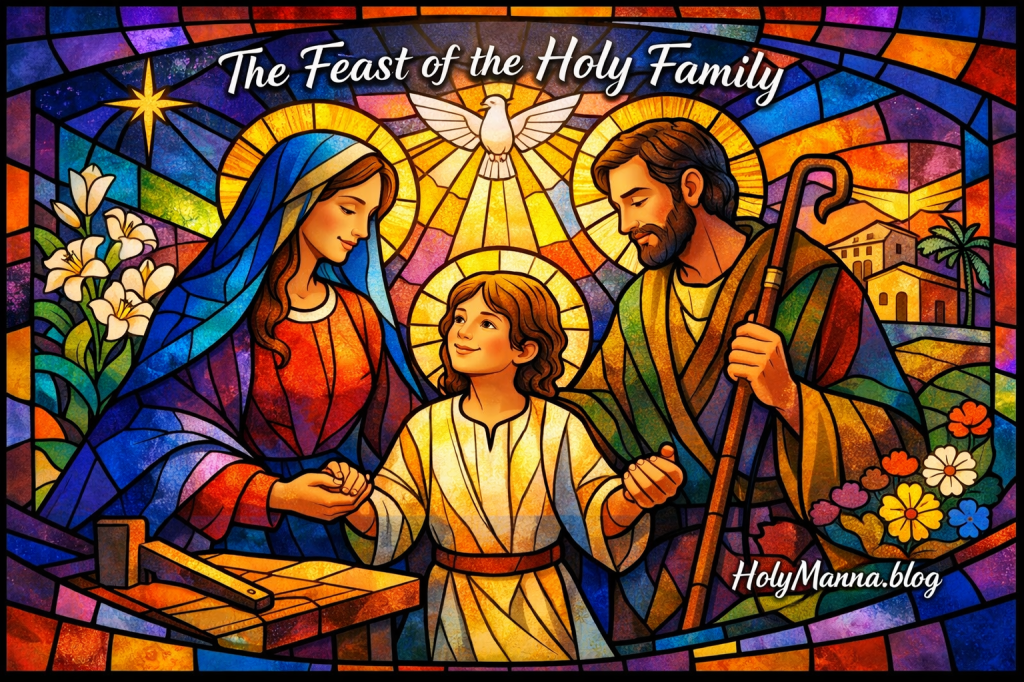
A Feast That Pulls Christmas into the Living Room
The Feast of the Holy Family of Jesus, Mary, and Joseph lands in the heart of the Christmas season for a reason. Christmas is not only about the wonder of God becoming man. It is also about where He chose to live that mystery. God did not enter history as a lone hero or a detached spiritual teacher. He entered through a mother, under the protection of a foster father, and inside the real day to day responsibilities of a household. This feast lifts up the hidden life of Nazareth as a revelation of God’s plan for ordinary people, because most people are not called to public miracles, dramatic conversions, or visible martyrdom. Most people are called to love God and neighbor in kitchens, living rooms, workplaces, hospitals, and quiet conversations late at night.
In Catholic tradition, this feast is like a bright lamp held over family life. It reminds believers that family is not a side project of the faith. Family is one of the primary places where faith is tested, refined, and made real. The Holy Family is not presented as a sentimental decoration for Christmas cards. The Church honors them as the model of faithful love under pressure, because their home was marked by poverty, displacement, misunderstanding, and sacrifice. Yet it was also marked by prayer, obedience, and steady trust in God’s providence.
Nazareth, Exile, and the Hidden Years That Changed Everything
To understand the Feast of the Holy Family, it helps to take Sacred Scripture seriously when it speaks about the ordinary years of Jesus. The Gospels do not give many details, but what they do reveal is deep and demanding. Jesus is conceived by the Holy Spirit and born of the Virgin Mary. Joseph receives his mission through divine messages and protects Mary and the Child with courageous obedience. The family experiences public suspicion and danger from the start. They travel for the census, they find no room at the inn, and they welcome the shepherds who come in awe. Soon after, they are forced to flee into Egypt because of Herod’s violence. This is not a calm or predictable beginning. This is a family learning to survive by trusting God one step at a time.
Later, The Gospel of Luke presents two key moments that reveal the spiritual depth of their family life. The Presentation in the Temple shows Mary and Joseph fulfilling the law with humility, offering what the poor could afford, while Simeon prophesies both glory and suffering. That moment binds joy and pain together from the beginning, which mirrors real family life more than any idealized image ever could. The Finding of Jesus in the Temple shows Mary and Joseph searching anxiously for three days before encountering a response that is honest and demanding. Jesus speaks of His Father’s house. Mary does not argue, and Joseph does not assert authority. Scripture tells us that Mary keeps these things in her heart, and then Jesus returns to Nazareth and is obedient to them.
Those hidden years matter profoundly to the Church. The Catechism teaches that the life of Nazareth reveals how Christ sanctified ordinary human existence. “The hidden life at Nazareth allows everyone to enter into fellowship with Jesus by the most ordinary events of daily life” (CCC 533). The Church sees Nazareth as proof that daily fidelity is not lesser Christianity. Nazareth is where the Redeemer chose to grow.
Historically, devotion to the Holy Family developed more strongly as the Church responded to modern attacks on marriage, parenthood, and the formation of children. Pope Leo XIII encouraged devotion to the Holy Family as a remedy for families under strain. Pope Benedict XV later extended the Feast of the Holy Family to the universal Church in 1921, recognizing how urgently the modern world needed this model of faithful domestic life.
The Incarnation Makes the Home Holy
The theological power of this feast is both simple and demanding. God chose family. The Son of God lived within a human household and submitted Himself to the authority of Mary and Joseph. That obedience was real and freely chosen. It reveals that parental authority, when rooted in love and ordered toward God, is not oppressive but life giving. It also reveals that holiness does not begin in public ministry. Holiness begins in obedience, work, prayer, and sacrifice lived consistently over time.
The Catechism emphasizes that the hidden life of Jesus teaches obedience and humility as part of His saving mission. It also affirms the family as the first place where faith is handed on, where prayer is learned, and where charity becomes concrete. The family is rightly called the domestic church because it is within the home that children first encounter God’s love through human love.
This feast also casts a strong light on Saint Joseph. Joseph is not a silent background figure. He is entrusted with guarding the Redeemer and caring for the Mother of God. His fatherhood is authentic, though not biological. Joseph shows that true masculinity is responsibility shaped by obedience to God. Mary reveals that authentic strength is fidelity, trust, and the courage to ponder suffering without surrendering hope. Jesus reveals that divine life does not bypass human growth. He worked, learned, obeyed, and waited.
For Catholic households, this feast calls families to reclaim their identity as places where faith is lived daily, not only discussed. The home becomes holy when prayer is normal, forgiveness is practiced, discipline is guided by love, and God is invited into ordinary decisions.
Consecration and the Quiet Power of Family Prayer
Devotion to the Holy Family often includes the consecration of families to Jesus, Mary, and Joseph. This devotion is not symbolic or sentimental. It is a deliberate choice to place the household under the protection and guidance of the Holy Family and to strive to imitate their virtues. Many families observe this feast by praying together more intentionally and by seeking healing where relationships have grown strained.
Parishes frequently bless families on this feast, emphasizing that family life is spiritual work. It is not merely emotional labor or social obligation. It is a genuine path to sanctity. On this day, many couples renew marriage vows, and parents pray for the grace to lead their children with patience, firmness, and mercy.
Pilgrimages connected to the Holy Family often focus on Nazareth, where the mystery of Christ’s hidden life is remembered in a tangible way. These places teach a quiet but challenging truth. God is found not only in dramatic moments, but in fidelity. God is found in daily obedience. God is found in the steady yes that continues even when it feels unseen.
A Feast That Strengthens Families Across Cultures
The Feast of the Holy Family is celebrated throughout the world as a day of prayer for marriages and households facing real pressure. In many communities, it becomes a moment for reconciliation, blessing, and renewed commitment. Families gather, parishes pray together, and the struggles of domestic life are placed before the altar where Christ can transform them.
Liturgically, the readings often highlight obedience, perseverance, and honoring family bonds. Even as the specific readings vary by year, the message remains consistent. God chose to dwell in a family. That choice elevates the home into a place of spiritual warfare and sacred formation. In cultures where marriage and family life are increasingly fragile, this feast stands as a public witness that the family is worth defending, healing, and sanctifying.
This feast also resists two modern extremes. It rejects the idea that freedom requires avoiding commitment. It also rejects the notion that family is merely a social arrangement without spiritual depth. The Holy Family shows that authentic love is disciplined, faithful, and ordered toward God.
Living Nazareth One Ordinary Day at a Time
The Holy Family offers a demanding hope. It does not promise a problem free home. It offers a holy home, which is something far deeper. Mary and Joseph faced uncertainty and fear, yet they trusted God and acted faithfully. They did not control every outcome. They followed God step by step.
Living this feast means taking seriously that ordinary habits shape souls. The Catechism teaches that Christ’s hidden life invites believers to sanctify everyday routines. Homes become holy when prayer is consistent, forgiveness is quick, and love is chosen even when emotions fluctuate. Work becomes dignified when it is offered to God. Rest becomes sacred when it is protected.
Nazareth teaches that holiness grows slowly. It grows through repetition, patience, and faithfulness. This feast invites families to offer daily responsibilities to God, to protect time for worship, and to trust that unseen fidelity bears eternal fruit.
Engage with Us!
Readers are invited to share their thoughts and reflections on the Feast of the Holy Family in the comments below. Every family has its own joys and challenges, and this feast speaks into all of them with hope and realism.
- How does the hidden life of Jesus in Nazareth challenge modern ideas of success and productivity?
- What practical steps can help make the home a true domestic church rooted in prayer and charity?
- Where is God asking for deeper trust and obedience within family life right now?
May this feast inspire every household to seek holiness not in perfection, but in faithful love. May all things be done with the mercy, patience, and self-giving love that Jesus taught, so that families become places where Christ is truly at home.
Jesus, Our God & King, we trust in You!
Blessed Mother Mary, pray for us!
Saint Joseph, pray for us!
Follow us on YouTube, Instagram and Facebook for more insights and reflections on living a faith-filled life.

 Holy Manna!
Leave a comment