The Nativity of the Lord (Christmas) Mass during the Day – Lectionary: 16
The Light Who Lets The World See God
Christmas during the day is not just about recalling a baby in a manger. It is about the shocking truth that the invisible God has stepped into human history in a way that can be seen, heard, and touched. Today’s readings celebrate that in Jesus Christ, the eternal Word, God’s saving kingship and glory are no longer hidden. They are revealed in a real human face.
In Isaiah 52:7-10, the prophet pictures a watchman on the walls of Jerusalem, straining his eyes across the mountains. Suddenly he sees a messenger running toward the city, and the whole scene explodes with joy. The cry rings out: “Your God is King!” The ruins of Jerusalem are told to sing because the Lord has come back to His people, has redeemed them, and has shown His holy arm in the sight of all the nations. This is not just a private comfort for Israel. It is a public act of God that the whole world can witness.
Psalm 98 picks up that same energy and turns it into a worldwide praise session. The psalmist calls all the earth to sing a new song, because “all the ends of the earth have seen the victory of our God”. Trumpets, horns, and lyres are not background noise here. They are the soundtrack of God’s victory breaking into history. Israel’s story has always been aimed outward, toward the nations, and Christmas is when that intention becomes unmistakably clear.
Then Hebrews 1:1-6 zooms out even further and explains what is actually happening behind this joy. In the past, God spoke through the prophets in partial and various ways. Now, in these last days, He speaks through a Son. This Son is not just another messenger. He is “the refulgence of his glory, the very imprint of his being”, the One through whom God created the universe and who now sits at the right hand of the Majesty on high. Angels themselves are told to worship Him. Christmas is not sentimental background. It is the decisive moment when God reveals that His final Word is not a concept or a rule, but a Person.
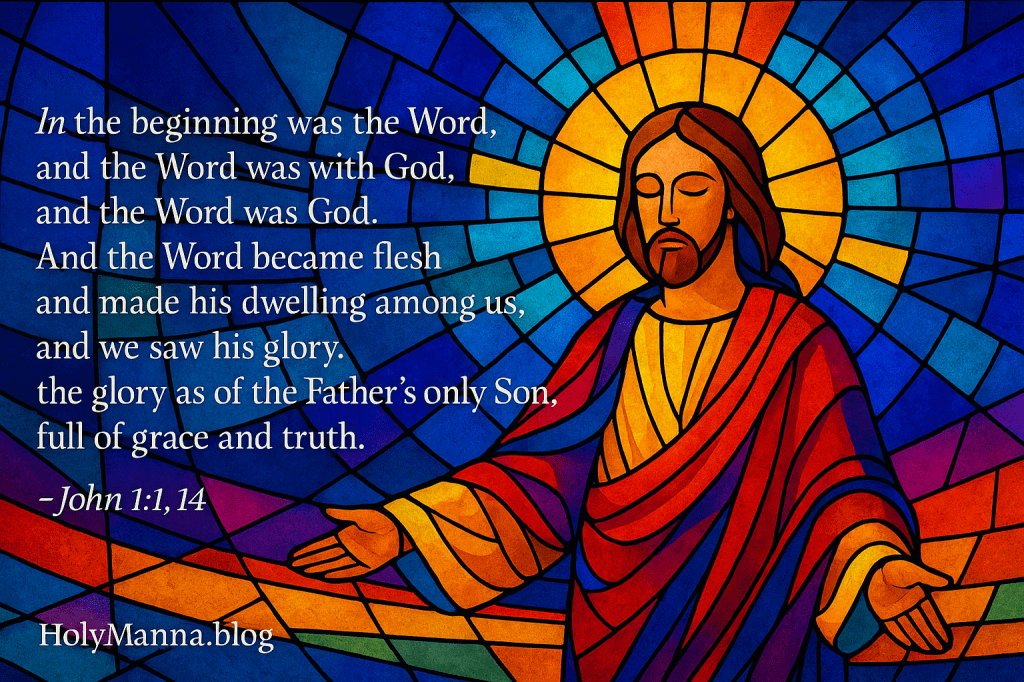
Finally, The Gospel of John opens up the deepest layer of all. John 1:1-18 takes the community back before Bethlehem, back before time, to the mystery that “In the beginning was the Word, and the Word was with God, and the Word was God”. This Word is life and light, shining in the darkness that cannot overcome it. Then comes the staggering line that defines Christmas forever: “And the Word became flesh and made his dwelling among us”. The God whom no one has ever seen has now been revealed by the only Son, who is at the Father’s side. The eternal Creator steps inside His creation so that ordinary human beings can receive “grace in place of grace” and be given the power to become children of God.
All together, these readings reveal one central theme. Christmas Day is the celebration of God’s definitive self-revelation in the Incarnate Word. The God who spoke through prophets and signs now lets the world see His face in Jesus Christ. The King returns to Zion, the nations witness His victory, the angels worship His divine Son, and the true Light shines on every human heart. Will this Light be welcomed, trusted, and followed in the concrete details of daily life, or will it be pushed aside like just another holiday story?
First Reading – Isaiah 52:7-10
The King Who Brings Good News In Person
Isaiah 52:7-10 comes from the part of the book often called Second Isaiah, addressed to a people in exile and humiliation. Jerusalem has been shattered, the people have lived under foreign rule, and it has looked like God has abandoned His promises. Into that darkness, this passage imagines a messenger racing over the mountains toward the ruined city, shouting news that changes everything. God Himself is returning as King. On Christmas Day, this vision reaches its deepest meaning. The true King does not only restore a city or a political situation. In Jesus Christ, the Incarnate Word, God comes in person to bring peace, salvation, and a visible revelation of His reign that all nations can see. This reading prepares hearts to recognize that the baby in the manger is the long-awaited King whose coming turns ruins into songs and exile into homecoming.
Isaiah 52:7-10 – New American Bible (Revised Edition)
7 How beautiful upon the mountains
are the feet of the one bringing good news,
Announcing peace, bearing good news,
announcing salvation, saying to Zion,
“Your God is King!”8 Listen! Your sentinels raise a cry,
together they shout for joy,
For they see directly, before their eyes,
the Lord’s return to Zion.
9 Break out together in song,
O ruins of Jerusalem!
For the Lord has comforted his people,
has redeemed Jerusalem.
10 The Lord has bared his holy arm
in the sight of all the nations;
All the ends of the earth can see
the salvation of our God.
Detailed Exegesis
Verse 7: “How beautiful upon the mountains are the feet of the one bringing good news, announcing peace, bearing good news, announcing salvation, saying to Zion, ‘Your God is King!’”
The image of beautiful feet highlights the urgency and joy of the messenger. Mountains often stood between cities, so seeing someone running over them meant news was finally arriving. The message is not vague encouragement. It is specific: peace, salvation, and a royal proclamation that God reigns. In a world used to hearing about earthly kings, this line shifts the focus. God is not a distant observer. He is the true King who intervenes and saves. At Christmas, this reaches its fullness as the Church proclaims that the Child born in Bethlehem is the definitive sign that “Your God is King!” in human flesh.
Verse 8: “Listen! Your sentinels raise a cry, together they shout for joy, for they see directly, before their eyes, the Lord’s return to Zion.”
Sentinels are watchmen on the walls, trained to notice the first sign of any movement in the distance. Here they see not an army or an enemy, but the Lord Himself returning. The key phrase is “before their eyes”. God’s saving action is not an invisible idea. It is something the people can see. In the Christmas mystery, the watchmen become those who first recognize Christ, like the shepherds and later the apostles, who see with their own eyes that God has come near in the flesh.
Verse 9: “Break out together in song, O ruins of Jerusalem! For the Lord has comforted his people, has redeemed Jerusalem.”
The ruins themselves are told to sing. Places of shame and destruction are invited to praise, because the Lord has acted. “Comforted” and “redeemed” are covenant words. God is not merely lifting moods. He is restoring the relationship that sin and infidelity damaged. Christmas proclaims that in Christ, God comforts His people at the deepest level, entering human misery and beginning the work of redemption that will reach its climax on the Cross and in the Resurrection.
Verse 10: “The Lord has bared his holy arm in the sight of all the nations; all the ends of the earth can see the salvation of our God.”
To bare the arm is a vivid ancient image for rolling up sleeves and showing power in action. God is not working behind the scenes. He reveals His saving power publicly and universally. “All the ends of the earth” points to the mission that will embrace every nation. On Christmas, this verse comes into sharp focus. In Jesus, God’s saving arm is revealed not as brute force, but as vulnerable love, a love that wants to be seen and welcomed by every human heart.
Teachings
This passage shows that God’s kingship is not abstract. It is revealed in history and reaches its fullness in Christ. The Catechism teaches that the coming of Christ is the definitive revelation of God’s plan and His Kingdom. CCC 763 explains: “The Lord Jesus inaugurated his Church by preaching the Good News, that is, the coming of the Reign of God, promised over the ages in the Scriptures. To fulfill the Father’s will, Christ ushered in the Kingdom of heaven on earth. The Church is the Reign of Christ already present in mystery.” The good news announced in Isaiah 52 is ultimately the Good News that Jesus preaches, lives, and embodies.
This reading also prepares for what Hebrews 1 and The Gospel of John will make explicit. God, who once spoke through prophets, now shows His saving arm and His kingship through the Son, the eternal Word made flesh. The joy of the sentinels and the singing ruins prefigure the joy of the Church, which recognizes in the Child born in Bethlehem the visible sign that God has come to comfort, redeem, and reign. Saints throughout the centuries have echoed this call. Saint Leo the Great famously said at Christmas, “Christian, remember your dignity.” If God has come as King to redeem and comfort His people, then every baptized person shares in that dignity and is called to live as a citizen of His Kingdom.
Reflection
This reading gently asks every believer to decide whose news shapes the heart. The world constantly sends messages of fear, defeat, and cynicism. God sends a very different messenger who runs into the ruins and cries out that He is King and that salvation is real. Where are the ruins in life that feel beyond repair, in family, in personal habits, in hidden regrets? The Lord wants those very places to hear His good news.
A practical way to live this reading is to start the day by acknowledging Christ as King in simple, concrete choices. Instead of letting worry rule the mind, a person can quietly repeat, “Your God is King.” Instead of spreading discouragement, a believer can become a small herald of hope in conversations, in the way they speak about the Church, and in how they treat those who feel forgotten. Who around you needs to hear, not just with words but through kindness and patience, that God has not abandoned them?
The sentinels in Isaiah 52 stayed awake and watched, even when things looked hopeless. In the same way, believers are invited to stay spiritually awake, to watch for signs of God’s action, and to respond with praise instead of complaint. Will this Christmas be allowed to remain only a cozy memory, or will it become a moment when the heart truly welcomes Christ the King and begins to carry His good news into the world?
Responsorial Psalm – Psalm 98:1-6
Singing Because The King Has Already Won
Psalm 98 is a royal hymn that likely grew out of Israel’s liturgical life in the Temple, where God was praised as King who saves His people in real historical events. This psalm stands in the line of songs that celebrated the Exodus, victories over enemies, and God’s faithfulness to His covenant with Israel. On Christmas Day, this same song is taken up in a new key. The marvelous deeds and the revealed victory are no longer only about past rescues. They point directly to Jesus Christ, the Word made flesh, whose birth is the definitive act of God’s saving power for all nations. In today’s theme of God’s self-revelation in the Incarnate Word, Psalm 98 becomes the Church’s way of saying that the only fitting response to such a gift is joyful praise.
Psalm 98:1-6 – New American Bible (Revised Edition)
The Coming of God
1 A psalm.
Sing a new song to the Lord,
for he has done marvelous deeds.
His right hand and holy arm
have won the victory.
2 The Lord has made his victory known;
has revealed his triumph in the sight of the nations,
3 He has remembered his mercy and faithfulness
toward the house of Israel.
All the ends of the earth have seen
the victory of our God.4 Shout with joy to the Lord, all the earth;
break into song; sing praise.
5 Sing praise to the Lord with the lyre,
with the lyre and melodious song.
6 With trumpets and the sound of the horn
shout with joy to the King, the Lord.
Detailed Exegesis
Verse 1: “Sing a new song to the Lord, for he has done marvelous deeds. His right hand and holy arm have won the victory.”
A “new song” in Scripture usually marks a fresh work of God in history. The “right hand” and “holy arm” symbolize God’s powerful, holy action on behalf of His people. At Christmas, this verse is fulfilled in a surprising way. The “marvelous deed” is the Incarnation itself. God’s saving arm is revealed not in military might but in the humility of the manger. The victory is His decision to enter human weakness in order to redeem it from within.
Verse 2: “The Lord has made his victory known; has revealed his triumph in the sight of the nations,”
God’s saving work is not hidden or reserved for a small inner circle. He makes it known and reveals it before the nations. This fits perfectly with Christmas, since the birth of Christ is for all peoples. The Church reads this verse in light of Christ as the visible revelation of God’s victory over sin and death. The triumph is revealed first in Bethlehem, then through the preaching of the apostles, and continues in the sacramental life of the Church.
Verse 3: “He has remembered his mercy and faithfulness toward the house of Israel. All the ends of the earth have seen the victory of our God.”
“Remembered” does not mean God had forgotten. It means He is actively fulfilling His covenant promises. His mercy and faithfulness to Israel now overflow toward the whole world. In Christ, the promises made to Abraham and David come to their climax. As The Gospel of John proclaims that “the Word became flesh”, this verse reminds believers that this flesh is the concrete sign that God keeps His word and that salvation is offered to every corner of the earth.
Verse 4: “Shout with joy to the Lord, all the earth; break into song; sing praise.”
The call expands from Israel to “all the earth.” Joy is not optional when God’s saving work is recognized. The psalm invites a loud, public response to what God has done. On Christmas Day, this becomes a call for every baptized person to let praise interrupt routine, to let gratitude shape words, choices, and even the mood of family gatherings.
Verse 5: “Sing praise to the Lord with the lyre, with the lyre and melodious song.”
Specific instruments show that worship involves the whole human person, including art, beauty, and creativity. Music is not decoration around faith. It is a privileged way of responding to God. The Church continues this through liturgical music, which gives believers a way to join their hearts to the praise of heaven. Christmas carols, when sung with faith, participate in this same movement of praise.
Verse 6: “With trumpets and the sound of the horn shout with joy to the King, the Lord.”
Trumpets and horns were used in royal and liturgical ceremonies. Here they announce that the Lord Himself is King. On Christmas, this is read in the light of Christ’s kingship. The Child in the manger is the true King, and this verse invites everyone to move from silent admiration to outspoken joy that acknowledges Him as Lord.
Teachings
This psalm teaches that God’s mighty deeds demand a response of worship. The Catechism reminds believers that the Church’s liturgy is the place where this praise is gathered and lifted to the Father in Christ. CCC 1157 explains the role of music in this: “Song and music fulfill their function as signs in a manner all the more significant when they are ‘more closely connected… with the liturgical action,’ according to three principal criteria: beauty expressive of prayer, the unanimous participation of the assembly at the designated moments, and the solemn character of the celebration.” Whenever the Church sings Psalm 98 at Mass, especially on Christmas, it is doing exactly that.
This psalm also echoes the universal scope of salvation. CCC 528 speaks of the manifestation of Christ to the nations: “The Epiphany is the manifestation of Jesus as Messiah of Israel, Son of God and Savior of the world.” The language of “all the ends of the earth” and “all the earth” in Psalm 98 anticipates this truth. What began with Israel finds its fulfillment in Christ, who is adored by both shepherds and, later, by the Magi as representatives of the nations.
Theologically, Psalm 98 fits tightly with Hebrews 1 and John 1. God’s “marvelous deeds” and “victory” are not just individual interventions. They culminate in the sending of the Son, the eternal Word who reveals the Father’s glory and brings salvation. The joy and music in the psalm are the right human response to this divine gift of self.
Reflection
This psalm gently pushes against the tendency to treat praise as something optional or reserved for emotionally charged moments. If God has already acted decisively in Christ, then praise is simply the honest response to reality. A believer who truly knows that “all the ends of the earth have seen the victory of our God” will not want to live with a permanently complaining or cynical heart.
A practical step is to build small acts of praise into daily life. That can look like starting the day by quietly repeating a verse of this psalm, for example, “Sing a new song to the Lord, for he has done marvelous deeds.” It can mean choosing to thank God aloud for specific blessings, especially in moments when frustration wants to take over. Families and friends can reclaim Christmas carols as real prayer rather than background noise. What would change in the rhythm of a day if gratitude and praise were given the first word instead of stress or distraction?
This psalm also challenges believers to see Christmas as a worldwide event, not just a private tradition. Who in life needs to hear a word of joy that points back to the true source of hope, which is Christ’s victory? How might God be inviting a more joyful witness at work, at home, or online, so that others can glimpse that the Lord is King and has already won the decisive battle?
Second Reading – Hebrews 1:1-6
The Final Word Of God Has A Human Face
The Letter to the Hebrews was written to Christians who knew the Old Testament deeply and were tempted to grow weary or slip backward under pressure. They had heard about Jesus, but some struggled to grasp just how radically God had acted in Him. In that setting, Hebrews 1:1-6 opens with a powerful contrast. God once spoke through prophets in many partial ways, but now speaks through a Son who is the eternal Word, the Creator, and the visible radiance of the Father.
On Christmas Day, this reading fits perfectly with the theme of God’s definitive self revelation. The Child in the manger is not just a holy teacher or another prophet. He is the One “through whom he created the universe” and “the refulgence of his glory” as Hebrews 1 proclaims. This passage helps hearts realize that the tenderness of Bethlehem and the majesty of the eternal Son are not in tension. They belong together. The tiny, vulnerable humanity of Jesus is the chosen place where the fullness of God’s glory shines for the world.
Hebrews 1:1-6 – New American Bible (Revised Edition)
1 In times past, God spoke in partial and various ways to our ancestors through the prophets; 2 in these last days, he spoke to us through a son, whom he made heir of all things and through whom he created the universe,
3 who is the refulgence of his glory,
the very imprint of his being,
and who sustains all things by his mighty word.
When he had accomplished purification from sins,
he took his seat at the right hand of the Majesty on high,
4 as far superior to the angels
as the name he has inherited is more excellent than theirs.Messianic Enthronement. 5 For to which of the angels did God ever say:
“You are my son; this day I have begotten you”?
Or again:
“I will be a father to him, and he shall be a son to me”?
6 And again, when he leads[c] the first-born into the world, he says:
“Let all the angels of God worship him.”
Detailed Exegesis
Verse 1: “In times past, God spoke in partial and various ways to our ancestors through the prophets”
The author begins by honoring the Old Testament. God really did speak through the prophets, but those revelations were fragmentary and preparatory. They were true, but not yet complete. This sets up a movement from many voices to one definitive Voice. The history of Israel is not thrown away. It is brought to its fulfillment.
Verse 2: “In these last days, he spoke to us through a son, whom he made heir of all things and through whom he created the universe”
The “last days” are not about the calendar only. They describe the decisive phase of God’s plan. The Son is both “heir of all things” and the One “through whom he created the universe.” This shows that the Son is not a creature, but shares the Father’s divine life. On Christmas, this verse reminds believers that the baby in the manger is the eternal Son through whom everything exists. The One who lies in a manger is the Owner and Lord of all creation.
Verse 3: “Who is the refulgence of his glory, the very imprint of his being, and who sustains all things by his mighty word. When he had accomplished purification from sins, he took his seat at the right hand of the Majesty on high”
“Refulgence of his glory” and “imprint of his being” are some of the strongest lines in the New Testament about Christ’s divinity. They express that the Son reveals the Father perfectly. To see Jesus is to see the Father’s heart. He not only created all things but still “sustains” them. The line about “purification from sins” looks ahead to the Passion and Resurrection. Christmas and Easter are one mystery. The same eternal Son who lies in the manger will later offer Himself on the Cross, rise, and sit at the Father’s right hand as the victorious High Priest.
Verse 4: “As far superior to the angels as the name he has inherited is more excellent than theirs”
In Jewish tradition, angels were mighty spiritual beings who served God and mediated aspects of His law. Some early Christians may have been tempted to put Christ and angels on a similar level. This verse cuts through that confusion. The Son is superior, not a glorified angel. He has a unique “name” as Son that no angel can share. At Christmas, when angels fill the sky to sing over Bethlehem, this verse reminds everyone that they are worshipping the Child, not rivaling Him.
Verse 5: “For to which of the angels did God ever say: ‘You are my son; this day I have begotten you’? Or again: ‘I will be a father to him, and he shall be a son to me’?”
Here the author quotes from Psalm 2 and 2 Samuel 7, texts originally applied to Israel’s kings, especially to David and his line. Hebrews shows that those royal promises were always pointing ahead to Christ. No angel ever heard these words. They are covenant lines declaring a unique Father Son relationship. On Christmas, these promises become visible reality. The eternal Son of the Father enters David’s family line and is born in David’s city.
Verse 6: “And again, when he leads the first born into the world, he says: ‘Let all the angels of God worship him.’”
“First born” here means the one with the highest rank and inheritance, not that the Son is created. When the Father “leads” the Son into the world, this can be seen in the Incarnation and especially in the manifestation of Christ to the nations. The command that all the angels worship Him seals the point. Jesus is true God. The whole heavenly court bows before the Child whose birth is celebrated at Christmas.
Teachings
This passage stands at the heart of what the Church believes about Christ. The Catechism teaches that in Jesus, God has said everything. CCC 65 states: “Christ, the Son of God made man, is the Father’s one, perfect and unsurpassable Word. In him he has said everything; there will be no other word than this one.” That is exactly what Hebrews 1:1-2 proclaims. God once spoke in many ways. Now, in the Son, He has given His final and complete self revelation.
The Catechism also speaks clearly about Christ as the visible image of the invisible God. CCC 151 explains: “For a Christian, believing in God cannot be separated from believing in the One he sent, his ‘beloved Son,’ in whom the Father is ‘well pleased’; God tells us to listen to him.” The language of “refulgence of his glory” and “imprint of his being” in Hebrews 1:3 aligns with this teaching. To listen to Jesus, to look at Jesus, and to follow Jesus is to receive the very self disclosure of God.
Saint Athanasius captured this mystery beautifully when he wrote about the Incarnation. He said, “He became what we are that he might make us what he is.” That line echoes Hebrews 1 and today’s Gospel from John 1. The eternal Word becomes flesh not as a temporary disguise, but in order to raise humanity into true communion with the Father through the Son in the Holy Spirit.
Reflection
This reading gently challenges every believer to ask whose word has the final say in daily life. Many voices compete for attention. Past hurts, fears about the future, cultural noise, and inner criticism all try to act like the “last word.” Hebrews 1 reminds the heart that the real final Word is a Person. That Word says, through His birth, life, death, and resurrection, that the Father’s plan is love, mercy, and adoption as children of God.
A concrete response is to come back again and again to Christ as the measure of truth. When anxiety or shame starts to define the inner narrative, a believer can consciously choose to let the Word of God in Christ speak louder. Decisions about work, relationships, moral choices, and use of time can be placed under His light. What would change if, before important decisions, there was a pause to remember that the One who speaks in the Gospel is “the very imprint” of the Father’s being? How might priorities shift if the heart took seriously that this Child in the manger is also the Lord who sustains all things by His mighty word?
This passage also invites a more intentional love for Scripture. If God’s final Word is His Son, and if that Son speaks in the Gospels and in the whole of Sacred Scripture, then time spent with the Word is never wasted. Is there a small, realistic step that can be taken this Christmas season to listen more attentively to Christ in the Bible, perhaps a few verses a day, so that His voice becomes the steady background music of the soul?
Holy Gospel – John 1:1-18
The Eternal Word Who Steps Into Our Darkness
The Prologue of The Gospel of John is one of the most profound passages in all of Scripture. Written in the late first century, it addresses both Jewish and Greek audiences who longed for meaning and searched for how God communicates Himself. John begins not with shepherds or a manger but with eternity itself. He reveals that Jesus Christ is the eternal Word who was with God and is God. Through Him all things came to be. Into a world marked by confusion, sin, and spiritual darkness, this eternal Word enters history by becoming flesh. On Christmas Day, this reading reveals the deepest truth behind the birth of Christ. The Child in Bethlehem is the true Light who shines in the darkness, the One who gives humanity the power to become children of God. This Gospel completes today’s theme by showing that God does not only send salvation. God comes personally as Light, Life, and Son.
John 1:1-18 – New American Bible (Revised Edition)
1 In the beginning was the Word,
and the Word was with God,
and the Word was God.
2 He was in the beginning with God.
3 All things came to be through him,
and without him nothing came to be.
What came to be 4 through him was life,
and this life was the light of the human race;
5 the light shines in the darkness,
and the darkness has not overcome it.6 A man named John was sent from God. 7 He came for testimony, to testify to the light, so that all might believe through him. 8 He was not the light, but came to testify to the light. 9 The true light, which enlightens everyone, was coming into the world.
10 He was in the world,
and the world came to be through him,
but the world did not know him.
11 He came to what was his own,
but his own people did not accept him.12 But to those who did accept him he gave power to become children of God, to those who believe in his name, 13 who were born not by natural generation nor by human choice nor by a man’s decision but of God.
14 And the Word became flesh
and made his dwelling among us,
and we saw his glory,
the glory as of the Father’s only Son,
full of grace and truth.15 John testified to him and cried out, saying, “This was he of whom I said, ‘The one who is coming after me ranks ahead of me because he existed before me.’” 16 From his fullness we have all received, grace in place of grace, 17 because while the law was given through Moses, grace and truth came through Jesus Christ. 18 No one has ever seen God. The only Son, God, who is at the Father’s side, has revealed him.
Detailed Exegesis
Verse 1: “In the beginning was the Word, and the Word was with God, and the Word was God.”
John echoes Genesis 1 to show that Jesus is present before creation. “Word” translates the Greek Logos, which would have resonated with both Jews and Greeks as the divine principle of wisdom and order. John makes clear that the Logos is a Person and is God.
Verse 2: “He was in the beginning with God.”
This reinforces that the Word is eternal and in a relationship of communion with the Father. Christmas is not the beginning of the Son but His entrance into the world.
Verse 3: “All things came to be through him, and without him nothing came to be.”
The Word is the Creator. Everything exists through Him. This means creation is not random but rooted in divine wisdom and love.
Verse 4: “What came to be through him was life, and this life was the light of the human race.”
Life and light are central themes in John’s Gospel. The Word does not just create physical life. He brings spiritual life that illumines the human heart.
Verse 5: “The light shines in the darkness, and the darkness has not overcome it.”
Darkness symbolizes sin, ignorance, and spiritual blindness. The Light of Christ enters this darkness and is never defeated.
Verse 6: “A man named John was sent from God.”
John the Baptist appears as the forerunner, the prophetic bridge between the old covenant and the new covenant.
Verse 7: “He came for testimony, to testify to the light, so that all might believe through him.”
John’s mission is oriented entirely toward Christ. His witness prepares hearts to receive the Light.
Verse 8: “He was not the light, but came to testify to the light.”
This clarifies that John is not the Messiah but the herald who points beyond himself.
Verse 9: “The true light, which enlightens everyone, was coming into the world.”
Christ is the universal Light. His coming seeks every human soul.
Verse 10: “He was in the world, and the world came to be through him, but the world did not know him.”
The Creator enters His creation, yet many fail to recognize Him. This expresses the tragedy of spiritual blindness.
Verse 11: “He came to what was his own, but his own people did not accept him.”
Israel, the chosen people who awaited the Messiah, largely rejected Him. This highlights the need for openness and humility.
Verse 12: “But to those who did accept him he gave power to become children of God, to those who believe in his name.”
Those who receive Christ are not merely forgiven. They are adopted into God’s family with real spiritual dignity.
Verse 13: “Who were born not by natural generation nor by human choice nor by a man’s decision but of God.”
This new birth is supernatural. It is the work of God through grace.
Verse 14: “And the Word became flesh and made his dwelling among us, and we saw his glory, the glory as of the Father’s only Son, full of grace and truth.”
This is the heart of Christmas. God takes on real human flesh and dwells among His people. “Made his dwelling” echoes the tent of meeting in the Old Testament, showing that Jesus is the new place of God’s presence. His glory is visible in His humanity.
Verse 15: “John testified to him and cried out, saying, ‘This was he of whom I said, the one who is coming after me ranks ahead of me because he existed before me.’”
John affirms Christ’s preexistence and superiority. Jesus appears later in time but is eternally before John.
Verse 16: “From his fullness we have all received, grace in place of grace.”
Christ pours out grace abundantly. The old covenant prepared for this, but the fullness comes through Jesus.
Verse 17: “Because while the law was given through Moses, grace and truth came through Jesus Christ.”
Moses mediated God’s law, but Jesus brings the fullness of grace and truth as the incarnate Son.
Verse 18: “No one has ever seen God. The only Son, God, who is at the Father’s side, has revealed him.”
Jesus uniquely reveals the Father because He shares His divine nature. He makes God visible and knowable.
Teachings
This passage is foundational for Christian doctrine. The Catechism declares the Incarnation as God’s fullest revelation. CCC 461 states: “Taking up St. John’s expression, ‘The Word became flesh,’ the Church calls ‘Incarnation’ the fact that the Son of God assumed a human nature in order to accomplish our salvation in it.” John’s words in verses 1 and 14 support this truth directly.
The Catechism also teaches that Jesus reveals the Father perfectly. CCC 151 says: “For a Christian, believing in God cannot be separated from believing in the One he sent, his beloved Son, in whom the Father is well pleased; God tells us to listen to him.” This builds on verse 18, which declares that Christ makes the unseen God known.
Saint Augustine reflects beautifully on Christ as Light. He writes, “The Light shines in the darkness not by ceasing to be Light, but by converting the darkness into Light.” This captures the Gospel’s promise that no sin or sorrow can extinguish the presence of Christ.
The Prologue of John also affirms the dignity of believers. Through Christ, humanity becomes God’s children. CCC 460 expresses this in stunning words: “The Word became flesh to make us partakers of the divine nature.” Christmas is not just about God entering our world. It is about inviting us into His life.
Reflection
This Gospel invites every believer to look honestly at the places of darkness in life. These might be wounds, fears, grudges, or habits that quietly drain hope. The Word became flesh so that no corner of the human heart remains untouched by His light. Where are there places that still resist Him, perhaps through discouragement, complacency, or self reliance?
A practical way to respond is to invite Christ into daily routines, relationships, and decisions. Light transforms whatever it touches. Prayer, confession, and Scripture all become opportunities to let His light drive out darkness. What would shift if, today, a moment were set aside simply to acknowledge Jesus as the Light that cannot be overcome?
This Gospel also calls believers to share His light. Many people walk in darkness without realizing it. A kind word, patient attitude, or gentle act of generosity can become a small reflection of the true Light. Who in life needs to encounter the radiance of Christ through encouragement, forgiveness, or compassion?
The Word became flesh so that humanity might live as children of God. This Christmas, the question becomes personal. Will His light be welcomed deeply enough that it shapes thoughts, moods, and choices, or will it be left at a distance as a seasonal decoration?
Let The King’s Light Rewrite Your Story
Christmas during the day gathers everything into one radiant truth. The God who once sent prophets and signs now comes in person as King, as Word, and as Light. Isaiah 52 announces a messenger racing over the mountains with news that changes everything: “Your God is King!” Psalm 98 answers with a song that refuses to be quiet, because “all the ends of the earth have seen the victory of our God.” Hebrews 1 pulls back the curtain to reveal that this victory is not just another chapter in history. It is the arrival of the eternal Son, “the refulgence of his glory, the very imprint of his being.” The Gospel of John then goes even deeper and proclaims the heart of the mystery: “And the Word became flesh and made his dwelling among us.”
Taken together, today’s readings say very clearly that God has not stayed far away, has not spoken in riddles, and has not left humanity to figure things out alone. In Jesus Christ, God has given the final Word about who He is and who humanity is meant to be. The King has returned to His people. The Creator has stepped into His creation. The true Light has entered real darkness, and the darkness has not overcome Him.
This is not only a cosmic story. It is incredibly personal. The same Word who created the universe wants to speak into the chaos, fears, and hidden places of every heart. The same Light that no darkness can defeat wants to shine in the parts of life that feel stuck, ashamed, or numb. The same King who bares His holy arm for all nations wants to reign in very ordinary decisions, conversations, and habits. Are there places in life where other voices are treated as the final word instead of Christ? What might begin to change if His truth, His mercy, and His love were allowed to define identity more than past mistakes or present anxieties?
A simple but powerful way to respond is to let today be more than a holiday. Let it become a yes. Say yes to the King by turning away from whatever blocks His reign, especially serious sin. Say yes to the Word by spending real time with Sacred Scripture, even if it starts with just a few verses a day. Say yes to the Light by bringing specific struggles into prayer instead of hiding them. Say yes to being a child of God by living with the quiet confidence that the Father truly loves, forgives, and calls every day closer to Himself.
The readings of this Christmas Day offer a gentle but strong invitation. The King has come. The victory has been revealed. The Word has spoken. The Light is shining. Will this be allowed to remain only a beautiful story that returns once a year, or will hearts let this truth move from the page of the Bible into the fabric of daily life?
If the answer is yes, even a small and trembling yes, then this Christmas becomes more than memories and decorations. It becomes the beginning of a deeper friendship with the living God who has chosen to draw close, to stay, and to lead His people home.
Engage with Us!
Share your reflections in the comments below and help build a space where hearts encourage one another to follow Christ more closely. Use these questions to pray, journal, or start a meaningful conversation with family and friends.
- First Reading – Isaiah 52:7-10:
Where in your life do you most need to hear the good news that “Your God is King”, especially in situations that feel like ruins or defeat? - Responsorial Psalm – Psalm 98:1-6:
If your daily life became a “new song” of praise, what concrete attitudes or habits would need to change so that your words and actions reflect the joy that “all the ends of the earth have seen the victory of our God”? - Second Reading – Hebrews 1:1-6:
What would it look like this week to let Jesus, “the refulgence of his glory, the very imprint of his being”, have the final word over your fears, your plans, and your sense of identity? - Holy Gospel – John 1:1-18:
Where do you most feel the tension between light and darkness in your own heart, and how can you invite the Word made flesh, “full of grace and truth”, to shine there more fully today?
May every reflection draw you closer to Jesus, the true Light, so that each decision, word, and action is shaped by faith in Him. Live a life rooted in prayer, strengthened by the sacraments, and filled with the courage to do everything with the love and mercy that Jesus has taught and entrusted to His Church.
Sacred Heart of Jesus, we trust in You!
Immaculate Heart of Mary, pray for us!
Saint Michael the Archangel, defend us in battle!
Follow us on YouTube, Instagram and Facebook for more insights and reflections on living a faith-filled life.

 Holy Manna!
Leave a comment