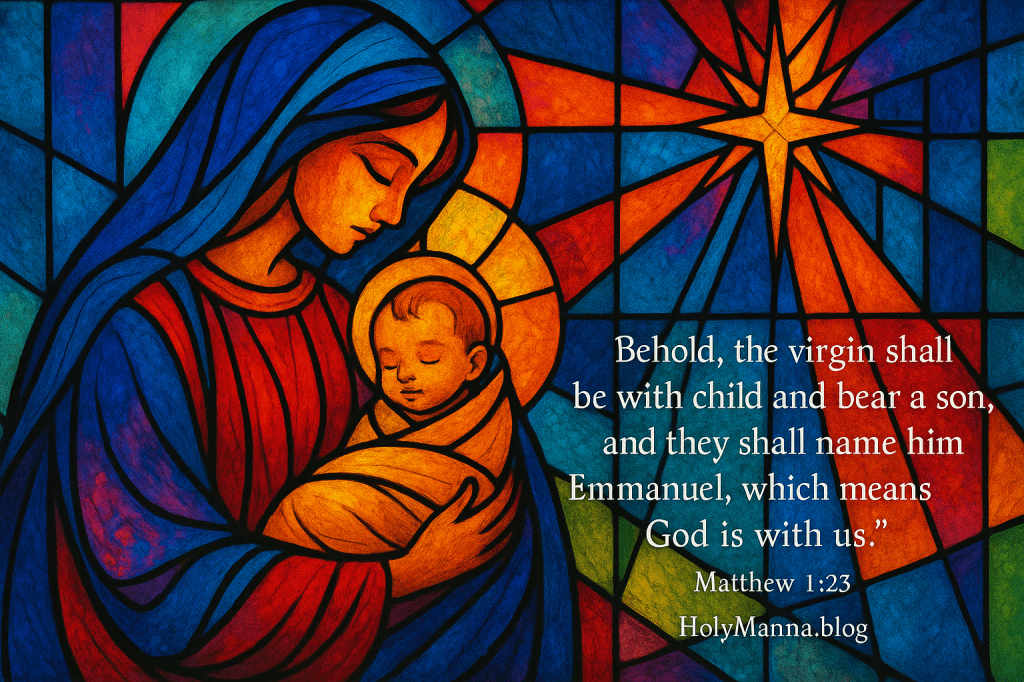
The Nativity of the Lord (Christmas) Vigil Mass – Lectionary: 13
A Night Of Promises Kept And Names Made New
Christmas begins in the dark, in that quiet hour when hearts feel the weight of history and the ache of waiting, and heaven finally whispers through the Child of Bethlehem that God has kept every promise. These Vigil readings for the Nativity of the Lord are not random Christmas passages. Together, they draw one long line through Israel’s story to show that the baby in the manger is the Davidic King, the divine Bridegroom, and Emmanuel, God with us, who comes to give His people a new name and a new identity.
In Isaiah 62:1-5, God speaks to a broken Jerusalem that had tasted exile, humiliation, and the sense of being abandoned. The prophet announces that God will not be silent until Israel’s vindication shines like dawn. No longer will the people be called “Forsaken” or the land “Desolate”. Instead, God promises a new name: “My Delight is in her” and “Espoused”. The covenant is described like a wedding. God rejoices over His people as a bridegroom rejoices in his bride. Christmas is not just the story of a birth. It is the story of God coming to claim His people as His own in a nuptial covenant of delight.
Psalm 89 takes that same hope and roots it in a specific promise. God swears an oath to David that his line and his throne will endure. “I have made a covenant with my chosen one, I have sworn to David my servant: I will make your dynasty stand forever and establish your throne through all ages.” This psalm is more than ancient poetry. It is the heartbeat of Israel’s expectation. The people are waiting for a son of David who will finally rule with justice, mercy, and faithfulness. When they pray and sing this psalm, they are clinging to a covenant God who refuses to abandon what He has sworn.
In Acts 13:16-17, 22-25, Saint Paul stands in a synagogue centuries later and connects the dots. He recalls how God chose Israel, led them out of Egypt with an uplifted arm, and then raised up David as king, calling him “a man after my own heart”. Then Paul declares that from David’s descendants, according to promise, God has brought to Israel a Savior, Jesus. John the Baptist appears as the final hinge of the story, preparing the way with a baptism of repentance and humbly confessing that he is not worthy to unfasten the sandals of the One who is coming. The entire history of Israel is presented as a long preparation for this single arrival.
Finally, Matthew 1:1-25 brings everything home. The genealogy might seem dry at first glance, but it is a theological firework. It proves that Jesus is “son of David, son of Abraham”, the legitimate heir to the covenant promises. Names like Abraham, David, and the generations after the Babylonian exile remind readers that God has been patiently weaving salvation through both glory and catastrophe. Then the focus shifts from the list of names to the holy drama in the home of Joseph and Mary. Joseph learns through the angel that the child is conceived through the Holy Spirit, and he is commanded to name Him Jesus, because “he will save his people from their sins.” Matthew then quotes the prophecy that “they shall name him Emmanuel”, which means “God is with us.” The divine Bridegroom of Isaiah 62 and the royal Son of Psalm 89 have stepped into history in a hidden, humble way. The child Mary carries is the living proof that God has not forgotten His people.
So the common thread running through all of these readings is simple and stunning. The God who made a covenant with David, the God who promised to restore Zion and rejoice over her like a bridegroom, the God who was proclaimed by John and preached by Paul, has finally come near in Jesus Christ. On this Christmas Vigil, the Church stands at the edge of the stable and hears the Father announcing through His Son: “You are not forsaken. You are My delight. My covenant with you stands firm.” How might this truth change the way Christmas is approached this year, not as a passing season, but as the celebration of a God who keeps every promise and gives His people a new name in His love?
First Reading – Isaiah 62:1-5
God Renews His People’s Name
Isaiah speaks to a wounded Jerusalem, marked by exile and shame. In this passage, God promises a future where His people will no longer feel abandoned but will receive a new name and a new identity. In the time of Isaiah, names carried deep covenant meaning. To change a name was to change a destiny. Here, God reveals Himself as a Bridegroom who takes back His people, not as a cold ruler, but as Someone who genuinely delights in them. This sets the tone for Christmas as the feast of promises fulfilled and of God’s tender joy in His people. The God who swore a covenant to David in Psalm 89 and who is revealed in Jesus in Matthew 1 shows in Isaiah 62 that His plan is not just to forgive from afar, but to bind Himself to His people in a nuptial bond of love.
Isaiah 62:1-5 – New American Bible (Revised Edition)
A New Name for Zion
1 For Zion’s sake I will not be silent,
for Jerusalem’s sake I will not keep still,
Until her vindication shines forth like the dawn
and her salvation like a burning torch.
2 Nations shall behold your vindication,
and all kings your glory;
You shall be called by a new name
bestowed by the mouth of the Lord.
3 You shall be a glorious crown in the hand of the Lord,
a royal diadem in the hand of your God.
4 No more shall you be called “Forsaken,”
nor your land called “Desolate,”
But you shall be called “My Delight is in her,”
and your land “Espoused.”
For the Lord delights in you,
and your land shall be espoused.
5 For as a young man marries a virgin,
your Builder shall marry you;
And as a bridegroom rejoices in his bride
so shall your God rejoice in you.
Detailed Exegesis
Verse 1 – “For Zion’s sake I will not be silent, for Jerusalem’s sake I will not keep still, until her vindication shines forth like the dawn and her salvation like a burning torch.”
God Himself is the speaker. He refuses to remain silent in the face of His people’s humiliation. Dawn and burning torch suggest a sudden, unmistakable rescue. Salvation is not vague comfort. It is public, visible vindication. God’s love is active and persistent, especially when His people feel forgotten.
Verse 2 – “Nations shall behold your vindication, and all kings your glory; you shall be called by a new name bestowed by the mouth of the Lord.”
The restoration of Zion is not private. Other nations and rulers will see it. The “new name” shows that God alone defines Israel’s identity. When God names, He creates a new reality, just as He did with Abraham and Jacob. This prepares the way for the Church to be known as the Bride of Christ and the People of God.
Verse 3 – “You shall be a glorious crown in the hand of the Lord, a royal diadem in the hand of your God.”
Israel is described as a crown and a diadem, precious and royal. To be in God’s hand means protection, favor, and closeness. God is not indifferent to His people. He treasures them as a king treasures his royal insignia.
Verse 4 – “No more shall you be called ‘Forsaken,’ nor your land called ‘Desolate,’ but you shall be called ‘My Delight is in her,’ and your land ‘Espoused.’ For the Lord delights in you, and your land shall be espoused.”
Old names like “Forsaken” and “Desolate” summed up the pain of exile. God replaces them with intimate names of love: “My Delight is in her” and “Espoused.” This is marital language. God is saying He does not only tolerate His people. He delights in them and commits to them like a faithful spouse.
Verse 5 – “For as a young man marries a virgin, your Builder shall marry you; and as a bridegroom rejoices in his bride so shall your God rejoice in you.”
God is called the “Builder” of His people, yet He is also the Bridegroom who rejoices in them. The joy of a bridegroom is the image God chooses for His own joy. This anticipates Christ the Bridegroom in the New Testament and the mystery of the Church as His Bride.
Teachings
This passage anticipates the full revelation of Christ as Bridegroom and the Church as Bride. The Catechism of the Catholic Church teaches in CCC 796: “The unity of Christ and the Church, head and members of one Body, also implies the distinction of the two within a personal relationship. This aspect is often expressed by the image of bridegroom and bride. The theme of Christ the Bridegroom and the Church as Bride of Christ was prepared for by the prophets and announced by John the Baptist. The Lord referred to himself as the ‘bridegroom.’ The Apostle speaks of the whole Church and of each of the faithful, members of his Body, as a bride ‘betrothed’ to Christ the Lord so as to become but one spirit with him.”
Isaiah 62 is one of those prophetic preparations. God promises not just restoration of land but a renewed covenant of love. In CCC 1612, the Church explains: “The nuptial covenant between God and his people Israel had prepared the way for the new and everlasting covenant in which the Son of God, by becoming incarnate and giving his life, has united to himself in a certain way all mankind saved by him, thus preparing ‘the wedding feast of the Lamb.’”
Saint Augustine often spoke of the Church as the Bride who is made beautiful by Christ’s love. Commenting on this mystery, he notes that the Bride does not make herself lovely first and then attract the Bridegroom. Christ loves the Church in her weakness and by that very love makes her radiant. That is exactly what God promises in Isaiah 62: He takes those called “Forsaken” and “Desolate” and gives them a new, radiant identity.
At Christmas, this prophecy reaches a new depth. In the child Jesus, Emmanuel, God truly comes to dwell with His people, to rejoice in them and to give them a name as sons and daughters in the Son. The promise in Isaiah 62 is not a poetic exaggeration. It is a real preview of what God accomplishes in Christ and in the life of the Church.
Reflection
This reading invites believers to reject the false names that sin, failure, or the world may have placed on their hearts. Names like “not enough,” “abandoned,” or “too broken” do not come from God. In Christ, God calls His people “delight,” “beloved,” and “espoused.” The spiritual life involves learning to live from the name God speaks, rather than from the labels of shame.
Practically, this can start by returning daily to prayer and allowing God’s Word to reshape identity. When a person hears in Scripture that God rejoices in His people, that truth can be received personally. Frequent reception of the sacraments, especially Confession and the Eucharist, becomes the place where God heals the experience of being forsaken and renews the covenant in mercy.
It also means looking at the Church, and at other believers, with the eyes of God. If God calls His people a “glorious crown” and a “royal diadem,” then gossip, cynicism, and contempt for others have no place in a Christian heart. A faithful response is to treat others as people whom God treasures.
What would change if each day began with the conviction that God truly delights in His people and desires a deep covenant relationship with them?
How might this Christmas be different if hearts allowed God to rename them in Christ, moving from “forsaken” to “beloved”?
Responsorial Psalm – Psalm 89:2, 4-5, 16-17, 27, 29
Singing The Covenant That Becomes Flesh In Christ
Psalm 89 is a royal and covenantal hymn that Israel prayed in times of both security and crisis. It recalls God’s solemn oath to David, that his dynasty and throne would endure. At Christmas, this psalm becomes a key that unlocks the meaning of the genealogy and birth of Jesus in Matthew 1. The Church places this psalm in the Vigil of Christmas to help believers hear Christmas not only as a beautiful story, but as the moment when God proves that His mercy and His promises to David do not fail. The child born in Bethlehem is the living answer to this psalm, the Son of David and true King whose kingdom will not pass away.
Psalm 89:2, 4-5, 16-17, 27, 29 – New American Bible (Revised Edition)
2 I will sing of your mercy forever, Lord
proclaim your faithfulness through all ages.4 I have made a covenant with my chosen one;
I have sworn to David my servant:
5 I will make your dynasty stand forever
and establish your throne through all ages.”
Selah16 Blessed the people who know the war cry,
who walk in the radiance of your face, Lord.
17 In your name they sing joyfully all the day;
they rejoice in your righteousness.27 He shall cry to me, ‘You are my father,
my God, the Rock of my salvation!’29 Forever I will maintain my mercy for him;
my covenant with him stands firm.
Detailed Exegesis
Verse 2 – “I will sing of your mercy forever, Lord, proclaim your faithfulness through all ages.”
The psalm opens with a decision to praise. Mercy and faithfulness are at the heart of God’s covenant character. To sing “forever” points toward more than temporary victories. It hints at an everlasting fulfillment. In the light of Christmas, this verse can be heard as the song of the Church before the manger, recognizing in Jesus the visible proof that God’s mercy and faithfulness have taken flesh.
Verse 4 – “I have made a covenant with my chosen one; I have sworn to David my servant:”
Here God Himself speaks. The covenant with David is not a human contract, but a divine oath. God calls David “my chosen one” and “my servant,” titles that later will echo in Christ. This line anchors Israel’s hope. Even when kings fail or the kingdom crumbles, the people can cling to what God has sworn.
Verse 5 – “I will make your dynasty stand forever and establish your throne through all ages.”
“Forever” and “through all ages” stretch far beyond any earthly monarchy. The Holy Spirit, through the psalmist, prepares hearts for a king whose reign death cannot destroy. This finds its completion in Jesus, whose kingship is not limited by time or politics. At Christmas, this verse becomes almost prophetic narration of what God quietly accomplishes in Bethlehem.
Verse 16 – “Blessed the people who know the war cry, who walk in the radiance of your face, Lord.”
“War cry” can also be understood as joyful shout, the triumphant acclamation of a people who know God fights for them. To walk in the radiance of God’s face is to live in His favor and presence. In Christ, believers literally walk in the light of God’s face, since He is the visible image of the invisible God.
Verse 17 – “In your name they sing joyfully all the day; they rejoice in your righteousness.”
The people’s joy is rooted not in their achievements but in God’s name and righteousness. The name of God reveals who He is. At Christmas, the name “Jesus” is given, meaning “God saves.” To rejoice in His righteousness means trusting that God sets things right through His saving action, especially in Christ’s birth, death, and resurrection.
Verse 27 – “He shall cry to me, ‘You are my father, my God, the Rock of my salvation!’”
The Davidic king speaks here, addressing God as Father and as the Rock of salvation. This verse anticipates the unique relationship between God the Father and God the Son. It also shows that the true king of Israel is meant to live in childlike trust, leaning on God’s strength and not his own.
Verse 29 – “Forever I will maintain my mercy for him; my covenant with him stands firm.”
This line closes the chosen verses with a firm divine promise. God’s mercy and covenant are not fragile. They stand firm even when human beings fail. In Jesus, this firm covenant becomes personal and unshakable. The Father’s mercy rests on Him in fullness, and through Him that mercy is offered to all.
Teachings
The Church sees in Psalm 89 a direct path from the promises to David to their fulfillment in Christ. The Catechism of the Catholic Church teaches in CCC 2579: “David is par excellence the king ‘after God’s own heart,’ the shepherd who prays for his people and in their name. His submission to the will of God, his praise and his repentance, will be a model for the prayer of the people.” The psalm places the believer into that same pattern of trust and praise, especially as they contemplate God’s fidelity at Christmas.
The Catechism also links the title “Son of David” to Jesus. In CCC 439 it explains: “Many Jews and even certain Gentiles who shared their hope recognized in Jesus the fundamental attributes of the messianic ‘Son of David’ promised by God to Israel. Jesus accepted his rightful title of Messiah, though with some reserve because it was understood by some of his contemporaries in too human a sense, as essentially political.” The covenant language of Psalm 89 finds its true meaning when believers see that the forever throne promised to David points to the kingship of Christ, who rules through the Cross and Resurrection, not through earthly domination.
In the liturgy, this psalm helps the Church interpret the genealogy in Matthew 1 and the preaching of Saint Paul in Acts 13. The same God who swore, “I will make your dynasty stand forever”, now shows that His covenant stands firm in the Son of David born of Mary. Christmas is not a sentimental break from the Old Testament, but its fulfillment. The nuptial joy of Isaiah 62 and the royal oath of Psalm 89 converge in one Person.
Reflection
This psalm invites believers to do more than admire God’s promises from a distance. It calls them to sing of His mercy, to trust His covenant, and to walk daily in the light of His face. That starts in prayer. Making time to praise God for His mercy, especially in difficult seasons, trains the heart to think in covenant terms rather than in terms of anxiety or control.
It also means remembering that Christians live under a real King whose throne will not be shaken. When news cycles or personal problems feel overwhelming, Psalm 89 quietly reminds the heart that Christ’s kingdom is not at risk. Decisions, priorities, and even holiday plans can be shaped by this reality. Choosing honesty, forgiveness, and generosity flows from belonging to a King whose defining traits are mercy and faithfulness.
Finally, this psalm can shape the way people speak about God. Instead of seeing God as distant or unpredictable, they learn to say with the psalmist that His covenant “stands firm.” This changes how they handle disappointment, sin, and suffering. They can keep coming back to Him because His mercy is not fragile.
What if every day began with a simple act of praise, echoing the words, “I will sing of your mercy forever, Lord”?
How might life look different if hearts really believed that God’s promises in Christ stand firm, even when everything else feels unstable?
Second Reading – Acts 13:16-17, 22-25
Paul Tells The Story That Leads Straight To Jesus
In Acts 13, Saint Paul is preaching in a synagogue in Pisidian Antioch to Jews and God fearing Gentiles. He stands up and retells Israel’s history as one continuous story of God’s faithful action. In just a few verses, he moves from the Exodus, to King David, to the promised Savior, Jesus, with John the Baptist as the final herald. This reading fits today’s theme by showing that Christmas is not an isolated event. The birth of Jesus is the climax of a long prepared plan in which God chooses, leads, corrects, and finally fulfills His promises to His people in the Son of David, Emmanuel.
Acts 13:16-17, 22-25 – New American Bible (Revised Edition)
Paul’s Address in the Synagogue. 16 So Paul got up, motioned with his hand, and said, “Fellow Israelites and you others who are God-fearing, listen. 17 The God of this people Israel chose our ancestors and exalted the people during their sojourn in the land of Egypt. With uplifted arm he led them out of it
22 Then he removed him and raised up David as their king; of him he testified, ‘I have found David, son of Jesse, a man after my own heart; he will carry out my every wish.’ 23 From this man’s descendants God, according to his promise, has brought to Israel a savior, Jesus. 24 John heralded his coming by proclaiming a baptism of repentance to all the people of Israel; 25 and as John was completing his course, he would say, ‘What do you suppose that I am? I am not he. Behold, one is coming after me; I am not worthy to unfasten the sandals of his feet.’
Detailed Exegesis
Verse 16 – “So Paul got up, motioned with his hand, and said, ‘Fellow Israelites and you others who are God fearing, listen.’”
Paul begins like a rabbi addressing a synagogue, but with apostolic authority. He speaks both to Israelites and to God fearing Gentiles, which already hints that the message of salvation is meant for all. The simple word “listen” is a biblical call to obedience, not just to passive hearing.
Verse 17 – “The God of this people Israel chose our ancestors and exalted the people during their sojourn in the land of Egypt. With uplifted arm he led them out of it.”
Paul starts with God’s initiative. God chose, exalted, and led Israel. The Exodus is described as an act of powerful rescue. This sets the pattern that salvation is God’s work, not human achievement. The same God who brought Israel out of Egypt is now acting in Christ.
Verse 22 – “Then he removed him and raised up David as their king; of him he testified, ‘I have found David, son of Jesse, a man after my own heart; he will carry out my every wish.’”
God is still the subject. He removes Saul and raises up David. Scripture calls David “a man after my own heart” because despite his sins he returns to God in humility. David becomes the model king whose heart is aligned with God’s will. This prepares for the true Son of David who will perfectly fulfill the Father’s will.
Verse 23 – “From this man’s descendants God, according to his promise, has brought to Israel a savior, Jesus.”
Here Paul reaches the core. From David’s line, exactly as promised, God brings a Savior, Jesus. The words “according to his promise” show that Jesus is not a backup plan. He is the fulfillment of a covenant that stretches back through Psalm 89 and the prophecies that spoke of a royal descendant who would rule forever.
Verse 24 – “John heralded his coming by proclaiming a baptism of repentance to all the people of Israel.”
John the Baptist appears as the bridge between the Old and the New. His baptism of repentance prepares hearts to receive the Savior. John announces that something greater is coming, inviting Israel to turn away from sin and make room for the Messiah.
Verse 25 – “And as John was completing his course, he would say, ‘What do you suppose that I am? I am not he. Behold, one is coming after me; I am not worthy to unfasten the sandals of his feet.’”
John knows his identity and his limits. He clearly denies being the Messiah and points beyond himself. His humility is striking. To say he is not worthy even to unfasten the sandals is to place himself in the position of a lowly servant. This prepares the listeners to recognize the absolute uniqueness and holiness of Jesus.
Teachings
This passage shows how the Church reads all of history as salvation history centered on Christ. The Catechism of the Catholic Church teaches in CCC 2568: “In the Old Testament, the revelation of prayer comes between the fall and the restoration of man, that is, between the first sin and the gift of salvation. Thus it is also a history of salvation.” Paul’s brief summary in Acts 13 is a snapshot of that history, where each stage points toward the Savior.
The promise to David is vital here. CCC 439 explains: “Many Jews and even certain Gentiles who shared their hope recognized in Jesus the fundamental attributes of the messianic ‘Son of David’ promised by God to Israel. Jesus accepted his rightful title of Messiah, though with some reserve because it was understood by some of his contemporaries in too human a sense, as essentially political.” By calling Jesus the descendant of David and the Savior, Paul shows that the real meaning of “Son of David” is not political domination but divine salvation.
Regarding John the Baptist, CCC 523 teaches: “St. John the Baptist is the Lord’s immediate precursor or forerunner, sent to prepare his way. ‘Prophet of the Most High,’ John surpasses all the prophets, of whom he is the last. He inaugurates the Gospel, already from his mother’s womb welcomes the coming of Christ, and rejoices in being ‘the friend of the bridegroom,’ whom he points out as ‘the Lamb of God, who takes away the sin of the world.’ Going before Jesus ‘in the spirit and power of Elijah,’ John bears witness to Christ in his preaching, by his Baptism of conversion, and through his martyrdom.” Paul’s words about John finishing his course highlight this role as the last and greatest prophet who hands everything over to Christ.
This reading also reflects the Church’s conviction that God’s plan is one single, unified story. CCC 122 states: “Indeed, ‘the economy of the Old Testament was deliberately so oriented that it should prepare for and declare in prophecy the coming of Christ, redeemer of all men.’ Even though they contain imperfections and are temporary, the books of the Old Testament bear witness to the whole divine pedagogy of God’s saving love: these writings ‘are a storehouse of sublime teaching on God and of sound wisdom on human life, as well as a wonderful treasury of prayers; in them, too, the mystery of our salvation is present in a hidden way.’” Paul is doing exactly this in Acts 13 by showing how God’s actions in the past were always ordered toward the coming of Jesus.
Reflection
This reading quietly invites every believer to see personal life inside God’s bigger story. Paul shows that God chooses, leads, corrects, and fulfills, even through messy human history. In a similar way, God is at work in the ups and downs of individual lives, not as a distant observer but as a Father who is faithful to His promises.
One concrete way to live this is to pray with Scripture and notice how often God is the one who acts first. Letting passages like this shape the way life is interpreted can slowly replace a mindset of random chaos with a sense of divine providence. When setbacks happen, instead of assuming everything is off track, a believer can recall that God brought Israel through slavery, kings, exile, and prophets to the Savior. He can handle the confusion of one ordinary life.
John the Baptist’s humility is also deeply practical. He knows he is not the Messiah, and he is content to point to Jesus. That kind of humility can transform relationships and work. It means not needing to be the hero in every situation, but being willing to point others toward Christ by words, by example, and by quiet fidelity.
Finally, this reading encourages a new way of hearing the Christmas story. The baby in the manger is not just sweet decoration. He is the Savior whom God promised through centuries, the Son of David that Psalm 89 sings about, the One whom John the Baptist declared greater than himself.
What would it look like to read personal struggles and joys as part of God’s larger plan, rather than as isolated moments?
How might daily life change if there were a conscious choice to imitate John the Baptist’s humility and let Jesus be at the center of every conversation, every plan, and every hope?
Holy Gospel – Matthew 1
The King, The Family Story, And The God Who Moves In Quiet Obedience
The Holy Gospel for the Christmas Vigil opens with what looks like a long list of names, but it is really a royal document. Matthew 1 presents Jesus as “son of David, son of Abraham”, the rightful heir of the promises sung in Psalm 89 and announced in Isaiah 62. Matthew is writing to a community steeped in Jewish memory. Genealogies mattered in that world. They proved identity, inheritance, and mission. By tracing Jesus through Abraham, David, exile, and return, this Gospel shows that the birth of Christ is not a random miracle. It is the carefully prepared fulfillment of God’s covenant, the moment when the promised King and divine Bridegroom finally enters history.
The second part of the passage moves from the big family tree to the quiet drama inside Joseph’s home. Mary is found with child through the Holy Spirit. Joseph wrestles with confusion, seeks a righteous path, and then receives a dream that changes everything. The angel reveals the child’s identity and mission: He is to be named Jesus because “he will save his people from their sins”, and He fulfills the prophecy of Emmanuel, “God is with us.” This Gospel ties together the entire theme of the Vigil. The God who vowed never to forsake His people now steps into their family line, their sin, their confusion, and their ordinary life, and He does it through humble obedience and quiet fidelity.
Matthew 1 – New American Bible (Revised Edition)
The Infancy Narrative
The Genealogy of Jesus. 1 The book of the genealogy of Jesus Christ, the son of David, the son of Abraham.
2 Abraham became the father of Isaac, Isaac the father of Jacob, Jacob the father of Judah and his brothers. 3 Judah became the father of Perez and Zerah, whose mother was Tamar. Perez became the father of Hezron, Hezron the father of Ram, 4 Ram the father of Amminadab. Amminadab became the father of Nahshon, Nahshon the father of Salmon, 5 Salmon the father of Boaz, whose mother was Rahab. Boaz became the father of Obed, whose mother was Ruth. Obed became the father of Jesse, 6 Jesse the father of David the king.
David became the father of Solomon, whose mother had been the wife of Uriah. 7 Solomon became the father of Rehoboam, Rehoboam the father of Abijah, Abijah the father of Asaph. 8 Asaph became the father of Jehoshaphat, Jehoshaphat the father of Joram, Joram the father of Uzziah. 9 Uzziah became the father of Jotham, Jotham the father of Ahaz, Ahaz the father of Hezekiah. 10 Hezekiah became the father of Manasseh, Manasseh the father of Amos, Amos the father of Josiah. 11 Josiah became the father of Jechoniah and his brothers at the time of the Babylonian exile.
12 After the Babylonian exile, Jechoniah became the father of Shealtiel, Shealtiel the father of Zerubbabel, 13 Zerubbabel the father of Abiud. Abiud became the father of Eliakim, Eliakim the father of Azor, 14 Azor the father of Zadok. Zadok became the father of Achim, Achim the father of Eliud, 15 Eliud the father of Eleazar. Eleazar became the father of Matthan, Matthan the father of Jacob, 16 Jacob the father of Joseph, the husband of Mary. Of her was born Jesus who is called the Messiah.
17 Thus the total number of generations from Abraham to David is fourteen generations; from David to the Babylonian exile, fourteen generations; from the Babylonian exile to the Messiah, fourteen generations.
The Birth of Jesus. 18 Now this is how the birth of Jesus Christ came about. When his mother Mary was betrothed to Joseph, but before they lived together, she was found with child through the holy Spirit. 19 Joseph her husband, since he was a righteous man, yet unwilling to expose her to shame, decided to divorce her quietly. 20 Such was his intention when, behold, the angel of the Lord appeared to him in a dream and said, “Joseph, son of David, do not be afraid to take Mary your wife into your home. For it is through the holy Spirit that this child has been conceived in her. 21 She will bear a son and you are to name him Jesus, because he will save his people from their sins.” 22 All this took place to fulfill what the Lord had said through the prophet:
23 “Behold, the virgin shall be with child and bear a son,
and they shall name him Emmanuel,”which means “God is with us.” 24 When Joseph awoke, he did as the angel of the Lord had commanded him and took his wife into his home. 25 He had no relations with her until she bore a son, and he named him Jesus.
Detailed Exegesis
Verse 1 – “The book of the genealogy of Jesus Christ, the son of David, the son of Abraham.”
This opening line announces the whole point. “Jesus Christ” is named as Messiah, the anointed one. Calling Him “son of David” highlights the royal promise. Calling Him “son of Abraham” connects Him to the covenant people and to the blessing promised to all nations through Abraham’s offspring.
Verse 2 – “Abraham became the father of Isaac, Isaac the father of Jacob, Jacob the father of Judah and his brothers.”
The line begins with the patriarchs. These names recall God’s original promises, long before kings and temples. Jesus stands inside this story of promise, testing, and faith.
Verse 3 – “Judah became the father of Perez and Zerah, whose mother was Tamar. Perez became the father of Hezron, Hezron the father of Ram.”
Tamar’s mention hints that God works through complicated and even scandalous human stories. The Messiah’s line is not spotless in a worldly sense. Grace is already at work in messy family situations.
Verse 4 – “Ram the father of Amminadab. Amminadab became the father of Nahshon, Nahshon the father of Salmon.”
These lesser-known names show that God’s plan is not only carried by the famous. Generations of ordinary, faithful lives carry the promise forward.
Verse 5 – “Salmon the father of Boaz, whose mother was Rahab. Boaz became the father of Obed, whose mother was Ruth. Obed became the father of Jesse.”
Rahab and Ruth, both non-Israelites, appear in the line of the Messiah. From the beginning, God’s plan for Israel includes an opening to the nations. The Messiah’s family tree is already catholic in the deepest sense.
Verse 6 – “Jesse the father of David the king. David became the father of Solomon, whose mother had been the wife of Uriah.”
David is finally named, and Matthew adds “the king” to stress his royal role. Reference to “the wife of Uriah” quietly recalls David’s grave sin, but also God’s mercy. The Messiah comes from a line marked by both greatness and failure.
Verse 7 – “Solomon became the father of Rehoboam, Rehoboam the father of Abijah, Abijah the father of Asaph.”
Solomon and his successors recall the period of the united and then divided monarchy. Wisdom, pride, idolatry, and repentance all mark this era. The line survives despite the kings’ instability.
Verse 8 – “Asaph became the father of Jehoshaphat, Jehoshaphat the father of Joram, Joram the father of Uzziah.”
These kings stand for a mix of fidelity and infidelity. The genealogy underscores that God’s promise does not collapse even when leaders falter.
Verse 9 – “Uzziah became the father of Jotham, Jotham the father of Ahaz, Ahaz the father of Hezekiah.”
Ahaz represents fear and compromise, while Hezekiah represents reform and trust. Both are in the line that leads to Christ. God patiently works through generations of mixed response.
Verse 10 – “Hezekiah became the father of Manasseh, Manasseh the father of Amos, Amos the father of Josiah.”
Manasseh is remembered as one of the worst kings, while Josiah is one of the best. The contrast highlights that God’s fidelity does not depend on perfect human behavior.
Verse 11 – “Josiah became the father of Jechoniah and his brothers at the time of the Babylonian exile.”
The exile is the lowest point, when the kingdom seems lost. Placing it inside the genealogy shows that even catastrophe is woven into God’s plan, not the end of it.
Verse 12 – “After the Babylonian exile, Jechoniah became the father of Shealtiel, Shealtiel the father of Zerubbabel.”
Post exilic names signal a community trying to rebuild without a visible Davidic king. The promise seems distant, but God quietly continues the line.
Verse 13 – “Zerubbabel the father of Abiud. Abiud became the father of Eliakim, Eliakim the father of Azor.”
These names remind readers that many generations lived and died in hope, trusting promises they did not see fulfilled.
Verse 14 – “Azor the father of Zadok. Zadok became the father of Achim, Achim the father of Eliud.”
Again, unknown names carry a known promise. Hidden fidelity matters in salvation history.
Verse 15 – “Eliud the father of Eleazar. Eleazar became the father of Matthan, Matthan the father of Jacob.”
The genealogy moves toward the immediate ancestors of Joseph, setting the stage for the final step.
Verse 16 – “Jacob the father of Joseph, the husband of Mary. Of her was born Jesus who is called the Messiah.”
This verse is the turning point. The wording changes. Joseph is called “the husband of Mary,” and the birth is attributed to her, not to Joseph. Jesus is explicitly called “the Messiah.” This respects the virginal conception and highlights Mary’s unique role while still affirming Joseph’s legal fatherhood.
Verse 17 – “Thus the total number of generations from Abraham to David is fourteen generations; from David to the Babylonian exile, fourteen generations; from the Babylonian exile to the Messiah, fourteen generations.”
Matthew highlights the pattern of three sets of fourteen. This shows order and design. God is not improvising. History is moving in a structured way toward Christ.
Verse 18 – “Now this is how the birth of Jesus Christ came about. When his mother Mary was betrothed to Joseph, but before they lived together, she was found with child through the holy Spirit.”
Betrothal in Jewish culture was a legally binding first stage of marriage. Before they lived together, Mary is found with child through the Holy Spirit. The text insists that the conception is divine in origin. The Incarnation is God’s initiative.
Verse 19 – “Joseph her husband, since he was a righteous man, yet unwilling to expose her to shame, decided to divorce her quietly.”
Joseph is called righteous, meaning he is faithful to the Law and compassionate. He plans a quiet divorce, balancing justice and mercy as he understands the situation. His heart is already tuned toward God.
Verse 20 – “Such was his intention when, behold, the angel of the Lord appeared to him in a dream and said, ‘Joseph, son of David, do not be afraid to take Mary your wife into your home. For it is through the holy Spirit that this child has been conceived in her.’”
The angel addresses him as “son of David,” reminding him of his role in the royal line. The command not to fear speaks to his confusion and reverence. The angel confirms the divine origin of the child and invites Joseph into God’s plan.
Verse 21 – “She will bear a son and you are to name him Jesus, because he will save his people from their sins.”
Joseph receives a mission. Naming the child is an act of legal fatherhood. The name Jesus, meaning “God saves,” reveals the child’s identity and mission. Salvation here is not only political deliverance but forgiveness of sins.
Verse 22 – “All this took place to fulfill what the Lord had said through the prophet:”
Matthew steps back to show fulfillment. The birth of Jesus is described as the realization of God’s earlier word. The whole passage is steeped in prophecy.
Verse 23 – “‘Behold, the virgin shall be with child and bear a son, and they shall name him Emmanuel,’ which means ‘God is with us.’”
The prophecy from Isaiah 7 is quoted and explained. Emmanuel is not just a title. It is a reality. God is literally with His people in this child, sharing their humanity and entering their history.
Verse 24 – “When Joseph awoke, he did as the angel of the Lord had commanded him and took his wife into his home.”
Joseph responds with prompt obedience. No words are recorded, only action. His silent faith becomes part of the foundation of the Holy Family.
Verse 25 – “He had no relations with her until she bore a son, and he named him Jesus.”
Matthew affirms the virginity of Mary before Jesus’ birth and Joseph’s obedience in naming the child. The focus rests on the fulfillment of the angel’s command and the child’s identity as Savior.
Teachings
The Church sees in this passage a dense summary of the mystery of Christ. The Catechism of the Catholic Church teaches in CCC 437: “To the shepherds, the angel announces the birth of Jesus as the Messiah promised to Israel: ‘To you is born this day in the city of David a Savior, who is Christ the Lord.’ From the beginning he is ‘the one whom the Father consecrated and sent into the world,’ conceived as ‘holy’ in the virginal womb of Mary. In the mystery of Christmas, the Church admires and adores the ‘Son of God who became Son of the Virgin.’” The genealogy and the annunciation to Joseph reveal this same truth. The child is both son of David and Son of God.
Regarding the virginal conception, CCC 497 states: “The Gospel accounts understand the virginal conception of Jesus as a divine work that surpasses all human understanding and possibility: ‘That which is conceived in her is of the Holy Spirit,’ said the angel to Joseph about Mary his fiancée. The Church sees here the fulfillment of the divine promise given through the prophet Isaiah: ‘Behold, a virgin shall conceive and bear a son.’” This directly echoes verses 18 and 23 and shows that Matthew is not using symbolic language only. The conception is truly a miraculous work of the Holy Spirit.
On Mary’s role, CCC 495 teaches: “Called in the Gospels ‘the mother of Jesus,’ Mary is acclaimed by Elizabeth, at the prompting of the Spirit and even before the birth of her son, as ‘the mother of my Lord.’ In fact, the One whom she conceived as man by the Holy Spirit, who truly became her Son according to the flesh, was none other than the Father’s eternal Son, the second person of the Holy Trinity. Hence the Church confesses that Mary is truly ‘Mother of God’ (Theotokos).” Matthew’s careful wording, “of her was born Jesus who is called the Messiah,” matches this teaching.
About the reality of the Incarnation, CCC 464 says: “The unique and altogether singular event of the Incarnation of the Son of God does not mean that Jesus Christ is part God and part man, nor does it imply that he is the result of a confused mixture of the divine and the human. He became truly man while remaining truly God. Jesus Christ is true God and true man.” Emmanuel, “God with us,” is not a metaphor. It speaks of a real union of God and man in one divine Person.
Saint John Paul II often highlighted Joseph’s role as guardian of the Redeemer. Joseph’s silent obedience in Matthew 1 models what trust looks like when God’s plan is confusing. The genealogy also mirrors the teaching that Christ assumed a real human history. CCC 527 explains: “Jesus’ circumcision, on the eighth day after his birth, is the sign of his incorporation into Abraham’s descendants, into the people of the covenant. It is the sign of his submission to the Law and his deputation to Israel’s worship, in which he will participate throughout his life.” The genealogy anticipates this insertion into Israel’s concrete history.
Reflection
This Gospel speaks powerfully into ordinary life. Many people carry complicated family histories, mixed with grace and sin, faith and failure. Matthew shows that Christ does not stand outside that reality. He steps into a family line marked by saints and sinners, heroes and scandals, exile and return. That means no story is too tangled for Him. He is Emmanuel, God with us, precisely in the middle of what feels broken or embarrassing.
Joseph’s example is especially important. He does not understand everything at once. He wrestles, discerns, and then obeys when God speaks. That pattern can guide anyone facing confusing situations. Before acting, there can be a turn to God in prayer, openness to the teaching of the Church, and willingness to do what is right even when it is hard or misunderstood.
The names Jesus and Emmanuel offer daily anchors. Jesus reminds every heart that God saves, not by staying far away, but by entering real human weakness and sin in order to lift it. Emmanuel assures believers that they are never abandoned. God is with them in temptation, in joy, in grief, and in very normal routines.
A practical response to this Gospel can include inviting Christ intentionally into family history and present relationships. This can happen by praying over family wounds in front of the crib, asking the Lord to redeem generational hurts, sins, or patterns of fear. It can also look like choosing obedience in small things, like Joseph, trusting that quiet fidelity is part of God’s larger story.
What would it change to really believe that Emmanuel, God with us, wants to enter not just beautiful moments, but the most complicated parts of personal and family history?
How might daily choices look different if every decision were made in the awareness that the true Son of David and Son of God is present, saving His people from their sins and guiding their lives with a faithful and patient love?
Standing in the Light of Promises Kept
Tonight’s readings trace one great arc of love. Isaiah 62 promises that God will not rest until His people shine with a new name, no longer called forsaken but delighted in and espoused. Psalm 89 sings of the covenant with David, a kingdom that will stand forever, rooted in God’s mercy and faithfulness. Acts 13 shows that this was never random history. Step by step, God patiently prepared Israel for a Savior from the line of David. Finally, Matthew 1 reveals that all of this lands in a real Child, in a real family, at a real moment in time. Jesus, son of David and son of Abraham, is born of Mary. He is named Jesus because “he will save his people from their sins” and called Emmanuel, “God is with us.”
Taken together, these readings say something deeply personal. The God of Israel is not distant, forgetful, or bored with His people. He is a Bridegroom who rejoices in them. He is a Father who keeps His promises. He is the King who steps into their history and into their wounds. In Jesus, every title from today’s readings becomes concrete. The glorious crown in the hand of the Lord, the firm covenant with David, the long awaited Savior, and the quiet obedience of Joseph all converge in one truth. God has come close and He has come to stay.
This Christmas Vigil is an invitation to let that truth move from the page into the heart. It is a gentle call to stop living under false names like “unseen,” “unworthy,” or “too far gone,” and to begin receiving the names God speaks instead: beloved, delighted in, redeemed. It is a reminder that family history, personal sin, and ordinary struggles do not scare Emmanuel. He has already chosen to enter a family line that carried both holiness and scandal and to be born into a humble home guarded by a silent, righteous carpenter.
A simple way to respond is to bring the real story of life to the crib in prayer. Every fear about the future, every regret from the past, every relationship that feels complicated can be placed before the One whose very name means that God saves and God is with us. Small acts of obedience, like Joseph’s quiet yes, become powerful ways of welcoming Christ more deeply into daily life.
How might this Christmas be different if the heart really believed that God rejoices over His people as a bridegroom rejoices over a bride?
What would change this week if every choice, every conversation, and every hidden struggle were lived in the awareness that Emmanuel is truly present, faithfully turning even the messiest parts of life into part of His story of salvation?
Engage with Us!
Share your reflections in the comments below and let the Word of God for this Christmas Vigil sink deep into your heart.
- First Reading – Isaiah 62:1-5: Where do you most feel the weight of old names like “forsaken” or “desolate” in life right now, and how is God inviting a new identity as someone in whom He delights and whom He espouses in love?
- Responsorial Psalm – Psalm 89:2, 4-5, 16-17, 27, 29: When fear or instability hits, how can the promise “my covenant with him stands firm” shape the way trust is lived in God’s mercy and faithfulness each day?
- Second Reading – Acts 13:16-17, 22-25: How might personal history look different if it were seen as part of God’s larger story of salvation, like Paul presents Israel’s history leading to Jesus?
- Holy Gospel – Matthew 1:1-25: Which part of Jesus’ genealogy or Joseph’s obedience speaks most to current family situations, and how can Emmanuel, “God is with us”, be invited more intentionally into those real stories and decisions?
May every heart choose to live a life of faith, letting Christ’s presence shape every decision, and strive to do everything with the love and mercy Jesus taught.
Sacred Heart of Jesus, we trust in You!
Immaculate Heart of Mary, pray for us!
Saint Michael the Archangel, defend us in battle!
Follow us on YouTube, Instagram and Facebook for more insights and reflections on living a faith-filled life.

 Holy Manna!
Leave a comment