Tuesday of the Fourth Week of Advent – Lectionary: 199
Hearts Prepared For His Coming
Advent always asks a quiet but decisive question: Is the Lord finding a people ready for His coming, or hearts that still need to be purified and turned back to Him?
Today’s readings trace a single movement of grace. In Malachi 3:1-4, 23-24, God promises a messenger who will go ahead of Him: “Now I am sending my messenger, he will prepare the way before me”. This is not a soft arrival. The Lord comes like a refiner’s fire, purifying His people so that their worship is pleasing again and their relationships are healed, with hearts of fathers and sons turned back toward one another.
Psalm 25 shows how that purification actually looks inside the soul. The psalmist begs: “Make known to me your ways, Lord; teach me your paths”, and then trusts that God guides the humble and teaches them His covenant. God’s refining work is not cruel. It is mercy and truth offered to those who let themselves be taught and led.
In The Gospel of Luke 1:57-66, this promise takes flesh in the birth of John the Baptist. His surprising name, his elderly parents, and Zechariah’s tongue being loosed all shout that God is on the move and that His messenger has arrived. The people ask, “What, then, will this child be?”, recognizing that “the hand of the Lord was with him”. According to CCC 522, the coming of John marks the moment when the Old Testament prepares directly for the encounter with Jesus Christ.
Together, these readings reveal a God who does not just show up unannounced, but lovingly prepares His people through a messenger, through purification, and through patient instruction in His ways. How is the Lord trying to prepare your heart in these last days before Christmas, so that you can recognize His hand and welcome Him with a humble, teachable spirit?
First Reading – Malachi 3:1-4, 23-24
A Messenger of Fire and a Turning of Hearts
The prophet Malachi 3:1-4, 23-24 speaks into a time when Israel’s worship had grown tired and careless. Priests were offering blemished sacrifices, and many hearts had slipped into routine rather than true covenant love. Into that lukewarm atmosphere, God promises not only judgment but mercy. He announces a coming messenger who will prepare the way and a coming day when the Lord Himself will visit His temple. This reading fits today’s theme by showing that before the Lord comes in glory, He first sends someone who will purify, refine, and reconcile hearts, so that His people can truly walk in His covenant and welcome Him with integrity.
Malachi 3:1-4, 23-24 – New American Bible (Revised Edition)
The Messenger of the Covenant
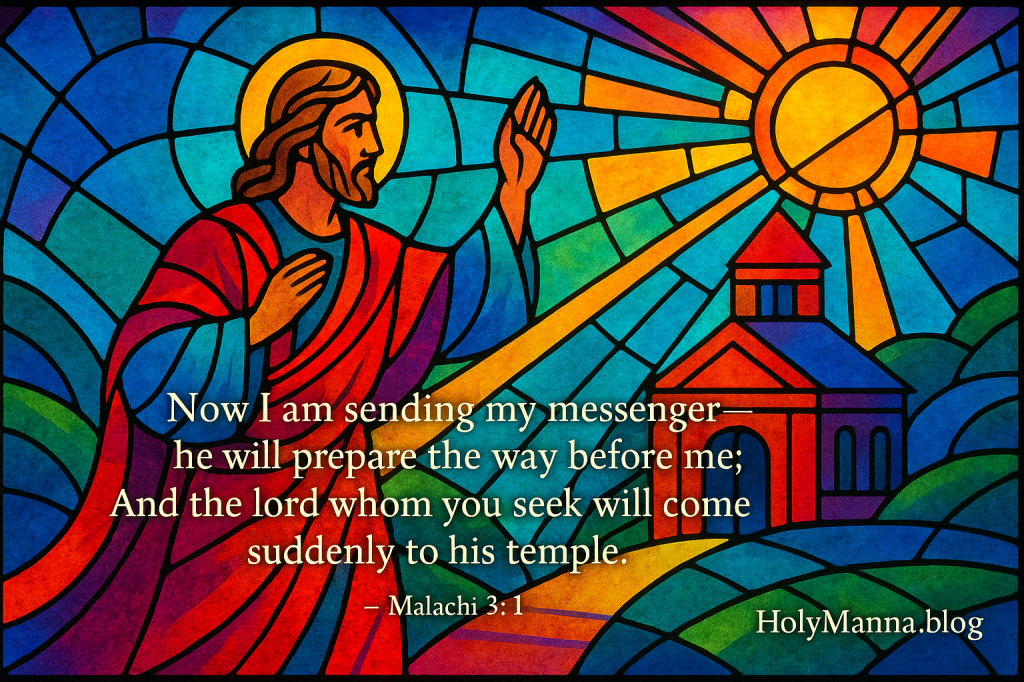
1 Now I am sending my messenger—
he will prepare the way before me;
And the lord whom you seek will come suddenly to his temple;
The messenger of the covenant whom you desire—
see, he is coming! says the Lord of hosts.
2 But who can endure the day of his coming?
Who can stand firm when he appears?
For he will be like a refiner’s fire,
like fullers’ lye.
3 He will sit refining and purifying silver,
and he will purify the Levites,
Refining them like gold or silver,
that they may bring offerings to the Lord in righteousness.
4 Then the offering of Judah and Jerusalem
will please the Lord,
as in ancient days, as in years gone by.23 Now I am sending to you
Elijah the prophet,
Before the day of the Lord comes,
the great and terrible day;
24 He will turn the heart of fathers to their sons,
and the heart of sons to their fathers,
Lest I come and strike
the land with utter destruction.
Detailed Exegesis
Verse 1 – “Now I am sending my messenger, he will prepare the way before me; And the lord whom you seek will come suddenly to his temple; The messenger of the covenant whom you desire, see, he is coming! says the Lord of hosts.”
This verse opens with God’s initiative. The people may be half hearted, but God is not. He promises a messenger who will prepare the way, a line later echoed in The Gospel of Luke about John the Baptist. The language of “suddenly” underlines that the Lord’s coming is decisive and not controlled by human timing. The title “messenger of the covenant” hints at someone who will not bring a new God, but will call the people back to the covenant they already have, purified and renewed in depth.
Verse 2 – “But who can endure the day of his coming? Who can stand firm when he appears? For he will be like a refiner’s fire, like fullers’ lye.”
Here the mood shifts from excitement to holy fear. The question is not whether the Lord will come, but whether anyone can stand before Him. The images of a refiner’s fire and a fuller’s lye show that God’s presence is not sentimental. A refiner’s fire burns away impurities in metal. Fullers used harsh substances and strong washing to make cloth pure and white. God’s coming is cleansing, not casual. It reveals what is false and burns it away.
Verse 3 – “He will sit refining and purifying silver, and he will purify the Levites, Refining them like gold or silver, that they may bring offerings to the Lord in righteousness.”
The Lord is pictured as a craftsman who “sits,” patiently focused on the silver until it is pure. This is a careful, personal work, not a quick blast. The Levites, the priests responsible for worship, are mentioned because if the worship is corrupt, the whole people suffer. God’s goal is not destruction but restoration. He wants priests whose hearts and lives match the holiness of their calling, so that their offerings are truly “in righteousness.”
Verse 4 – “Then the offering of Judah and Jerusalem will please the Lord, as in ancient days, as in years gone by.”
The result of purification is pleasing worship. The sacrifices will again be acceptable to God, not just outwardly correct, but inwardly sincere. The mention of “ancient days” recalls the early fervor of Israel’s relationship with God and suggests a kind of return to first love. The Lord’s refining is aimed at renewing that original faithfulness.
Verse 23 – “Now I am sending to you Elijah the prophet, Before the day of the Lord comes, the great and terrible day.”
These closing verses jump forward in time and promise the coming of “Elijah the prophet.” In Jewish expectation, Elijah would return before the day of the Lord to prepare the people. In The Gospel of Matthew and The Gospel of Luke, Jesus identifies John the Baptist with this Elijah figure, not as a literal reincarnation, but as someone who comes “in the spirit and power of Elijah.” The “great and terrible day” is great because God will act in power and fulfill His promises, and terrible because His holiness exposes sin and demands a response.
Verse 24 – “He will turn the heart of fathers to their sons, and the heart of sons to their fathers, Lest I come and strike the land with utter destruction.”
The first fruit of this Elijah like mission is reconciliation. God is not only interested in temple rituals but in real relationships. Hearts that were hardened, bitter, or distant will be turned back toward one another, starting in the family. This healing of generational wounds is presented as a condition that helps avert destruction. When grace is rejected and hearts remain closed, the result is ruin. When hearts are turned, the land is spared and blessed.
Teachings
This reading shows that God’s preparation for His coming is both personal and communal. He does not simply announce a deadline. He sends a messenger, refines His people, and heals their relationships so they can truly receive Him. The Catechism of the Catholic Church connects these prophecies directly with John the Baptist and the coming of Christ. In CCC 522, the Church teaches: “The coming of God’s Son to earth is an event of such immensity that God willed to prepare for it over centuries. He makes everything converge on Christ, all the rituals and sacrifices, figures and symbols of the ‘First Covenant.’ He announces him through the mouths of the prophets who succeeded one another in Israel. Moreover, he awakens in the hearts of the pagans a dim expectation of this coming.”
John stands at the climax of this preparation and is identified with the promised messenger and the new Elijah. CCC 523 explains: “St. John the Baptist is the Lord’s immediate precursor or forerunner, sent to prepare his way. ‘Prophet of the Most High,’ John surpasses all the prophets, of whom he is the last. He inaugurates the Gospel, already from his mother’s womb welcomes the coming of Christ, and rejoices in being ‘the friend of the bridegroom,’ whom he points out as ‘the Lamb of God, who takes away the sin of the world.’ Going before Jesus ‘in the spirit and power of Elijah,’ John bears witness to Christ in his preaching, by his Baptism of conversion, and through his martyrdom.”
The image of the refiner’s fire speaks to the way God purifies hearts through trials, correction, and grace. Fire as a symbol of purifying love appears throughout Scripture and tradition. The Church Fathers often saw God’s purifying presence as both painful and healing. Saint John of the Cross spoke about God’s love as a consuming fire that burns away self love to make room for divine love. Malachi’s focus on the Levites reminds believers that leadership in the Church demands purity and integrity. Priests and all who serve are called to let God refine them so that their ministry is a true offering. At the same time, every baptized person shares in the priestly people of God and is invited to let the Lord purify motives, habits, and desires.
The promise that Elijah will turn the hearts of fathers and sons has deep echoes in Christian teaching on the family. The family is the “domestic church,” as CCC 2204 teaches: “The Christian family constitutes a specific revelation and realization of ecclesial communion, and for this reason it can and should be called a domestic church.” When hearts within the family are turned back to each other in forgiveness and love, the wider Church and society are strengthened. When families remain locked in resentment, the land suffers spiritually.
Reflection
This reading invites every believer to see Advent not just as a countdown to Christmas, but as a season of refinement. God is not content with surface level faith. He wants to purify hearts like silver and restore worship that truly pleases Him. That often means allowing Him to confront areas of compromise, hidden sin, or spiritual laziness. It can feel like fire, but it is the fire of a craftsman who knows the true beauty that lies beneath the dross.
It also challenges families and communities to seek reconciliation. God connects the turning of hearts within the family to the health of the whole land. Forgiveness, honest conversations, and humble apologies are not optional extras. They are part of preparing the way of the Lord. The same God who promises a messenger also promises to heal generational fractures and restore unity.
In practical terms, this reading can inspire a few simple steps. A believer can ask the Holy Spirit to show where refinement is needed, whether in speech, hidden habits, or attitudes toward God and others. A concrete act of repentance, such as going to Confession, aligns perfectly with the theme of purification. Reaching out to a family member with whom there is tension, even with a small gesture, mirrors Elijah’s mission of turning hearts toward one another.
Where might the Lord be using “refiner’s fire” in your life right now, not to destroy you, but to free you from what keeps you from Him?
Is there a relationship in your family or circle of friends where God is gently asking you to let Him turn your heart back in forgiveness or humility?
How can your worship, whether at Mass or in daily prayer, become more sincere and pleasing to the Lord in this final stretch of Advent?
Responsorial Psalm – Psalm 25:4-5, 8-10, 14
Learning the Paths of the Covenant
Psalm 25 gives voice to the heart that is being prepared for the Lord’s coming. While Malachi 3 speaks of God purifying His people from above, this psalm shows the response from below: a humble believer begging to be taught, guided, and formed in the ways of the covenant. In the context of Advent and the promise of a coming messenger, this psalm is like the interior soundtrack of a soul that is ready to be refined, willing to be corrected, and eager to walk on the Lord’s paths of mercy and truth.
Psalm 25:4-5, 8-10, 14 – New American Bible (Revised Edition)
4 Make known to me your ways, Lord;
teach me your paths.
5 Guide me by your fidelity and teach me,
for you are God my savior,
for you I wait all the day long.8 Good and upright is the Lord,
therefore he shows sinners the way,
9 He guides the humble in righteousness,
and teaches the humble his way.
10 All the paths of the Lord are mercy and truth
toward those who honor his covenant and decrees.14 The counsel of the Lord belongs to those who fear him;
and his covenant instructs them.
Detailed Exegesis
Verse 4 – “Make known to me your ways, Lord; teach me your paths.”
The psalmist does not ask God to bless his own plans. He asks to be shown God’s ways and to be taught God’s paths. This is the posture of a disciple, not a self directed believer. It fits perfectly with today’s theme of preparation, since the heart that is ready for the Lord is a heart that wants to be instructed rather than merely affirmed.
Verse 5 – “Guide me by your fidelity and teach me, for you are God my savior, for you I wait all the day long.”
The psalmist trusts God’s faithful love and asks to be guided by it. The phrase “God my savior” already hints at the saving character of God’s guidance. Waiting “all the day long” suggests patient perseverance, not instant gratification. This patient waiting lines up with Israel’s long expectation of the Messiah and the Church’s Advent longing for Christ.
Verse 8 – “Good and upright is the Lord, therefore he shows sinners the way.”
Here the psalmist grounds everything in who God is. Because He is both good and upright, He does not abandon sinners. Instead, He shows them the way back. This is a powerful reminder that conversion begins not with human effort but with God’s initiative. Even sinners are not written off. They are invited to learn a new path.
Verse 9 – “He guides the humble in righteousness, and teaches the humble his way.”
Humility is the condition for guidance. The proud are not teachable. The humble are. The Lord guides them into righteousness, which is right relationship with God and others. This links with Malachi 3, where purified worship and reconciled hearts are the result of God’s work. The humble allow Him to do that work.
Verse 10 – “All the paths of the Lord are mercy and truth toward those who honor his covenant and decrees.”
The psalmist describes God’s paths with two key words: mercy and truth. Mercy without truth becomes indulgence. Truth without mercy becomes crushing. In God, both are perfectly united. Those who honor the covenant discover that His guidance always holds together faithful love and honest correction.
Verse 14 – “The counsel of the Lord belongs to those who fear him; and his covenant instructs them.”
Holy fear is not panic. It is reverent awe and deep respect. Those who fear the Lord are entrusted with His counsel. They are not left in confusion. The covenant itself becomes a school that forms their minds and hearts. In Advent, this points to how Christ, the new and eternal covenant, becomes the living Teacher of His people.
Teachings
This psalm reveals that preparation for the Lord is not primarily about activity, but about teachability. The heart that prays Psalm 25 is not self confident but God confident. It knows that without divine guidance, it will drift. With God’s counsel, it will walk in mercy and truth.
The Catechism of the Catholic Church teaches that prayer is fundamentally the meeting of God’s thirst and our thirst. In CCC 2559 the Church states: “‘Prayer is the raising of one’s mind and heart to God or the requesting of good things from God.’ But when we pray, do we speak from the height of our pride and will, or ‘out of the depths’ of a humble and contrite heart? He who humbles himself will be exalted. Humility is the foundation of prayer, Only when we humbly acknowledge that ‘we do not know how to pray as we ought,’ are we ready to receive freely the gift of prayer. ‘Man is a beggar before God.’” This is exactly the attitude of Psalm 25: a humble beggar asking to be taught and guided.
The union of mercy and truth in verse 10 reflects the way God reveals Himself in Christ. CCC 214 affirms: “God, ‘He who is,’ revealed himself to Israel as the one ‘abounding in steadfast love and faithfulness.’ These two terms express summarily the riches of the divine name. In all his works God displays, not only his kindness, goodness, grace and steadfast love, but also his trustworthiness, constancy, faithfulness, truth and justice.” The believer who walks on God’s paths is walking inside this mystery, where mercy and truth are never separated.
The emphasis on the covenant instructing the faithful anticipates the New Covenant written on the heart. CCC 1965 teaches: “The New Law is the grace of the Holy Spirit given to the faithful through faith in Christ. It works through charity; it uses the Sermon on the Mount to teach us what must be done, and makes use of the sacraments to give us the grace to do it.” The psalm’s desire to be taught finds its fulfillment in Christ, who not only gives commandments but pours out the Spirit so that believers can live them from within.
Reflection
This psalm invites a real interior check before Christmas. It is easy to want God’s blessings without wanting God’s ways. The psalmist shows a different posture. He wants to be taught, corrected, and redirected if necessary. That is the heart of a true disciple.
In daily life, this can be as simple as beginning the day with a sincere prayer asking the Lord to show His will in concrete choices, not just big life decisions. It can mean approaching Scripture with the expectation that God will challenge and console, not only confirm what is already comfortable. It also means accepting that God’s paths often stretch patience, like the psalmist who waits “all the day long,” rather than demanding instant clarity.
A practical step could be to take one small area of life and deliberately invite the Lord’s guidance, such as how to spend time, how to speak at home, or how to handle a difficult relationship. Another step is to cultivate humility by admitting limitations and asking for help in prayer, in Confession, or in spiritual counsel.
Where is there a tendency to ask God to bless personal plans instead of asking Him to reveal His paths?
What would it look like to let mercy and truth shape the way difficult conversations or decisions are handled this week?
How can the habit of daily, humble prayer become a real place where the Lord teaches and guides, rather than just a quick box to check in a busy day?
Holy Gospel – Luke 1:57-66
The Birth of the Messenger and the Loosening of a Tongue
The Gospel in Luke 1:57-66 moves from prophecy to fulfillment. After long years of waiting and personal barrenness, Elizabeth gives birth to the child promised by God. This is not just a sweet family moment. It is the concrete beginning of God’s plan to send His messenger, the one foretold in Malachi 3 and Malachi 4, who will prepare the way of the Lord and turn hearts back to God. In a small village in Judea, through an elderly couple, the “refining fire” and “turning of hearts” promised by God quietly begins as the forerunner, John the Baptist, enters history.
Luke 1:57-66 – New American Bible (Revised Edition)
57 When the time arrived for Elizabeth to have her child she gave birth to a son. 58 Her neighbors and relatives heard that the Lord had shown his great mercy toward her, and they rejoiced with her. 59 When they came on the eighth day to circumcise the child, they were going to call him Zechariah after his father, 60 but his mother said in reply, “No. He will be called John.” 61 But they answered her, “There is no one among your relatives who has this name.” 62 So they made signs, asking his father what he wished him to be called. 63 He asked for a tablet and wrote, “John is his name,” and all were amazed. 64 Immediately his mouth was opened, his tongue freed, and he spoke blessing God. 65 Then fear came upon all their neighbors, and all these matters were discussed throughout the hill country of Judea. 66 All who heard these things took them to heart, saying, “What, then, will this child be?” For surely the hand of the Lord was with him.
Detailed Exegesis
Verse 57 – “When the time arrived for Elizabeth to have her child she gave birth to a son.”
The phrase “when the time arrived” signals God’s timing, not just biology. Elizabeth’s barrenness has been overcome by divine intervention. The birth of a son fits the angel’s promise and marks the start of John’s mission even before he can speak.
Verse 58 – “Her neighbors and relatives heard that the Lord had shown his great mercy toward her, and they rejoiced with her.”
The focus is on the Lord’s mercy, not just Elizabeth’s joy. Her personal blessing becomes a communal sign of God’s favor. The whole village sees that God has stepped into their ordinary life with extraordinary kindness.
Verse 59 – “When they came on the eighth day to circumcise the child, they were going to call him Zechariah after his father,”
The eighth day circumcision places this event solidly within the covenant of Abraham. Naming the child after his father follows cultural custom. The community assumes continuity, but God is about to signal something new.
Verse 60 – “But his mother said in reply, ‘No. He will be called John.’”
Elizabeth’s “No” shows her obedience to the angelic message given to Zechariah. The name “John” means “The Lord has shown favor” or “The Lord is gracious,” which perfectly expresses God’s mercy in this story and in John’s mission.
Verse 61 – “But they answered her, ‘There is no one among your relatives who has this name.’”
The people push back because the name breaks family tradition. God’s plan often unsettles expectations and customs. The new covenant work of God cannot always be squeezed into old patterns.
Verse 62 – “So they made signs, asking his father what he wished him to be called.”
Zechariah is drawn into a moment of decision. He has been silent since doubting the angel. Now he is invited to either cling to custom or submit to God’s word. The signs show that he is still mute and likely deaf, secluded in his own quiet trial.
Verse 63 – “He asked for a tablet and wrote, ‘John is his name,’ and all were amazed.”
Zechariah’s agreement with the divine command is exact and firm. He does not say “will be,” but “is.” He submits his fatherly authority to the revealed will of God. The amazement of the people shows that this obedience is striking and memorable.
Verse 64 – “Immediately his mouth was opened, his tongue freed, and he spoke blessing God.”
As soon as Zechariah obeys, his punishment is lifted. Doubt had closed his mouth. Faith opens it. His first words are not complaints but blessing. This is a beautiful image of what God’s refining does: it turns silence into praise and fear into faith.
Verse 65 – “Then fear came upon all their neighbors, and all these matters were discussed throughout the hill country of Judea.”
“Fear” here means holy awe. People sense that God is at work in a special way. The hill country becomes a place of whispered wonder and shared stories. The birth and naming of John become a local evangelization moment.
Verse 66 – “All who heard these things took them to heart, saying, ‘What, then, will this child be?’ For surely the hand of the Lord was with him.”
The people recognize that this child’s life will not be ordinary. The phrase “the hand of the Lord was with him” signals divine favor and mission. Their question prepares the reader for the full revelation of John as the promised forerunner, the messenger who will prepare the way.
Teachings
This Gospel shows how God’s saving plan unfolds through real families, real struggles, and real obedience. The Church teaches that John the Baptist stands at the hinge between the Old and New Covenants. In CCC 523 we read: “St. John the Baptist is the Lord’s immediate precursor or forerunner, sent to prepare his way.” John is the “messenger” announced in Malachi, and his birth is already a sign that the time of fulfillment has arrived.
The naming of John reveals that a child’s identity comes first from God. His mission is not created by his parents or by social expectations. It is received as a gift. CCC 1694 reminds believers that Christian identity is also received: “Incorporated into Christ by Baptism, Christians are ‘dead to sin and alive to God in Christ Jesus.’” Just as John’s name and mission are given by God, so every baptized person receives a new name and mission in Christ.
Zechariah’s silence and restored speech highlight the connection between faith and witness. Doubt had led to muteness. Obedience leads to proclamation. CCC 1816 teaches: “The disciple of Christ must not only keep the faith and live on it, but also profess it, confidently bear witness to it, and spread it.” Zechariah models this shift. Once he believes and obeys, he cannot remain silent. His tongue is set free to bless God, which is exactly what every Christian is called to do.
The awe of the neighbors shows how God uses signs in ordinary life to awaken hearts. Events in one family become a spark that spreads through a whole region. In the bigger picture of The Gospel of Luke, this sets the stage for the public ministry of both John and Jesus, where God’s work in people’s lives sparks questions and conversions.
Reflection
This Gospel invites a very personal examination. God still works through surprising births, unexpected turns, and quiet villages. He still gives names and missions that do not always match human expectations. It can be tempting to cling to “how things are done” rather than listen for God’s specific call in a situation. Zechariah and Elizabeth show a different way. They surrender their parental rights and social customs to obey the word God has spoken.
In daily life, that might show up in small but real choices. It might mean letting God reshape plans for career, family, or service in the Church. It might mean accepting a cross or a blessing that does not fit the usual pattern. Like Zechariah, a believer can move from silent doubt to outspoken praise by choosing obedience in very concrete decisions.
The people’s reaction also matters. They “take these things to heart” and ask what God is doing. That is a beautiful Advent posture. Instead of scrolling past God’s signs, the heart slows down, ponders, and asks how His hand might be at work.
Where might God be inviting a step of obedience that goes against comfort or family expectations, like the choice of John’s name did for Elizabeth and Zechariah?
Is there any place where doubt or fear has made it hard to speak about God, and how might a renewed act of trust help “loosen the tongue” in conversations about faith?
How can the habit of “taking things to heart,” like the neighbors in this Gospel, help recognize the hand of the Lord in ordinary family and parish life this week?
Preparing the Way in Our Own Hearts
Today’s readings all circle around one simple reality: God does not crash into a person’s life without preparation. In Malachi 3:1-4, 23-24 the Lord promises a messenger who will purify His people like a refiner’s fire and turn hearts back to one another so that the covenant can be lived with integrity. In Psalm 25, the soul responds with humility and trust, praying, “Make known to me your ways, Lord; teach me your paths.” In The Gospel of Luke 1:57-66, that promised messenger finally arrives as John the Baptist, and the hill country of Judea feels the shock of grace as people say, “What, then, will this child be?” and recognize that “the hand of the Lord was with him.”
All of this points straight into everyday life. The same God who refined Israel, taught the psalmist, and sent John is still at work refining, teaching, and calling. He is not only preparing the world in a general way. He is preparing individual hearts to welcome Christ more deeply, especially as Christmas draws near. That preparation might look like conviction about sin, a nudge toward Confession, a difficult conversation that could heal a relationship, or a quiet desire to pray more honestly and consistently.
A simple way forward is to make the psalmist’s words a real daily prayer. Ask the Lord to show where He wants to purify, where He wants to guide, and where He is already at work like He was in the life of John. Then take one concrete step: reconcile with someone, return to the sacraments, carve out silent time for prayer, or let go of a habit that God has been gently highlighting.
What if the “refiner’s fire” in this season is actually God’s personal love, burning away what keeps you from joy?
How might the Lord be inviting you to become more teachable, more reconciled, and more ready to recognize His hand in the ordinary details of your life?
Engage with Us!
Share your reflections in the comments below and help build a real conversation around what God is doing in hearts this Advent. Here are some questions to pray with and discuss:
- First Reading – Malachi 3:1-4, 23-24: Where do you most feel the Lord’s “refiner’s fire” at work in your life right now, gently burning away what does not belong to Him? Is there a relationship, maybe within your family, where God might be inviting you to let Him “turn hearts” back toward forgiveness and reconciliation?
- Responsorial Psalm – Psalm 25:4-5, 8-10, 14: When you pray “Make known to me your ways, Lord; teach me your paths”, what area of your life comes to mind first? What would it look like in a practical way to be more teachable before God and to really let His mercy and truth guide your decisions this week?
- Holy Gospel – The Gospel of Luke 1:57-66: Looking at the story of John’s birth, Elizabeth’s courage, and Zechariah’s obedience, where might God be inviting you to trust Him beyond your comfort zone or usual expectations? How can you, like the people of the hill country, “take things to heart” and look more carefully for signs that “the hand of the Lord” is with you in your ordinary daily life?
May these questions help you live more awake to God’s presence, more rooted in faith, and more ready to do everything with the love and mercy that Jesus has taught and entrusted to His Church.
Sacred Heart of Jesus, we trust in You!
Immaculate Heart of Mary, pray for us!
Saint Michael the Archangel, defend us in battle!
Follow us on YouTube, Instagram and Facebook for more insights and reflections on living a faith-filled life.

 Holy Manna!
Leave a comment