A Heart Shaped in Nazareth
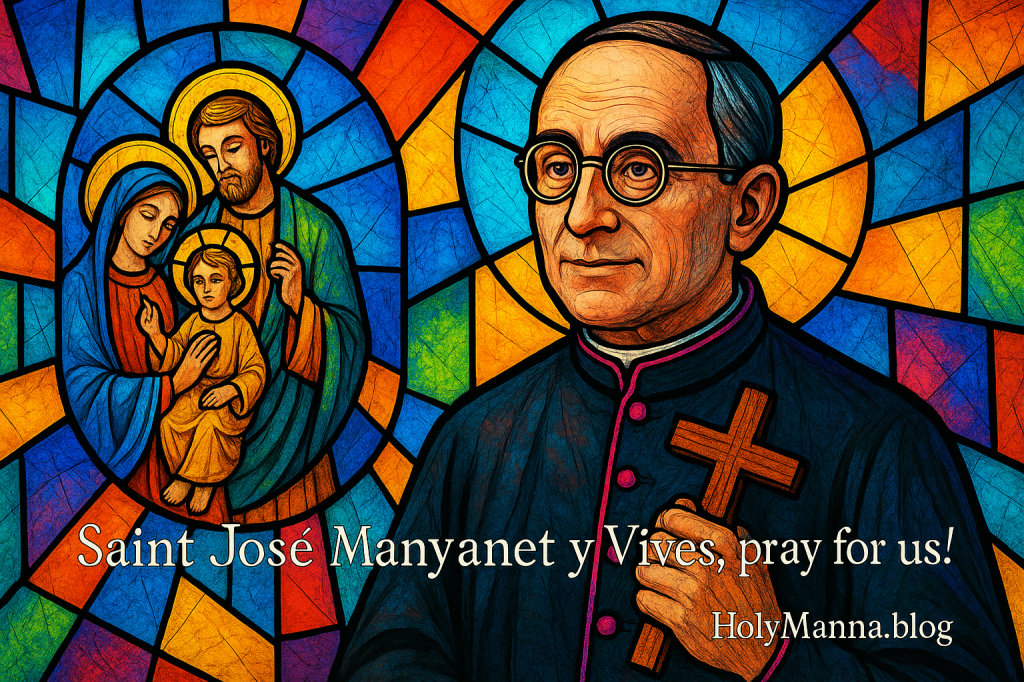
Saint José Manyanet y Vives stands as one of the great champions of the Holy Family in modern times. A humble Catalonian priest with a burning love for Jesus, Mary, and Joseph, he dedicated his life to strengthening Christian families, forming holy priests, and raising up communities that embodied the virtues of Nazareth. His work influenced education, family life, and the renewal of priestly holiness. Canonized by Pope Saint John Paul II in 2004, he is remembered as a man whose spirituality flowed from the quiet, radiant simplicity of the home of Jesus in Nazareth. His motto was rooted in imitation and mission: to make every home “another Nazareth,” where God is known, loved, and served.
From Mountain Village to Missionary Vision
José Manyanet y Vives was born on January 7, 1833, in Tremp, in the Catalonia region of Spain. He was the youngest of nine children, born into a devout and hardworking family whose life revolved around faith, community, and the rhythms of rural life. His mother, a woman of deep piety, nurtured in him a love of the Blessed Virgin and the Church from an early age. After the death of his father, José leaned even more deeply into prayer and discernment, sensing the quiet yet persistent call to the priesthood.
He entered the diocesan seminary at an early age, persevering through illness, poverty, and the challenges of Spain’s political and social unrest. Ordained a priest in 1859, he quickly became known as a gifted spiritual director, a compassionate confessor, and a man of remarkable pastoral energy. But beneath his daily ministry, a fire had begun to burn. He felt called to devote his entire priesthood to the Holy Family of Nazareth, drawing from their hidden life a model of holiness for families, youth, and clergy. This would become the defining mission of his life.
Saint José is best known for founding two great religious families: the Sons of the Holy Family (in 1864) and the Missionary Daughters of the Holy Family of Nazareth (in 1874). Both focused on education, priestly formation, and the strengthening of Christian families, all rooted in the spirituality of Nazareth.
A Life Poured Out in Service
Saint José Manyanet y Vives dedicated himself tirelessly to the renewal of society through the renewal of the family. He believed deeply that the health of civilization begins in the home, and the health of the home begins with holiness. He wrote extensively on family life, the priesthood, and the mission of Catholic education. His most known work, The School of Nazareth, laid out a practical and spiritual vision for living the virtues of Jesus, Mary, and Joseph.
He founded schools, parishes, and formation houses, often working day and night to secure resources, teach students, minister to families, and guide young men toward the priesthood. His spirituality was rooted in humility and prayer, and those who knew him testified to his serenity, patience, and fatherly kindness.
Several extraordinary events during his ministry suggest God’s favor upon him. He experienced healings that allowed him to continue his work despite chronic illness, and many people testified that his prayers brought spiritual conversions, reconciliations within families, and physical healings. A well-known tradition holds that his blessing brought miraculous peace to couples who struggled with infertility or marital conflict, though he never sought attention for these graces.
His spiritual children remembered him as a man whose holiness radiated quietly but unmistakably. His writings, his presence, and his prayer life testified to the Holy Family dwelling deeply within his soul.
Crosses That Refined His Mission
Although he was not a martyr, Saint José Manyanet y Vives endured significant hardships for the sake of his mission. He suffered widespread misunderstanding, opposition from clergy and civil authorities, and frequent financial instability as he worked to build schools and religious communities. His health was fragile for much of his adulthood, and he lived with painful sores and chronic illnesses that made even basic tasks difficult.
Yet, he accepted every suffering as a participation in the hidden sorrows of Nazareth. He believed deeply that the Holy Family formed him through trials, shaping him into a vessel for God’s work. His calm endurance, gentle silence, and unshakeable faith became powerful signs of God’s presence in him. His greatest hardships purified his mission and expanded his trust in divine providence.
He died on December 17, 1901, after a long illness offered entirely to God. Those who surrounded him testified to the peace and holiness that marked his final days.
Nazareth Continues to Shine
After his death, devotion to Saint José Manyanet grew steadily among those who had been touched by his schools, his writings, and the religious congregations he founded. Many miracles were attributed to his intercession, especially healings of the sick and the restoration of harmony within families. His cause for canonization included several remarkable healings involving life-threatening illnesses, all medically inexplicable.
His tomb in Barcelona became a place of quiet pilgrimage, where families, priests, and educators came to seek the intercession of the saint who dedicated his life to them. Even today, his religious congregations operate schools and apostolates across the world, continuing his dream of forming hearts that mirror the love and unity of the Holy Family.
Learning from Nazareth
Saint José Manyanet y Vives reminds us that holiness often begins not in grand gestures but in the daily fidelity of family life. The home becomes a school of virtue when Christ is at the center and when parents, children, and communities intentionally seek to live the peace, humility, and charity of Nazareth.
His life encourages a deeper appreciation for the sacredness of ordinary duties. The way a family prays, forgives, works, and loves becomes a quiet yet powerful witness to the Gospel. In the spirit of Saint José, readers are invited to reflect on how their own homes might more closely reflect the simplicity and holiness of the Holy Family.
Holiness begins in daily choices: patience during conflict, gentleness in correction, gratitude for small blessings, perseverance in prayer, and trust in God’s providence through hardships. These virtues transform homes into living reflections of Jesus, Mary, and Joseph.
Engage with Us!
Share your thoughts and reflections in the comments below.
- How does the example of the Holy Family speak to your own home and relationships today?
- Which virtue of Saint José Manyanet y Vives inspires you the most, and how can you practice it this week?
- In what ways can you help renew family life in your community, workplace, or parish?
- How might God be inviting you to make your home “another Nazareth”?
May every reader be encouraged to live a life rooted in faith, strengthened by hope, and overflowing with the love and mercy that Jesus taught us.
Saint José Manyanet y Vives, pray for us!
Follow us on YouTube, Instagram and Facebook for more insights and reflections on living a faith-filled life.

 Holy Manna!
Leave a comment