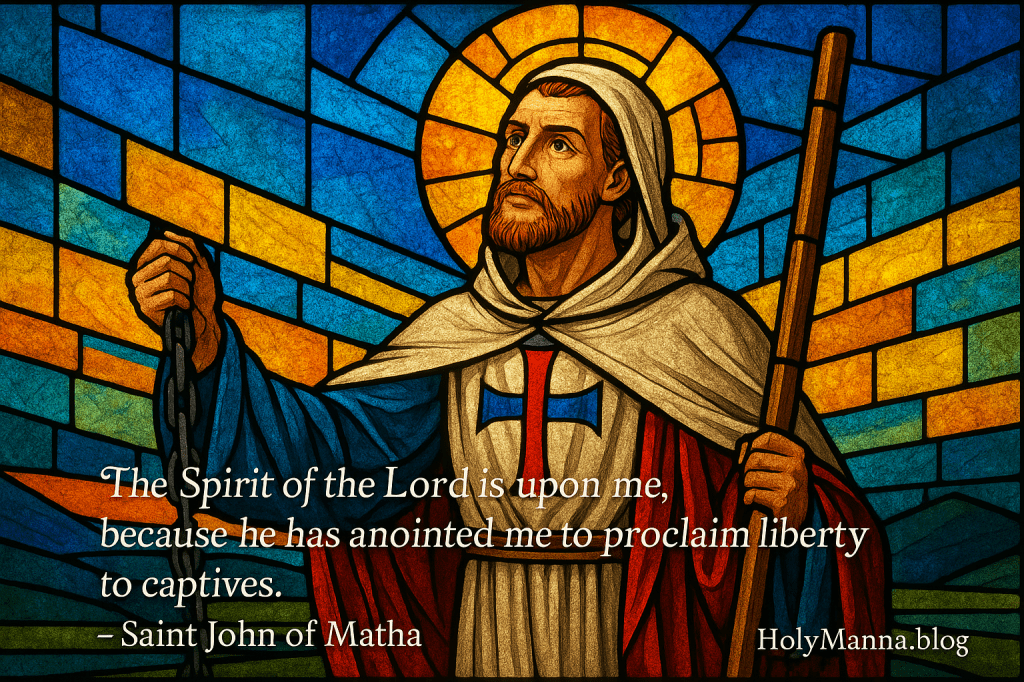
A Heart Formed for Freedom
Saint John of Matha shines as a beacon of mercy in the rich tapestry of the Church’s history. He is best known as the cofounder of the Trinitarian Order, a community dedicated to the redemption of Christian captives who had been taken by pirates and sold into slavery. His life offers a compelling vision of courage, sacrificial love, and unwavering trust in God’s power to set the oppressed free. His commitment to justice and compassion continues to inspire countless believers to live the Gospel with boldness and charity.
Seeds of Vocation
John of Matha was born on June 23, 1154, in Faucon in the region of Provence in France. He grew up in a devout Christian family where virtue was woven into the fabric of daily life, planting deep roots of faith in his heart. Known for extraordinary kindness and spiritual sensitivity even as a boy, John seemed drawn toward service long before he fully understood his calling.
He pursued formal studies in theology at the University of Paris, where his intellectual gifts quickly became evident. John’s ordination to the priesthood became a decisive moment in his spiritual journey. During the Mass of his first priestly celebration, he received a mystical vision that would define the rest of his life. Tradition recounts that he saw an angel clothed in white with a red and blue cross on the chest, standing between two slaves, one Christian and one Muslim, whose chains hung loosely at their sides. This vision struck him with profound clarity, revealing God’s will that he dedicate his life to the liberation of captives.
This encounter ignited the mission that John would carry throughout his entire life, ultimately leading to the foundation of the Order of the Most Holy Trinity for the Redemption of Captives, known today as the Trinitarians. The red and blue cross seen in the vision became the emblem of the order, symbolizing their dedication to the Trinity and the freedom of those in chains.
A Life Spent Setting the Captive Free
Once John understood the mission entrusted to him, he pursued it with heroic zeal. Together with Saint Felix of Valois, he retreated into a life of deep prayer and discernment. Tradition speaks of miraculous signs that confirmed their calling, including a stag that appeared with a red and blue cross on its brow, echoing the symbol from John’s vision.
John traveled to Rome to seek approval from Pope Innocent III, who recognized the divine hand at work and formally approved the Trinitarian Order in 1198. With that blessing, John began establishing houses across Europe where funds were collected for the ransom of Christian captives held in North Africa. These ransoming missions were dangerous and demanding, yet John undertook them with unwavering confidence in God’s providence.
Historical accounts record several instances in which captives were freed through John’s courageous interventions. He not only raised funds but often journeyed into hostile territories himself, negotiating with slave traders and risking his own freedom in the process. Tradition also attributes healings and acts of divine protection to him, signs that God accompanied him in this mission of mercy.
John’s life became a living witness to the words of Christ: “The Spirit of the Lord is upon me, because he has anointed me to proclaim liberty to captives.” His love for the oppressed, his trust in the Trinity, and his tireless labor on behalf of the enslaved reveal a soul molded by divine charity.
Trials, Peril, and Perseverance
Although Saint John of Matha did not die a martyr, his life was marked by profound hardships and dangers faced for the sake of the Gospel. Traveling to North Africa meant exposing himself to disease, capture, betrayal, and political volatility. Every ransom mission presented real threats, yet he remained steadfast. Accounts describe John narrowly escaping imprisonment during these efforts, protected through miraculous interventions. These moments revealed how deeply he trusted in the power of God to guide and shield him.
His hardships were not limited to physical danger. He also endured opposition from those who questioned his mission, as well as the constant burden of fundraising to save lives. Nevertheless, John persisted, inspired by the love of the Trinity and the needs of those who awaited freedom.
The Works of Mercy Continue
John of Matha died on December 17, 1213, in Rome, leaving behind a legacy that stretched far beyond his earthly life. After his death, miracles began to be reported at his tomb, especially healings attributed to his intercession. Pilgrims flocked to his resting place seeking comfort, freedom from affliction, and spiritual renewal.
The Trinitarian Order itself became one of the greatest testimonies to his enduring influence. For centuries, Trinitarians continued rescuing captives, often risking their own lives, inspired by John’s founding vision. Churches and monasteries dedicated to him sprang up across Europe, and his relics drew the faithful who desired to imitate his courage and his trust in the Lord.
Walking in Freedom
The life of Saint John of Matha invites every Christian to confront the spiritual chains that bind the world today. His mission to liberate captives challenges believers to consider where oppression still exists, whether physical, emotional, or spiritual. His trust in the Trinity encourages a deeper reliance on God when the work seems overwhelming or the path unclear.
Readers can take inspiration from his example by practicing concrete acts of mercy, defending the vulnerable, and advocating for justice wherever possible. His profound commitment to charity reminds all who follow Christ that true love demands sacrifice, courage, and a willingness to step into darkness carrying the light of the Gospel.
People today can honor Saint John’s legacy by asking the Holy Trinity to free them from the chains of sin, fear, and complacency, and by offering themselves to serve those who suffer. Spiritual freedom begins when believers allow God to transform their hearts and send them, like John, into the world as instruments of liberation.
Engage with Us!
Share your thoughts and reflections in the comments below.
- How does the mission of Saint John of Matha challenge you to live out mercy in concrete ways?
- What “chains” in your life or in the lives of others need to be brought before the Holy Trinity for healing and freedom?
- How can you incorporate acts of sacrificial love into your daily routine, inspired by this saint’s example?
May this day be a reminder to pursue holiness boldly, to serve others with love, and to do everything with the mercy Jesus taught us.
Saint John of Matha, pray for us!
Follow us on YouTube, Instagram and Facebook for more insights and reflections on living a faith-filled life.

 Holy Manna!
Leave a comment