Wednesday of the Third Week of Advent – Lectionary: 193
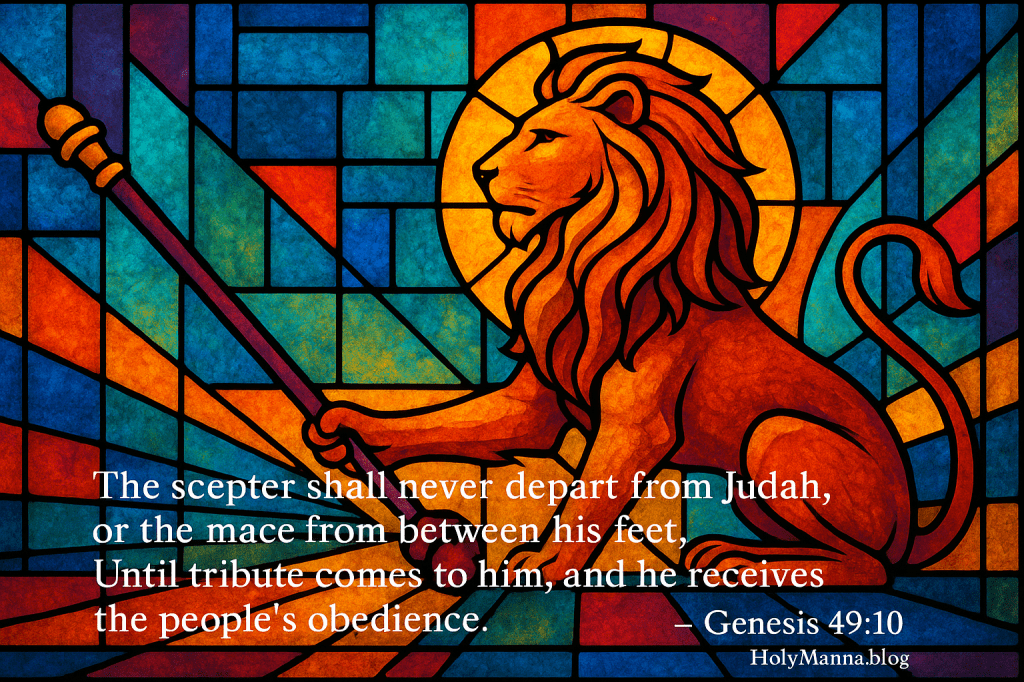
The Lion of Judah
There is a quiet thrill in Advent when the Church starts naming names and tracing family lines. These are not random ancient relatives. They are the thread of a promise. Today’s readings pull that golden thread tight and reveal a central truth: God has always intended to give a King from the line of Judah whose reign is just, merciful, and everlasting, and that King is Jesus Christ.
In Genesis 49, an old patriarch leans on his staff and speaks words that echo far beyond his own sons. Jacob calls his children together and singles out Judah with a striking image: a lion, royal and untouchable, holding a scepter that will never be taken away. The blessing climaxes with the prophecy that tribute will come to him and that the peoples will obey him. This is not just about one tribe having influence over the others. It is the seed of what will become the royal line of David and, in the fullness of time, the kingship of Christ. The Church sees here a messianic promise beginning to take shape, a first glimpse of the Lion of Judah whose authority will never end.
Psalm 72 picks up that same royal thread and turns it into a prayer for the ideal king. The psalmist asks God to give judgment and justice to the king’s son so that he may rule with righteousness, defend the oppressed, save the children of the poor, and crush the oppressor. This is not a fantasy about power. It is a vision of a king whose reign brings peace, abundance, and protection for the most vulnerable. The psalm stretches the horizon of Israel’s hope: a rule that extends from sea to sea, a name that endures as long as the sun, and a blessing that reaches all nations. This is the kind of kingdom every human heart secretly longs for, even if it cannot put that desire into words.
Then The Gospel of Matthew steps in like a divine family record, grounding all these hopes in real history. Matthew 1 is not just a long list of names to skim past. It is a theological proclamation. Jesus is openly presented as “son of David, son of Abraham”, the heir of both the promise to Abraham that all nations would be blessed through his offspring, and the promise to David that his throne would be established forever. The genealogy shows a line that survives sin, scandal, exile, and disappointment. Kings rise and fall, kingdoms break apart, but the promise keeps quietly moving forward until it arrives at Joseph, the husband of Mary, from whom is born Jesus who is called the Messiah.
The Catechism of the Catholic Church reminds the faithful that the heart of the Gospel is that Jesus is the Christ, the anointed one, the Son of David in whom all God’s promises find their yes (CCC 436–440). Advent is not only about waiting for a baby in a manger. It is about recognizing that this child is the King whose scepter will never depart, whose justice is perfect, and whose mercy reaches every corner of the earth. Where does the heart still look for security in worldly power instead of resting under the kingship of Christ, the Lion of Judah who came to save rather than to crush?
First Reading – Genesis 49:2, 8-10
The Lion of Judah and the Promise of a King
This blessing over Judah in Genesis 49 takes place near the end of Jacob’s life, when the patriarch gathers his sons and speaks prophetic words over each of them. In the culture of ancient Israel, a father’s blessing was more than a kind farewell. It was understood as a kind of covenantal proclamation that revealed something of God’s plans for the family and for the tribes that would come from them. When Jacob turns to Judah, the tone shifts from simple family blessing to royal prophecy. The language of scepter, tribute, and obedience points forward to kingship, first realized in David and ultimately fulfilled in Jesus Christ. In the light of today’s theme, this reading shows that the Messiah’s kingship is not a late idea. From the beginning, God was preparing a King from the tribe of Judah whose rule would endure and gather the obedience of the nations.
Genesis 49:2, 8-10 – New American Bible (Revised Edition)
2 “Assemble and listen, sons of Jacob,
listen to Israel, your father.
8 “You, Judah, shall your brothers praise
—your hand on the neck of your enemies;
the sons of your father shall bow down to you.
9 Judah is a lion’s cub,
you have grown up on prey, my son.
He crouches, lies down like a lion,
like a lioness—who would dare rouse him?
10 The scepter shall never depart from Judah,
or the mace from between his feet,
Until tribute comes to him,
and he receives the people’s obedience.
Detailed Exegesis
Verse 2 – “Assemble and listen, sons of Jacob, listen to Israel, your father.”
Jacob calls his sons together in a solemn assembly. This is not a casual conversation. The repetition of “listen” signals that what follows carries real authority. The patriarch speaks as both father and covenant bearer. The family gathered around him represents the twelve tribes of Israel, so his words carry implications for the whole people of God, not just a private household.
Verse 8 – “You, Judah, shall your brothers praise, your hand on the neck of your enemies; the sons of your father shall bow down to you.”
Judah is singled out for leadership and honor. The name Judah is related to praise, and Jacob’s blessing reveals that Judah will be praised by his brothers. The image of a hand on the neck of enemies suggests decisive victory, while the brothers bowing hints at royal authority. This prepares the way for the monarchy that will arise from this tribe. Spiritually, this points to Christ who conquers sin, death, and the devil, and before whom every knee will bow.
Verse 9 – “Judah is a lion’s cub, you have grown up on prey, my son. He crouches, lies down like a lion; who would dare rouse him?”
The lion image evokes power, majesty, and fearlessness. Judah begins as a lion’s cub and matures into a full lion, hinting at a growing royal strength. The picture of the lion at rest yet untouchable suggests a king whose authority is secure and unshakable. In Christian tradition, this verse is read in connection with Christ as the Lion of Judah, the King whose strength is both awe inspiring and protective.
Verse 10 – “The scepter shall never depart from Judah, or the mace from between his feet, until tribute comes to him, and he receives the peoples’ obedience.”
The scepter and mace are symbols of royal rule. Saying they will not depart from Judah means that kingship is permanently attached to this tribe. The line about tribute and the obedience of the peoples stretches the vision beyond Israel alone. This hints at a universal reign where many nations come under the rule of this promised ruler. In the fullness of revelation, this verse is understood as a prophecy of the Messiah, whose kingdom is without end and whose authority is meant for all peoples.
Teachings
This short passage from Genesis 49 is one of the key Old Testament foundations for understanding the Messiah as a royal figure from the tribe of Judah. It forms part of the background for the Church’s confession that Jesus is truly the Christ, the anointed King. The Catechism of the Catholic Church explains that the very title “Christ” has royal and messianic weight. In CCC 436 it states: “Christ comes from the Greek translation of the Hebrew ‘Messiah’ which means ‘anointed’.” The kings of Israel were anointed with oil as a sign of their consecration to God’s service. Christ is the one in whom this anointing reaches its fullness.
The promise of a scepter that will not depart from Judah points forward to the Davidic covenant, where God promises David an everlasting throne. The Catechism teaches that the people of Israel awaited a son of David who would restore the kingdom in a definitive way. CCC 439 notes that many recognized in Jesus the features of this promised Son of David and saw in him the hoped for Messiah. This means that Genesis 49 is not just family history. It is part of the deep scriptural preparation for recognizing Jesus as King.
The lion imagery also resonates in Christian tradition. The title “Lion of the tribe of Judah” appears in Revelation 5, where the victorious Christ is praised in heaven. The Fathers of the Church often saw in these verses a figure of Christ who is mighty in battle yet gentle toward his people. Saint Augustine frequently highlighted how the Old Testament, including passages like this, foreshadows Christ. He taught that the New Testament is hidden in the Old, and the Old is made clear in the New. This reading is a clear example. The prophecy over Judah becomes fully luminous only when seen in the light of Jesus, the son of David and heir of the scepter.
Reflection
This reading invites every disciple to ask what it really means to live under the kingship of Christ. The blessing over Judah shows that God’s plan for a just and faithful King was in place from the earliest days of Israel’s story. That same King now reigns and seeks obedience, not as a tyrant, but as a Savior whose rule brings peace and justice.
In daily life, this means allowing Christ to have real authority over decisions, habits, relationships, and desires. It means trusting his strength more than personal strength when facing enemies such as temptation, fear, or discouragement. The Lion of Judah does not crush those who belong to him. He protects them and calls them to share in his victory over sin and death.
Concrete steps might include renewing a daily act of surrender to Christ’s kingship, examining the heart for areas where there is still resistance to his will, and praying for the grace to obey even when it costs something. It can also mean defending the vulnerable and standing for justice, since the true King cares for the oppressed and the poor.
Where is Christ’s scepter not yet welcome in daily choices and priorities?
What fears or “enemies” are still treated as stronger than the Lion of Judah?
How can a disciple today make the kingship of Christ visible through mercy, justice, and faithful obedience in ordinary life?
Responsorial Psalm – Psalm 72:1-4, 7-8, 17
The Just King Whose Rule Heals the World
Psalm 72 is a royal psalm, traditionally associated with Solomon and the Davidic kings, but ultimately pointing beyond them to the perfect King whom God would one day send. In ancient Israel, the king was meant to be more than a political leader. He was supposed to be a shepherd who defended the poor, upheld justice, and reflected God’s own care for his people. This psalm prays for a king whose reign brings justice, peace, abundance, and universal blessing. In the light of today’s theme, this psalm becomes a portrait of Christ, the Son of David and Lion of Judah, whose kingship is marked not by domination but by mercy, righteousness, and care for the most vulnerable.
Psalm 72:1-4, 7-8, 17 – New American Bible (Revised Edition)
A Prayer for the King
1 Of Solomon.
2 O God, give your judgment to the king;
your justice to the king’s son;
That he may govern your people with justice,
your oppressed with right judgment,
3 That the mountains may yield their bounty for the people,
and the hills great abundance,
4 That he may defend the oppressed among the people,
save the children of the poor and crush the oppressor.
7 That abundance may flourish in his days,
great bounty, till the moon be no more.
8 May he rule from sea to sea,
from the river to the ends of the earth.
17 May his name be forever;
as long as the sun, may his name endure.
May the tribes of the earth give blessings with his name;
may all the nations regard him as favored.
Detailed Exegesis
Verse 2 – “O God, give your judgment to the king; your justice to the king’s son; that he may govern your people with justice, your oppressed with right judgment,”
The psalmist asks that the king be filled with God’s own judgment and justice. True authority in Israel is not self-invented. It is received from God and exercised on behalf of the people, especially the oppressed. In Christ, this is fulfilled perfectly, since he judges with the heart of the Father and defends those who suffer.
Verse 3 – “That the mountains may yield their bounty for the people, and the hills great abundance,”
Creation itself is pictured responding to the just rule of the king. When justice and righteousness are present, the land becomes fruitful and life giving. This hints at the harmony between God, humanity, and creation that Christ came to restore, a peace the Church calls to mind whenever it prays for the coming of the Kingdom.
Verse 4 – “That he may defend the oppressed among the people, save the children of the poor and crush the oppressor.”
The heart of this king’s mission is clear. He defends the oppressed, rescues poor children, and confronts the oppressor. This is not soft or vague kindness. It is protective love that takes the side of the vulnerable. In Jesus, the King eats with sinners, heals the sick, and warns those who exploit others, revealing that his kingdom belongs especially to the little ones.
Verse 7 – “That abundance may flourish in his days, great bounty, till the moon be no more.”
Under this king, peace and abundance are not brief moments. They endure. The phrase “till the moon be no more” points to a long lasting, almost endless flourishing. This prepares the Christian imagination for an eternal kingdom, where Christ’s reign brings permanent peace and joy, not just a temporary political calm.
Verse 8 – “May he rule from sea to sea, from the river to the ends of the earth.”
The reign of this king is not limited to a small territory. It stretches from sea to sea and reaches the ends of the earth. This universal language points beyond any earthly king to the Messiah, whose Gospel is meant for all nations. The Church sees in this verse a foreshadowing of the worldwide mission of Christ’s kingdom.
Verse 17 – “May his name be forever; as long as the sun, may his name endure. May the tribes of the earth give blessings with his name; may all the nations regard him as favored.”
The name of this king is everlasting, and his blessing touches all peoples. The tribes of the earth call one another blessed in his name. For Christians, this verse naturally brings to mind the name of Jesus, invoked in every nation and every language, the only name given by which humanity is saved.
Teachings
Psalm 72 offers a powerful biblical vision of kingship that finds its ultimate fulfillment in Jesus Christ. The king is meant to be an instrument of God’s own justice and mercy, especially toward the poor. The Catechism of the Catholic Church teaches that Jesus comes as Messiah and King in a radically different way from worldly rulers. CCC 544 says: “Jesus identifies himself with the poor of every kind and makes active love toward them the condition for entering his kingdom.” The royal concern for the poor and oppressed in Psalm 72 is not sentimental. It is a prophetic anticipation of the Gospel, where the King himself walks among the poor and calls his followers to do the same.
The universal scope of the psalm, with a reign that stretches “to the ends of the earth” and a name that endures “as long as the sun,” also points to the universality of Christ’s kingship. The Church proclaims that Christ is Lord of all creation and that every human heart is invited under his saving rule. CCC 2105 affirms: “The duty of offering God genuine worship concerns man both individually and socially.” This means that Christ’s kingship touches not only personal spirituality but also social life, justice, and the way societies are ordered.
Saint Augustine often reflected on how the Old Testament kings foreshadowed Christ. He saw in psalms like this one a description of the true King whose humility and charity surpass all earthly models. For Augustine, the real greatness of a king is measured not by territory or power but by how much he serves God and protects the least. In that sense, Psalm 72 gives a spiritual checklist for any form of Christian leadership, modeled after the heart of Christ the King.
Reflection
This psalm invites every believer to examine how the kingship of Christ is welcomed in daily life. The King described here defends the poor, brings justice, and heals what is broken. When that vision sinks in, it becomes clear that following this King cannot be a purely private act. It shapes how one views money, power, success, and other people, especially the vulnerable.
Practically, this can mean praying regularly for the grace to see the world with Christ’s eyes, choosing to stand up for those who are treated unjustly, and being intentionally generous with time, resources, and compassion. It can mean asking in each decision whether it reflects the justice and mercy of this King or personal comfort and fear.
Where does the heart still cling to a worldly idea of power that ignores the weak and the poor?
How can the way work, family life, and relationships are lived become a small reflection of the justice and mercy described in Psalm 72?
What concrete step can be taken this week to defend someone vulnerable, in honor of the King who “saves the children of the poor”?
Holy Gospel – Matthew 1:1-17
The Genealogy That Crowns Jesus as the True King
The Gospel of Matthew opens in a way that would have immediately grabbed the attention of a first century Jewish audience. Instead of starting with a miracle or a parable, it begins with a genealogy. For modern ears this might feel dry, but for Israel it was explosive. Genealogies were about identity, inheritance, and covenant promises. Matthew is deliberately showing that Jesus stands at the end of a very specific story, the story of Abraham, David, exile, and return. In the light of today’s theme, this passage reveals Jesus as the promised Son of David and Son of Abraham, the royal heir from the tribe of Judah in whom all God’s promises reach their fulfillment.
This long list of names is not a random family tree. It is a theological proclamation. Each section recalls a major moment in Israel’s history: the patriarchal era, the monarchy under David and his descendants, and the crisis of the Babylonian exile. Through all of it, God keeps the line of Judah alive so that, at the right time, the Messiah can be born. In Advent, this genealogy invites the heart to see that Jesus is not an idea dropped from the sky. He is a real man in a real family, the true King who steps into the messy, complicated history of his people to save them from within.
Matthew 1:1-17 – New American Bible (Revised Edition)
The Genealogy of Jesus. 1 The book of the genealogy of Jesus Christ, the son of David, the son of Abraham.
2 Abraham became the father of Isaac, Isaac the father of Jacob, Jacob the father of Judah and his brothers. 3 Judah became the father of Perez and Zerah, whose mother was Tamar. Perez became the father of Hezron, Hezron the father of Ram, 4 Ram the father of Amminadab. Amminadab became the father of Nahshon, Nahshon the father of Salmon, 5 Salmon the father of Boaz, whose mother was Rahab. Boaz became the father of Obed, whose mother was Ruth. Obed became the father of Jesse, 6 Jesse the father of David the king.
David became the father of Solomon, whose mother had been the wife of Uriah. 7 Solomon became the father of Rehoboam, Rehoboam the father of Abijah, Abijah the father of Asaph. 8 Asaph became the father of Jehoshaphat, Jehoshaphat the father of Joram, Joram the father of Uzziah. 9 Uzziah became the father of Jotham, Jotham the father of Ahaz, Ahaz the father of Hezekiah. 10 Hezekiah became the father of Manasseh, Manasseh the father of Amos, Amos the father of Josiah. 11 Josiah became the father of Jechoniah and his brothers at the time of the Babylonian exile.
12 After the Babylonian exile, Jechoniah became the father of Shealtiel, Shealtiel the father of Zerubbabel, 13 Zerubbabel the father of Abiud. Abiud became the father of Eliakim, Eliakim the father of Azor, 14 Azor the father of Zadok. Zadok became the father of Achim, Achim the father of Eliud, 15 Eliud the father of Eleazar. Eleazar became the father of Matthan, Matthan the father of Jacob, 16 Jacob the father of Joseph, the husband of Mary. Of her was born Jesus who is called the Messiah.
17 Thus the total number of generations from Abraham to David is fourteen generations; from David to the Babylonian exile, fourteen generations; from the Babylonian exile to the Messiah, fourteen generations.
Detailed Exegesis
Verse 1 – “The book of the genealogy of Jesus Christ, the son of David, the son of Abraham.”
Matthew sets the theme from the start. Jesus is called “Christ,” the Messiah, and is identified as son of David and son of Abraham. That means he is both the royal heir of David and the fulfillment of the promise to Abraham that all nations would be blessed through his offspring.
Verse 2 – “Abraham became the father of Isaac, Isaac the father of Jacob, Jacob the father of Judah and his brothers.”
The genealogy begins with Abraham, the father of the covenant people. It then narrows to Judah, connecting directly to Genesis 49 where Judah is promised a scepter that will not depart. The focus is clearly on the royal line.
Verse 3 – “Judah became the father of Perez and Zerah, whose mother was Tamar. Perez became the father of Hezron, Hezron the father of Ram,”
Tamar’s mention reminds readers that this line includes painful and complicated stories. God does not build the Messiah’s family from spotless human perfection, but from real sinners and broken situations, showing divine mercy and fidelity.
Verse 4 – “Ram the father of Amminadab, Amminadab became the father of Nahshon, Nahshon the father of Salmon,”
These lesser-known names bridge the time from the patriarchs toward the period of the Exodus and settlement in the land. Nahshon is associated with leadership in Israel, again hinting at a line marked by responsibility and authority.
Verse 5 – “Salmon the father of Boaz, whose mother was Rahab. Boaz became the father of Obed, whose mother was Ruth. Obed became the father of Jesse,”
Rahab and Ruth are both Gentile women who enter Israel through faith. Their presence in the genealogy highlights that the Messiah’s line already contains the nations, which prepares for the universal mission of Christ. Jesse brings the story right up to the threshold of David.
Verse 6 – “Jesse the father of David the king. David became the father of Solomon, whose mother had been the wife of Uriah.”
David is explicitly called “the king,” marking a key turning point. The reference to “the wife of Uriah” recalls David’s grave sin with Bathsheba, reminding readers that even the greatest king needed mercy. Yet God still works through this wounded line to bring forth the true King.
Verse 7 – “Solomon became the father of Rehoboam, Rehoboam the father of Abijah, Abijah the father of Asaph,”
Solomon, famous for wisdom, begins the line of Davidic kings who will rule Judah. Rehoboam’s failures led to division in the kingdom, showing how human sin fractures God’s people. Still, the royal line continues.
Verse 8 – “Asaph became the father of Jehoshaphat, Jehoshaphat the father of Joram, Joram the father of Uzziah.”
These are kings of Judah, some faithful, some not. Jehoshaphat is known for seeking God, while others compromised. Matthew is quietly showing that the messianic promise survives through both good and bad rulers.
Verse 9 – “Uzziah became the father of Jotham, Jotham the father of Ahaz, Ahaz the father of Hezekiah.”
Here again there is a mix. Ahaz was unfaithful and fearful, while Hezekiah trusted in the Lord in times of crisis. The line of David contains both saints and sinners, yet God’s plan endures.
Verse 10 – “Hezekiah became the father of Manasseh, Manasseh the father of Amos, Amos the father of Josiah.”
Manasseh was one of Judah’s worst kings, associated with idolatry and bloodshed. Josiah, by contrast, was a reformer who rediscovered the Law. This contrast highlights how God remains faithful even when human leaders fail dramatically.
Verse 11 – “Josiah became the father of Jechoniah and his brothers at the time of the Babylonian exile.”
The genealogy reaches the Babylonian exile, one of the darkest moments in Israel’s history. The kingdom falls, the temple is destroyed, and the royal line seems finished. Yet Matthew shows that even exile cannot break God’s promise.
Verse 12 – “After the Babylonian exile, Jechoniah became the father of Shealtiel, Shealtiel the father of Zerubbabel,”
After exile, a remnant returns. Zerubbabel is associated with the rebuilding of the temple. The royal line continues in a quieter, less politically powerful way, but it is still alive and moving toward its fulfillment.
Verse 13 – “Zerubbabel the father of Abiud. Abiud became the father of Eliakim, Eliakim the father of Azor,”
These names belong to the post exilic period, largely unknown to most readers. Their very obscurity shows that God’s work continues even in what feels like spiritual obscurity or silence.
Verse 14 – “Azor the father of Zadok. Zadok became the father of Achim, Achim the father of Eliud,”
Again, a chain of faithful transmission stretches quietly through ordinary generations. Nothing spectacular is told about them, yet God is weaving salvation history through their family life.
Verse 15 – “Eliud the father of Eleazar. Eleazar became the father of Matthan, Matthan the father of Jacob,”
The genealogy is now very close to the time of Jesus. These final names remind readers that the Messiah’s coming was prepared through many hidden lives, lived in apparent normality.
Verse 16 – “Jacob the father of Joseph, the husband of Mary. Of her was born Jesus who is called the Messiah.”
This is the climax. Joseph is called the husband of Mary, not the father of Jesus by natural generation. Matthew carefully states that “of her was born Jesus who is called the Messiah.” This protects the truth of the virginal conception and clearly names Jesus as the Christ.
Verse 17 – “Thus the total number of generations from Abraham to David is fourteen generations; from David to the Babylonian exile, fourteen generations; from the Babylonian exile to the Messiah, fourteen generations.”
Matthew points out a structure of three groups of fourteen generations. This is a symbolic way of showing ordered, purposeful history. Many scholars see a hint at David here, since the numeric value of David’s name in Hebrew is fourteen. The message is simple and strong. All of history has been moving toward Jesus, the Davidic Messiah.
Teachings
This genealogy expresses a core truth of the faith: Jesus is the Christ, the Son of David and Son of Abraham, the long awaited King who fulfills the promises made to Israel. The Catechism of the Catholic Church explains the title “Christ” in rich detail. CCC 436 teaches: “Christ comes from the Greek translation of the Hebrew ‘Messiah,’ which means ‘anointed.’ It became the name proper to Jesus only because he accomplished perfectly the divine mission that ‘Christ’ signifies. In effect, in Israel those consecrated to God for a mission that he gave were anointed in his name.” This genealogy shows that Jesus stands at the end of the line of those kings and anointed ones. He is the one they all pointed toward.
Matthew also emphasizes Jesus as Son of David. CCC 439 notes: “Many Jews and even certain Gentiles who shared their hope recognized in Jesus the fundamental attributes of the messianic ‘Son of David,’ promised by God to Israel.” This explains why the Gospel spends so much time proving his Davidic descent. He is the rightful King who brings a kingdom that is not political in the usual sense, but deeply real and eternal.
At the same time, the presence of sinners and outsiders in the genealogy reveals the mercy and universality of Christ’s mission. There are morally compromised kings, foreign women, and scandalous stories in this family tree. God does not erase this history. Instead, he enters it. CCC 489 beautifully states: “Throughout the Old Testament the coming of the Son of God is prepared. From the beginning God envisaged the glory of the new creation in Christ.” That means even the messy parts of Israel’s story were somehow taken up into God’s preparation for the coming of Jesus. The same pattern plays out in the life of every disciple.
Reflection
This Gospel reminds the heart that Christ’s coming is not abstract. The Son of God chose to enter a specific line of imperfect human beings. That should give deep hope. If God can write salvation history through this mix of saints, sinners, and ordinary people, then God can certainly work in the tangled details of modern life.
In practice, this passage invites a few concrete responses. One is gratitude. The story of salvation stretches back centuries and yet is ordered toward each soul hearing this Gospel today. Another is humility. No one comes to Christ as a self made person. Everyone stands inside a family story that includes blessings and wounds, just like his. Another is trust. Even when life feels like the “exile” part of the story, the genealogy shows that God is still moving the story forward toward Christ.
Where has God already been quietly at work in the “genealogy” of personal life, through family, friends, and events that prepared the heart for Jesus?
What parts of personal or family history still feel too messy or painful to bring under the kingship of Christ?
How can this Advent become a time to let Jesus, the true Son of David, step more fully into that story and reign with mercy, healing, and hope?
Welcoming the King Who Never Breaks His Promises
Today’s readings trace one continuous story. Genesis 49 announces that a ruler will come from Judah, a lion like king whose scepter will not depart. Psalm 72 paints the portrait of that King as just, compassionate, and attentive to the poor, a ruler whose name endures and whose reign stretches to the ends of the earth. The Gospel of Matthew then quietly but powerfully shows that this King has a name and a face: Jesus Christ, “son of David, son of Abraham”, born from a real family line, right into the middle of human history.
Together, these passages reveal a God who is not random or distant. God makes promises and patiently keeps them across centuries, through faithful servants and through sinners, through triumph and exile, until everything converges in Jesus. His kingship is not about control but about healing, justice, mercy, and the salvation of every person who lets him reign in the heart.
This Advent is a chance to welcome that King more intentionally. It can be as simple and real as taking time each day to acknowledge Jesus as Lord, asking for the grace to obey his voice, and choosing one concrete way to reflect his justice and mercy toward someone in need. Where is Christ inviting a deeper trust in his plan rather than anxiety about the future? What area of life still resists his gentle but real authority?
The Lion of Judah has come, not to crush, but to save. Let the heart, the home, and even the hidden corners of daily life become places where his promised kingdom can take root and grow.
Engage with Us!
Share your thoughts and graces from today’s readings in the comments below. Your reflection might be exactly what someone else needs to hear today.
- First Reading – Genesis 49:2, 8–10: Where do you most need to let Christ, the Lion of Judah, have real authority in your life right now, instead of trusting your own strength or plans?
- Responsorial Psalm – Psalm 72: How is Jesus inviting you to reflect his kingship by caring for the poor, the forgotten, or the “little ones” in your daily routine this week?
- Holy Gospel – Matthew 1:1–17: When you look at your own family story, where can you see God quietly at work through imperfect people and messy situations, just as he was in the genealogy of Jesus?
May every choice, word, and action today be shaped by living faith, and may everything be done with the love and mercy that Jesus, our true King, has taught and entrusted to the hearts of his followers.
Sacred Heart of Jesus, we trust in You!
Immaculate Heart of Mary, pray for us!
Saint Michael the Archangel, defend us in battle!
Follow us on YouTube, Instagram and Facebook for more insights and reflections on living a faith-filled life.

 Holy Manna!
Leave a comment