Tuesday of the Third Week of Advent – Lectionary: 188
From Lip Service to Living Obedience
Sometimes the hardest step is not saying yes to God, but actually getting up and doing what He asks. That tension sits right at the heart of today’s readings, where the Lord calls His people away from proud religion on the surface and into humble obedience that flows from a repentant heart.
In Zephaniah 3:1-2, 9-13, the prophet speaks into a Jerusalem that is corrupt, self satisfied, and spiritually deaf. This is late in the history of Judah, when outward worship still happens, but hearts have drifted far from the covenant. God promises a purification that will strip away the arrogant and leave behind a small, humble remnant that takes refuge in His name. That image of a lowly people preserved by God becomes a lens for the rest of the day’s readings.
Psalm 34 gives the voice of that remnant. Instead of boasting in themselves, the poor and brokenhearted boast only in the Lord. They cry out and He hears. They are not without suffering, but they are never abandoned. The psalm insists that “none are condemned who take refuge in him”, which echoes Zephaniah’s promise of a people who find shelter in the Lord rather than in their own strength.
In The Gospel of Matthew 21:28-32, Jesus brings this all into sharp focus with the parable of the two sons. One son says no and then repents and goes to work. The other son says yes and never moves. Jesus uses this to confront the religious leaders of His day, who claim fidelity while refusing the call to conversion preached by John the Baptist. The tax collectors and prostitutes, who seemed far from God, become the surprising example of the humble remnant because they actually repent and believe.
Taken together in this Advent season, these readings invite a serious question: Is the response to God more like the son who talks a good game or the son who finally gets up and goes into the vineyard? The Lord is drawing close to the poor, the lowly, and the brokenhearted who turn back to Him in truth, and He is ready to form from them a radiant people whose obedience is real, not just spoken.
First Reading – Zephaniah 3:1-2, 9-13
A Proud City, A Humble Remnant
Zephaniah speaks into a late period of the kingdom of Judah, when Jerusalem still had the Temple and sacrifices, yet hearts had grown proud, unjust, and spiritually deaf. The prophet exposes a city that refuses correction and does not trust the Lord, which makes God’s people vulnerable not just to foreign enemies, but to interior corruption. At the same time, God promises that after judgment He will purify a humble remnant that truly calls upon His name. In light of today’s theme, this reading shows the shift from empty religious identity to a small, sincere people whose repentance becomes real obedience and peaceful trust in God.
Zephaniah 3:1-2, 9-13 – New American Bible (Revised Edition)
Jerusalem Reproached
1 Ah! Rebellious and polluted,
the tyrannical city!
2 It listens to no voice,
accepts no correction;
In the Lord it has not trusted,
nor drawn near to its God.
9 For then I will make pure
the speech of the peoples,
That they all may call upon the name of the Lord,
to serve him with one accord;
10 From beyond the rivers of Ethiopia
and as far as the recesses of the North,
they shall bring me offerings.11 On that day
You will not be ashamed
of all your deeds,
when you rebelled against me;
For then I will remove from your midst
the proud braggarts,
And you shall no longer exalt yourself
on my holy mountain.
12 But I will leave as a remnant in your midst
a people humble and lowly,
Who shall take refuge in the name of the Lord—
13 the remnant of Israel.
They shall do no wrong
and speak no lies;
Nor shall there be found in their mouths
a deceitful tongue;
They shall pasture and lie down
with none to disturb them.
Detailed Exegesis
Verse 1 – “Ah! Rebellious and polluted, the tyrannical city!”
The prophet opens with a lament over Jerusalem, describing it as rebellious, defiled, and oppressive. The city that should reflect God’s holiness instead mirrors the injustice of the nations, which reveals how far the covenant people have drifted from their calling.
Verse 2 – “It listens to no voice, accepts no correction; In the Lord it has not trusted, nor drawn near to its God.”
Here the root problem is spiritual stubbornness. The city refuses prophetic warning and does not trust the Lord. The real crisis is not political but relational. The people do not draw near to God, which perfectly sets up today’s theme of authentic repentance versus hardened hearts.
Verse 9 – “For then I will make pure the speech of the peoples, that they all may call upon the name of the Lord, to serve him with one accord.”
After judgment comes promise. God Himself will purify the speech of the nations so that their worship becomes sincere. The focus is on unity in serving the Lord, not just in speaking the right words. This prepares the Advent hope of a renewed people gathered around true worship.
Verse 10 – “From beyond the rivers of Ethiopia and as far as the recesses of the North, they shall bring me offerings.”
The horizon widens to include distant lands. Even those far away will come to offer worship. This hints at the universal mission of salvation that will reach all peoples, anticipating the Church’s call to gather every nation into one worship of the true God.
Verse 11 – “On that day you will not be ashamed of all your deeds, when you rebelled against me; for then I will remove from your midst the proud braggarts, and you shall no longer exalt yourself on my holy mountain.”
God promises a time when shame over past rebellion will be healed because the proud will be removed. The problem is not simply individual failures, but a collective arrogance rooted in self exaltation, especially in religious spaces. God’s work of purification targets pride at its core.
Verse 12 – “But I will leave as a remnant in your midst a people humble and lowly, who shall take refuge in the name of the Lord,”
The Lord preserves a remnant marked by humility and lowliness. Their strength is not in status or power, but in taking refuge in the name of the Lord. This verse captures the heart of today’s readings: God delights in the humble who trust Him rather than in those who rely on their own righteousness.
Verse 13 – “the remnant of Israel. They shall do no wrong and speak no lies; nor shall there be found in their mouths a deceitful tongue; they shall pasture and lie down with none to disturb them.”
The remnant is truthful and upright, and their peace flows from their honesty and trust in God. The pastoral image of lying down undisturbed echoes the shepherd imagery of other prophecies. Interior conversion leads to a life of integrity and a deep, God given peace.
Teachings
Zephaniah’s vision of a humble remnant matches the Church’s teaching on interior conversion. The Catechism of the Catholic Church teaches that “interior repentance is a radical reorientation of our whole life toward God” (CCC 1431). This is exactly what the proud city lacks and what the humble remnant receives as a gift. The problem is not only external injustice but a heart that does not listen, does not trust, and does not draw near.
Scripture consistently shows that God looks to the lowly. In James 4:6 we hear, “God resists the proud but gives grace to the humble.” Zephaniah anticipates this grace by promising that the Lord Himself will remove the proud and preserve the little ones who seek refuge in His name. This remnant language also points toward the Church, gathered from all nations, called to be a people whose worship is truthful and whose lives match their prayers.
The promise that peoples from distant lands will bring offerings hints at the unfolding of God’s plan in Christ, where the Gospel reaches every nation and the Church gathers believers from every corner of the earth. The purified speech and united service foreshadow the outpouring of the Holy Spirit, who enables believers to confess Jesus as Lord with both lips and lives.
Reflection
This reading challenges any tendency to live like the “tyrannical city,” outwardly religious but inwardly resistant to God. It invites a shift from spiritual pride to humble dependence, from saying the right things to actually trusting the Lord and letting His word correct and shape daily choices.
In practical terms, this looks like concrete acts of obedience: honest confession of sin, reconciliation with those who have been hurt, and small daily decisions to seek God’s will rather than personal comfort or image. It means asking for the grace to become part of that humble remnant who takes refuge in the Lord instead of relying on self.
A good way to pray with this passage is to invite the Holy Spirit to shine light on any areas where the heart refuses correction or avoids drawing near to God. Then, with simple trust, one can offer those places to the Lord and ask for a deeper humility and honesty that leads to peace.
Where does this reading reveal areas of pride or resistance to God’s voice?
What would it look like today to “take refuge in the name of the Lord” in a concrete way?
How might the Lord be inviting a move from empty words to humble, quiet obedience in ordinary responsibilities?
Responsorial Psalm – Psalm 34:2-3, 6-7, 17-19, 23
The Song of the Poor Who Really Trust God
Psalm 34 comes from David in a season of distress, when life was fragile and uncertain, yet his heart chose constant praise instead of despair. In Israel’s worship, this kind of psalm taught the people that true security does not come from power, control, or status, but from a living relationship with the Lord who hears the cry of the lowly. In the light of today’s theme, this psalm gives the voice of the humble remnant described in Zephaniah 3 and prepares the heart to receive the challenge of The Gospel of Matthew 21. It shows what authentic repentance looks like from the inside: not self-hatred, but a poor and trusting heart that takes refuge in God and glorifies Him in every circumstance.
Psalm 34:2-3, 6-7, 17-19, 23 – New American Bible (Revised Edition)
2 I will bless the Lord at all times;
his praise shall be always in my mouth.
3 My soul will glory in the Lord;
let the poor hear and be glad.
6 Look to him and be radiant,
and your faces may not blush for shame.
7 This poor one cried out and the Lord heard,
and from all his distress he saved him.
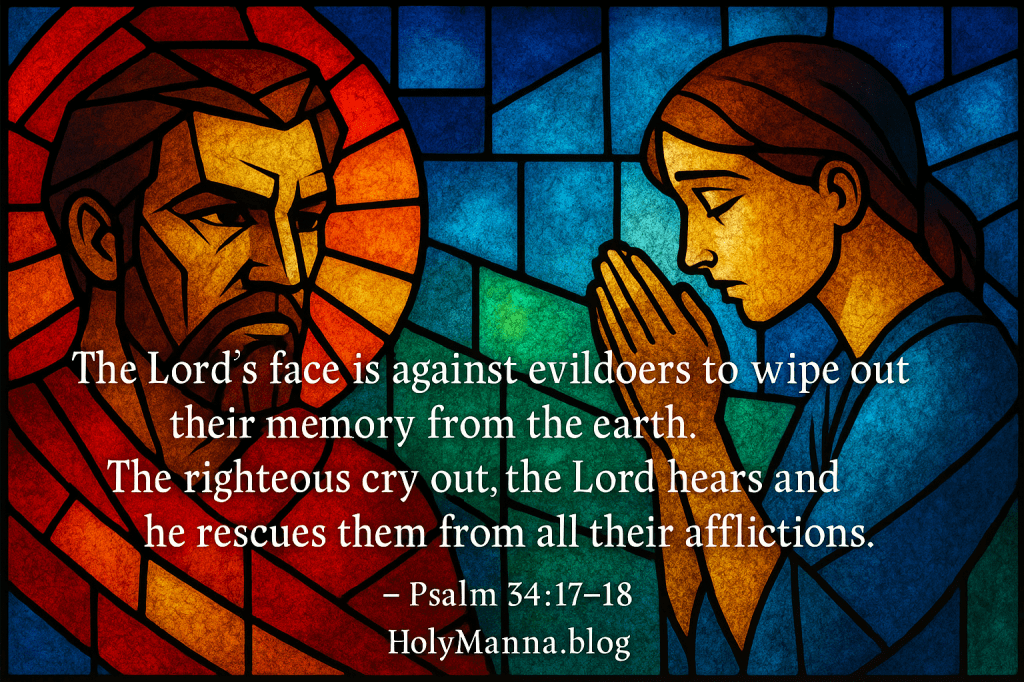
17 The Lord’s face is against evildoers
to wipe out their memory from the earth.
18 The righteous cry out, the Lord hears
and he rescues them from all their afflictions.
19 The Lord is close to the brokenhearted,
saves those whose spirit is crushed.
23 The Lord is the redeemer of the souls of his servants;
and none are condemned who take refuge in him.
Detailed Exegesis
Verse 2 – “I will bless the Lord at all times; his praise shall be always in my mouth.”
This verse reveals a decision of the heart. Blessing the Lord “at all times” means that praise does not depend on emotions or circumstances. The mouth that used to speak fear, complaint, or pride now becomes a place of constant worship. This is the opposite of the deceitful tongue condemned in Zephaniah 3:13. It shows a heart that has turned from self to God.
Verse 3 – “My soul will glory in the Lord; let the poor hear and be glad.”
To glory in the Lord means to boast in God rather than in personal achievements or status. The poor hear this and rejoice because it puts everyone on the same level before God. Those who have nothing find their true dignity in Him. This matches the consistent biblical preference for the poor and humble as those who are most open to God’s mercy.
Verse 6 – “Look to him and be radiant, and your faces may not blush for shame.”
Turning one’s gaze to God brings an inner radiance that replaces shame. In a world that often weaponizes shame, God lifts the faces of those who look to Him. The verse echoes the promise in Zephaniah 3:11 that shame over past rebellion will be healed when God purifies His people. The focus is not on staring at personal failures, but on looking to the Lord who restores.
Verse 7 – “This poor one cried out and the Lord heard, and from all his distress he saved him.”
The psalm becomes very personal here. The “poor one” is anyone who recognizes dependence on God. The key is not material poverty alone but spiritual poverty, the awareness of need. The Lord hears and saves, which anticipates the way Jesus listens to the cries of sinners in the Gospel and brings real freedom.
Verse 17 – “The Lord’s face is against evildoers to wipe out their memory from the earth.”
God is not neutral about evil. His face, which is a symbol of His presence and favor, turns against those who stubbornly choose evil. This does not contradict mercy but highlights that unrepented injustice and hard hearts will not stand forever. It matches Zephaniah’s warning that the proud and oppressive will be removed.
Verse 18 – “The righteous cry out, the Lord hears and he rescues them from all their afflictions.”
The righteous are not people who never suffer. They are those who cry out to God in their afflictions and remain faithful to Him. The promise of rescue does not always mean immediate change of circumstances, but it guarantees that the Lord is not distant or indifferent.
Verse 19 – “The Lord is close to the brokenhearted, saves those whose spirit is crushed.”
This verse is one of the most tender in all of Psalm 34. God is not just aware of suffering, He draws close in a special way to the brokenhearted and crushed in spirit. This fits perfectly with the theme that God chooses the humble and lowly. It also prepares the heart to understand why tax collectors and prostitutes, who know their brokenness, are more ready to enter the kingdom in The Gospel of Matthew 21.
Verse 23 – “The Lord is the redeemer of the souls of his servants; and none are condemned who take refuge in him.”
The psalm ends with a strong statement of hope. God redeems not just circumstances but souls. Those who take refuge in Him are not condemned. This points forward to Christ, the Redeemer, and to the promise in Romans 8:1 that “there is now no condemnation for those who are in Christ Jesus.” The refuge of the humble heart is ultimately fulfilled in the pierced Heart of Jesus.
Teachings
This psalm reveals the inner attitude of genuine repentance: humble trust and constant praise. The Catechism of the Catholic Church teaches that Christian prayer is marked by thanksgiving and praise. It states that “praise is the form of prayer which recognizes most immediately that God is God. It lauds God for his own sake, gives him glory quite beyond what he does, but simply because he is.” (CCC 2639). That is exactly what happens when the psalmist blesses the Lord at all times and glories in Him alone.
The Church also teaches that God has a special love for the poor and broken. The Catechism explains that “the Church’s love for the poor is a part of her constant tradition” and that “this love is inspired by the Gospel of the Beatitudes, of the poverty of Jesus, and of his concern for the poor” (CCC 2444). When Psalm 34 says that the Lord is close to the brokenhearted and that the poor hear and are glad, it reflects this deep tradition. The psalm is not sentimental. It is a theological statement about who God is and where He chooses to be found.
The tenderness of God toward the brokenhearted also resonates with the teaching on contrition. The Catechism says that “the human heart is heavy and hardened. God must give man a new heart. Conversion is first of all a work of the grace of God who makes our hearts return to him” (CCC 1432). The poor one who cries out in Psalm 34 is already experiencing this grace of a softened heart. That poor one has stopped pretending to be strong and instead takes refuge in the Lord.
Reflection
This psalm offers a concrete way to live today’s theme of authentic repentance and humble obedience. It shows that the path forward is not self reliance but refuge in God. The Lord does not wait for perfect performance. He draws close to the brokenhearted, listens to the cry of the poor, and shelters those who trust Him.
In daily life, this can look very simple. It might mean choosing to praise God out loud during a hard day, letting His name be in the mouth instead of constant complaint. It might mean bringing a crushed spirit honestly to prayer, without pretending to be fine. It might mean admitting spiritual poverty and asking for help rather than trying to fix everything alone. The more a person learns to glory in the Lord rather than in personal strength or reputation, the more this psalm begins to shape the heart.
Where does this psalm invite a more honest cry to God instead of silent self sufficiency?
What would it look like today to “bless the Lord at all times” in concrete situations of stress, disappointment, or fear?
How might the Lord be asking for a deeper poverty of spirit so that His closeness to the brokenhearted can be experienced in a new way?
Holy Gospel – Matthew 21:28-32
When Saying Yes Is Not Enough
In The Gospel of Matthew 21, Jesus speaks to the chief priests and elders in Jerusalem during the final week before His Passion. The tension is high. Religious leaders are questioning His authority while refusing to face their own lack of conversion. Into that atmosphere Jesus tells a simple story about a father and two sons that cuts straight through religious appearances and exposes the heart. This parable fits perfectly with today’s theme. God is not impressed by empty words or pious image. He delights in real repentance that leads to concrete obedience, even when it comes from people everyone else has written off.
Matthew 21:28-32 – New American Bible (Revised Edition)
28 “What is your opinion? A man had two sons. He came to the first and said, ‘Son, go out and work in the vineyard today.’ 29 He said in reply, ‘I will not,’ but afterwards he changed his mind and went. 30 The man came to the other son and gave the same order. He said in reply, ‘Yes, sir,’ but did not go. 31 Which of the two did his father’s will?” They answered, “The first.” Jesus said to them, “Amen, I say to you, tax collectors and prostitutes are entering the kingdom of God before you. 32 When John came to you in the way of righteousness, you did not believe him; but tax collectors and prostitutes did. Yet even when you saw that, you did not later change your minds and believe him.
Detailed Exegesis
Verse 28 – “What is your opinion? A man had two sons. He came to the first and said, ‘Son, go out and work in the vineyard today.’”
Jesus begins by inviting His listeners to judge the story themselves. The father represents God, and the vineyard echoes Israel, God’s people, as in Isaiah 5. The command is simple and clear. The relationship is personal. God’s will is not vague. It is a loving Father asking a son to work in His field today, not later.
Verse 29 – “He said in reply, ‘I will not,’ but afterwards he changed his mind and went.”
The first son begins with open disobedience. His no is blunt and disrespectful. Yet something happens in his heart. He repents, literally “changes his mind,” and actually goes to work. This is the picture of a sinner who initially resists God but later turns back and obeys. The action in the end matters more than the initial refusal.
Verse 30 – “The man came to the other son and gave the same order. He said in reply, ‘Yes, sir,’ but did not go.”
The second son sounds perfect. He is polite and compliant. Outwardly he looks like the ideal child. Yet nothing happens. There is no obedience. This is the image of a person whose religion is all words and appearance. The lips say yes while the life quietly stays in rebellion.
Verse 31 – “Which of the two did his father’s will?” They answered, “The first.” Jesus said to them, “Amen, I say to you, tax collectors and prostitutes are entering the kingdom of God before you.”
The leaders give the obvious answer. The first son, despite his initial refusal, truly does the father’s will. Jesus then delivers the shock. The notorious sinners of that time, tax collectors and prostitutes, are entering the kingdom ahead of respected religious figures. Why. Because they are like the first son. Their past no becomes a real yes through repentance and obedience.
Verse 32 – “When John came to you in the way of righteousness, you did not believe him; but tax collectors and prostitutes did. Yet even when you saw that, you did not later change your minds and believe him.”
John the Baptist preached a call to conversion that prepared the way for Jesus. The religious leaders rejected that call. Meanwhile, those considered morally ruined believed and changed. The saddest line is that they still did not “change their minds” even after seeing others convert. Their refusal to repent is not ignorance. It is a stubborn closing of the heart against grace.
Teachings
This Gospel shows the difference between external religion and interior conversion. The Church teaches that real repentance begins in the heart. The Catechism of the Catholic Church explains that “interior repentance is a radical reorientation of our whole life, a return, a conversion to God with all our heart” (CCC 1431). That is exactly what happens in the first son. His words did not start out right, but his heart eventually turned, and his life followed.
The Lord is not satisfied with a polite yes that never becomes obedience. The Catechism also teaches that “Jesus’ call to conversion and penance, like that of the prophets before him, does not aim first at outward works, but at the conversion of the heart” (CCC 1430). The second son has all the outward politeness without inner conversion. This is the danger Jesus is exposing in the religious leaders, and it remains a danger in every age.
The mention of tax collectors and prostitutes reveals the scandal of mercy. Those who know they are sinners often respond more readily to grace than those who trust in their own righteousness. The humble remnant described in Zephaniah 3 and the poor of Psalm 34 find a living example in these unlikely disciples. Saints throughout history echo this truth. Saint Augustine, who knew his own conversion story well, wrote that “there is no saint without a past, no sinner without a future”. The key difference is whether the heart eventually says yes to God in action.
Reflection
This Gospel invites a very honest look at the heart. It is possible to sound like the second son in prayer and conversation, always saying yes to God in theory, while daily choices quietly refuse His will. It is also possible to have a messy history, full of former no responses, yet become like the first son by finally changing course and stepping into obedience.
In daily life, this means letting repentance become concrete. It may involve going to Confession instead of just feeling vaguely sorry. It may mean repairing a relationship instead of only talking about forgiveness. It may mean changing a habit, media choice, or pattern of speech that has never really been surrendered to God. The Lord cares less about perfect religious image and more about a heart that is willing to change and actually follow Him.
Where does this parable reveal a pattern of saying yes to God with words but not following through with actions.
In what area of life is the Lord inviting a real change of mind that leads to concrete obedience, like the first son going into the vineyard.
How can this day become a practical step into the vineyard, even if previous days sounded like a no.
Stepping Into the Vineyard Today
Today’s readings paint a clear picture of the kind of heart God is looking for. In Zephaniah 3:1-2, 9-13, the Lord promises to purify a rebellious people and preserve a humble remnant that takes refuge in His name. In Psalm 34, that remnant finds its voice in the poor, the brokenhearted, and the crushed in spirit who cry out to God and discover that “none are condemned who take refuge in him”. Then, in The Gospel of Matthew 21:28-32, Jesus shows that it is not the polished yes that matters most, but the repentant heart that finally gets up and does the Father’s will.
Together, these passages remind every disciple that God is not looking for perfect performance or flawless history. He looks for honesty, humility, and real conversion. The first son in the parable, the poor one in Psalm 34, and the humble remnant in Zephaniah all share the same secret. They know their need, they turn back, and they entrust themselves to the Lord. That is where peace, radiance, and true freedom begin.
A simple call to action emerges. Let the Lord move the heart from lip service to living obedience. Let praise replace complaint. Let confession replace excuses. Let trust replace self reliance. Even one small act of concrete obedience today can be a real step into the Father’s vineyard, right where He is already waiting with mercy and strength.
Where is the Lord inviting a move from saying the right things to actually doing His will in a specific, concrete way today.
What would it look like, in this season, to take refuge in the name of the Lord with the same trust as the poor, the brokenhearted, and the repentant sinners who hear His voice and follow.
Engage with Us!
Share your reflections in the comments below and let these readings stir a real, living conversation with God in your heart.
- Where does the message of a humble remnant in Zephaniah 3:1-2, 9-13 challenge patterns of pride, self reliance, or resistance to God’s correction in your life, and how might the Lord be inviting you to take more deliberate refuge in His name today.
- How does Psalm 34:2-3, 6-7, 17-19, 23 speak into your current struggles or anxieties, and what would it look like in a concrete way for you to “bless the Lord at all times” and trust that He is close to your broken heart and ready to redeem your soul.
- In The Gospel of Matthew 21:28-32, which son do you resemble more in this season of life, and what specific step could you take today to move from words into action and to let your repentance become real obedience in the Father’s vineyard.
May these questions help shape not just thoughts but choices. Go forward with courage, live a life of faith, and let every word, decision, and action be filled with the love and mercy that Jesus has taught, so that His light shines through everything that is done.
Sacred Heart of Jesus, we trust in You!
Immaculate Heart of Mary, pray for us!
Saint Michael the Archangel, defend us in battle!
Follow us on YouTube, Instagram and Facebook for more insights and reflections on living a faith-filled life.

 Holy Manna!
Leave a comment