Monday of the Third Week of Advent – Lectionary: 187
Letting God Unveil Our Eyes
There are days in Advent when the readings feel like a quiet spiritual eye exam, and today is one of them. The Word of God gently asks whether hearts are really recognizing the Messiah’s authority or just looking right past Him.
In Numbers 24:2-7, 15-17, Balaam stands on a hillside in Moab, hired to curse Israel, yet the Spirit of God opens his eyes. He becomes “the man whose eye is true” and foretells a mysterious ruler, saying “A star shall advance from Jacob, and a scepter shall rise from Israel.” This prophecy, given through a reluctant outsider, points forward to the royal authority of Christ and shows that God’s plan cannot be blocked by human schemes.
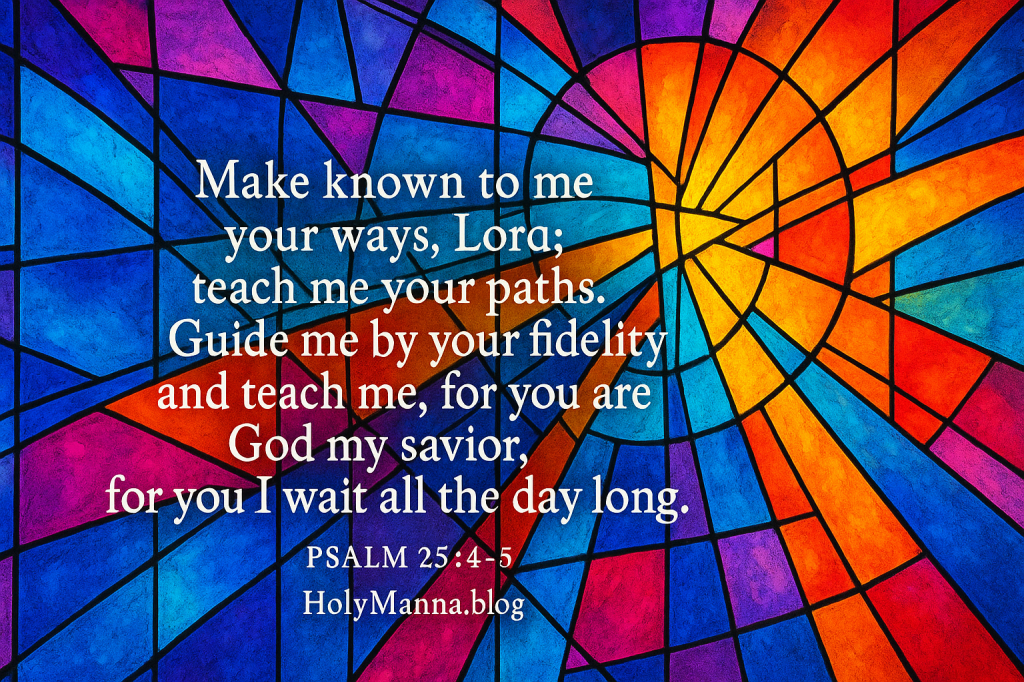
Psalm 25:4-9 gives the interior posture that matches this revelation. Instead of resisting, the psalmist begs, “Make known to me your ways, Lord; teach me your paths.” The Lord is described as “good and upright”, the one who “guides the humble in righteousness, and teaches the humble his way.” True vision comes not from sharp intellect but from humble hearts that let God lead.
In Matthew 21:23-27, the chief priests and elders confront Jesus in the temple and challenge His authority. They debate John the Baptist in terms of political fallout instead of eternal truth. They know the options, but they refuse to choose, so they settle for “We do not know.” Their problem is not a lack of information but a lack of honesty and humility before God.
Together, these readings invite a simple but piercing examination: Is the heart approaching Jesus like Balaam with eyes opened by God, like the psalmist asking to be taught, or like the religious leaders protecting their status at all costs? Advent is a graced time to let the Lord unveil spiritual blindness, to welcome the true Star and Scepter from Jacob, and to let His authority reshape choices, desires, and daily life.
First Reading – Numbers 24:2-7, 15-17
Prophecy With Eyes Unveiled
This reading from Numbers 24:2-7, 15-17 places Balaam, a non Israelite seer, on the heights of Moab looking down on Israel’s encampment. Hired by King Balak to curse Israel, Balaam instead blesses them under the influence of the Spirit of God. In a culture where nations believed in many local gods and relied on diviners to manipulate spiritual forces, this moment shows that the God of Israel alone holds true authority over history and destiny. Balaam’s oracles point beyond his own time to a future king, described as a star and a scepter, hinting at the coming Messiah. This fits today’s theme of spiritual sight and authority, because Balaam becomes the man with unveiled eyes who recognizes what God is doing, while many in Israel’s future will struggle to recognize the very King these words promise.
Numbers 24:2-7, 15-17
New American Bible (Revised Edition)
2 When Balaam looked up and saw Israel encamped, tribe by tribe, the spirit of God came upon him, 3 and he recited his poem:
The oracle of Balaam, son of Beor,
the oracle of the man whose eye is true,
4 The oracle of one who hears what God says,
and knows what the Most High knows,
Of one who sees what the Almighty sees,
in rapture and with eyes unveiled:
5 How pleasant are your tents, Jacob;
your encampments, Israel!
6 Like palm trees spread out,
like gardens beside a river,
Like aloes the Lord planted,
like cedars beside water;
7 Water will drip from their buckets,
their seed will have plentiful water;
Their king will rise higher than Agag
and their dominion will be exalted.
15 Then he recited his poem:
The oracle of Balaam, son of Beor,
the oracle of the man whose eye is true,
16 The oracle of one who hears what God says,
and knows what the Most High knows,
Of one who sees what the Almighty sees,
in rapture and with eyes unveiled.
17 I see him, though not now;
I observe him, though not near:
A star shall advance from Jacob,
and a scepter shall rise from Israel,
That will crush the brows of Moab,
and the skull of all the Sethites,
Detailed Exegesis
Verse 2 – “When Balaam looked up and saw Israel encamped, tribe by tribe, the spirit of God came upon him,”
Balaam does not speak from his own insight. The Spirit of God takes the initiative and turns his gaze toward the ordered tribes of Israel, showing that the blessing flows from God’s plan and not from human manipulation.
Verse 3 – “and he recited his poem: The oracle of Balaam, son of Beor, the oracle of the man whose eye is true,”
Balaam introduces himself as one whose eye is true, meaning his vision has been corrected by God. Authentic prophecy is described as a matter of truthful sight, not clever speech.
Verse 4 – “The oracle of one who hears what God says, and knows what the Most High knows, of one who sees what the Almighty sees, in rapture and with eyes unveiled:”
This verse highlights the humility of a prophet who listens, hears, and sees only because God allows it. The phrase “eyes unveiled” anticipates the fuller revelation of Christ, who opens spiritual eyes to see the Father’s will.
Verse 5 – “How pleasant are your tents, Jacob; your encampments, Israel!”
Balaam speaks admiration over Israel’s dwelling places. The beauty of the tents reflects God’s favor and presence among His people, even while they are still in the wilderness.
Verse 6 – “Like palm trees spread out, like gardens beside a river, like aloes the Lord planted, like cedars beside water;”
The imagery of water, gardens, and trees symbolizes life, stability, and fruitfulness. Israel’s flourishing is rooted in God’s own planting and care, not in military might or political advantage.
Verse 7 – “Water will drip from their buckets, their seed will have plentiful water; their king will rise higher than Agag and their dominion will be exalted.”
Abundance of water signifies blessing and fertility. The mention of a king higher than Agag, a pagan ruler, points to a future royal line in Israel that will surpass surrounding powers, hinting ultimately toward the kingship fulfilled in Christ.
Verse 15 – “Then he recited his poem: The oracle of Balaam, son of Beor, the oracle of the man whose eye is true,”
The repetition emphasizes Balaam’s prophetic identity as one whose vision has been purified. This literary echo signals the importance of what follows.
Verse 16 – “The oracle of one who hears what God says, and knows what the Most High knows, of one who sees what the Almighty sees, in rapture and with eyes unveiled.”
The text again stresses that Balaam’s knowledge is a gift. True authority to speak about God comes from listening to Him, not from personal power or reputation.
Verse 17 – “I see him, though not now; I observe him, though not near: A star shall advance from Jacob, and a scepter shall rise from Israel, that will crush the brows of Moab, and the skull of all the Sethites,”
Balaam sees a future figure, distant in time yet certain. The star and scepter are royal images that the Church has always connected with Christ. The crushing of Moab and the Sethites symbolizes the Messiah’s ultimate victory over the enemies of God and over every power that opposes His reign.
Teachings
This passage shows how God can use even a pagan seer to proclaim truth, underlining that divine revelation is God’s free initiative. The Church sees in this oracle a prophecy of Christ’s coming kingship. The Catechism links Old Testament prophecies of the Messiah with the coming of Jesus, teaching in CCC 712 that “The characteristics of the awaited Messiah begin to be revealed in the ‘Book of Emmanuel’ (Isaiah 7 12), particularly in the first two verses of chapter 11: ‘There shall come forth a shoot from the stump of Jesse, and a branch shall grow out of his roots.’” This same pattern of promise, sign, and royal imagery appears here in Numbers 24.
The image of the star from Jacob has also been connected with the star of Bethlehem. The Catechism in CCC 528 states that “The Epiphany is the manifestation of Jesus as Messiah of Israel, Son of God and Savior of the world. The great feast of Epiphany celebrates the adoration of Jesus by the wise men (magi) from the East.” The magi are guided by a star, which echoes Balaam’s prophecy and highlights how even Gentiles are led to recognize the true King.
Saint Augustine often emphasized that the Old Testament conceals what the New Testament reveals. His famous idea that the Old is the New concealed and the New is the Old revealed helps believers see Balaam’s oracle as a hidden announcement of Christ’s authority and victory. The prophetic description of a king whose dominion is exalted speaks to the universal kingship of Jesus, who reigns not only over Israel but over every nation and every human heart that accepts His rule.
Reflection
This reading offers a gentle but direct question for the heart: Is there a willingness to let God unveil spiritual eyes, even if that means surrendering control to His authority? Balaam, an outsider, ends up seeing more clearly than many who belonged to the chosen people. That contrast invites an honest examination of whether familiarity with faith has led to deeper trust or quiet resistance.
One practical step is to begin and end the day with a short, sincere act of surrender to Christ’s kingship, asking Him to guide decisions, desires, and reactions. Another step is to approach Scripture with the humility of Balaam as described here, asking the Holy Spirit to make hearts attentive, not just curious.
Where might the Lord be inviting a deeper trust in His plan rather than in personal strategies or self protection?
What part of daily life needs to be handed over again to the “star” and “scepter” from Jacob, recognizing that Christ alone has the authority to bless, correct, and lead?
Allowing this prophecy to shape prayer today helps faith move from distant admiration of a future king to real obedience to the living Christ who still speaks with authority.
Responsorial Psalm – Psalm 25:4-9
Learning To Walk Under God’s Authority
Psalm 25 is a heartfelt prayer of someone who knows that guidance, forgiveness, and true wisdom all come from God. In Israel’s world, many nations trusted in idols, political alliances, or sheer human strategy. This psalm stands out as a confession that the only safe path is the Lord’s path. It fits today’s theme beautifully because it shows the interior posture needed to recognize Christ’s authority. While Numbers 24 reveals a King who is coming, Psalm 25 shows the kind of heart that welcomes that King with humility and trust. The psalmist is not demanding answers on personal terms but asking to be taught, corrected, and led.
Psalm 25:4-9
New American Bible (Revised Edition)
4 Make known to me your ways, Lord;
teach me your paths.
5 Guide me by your fidelity and teach me,
for you are God my savior,
for you I wait all the day long.
6 Remember your compassion and your mercy, O Lord,
for they are ages old.
7 Remember no more the sins of my youth;
remember me according to your mercy,
because of your goodness, Lord.
8 Good and upright is the Lord,
therefore he shows sinners the way,
9 He guides the humble in righteousness,
and teaches the humble his way.
Detailed Exegesis
Verse 4 – “Make known to me your ways, Lord; teach me your paths.”
The psalmist asks not simply for help with immediate problems but for insight into God’s ways and paths. This is a request to see reality from God’s perspective and to walk in a way of life shaped by His wisdom. It echoes the need for spiritual sight that runs through today’s readings.
Verse 5 – “Guide me by your fidelity and teach me, for you are God my savior, for you I wait all the day long.”
God’s fidelity is the foundation of this trust. The psalmist calls God “my savior,” recognizing that rescue and direction come from the Lord, not from personal cleverness. Waiting “all the day long” describes a steady, patient dependence instead of quick fixes.
Verse 6 – “Remember your compassion and your mercy, O Lord, for they are ages old.”
Here the prayer leans on God’s own character. Compassion and mercy are not new reactions but ancient, constant traits of the Lord. The psalmist appeals to the unchanging goodness of God, which is the same goodness fully revealed in Christ.
Verse 7 – “Remember no more the sins of my youth; remember me according to your mercy, because of your goodness, Lord.”
The psalmist knows personal sin and does not hide it. Instead of pleading innocence, there is an appeal to mercy. The desire is that God’s memory would be shaped not by past sins but by His own goodness and covenant love.
Verse 8 – “Good and upright is the Lord, therefore he shows sinners the way,”
Because the Lord is good and upright, He does not abandon sinners in confusion. His goodness moves Him to show them “the way,” which includes conversion, instruction, and gentle correction. Divine authority is presented as healing, not crushing.
Verse 9 – “He guides the humble in righteousness, and teaches the humble his way.”
Humility becomes the key condition for receiving guidance. Those who admit their need and bow under God’s authority are the ones who are taught. Righteousness here is not self-achievement but right relationship with God, formed by His teaching.
Teachings
This psalm highlights that guidance from God is relational. The psalmist asks to be taught because the Lord is known as compassionate and faithful. The Catechism expresses the same truth in CCC 1696: “The way of Christ ‘leads to life’; a contrary way ‘leads to destruction.’” The request, “teach me your paths”, is really a plea to walk the way of Christ that leads to life.
The emphasis on humility and teachability connects with the Church’s teaching on the moral life and the formation of conscience. CCC 1783 teaches: “Conscience must be informed and moral judgment enlightened. A well formed conscience is upright and truthful.” The psalmist is modeling that desire for an enlightened conscience by asking God to teach, guide, and correct.
The admission of past sins in verse 7 resonates with the Church’s understanding of repentance and mercy. CCC 1847 states: “‘God created us without us: but he did not will to save us without us.’ To receive his mercy, we must admit our faults.” The psalmist admits youthful sins and throws himself on God’s goodness, which anticipates the full outpouring of mercy in Christ and the sacrament of Reconciliation.
Reflection
This psalm invites a simple but deep shift: instead of asking God to bless personal plans, it encourages a heart that asks to be taught and led. The repeated cry to “teach me” and “guide me” fits perfectly with Advent, which is a season of learning to recognize and welcome Christ’s authority in real, concrete ways.
One practical way to live this out is to begin prayer by using the words of verse 4 and verse 5, asking the Lord to make His ways known before any decisions or worries are laid out. Another step is to bring past sins and regrets honestly to God, especially in Confession, asking to be remembered according to His mercy rather than personal failures.
Where might pride or self reliance be blocking the ability to hear God’s guidance right now?
What would it look like this week to live as someone who truly believes that the Lord is “good and upright” and that His paths, even when difficult, always lead toward life and peace?
Holy Gospel – Matthew 21:23-27
When Human Calculations Clash With Divine Authority
In Matthew 21:23-27, Jesus is in the temple during the final days before His Passion. He has just cleansed the temple and welcomed the praise of children, which deeply unsettles the religious leaders. In that world, the temple was the heart of Jewish worship and identity, and the chief priests and elders saw themselves as guardians of that sacred order. When Jesus teaches and acts with sovereign freedom, they feel their authority threatened.
This scene fits today’s theme perfectly. Numbers 24 shows a pagan seer whose eyes are opened to God’s plan. Psalm 25 reveals the humble heart that asks to be taught God’s ways. Here, by contrast, the leaders know enough to recognize the implications of John the Baptist and Jesus, yet they refuse to surrender. Instead of truly seeking truth, they calculate how to protect their positions. The Gospel exposes the danger of spiritual blindness that comes not from ignorance but from a refusal to bow before Christ’s authority.
Matthew 21:23-27
New American Bible (Revised Edition)
23 When he had come into the temple area, the chief priests and the elders of the people approached him as he was teaching and said, “By what authority are you doing these things? And who gave you this authority?” 24 Jesus said to them in reply, “I shall ask you one question, and if you answer it for me, then I shall tell you by what authority I do these things. 25 Where was John’s baptism from? Was it of heavenly or of human origin?” They discussed this among themselves and said, “If we say ‘Of heavenly origin,’ he will say to us, ‘Then why did you not believe him?’ 26 But if we say, ‘Of human origin,’ we fear the crowd, for they all regard John as a prophet.” 27 So they said to Jesus in reply, “We do not know.” He himself said to them, “Neither shall I tell you by what authority I do these things.
Detailed Exegesis
Verse 23 – “When he had come into the temple area, the chief priests and the elders of the people approached him as he was teaching and said, ‘By what authority are you doing these things? And who gave you this authority?’”
The leaders confront Jesus publicly in the temple, the very place where God’s presence was honored. Their question sounds religious, but it is really about control. Instead of asking whether His works are from God, they ask who authorized Him, revealing their attachment to human approval and institutional power.
Verse 24 – “Jesus said to them in reply, ‘I shall ask you one question, and if you answer it for me, then I shall tell you by what authority I do these things.’”
Jesus responds by shifting the focus from His credentials to their honesty. He is not dodging the issue. He is testing whether they are capable of recognizing and admitting truth when it is placed in front of them.
Verse 25 – “‘Where was John’s baptism from? Was it of heavenly or of human origin?’ They discussed this among themselves and said, ‘If we say “Of heavenly origin,” he will say to us, “Then why did you not believe him?”’”
John’s baptism is the key. If it was from heaven, then John’s testimony to Jesus must be taken seriously. The leaders see that admitting this would expose their lack of faith and force them to change. They calculate consequences instead of submitting to what they know deep down.
Verse 26 – “‘But if we say, “Of human origin,” we fear the crowd, for they all regard John as a prophet.’”
Here their fear is revealed. They are not guided by love of truth or reverence for God but by anxiety about public opinion. They fear the crowd more than they fear God. This shows how concern for human approval can paralyze obedience.
Verse 27 – “So they said to Jesus in reply, ‘We do not know.’ He himself said to them, ‘Neither shall I tell you by what authority I do these things.’”
Their final answer is not genuine ignorance but a chosen evasion. They refuse to commit. Jesus then withholds further explanation because they have already rejected the light they were given. When hearts refuse the grace to be honest, further revelation becomes fruitless.
Teachings
This Gospel reveals that faith is not just about having enough information but about having a heart that is willing to submit to truth. The leaders have encountered John, heard Jesus, and seen His works, yet cling to control. The Catechism in CCC 581 notes how Jesus’ authority goes beyond that of the teachers of the Law, stating that “Jesus did not abolish the Law of Sinai, but rather fulfilled it with such perfection that he revealed its ultimate meaning.” His authority is divine, not borrowed from human structures.
The refusal of the leaders points to the mystery of unbelief. CCC 2089 speaks of incredulity as “the neglect of revealed truth or the willful refusal to assent to it.” The chief priests and elders embody that willful refusal. They see that admitting John’s divine mission would demand conversion, so they avoid the question.
Saint Augustine often warned about a hardness of heart that hears the truth but does not want to live it. For him, real understanding comes when the heart loves the truth enough to obey it. This scene in The Gospel of Matthew shows the opposite: minds that see the logic, yet hearts that will not surrender.
Reflection
This passage gently but clearly asks a hard question: Is there any area of life where the truth of Christ is recognized but not obeyed because it feels too costly? The religious leaders were not confused. They were divided inside, pulled between what they knew and what they wanted to keep.
A practical step is to bring one concrete area of resistance to prayer and ask the Lord for the grace to move from calculation to obedience. Another step is to examine whether decisions are shaped more by fear of what others will think or by desire to please God.
Where is there a temptation to answer like the leaders with a safe “We do not know,” instead of honestly admitting what God is asking?
How might daily life change if Christ’s authority in the home, workplace, relationships, and moral choices were trusted as loving and good rather than threatening?
Letting this Gospel sink in can move hearts from cautious debate to humble surrender, so that Christ’s true authority becomes a source of freedom and peace rather than something to resist.
Letting Christ Teach the Heart
Today’s readings draw a clear line between two kinds of hearts. There is the heart that lets God open its eyes, and there is the heart that keeps things safely under control. In Numbers 24:2-7, 15-17, Balaam becomes the unlikely prophet with “eyes unveiled”, allowed to glimpse the royal “star” and “scepter” rising from Israel. In Psalm 25:4-9, the psalmist shows what that open heart looks like in daily life, praying “Make known to me your ways, Lord; teach me your paths.” In Matthew 21:23-27, the chief priests and elders show the opposite reaction, protecting status and reputation instead of surrendering to the authority of Jesus.
The message is simple and challenging at the same time. Christ is the true King. His authority is real, loving, and life giving. He still comes close and still asks for trust. Balaam’s vision, the psalmist’s humility, and the leaders’ resistance all stand in front of the soul as a kind of mirror. Which pattern is closest to the way Christ is being treated right now?
A concrete way forward is to take the psalm’s words and make them a quiet prayer throughout the day: “Guide me by your fidelity and teach me, for you are God my savior.” Let that line accompany choices, conversations, and moments of pressure.
Where can a step be taken today to listen more honestly, obey more quickly, or repent more humbly before the Lord’s gentle authority?
How might life change if Christ’s kingship over thoughts, habits, and desires were welcomed the way Israel’s blessing was welcomed in Numbers 24, rather than questioned like in Matthew 21:23-27?
Advent is a gift of time to let Christ’s light sharpen spiritual vision. As these readings sink in, the heart can move from cautious distance to real discipleship, trusting that the One who teaches, corrects, and leads is always good, always upright, and always merciful.
Engage with Us!
Share your reflections in the comments below and let these readings shape real conversation and real change of heart.
- First Reading – Numbers 24:2-7, 15-17: Where might God be trying to “unveil your eyes” so that you recognize Christ as the true “star” and “scepter” in your life instead of clinging to your own plans or control?
- Responsorial Psalm – Psalm 25:4-9: What would it look like this week to honestly pray “Make known to me your ways, Lord; teach me your paths” and then actually let that prayer guide one specific decision or habit?
- Holy Gospel – Matthew 21:23-27: Is there any area where the response to Jesus looks a bit like “We do not know”, avoiding the truth because the cost feels too high, and how can that place be opened to His authority with trust instead of fear?
Walk forward with courage, choosing each day to live a life of faith, and strive to do everything with the love and mercy that Jesus has taught and continues to pour into every heart that turns to Him.
Sacred Heart of Jesus, we trust in You!
Immaculate Heart of Mary, pray for us!
Saint Michael the Archangel, defend us in battle!
Follow us on YouTube, Instagram and Facebook for more insights and reflections on living a faith-filled life.

 Holy Manna!
Leave a comment