A Flame That Purifies
Saint John of the Cross stands as one of the most profound mystics in Christian history, a Doctor of the Church whose writings on the spiritual life continue to shape Catholic teaching today. His poetry and theological works explore the depths of the soul’s journey toward God, especially through purification and divine intimacy. He is best known for his teachings on the Dark Night of the Soul, a phrase taken from his own writing that describes the painful yet transformative purification God uses to draw the soul into perfect union with Himself. His life, marked by humility, suffering, brilliance, and holiness, invites believers to trust God’s work even in the silence and shadows.
Roots of a Mystic
John of the Cross was born in 1542 in Fontiveros, a small town in Spain marked by poverty and simplicity. His father, Gonzalo, had married beneath his noble social standing and was disowned by his wealthy family, leaving the household in financial hardship. After his father’s death, young John was raised primarily by his mother Catalina, a woman of deep faith and resilience who taught her children to cling to God in all things. These early years shaped the saint’s compassion for the poor and his deep awareness of human suffering.
John received an education from the Jesuits and later joined the Carmelites, drawn by a desire to serve God with total dedication. He took the religious name “John of St. Matthias” and would later become “John of the Cross” after embracing a life of radical spiritual poverty. His path dramatically changed when he met Saint Teresa of Avila, the great reformer of Carmel. She recognized his extraordinary holiness and invited him to join her in the reform of the Carmelite Order. This reform sought a return to contemplation, silence, poverty, obedience, and authentic prayer. John would become one of its most essential architects and defenders.
He became known for his spiritual wisdom, his depth of prayer, and his ability to guide souls into deeper union with God. And while not known for performing public miracles like many other saints, his spiritual direction transformed countless lives and his writings continue to convert hearts even today.
Among his most celebrated teachings is his poetic line: “In the evening of life, we will be judged on love alone.” This single sentence expresses the essence of his spirituality. What matters most to God is love, purified and perfected in faithful surrender.
Fire in the Night
Saint John of the Cross lived a life marked by contemplation, self-denial, and an unshakeable desire to bring souls back to God. His collaboration with Saint Teresa of Avila helped ignite one of the most important reforms in Church history. Together they founded the Discalced Carmelites, returning the order to a simple, prayer-centered existence.
John’s teachings describe the soul’s ascent toward God through detachment from sin and even from good but lesser things. He explained how God uses both joys and trials to purify the heart so that nothing stands between the soul and His divine love. His masterpieces The Spiritual Canticle, The Ascent of Mount Carmel, The Dark Night, and The Living Flame of Love remain pillars of Catholic mystical theology and are still required reading in seminaries and religious formation programs.
His miracles were often hidden, expressed in the extraordinary spiritual fruits that flowed from his guidance. People who sought him in confession or spiritual direction frequently left converted, strengthened in virtue, or healed interiorly. His gentle wisdom pierced souls, and his ability to explain God’s movements in the heart was seen by many as a divine gift. His poetry, written during times of profound suffering, demonstrates a grace far beyond natural human capacity. Many describe these works themselves as miracles of the Holy Spirit.
Chains, Darkness, and Triumph
John’s commitment to reform was not welcomed by all. His fidelity to Saint Teresa’s vision caused tension within the Carmelite Order, leading to fierce opposition. In 1577, he was kidnapped by opponents of the reform and imprisoned in a tiny, dark cell in Toledo. His captors imposed harsh penances, starvation, and isolation. In that brutal confinement, John experienced some of the most intense suffering of his life. This period of darkness would later inspire his writings on the Dark Night, a spiritual experience in which God uses trials to strip the soul of attachments so it may cling only to Him.
Despite the cruelty he faced, John responded with forgiveness and trust in God. It was during this time of extreme deprivation that he composed some of his most beautiful and mystical poetry, including the opening lines of the Spiritual Canticle. His ability to create such profound spiritual literature from a place of anguish is often seen as a sign of divine inspiration.
After months of imprisonment, he escaped in a daring and miraculous way, climbing out of a small window and descending by knotted sheets in the middle of the night. His escape preserved his life and allowed him to continue the reform work that would eventually bring spiritual renewal to Carmelites around the world.
John did not die a martyr by blood, but he is often considered a martyr of the interior life. His sufferings, endured with unwavering love, became a witness to the transforming power of grace.
Light After the Night
Saint John of the Cross died peacefully in 1591 at the age of 49, offering his final sufferings with serenity and joy. After his death, reports of miraculous healings began to spread. Many pilgrims came to his tomb seeking physical and spiritual healing, and numerous cures were attributed to his intercession. His relics became a source of devotion across Spain, especially in Úbeda and Segovia, where he spent much of his ministry.
The Church canonized him in 1726 and named him a Doctor of the Church in 1926, recognizing the unique depth and clarity of his mystical theology. Today, shrines dedicated to him draw thousands of visitors each year who desire a deeper relationship with God through contemplation and purification of the heart.
His writings continue to offer spiritual healing, insight, and freedom. Many believers testify that reading The Dark Night or The Living Flame of Love opened their eyes to God’s presence in trials they once saw as meaningless. His legacy lives on not just through miracles but through the millions of souls drawn closer to Christ through his teachings.
A Heart Set Ablaze
Saint John of the Cross teaches that God’s work in the soul is often hidden, slow, and mysterious, yet always driven by love. His life reminds believers that trials are not signs of abandonment but invitations to deeper trust. He encourages the faithful to see every moment, even painful ones, as opportunities to grow closer to Christ.
His constant message echoes through time: God desires to unite Himself with every soul. That union requires purification, detachment from sin, and surrender to the movements of grace. Readers who struggle with dryness in prayer or seasons of spiritual confusion can take comfort in knowing that God often works most powerfully when He seems most silent.
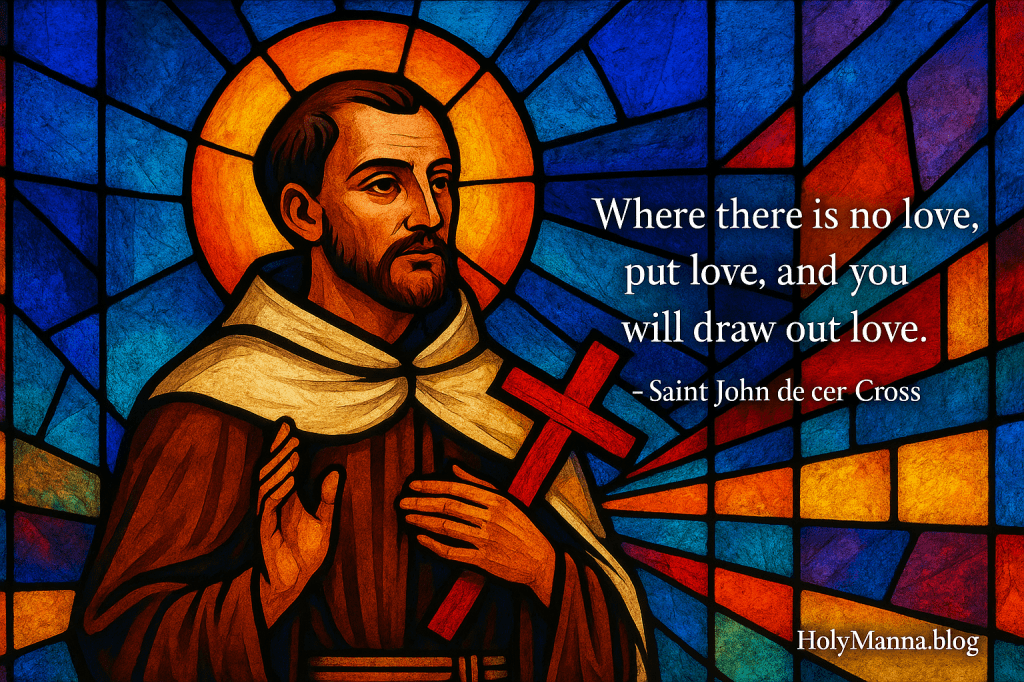
His famous teaching captures the heart of Christian life: “Where there is no love, put love, and you will draw out love.” This is a practical invitation to love actively, sacrificially, and faithfully. It applies to homes, workplaces, parishes, and relationships. Daily life becomes holy when every action is rooted in genuine charity.
Engage with Us!
Share your thoughts and reflections in the comments below and join the conversation about this extraordinary Doctor of the Church.
- How does Saint John of the Cross challenge your understanding of suffering and spiritual growth?
- Which of his teachings or quotations speaks most deeply to your heart today?
- What areas of your life is God inviting you to purify or surrender so you can draw closer to Him?
- How can you practice love intentionally, especially when situations feel difficult or confusing?
May the example of Saint John of the Cross inspire a deeper trust in God’s hidden work, a stronger commitment to prayer, and a renewed desire to love with the same mercy and faithfulness that Jesus taught us.
Saint John of the Cross, pray for us!
Follow us on YouTube, Instagram and Facebook for more insights and reflections on living a faith-filled life.

 Holy Manna!
Leave a comment