Thursday of the Second Week of Advent – Lectionary: 184
Grasped By God And Drawn Into His Kingdom
There is a quiet moment in every soul where the question rises: Is God really close, or is this struggle just mine to carry? Today’s readings answer that question with a firm and tender reassurance. The Lord is not standing far off, watching from a distance. He is the One who reaches down, takes His people by the hand, and invites them into a Kingdom that is both deeply comforting and radically demanding.
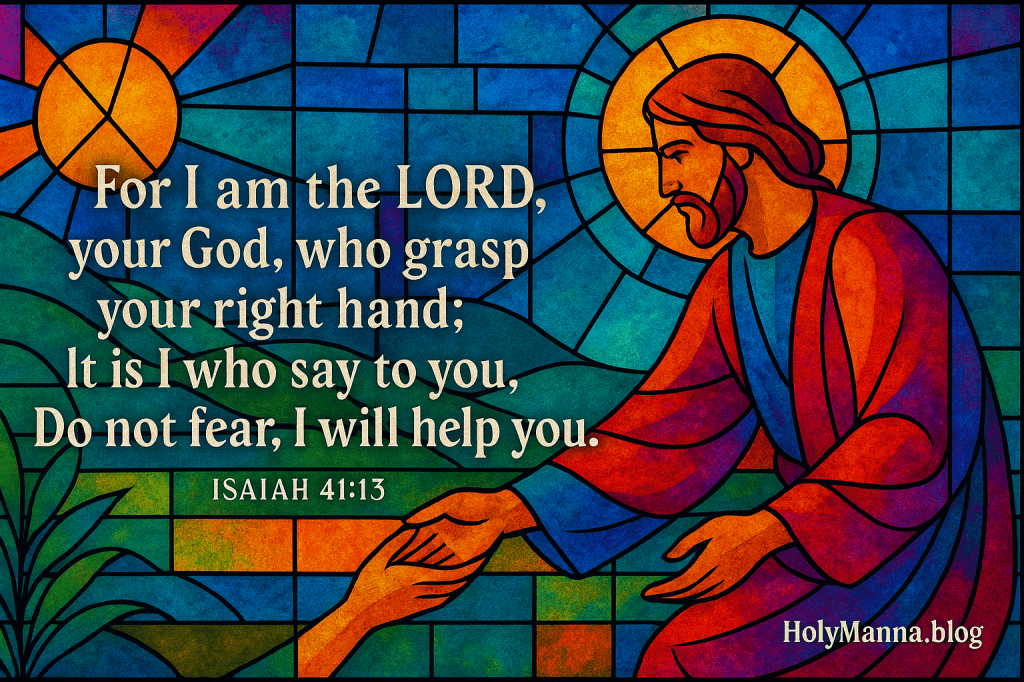
In Isaiah 41:13-20, God speaks to Israel in a time marked by weakness, exile, and fear. Israel feels small, fragile, and insignificant, and God does not deny that experience. Instead, He steps right into it. He says, “For I am the Lord, your God, who grasp your right hand; It is I who say to you, Do not fear, I will help you”. The imagery is both humbling and stunning. A people called a “worm” and a “maggot” are not discarded; they are transformed. God promises to make them like a sharp new threshing sledge, strong enough to crush mountains, and to turn their desert into flowing waters and lush forests. In a world that often celebrates self sufficiency and visible strength, this reading reminds everyone that true power begins when God takes hold of a very small and needy people.
The responsorial psalm, Psalm 145, is like the song that rises up once a heart finally realizes what God has done. It proclaims that the Lord is “gracious and merciful, slow to anger and abounding in mercy”, that He is “good to all” and “trustworthy in all his words”. The psalm pulls the focus away from human instability and points it toward the steady reign of God. His Kingdom is not temporary or fragile. Psalm 145 says His reign is “for all ages” and His dominion is “for all generations”. The same God who grasped Israel’s hand in exile is the God who still rules and sustains every believer today. The praise of the psalm is not abstract; it grows from concrete experiences of rescue, provision, and mercy.
Then the Gospel, The Gospel of Matthew 11:11-15, shows how all of this comes to a dramatic turning point in salvation history. Jesus calls John the Baptist the greatest among those born of women and then drops a line that is almost shocking: “yet the least in the kingdom of heaven is greater than he”. With John, a new moment has arrived. All the prophets and the law pointed forward to this time, and now the Kingdom is breaking in with intensity. Jesus says that from the days of John the Baptist, the Kingdom of heaven suffers violence and the violent are taking it by force. This is not a call to physical aggression but to spiritual urgency. God has already moved toward His people, grasped their hand, and opened the way. Now the question becomes: Will the heart respond with the kind of bold, decisive faith that takes the Kingdom seriously?
Taken together in this Advent season, these readings reveal a powerful pattern. God comes first, tenderly and powerfully, to a weak and thirsty people. He shows His greatness and goodness in real, transforming ways. Then He invites them into something far bigger than comfort: the dynamic, demanding life of His Kingdom. Today is a reminder that no one is too small, too tired, or too late for God to grasp by the hand, lift up, and draw into His royal, merciful, and everlasting reign.
First Reading – Isaiah 41:13-20
From Desolation To Divine Strength
The prophet Isaiah 41:13-20 speaks into a moment of deep vulnerability for Israel. God’s people are living with the memory and reality of exile, political humiliation, and spiritual discouragement. Surrounded by powerful empires and haunted by their own past infidelities, they do not feel mighty or chosen. They feel small, defeated, and forgotten. Into that fragile place, the Lord reveals Himself not as a distant judge, but as the God who steps close enough to grasp their right hand and speak directly to their fear.
This passage belongs to the section of Isaiah often called the “Book of Consolation,” where God comforts His people with promises of restoration after judgment and exile. The images are intense and sometimes shocking. Israel is called a “worm” and a “maggot,” language that captures how crushed and insignificant the people feel in the face of history and their enemies. Yet this is exactly where the Lord chooses to act. He does not pretend that their situation is strong. Instead, He takes what is weak and powerless and fills it with His own strength, turning them into a “sharp, new threshing sledge” and transforming their wilderness into a lush, watered garden.
In the context of today’s theme, this reading shows the first movement of God’s action. Before calling anyone to boldness or sacrifice, the Lord comes close to a poor, thirsty people and says, “Do not fear, I will help you”. It reveals a God who does not just demand courage, but who creates it by His presence. Advent makes this especially powerful, because this same God will soon come in the flesh as the Child in Bethlehem, the One who literally enters the poverty and weakness of the world to lift it up from within.
Isaiah 41:13-20
New American Bible (Revised Edition)
13 For I am the Lord, your God,
who grasp your right hand;
It is I who say to you, Do not fear,
I will help you.
14 Do not fear, you worm Jacob,
you maggot Israel;
I will help you—oracle of the Lord;
the Holy One of Israel is your redeemer.
15 I will make of you a threshing sledge,
sharp, new, full of teeth,
To thresh the mountains and crush them,
to make the hills like chaff.
16 When you winnow them, the wind shall carry them off,
the storm shall scatter them.
But you shall rejoice in the Lord;
in the Holy One of Israel you shall glory.
17 The afflicted and the needy seek water in vain,
their tongues are parched with thirst.
I, the Lord, will answer them;
I, the God of Israel, will not forsake them.
18 I will open up rivers on the bare heights,
and fountains in the broad valleys;
I will turn the wilderness into a marshland,
and the dry ground into springs of water.
19 In the wilderness I will plant the cedar,
acacia, myrtle, and olive;
In the wasteland I will set the cypress,
together with the plane tree and the pine,
20 That all may see and know,
observe and understand,
That the hand of the Lord has done this,
the Holy One of Israel has created it.
Detailed Exegesis
Verse 13 – “For I am the Lord, your God, who grasp your right hand; It is I who say to you, Do not fear, I will help you.”
This verse is pure tenderness and power at the same time. The Lord identifies Himself personally, “I am the Lord, your God”, reminding Israel of the covenant relationship that goes back to Abraham, Moses, and the Exodus. The image of God grasping the right hand is deeply intimate, like a father guiding a child across a dangerous road. The repeated command “Do not fear” is not a harsh rebuke. It is a promise that His presence is stronger than whatever threat stands before them. The assurance “I will help you” shows that divine help is not abstract. It is concrete, personal, and timely. The Church consistently reads passages like this as signs of God’s providence, where He guides history and the life of every believer with a firm yet loving hand.
Verse 14 – “Do not fear, you worm Jacob, you maggot Israel; I will help you oracle of the Lord; the Holy One of Israel is your redeemer.”
The language here feels harsh at first. Calling Jacob a “worm” and Israel a “maggot” is not an insult in the way people throw insults around today. It is a vivid way of expressing how utterly small and powerless the people feel. Compared to the might of empires, they are like insignificant creatures in the dust. Yet the Lord speaks into that lowliness and repeats, “Do not fear”. The title “Holy One of Israel” emphasizes God’s absolute otherness and purity, but this Holy One is also their “redeemer”. In biblical terms, a redeemer is a close relative who buys back a family member from slavery or debt. God is saying that He is the family protector of Israel, willing and able to pay the cost to set them free.
Verse 15 – “I will make of you a threshing sledge, sharp, new, full of teeth, To thresh the mountains and crush them, to make the hills like chaff.”
Here the transformation begins. The same people who felt like worms and maggots are promised a new identity. God will make them like a fresh, sharp threshing tool used to separate grain from chaff. Threshing mountains is an exaggerated image that shows how overwhelming obstacles and enemies will become small and manageable under God’s power. The mountains and hills represent difficulties, injustices, or hostile nations. By God’s action, these obstacles are reduced to chaff, light and powerless in the wind. This is not a call to human brutality, but a poetic way of saying that God’s strength working in His people can overcome anything that seems impossible.
Verse 16 – “When you winnow them, the wind shall carry them off, the storm shall scatter them. But you shall rejoice in the Lord; in the Holy One of Israel you shall glory.”
The image of winnowing continues the agricultural scene. After threshing, the grain is tossed into the air so the wind can blow away the chaff. Here, it is the wind and the storm that remove the opposition, not Israel’s cleverness or strategy. The people’s role is faithful cooperation. The result is joy and worship. They “rejoice in the Lord” and “glory” in Him, not in themselves. Their victory is a reason to praise God, not their own talent or power. That is a central biblical pattern. Any authentic triumph of God’s people leads to humility, gratitude, and adoration.
Verse 17 – “The afflicted and the needy seek water in vain, their tongues are parched with thirst. I, the Lord, will answer them; I, the God of Israel, will not forsake them.”
The focus shifts from enemies and mountains to the deep human need for survival. Water is life, especially in the ancient Near Eastern setting where droughts and deserts were a real threat. The afflicted and the needy are not just spiritually poor, they are in dire physical need. They have sought relief “in vain,” which means human resources have failed them. At that moment, God speaks again with incredible tenderness. He promises to answer and not forsake them. The thirst of the poor becomes the place where the heart of God is most clearly revealed. This verse points forward to many moments in Scripture, including Jesus speaking of “living water” in The Gospel of John 4, and His cry of thirst on the Cross.
Verse 18 – “I will open up rivers on the bare heights, and fountains in the broad valleys; I will turn the wilderness into a marshland, and the dry ground into springs of water.”
God responds to thirst with abundance, not with barely enough. Rivers on bare heights and fountains in valleys are unexpected. Water usually flows downhill, but here it surges even on the heights where dryness seems guaranteed. Turning wilderness into marshland and dry ground into springs of water shows total reversal. Places that were dead become alive and fruitful. Spiritually, this points to the way God can renew a soul, a community, or even an entire culture that seems spiritually dried out. When God acts, life returns, and it is visible.
Verse 19 – “In the wilderness I will plant the cedar, acacia, myrtle, and olive; In the wasteland I will set the cypress, together with the plane tree and the pine,”
The promise continues with specific trees, many of which are associated with strength, beauty, and usefulness. Cedars are known for their durability. Olive trees provide oil for cooking, anointing, and light. Myrtle is fragrant, and cypress and pine are strong and enduring. God is not just watering the desert. He is landscaping it with beauty and purpose. The wilderness, which once symbolized chaos and danger, becomes a place of ordered life and rich variety. It is a picture of God’s grace shaping something new out of what was barren.
Verse 20 – “That all may see and know, observe and understand, That the hand of the Lord has done this, the Holy One of Israel has created it.”
This final verse reveals the ultimate goal of all this transformation. It is not simply to make Israel comfortable or secure. It is to reveal God. People are meant to “see and know, observe and understand” that this renewal is the work of the Lord’s hand. The stress falls on God as Creator. Just as He created the world from nothing, He can recreate His people and their circumstances from apparent ruin. The miracles of restoration are meant to be signs that invite faith and worship, both for Israel and for the nations watching.
Teachings
This passage from Isaiah 41 fits very closely with the way The Catechism of the Catholic Church speaks about God’s providence. The Catechism teaches that God is not a distant clockmaker who sets the world in motion and then walks away. Instead, God continuously sustains and guides creation toward its purpose. He holds everything in being and directs it with wisdom and love. The image of God grasping Israel’s right hand beautifully reflects this constant involvement. The Lord does not simply give one burst of help and then leave. He walks with His people, supports them, and leads them through history.
The reading also connects strongly with the Church’s teaching on hope. Christian hope is not naive optimism or a vague feeling that things will somehow work out. It is the confident expectation that God is faithful to His promises and will bring about what He has pledged, even when the present situation feels like a wilderness. When the Lord says, “Do not fear, I will help you”, He calls His people to a hope that looks beyond their own strength and rests on His character. That kind of hope is a theological virtue, planted by God in the heart and oriented toward eternal life, but lived out in very concrete struggles here and now.
The saints have often meditated on this kind of lowliness and divine lifting up. Many of them describe themselves as small, weak, and unworthy, yet completely confident in God’s mercy. They echo Israel’s experience in this passage. Their greatness does not come from natural ability or social power, but from allowing God to be their strength. This reading allows believers to see that pattern already at work in salvation history. God chooses a humiliated people, transforms them from “worm” to “threshing sledge,” and does it so that every observer can recognize that the Holy One of Israel is the true author of the story.
There is also an important spiritual lesson in the way God turns deserts into watered gardens and plants trees in wastelands. Throughout the tradition of the Church, the desert has been a symbol of both trial and encounter. The people of Israel passed through the desert in the Exodus. The prophets often speak from or into wilderness places. Jesus Himself is led by the Spirit into the desert in The Gospel of Matthew 4 to fast and be tempted. In this reading, God shows that He does not simply remove the desert. He transforms it. The very place of emptiness, struggle, and apparent abandonment becomes the place where life begins to flourish again through His grace.
Reflection
This reading is incredibly practical for daily life because almost everyone knows what it feels like to be small and overwhelmed. There are seasons when careers, finances, health, or relationships feel like towering mountains. There are moments when the heart feels like a dry desert where prayer is difficult and hope seems thin. Into that very real experience, God speaks the same words that He spoke to Israel. “Do not fear, I will help you.” The first step is to let those words land in the heart as a promise, not just as pretty religious language.
A helpful daily step can be to identify one specific area that feels like a wilderness and consciously place it in God’s hands. That might look like a short prayer in the morning where a person names a fear or struggle and says something like, “Lord, this feels dry and heavy, please turn this desert into a place of grace.” Over time, that habit trains the heart to see difficulties not as dead ends, but as places where God may be preparing to plant new life.
Another step is to pay attention to the “small rivers” that God is already opening. Sometimes the Lord’s help does not begin with huge miracles, but with small shifts, unexpected consolations in prayer, new opportunities, or a conversation that brings clarity. When a believer notices and thanks God for those, it becomes easier to trust Him when the big mountains still seem to stand in place.
This passage also invites a shift from self reliance to God reliance. The world often teaches that strength means never showing weakness and never asking for help. Yet in Isaiah 41, God speaks precisely to the weak and needy. The invitation here is to stop pretending to be invincible and to allow God to grasp the right hand in very concrete ways, through prayer, the sacraments, healthy relationships, and obedience to His commands.
It can be powerful to sit quietly with verse 20 and ask in the heart, Where does God want others to “see and know, observe and understand” that His hand is at work in my life? That question opens up a new perspective. Life is not just about survival or success. It is about becoming a living sign that points to the Holy One of Israel. When someone lets God act in their weakness, their story can encourage others who feel like worms in the dust or thirsty souls in the desert.
A final question for prayer could be, Which area of my life is God inviting me to surrender so that He can transform it from wasteland into a place of new growth? Standing in Advent, on the edge of the celebration of Christ’s coming, this reading gently urges every heart to extend its right hand to the Lord, trust His grasp, and watch for the rivers and trees He will bring forth where there once was only dry ground.
Responsorial Psalm – Psalm 145:1, 8-13
Praising The King Who Holds Everything Together
The responsorial psalm for today, Psalm 145:1, 8-13, is like the heart’s answer to everything God promises in Isaiah 41:13-20. If the first reading shows the Lord reaching down to grasp the right hand of a weak and frightened people, this psalm shows what happens when that same people finally realize how good and faithful He is. This is a hymn of praise to God as King, a God whose power is not cold or distant, but marked by mercy, patience, and compassion.
In the world of ancient Israel, kings often ruled with fear or brutality. Empires rose and fell through violence and pride. Against that backdrop, Psalm 145 describes a very different kind of rule. The Lord is not just one more king among many. The psalmist blesses God as “my God and king”, the One whose reign stretches beyond any earthly timeline, whose dominion is “for all generations”. This is a royal hymn that celebrates a Kingdom built on mercy and faithfulness, not on oppression.
In today’s Advent theme, this psalm fits beautifully with the image of God grasping Israel’s hand and lifting them from humiliation. It also prepares the heart for The Gospel of Matthew 11:11-15, where Jesus announces the breakthrough of the Kingdom of heaven. The God who comforts the poor and needy in Isaiah is the same King who is “gracious and merciful, slow to anger and abounding in mercy” in Psalm 145. Praising this King is not just a nice religious action. It is the right response to a God who has already moved close, already begun to transform deserts into gardens, and already invited souls into His Kingdom.
Psalm 145:1, 8-13
New American Bible (Revised Edition)
The Greatness and Goodness of God
1 Praise. Of David.
I will extol you, my God and king;
I will bless your name forever and ever.
8 The Lord is gracious and merciful,
slow to anger and abounding in mercy.
9 The Lord is good to all,
compassionate toward all your works.
10 All your works give you thanks, Lord
and your faithful bless you.
11 They speak of the glory of your reign
and tell of your mighty works,
12 Making known to the sons of men your mighty acts,
the majestic glory of your rule.
13 Your reign is a reign for all ages,
your dominion for all generations.
The Lord is trustworthy in all his words,
and loving in all his works.
Detailed Exegesis
Verse 1 – “I will extol you, my God and king; I will bless your name forever and ever.”
This opening line sets the tone for the entire psalm. To “extol” means to lift up in praise, to proclaim someone’s greatness openly. Calling God “my God and king” shows a personal relationship and a recognition of His royal authority. The promise to “bless your name forever and ever” stretches praise beyond one moment of emotion. It points toward an attitude of worship that is meant to last into eternity. This verse reminds the reader that praise is not an occasional activity. It is meant to become a way of life, rooted in the truth that God’s goodness never runs out.
Verse 8 – “The Lord is gracious and merciful, slow to anger and abounding in mercy.”
Here the psalm echoes the great self revelation of God in Exodus 34, where God reveals His name to Moses as compassionate and gracious. This verse is like a summary of God’s character. The Lord is not quick tempered or harsh. He is patient, kind, and overflowing with mercy. The phrase “slow to anger” is especially powerful. It tells the truth that God is not looking for an excuse to punish. Instead, He waits, gives time, offers chances to repent, and extends mercy far beyond what is deserved. For a believer who feels weak or ashamed, this verse is a lifeline. It shows that God’s first movement toward the sinner is mercy, not condemnation.
Verse 9 – “The Lord is good to all, compassionate toward all your works.”
This verse widens the lens. God’s goodness is not limited to a small group or a particular nation. He is good “to all” and shows compassion toward “all your works,” which includes every creature He has made. This reflects a universal dimension of God’s love. The same God who chose Israel in a special way also cares about every human being and even the rest of creation. This verse quietly challenges any tendency to think of God as small, tribal, or limited. His heart is big enough for all.
Verse 10 – “All your works give you thanks, Lord and your faithful bless you.”
Here the psalm moves into a kind of cosmic liturgy. “All your works” refers to everything God has made. Creation itself, in simply being what it is, gives thanks to God. The faithful, those who consciously know and love God, join in that praise in a deliberate way. They “bless” the Lord by speaking well of Him, by worship and obedience, and by living in a way that reflects His goodness. This verse shows that thanksgiving is the natural response of a creature to a good Creator. When the heart truly sees what God has done, gratitude becomes almost spontaneous.
Verse 11 – “They speak of the glory of your reign and tell of your mighty works,”
The faithful do not keep their praise private. They speak of the “glory of your reign” and tell others about God’s “mighty works”. That includes the big events of salvation history, like the Exodus, but also the smaller, personal ways God acts in each life. This verse highlights the missionary dimension of praise. When someone really knows the Lord as King, it becomes natural to talk about Him, not in a pushy or artificial way, but as a joyful overflow.
Verse 12 – “Making known to the sons of men your mighty acts, the majestic glory of your rule.”
This continues the thought of the previous verse but emphasizes the responsibility to “make known” God’s deeds. The phrase “sons of men” points to all people, not just the inner circle of believers. The “majestic glory” of God’s rule is meant to be visible and attractive. When God renews the poor and afflicted, when He turns deserts into gardens, that is not meant to stay hidden. It is meant to be shared, so that others can come to trust Him as well.
Verse 13 – “Your reign is a reign for all ages, your dominion for all generations. The Lord is trustworthy in all his words, and loving in all his works.”
This verse is like the anchor of the whole psalm. God’s Kingdom is not temporary. It is not threatened by shifting politics, cultural changes, or personal crises. His reign is “for all ages”, His dominion “for all generations”. This means that His promises are not just for one era in history. They are valid in every time, including the present. The second half of the verse drives this home. The Lord is “trustworthy in all his words, and loving in all his works”. Every promise He makes can be relied on. Every action He takes flows from love. This verse holds together power and tenderness, justice and mercy, strength and affection.
Teachings
The vision of God in Psalm 145 matches beautifully with how The Catechism of the Catholic Church describes Him. The Catechism teaches very clearly that God is both almighty and all loving, and that His strength is never separated from His mercy. It explains that God shows His almighty power especially through mercy and forgiveness. That truth is woven all through this psalm. The King who reigns forever is the same Lord who is “gracious and merciful, slow to anger and abounding in mercy”.
The Church also teaches that the human response to God’s greatness and goodness should be adoration and praise. Adoration is the first act of the virtue of religion. It is the humble acknowledgement that God is the Creator and everything else, including every human person, is His creature. Psalm 145 is a perfect example of this. The psalmist does not negotiate with God or place conditions on his praise. He simply lifts up the Lord as King and blesses His name forever.
There is also a strong connection between this psalm and the Church’s teaching on the Kingdom of God. The Kingdom is not just a distant future reality. It began to break into the world in a new way with the coming of Christ, and it continues to grow in hidden ways in hearts, in the Church, and in the world. The lines “Your reign is a reign for all ages, your dominion for all generations” echo what Jesus announces in The Gospel of Matthew when He speaks of the Kingdom of heaven. In Advent, the Church looks back to the first coming of Christ, lives in His presence now, and looks forward to His final coming in glory. This psalm supports that threefold focus by stressing that God’s rule is continuous and unshakable.
The saints often echo the spirit of Psalm 145 in their writings and prayers. They speak about the greatness of God and His mercy with awe and joy. Many of them describe how meditation on God’s attributes, especially His goodness and patience, helped them persevere through trials. The psalm’s constant theme that God is trustworthy and loving in all His works has been a source of strength for believers across centuries of persecution, hardship, and confusion. The Church invites every generation to join that long line of praise.
Reflection
This psalm is not just a beautiful poem to admire. It is an invitation to let praise reshape how life is seen and lived. When someone spends time with these verses, the heart slowly shifts from focusing mainly on problems to focusing on who God is in the midst of those problems. The Lord’s character becomes the lens through which everything else is viewed.
One very practical step is to turn the language of this psalm into a daily habit. At the beginning or end of the day, it can be very helpful to quietly repeat verses like “The Lord is gracious and merciful, slow to anger and abounding in mercy” or “Your reign is a reign for all ages, your dominion for all generations”. Letting those words sink into the mind and heart changes the atmosphere on the inside. The more a person remembers how steady and kind God is, the less overwhelming external chaos becomes.
Another step is to consciously notice God’s “mighty works” in ordinary life. They might not look as dramatic as parting seas or conquering armies, but they are real. A sudden moment of peace in prayer, a reconciled relationship, a necessary opportunity opening up, or strength to endure suffering with faith can all be signs of the King’s loving rule. When someone notices these and quietly thanks God, that person joins the “faithful” who “bless you” and “speak of the glory of your reign”.
This psalm also encourages a mission mindset. The faithful do not praise God only in private. They “make known to the sons of men your mighty acts”. That can happen through simple, sincere conversations, where someone shares what God has done in their life, or through a peaceful witness in how they live, work, and love others. The goal is not to draw attention to self, but to the King whose reign is for all ages.
It can be powerful to sit with verse 13 and ask, Where is it hardest right now to trust that the Lord is “trustworthy in all his words, and loving in all his works”? Bringing that specific area to God in prayer opens a space for deeper faith. Another helpful question is, How can the way I speak about God this week help others “see and know” His goodness and mercy? Letting these questions shape the week allows Psalm 145 to move from the page into real decisions, real conversations, and real hope.
In this Advent time, when the Church waits for the coming King, Psalm 145 teaches hearts to praise Him as already present and already reigning. The same Lord who grasps the right hand of the weak in Isaiah 41 is the King whose goodness, mercy, and faithfulness are worth singing about forever and ever.
Holy Gospel – Matthew 11:11-15
The Greatest Prophet And The Fierce Entrance Of The Kingdom
The Gospel of Matthew 11:11-15 places the listener in the middle of a powerful moment in salvation history. John the Baptist has been preaching conversion, calling Israel to repentance, and preparing the way for the Messiah. At this point in the Gospel, John is in prison for speaking the truth to Herod, and questions are beginning to rise about Jesus and His mission. Into that tension, Jesus delivers a stunning affirmation of John and an even more stunning revelation about the Kingdom of heaven.
In first century Judaism, many awaited a decisive intervention of God, a time when He would act to restore His people, judge the wicked, and fulfill the promises made through the Law and the Prophets. Elijah was expected to return before the great day of the Lord, as foretold in Malachi 3 and Malachi 4. John’s austere lifestyle, desert preaching, and bold call to repentance had already stirred hearts and provoked opposition. Yet Jesus now reveals that John is more than a prophet. He calls John the greatest among those born of women and identifies him as the Elijah who was to come.
At the same time, Jesus says something that shakes human expectations. “The least in the kingdom of heaven is greater than he”. The arrival of the Kingdom introduces a new measure of greatness, not based on human power or prominence, but on participation in the life Jesus brings. The line about the Kingdom “suffering violence” and the “violent” taking it by force reflects the intense spiritual struggle and radical decision that the coming Kingdom demands. This fits tightly with today’s theme. The same God who grasps the hand of a weak people in Isaiah 41 and reveals His merciful kingship in Psalm 145 now calls for a courageous, all in response as His Kingdom breaks into history through Jesus.
Matthew 11:11-15
New American Bible (Revised Edition)
11 Amen, I say to you, among those born of women there has been none greater than John the Baptist; yet the least in the kingdom of heaven is greater than he. 12 From the days of John the Baptist until now, the kingdom of heaven suffers violence, and the violent are taking it by force. 13 All the prophets and the law prophesied up to the time of John. 14 And if you are willing to accept it, he is Elijah, the one who is to come. 15 Whoever has ears ought to hear.
Detailed Exegesis
Verse 11 – “Amen, I say to you, among those born of women there has been none greater than John the Baptist; yet the least in the kingdom of heaven is greater than he.”
Jesus begins with “Amen, I say to you”, which signals a solemn, authoritative statement. Among all those born in the ordinary human way, John stands at the top. That includes patriarchs, prophets, and kings. John’s greatness comes from his unique role as the immediate forerunner of the Messiah. He is the bridge between the old covenant and the new, the last and greatest prophet of the old order. Yet Jesus immediately shifts the perspective. “The least in the kingdom of heaven is greater than he”. Greatness in the Kingdom is not defined by prophetic status, public ministry, or human honor. It is defined by union with Christ and participation in the new life He brings. Even the most hidden disciple who shares in the grace of the Kingdom has access to a depth of intimacy with God that surpasses what came before. This verse underlines the radical newness of the Kingdom and reminds every believer that holiness in Christ is a gift beyond what human greatness alone could achieve.
Verse 12 – “From the days of John the Baptist until now, the kingdom of heaven suffers violence, and the violent are taking it by force.”
This is one of the most challenging lines in the Gospel. The phrase about the Kingdom “suffering violence” can carry two closely related meanings. On one level, it points to the opposition and persecution that surround the coming of the Kingdom. John is in prison, Jesus Himself will face rejection and the Cross, and those who follow Him will experience hostility. The Kingdom is not entering a neutral space. It collides with sin, hardness of heart, and demonic resistance. On another level, many spiritual writers read “the violent” who take the Kingdom by force as those who respond with radical, decisive zeal. They are spiritually “violent” in the sense that they refuse lukewarmness and half measures. They fight against sin, comfort, and compromise in order to cling to Christ. The line, then, reveals both the cost and the urgency of the Kingdom. God has moved close and opened the door, but entering requires serious conversion and perseverance.
Verse 13 – “All the prophets and the law prophesied up to the time of John.”
Here Jesus situates John in the timeline of salvation history. The Law and the Prophets, which is a way of referring to the whole of the Old Testament, pointed forward toward a fulfillment that had not yet arrived. They contained promises, figures, and shadows that anticipated the Messiah. John stands at the turning point. With him, the long period of expectation reaches its final stage. His preaching, baptizing, and witness do not just hint at the future. They announce that the promised One is here. This means that what the prophets looked forward to in faith, the listeners of Jesus are seeing unfold in real time.
Verse 14 – “And if you are willing to accept it, he is Elijah, the one who is to come.”
Jesus now explicitly identifies John with the expected Elijah figure. The prophets, especially Malachi 3 and Malachi 4, had spoken of Elijah returning before the day of the Lord. Many in Israel expected a literal reappearance of the prophet Elijah. Jesus reveals that John fulfills this role in a deeper way. John comes “in the spirit and power of Elijah,” as another passage explains in The Gospel of Luke 1:17. His mission is to call Israel to repentance and prepare a people ready for the Lord. The phrase “if you are willing to accept it” suggests that this truth is both challenging and revealing. Accepting John as Elijah means accepting Jesus as the Messiah. It requires faith and humility. Those who cling to narrow expectations may stumble over this revelation, while those open to God’s plan will recognize in John the fulfillment of prophecy.
Verse 15 – “Whoever has ears ought to hear.”
Jesus ends this section with a call to deep listening. Not everyone who hears His words will truly receive them. “Whoever has ears” implies there are ears that remain spiritually closed. This is not just a physical hearing problem. It is a heart issue. Hearing in the biblical sense involves obedience, trust, and response. To “hear” what Jesus has just said means to accept John’s unique role, to recognize the arrival of the Kingdom, and to allow that truth to reshape life. This simple sentence is a gentle but serious warning. Revelation has been given. The question now is how each person will respond.
Teachings
The Church understands this passage as a key moment in understanding both John the Baptist and the Kingdom of God. The Catechism of the Catholic Church explains that John is more than a prophet. He is the immediate precursor of the Lord, sent to prepare His way. The Catechism describes John as the one who “goes before” Christ and bears witness to Him, living a life of radical humility and truth. In The Gospel of John 3:30, John sums up his attitude with the words “He must increase; I must decrease.” That posture of joyful decrease is one of the reasons Jesus calls him the greatest among those born of women.
The teaching on the Kingdom in this passage is also central. The Church teaches that the Kingdom of God is both present and future. It is present wherever Christ is acknowledged as Lord, where grace is at work, and where love, truth, and justice grow. It is future in the sense that its fullness will only be revealed when Christ returns in glory. Jesus’ words in The Gospel of Matthew 11:12 highlight the tension that comes when the Kingdom enters a fallen world. There is conflict, resistance, and suffering. At the same time, there is an invitation to holy intensity, a spiritual “violence” that refuses to drift along with sin and spiritual laziness.
John as the “Elijah who is to come” links this Gospel directly with the prophetic tradition of Malachi. Those prophecies spoke of a time of purification and judgment, a time when hearts would be turned back to God. John fulfills that mission by calling people to repent, receive baptism, and prepare for the One who baptizes with the Holy Spirit and fire. His role shows that God is faithful. The promises spoken centuries before are not forgotten. They reach their fulfillment in God’s time and in God’s way.
Many saints have drawn from this passage to speak about the need for courage in the spiritual life. The idea that the Kingdom is “taken by force” has inspired generations to embrace practices like prayer, fasting, almsgiving, and sacramental life with serious commitment. Not as a grim burden, but as a joyful response to a God who has already come close. The witness of martyrs, confessors, and ordinary faithful people who remain steadfast under pressure shows that the Kingdom does indeed suffer violence, yet continues to advance through the fidelity of those who hear and respond.
Reflection
This Gospel scene reaches across time and asks every listener a very direct question. If God has already drawn close, if the Kingdom has already begun in Christ, how will the heart respond? There is no neutral ground with Jesus. His words about John and the Kingdom invite a choice between comfortable distance and courageous commitment.
In daily life, that commitment can begin very simply. It can look like returning to confession regularly, even when shame or fear whisper that it is easier to stay away. It can mean setting aside time each day to sit with God’s Word, especially passages like The Gospel of Matthew 11:11-15, and letting Jesus’ voice shape thoughts, desires, and decisions. It can show up in concrete acts of charity and justice, where faith becomes visible in how others are treated, especially the weak and the forgotten.
The idea that “the least in the kingdom of heaven is greater than he” is not meant to crush anyone under impossible expectations. It is meant to lift hearts. No matter how hidden, unstable, or broken someone’s story may feel, life in Christ opens a path to a greatness that looks like humility, mercy, and faithful love. John’s greatness lay in pointing to Jesus. The greatness of every disciple lies in letting Jesus live and shine through an ordinary life.
The words about the Kingdom suffering violence invite an honest examination of spiritual intensity. It is worth asking, Is there any area where comfort has quietly replaced courage in the walk with God? Where is the Lord asking for a bolder, more decisive “yes” that may involve sacrifice, risk, or change? These are not meant to be abstract questions. They touch real choices about relationships, moral decisions, use of time, and willingness to witness to the faith.
Finally, Jesus’ closing line, “Whoever has ears ought to hear”, can become a simple Advent prayer. Lord, grant ears that truly hear and a heart that truly responds to Your Kingdom. As that prayer is repeated and lived, the same God who grasped Israel’s hand in Isaiah 41 and who reigns in mercy in Psalm 145 will continue to draw souls into the surprising greatness of His Kingdom, where even the least become radiant signs of His love.
Let God Take Your Hand And Step Into His Kingdom
Today’s readings trace a beautiful arc of grace. In Isaiah 41:13-20, the Lord bends down into Israel’s fear and humiliation and says, “Do not fear, I will help you”. His people feel like a “worm” and a “maggot,” yet He promises to grasp their right hand, turn their mountains into chaff, and transform their deserts into flowing rivers and rich forests. The message is clear. God does not wait for perfection. He comes into weakness, into thirst, into wasteland, and begins His work of quiet, astonishing renewal.
In Psalm 145:1, 8-13, the heart that has experienced that rescue bursts into praise. The Lord is proclaimed as “gracious and merciful, slow to anger and abounding in mercy”, “good to all”, and “trustworthy in all his words, and loving in all his works”. His reign is “for all ages” and His dominion is “for all generations”. The God who takes the hand of the poor in Isaiah 41 is revealed as King whose Kingdom is steady when everything else feels unstable. Praise becomes more than a nice idea. It turns into the natural response of a soul that has seen God’s faithfulness up close.
Then The Gospel of Matthew 11:11-15 shows what happens when this King arrives in a new and decisive way. Jesus reveals John the Baptist as the greatest born of women and yet says that “the least in the kingdom of heaven is greater than he”. The Kingdom is breaking in, not as a comfortable background, but as a reality that “suffers violence” and is taken by those who respond with serious, courageous faith. John stands at the turning point as the new Elijah, and Jesus invites everyone listening to move from curiosity to decision. “Whoever has ears ought to hear” is not just a nice closing line. It is a personal challenge.
Put together, these readings show a God who comes very close and a Kingdom that calls for a real response. The Lord first takes the initiative. He sees the desert in the heart and promises living water. He proves Himself patient, merciful, and trustworthy. Then He invites a bold yes. Not a shallow, emotional moment, but a steady choice to live as a citizen of His Kingdom in daily life.
So the invitation today is simple and deep. Let God take your right hand. Bring to Him the specific fears, sins, and dry places that feel too heavy to fix. Let verses like “Do not fear, I will help you” and “The Lord is gracious and merciful, slow to anger and abounding in mercy” shape how His heart is seen. Ask for the grace to respond to His Kingdom with the kind of spiritual courage that refuses half hearted faith.
It can start in very concrete ways. A renewed habit of daily prayer, even if it is short but honest. A sincere examination of conscience and a plan to get to confession. A choice to praise God out loud in the middle of stress. A decision to forgive someone, to reach out to someone in need, or to finally surrender a hidden sin that has been clung to for too long.
In prayer it might help to ask, Where is the Lord reaching out to grasp my hand right now? What desert in my life is He asking to transform if I will let Him? What step of courageous faith is He gently but clearly putting in front of me? As those questions are brought to Him with trust, the God of Isaiah 41 and Psalm 145 and The Gospel of Matthew 11 will continue to do what He always does. He will lift up the lowly, pour water on dry ground, and lead willing hearts deeper into the fierce and beautiful life of His Kingdom.
Engage with Us!
Share your thoughts and prayer experiences in the comments below so others can be encouraged by how God is working in your life too.
- In the First Reading, Isaiah 41:13-20, where do you most feel like the “afflicted and the needy,” and how is God inviting you to trust His promise, “Do not fear, I will help you”, in that specific area of your life today?
- In Psalm 145:1, 8-13, which line about God’s mercy or kingship speaks most directly to your heart right now, and how can that verse reshape the way you face your worries this week?
- In The Gospel of Matthew 11:11-15, what might it look like, in your concrete daily routines, to respond like one of those “violent” souls who take the Kingdom by force with courageous, no half measure faith?
May every reflection today help build a steady life of faith, where every decision, sacrifice, and act of service is done with the same love and mercy that Jesus has poured out on the world.
Sacred Heart of Jesus, we trust in You!
Immaculate Heart of Mary, pray for us!
Saint Michael the Archangel, defend us in battle!
Follow us on Instagram and Facebook for more insights and reflections on living a faith-filled life.

 Holy Manna!
Leave a comment