Memorial of Saint Francis Xavier, Priest – Lectionary: 177
A Feast for the Hungry Heart
There is a quiet beauty in realizing that God never lets His people remain hungry, abandoned, or unseen. Today’s readings draw everyone into that truth with a vivid tenderness. The passages reveal a God who gathers, heals, and feeds His people with a love that goes far beyond physical needs. They show a Lord who restores souls, wipes away tears, conquers death itself, and sets a table overflowing with mercy. This theme becomes even more striking as the Church celebrates the Memorial of Saint Francis Xavier, the missionary who crossed oceans and cultures with one burning conviction: every soul is made to be fed by the saving love of Christ.
In Isaiah 25, the Lord prepares a magnificent feast on His holy mountain, a banquet where rich food and choice wine symbolize the fullness of life that only God can give. The prophet proclaims that God will remove the veil of sorrow that covers the nations and will destroy death forever. This vision of redemption and rescue resonates deeply with the hunger found in the human heart, especially in ages marked by suffering, uncertainty, and spiritual longing.
Psalm 23 draws the same image closer through personal intimacy. The Lord is shown as a shepherd who leads His flock to still waters, restores weary souls, and guides them along right paths. Even when walking through the valley of the shadow of death, there is no fear because the Shepherd remains near. The psalmist experiences a God who not only protects but also hosts a banquet in the presence of enemies, anointing His followers with overflowing grace.
In The Gospel of Matthew, Jesus reveals this divine generosity in real time as He heals the blind, the lame, the mute, and the broken. He looks upon the crowd with compassion and refuses to send them away empty. His heart moves with pity, and He multiplies seven loaves and a few fish until everyone eats and is satisfied. The miracle reflects the same heavenly feast promised by Isaiah and celebrated in the psalm, pointing forward to the Eucharist where Christ continues to feed the world with Himself.
Saint Francis Xavier spent his life bringing this feast of healing and salvation to distant lands, especially in Asia. His missionary zeal flowed from the conviction that Christ desires to gather every people, culture, and nation into His abundant banquet. His life reminds the Church that the compassion of Jesus must be shared with those who hunger spiritually and physically.
Today’s readings echo with one central message: God is the Shepherd who heals, gathers, and feeds His people until their souls overflow with His goodness and mercy. This theme prepares everyone to listen more deeply as Scripture unfolds a God who satisfies every hunger and invites all humanity to His everlasting feast.
First Reading – Isaiah 25:6-10
The Mountain Where God Feeds Every Hunger
This prophetic passage from Isaiah was spoken into a world that knew war, exile, and deep insecurity. Israel had seen foreign powers rise and fall, and many of God’s people felt the weight of shame, loss, and death. Into that darkness, the Lord speaks through Isaiah about a future day when He Himself will prepare a feast on His holy mountain, remove the veil of sorrow that covers the nations, and even destroy death. This is not just about one nation regaining political stability. It is a promise that God will act decisively to heal, to restore, and to gather all peoples into His saving presence.
In the light of today’s theme, this reading shows God as the divine Host who does not tolerate the hunger, tears, and humiliation of His people forever. The feast on the mountain anticipates the fullness of the Kingdom of God and, in a profound way, points forward to the Eucharistic banquet. As the Church remembers Saint Francis Xavier, this text also highlights the universal scope of God’s plan. The feast is prepared “for all peoples,” which resonates perfectly with the missionary heart of the Church and the tireless travel of Saint Francis Xavier, who carried the Gospel from Europe into Asia so that every nation could be invited to this divine banquet.
Isaiah 25:6-10
New American Bible (Revised Edition)
6 On this mountain the Lord of hosts
will provide for all peoples
A feast of rich food and choice wines,
juicy, rich food and pure, choice wines.
7 On this mountain he will destroy
the veil that veils all peoples,
The web that is woven over all nations.
8 He will destroy death forever.
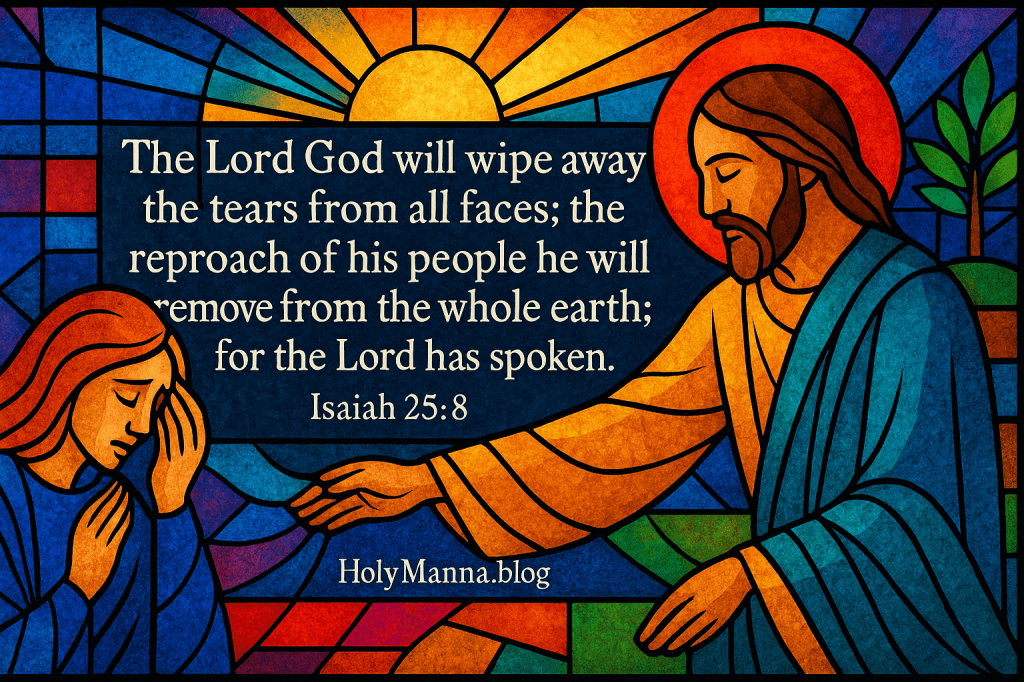
The Lord God will wipe away
the tears from all faces;
The reproach of his people he will remove
from the whole earth; for the Lord has spoken.
9 On that day it will be said:
“Indeed, this is our God; we looked to him, and he saved us!
This is the Lord to whom we looked;
let us rejoice and be glad that he has saved us!”
Judgment on Moab
10 For the hand of the Lord will rest on this mountain,
but Moab will be trodden down
as straw is trodden down in the mire.
Detailed Exegesis: The Banquet That Ends Every Tear
Verse 6: “On this mountain the Lord of hosts will provide for all peoples a feast of rich food and choice wines, juicy, rich food and pure, choice wines.”
Isaiah begins with a striking image of a royal banquet. The “mountain” points to Zion, the place of God’s presence and worship, and ultimately to the heavenly Jerusalem. The rich food and choice wines signify joy, abundance, and perfect satisfaction. This is not a quick snack for a few select insiders. It is a carefully prepared feast for “all peoples,” revealing the universal mission of God’s mercy. The lavishness of the food points beyond earthly prosperity toward the spiritual fullness that only God can give. In the light of the Eucharist, the Church sees in this verse a prophetic glimpse of the sacramental banquet where Christ Himself is offered as true food and true drink.
Verse 7: “On this mountain he will destroy the veil that veils all peoples, the web that is woven over all nations.”
The “veil” and “web” suggest ignorance, sin, fear, and the spiritual blindness that keeps humanity from seeing God clearly. This is the cloak of separation that hangs over shattered hearts, broken cultures, and divided nations. God does not simply comfort people under the veil. He promises to destroy it. The Lord unveils reality, reveals Himself, and opens a path into communion with Him. This verse speaks directly to the evangelizing mission of the Church. Through preaching, sacraments, and witness, the Gospel tears away the web of lies and confusion that keeps people distant from the Father.
Verse 8: “He will destroy death forever. The Lord God will wipe away the tears from all faces; the reproach of his people he will remove from the whole earth; for the Lord has spoken.”
Here the prophecy reaches its deepest promise. God does not simply lessen suffering; He destroys death itself. Death, the ultimate enemy, will not have the last word. The tender image of God wiping away tears shows His deeply personal love. This is not a distant deity but a Father who stoops down to dry the eyes of each of His children. The “reproach” of His people refers to the shame, humiliation, and apparent defeat of God’s chosen ones in front of the nations. God promises to reverse their disgrace publicly. The phrase “for the Lord has spoken” reinforces the certainty of this promise. The Church sees this fulfilled in the Resurrection of Christ, where death is conquered from within, and in the final victory that will be revealed in the new creation.
Verse 9: “On that day it will be said: ‘Indeed, this is our God; we looked to him, and he saved us! This is the Lord to whom we looked; let us rejoice and be glad that he has saved us!’”
This verse expresses the joyful response of the redeemed. Salvation is not something abstract; it is the experience of seeing God act and then recognizing that He is the One everyone has been waiting for all along. The repetition of “we looked to him” shows trust, hope, and perseverance. There were seasons when God’s people waited in darkness, but they continued to look toward Him. Now, seeing His saving work, they break into praise. This verse mirrors the joy of the saints, including Saint Francis Xavier, who gave everything to make sure that more people could one day say those same words in their own languages and cultures.
Verse 10: “For the hand of the Lord will rest on this mountain, but Moab will be trodden down as straw is trodden down in the mire.”
The “hand of the Lord” resting on the mountain symbolizes protection, blessing, and stable presence. God’s saving power is not temporary. It abides. The mention of Moab being trodden down points to God’s judgment against pride, injustice, and opposition to His will. While the feast is offered to all, those who persist in resisting God’s ways will experience the consequences. The contrast emphasizes that God’s mercy and God’s justice are both real. Salvation is a gift, but it involves a real turning away from sin and hostility toward God.
Teachings: The Heavenly Banquet and the Heart of the Church
This reading opens a window into the Christian understanding of the final destiny of humanity and the meaning of the Eucharist. The Catechism of the Catholic Church teaches that the Eucharist is both memorial and foretaste of the heavenly banquet. It says: “In the Eucharist the Church is as it were at the foot of the cross with Mary, united with the offering and intercession of Christ” (CCC 1370), and also: “In an ancient prayer the Church acclaims the mystery of the Eucharist: ‘O sacred banquet in which Christ is received as food, the memory of his Passion is renewed, the mind is filled with grace and a pledge of future glory is given to us’” (CCC 1402). That “pledge of future glory” echoes the promise of Isaiah 25, where God prepares a feast and destroys death.
Regarding the destruction of death, The Catechism explains: “The Christian meaning of death is revealed in the light of the Paschal mystery of the death and resurrection of Christ in whom resides our only hope” (CCC 1681). What Isaiah saw from afar becomes clear in Christ. The risen Lord is the One through whom God has destroyed death from the inside and begun the renewal of all things.
The universal scope of Isaiah’s vision, a feast “for all peoples,” mirrors the missionary nature of the Church. The Catechism states: “The Church, guided by the Holy Spirit, continues the mission of Christ himself in the course of history” (CCC 730). Saint Francis Xavier embodied this in a radical way. He left his homeland to bring the Gospel to India, Japan, and other regions so that those who had never heard the name of Jesus could be invited to the same feast of salvation. His life reflects the belief that the promise in Isaiah is not meant to remain as poetic language. It is a real invitation for real people in every time and place.
The image of God wiping away every tear also resonates with the Church’s hope for the new creation. The Catechism teaches: “The visible universe, then, is itself destined to be transformed, so that the world itself, restored to its original state, facing no further obstacles, should be at the service of the just” (CCC 1047). Isaiah’s vision of God removing reproach and sorrow anticipates that final restoration when everything will be renewed in Christ.
Reflection: Living Today as Guests of God’s Coming Feast
Isaiah’s prophecy does not only talk about the end of time. It speaks into the present struggles, fears, and hungers that people carry right now. Many hearts feel the weight of a “veil” of anxiety, confusion, or sin. Some feel spiritually starved, like they have been wandering in a desert of distraction or disappointment. Others are grieving, carrying hidden tears that do not seem to end. This reading invites everyone to bring those hungers and sorrows to the mountain of the Lord, which is encountered today in prayer, in the sacraments, and especially in the Eucharist.
In daily life, this can look very concrete. It means trusting that God truly wants to feed hearts with His grace, not just occasionally, but regularly. It means approaching Mass not as an obligation but as a foretaste of the heavenly banquet where Christ Himself satisfies every hunger. It also means living with hope in the face of death, suffering, and loss, knowing that God has promised to wipe away every tear and to remove the reproach and shame that weigh down His people.
This reading also challenges a closed, comfortable Christianity. If God prepares a feast “for all peoples,” then there is no room for an attitude that keeps the Gospel to a small circle. The missionary fire of Saint Francis Xavier is a reminder that every baptized person shares in the responsibility of inviting others into this feast, whether through direct evangelization, joyful witness, acts of charity, or simple conversations that point people toward Christ.
Where is there a hunger in your life that you have been trying to satisfy with everything except God?
What “veil” or “web” might the Lord be asking you to let Him tear away, whether it is a habit of sin, a lie you believe about yourself, or a fear about the future?
How can you approach the Eucharist with deeper awareness that it is the pledge of the very feast Isaiah describes, where God will destroy death and wipe away every tear?
As these questions sink in, this reading can gently shape a new way of seeing reality. The world is not just drifting in chaos. It is moving toward a mountain where God Himself will host a feast of mercy, joy, and healing, and everyone is invited to begin living as a guest of that coming banquet even now.
Responsorial Psalm – Psalm 23
Resting In The Care Of The Divine Shepherd
Psalm 23 is one of the most beloved prayers in all of Scripture. It comes from King David, who knew the life of a shepherd before he ever wore a crown. In ancient Israel, shepherds did not simply manage animals as a job. They lived with the flock, defended it from danger, searched for lost sheep, and led them to food and water. To call the Lord a shepherd was to confess that God is personally involved, protective, and tender, not distant or uninterested. Religiously, this psalm expressed Israel’s trust that God guided His people as a flock through history. Culturally, the image of a host preparing a table and anointing with oil expressed generous hospitality, honor, and covenant friendship.
In light of today’s theme, this psalm fits beautifully with Isaiah 25 and the feeding miracle in The Gospel of Matthew. God does not only feed His people in the future on a mountain, and Jesus does not only multiply bread once in the wilderness. The same Lord is a daily shepherd who leads His people through every valley and prepares a table for them even in the face of enemies. The feast that Isaiah promises and Jesus begins to reveal with signs is already tasted in the soul that trusts “The Lord is my shepherd; there is nothing I lack.” This inner trust is what drives the missionary zeal of saints like Francis Xavier, who gave everything so more people could know this Shepherd and dwell in His house forever.
Psalm 23
New American Bible (Revised Edition)
The Lord, Shepherd and Host
1 A psalm of David.
The Lord is my shepherd;
there is nothing I lack.
2 In green pastures he makes me lie down;
to still waters he leads me;
3 he restores my soul.
He guides me along right paths
for the sake of his name.
4 Even though I walk through the valley of the shadow of death,
I will fear no evil, for you are with me;
your rod and your staff comfort me.
5 You set a table before me
in front of my enemies;
You anoint my head with oil;
my cup overflows.
6 Indeed, goodness and mercy will pursue me
all the days of my life;
I will dwell in the house of the Lord
for endless days.
Detailed Exegesis
Verse 1: “The Lord is my shepherd; there is nothing I lack.”
David starts with a bold confession of trust. The Lord is not simply a shepherd in general. The Lord is “my” shepherd, which speaks of personal relationship and belonging. To say “there is nothing I lack” does not mean life becomes easy or that there are no struggles. It means that with God’s presence and guidance, nothing essential for salvation is missing. The Catechism of the Catholic Church reminds believers: “Man is made to live in communion with God in whom he finds happiness” (CCC 45). If the heart’s deepest purpose is communion with God, then having the Lord as shepherd really does mean that nothing truly necessary is lacking.
Verse 2: “In green pastures he makes me lie down; to still waters he leads me.”
The “green pastures” and “still waters” describe a place of nourishment, rest, and safety. Sheep cannot rest when they are threatened or starving. The Lord provides both security and sustenance. Spiritually, this points to the way God feeds the soul with His Word and His sacraments. Quiet waters hint at baptism and the living water of grace that Christ offers. The calmness of the scene contrasts with the chaos many people experience inside. God desires to lead His people to interior peace, not just external stability.
Verse 3: “He restores my soul. He guides me along right paths for the sake of his name.”
To have the soul restored means to be renewed, healed, and brought back from weariness or sin. God does not merely point out the way. He actively guides along “right paths,” which are the ways of righteousness and fidelity to His law. This is not only for the benefit of the individual. It is “for the sake of his name,” which means God’s guidance shows His faithfulness and holiness to the world. The Catechism teaches: “The Ten Commandments state what is required in the love of God and love of neighbor” (CCC 2067). Walking in those paths glorifies God’s name and reveals His character.
Verse 4: “Even though I walk through the valley of the shadow of death, I will fear no evil, for you are with me; your rod and your staff comfort me.”
The “valley of the shadow of death” evokes times of danger, grief, persecution, or spiritual darkness. The psalm does not pretend these moments do not exist. It simply declares that fear does not have to dominate because God’s presence changes everything. The “rod” and “staff” are tools of a shepherd, used to protect, guide, and sometimes correct the sheep. They are not weapons of cruelty but instruments of care. God’s correction and discipline can actually become a comfort, because they show that the Lord refuses to abandon His people to self destruction. This aligns with the teaching that God’s providence is real, even in suffering. The Catechism says: “We know that in everything God works for good for those who love him” (CCC 313).
Verse 5: “You set a table before me in front of my enemies; You anoint my head with oil; my cup overflows.”
The image shifts from shepherd to host. To set a table “in front of my enemies” means that God’s favor and generosity surround the faithful even when opposition or spiritual attack is present. The anointing with oil refers to a gesture of hospitality and honor, and it also hints at the anointing of kings and priests. The overflowing cup symbolizes abundance and joy that cannot be contained. In a Christian lens, many see here a foreshadowing of the Eucharist, where Christ prepares a table in the presence of a hostile world and pours out grace abundantly. Saint Augustine reflected on this psalm and saw in the table a figure of the mysteries of God. He wrote: “There you have the table of God, the table that satisfies, not the body, but the soul”. This connects directly to the feast imagery from Isaiah 25 and the miraculous feeding in The Gospel of Matthew.
Verse 6: “Indeed, goodness and mercy will pursue me all the days of my life; I will dwell in the house of the Lord for endless days.”
The psalm ends with a powerful promise. God’s “goodness and mercy” are not passive qualities. They “pursue,” or follow closely, like a shepherd’s loving attention that never gives up. This means that God is more persistent in loving than people are in wandering. The desire to “dwell in the house of the Lord” expresses longing for unbroken communion with God in His presence. For Israel, this meant the Temple. For Christians, this points to life with God in the Church and ultimately in heaven. The Catechism describes heaven as: “the ultimate end and fulfillment of the deepest human longings, the state of supreme, definitive happiness” (CCC 1024). That is the “house of the Lord” where the Good Shepherd finally brings His flock.
Teachings: The Good Shepherd, The Eucharistic Table, And The Mission Of The Church
Psalm 23 lies at the heart of Christian spirituality because it foreshadows Christ, the Good Shepherd. Jesus explicitly applies this image to Himself in The Gospel of John, where He says that the shepherd lays down his life for the sheep. The Church reads this psalm in the light of Christ’s Paschal Mystery. He not only leads and feeds but also dies and rises for the flock.
The Catechism teaches about the Church as the sheepfold of Christ: “The Church is a sheepfold whose one and indispensable door is Christ” (CCC 754). This means that belonging to the Church is not a social membership. It is a living inclusion in the flock gathered and protected by Jesus. The shepherd imagery of the psalm becomes a reality in the life of the Church through preaching, sacraments, and pastoral care.
The table imagery strongly connects to the Eucharist. The Lord prepares a table and fills the cup until it overflows. The Catechism says: “The Eucharist is ‘the source and summit of the Christian life’” (CCC 1324). At Mass, God does exactly what this psalm describes. He restores the soul, leads hearts out of fear, and sets a banquet where His very life is given as food and drink. The overflowing cup points to the superabundance of grace that flows from the sacrifice of Christ.
Saint Francis Xavier’s missionary work also reflects the heart of this psalm. He trusted that the same Shepherd who guided David would guide him across continents and dangers. He wanted those who walked in the “valley of the shadow of death” without knowing Christ to discover a Shepherd who loves them and prepares a table for them. His life embodied the belief that God’s goodness and mercy are meant to pursue not only one people, but all nations.
The psalm also teaches something crucial about Christian suffering. Trust in the Good Shepherd does not deny pain, but it refuses to let fear and despair define reality. The Catechism explains that faith in God’s providence includes trust when things are hard: “Faith in God the Father Almighty can be put to the test by the experience of evil and suffering” (CCC 272). Psalm 23 shows how to respond in those tests. The believer can say, in the middle of the valley, that God is still guiding, still providing, and still preparing a future in His house forever.
Reflection: Learning To Be Led By The Shepherd
This psalm is not meant to stay on holy cards or funeral programs. It is a daily way of seeing life. Many people carry hidden anxieties about money, family, career, health, or the state of the world. The reflex is often to act like a self appointed shepherd, trying to control every situation and outcome. Psalm 23 invites a different posture. It calls believers to let God be the shepherd in practical ways. That can look like starting the day by consciously entrusting plans and worries to the Lord, or pausing when fear rises and quietly repeating, “The Lord is my shepherd; there is nothing I lack.”
Living this psalm means seeking the “green pastures” and “still waters” of prayer and the sacraments instead of constantly grazing on noise and distraction. It means allowing God’s “rod and staff” to correct a wandering heart, accepting His moral law and Church teaching not as burdens, but as the guidance of a wise and loving Shepherd. It also means approaching the Eucharist with deeper awareness that this is the table He sets in a hostile world, where the cup of grace truly overflows.
In times that feel like the valley of the shadow of death, this psalm becomes a lifeline. Fear does not need to be denied. It can be brought honestly before the Lord who walks beside His people. The more someone clings to the Shepherd’s presence, the less power the valley has to define their identity or their future.
Where in your life are you trying to act as your own shepherd instead of letting the Lord lead you?
What might the “green pastures” and “still waters” look like in your current season, and how can you make real space for them in your schedule?
How can you approach the Eucharist more consciously as the table where your soul is restored and your cup is meant to overflow with grace for others?
In what concrete situation do you need to repeat with faith, even if your emotions do not feel it yet, “I will fear no evil, for you are with me”?
As these questions settle in the heart, Psalm 23 becomes more than a familiar text. It becomes a personal school of trust, teaching each believer to walk every path, joyful or dark, in the company of the Good Shepherd who never stops pursuing with goodness and mercy.
Holy Gospel – Matthew 15:29-37
The Compassionate Christ Who Heals And Feeds The Crowd
This passage from The Gospel of Matthew places Jesus in the region around the Sea of Galilee, a place where Jewish and Gentile territories met. Culturally and religiously, this matters. The crowds coming to Him likely included people from different backgrounds, carrying not only physical illnesses but spiritual and social wounds as well. In that setting, Jesus goes up the mountain, a biblical symbol of revelation and encounter with God, and sits as a teacher and Lord who draws the broken to Himself. What follows is a scene where the lame, the blind, the deformed, and the mute are brought to His feet and healed, and then a hungry crowd is fed with a miraculous multiplication of loaves and fish.
This Gospel fits directly into today’s theme of God as the divine Shepherd and Host who gathers His people, heals their wounds, and feeds their deepest hungers. In Isaiah 25, the Lord promises a feast for all peoples on the mountain where death and sorrow are destroyed. In Psalm 23, the Lord is the Shepherd who restores the soul and prepares a table in the presence of enemies. In Matthew 15, Jesus personally fulfills these images. He heals the broken bodies and broken lives of the crowd and then refuses to send them away hungry. His heart is moved with pity, and He provides a superabundant meal in a deserted place. On the Memorial of Saint Francis Xavier, this Gospel highlights the missionary heart of Christ, who desires that no one remain far from His healing and His banquet of grace.
Matthew 15:29-37
New American Bible (Revised Edition)
The Healing of Many People. 29 Moving on from there Jesus walked by the Sea of Galilee, went up on the mountain, and sat down there. 30 Great crowds came to him, having with them the lame, the blind, the deformed, the mute, and many others. They placed them at his feet, and he cured them. 31 The crowds were amazed when they saw the mute speaking, the deformed made whole, the lame walking, and the blind able to see, and they glorified the God of Israel.
The Feeding of the Four Thousand. 32 Jesus summoned his disciples and said, “My heart is moved with pity for the crowd, for they have been with me now for three days and have nothing to eat. I do not want to send them away hungry, for fear they may collapse on the way.” 33 The disciples said to him, “Where could we ever get enough bread in this deserted place to satisfy such a crowd?” 34 Jesus said to them, “How many loaves do you have?” “Seven,” they replied, “and a few fish.” 35 He ordered the crowd to sit down on the ground. 36 Then he took the seven loaves and the fish, gave thanks, broke the loaves, and gave them to the disciples, who in turn gave them to the crowds. 37 They all ate and were satisfied. They picked up the fragments left over—seven baskets full.
Detailed Exegesis
Verse 29: “Moving on from there Jesus walked by the Sea of Galilee, went up on the mountain, and sat down there.”
The setting by the Sea of Galilee points to an area that was both familiar and theologically rich in the Gospels. Jesus goes up the mountain and sits, a posture of authoritative teaching. Mountains in Scripture often signal moments of revelation, such as Sinai for Moses or the mountain of the Transfiguration. Here the mountain becomes the place where God’s mercy is revealed in action. Jesus is not just a wandering healer. He is the Lord who takes His place as teacher and shepherd of the people.
Verse 30: “Great crowds came to him, having with them the lame, the blind, the deformed, the mute, and many others. They placed them at his feet, and he cured them.”
The list of conditions highlights how comprehensive the brokenness of humanity is. Lame, blind, deformed, mute, and “many others” shows that no wound is too complicated or too visible for Christ. Placing them at His feet is an act of trust and surrender. In biblical language, to be at the feet of someone is to recognize their authority and to seek mercy. Jesus responds not with hesitation but with healing. This verse reflects the heart of Christ described in The Catechism of the Catholic Church: “Moved by so much suffering Christ not only allows himself to be touched by the sick, but he makes their miseries his own” (CCC 1505). The physical healings also point to deeper spiritual restoration.
Verse 31: “The crowds were amazed when they saw the mute speaking, the deformed made whole, the lame walking, and the blind able to see, and they glorified the God of Israel.”
The miracles are not just personal blessings. They lead to public praise. The mute now speak, the deformed are restored, the lame walk, and the blind see. These signs fulfill prophecies like those in Isaiah 35, where the coming of God brings healing to the blind and lame. The reaction is worship. They glorify “the God of Israel,” recognizing that this power comes from the true God. The signs are not an end in themselves. They reveal who God is and call people into right relationship with Him.
Verse 32: “Jesus summoned his disciples and said, ‘My heart is moved with pity for the crowd, for they have been with me now for three days and have nothing to eat. I do not want to send them away hungry, for fear they may collapse on the way.’”
Here the Gospel opens a window into the interior of Christ. His heart is moved with pity. This word in the original language points to a deep, visceral compassion. The crowd has stayed with Him for three days, a detail that suggests they have been receiving teaching and healing, yet now face real physical exhaustion. Jesus cares about their bodies as well as their souls. He does not want to send them away hungry. This line echoes the Good Shepherd image from Psalm 23. The Shepherd who restores the soul also leads to food and protects from collapse. It also anticipates the Eucharist, where Jesus refuses to let His followers walk the journey of life spiritually starving.
Verse 33: “The disciples said to him, ‘Where could we ever get enough bread in this deserted place to satisfy such a crowd?’”
The disciples state the obvious human limitation. They are in a deserted place with a large crowd. Their question reflects a lack of imagination about what Christ can do. It is similar to Israel’s doubt in the desert about whether God could provide food. The disciples focus on scarcity and circumstances. Jesus will show that in His hands, even small resources can become more than enough. This dynamic often appears in the spiritual life. Human weakness and limited resources are real, yet Christ invites trust that He can work beyond what appears possible.
Verse 34: “Jesus said to them, ‘How many loaves do you have?’ ‘Seven,’ they replied, ‘and a few fish.’”
Jesus does not produce bread out of thin air. He asks what they already have. Their response, “seven” and “a few fish,” seems insignificant compared to the needs of several thousand people. The number seven often symbolizes completeness in Scripture, hinting that even this small amount, offered to Christ, can become a complete provision. Jesus invites cooperation. The disciples offer their limited resources, and He transforms them. This is a pattern for Christian life and mission. God often asks for what seems small and then multiplies it in ways that serve others.
Verse 35: “He ordered the crowd to sit down on the ground.”
The instruction to sit down signals that a meal is about to be shared. It also creates a posture of receptivity and peace. The crowd is not scrambling for food. They are positioned as guests who will be served. This detail reflects the hospitality of God, who invites His people to rest and receive. It mirrors the language of Isaiah 25, where God prepares a feast on the mountain and invites the nations to share it.
Verse 36: “Then he took the seven loaves and the fish, gave thanks, broke the loaves, and gave them to the disciples, who in turn gave them to the crowds.”
The actions of Jesus are very significant. He takes, gives thanks, breaks, and gives. This is the same pattern seen at the Last Supper and in the Church’s Eucharistic celebration. The thanksgiving points to the underlying meaning of the word “Eucharist,” which means thanksgiving. Jesus gives the loaves to the disciples, and they distribute them to the crowd. This shows the way Christ chooses to work. He is the source of the gift, yet He involves His disciples in the distribution. In the Church, the Eucharist is given by Christ through the ministry of His priests to feed the people of God.
Verse 37: “They all ate and were satisfied. They picked up the fragments left over seven baskets full.”
The result is not minimal. Everyone eats and is satisfied. There is even an abundance of leftovers, symbolized by the seven baskets full. The satisfaction of the crowd echoes Psalm 23 where the cup overflows. It also fulfills the promise of Isaiah 25 where God provides a lavish feast. Spiritually, this points to the way Christ satisfies the deepest hungers of the heart and provides enough grace to overflow beyond personal needs, spilling out in mission and charity to others.
Teachings: Eucharistic Echoes, Missionary Heart, And The Christ Who Feeds The Nations
This Gospel scene carries strong Eucharistic overtones. The actions of taking, giving thanks, breaking, and giving mirror the institution of the Eucharist and the Church’s liturgy. The Catechism of the Catholic Church explains: “The miracles of the multiplication of the loaves, when the Lord says the blessing, breaks and distributes the loaves through his disciples to feed the multitude, prefigure the superabundance of this unique bread of his Eucharist” (CCC 1335). The feeding of the four thousand is not just a miracle of mercy. It is a sign pointing to the sacrament where Christ continues to feed His people with Himself.
The Gospel also reveals the compassionate heart of Jesus toward the sick and suffering. The Catechism teaches: “Christ’s compassion toward the sick and his many healings of every kind of infirmity are a resplendent sign that ‘God has visited his people’” (CCC 1503). When Jesus heals the lame, blind, and mute, He is not simply solving problems. He is showing that in Him, the kingdom of God is breaking into human history. Bodies are restored, and souls are invited into faith.
The role of the disciples in this story is also important for understanding the Church’s mission. Jesus involves them in distributing the bread. The Catechism states: “The Church, in her very nature, is missionary, sent by Christ to all the nations to make disciples of them” (CCC 767). The apostles and their successors continue to bring Christ’s healing and nourishment to the world. The Memorial of Saint Francis Xavier is a striking example. He traveled across oceans to bring the Gospel and the sacraments to those who had never heard of Christ. His life reflects this Gospel scene. Christ still asks, “How many loaves do you have?” and then uses what is given to feed many souls.
The crowd’s hunger and Christ’s response also touch on the Christian understanding of divine providence. God sees the needs of His people and acts with mercy. The Catechism explains: “We firmly believe that God is master of the world and of its history” (CCC 314). Even when believers feel as though they are in a “deserted place,” the Lord is able to provide in ways that surpass human calculations. The story encourages trust that no situation is beyond His reach.
Reflection: Trusting The Lord Who Feeds Every Hunger
This Gospel is incredibly concrete for modern life. Many people carry spiritual and emotional hungers that feel just as real as the hunger of that crowd in the desert. There are wounds that look as impossible to heal as being lame or blind. There are situations that seem as deserted and hopeless as that lonely place where the disciples saw no solution. This passage invites each disciple of Christ to bring personal poverty and brokenness to His feet, just as the crowds brought the sick to Him. Nothing is too messy or too complicated for His mercy.
There is also a powerful lesson in the way Christ asks for the seven loaves and few fish. The ordinary, limited things placed in His hands become instruments of abundance. In daily life, that might look like offering a small amount of time for prayer, a simple act of service, a conversation about faith, or a hidden sacrifice. The Christian may feel that these efforts are too little. Yet when Christ is truly trusted and His will is followed, He multiplies those offerings in ways that cannot be predicted. This is especially true in missionary efforts, whether in faraway countries like those where Saint Francis Xavier served, or in ordinary workplaces, schools, and families.
The Eucharistic dimension of this Gospel also calls for a deeper love of the Mass. The same Jesus who refused to send the crowd away hungry is present on the altar, taking, blessing, breaking, and giving His Body and Blood for the life of the world. Approaching Holy Communion with faith means believing that Christ really intends to satisfy the deepest hunger of the heart. It also means being willing to become, in a sense, bread for others, allowing His love to work through daily choices, sacrifices, and words.
There is a final challenge in the disciples’ initial reaction. They saw only scarcity and difficulty. Christ saw an opportunity to reveal the generosity of God. In moments of anxiety about money, health, relationships, or the state of the world, this Gospel encourages choosing trust over panic. The question is not only how big the problem is, but whether it has been placed honestly before Christ and whether His guidance has been sought.
Where is there a “deserted place” in your life that feels hopeless or empty, and how might Christ be asking you to bring that place to Him rather than face it alone?
What “seven loaves and few fish” do you have right now, whether talents, time, or small acts of generosity, that the Lord may be inviting you to place in His hands for the good of others?
How can participation in the Eucharist move from routine to a real encounter with the Christ who heals and feeds, and what concrete change could help make that shift this week?
In moments of fear about not having enough, how can this Gospel help you remember that the heart of Jesus is still moved with pity for the crowd and that His providence has not changed?
As these questions are taken seriously, this passage from The Gospel of Matthew becomes more than a story from the past. It becomes a living call to trust the compassionate Christ who still heals, still feeds, and still sends His disciples into the world so that no one is left hungry on the journey.
Living From The Feast Of The Shepherd King
Today’s readings paint a single, powerful picture of God’s heart. Isaiah 25 shows the Lord preparing a feast on His holy mountain, destroying death, wiping away tears, and removing the reproach of His people. Psalm 23 reveals the same Lord as a tender Shepherd who restores the soul, leads through dark valleys, and prepares a table where the cup overflows. The Gospel of Matthew then shows Jesus Himself healing the broken, feeding the hungry, and revealing a heart that refuses to send anyone away empty. The Memorial of Saint Francis Xavier reminds the Church that this is not just a private comfort. It is news meant to cross borders, cultures, and generations.
Together, these passages reveal a God who is not distant, cold, or indifferent. The Lord is a Shepherd and a Host, a Savior and a King. He sees the valleys people walk through, the tears they hide, the hunger they cannot put into words, and the confusion that weighs on their minds. He does not ignore any of it. He invites everyone to His mountain, to His table, to His Eucharistic banquet, where grace is not measured out in tiny portions but poured out until the cup overflows.
Saint Francis Xavier spent his life acting like someone who really believed these promises. He trusted that every person, from European ports to Asian villages, had a place at God’s table. His example gently confronts any temptation to keep faith small, comfortable, and quiet. If God prepares a feast for all peoples, then every baptized Christian shares some responsibility to invite others, whether across oceans or across a dinner table.
The call to action today is simple but demanding. It begins with letting the Lord be truly recognized as Shepherd and Host in daily life. That means trusting Him in the valleys instead of living in constant fear, approaching the Eucharist as the real feast that restores the soul, and surrendering wounds and sins to the One who alone can destroy the inner “veil” that still hangs over hearts. From there, it flows outward in a missionary spirit, inspired by Saint Francis Xavier, that looks around and asks who is still starving spiritually and how the love of Christ can be shared with them in concrete, patient, and courageous ways.
Where is the Lord inviting you to stop living like a spiritual orphan and start living as a guest at His table, completely provided for by His grace?
How might He be asking you to become, in your own state in life, a bridge that leads someone else to His healing, His Word, and His Eucharistic feast?
As these questions settle into the heart, the message of the day becomes clear. The Shepherd King is preparing a feast. His heart is moved with pity. His table is set. The only thing left is to respond with trust, to draw near, and then to help others find their place at that same overflowing banquet of mercy.
Engage with Us!
Share your reflections and insights in the comments below, because this journey with God is meant to be walked together, not alone. Let these questions help you pray with today’s readings and listen more closely to the voice of the Shepherd who heals, feeds, and leads His people.
- First Reading – Isaiah 25:6-10: Where in your life do you feel most in need of the “mountain feast” that God promises, and how can you bring that hunger honestly before Him in prayer today? When you hear the promise that God will “destroy death forever” and “wipe away the tears from all faces,” how does that shape the way you look at your own suffering and the suffering of those around you?
- Responsorial Psalm – Psalm 23: What would it look like in your daily routine to really live as someone who believes “The Lord is my shepherd; there is nothing I lack”? Which “valley of the shadow of death” are you walking through right now, and how can you let the Lord’s “rod and staff” comfort and guide you instead of trying to handle it all on your own?
- Holy Gospel – Matthew 15:29-37: Where do you see yourself in the crowd that comes to Jesus, whether among the sick, the hungry, or the tired, and how is He inviting you to place those needs at His feet? What are the “seven loaves and few fish” of your life that seem small, but could become a source of blessing for others if you truly entrusted them to Christ and followed His lead?
May every reflection stir a deeper desire to live a life of faith, to trust the Shepherd who provides, and to do everything with the love and mercy Jesus has taught, so that His compassion can be seen and felt through the way you live each day.
Sacred Heart of Jesus, we trust in You!
Immaculate Heart of Mary, pray for us!
Saint Michael the Archangel, defend us in battle!
Follow us on Instagram and Facebook for more insights and reflections on living a faith-filled life.

 Holy Manna!
Leave a comment