A Quiet Flower in the Heart of Persecution
Saint Bibiana is one of the quiet, hidden saints of the early Church. Though her name is not widely known outside of Rome, the Church has honored her for more than fifteen centuries as a virgin martyr whose relics rest in the basilica of Santa Bibiana. Her story comes from ancient Christian tradition, and even where historical details are uncertain, her witness has been treasured for generations. She is remembered as a sign of purity, courage, and unwavering faith during one of the most difficult periods of Christian persecution. The Church invokes her as a patroness against epilepsy, headaches, mental illness, torture, and struggles related to addiction. Her life is a powerful example of what the Catechism calls the supreme witness to the truth of the faith through martyrdom.
Born into a Family of Confessors
According to early tradition, Bibiana was born in fourth century Rome to a devout Christian family. Her father Flavian was said to be a Roman knight or former prefect, her mother Dafrosa a faithful Christian woman, and she had at least one sister named Demetria. Their family lived during the reign of Emperor Julian, often called “the Apostate,” who attempted to revive paganism and suppress the growing influence of Christianity.
Governor Apronianus, appointed by Julian, initiated harsh measures against Christians in Rome. Flavian was arrested, tortured, and exiled, eventually dying from his wounds. Dafrosa was executed shortly afterward. Bibiana and Demetria, now alone, were stripped of their possessions and left in poverty. They remained in their home, committing themselves to prayer and fasting rather than abandoning Christ.
There is no dramatic conversion story for Bibiana. She grew up Christian and lived her faith with quiet strength. Her “conversion” was the steady deepening of her baptismal identity. She is most known for her steadfast purity, her unshakable loyalty to Christ in the face of temptation, and her willingness to stand firm even as her family was destroyed around her. Her faith was not loud or dramatic. It was rooted in daily fidelity, prayer, and courage.
Faith That Would Not Bend
The traditional accounts emphasize Bibiana’s inner strength and holiness rather than dramatic miracles during her life. After losing their parents, Bibiana and Demetria continued to live in prayerful solitude. Poverty and grief did not break their resolve. When the sisters were eventually brought before Apronianus, Demetria boldly professed her faith and collapsed, dying immediately after her confession. The early Christians saw this as an act of divine mercy, sparing her from greater torture.
Bibiana, however, was handed over to a corrupt woman named Rufina, who attempted to pressure her into abandoning her chastity. When persuasion failed, threats and beatings followed. Bibiana remained unshaken. Her refusal to forsake purity became the true “miracle” of her life. The Catechism, in discussing virginity for the sake of the Kingdom, notes that consecrated chastity is a sign of total belonging to Christ. Bibiana embodies this teaching. In a culture that tried to lure or coerce her into compromise, she clung to Christ with clarity and courage.
Beaten but Not Broken
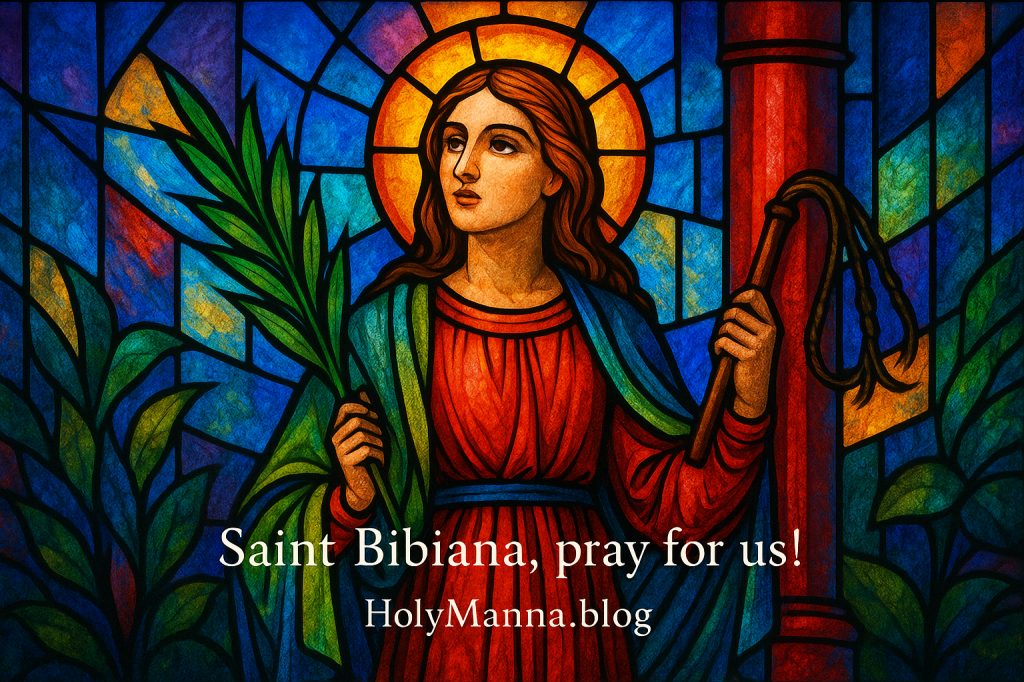
When attempts to corrupt her failed, Apronianus ordered Bibiana to be scourged. She was tied to a column and flogged with weighted whips until she died. Christian art often shows her with a scourge or standing near a pillar as a reminder of this final suffering. Tradition says that she endured her torments with a supernatural peace. One account even states that the saint endured her torments with joy, showing the grace that filled her heart even as her body was torn.
After her death, her executioners left her body exposed, hoping wild animals would consume it. Instead, no creature touched her. After two days a priest named John retrieved her body and buried her beside her mother and sister. Even though many details of her passion come from later tradition, her veneration as a true martyr is ancient, and her story reflects the Gospel words of Jesus in The Gospel of Matthew 10:28. Martyrdom, as the Catechism teaches, is the ultimate witness to faith, hope, and love.
Healing at the Edge of the City
The basilica of Santa Bibiana stands on what was believed to be the site of her family home and burial place. Built in the fifth century, it has long housed her relics along with those of Dafrosa and Demetria. Inside the basilica stands a column traditionally identified as the one to which Bibiana was tied during her scourging. Pilgrims for centuries have prayed there for healing, purity, and courage.
In the seventeenth century Pope Urban VIII commissioned Gian Lorenzo Bernini to restore the church and sculpt a statue of Bibiana. The result is a beautiful image of the young martyr holding the palm of victory beside the pillar of her passion. Over time, devotion to her grew, especially among those suffering from neurological conditions. Local tradition even spoke of a medicinal herb that grew in the gardens of Santa Bibiana, believed to cure epilepsy and headaches. Her patronage also came to include freedom from addictions, hangovers, and emotional distress, making her a powerful intercessor for those struggling with both physical and spiritual wounds.
It is important to note that Saint Bibiana is distinct from Saint Vibiana, a different early martyr whose relics are associated with Los Angeles. Their names are similar but their stories and venerated locations are different.
Standing Firm in a Fragile World
Saint Bibiana’s life is a short and quiet story set against the backdrop of intense suffering. Yet her witness speaks strongly to a world weighed down by anxiety, temptation, and emotional struggles. Her steady faith reminds every Christian that holiness does not always appear in dramatic gestures. It often blossoms in hidden rooms, in painful seasons, and in small moments of courage that only God sees.
Her example encourages believers to hold firmly to Christ in a culture that often demands compromise. Bibiana shows that chastity is a form of strength, not fragility. Her endurance in suffering demonstrates the mysterious grace by which the Holy Spirit sustains those who unite their pain with Christ. Her patronage over mental and emotional afflictions shows that holiness is not reserved for the emotionally unscarred but is deeply connected to the mercy of God who heals broken hearts.
In practical terms, her life encourages Christians to set boundaries that protect purity of heart and body, to pray even when emotions feel heavy, and to support those who suffer in silence. It also reminds believers to call on the saints, especially those like Bibiana who understand the long, hidden battles of the heart. With her intercession, even fragile souls can grow in courage and peace.
Engage with Us!
Readers are invited to share their thoughts and reflections in the comments below. The quiet witness of Saint Bibiana can speak powerfully into modern struggles, and your reflections may help someone else who is facing a similar spiritual or emotional challenge.
- Where do you feel the strongest pressure to compromise your faith or moral convictions, and how does Saint Bibiana’s courage help illuminate that struggle?
- What steps can you take this week to guard your heart and body for Christ, especially in areas of sexuality, entertainment, or relationships?
- Do you or someone close to you suffer from anxiety, depression, addiction, or mental distress, and how might invoking Saint Bibiana’s intercession help bring hope into that situation?
- How can you become a source of support for someone in your life who feels spiritually or emotionally exhausted, so that they experience the mercy of Christ through your presence?
- Does the hidden nature of Saint Bibiana’s life help you see that holiness can grow quietly in the ordinary corners of your own life?
May Saint Bibiana, virgin and martyr, intercede for all who seek purity, courage, and healing. May her example inspire a deeper trust in Christ, and may we strive to do everything with the love and mercy that Jesus taught, allowing His light to shine even in our most hidden struggles.
Saint Bibiana, pray for us!
Follow us on Instagram and Facebook for more insights and reflections on living a faith-filled life.

 Holy Manna!
Leave a comment