Memorial of Saint Andrew Dŭng-Lạc, Priest, and Companions, Martyrs – Lectionary: 503
Faith That Holds Nothing Back
Some days the Word of God quietly invites a small step forward, and other days it gently exposes how tightly people cling to comfort, control, and security. Today’s readings are one of those days that lovingly ask the hard question: What would it look like to give God everything, even when the world offers comfort, compromise, or fear instead?
In Daniel 1, young men from Judah are dragged far from home into Babylon, a culture that tries to reshape their minds, habits, and even their diets. The empire wants to feed them from the king’s table, to make them forget who they are and whom they belong to. Yet Daniel and his friends quietly choose fidelity. Scripture says that he “was resolved not to defile himself with the king’s food or wine”, and that simple, hidden act of obedience becomes the place where God pours out wisdom, favor, and strength. They look weaker in the world’s eyes at first, but they end up ten times better in true understanding.
The responsorial canticle from Daniel 3 is like the soundtrack behind that quiet courage. As the Church prays, “Blessed are you, O Lord, the God of our ancestors, praiseworthy and exalted above all forever”, it echoes the faith of those who praise God even in exile, trial, and danger. The words come from a context of persecution and fire, yet the focus is not on fear but on the greatness, glory, and faithfulness of God who reigns over history, over kings, and even over the furnace.
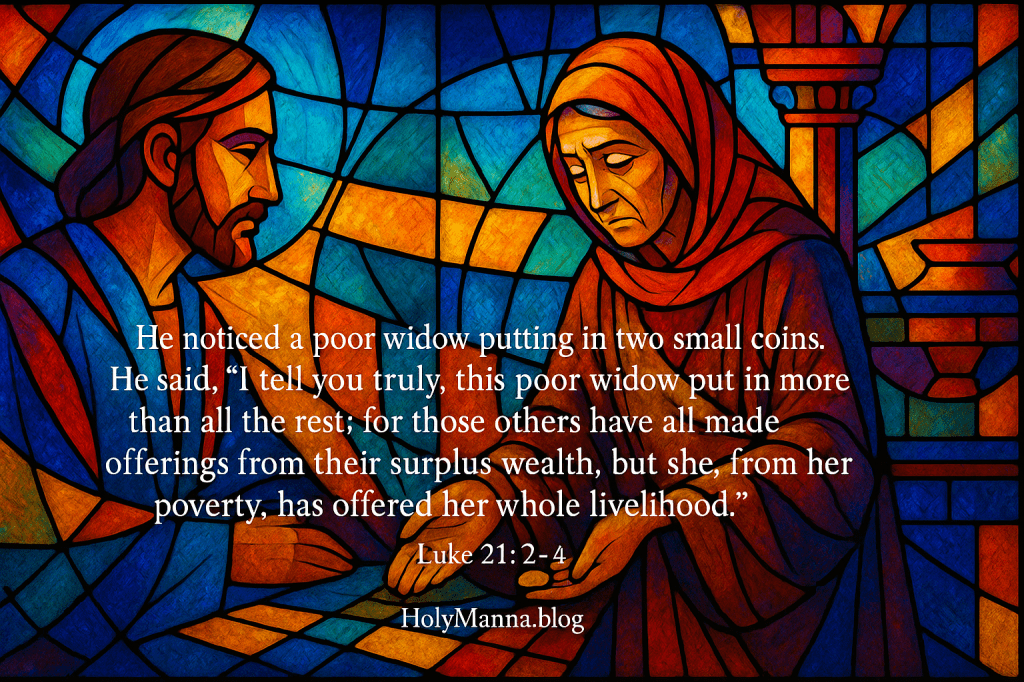
Then The Gospel of Luke brings that same theme right into the Temple of Jerusalem with a scene that lasts only a few verses but cuts straight to the heart. Jesus watches people put their offerings into the treasury. Many give from abundance, and then a poor widow slips in two tiny coins that barely register in anyone’s eyes. Yet Christ declares, “This poor widow put in more than all the rest”, because she offers not leftovers but her entire livelihood. In a culture where widows were some of the most vulnerable, this woman embodies radical trust. She gives God everything, holding nothing back, even when logic would say to clutch onto every last coin.
Today the Church also remembers the Memorial of Saint Andrew Dŭng Lạc and Companions, martyrs from Vietnam who lived this same pattern of total self gift. In the nineteenth century, waves of persecution tried to erase the Catholic faith from their land. Priests, catechists, and lay faithful faced prison, torture, and death rather than deny Christ. Their lives mirror Daniel’s refusal to compromise and the widow’s total trust: surrounded by pressure, they chose fidelity instead of safety. Their blood became a powerful witness that Jesus is worth more than comfort, reputation, or even life itself.
All together, these readings and this memorial point to one central truth: God sees and treasures the heart that belongs entirely to Him. Whether it is a young exile saying no to defilement, a persecuted believer singing praise in the fire, a widow dropping in two small coins, or a martyr embracing the cross, the pattern is the same. The world measures power by appearance, status, and surplus, but God measures by love, trust, and sacrifice.
Where is God inviting a Daniel like resolve, a widow like trust, or a martyr like courage in daily life today?
First Reading – Daniel 1:1-6, 8-20
Faithful Hearts in a Foreign Kingdom
The first reading drops everyone right into a moment of national catastrophe and quiet heroism. Judah has fallen under the power of Babylon. The Temple has been plundered. Sacred vessels that once belonged to the worship of the true God are now carried off into the land of Shinar and placed in the treasury of a pagan deity. This is not just a political defeat. It is a deep spiritual crisis. From a Jewish perspective, it looks like the gods of the nations have triumphed over the Lord.
Into this scene steps King Nebuchadnezzar with a different kind of strategy. Instead of only using brute force, he uses cultural and intellectual pressure. He takes the best and brightest of Judah’s young men, especially from the royal and noble families, and enrolls them in a Babylonian reeducation program. They are given new language, new literature, new food, and eventually a place in the king’s service. The goal is clear. If their minds, bodies, and desires can be reshaped, their loyalty will shift as well.
The story of Daniel and his friends shows what fidelity looks like when a believer is immersed in a powerful, seductive culture. They do not escape the Babylonian system, but they refuse to let it define their deepest identity. The key moment is when Daniel decides not to defile himself with the king’s food and wine. On the surface, this might look like a minor dietary choice, but it is actually a line drawn for God. In a setting where food would have been linked to idolatrous rituals and where conformity meant safety and advancement, Daniel chooses obedience over comfort.
This reading fits today’s theme perfectly. Together with the psalm of praise from Daniel 3 and the Gospel of the poor widow in The Gospel of Luke, it shows that God honors those who give Him everything, even when the surrounding culture pulls in the opposite direction. Daniel’s quiet faithfulness in the small things prepares the way for his extraordinary witness later in the book. It also mirrors the courage of Saint Andrew Dŭng Lạc and his companions, who lived fidelity to Christ in a hostile environment and sealed that fidelity with their blood.
Daniel 1:1-6, 8-20
New American Bible (Revised Edition)
The Food Test. 1 In the third year of the reign of Jehoiakim, king of Judah, King Nebuchadnezzar of Babylon came and laid siege to Jerusalem. 2 The Lord handed over to him Jehoiakim, king of Judah, and some of the vessels of the temple of God, which he carried off to the land of Shinar and placed in the temple treasury of his god.
3 The king told Ashpenaz, his chief chamberlain, to bring in some of the Israelites, some of the royal line and of the nobility. 4 They should be young men without any defect, handsome, proficient in wisdom, well informed, and insightful, such as could take their place in the king’s palace; he was to teach them the language and literature of the Chaldeans. 5 The king allotted them a daily portion of food and wine from the royal table. After three years’ training they were to enter the king’s service. 6 Among these were Judeans, Daniel, Hananiah, Mishael, and Azariah.
8 But Daniel was resolved not to defile himself with the king’s food or wine; so he begged the chief chamberlain to spare him this defilement.[a] 9 Though God had given Daniel the favor and sympathy of the chief chamberlain, 10 he said to Daniel, “I am afraid of my lord the king, who allotted your food and drink. If he sees that you look thinner in comparison to the other young men of your age, you will endanger my life with the king.” 11 Then Daniel said to the guardian whom the chief chamberlain had put in charge of Daniel, Hananiah, Mishael, and Azariah, 12 “Please test your servants for ten days. Let us be given vegetables to eat and water to drink. 13 Then see how we look in comparison with the other young men who eat from the royal table, and treat your servants according to what you see.” 14 He agreed to this request, and tested them for ten days; 15 after ten days they looked healthier and better fed than any of the young men who ate from the royal table. 16 So the steward continued to take away the food and wine they were to receive, and gave them vegetables.
17 To these four young men God gave knowledge and proficiency in all literature and wisdom, and to Daniel the understanding of all visions and dreams. 18 At the end of the time the king had specified for their preparation, the chief chamberlain brought them before Nebuchadnezzar. 19 When the king had spoken with all of them, none was found equal to Daniel, Hananiah, Mishael, and Azariah; and so they entered the king’s service. 20 In any question of wisdom or understanding which the king put to them, he found them ten times better than any of the magicians and enchanters in his kingdom.
Detailed Exegesis
Verse 1 – “In the third year of the reign of Jehoiakim, king of Judah, King Nebuchadnezzar of Babylon came and laid siege to Jerusalem.”
This verse sets the historical stage. Jehoiakim’s reign was marked by instability and infidelity to God’s covenant. The siege of Jerusalem is not just a random political event. It is the consequence of Judah’s sin and a fulfillment of prophetic warnings. God allows a foreign king to besiege His own people, which underlines that He is still Lord of history. Nebuchadnezzar looks powerful, but he is ultimately an instrument that God uses to discipline His people and call them back to faithfulness.
Verse 2 – “The Lord handed over to him Jehoiakim, king of Judah, and some of the vessels of the temple of God, which he carried off to the land of Shinar and placed in the temple treasury of his god.”
Here the text emphasizes that it is “The Lord” who hands over Jehoiakim, not simply Babylon’s military strength. This preserves God’s sovereignty even in defeat. The removal of the sacred vessels is especially painful. Items used in the worship of the true God are now in a pagan temple. This looks like a humiliation of Israel’s God, yet in reality it is a permitted trial. The land of Shinar, associated with the Tower of Babel, symbolizes human pride and rebellion. Daniel’s story will show that even in Shinar, the true God is still on the throne.
Verse 3 – “The king told Ashpenaz, his chief chamberlain, to bring in some of the Israelites, some of the royal line and of the nobility.”
Nebuchadnezzar targets the elites. By taking young nobles, he can weaken Judah’s leadership and also gain capable servants for his empire. It is a classic move of cultural assimilation. The enemy does not only want territory. He wants hearts and minds. These young men are future leaders, and if their loyalties can be shifted, an entire people can be reshaped.
Verse 4 – “They should be young men without any defect, handsome, proficient in wisdom, well informed, and insightful, such as could take their place in the king’s palace; he was to teach them the language and literature of the Chaldeans.”
The criteria sound like a perfect résumé. Physical perfection, intellectual sharpness, and social polish are in view. They are then to be trained in the language and literature of the Chaldeans, which means they will be immersed in Babylonian worldview, myths, and philosophy. On the surface this could look like an amazing scholarship. Beneath it is a battle over identity and loyalty. The Church has always recognized that culture and education are powerful tools that can be used either to lead to the truth or to draw people away from God.
Verse 5 – “The king allotted them a daily portion of food and wine from the royal table. After three years’ training they were to enter the king’s service.”
Being fed from the royal table shows honor and privilege. It is a way of binding these young men to the king. Food in the ancient world was not just about nutrition. It was tied to worship and sacrifice. A daily portion from the king’s table likely involved food associated with pagan offerings or with laws that would violate Jewish dietary norms. The three years of training echo the length of a full formation period. By the end, these young men are expected to think like Babylonians and serve the king’s agenda.
Verse 6 – “Among these were Judeans, Daniel, Hananiah, Mishael, and Azariah.”
Now the narrative introduces the main figures. Their Hebrew names all contain references to God. Daniel means “God is my judge.” Hananiah means “The Lord shows grace.” Mishael means “Who is like God.” Azariah means “The Lord helps.” Even their names quietly proclaim the true God right in the middle of Babylon. This is a reminder that identity rooted in God is not erased simply by changing location or circumstances.
Verse 8 – “But Daniel was resolved not to defile himself with the king’s food or wine; so he begged the chief chamberlain to spare him this defilement.”
This is the turning point. Daniel’s resolution is interior before it is exterior. He makes a choice in his heart that he will not cross a line that would compromise his covenant with God. The word “defile” suggests ritual and moral contamination. Daniel understands that certain things offered by the surrounding culture are not spiritually neutral. Even though he is in exile and under pressure, he still sees himself as belonging first to God. His humble request to the chief chamberlain shows that fidelity can be lived with respect and prudence, not with arrogance.
Verse 9 – “Though God had given Daniel the favor and sympathy of the chief chamberlain,”
This verse quietly reveals grace at work. Daniel’s fidelity is met by God’s providence. The sympathy of the chief chamberlain is not a lucky accident. It is a gift from God. This shows how divine grace and human courage interact. God opens doors, but Daniel still has to walk through them with trust.
Verse 10 – “he said to Daniel, ‘I am afraid of my lord the king, who allotted your food and drink. If he sees that you look thinner in comparison to the other young men of your age, you will endanger my life with the king.’”
The chamberlain’s reaction is understandable. He is not opposed to Daniel, but he is afraid of the consequences. Human respect and fear of authority can often block even good people from supporting holiness. He worries about appearances. If Daniel looks worse than the others, it will reflect badly on him and could cost him his life. This is a reminder that following God sometimes puts others on the spot as well. Daniel will need not only courage but also wisdom to propose a path that can be accepted.
Verse 11 – “Then Daniel said to the guardian whom the chief chamberlain had put in charge of Daniel, Hananiah, Mishael, and Azariah,”
Daniel now appeals to a more immediate supervisor. He does not give up at the first sign of resistance. Instead, he looks for a way to work within the system while still honoring God. This shows prudence and perseverance. He also clearly leads his three friends. His initiative helps them live fidelity along with him.
Verse 12 – “‘Please test your servants for ten days. Let us be given vegetables to eat and water to drink.’”
Daniel proposes a concrete, time bound test. He does not demand permanent change immediately. Instead, he suggests a trial period. This respects the concerns of the guardian while still making space for obedience to God. The simple diet of vegetables and water contrasts sharply with the rich royal table and suggests humility, self control, and dependence on God. The number ten often symbolizes completeness in Scripture. Ten days is long enough to reveal something real.
Verse 13 – “‘Then see how we look in comparison with the other young men who eat from the royal table, and treat your servants according to what you see.’”
Daniel entrusts the outcome to God and to honest observation. He does not try to manipulate or pressure. He essentially says, let the truth show itself. He is confident that God will sustain those who choose fidelity. The guardian is given freedom to decide based on visible results. This balance of faith and reason is very much in line with the Catholic understanding that grace builds on nature.
Verse 14 – “He agreed to this request, and tested them for ten days;”
The guardian agrees, which is another small victory of grace. A door opens because Daniel has been respectful, reasonable, and steadfast. The ten day test begins. There is a sense of anticipation. Will God honor this act of trust or will Daniel and his friends look weak and foolish in worldly eyes.
Verse 15 – “after ten days they looked healthier and better fed than any of the young men who ate from the royal table.”
The result is striking. Not only do Daniel and his friends survive. They actually appear healthier and more robust than those who enjoyed the king’s rich food. This is a visible sign that God can sustain those who place Him first, even when they give up what seems advantageous. While this is not a guarantee that every act of fidelity will lead to worldly success, it does reveal that obedience opens the way for God’s blessing.
Verse 16 – “So the steward continued to take away the food and wine they were to receive, and gave them vegetables.”
The temporary test becomes a permanent arrangement. The steward now supports their way of life. Small victories of faithfulness can create space for ongoing fidelity. Daniel and his friends will continue to live in Babylon, but their daily habits are now quietly rooted in covenant loyalty.
Verse 17 – “To these four young men God gave knowledge and proficiency in all literature and wisdom, and to Daniel the understanding of all visions and dreams.”
Here the spiritual payoff becomes even clearer. God is the one who gives knowledge and wisdom. Their learning is not merely human brilliance. It is graced intelligence. They master the literature and wisdom of their age without losing faith. Daniel receives an added charism of understanding visions and dreams, which will become crucial later in the book. This verse shows that true wisdom is a gift that God delights to give to those who seek Him with pure hearts.
Verse 18 – “At the end of the time the king had specified for their preparation, the chief chamberlain brought them before Nebuchadnezzar.”
The formation period ends and the moment of evaluation arrives. The young men are now tested not only in diet but in knowledge, character, and competence before the king himself. This is a kind of public judgment. Their hidden faithfulness is about to be revealed in a public setting.
Verse 19 – “When the king had spoken with all of them, none was found equal to Daniel, Hananiah, Mishael, and Azariah; and so they entered the king’s service.”
The king recognizes their excellence. None of the others match them. Their fidelity to God has not made them mediocre. It has made them stand out. They enter the king’s service, which means they will exercise influence in the very empire that tried to absorb them. This foreshadows how God often places faithful believers in positions of cultural impact. Their mission is to serve without losing their soul.
Verse 20 – “In any question of wisdom or understanding which the king put to them, he found them ten times better than any of the magicians and enchanters in his kingdom.”
The comparison is striking. They are not just a little better. They are “ten times” better. This exaggeration highlights the clear superiority of God given wisdom over the occult practices and worldly counsel of Babylon. The magicians and enchanters represent a spirituality that is disconnected from the true God. Daniel and his friends show that fidelity to the Lord leads to a deeper, more reliable understanding of reality.
Teachings
This reading lines up strongly with Catholic teaching about human freedom, conscience, and the call to holiness in the midst of the world. The Catechism teaches that the human person is created free in order to seek God and choose the good. CCC 1730 explains that man is created “a rational being, conferring on him the dignity of a person who can initiate and control his own actions.” Daniel’s resolution not to defile himself is a concrete exercise of that freedom. Even as an exile under political pressure, he still chooses to act according to God’s law.
The virtue of prudence also shines here. CCC 1806 describes prudence as the virtue that “disposes practical reason to discern our true good in every circumstance and to choose the right means of achieving it.” Daniel does not simply refuse the king’s food in a reckless way. He discerns, proposes a test, and works through proper channels. His prudence shows that holiness is not impulsive stubbornness. It is wise, thoughtful obedience that seeks the good while avoiding unnecessary conflict.
There is also a clear connection to the Church’s teaching on living faithfully within human societies and political systems. CCC 2242 notes that when civil authorities command something contrary to the moral order or the Gospel, “the Christian must refuse obedience.” While Daniel is not directly commanded to worship idols in this chapter, the royal food is tied to a system that would compromise his fidelity. By refusing defilement, he anticipates the later, more dramatic acts of disobedience that will come when he is asked to abandon prayer or worship a false god.
This reading also prefigures martyrdom. CCC 2473 states that martyrdom is “the supreme witness given to the truth of the faith: it means bearing witness even unto death.” Daniel and his friends are not yet martyrs in this passage, but they are practicing the interior disposition that makes martyrdom possible. They are willing to suffer loss, risk status, and face danger rather than compromise their relationship with God. The memorial of Saint Andrew Dŭng Lạc and his companions makes this connection very concrete. In nineteenth century Vietnam, Catholics were pressured to apostatize, trample on sacred images, or compromise the faith. Many chose death instead. Their heroic witness is the full flower of the fidelity seen in Daniel’s quiet diet choice.
The Church also recognizes that true wisdom comes from God, not from mere human systems. CCC 1831 speaks of the gifts of the Holy Spirit, including wisdom and understanding, which “complete and perfect the virtues of those who receive them.” Daniel and his friends are examples of believers who receive and exercise these gifts in a secular context. They master the literature and wisdom of their age, but they do so under the light of God’s Spirit. This is a powerful model for Catholics today who study, work, and live in environments that do not share the faith.
Saint John Paul II often spoke about the importance of not letting modern culture strip believers of their Christian identity. In one of his homilies, he said that Christians must be ready “to resist everything that could deprive this life of its genuine content and its dignity.” Daniel and his companions do exactly that. They refuse to let Babylon define their dignity. Instead, they live as sons of the living God even in a foreign court.
Reflection
This reading speaks directly into the experience of living as a Catholic in a secular world. Many believers today feel like exiles in their own culture. Media, education, workplace expectations, and social norms can quietly push them to think, speak, and act in ways that do not line up with the Gospel. Daniel’s story shows that it is possible to be fully engaged in the world while still drawing clear lines for God.
One practical takeaway is the importance of interior resolution. Before any external action, Daniel “was resolved” in his heart. That kind of decision happens in prayer. It grows from a living relationship with God. It might look like choosing to stay faithful to Sunday Mass even when travel or work makes it inconvenient. It could mean refusing to participate in gossip or dishonest practices at work. It might involve setting limits on media consumption or entertainment that undermines purity and charity.
Another lesson is the value of small sacrifices. Daniel’s choice concerns food and drink. It would have been easy to say that this is a minor issue and not worth the trouble. Yet fidelity in small things prepares the heart for larger tests. Simple acts of self denial, like fasting from certain foods, technology, or comforts, can strengthen the will and open more space for God’s grace.
There is also a call to pursue excellence without compromise. Daniel and his friends do not withdraw into mediocrity. They become ten times better in wisdom and understanding. Catholics today are invited to be excellent students, professionals, and citizens, but in a way that is rooted in holiness. This means letting faith shape not only moral choices, but also the way work is done, how people are treated, and how truth is defended in public conversations.
Finally, this reading invites trust in God’s providence. God gives Daniel favor with the chief chamberlain. He blesses the ten day test. He grants wisdom beyond the other counselors. Even when culture feels hostile, the Lord is still quietly opening doors, arranging circumstances, and giving grace to those who lean on Him.
Where are there “royal foods” in daily life that seem attractive but quietly pull the heart away from God’s law?
What small, concrete act of fidelity could be offered this week, even if it costs a bit of comfort or approval?
How might God be inviting a deeper pursuit of excellence in studies, work, or family life, not for ego, but as a witness to His wisdom?
In what relationships or environments is there a need to ask God for “favor and sympathy” like Daniel received, so that faith can be lived more freely and joyfully?
Responsorial Psalm – Daniel 3:52-56
Praise That Survives the Fire
The responsorial psalm today comes from the canticle of the three young men in the fiery furnace in Daniel 3. Historically, this prayer rises from the hearts of faithful Jews who have refused to bow down to the golden statue of King Nebuchadnezzar. Shadrach, Meshach, and Abednego are thrown into a blazing furnace for their fidelity, yet in the midst of the flames they sing a hymn of blessing and praise. It is one of the most powerful images in Scripture of worship offered from within suffering, not after it is over.
Culturally and religiously, this canticle shows the heart of Israel’s faith. Even when surrounded by pagan power and apparent defeat, the people of God cling to the truth that the Lord is above all kings, idols, and created things. Their praise is not a denial of reality. It is a deeper acknowledgment of reality as God sees it. They know that the Lord is still seated on His throne, even when the world mocks or persecutes His faithful ones.
This psalm fits the theme of wholehearted fidelity perfectly. Daniel and his friends in the first reading remain faithful in their lifestyle and choices. The poor widow in The Gospel of Luke remains faithful in radical trust and generosity. Saint Andrew Dŭng Lạc and his companions remain faithful even unto death. This canticle gives words to that same interior stance. Surrounded by danger and injustice, the heart says over and over: “Blessed are you, O Lord”.
Daniel 3:52-56
New American Bible (Revised Edition)
52 “Blessed are you, O Lord, the God of our ancestors,
praiseworthy and exalted above all forever;
And blessed is your holy and glorious name,
praiseworthy and exalted above all for all ages.
53 Blessed are you in the temple of your holy glory,
praiseworthy and glorious above all forever.
54 Blessed are you on the throne of your kingdom,
praiseworthy and exalted above all forever.
55 Blessed are you who look into the depths
from your throne upon the cherubim,
praiseworthy and exalted above all forever.
56 Blessed are you in the firmament of heaven,
praiseworthy and glorious forever.
Detailed Exegesis
Verse 52 – “Blessed are you, O Lord, the God of our ancestors, praiseworthy and exalted above all forever; And blessed is your holy and glorious name, praiseworthy and exalted above all for all ages.”
This verse roots praise in memory. The Lord is “the God of our ancestors”, the God of Abraham, Isaac, Jacob, and all who trusted Him before. In persecution it is easy to feel isolated and abandoned. By invoking the ancestors, this prayer reminds believers that they stand in a long line of faith. God has been faithful to His people across generations. The repetition of “praiseworthy and exalted above all forever” and “for all ages” underlines that God’s greatness is not temporary. Empires rise and fall, but His name remains holy and glorious. The Church continues this same attitude in the Eucharistic liturgy whenever the Lord is blessed, praised, and exalted without end.
Verse 53 – “Blessed are you in the temple of your holy glory, praiseworthy and glorious above all forever.”
Here the focus shifts to the temple, the visible sign of God’s dwelling among His people. Even though the earthly temple in Jerusalem has been defiled or destroyed, the prayer affirms that God remains “in the temple of your holy glory”. This can be understood as His heavenly sanctuary and also, in Christian light, as the Body of Christ and the Church. When the psalm proclaims God as “praiseworthy and glorious above all forever”, it reminds believers that worship is anchored in who God is, not in the condition of earthly institutions. Even if sacred spaces are attacked, His presence is not diminished.
Verse 54 – “Blessed are you on the throne of your kingdom, praiseworthy and exalted above all forever.”
This verse centers on the throne of God. The image of a throne speaks of kingship, authority, and judgment. Calling Him blessed “on the throne of your kingdom” declares that God remains King even when earthly rulers misuse their power. For believers under persecution, including the martyrs remembered today, this is a vital truth. Earthly courts can condemn, but the final judgment belongs to the One who is “exalted above all forever”. The Church often prays in this way on the solemnity of Christ the King, rejoicing that the true King reigns in justice and mercy.
Verse 55 – “Blessed are you who look into the depths from your throne upon the cherubim, praiseworthy and exalted above all forever.”
This line combines transcendence and intimacy. God sits upon the cherubim, an image drawn from the Ark of the Covenant and the heavenly throne room. At the same time He “look[s] into the depths”, which suggests that nothing in creation is hidden from His gaze. He sees the depths of the human heart, the depths of suffering, and the depths of history. For those in fiery trials, this assurance matters deeply. Their pain is not invisible. The God who is exalted above all forever also sees and knows every detail. This prepares the ground for trust and ongoing praise.
Verse 56 – “Blessed are you in the firmament of heaven, praiseworthy and glorious forever.”
The final verse of this selection lifts the eyes all the way to the firmament of heaven. The firmament symbolizes the whole created universe. To bless God “in the firmament of heaven” is to acknowledge that all creation is the stage of His glory. Even when parts of that creation are misused or turned against Him, the larger truth stands. He is “praiseworthy and glorious forever”. This universal vision of praise echoes in the Church’s understanding that all things were created through Christ and for Christ, and that in Him everything finds its proper meaning.
Teachings
This canticle from Daniel 3 perfectly illustrates what The Catechism of the Catholic Church calls the prayer of praise. In CCC 2639 the Church teaches that “Praise is the form of prayer which recognizes most immediately that God is God.” Praise focuses not on what God does, but on who He is in Himself. The young men in the furnace do not first ask to be delivered. They first bless and exalt God simply because He is worthy of it.
Praise in suffering also connects with the Church’s understanding of adoration. CCC 2097 says that adoration is “the first act of the virtue of religion” and that it is “to adore God, to acknowledge him as God, as the Creator and Savior, the Lord and Master of everything that exists.” In this canticle the three young men do exactly that. Surrounded by death, they still proclaim that the Lord is Master of all. This is true adoration in the furnace.
There is a strong link here to the witness of martyrs. CCC 2473 teaches that “Martyrdom is the supreme witness given to the truth of the faith: it means bearing witness even unto death.” The song from Daniel 3 foreshadows the inner attitude of countless martyrs, including Saint Andrew Dŭng Lạc and his companions. Their lives became a living canticle of praise. Even as authorities tried to crush the Church in Vietnam, their fidelity proclaimed that Christ is praiseworthy and exalted above all forever.
Saint Augustine reflects often on praise in hardship. In one of his homilies he says that believers should “sing alleluia here below, even in our trials, so that we may sing it in full joy hereafter.” The idea is that praise on earth, especially in difficulty, trains the heart for the eternal praise of heaven. The canticle in Daniel 3 is exactly that kind of training. It is heaven’s language spoken from the middle of earthly fire.
The psalm also aligns with the Church’s teaching about hope. CCC 1817 explains that “Hope is the theological virtue by which we desire the kingdom of heaven and eternal life as our happiness, placing our trust in Christ’s promises.” When the three young men bless God’s name and kingdom, they are living this hope. They look beyond their immediate danger toward the larger reality of God’s eternal reign. This same hope sustained the Vietnamese martyrs as they faced torture and death with their eyes fixed on Christ.
Reflection
This responsorial psalm invites a very practical and challenging habit: praising God not only when life is smooth, but also when hearts feel the heat of trials, confusion, or loss. It is relatively easy to say “Blessed are you, O Lord” when prayers are answered and circumstances are comfortable. It is much harder to say those words when finances are tight, relationships are strained, or faith is mocked. Yet that is exactly when this canticle speaks most powerfully.
One concrete step is to make praise part of daily prayer, even in a small way. That could mean beginning or ending the day by slowly repeating a line like “Blessed are you on the throne of your kingdom, praiseworthy and exalted above all forever” and letting those words sink in. It can also mean choosing to bless God in the middle of stressful moments, not as a way to pretend the stress is not real, but as a way to remember that He is bigger than the situation.
Another step is to connect praise with memory. The psalm calls God “the God of our ancestors”, so it can be helpful to recall the ways He has been faithful in the past. That might include moments of personal conversion, answered prayers, or the example of grandparents, parents, and spiritual mentors who lived and died in faith. Remembering these things strengthens trust that God is still at work now, even if His action is not yet visible.
This canticle also encourages a broader, more cosmic view of life. When everything feels small and claustrophobic, lifting the heart to God “in the firmament of heaven” can widen perspective. The Creator of galaxies is also watching over each soul. Nothing falls outside His gaze as He “look[s] into the depths”. That truth can bring peace in situations that would otherwise lead to despair or anger.
There is a strong link between this psalm and the call to witness in a secular world. When believers choose to praise God openly, humbly, and consistently, their lives become a quiet sermon. People may not always understand the reasons for this praise, especially when circumstances look hard, but they will notice the difference. That kind of praise filled fidelity can prepare hearts around them to encounter Christ.
In the “furnaces” of life right now, where is there an opportunity to say from the heart, “Blessed are you, O Lord, praiseworthy and exalted above all forever”?
What would it look like to cultivate a habit of praise in daily prayer, not only asking for help but also blessing God for who He is?
How might remembering the faith and example of spiritual ancestors strengthen trust when the culture feels hostile or indifferent to God?
Where could this week’s struggles become a hidden altar of praise, turning pain into an offering that honors the God who looks into the depths and never abandons His own?
Holy Gospel – Luke 21:1-4
The Hidden Greatness of a Heart That Gives All
The Gospel scene today unfolds in the Temple in Jerusalem, likely during the final days before the Passion. Jesus is in the Temple courts, teaching and confronting the religious leaders, while people come forward to place their offerings into the treasury. There were thirteen trumpet shaped chests where worshippers deposited their gifts. The rich could easily make a show of their generosity, and the culture often equated large visible offerings with spiritual importance.
Into that very public and religiously charged space walks someone invisible to most eyes: a poor widow. In first century Israel, widows were among the most vulnerable members of society. Without a husband for protection or provision, many lived on the edge of survival. The Law and the prophets repeatedly commanded care for widows, orphans, and strangers, because they represented those who depended totally on God and the community. This woman steps forward with two small coins that barely register in monetary value, yet in the eyes of Jesus they are worth more than all the rich offerings combined.
This short Gospel fits the day’s theme with laser precision. Daniel and his friends in Daniel 1 give their fidelity, their diet, their future into God’s hands instead of Babylon’s. The canticle from Daniel 3 gives unshaken praise in the middle of trial. Saint Andrew Dŭng Lạc and his companions give their bodies and their lives in martyrdom. The poor widow in The Gospel of Luke gives her whole livelihood. In different ways, each one lives the same truth. God does not measure by external size or visible success. God looks at the heart and treasures the gift that holds nothing back.
Luke 21:1-4
New American Bible (Revised Edition)
The Poor Widow’s Contribution. 1 When he looked up he saw some wealthy people putting their offerings into the treasury 2 and he noticed a poor widow putting in two small coins. 3 He said, “I tell you truly, this poor widow put in more than all the rest; 4 for those others have all made offerings from their surplus wealth, but she, from her poverty, has offered her whole livelihood.”
Detailed Exegesis
Verse 1 – “When he looked up he saw some wealthy people putting their offerings into the treasury”
The passage begins with Jesus looking up and observing. His gaze is intentional. Many people bring offerings to the Temple, but the text highlights the wealthy. Their offerings would have made noise as the coins fell into the metal receptacles. From a human perspective, this looks impressive. Large gifts naturally draw attention. The religious culture of the time often assumed that those whom God favored most would show it by abundant external blessings. Jesus does not condemn the fact that they give. Instead, he prepares to reveal a deeper standard. The scene also underlines that worship is always under the gaze of God. Nothing about giving is hidden from Christ, whether generous or selfish, ostentatious or humble.
Verse 2 – “and he noticed a poor widow putting in two small coins.”
Now the focus shifts. Jesus “noticed” the poor widow. Human eyes might have barely registered her presence. Her coins were likely leptons, among the smallest denominations in circulation. They would have made almost no sound at all when dropped into the collection box. Yet Jesus sees her. The text emphasizes that she is both poor and a widow, which stacks vulnerability on vulnerability. This is exactly the kind of person the Law commanded Israel to protect. Her act of giving is not only financial. It is a statement of trust in a God who cares for the poor and upholds widows.
Verse 3 – “He said, ‘I tell you truly, this poor widow put in more than all the rest;’”
Jesus now interprets the scene for his disciples. The phrase “I tell you truly” signals a solemn teaching. By every visible standard, her gift is tiny. Yet Jesus declares that she has given “more than all the rest”. Christ redefines the meaning of greatness and generosity. The value of a gift in God’s eyes is not determined by its market price, but by the degree of love and sacrifice behind it. The wealthy may have given more money, but the widow has given more heart.
Verse 4 – “‘for those others have all made offerings from their surplus wealth, but she, from her poverty, has offered her whole livelihood.’”
Here Jesus explains the paradox. The others gave from their surplus. That means they could give lavishly while still remaining materially secure. Their giving did not cut into what they relied on for daily life. The widow, however, gave “from her poverty” and offered “her whole livelihood”. She put in all she had to live on. This does not mean that Jesus commands every disciple to empty their bank account literally in the same way. Instead, he lifts up her radical trust as the purest example of total self gift. She entrusts her survival to God. Her offering is not a tip to the Lord. It is a surrender of her entire future. That is why she becomes a model for discipleship and, in a special way, for martyrdom. The martyrs give their whole livelihood and even their lives into the hands of the Father.
Teachings
This Gospel passage speaks deeply to the Church’s understanding of poverty of spirit, charity, and the right use of earthly goods. The Catechism of the Catholic Church teaches about poverty of heart in relation to Christ’s call to detachment. In CCC 2544 it states: “Jesus enjoins his disciples to prefer him to everything and everyone, and bids them ‘renounce all that [they have]’ for his sake and that of the Gospel.” The poor widow embodies this interior freedom. Her external poverty mirrors a heart that clings to God more than to possessions.
The Catechism also emphasizes that the value of almsgiving is not merely in the external act but in the charity that motivates it. CCC 1434 explains: “The interior penance of the Christian can be expressed in many and various ways. Scripture and the Fathers insist above all on three forms, fasting, prayer, and almsgiving.” Her two coins become a powerful act of interior penance and love. They express a heart turned toward God and neighbor, not toward self preservation at all costs.
The Church’s teaching on love for the poor also fits directly here. CCC 2443 says: “God blesses those who come to the aid of the poor and rebukes those who turn away from them.” In this Gospel, God in the flesh, Jesus Christ, blesses a poor person who herself is generous. The poor are not only recipients of charity. They are often the most shining examples of it. The widow shows that even those with almost nothing can be rich in mercy and trust.
Saint Teresa of Calcutta often spoke about giving until it hurts. In one of her reflections she said that “Love, to be real, must cost, it must hurt, it must empty us of self.” The poor widow’s gift fits that description perfectly. Her offering costs her something real. It empties her of security so that she can rest entirely in God. This is the same spirit that animated the martyrs. Saint Andrew Dŭng Lạc and his companions did not give leftover time or energy to Christ. They laid down their lives, trusting that the Father would receive their sacrifice.
There is also a connection to the Eucharist, which is the sacrament of Christ’s total self gift. CCC 1368 teaches that “In the Eucharist the sacrifice of Christ becomes also the sacrifice of the members of his Body.” Whenever the faithful participate in Mass, they are invited to unite their own small offerings with his perfect offering. The widow’s two coins can be seen as a symbol of every humble gift that believers place on the altar: time, energy, resources, fears, and hopes. Christ takes what seems tiny and counts it as infinitely precious when it is given with love.
Reflection
This Gospel invites a very honest examination of the heart. The poor widow forces the question of what generosity really looks like. It is easy to give from surplus, whether that surplus is money, time, attention, or emotional energy. The deeper challenge is to give in ways that touch what feels essential, to offer something that actually costs. For some, that might mean financial generosity that pushes back against fear of not having enough. For others, it might mean taking the risk of giving time to family, parish, or apostolate even when schedules feel packed. For many, it includes the costly gift of forgiving someone who has wounded deeply.
One concrete step flowing from this Gospel could be to identify one area of life where God only receives leftovers. That might be prayer time, which is squeezed in if there is a spare moment. It might be the poor, who receive what is not really missed. It might be attention to a spouse or children that only happens when everything else is done. The example of the widow suggests a different pattern. Instead of asking what can be spared, the question becomes what God is inviting to place first, trusting that He will provide.
This passage also speaks into fears about provision. The widow puts in all she has to live on. That kind of trust can feel terrifying in a culture obsessed with financial planning, security, and control. The Gospel does not call believers to be reckless, but it does challenge anxious hoarding. There is a real invitation to let go of the belief that safety comes primarily from savings, status, and human backup plans. True safety rests in the Father who sees in secret and rewards in His time.
The Memorial of Saint Andrew Dŭng Lạc and Companions gives an even sharper edge to this reflection. The martyrs did with their bodies what the widow did with her coins. They put everything on the line for Christ. Most Catholics will not be called to physical martyrdom, but all are called to a martyrdom of the heart. That means dying to self reliance, comfort addiction, and the fear that holds back from full surrender.
Finally, this Gospel reassures anyone who feels small or unseen. The widow probably believed her gift was insignificant. Yet her act of love has echoed through twenty centuries of Christian preaching. Jesus sees every hidden sacrifice, every quiet act of generosity, every unnoticed offering of time, money, or suffering. In the Kingdom, nothing given with love is ever wasted.
Where is there a tendency to give God or others only what feels safe and easy, rather than what is truly sacrificial?
What would it look like this week to make one concrete gift that costs something real, whether in money, time, comfort, or pride?
How does the example of the martyrs and this poor widow challenge the way security, success, and generosity are usually measured?
In what area of life is Jesus inviting a deeper trust in His providence, so that the heart can say with the widow’s action, “Lord, everything belongs to You”?
Giving God Everything In A World That Offers You Less
The readings and the memorial today paint a single, powerful picture of what it looks like when a heart belongs completely to God. In Daniel 1, young exiles stand in the middle of Babylon’s luxury and pressure, and Daniel quietly resolves not to defile himself. He chooses faithfulness in something as ordinary as food, and God honors that hidden fidelity with wisdom and favor. In the canticle from Daniel 3, the Church hears the voice of believers who sing “Blessed are you, O Lord” from inside the furnace, not from the safety of the sidelines. Their praise proves that God’s greatness does not depend on easy circumstances.
In The Gospel of Luke, a poor widow walks into the Temple with two tiny coins and walks out with a place in salvation history. Jesus tells the truth about her gift: she gave more than all the others because she gave “her whole livelihood”. She holds nothing back from the God who sees her, knows her, and loves her. The memorial of Saint Andrew Dŭng Lạc and his companions takes that same pattern to its final conclusion. Faced with brutal persecution, they choose Christ over comfort, reputation, and even life itself. Like Daniel, like the three young men, like the widow, they trust that God is worth everything.
Together, these witnesses make something very clear. God is not impressed by flashy appearances, loud offerings, or surface level religiosity. God delights in hearts that are rooted in Him when no one is watching, hearts that will praise Him in hardship, and hearts that are willing to give everything, even when the world calls that foolish. Fidelity in diet, in song, in coins, and in blood is all part of the same response to a God who has already given His all in Christ.
The invitation today is not first of all to do something dramatic, but to let God deepen trust in the quiet places. That can start with small choices: honest prayer when distractions rush in, integrity at work when cutting corners would be easier, generosity when the budget feels tight, praise when life feels more like a furnace than a feast. Step by step, those decisions shape a heart that can say to God with its whole life, “Everything belongs to You.”
Where might the Lord be asking for a Daniel like resolution in daily habits, a psalm like song of praise in the middle of pressure, or a widow like gift that feels costly but is full of trust? What one concrete act of fidelity, generosity, or praise could be offered today as a small but real step toward giving God everything?
Engage with Us!
Take a moment to share what moved your heart in the comments below. The Word of God becomes even more alive when believers pray, reflect, and wrestle with it together. Let these questions help you go deeper into each reading and listen for how the Lord is speaking personally today.
- First Reading – Daniel 1:1-6, 8-20: Where might God be inviting a Daniel like resolve in daily life, especially in the small choices that no one else sees, and what concrete step could be taken this week to honor Him more fully in those areas?
- Responsorial Psalm – Daniel 3:52-56: In what “fiery furnace” moments has the heart struggled to praise God, and how could a simple habit of blessing the Lord, even in difficulty, begin to change the way trials are faced?
- Holy Gospel – Luke 21:1-4: Where is there a tendency to give God or others only from surplus time, energy, or resources, and what would it look like to make a poor widow style gift that is small in the world’s eyes but costly and wholehearted before the Lord?
May every reflection stir up a deeper desire to live a life of faith, to trust God in every circumstance, and to do all things with the love and mercy that Jesus taught, so that hearts, like those of Daniel, the three young men, the poor widow, and the martyrs, may belong completely to Him.
Sacred Heart of Jesus, we trust in You!
Immaculate Heart of Mary, pray for us!
Saint Michael the Archangel, defend us in battle!
Follow us on Instagram and Facebook for more insights and reflections on living a faith-filled life.

 Holy Manna!
Leave a comment