Thursday of the Thirty-third Week in Ordinary Time – Lectionary: 500
When Zeal Becomes Peace
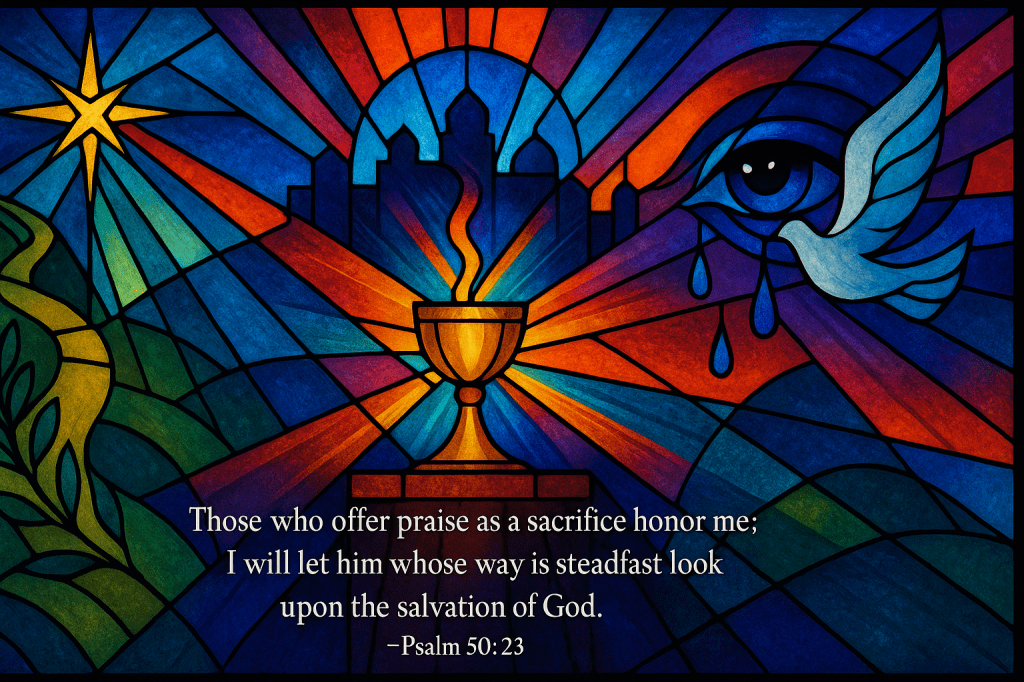
Hearts are hungry for lasting peace, yet real peace settles only where God is worshiped in truth and the covenant is kept. Today’s readings trace that path with striking clarity. In 1 Maccabees 2:15–29, the pressure to conform is intense as royal officers arrive in Modein to enforce pagan rites under the Seleucid program of Hellenization. Mattathias answers the moment with covenant courage, declaring “We will not… depart from our religion in the slightest degree.” His stand recalls earlier zeal like that of Phinehas and becomes the spark that carries Israel back toward fidelity when compromise feels easier and safer. Psalm 50 steps in to correct the heart, reminding God’s people that the offering He desires is not empty ritual but grateful obedience: “Offer praise as your sacrifice to God.” The psalm announces that God Himself summons the covenant assembly and judges with righteousness, and that the ones who keep their vows are the ones who will see His salvation (Ps 50:1–2, 5–6, 14–15, 23). Then Luke 19:41–44 brings the sobering edge of love, as Jesus draws near Jerusalem and weeps, lamenting, “If this day you only knew what makes for peace.” The warning about the coming siege points to the heartbreak that follows when God’s people do not recognize the time of His visitation. Taken together, these passages teach that covenant loyalty and true worship open the door to God’s peace, while compromise and spiritual blindness close it. The Church’s teaching reinforces this rhythm, since CCC 2099–2101 explains that genuine sacrifice is interior and expressed in outward acts, and that fidelity to God’s covenant is the measure of authentic worship. In a world crowded with rival altars and easy shortcuts, the Word today invites a renewed zeal like Mattathias, a living sacrifice of thanksgiving like Asaph’s psalm, and clear eyes that recognize the Lord who comes near in mercy. Where is God inviting a steadfast heart today so that His visitation is welcomed and His peace can finally take root?
First Reading – 1 Maccabees 2:15–29
Zeal that Guards the Covenant and Refuses Compromise
The scene unfolds in Modein during the harsh program of forced Hellenization under Antiochus IV Epiphanes. Royal officers travel town to town demanding public sacrifice to pagan gods, a direct assault on Israel’s identity as a covenant people. Mattathias, a respected elder, becomes the hinge of history when he refuses the king’s command and calls others to stand firm. This moment ignites the Hasmonean resistance and reveals what true worship looks like when pressure peaks. Within today’s theme, the passage shows that covenant fidelity is not abstract, it is embodied in concrete choices that honor God’s law rather than the benefits of royal favor. Interior loyalty becomes visible in outward obedience, which is precisely the kind of sacrifice that pleases God and leads to real peace.
1 Maccabees 2:15-29
New American Bible (Revised Edition)
Pagan Worship Refused and Resisted. 15 The officers of the king in charge of enforcing the apostasy came to the city of Modein to make them sacrifice. 16 Many of Israel joined them, but Mattathias and his sons drew together. 17 Then the officers of the king addressed Mattathias: “You are a leader, an honorable and great man in this city, supported by sons and kindred. 18 Come now, be the first to obey the king’s command, as all the Gentiles and Judeans and those who are left in Jerusalem have done. Then you and your sons shall be numbered among the King’s Friends, and you and your sons shall be honored with silver and gold and many gifts.”
19 But Mattathias answered in a loud voice: “Although all the Gentiles in the king’s realm obey him, so that they forsake the religion of their ancestors and consent to the king’s orders, 20 yet I and my sons and my kindred will keep to the covenant of our ancestors. 21 Heaven forbid that we should forsake the law and the commandments. 22 We will not obey the words of the king by departing from our religion in the slightest degree.”
23 As he finished saying these words, a certain Jew came forward in the sight of all to offer sacrifice on the altar in Modein according to the king’s order. 24 When Mattathias saw him, he was filled with zeal; his heart was moved and his just fury was aroused; he sprang forward and killed him upon the altar. 25 At the same time, he also killed the messenger of the king who was forcing them to sacrifice, and he tore down the altar. 26 Thus he showed his zeal for the law, just as Phinehas did with Zimri, son of Salu.
27 Then Mattathias cried out in the city, “Let everyone who is zealous for the law and who stands by the covenant follow me!” 28 Then he and his sons fled to the mountains, leaving behind in the city all their possessions.
29 At that time many who sought righteousness and justice went out into the wilderness to settle there,
Detailed Exegesis
Verse 15 – “The officers of the king in charge of enforcing the apostasy came to the city of Modein to make them sacrifice.”
The policy is explicit. The command is not cultural suggestion, it is state coercion. The sacred bond between Israel and the Lord is targeted by forcing sacrifices to false gods. Apostasy here is public and ritualized, which is why the response must be public and faithful.
Verse 16 – “Many of Israel joined them, but Mattathias and his sons drew together.”
The crowd fracture is immediate. Some comply, yet a remnant holds fast. The phrase “drew together” signals deliberate solidarity around the covenant. Fidelity often begins in a small community that refuses to be swept along by fear or flattery.
Verse 17 – “Then the officers of the king addressed Mattathias: ‘You are a leader, an honorable and great man in this city, supported by sons and kindred.’”
Flattery becomes a political tool. The regime tries to leverage honor, reputation, and family influence to secure compliance. If a visible leader yields, the community will likely follow.
Verse 18 – “‘Come now, be the first to obey the king’s command, as all the Gentiles and Judeans and those who are left in Jerusalem have done. Then you and your sons shall be numbered among the King’s Friends, and you and your sons shall be honored with silver and gold and many gifts.’”
Incentives are offered, status is dangled, and conformity is framed as normal. The lure of privilege attempts to redefine virtue as loyalty to the king rather than to God.
Verse 19 – “But Mattathias answered in a loud voice: ‘Although all the Gentiles in the king’s realm obey him, so that they forsake the religion of their ancestors and consent to the king’s orders,’”
The contrast is stark. Even if the majority capitulates, truth does not shift with numbers. Mattathias names the cost plainly, apostasy means forsaking the faith of the fathers.
Verse 20 – “‘yet I and my sons and my kindred will keep to the covenant of our ancestors.’”
Covenant fidelity is claimed as identity. The family will not merely avoid overt sin, they will actively keep the covenant, which includes worship, moral law, and distinct practices that mark belonging to the Lord.
Verse 21 – “‘Heaven forbid that we should forsake the law and the commandments.’”
This is a holy refusal. The phrase invokes divine disapproval at the very thought of abandoning God’s revealed will. The law is not a negotiable policy, it is the path of life.
Verse 22 – “‘We will not obey the words of the king by departing from our religion in the slightest degree.’”
The boundary is precise. Not even a slight departure is acceptable. Faithfulness is measured not only by avoiding grave betrayal but by resisting incremental compromise.
Verse 23 – “As he finished saying these words, a certain Jew came forward in the sight of all to offer sacrifice on the altar in Modein according to the king’s order.”
Public apostasy intensifies the crisis. The act is performed “in the sight of all,” which threatens to normalize disobedience and scandalize the community.
Verse 24 – “When Mattathias saw him, he was filled with zeal; his heart was moved and his just fury was aroused; he sprang forward and killed him upon the altar.”
Zeal language connects Mattathias to earlier biblical defenders of covenant purity, signaling a decisive rupture with enforced idolatry. The narrative underscores the gravity of liturgical betrayal in Israel’s story. The Church reads such episodes within salvation history, not as a template for Christian conduct, but as a witness to the seriousness of worship and the priority of God’s rights.
Verse 25 – “At the same time, he also killed the messenger of the king who was forcing them to sacrifice, and he tore down the altar.”
The imposed altar is dismantled, symbolically rejecting the counterfeit liturgy. The story emphasizes that structures of false worship must not stand among God’s people. In Christian fulfillment, the victory over idolatry is accomplished by Christ’s cross and is advanced by persevering witness, prayer, and sacramental life.
Verse 26 – “Thus he showed his zeal for the law, just as Phinehas did with Zimri, son of Salu.”
The text explicitly cites Phinehas, recalling Numbers 25, where zeal stayed divine wrath. The comparison situates Mattathias within a tradition of covenant guardianship. The deeper point is theological, God’s holiness and the integrity of worship matter for the life of the people.
Verse 27 – “Then Mattathias cried out in the city, ‘Let everyone who is zealous for the law and who stands by the covenant follow me!’”
A call is issued. The remnant is summoned to costly fidelity. The verse links zeal with steadfastness, not with rage, and directs it toward preserving the covenant community.
Verse 28 – “Then he and his sons fled to the mountains, leaving behind in the city all their possessions.”
Renunciation follows resolve. Possessions are left to safeguard faith. Exile becomes the price of worship. The movement to the mountains anticipates a wilderness pattern where God preserves a faithful people.
Verse 29 – “At that time many who sought righteousness and justice went out into the wilderness to settle there,”
The faithful gather. A community of righteousness takes shape outside compromised spaces. Historically this sets the stage for the Hasmonean revolt and ultimately for renewed temple worship, all within the mystery of God guiding a people through trial toward purification.
Teachings
The Church clarifies the nature of true sacrifice and vows, illuminating why Mattathias’s stand matters for worship that pleases God. CCC 2099 states, “It is right to offer sacrifice to God as a sign of adoration and gratitude, supplication and communion: ‘Every action done so as to cling to God in communion of holiness, and thus achieve blessedness, is a true sacrifice.’” CCC 2100 deepens the point, “Outward sacrifice, to be genuine, must be the expression of spiritual sacrifice: ‘The sacrifice acceptable to God is a broken spirit. . . .’ The prophets of the Old Covenant often denounced sacrifices that were not from the heart or not coupled with love of neighbor. Jesus recalls the words of the prophet Hosea: ‘I desire mercy, and not sacrifice.’” CCC 2101 applies fidelity to promises made to God, “In many circumstances the Christian is called to make promises to God. . . . Fidelity to promises made to God is a sign of the respect owed to the divine majesty and of love for a faithful God.”
Sacred Scripture echoes the same hierarchy of obedience. Acts 5:29 teaches, “We must obey God rather than men.” Psalm 50:14 instructs, “Offer praise as your sacrifice to God.” In the historical background of 1 Maccabees, Antiochus IV’s decrees around 167 BC outlawed core practices such as circumcision, Sabbath observance, and kosher laws, attempting to erase covenant identity. Mattathias’s refusal safeguards the truth that worship belongs to God alone and that the people’s peace depends on fidelity to Him.
Reflection
The reading challenges comfortable compromise and invites steadfast hearts. Public pressure to dilute worship can be subtle, arriving as promises of approval or advancement. Covenant fidelity looks like concrete daily choices that honor God’s law in prayer, work, family, and community. Consider specific practices that keep the covenant visible, such as faithful Sunday Mass, regular confession, daily Scripture, and acts of mercy that flow from worship. Ask for courage to relinquish comforts that weaken devotion, since holiness often requires leaving behind lesser goods to keep the greatest good. Where might small compromises be bending the heart away from the Lord’s commands today? Which promise made to God needs renewed fidelity and concrete action this week? What step of praise, repentance, or restitution can open space for God’s peace to take root more deeply?
Responsorial Psalm – Psalm 50:1–2, 5–6, 14–15, 23
Thanksgiving, Vows, and the Sacrifice God Desires
Composed by Asaph, Psalm 50 is a liturgical summons in which God Himself convenes a covenant court. The imagery is royal and judicial, as the Lord calls together heaven and earth to witness His judgment of worship that has become hollow. In the world of ancient Israel, sacrifices were meant to express faithful hearts and obedient lives, not to replace them. This psalm reorders the worshiper’s priorities by insisting that praise, fidelity to vows, and steadfast ways are the acceptable sacrifice. Within today’s theme, these lines clarify that God’s peace accompanies covenant loyalty and true worship. The faithful who keep promises to the Most High, cry to Him in distress, and walk uprightly are the ones who will see the salvation of God.
Psalm 50:1-2, 5-6, 14-15, 23
New American Bible (Revised Edition)
The Acceptable Sacrifice
1 A psalm of Asaph.
The God of gods, the Lord,
has spoken and summoned the earth
from the rising of the sun to its setting.
2 From Zion, the perfection of beauty,
God shines forth.
5 “Gather my loyal ones to me,
those who made a covenant with me by sacrifice.”
6 The heavens proclaim his righteousness,
for God himself is the judge.
Selah
14 Offer praise as your sacrifice to God;
fulfill your vows to the Most High.
15 Then call on me on the day of distress;
I will rescue you, and you shall honor me.”
23 Those who offer praise as a sacrifice honor me;
I will let him whose way is steadfast
look upon the salvation of God.”
Verse-by-Verse Exegesis
Verse 1 – “The God of gods, the Lord, has spoken and summoned the earth from the rising of the sun to its setting.”
The covenant lawsuit begins with universal scope. The Lord is not a local deity who bargains for tribute. He is the Judge of all the earth who calls every corner of creation to witness His verdict on worship. The summons signals that worship is not private performance but a truth claim about God’s identity that touches the whole world.
Verse 2 – “From Zion, the perfection of beauty, God shines forth.”
Zion stands as the liturgical heart of Israel, the place of God’s presence and instruction. Beauty here is not mere aesthetics. It is the radiance of holiness that goes out from God’s dwelling to purify His people. The verse anticipates that God will correct their worship so that beauty and truth can shine again.
Verse 5 – “‘Gather my loyal ones to me, those who made a covenant with me by sacrifice.’”
God calls the covenant family together, not to reject sacrifice, but to renew its meaning. The phrase “by sacrifice” recalls the foundational bond sealed with blood and oath. Loyalty is measured by fidelity to that bond, which embraces both ritual and moral obedience.
Verse 6 – “The heavens proclaim his righteousness, for God himself is the judge. Selah”
Heaven is personified as a witness to God’s justice. The verdict comes from the Holy One who judges rightly. The liturgical pause invites reflection before the Lord’s requirements are named. Worshipers stand under truth, not over it.
Verse 14 – “Offer praise as your sacrifice to God; fulfill your vows to the Most High.”
This is the center of the psalm’s teaching. Praise offered in gratitude and obedience is the sacrifice God desires. Vows refer to promises made in covenant life, which must be kept. The verse links liturgy and life, showing that the heart’s thanksgiving and the integrity of promises are indispensable.
Verse 15 – “Then call on me on the day of distress; I will rescue you, and you shall honor me.”
Trust becomes the test of worship. God commands His people to cry to Him in trouble, promising deliverance. Rescue leads to glory given to God, completing a cycle of covenant love in which gratitude, fidelity, and dependence all harmonize.
Verse 23 – “Those who offer praise as a sacrifice honor me; I will let him whose way is steadfast look upon the salvation of God.”
The psalm closes by tying right worship to a steadfast life. Praise is not noise, it is a lived posture that bears fruit in perseverance. The prize is vision, the grace to behold God’s saving work. Peace follows where praise and integrity meet.
Teachings
The psalm’s call to offer praise and keep vows aligns with the Church’s understanding of sacrifice and worship. In CCC 2099, the Church teaches, “It is right to offer sacrifice to God as a sign of adoration and gratitude, supplication and communion.” In CCC 2100, the Church explains, “Outward sacrifice, to be genuine, must be the expression of spiritual sacrifice.” In CCC 2101, the Church adds, “In many circumstances the Christian is called to make promises to God. Fidelity to promises made to God is a sign of the respect owed to the divine majesty and of love for a faithful God.” Sacred Scripture confirms that praise is sacrificial worship fulfilled in Christ. “Through him then let us continually offer up a sacrifice of praise to God, that is, the fruit of lips that acknowledge his name.” (Heb 13:15). When worship drifts from obedience, the apostles give the perennial rule: “We must obey God rather than men.” (Acts 5:29). The psalm therefore corrects empty ritual by directing hearts toward thanksgiving, truth, and promise-keeping so that worship becomes a living sacrifice pleasing to God.
Reflection
The psalm invites a daily rhythm of covenant faithfulness that starts with gratitude, continues with integrity, and leans on God in every trial. Begin and end the day with spoken praise, not as a routine, but as an offering that names God’s goodness. Review promises made to God and to others, then take one concrete step to fulfill them today. When anxiety rises, call on the Lord immediately and expect His help, then honor Him with public thanksgiving when rescue comes. Where does praise need to replace complaint today so that worship becomes a true sacrifice? Which promise to the Most High needs attention and concrete follow through this week? What distress can be brought to God right now in trusting prayer so that His peace can take root?
Holy Gospel – Luke 19:41–44
Tears Over a Blind City and the Peace That Was Near
Luke places Jesus on the road that leads down the Mount of Olives toward Jerusalem, the city of the temple and the heart of Israel’s worship. Pilgrims would approach with songs of ascent and hope for God’s nearness, yet what unfolds is a lament. The term “visitation” signals a decisive moment when God draws near to save and to judge. Within today’s theme, this scene exposes how covenant infidelity and hollow worship blind the heart to God’s peace. Jesus does not condemn from a distance. He weeps over a beloved city that fails to recognize the One who brings the very shalom it seeks.
Luke 19:41-44
New American Bible (Revised Edition)
41 As he drew near, he saw the city and wept over it, 42 saying, “If this day you only knew what makes for peace—but now it is hidden from your eyes. 43 For the days are coming upon you when your enemies will raise a palisade against you; they will encircle you and hem you in on all sides. 44 They will smash you to the ground and your children within you, and they will not leave one stone upon another within you because you did not recognize the time of your visitation.”
Detailed Exegesis
Verse 41 – “As he drew near, he saw the city and wept over it,”
The Lord’s tears reveal divine compassion. The true King approaches His city not with triumphal gloating but with grief. The sorrow is pastoral and prophetic. It echoes the tears of Jeremiah over a wayward people and shows the heart of God who desires mercy and conversion.
Verse 42 – “saying, ‘If this day you only knew what makes for peace—but now it is hidden from your eyes.’”
“Peace” means more than absence of conflict. It is the fullness of covenant life restored by the Messiah. The tragedy is epistemic and moral. Sin and stubbornness have made the essentials of peace opaque. The hiddenness is not arbitrary. It is the result of refusing the grace that stands before them.
Verse 43 – “For the days are coming upon you when your enemies will raise a palisade against you; they will encircle you and hem you in on all sides.”
The language anticipates siege warfare. Within a generation, Rome would encircle Jerusalem and build embankments, tightening a noose that devastated the city. The prophecy is not vindictive prediction. It is a sober warning that rejecting the way of God’s peace unleashes consequences in history.
Verse 44 – “They will smash you to the ground and your children within you, and they will not leave one stone upon another within you because you did not recognize the time of your visitation.”
“Visitation” means God’s saving arrival in His Messiah. The failure to recognize Jesus is the root cause of the coming ruin. The stones of the city mirror the hardness of unrepentant hearts. The line points beyond politics to worship, since peace is lost when the Lord who comes near is refused.
Teachings
The Church reads this moment as a revelation of Christ’s sorrowful love and a call to conversion. CCC 558 teaches, “As Jerusalem was the city of David, Jesus, the Son of David, chooses to go up to Jerusalem as the place of his Passion and Resurrection. When the days drew near for him to be taken up Jesus set his face to go to Jerusalem. By this decision he indicated that he was going up to Jerusalem prepared to die there. Three times he had announced his Passion and Resurrection. On his way to Jerusalem, Jesus wept over the city and expressed once again his desire to gather her children; like hens gather their brood under their wings, but they refused. Jesus recalls the prophets who had been put to death in Jerusalem. Nevertheless he persists in his love of Jerusalem.”
The Catechism also clarifies what true conversion requires. CCC 1430 explains, “Jesus’ call to conversion and penance, like that of the prophets before him, does not aim first at outward works, ‘sackcloth and ashes,’ but at the conversion of the heart, interior conversion. Without this, such penances remain sterile and false.” In the light of Psalm 50, the Gospel shows why vows, praise, and steadfastness matter. Peace flows from worship that receives the Lord’s visitation with obedient faith. Historical memory corroborates the warning, since Jerusalem’s destruction in the first century follows the path Jesus names. The point is theological. Missing the Messiah means missing the peace He gives.
A classic witness from the tradition captures the heart’s need for the One who draws near. Saint Augustine writes in Confessions, “You have made us for yourself, and our heart is restless until it rests in you.” The Gospel scene is Augustine’s insight in history. Restlessness hardens into ruin when the Lord is refused, yet rest and peace are given when He is welcomed.
Reflection
This Gospel presses an examination of the heart before it becomes a lament on the lips. The Lord draws near in His Word, in the poor, in the Eucharist, and in daily providence. Recognition requires humility, repentance, and concrete obedience. Set aside time today for silent prayer with Luke 19:41–44, then ask for the grace to see where peace is being delayed by hidden pride or quiet compromise. Make a sincere act of contrition and plan a good confession if needed. Offer praise as a real sacrifice and keep a promise made to God this week. Practice mercy toward someone difficult as a sign that the Lord’s peace is at work. Where has the voice of Jesus been resisted and peace has grown thin as a result? What step of interior conversion can open the eyes to recognize His visitation today? How can the Eucharist be received with renewed faith so that the city of the heart becomes a place of His peace?
Let Peace Take Root in True Worship
Mattathias in 1 Maccabees 2:15–29 shows what covenant loyalty looks like when pressure is high, refusing even the smallest departure from the law so that worship remains pure. Psalm 50 teaches the heart of that worship, calling for the sacrifice of thanksgiving, fidelity to vows, and trust that cries to God in distress, because “Those who offer praise as a sacrifice honor me.” Luke 19:41–44 reveals the cost of missing the Lord’s nearness, as Jesus weeps over a city that does not recognize the time of its visitation and therefore forfeits the very peace it longs to possess. Together these readings announce a clear path. Real peace comes where worship is true, where vows are kept, and where the Messiah is welcomed with obedient faith, exactly as CCC 2099–2101 and CCC 1430 affirm about interior sacrifice and conversion.
The invitation is simple and strong. Choose covenant fidelity over compromise. Offer praise as a real sacrifice. Keep promises made to God. Seek interior conversion and meet the Lord in the Eucharist with a contrite and trusting heart. Let the eyes be opened to God’s visitation in Scripture, in the poor, in daily providence, and in the quiet of prayer. “If this day you only knew what makes for peace.” Open the door. Live the vow. Let praise lead the way. What concrete step today will honor the covenant and clear space for the Prince of Peace to rule the heart? Which promise needs to be kept so that worship becomes truth and not just words? How will the Lord’s visitation be welcomed with gratitude, obedience, and steadfast love this week?
Engage with Us!
Share your reflections in the comments below and join the conversation of faith, hope, and steadfast love.
- Where might cultural pressure be nudging a compromise of faith like the scene in 1 Maccabees 2:15–29 and what concrete step this week will guard fidelity to God’s covenant? How can daily choices around prayer, work, and family become visible signs of covenant loyalty rather than quiet concessions?
- How can praise become a real sacrifice in light of Psalm 50 and which specific vow to the Most High needs renewed attention today? When distress rises, what practical habit will help call on the Lord first and then honor Him with thanksgiving?
- In the light of Luke 19:41–44, what signs of the Lord’s visitation are already present and how can humble repentance open the eyes to His peace? Which concrete act of mercy will welcome Jesus more fully into the city of the heart this week?
Choose fidelity. Offer praise. Keep promises. Walk in mercy. Live a life of faith and do everything with the love and compassion Jesus taught.
Sacred Heart of Jesus, we trust in You!
Immaculate Heart of Mary, pray for us!
Saint Michael the Archangel, defend us in battle!
Follow us on Instagram and Facebook for more insights and reflections on living a faith-filled life.

 Holy Manna!
Leave a comment