Fire in the Frost
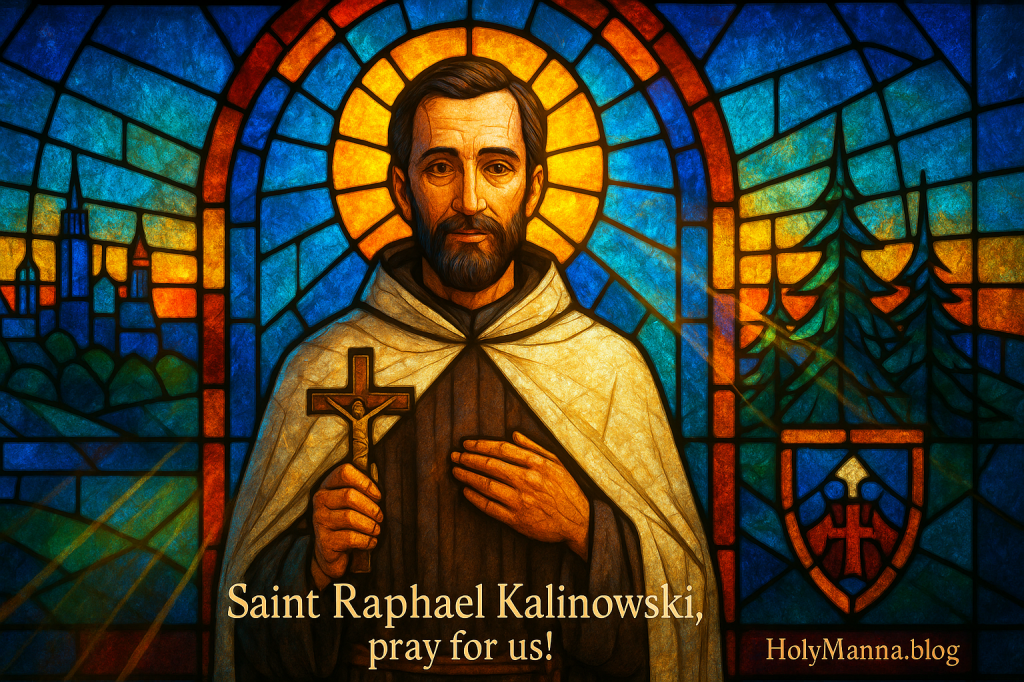
Saint Raphael of St. Joseph Kalinowski shines as a bridge between courage in public life and humility in the cloister. Born Józef Kalinowski in 1835 in Vilnius, he served as a gifted engineer and a leader in the 1863 January Uprising, then endured years of exile in Siberia, and finally answered a late vocation as a Discalced Carmelite priest. His sanctity grew in steady, ordinary fidelity rather than spectacle, especially in the confessional where he welcomed countless souls back to God. The Church remembers him as a restorer of Carmel in Poland, a spiritual father to the broken, and a witness that divine mercy can transform political defeat and personal suffering into radiant holiness. His feast is celebrated on November 19, and his life remains a living invitation to hope.
A Patriot’s Heart, a Carmelite’s Soul
Józef grew up in an intellectually rich home; his father, Andrzej, taught mathematics and encouraged serious study, prayer, and integrity. The young Kalinowski studied at the Institute for Nobles in Vilnius, then pursued agriculture and military engineering, earning assignments that placed him at the center of major railway projects. A fierce love of country stirred his conscience when Poland rose against oppression in 1863, and he resigned his imperial commission to serve the insurgency in the Vilnius region. Arrest followed, and he accepted the consequences with a conscience anchored in truth, refusing to save himself at the cost of others. Grace was already at work, deepening a faith that would later blossom in Carmel and define the service for which he is best known.
From Engineering Blueprints to a Vocation Rebuilt
Exile changed him. A death sentence was commuted to hard labor, and he spent about a decade in Siberia, where cold, hunger, and deprivations were constant companions. In those frozen years he became a quiet apostle among the exiled, sharing food, prayer, and hope, and keeping alive a reverence for God and country without hatred. Released and repatriated in 1874, he served for a time as tutor to Prince August Czartoryski, guiding him toward a priestly vocation that would lead to beatification. In 1877 he entered the Discalced Carmelites, received the name Raphael of St. Joseph, and was ordained a priest in 1882. He poured himself into rebuilding Carmelite life in Poland, especially at Czerna and in Wadowice, and became known for long hours in the confessional and for fatherly spiritual direction centered on prayer, penance, and charity.
Mercy in Motion
Saint Raphael’s most characteristic wonders took place in the confessional where grace quietly remade lives. He often spent many hours hearing confessions with patience and clarity, encouraging honest self-knowledge and firm purpose of amendment. People sought him out because he combined a surgeon’s precision with a father’s tenderness, always pointing sinners to the Eucharist and Our Lady. He loved to remind weary hearts of the nearness of Christ in the tabernacle, expressing a conviction that still heals: “Our Redeemer, ever present in the most Blessed Sacrament, extends His hands to everyone. He opens His heart and says, ‘Come to Me, all of you.’” His counsel was not sentimental; it was demanding in the best sense, anchored in the Cross, and radiant with the hope that God’s mercy can truly make all things new.
Chains, Cold, and Christ
The hardships Raphael endured were real and relentless. Exile meant forced marches, backbreaking labor, sickness, and the constant temptation to despair. He chose instead to offer his suffering in union with Christ, to comfort fellow prisoners, and to cultivate a disciplined interior life of prayer. Even after his return, the crosses of responsibility, fatigue, and pastoral demands continued, yet he met them with a steady charity that had been forged in the school of suffering. He died on November 15, 1907, worn out but peaceful, in the Carmelite house he had helped establish; his body rests at Czerna, where pilgrims still come to ask his intercession and to learn from his perseverance in love.
When the Grain Falls to the Earth
After his death, devotion to Raphael spread quickly because people recognized the authenticity of his holiness. Reports of favors and healings multiplied as pilgrims visited his tomb and asked for help with family burdens, conversions, and illnesses. The Church examined two miracles attributed to his intercession, one for beatification and another for canonization, each involving healings that defied medical expectation and were obtained through prayer invoking him. Pope John Paul II beatified him in Kraków in 1983 and canonized him in 1991, presenting him as a model for priests, religious, laity, and all who suffer for truth. The Carmel at Czerna remains a place of prayer where his legacy lives, and where the quiet fruits of his intercession continue to strengthen faith.
A Quiet Flame that Still Warms
Saint Raphael Kalinowski speaks powerfully to anyone who has ever started over, who has carried regret, or who has wrestled with divided loyalties and a restless heart. His life shows that love of country and love of God do not compete when both are purified by charity and truth. He teaches that the sacraments, especially the Eucharist and Reconciliation, are not side notes but the very lifeblood of Christian renewal. He helped restore Carmel in Poland, inspired a future pope from the town of Wadowice, and modeled a priesthood that listens more than it scolds. His memory urges a practical holiness that looks like fidelity to duty, patience with suffering, and a mercy that never gives up on anyone.
Holiness is for Today
Raphael’s spirituality is wonderfully concrete. He believed that sanctity grows where duty is fulfilled with love, where prayer is regular and honest, and where sacrifice is offered for others. His own words cut through excuses and focus the heart: “The Holy Scriptures praise nothing more than a perfect and holy life lived in the exact and perfect fulfillment of each one’s duties.” That vision harmonizes with the Church’s teaching on the universal call to holiness in the Catechism of the Catholic Church 2013 through 2014, the healing power of the sacrament of Penance in CCC 1468 through 1470, and the unity God desires for his people in CCC 820 through 821. Start small and stay steady. Go to Mass on Sundays and as often as possible, return to confession without delay when you fall, offer a hidden sacrifice each day for a specific person, and spend a few quiet minutes before the tabernacle. The Lord uses such ordinary faithfulness to write extraordinary stories of redemption.
Engage with Us!
Share your thoughts and prayers in the comments.
- Where do you sense the Lord inviting you to “fulfill your duties” with renewed love this week?
- How has the sacrament of Reconciliation lifted you from discouragement and helped you start again?
- What cross are you carrying now, and how might you unite it to Christ for someone else’s good, as Raphael did?
- Where is the Lord calling you to work for unity with patience and humility in your family, parish, or friendships?
Be encouraged to live a faithful life, loving God and neighbor with the mercy Jesus taught, and let Saint Raphael Kalinowski’s prayerful courage kindle steady holiness in you today.
Saint Raphael Kalinowski, pray for us!
Follow us on Instagram and Facebook for more insights and reflections on living a faith-filled life.

 Holy Manna!
Leave a comment