Tuesday of the Thirty-third Week in Ordinary Time – Lectionary: 498
Courage That Sparks Conversion
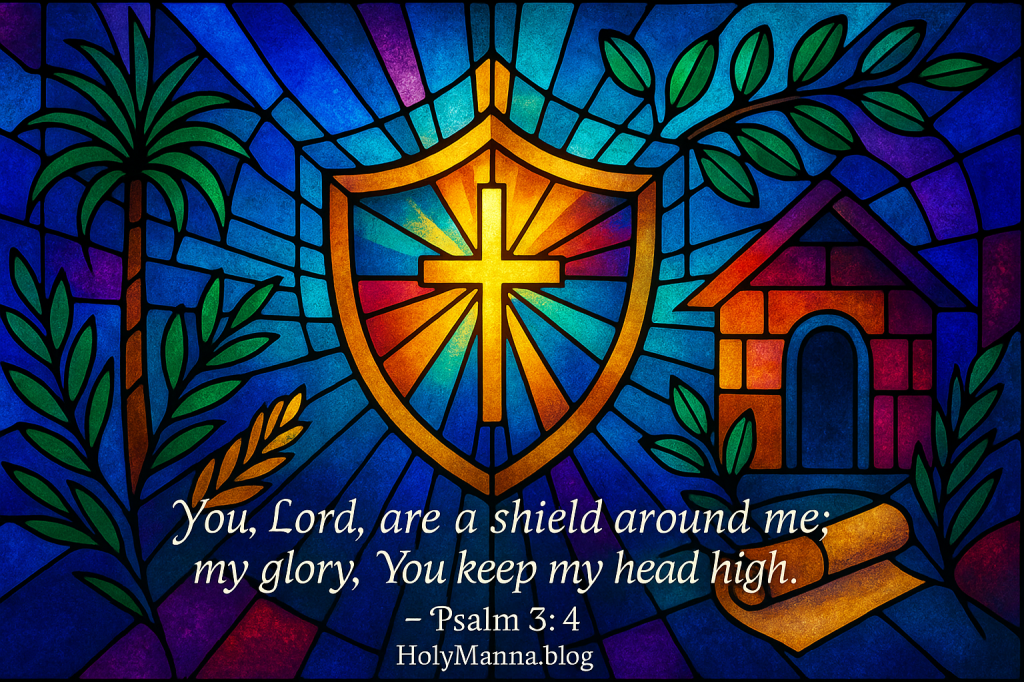
When conviction is pressed by power, the true allegiance of the heart comes into focus. In 2 Maccabees 6:18-31, Eleazar stands within the violent swirl of the persecutions under Antiochus IV, where faithful Jews were coerced to abandon the law and embrace a veneer of Hellenistic conformity. He refuses even the appearance of compromise, choosing honor before God over a longer but hollow life, a stance the Church names with clarity: “Martyrdom is the supreme witness given to the truth of the faith.” CCC 2473. Psalm 3 gives the interior soundtrack to that kind of fidelity, teaching the embattled believer to pray with steady trust, “You, Lord, are a shield around me.” Ps 3:4. Then Luke 19:1-10 shifts the scene to Jericho, a major customs hub, where Zacchaeus, a chief tax collector entangled in Rome’s exploitative system, climbs a sycamore to glimpse the Messiah and is instead seen and called by Him. The Lord’s initiative lands like grace on a parched field, and the proof of that grace appears immediately in Zacchaeus’s concrete repentance and generous restitution, perfectly echoing the Church’s wisdom that “One must do what is possible in order to repair the harm.” CCC 1459. Here the readings converge in a single theme: courageous fidelity to God opens the door to conversion and visible renewal. Eleazar’s integrity guards the young from scandal, the psalm trains the heart to rest under God’s protection, and the Gospel shows salvation taking root in a house through acts of justice and mercy, crowned by the Lord’s own word, “Today salvation has come to this house.” Lk 19:9. What choice today will witness to God with the same clarity, trusting that Christ still seeks and saves what was lost?
First Reading – 2 Maccabees 6:18-31
Integrity That Refuses the Mask
Under the harsh decrees of Antiochus IV Epiphanes in the second century before Christ, faithful Jews were pressured to abandon the covenant and accept Hellenistic practices that violated the law of Moses. Dietary commands were not mere customs but visible signs of belonging to the holy people formed by God at Sinai. The episode of Eleazar takes place within the Maccabean persecution, when public acts of apostasy were staged to break Israel’s resolve. Eleazar’s refusal to eat pork, or even to pretend to do so, exposes the stakes: a community rises or falls on the integrity of its elders, and the holiness of God’s people cannot be built on a lie. Within today’s theme, his steadfastness embodies courageous fidelity that guards the young from scandal, while his joyful endurance under torture anticipates the Gospel’s pattern of grace that brings visible renewal. His example announces that authentic religion requires both the heart’s allegiance and the body’s witness before the watching world.
2 Maccabees 6:18-31
New American Bible (Revised Edition)
Martyrdom of Eleazar. 18 Eleazar, one of the foremost scribes, a man advanced in age and of noble appearance, was being forced to open his mouth to eat pork. 19 But preferring a glorious death to a life of defilement, he went forward of his own accord to the instrument of torture, 20 spitting out the meat as they should do who have the courage to reject food unlawful to taste even for love of life.
21 Those in charge of that unlawful sacrifice took the man aside, because of their long acquaintance with him, and privately urged him to bring his own provisions that he could legitimately eat, and only to pretend to eat the sacrificial meat prescribed by the king. 22 Thus he would escape death, and be treated kindly because of his old friendship with them. 23 But he made up his mind in a noble manner, worthy of his years, the dignity of his advanced age, the merited distinction of his gray hair, and of the admirable life he had lived from childhood. Above all loyal to the holy laws given by God, he swiftly declared, “Send me to Hades!”
24 “At our age it would be unbecoming to make such a pretense; many of the young would think the ninety-year-old Eleazar had gone over to an alien religion. 25 If I dissemble to gain a brief moment of life, they would be led astray by me, while I would bring defilement and dishonor on my old age. 26 Even if, for the time being, I avoid human punishment, I shall never, whether alive or dead, escape the hand of the Almighty. 27 Therefore, by bravely giving up life now, I will prove myself worthy of my old age, 28 and I will leave to the young a noble example of how to die willingly and nobly for the revered and holy laws.”
He spoke thus, and went immediately to the instrument of torture. 29 Those who shortly before had been kindly disposed, now became hostile toward him because what he had said seemed to them utter madness. 30 When he was about to die under the blows, he groaned, saying: “The Lord in his holy knowledge knows full well that, although I could have escaped death, I am not only enduring terrible pain in my body from this scourging, but also suffering it with joy in my soul because of my devotion to him.” 31 This is how he died, leaving in his death a model of nobility and an unforgettable example of virtue not only for the young but for the whole nation.
Detailed Exegesis
Verse 18 – “Eleazar, one of the foremost scribes, a man advanced in age and of noble appearance, was being forced to open his mouth to eat pork.”
Eleazar’s public status heightens responsibility. As a scribe and elder, his actions would teach by example. Jewish dietary law marked out a consecrated identity, so forcing pork aimed to erase the covenant. The pressure falls not only on a private conscience but on the face of the community.
Verse 19 – “But preferring a glorious death to a life of defilement, he went forward of his own accord to the instrument of torture,”
The text highlights freedom and dignity. Eleazar chooses a “glorious death,” which the Church recognizes as the apex of witness. CCC 2473 teaches, “Martyrdom is the supreme witness given to the truth of the faith: it means bearing witness even unto death.”
Verse 20 – “spitting out the meat as they should do who have the courage to reject food unlawful to taste even for love of life.”
His gesture is both literal and symbolic. He rejects not only the act but the compromise that would subordinate God’s law to self-preservation. This is fortitude in action, the moral virtue that stands firm in trial. CCC 1808 states, “Fortitude is the moral virtue that ensures firmness in difficulties and constancy in the pursuit of the good.”
Verse 21 – “Those in charge of that unlawful sacrifice took the man aside, because of their long acquaintance with him, and privately urged him to bring his own provisions that he could legitimately eat, and only to pretend to eat the sacrificial meat prescribed by the king.”
Here appears the subtle temptation of appearances. The persecutors offer a path of deception to preserve comfort and social standing. The suggestion reveals how scandal spreads through crafted illusions.
Verse 22 – “Thus he would escape death, and be treated kindly because of his old friendship with them.”
Human favor is dangled as a substitute for divine approval. Eleazar understands that kindness bereft of truth becomes complicity, not mercy.
Verse 23 – “But he made up his mind in a noble manner, worthy of his years, the dignity of his advanced age, the merited distinction of his gray hair, and of the admirable life he had lived from childhood. Above all loyal to the holy laws given by God, he swiftly declared, ‘Send me to Hades!’”
His lifelong formation bears fruit at the hour of testing. Integrity in old age crowns decades of fidelity. His cry, stark and courageous, rejects any collaboration with evil, even under the guise of prudence.
Verse 24 – “‘At our age it would be unbecoming to make such a pretense; many of the young would think the ninety-year-old Eleazar had gone over to an alien religion.”
The concern turns to the young. Eleazar refuses to teach by a lie. The Church warns about scandal. CCC 2284 teaches, “Scandal is an attitude or behavior which leads another to do evil. The person who gives scandal becomes his neighbor’s tempter.”
Verse 25 – “‘If I dissemble to gain a brief moment of life, they would be led astray by me, while I would bring defilement and dishonor on my old age.”
A short extension of life is worthless if it corrupts others. The elder refuses to exchange a momentary reprieve for enduring damage to souls.
Verse 26 – “‘Even if, for the time being, I avoid human punishment, I shall never, whether alive or dead, escape the hand of the Almighty.”
He acknowledges God’s sovereign justice. Human courts can be evaded. The Lord’s judgment cannot. This holy fear purifies discernment and anchors moral clarity.
Verse 27 – “‘Therefore, by bravely giving up life now, I will prove myself worthy of my old age,”
True worth is measured by fidelity at the end. His courage confirms the authenticity of a life of devotion.
Verse 28 – “‘and I will leave to the young a noble example of how to die willingly and nobly for the revered and holy laws.’” “He spoke thus, and went immediately to the instrument of torture.”
Testimony culminates in action. He not only speaks rightly but acts decisively, offering a pattern of sanctity that forms future generations.
Verse 29 – “Those who shortly before had been kindly disposed, now became hostile toward him because what he had said seemed to them utter madness.”
The world often calls holiness madness. Shifting opinions reveal the instability of human approval when confronted with uncompromising truth.
Verse 30 – “When he was about to die under the blows, he groaned, saying: ‘The Lord in his holy knowledge knows full well that, although I could have escaped death, I am not only enduring terrible pain in my body from this scourging, but also suffering it with joy in my soul because of my devotion to him.’”
This paradox of sorrow and joy anticipates Christian martyrdom. Bodily pain coexists with spiritual joy rooted in love for God. Such joy flows from union with the Lord who gives meaning to suffering.
Verse 31 – “This is how he died, leaving in his death a model of nobility and an unforgettable example of virtue not only for the young but for the whole nation.”
The narrative closes with legacy. The elder’s faithful death becomes a national catechesis. Sanctity is never private property. It strengthens the entire people of God.
Teachings
The Church names what Eleazar embodies. CCC 2473 teaches, “Martyrdom is the supreme witness given to the truth of the faith: it means bearing witness even unto death; the martyr bears witness to Christ who died and rose, to whom he is united by charity.” CCC 2474 adds the Church’s memory of the martyrs and includes the ancient confession, “I am God’s wheat, and I am ground by the teeth of wild beasts that I may be found the pure bread of Christ.” This line from Saint Ignatius of Antioch echoes Eleazar’s readiness to be spent for fidelity. Regarding fortitude, CCC 1808 states in full, “Fortitude is the moral virtue that ensures firmness in difficulties and constancy in the pursuit of the good. It strengthens the resolve to resist temptations and to overcome obstacles in the moral life. The virtue of fortitude enables one to conquer fear, even fear of death, and to face trials and persecutions.” On scandal, CCC 2284 gives a sober warning, “Scandal is an attitude or behavior which leads another to do evil. The person who gives scandal becomes his neighbor’s tempter. He damages virtue and integrity; he may even draw his brother into spiritual death.” The Maccabean persecutions themselves are a pivotal historical crucible in which Israel’s identity is purified. The refusal to pretend speaks to the heart of covenant fidelity, since God’s people are called to worship in spirit and truth, not in appearances that betray the young and dilute the holy law entrusted to them.
Reflection
Eleazar’s witness calls for honest worship that matches the heart and the body. Public masks are easy to wear, yet holiness requires truth in the open, not just in private intention. Prayer for fortitude is essential, then intentional habits must follow. Choose small acts of fidelity that resist peer pressure. Refuse to normalize what profanes God’s law. Guard the young by consistent example and clear speech that never hints at compromise. Make choices that can be imitated safely by those who are watching. Seek the Lord’s joy in sacrifice so that suffering for the good does not become bitterness. What area of life invites a quiet pretense that must be surrendered to truth today? Whose faith would be steadied if a firm and peaceful no were spoken to compromise? How might the daily cross be embraced with the joyful devotion that Eleazar showed, trusting the Lord to sustain and to save?
Responsorial Psalm – Psalm 3:2-7
Shielded Courage and Restful Trust
Composed against the backdrop of conflict, Psalm 3 has been traditionally associated with David’s flight from Absalom, a moment when betrayal and danger pressed in from every side. In Israel’s worship this psalm formed the heart of morning prayer, the time when the faithful rose to confess that the Lord alone sustains life. The repeated cry about many foes and the refrain of trust reveal the interior posture of the covenant people when power threatens fidelity. Within today’s theme, the psalm supplies the inner music of courageous fidelity that refuses pretense and relies on God’s protection, so that renewal can take visible shape in works of justice and mercy. The language of “shield,” “holy mountain,” and peaceful sleep signals a faith that refuses panic, chooses prayer, and expects God to act in history.
Psalm 3:2-7
New American Bible (Revised Edition)
2 How many are my foes, Lord!
How many rise against me!
3 How many say of me,
“There is no salvation for him in God.”
Selah
4 But you, Lord, are a shield around me;
my glory, you keep my head high.
5 With my own voice I will call out to the Lord,
and he will answer me from his holy mountain.
Selah
6 I lie down and I fall asleep,
[and] I will wake up, for the Lord sustains me.
7 I do not fear, then, thousands of people
arrayed against me on every side.
Detailed Exegesis
Verse 2 – “How many are my foes, Lord! How many rise against me!”
The psalm opens with honest lament, not with denial. Naming the opposition is a form of spiritual clarity. The enemy can be external hostility or interior temptation. The believer refuses to minimize the threat while refusing to surrender to it.
Verse 3 – “How many say of me, ‘There is no salvation for him in God.’ Selah”
The sharpest wound is the taunt that God will not save. Unbelief speaks through the crowd and tries to settle in the heart. The sacred pause, “Selah,” invites the worshiper to let the charge surface and then hand it to the Lord, who alone answers it.
Verse 4 – “But you, Lord, are a shield around me; my glory, you keep my head high.”
The turn from “many” to “you” is decisive. God is not a distant observer but a surrounding defense. To lift the head is covenant language for restored dignity. Divine protection does not remove the battlefield, yet it establishes unshakable honor.
Verse 5 – “With my own voice I will call out to the Lord, and he will answer me from his holy mountain. Selah”
Prayer engages the whole person. The voice rises from earth to Zion, the place of God’s presence. Confidence rests on God’s faithfulness, not on willpower. The second “Selah” marks the quiet certainty that God hears and answers in His time.
Verse 6 – “I lie down and I fall asleep, and I will wake up, for the Lord sustains me.”
Sleep becomes a sacrament of trust. The world still rages, yet the faithful rest, because life remains in God’s hands. Waking is a daily resurrection, a fresh proof that the Lord upholds those who rely on Him.
Verse 7 – “I do not fear, then, thousands of people arrayed against me on every side.”
Fear loses authority when God is near. The image shifts from inner prayer to outward courage. The believer stands firm, not because threats shrink, but because the Lord surrounds, lifts, answers, and sustains.
Teachings
The Church situates this psalm within the living school of prayer. CCC 2586 teaches, “The Psalms constitute the masterwork of prayer in the Old Testament.” In them the covenant people learn to bring every fear and hope into God’s presence. CCC 2587 further affirms, “In the Psalms, the Word of God becomes the prayer of man.” The believer prays with words God Himself has given, which is why this psalm fits both the embattled king and any disciple facing pressure. The heart of this prayer is theological hope. CCC 1817 defines hope with precision: “Hope is the theological virtue by which we desire the kingdom of heaven and eternal life as our happiness, placing our trust in Christ’s promises and relying not on our strength, but on the help of the grace of the Holy Spirit.” The confident sleep of Ps 3:6 mirrors that virtue. The very act of calling upon the Lord embodies the Church’s classic teaching on prayer. CCC 2559 cites Saint John Damascene in full: “Prayer is the raising of one’s mind and heart to God, or the requesting of good things from God.” Through this lens, the psalm’s movement from complaint to confidence is not mood management but an act of worship that places the whole person under God’s shield. In the liturgy, this psalm trains the community to resist the lie that God does not save and to live the courage that flows from being heard on God’s holy mountain.
Reflection
This psalm invites a daily rhythm of trust that is brave enough to name fears and gentle enough to sleep in God’s care. Begin the day by praying the words of Psalm 3, allow the taunts of unbelief to surface, and then hand them to the Lord with slow and steady confidence. Throughout the day return to the simple confession, “You are my shield,” especially when criticism or temptation presses in. Before bed, practice an examen that surrenders control and welcomes sustaining grace for the next morning. Refuse the cultural script that equates worth with frantic performance, and choose the covenant script that lifts the head and restores dignity. Where has anxiety been narrating the day instead of the Lord’s promises? What concrete step today would look like trusting God enough to rest rather than to grasp? Whose courage would rise if the quiet prayer of this psalm became the steady pattern of the morning and the night?
Holy Gospel – Luke 19:1-10
Seen, Called, Changed
Jericho was a strategic crossroads, a wealthy oasis city where customs duties flowed to Rome and where tax farming turned profit through over-collection. A “chief tax collector” managed others and profited from their take, which meant social exclusion within Israel’s religious life. Into this world of money and mistrust, the Lord enters with divine initiative and table fellowship that signals full communion. Hospitality in the ancient Near East carried covenant weight. To stay in a house was to restore a person to the community. Within today’s theme, this encounter shows that courageous fidelity to God does not harden into contempt. It opens space for grace to seek the sinner, and it bears visible fruit in repentance, restitution, and mercy that can be verified by one’s neighbors.
Luke 19:1-10
New American Bible (Revised Edition)
Zacchaeus the Tax Collector. 1 He came to Jericho and intended to pass through the town. 2 Now a man there named Zacchaeus, who was a chief tax collector and also a wealthy man, 3 was seeking to see who Jesus was; but he could not see him because of the crowd, for he was short in stature. 4 So he ran ahead and climbed a sycamore tree in order to see Jesus, who was about to pass that way. 5 When he reached the place, Jesus looked up and said to him, “Zacchaeus, come down quickly, for today I must stay at your house.” 6 And he came down quickly and received him with joy. 7 When they all saw this, they began to grumble, saying, “He has gone to stay at the house of a sinner.” 8 But Zacchaeus stood there and said to the Lord, “Behold, half of my possessions, Lord, I shall give to the poor, and if I have extorted anything from anyone I shall repay it four times over.” 9 And Jesus said to him, “Today salvation has come to this house because this man too is a descendant of Abraham. 10 [c]For the Son of Man has come to seek and to save what was lost.”
Detailed Exegesis
Verse 1 – “He came to Jericho and intended to pass through the town.”
The movement through Jericho is purposeful. Salvation is on the move. The Lord brings the kingdom into a city known for commerce and compromise, making it a stage for divine mercy.
Verse 2 – “Now a man there named Zacchaeus, who was a chief tax collector and also a wealthy man,”
Zacchaeus stands at the top of a system that profited from Roman occupation. His wealth signals success and suspicion. In the religious culture of the time, his status meant ritual impurity and social distance.
Verse 3 – “was seeking to see who Jesus was; but he could not see him because of the crowd, for he was short in stature.”
Desire leads the way. The obstacle is both physical and social. The crowd that should help him meet the Lord becomes a barrier. The Gospel exposes how curiosity can ripen into conversion when grace intervenes.
Verse 4 – “So he ran ahead and climbed a sycamore tree in order to see Jesus, who was about to pass that way.”
Running and climbing are undignified for a wealthy official. Humility takes concrete form. He accepts a childlike posture to gain a clearer view, a living image of the lowliness that prepares the heart for mercy.
Verse 5 – “When he reached the place, Jesus looked up and said to him, ‘Zacchaeus, come down quickly, for today I must stay at your house.’”
The Lord “must” stay with him. That necessity is the will of the Father. He calls Zacchaeus by name and invites table fellowship. Mercy is personal and urgent. Communion precedes cleanup, yet it also guarantees transformation.
Verse 6 – “And he came down quickly and received him with joy.”
Joy is the first sign of salvation at work. Zacchaeus responds promptly and welcomes the Lord. The posture of hospitality becomes the doorway to conversion.
Verse 7 – “When they all saw this, they began to grumble, saying, ‘He has gone to stay at the house of a sinner.’”
The crowd judges the Lord’s mercy. Their complaint reveals a scandal at grace. The Good Shepherd’s search for the lost often provokes resistance in the self-assured.
Verse 8 – “But Zacchaeus stood there and said to the Lord, ‘Behold, half of my possessions, Lord, I shall give to the poor, and if I have extorted anything from anyone I shall repay it four times over.’”
Repentance turns into measurable justice. Almsgiving answers love of neighbor, and fourfold restitution exceeds strict requirements, echoing the robust reparation found in Exodus 22:1 and David’s judgment in 2 Samuel 12:6. Grace does not excuse sin. It heals, restores, and goes beyond the minimum.
Verse 9 – “And Jesus said to him, ‘Today salvation has come to this house because this man too is a descendant of Abraham.’”
The Lord declares a present reality. Salvation is not abstract. It enters a house and a lineage. To call him a son of Abraham restores covenant identity by faith and by a life that shows faith’s fruit.
Verse 10 – “For the Son of Man has come to seek and to save what was lost.”
This is the mission statement of the Incarnate Mercy. He seeks before we search. He saves those who cannot save themselves. The entire scene reveals the pattern of Christian life: sought, seen, summoned, and sent in renewed justice.
Teachings
The Church names the Lord’s action with precision. The Catechism of the Catholic Church 1443 teaches, “During his public life Jesus not only forgave sins, but also made plain the effect of this forgiveness: he reintegrated forgiven sinners into the community of the People of God from which sin had alienated or even excluded them.” Zacchaeus’s table fellowship and restored identity as a son of Abraham are the visible sign of that reintegration. Conversion begins inside and moves outward. CCC 1431 states, “Interior repentance is a radical reorientation of our whole life, a return, a conversion to God with all our heart, an end of sin, a turning away from evil, with repugnance toward the evil actions we have committed.” The Gospel shows that interior turn flowering in concrete acts. Satisfaction is part of true repentance. CCC 1459 teaches, “Many sins wrong our neighbor. One must do what is possible in order to repair the harm (for example, return stolen goods, restore the reputation of someone slandered, pay compensation for injuries). Simple justice requires as much.” The grace that initiates conversion is God’s free gift. CCC 1996 proclaims, “Our justification comes from the grace of God. Grace is favor, the free and undeserved help that God gives us to respond to his call to become children of God, adoptive sons, partakers of the divine nature and of eternal life.” That grace then bears the fruit of mercy. CCC 2447 clarifies, “The works of mercy are charitable actions by which we come to the aid of our neighbor in his spiritual and bodily necessities.” Zacchaeus’s almsgiving and restitution are a textbook instance of mercy’s shape in real life. In this way, the Gospel teaches that courageous fidelity to God welcomes the Lord’s initiative and then proves its authenticity by justice, generosity, and restored communion.
Reflection
The Lord still walks through crowded streets and still calls people by name. He does not wait for perfect behavior before He says, “Today.” The answer begins with humble availability and becomes visible in specific repair and specific generosity. Invite Him into the places that have been protected by excuses. Then choose measurable steps that reflect a new heart. Make a plan for restitution where harm has been done. Set a percentage for almsgiving that is both sacrificial and sustainable. Seek the Sacrament of Reconciliation and ask for a penance that aims at love of neighbor. Where is the crowd blocking a clear view of Christ and how can humility climb above the noise to see Him? What concrete act of restitution would make love measurable this week? How might table fellowship with those on the margins become a sign that salvation has truly come to the house?
Hold the Line, Open the Door
Eleazar in 2 Maccabees 6:18-31 stands as a living standard of covenant honesty, refusing even the appearance of betrayal so that the young will see a faith that does not flinch. Psalm 3 supplies the interior courage for that kind of witness, teaching the heart to rest and to rise under the promise, “You, Lord, are a shield around me.” Ps 3:4. Then Luke 19:1-10 shows what happens when courageous fidelity meets divine initiative, as the Lord calls Zacchaeus by name and declares, “Today salvation has come to this house.” Lk 19:9. The day’s message comes into focus with clarity. God shields those who choose truth over pretense, and that protection becomes the soil where real conversion grows into visible mercy, generous almsgiving, and concrete restitution.
Take this into the week with steady purpose. Choose integrity in the small places that no one sees, and let that hidden yes shape a public example that guards the young. Pray Psalm 3 at the start and end of the day, and hand the taunts of fear to the Lord who answers from His holy mountain. Build a simple Zacchaeus plan that names harm done, restores what can be restored, and sets generosity in motion that love can measure. Where is a quiet compromise asking to be surrendered today? What would trusting God enough to sleep in peace look like tonight? Which person needs repair, restitution, or hospitality so that salvation can be seen in a house again?
Engage with Us!
Share reflections in the comments below and join the conversation about how God is speaking through these readings today.
- First Reading – 2 Maccabees 6:18-31: Where is a quiet pretense asking to be surrendered so that integrity can lead by example? How can the witness of Eleazar shape choices that guard the faith of the young and honor God in public and in private?
- Responsorial Psalm – Psalm 3:2-7: Where has anxiety been telling the story of the day instead of the Lord’s promise, “You, Lord, are a shield around me” (Ps 3:4)? What simple practice tonight would look like trusting God enough to rest in His sustaining care?
- Holy Gospel – Luke 19:1-10: What concrete act of restitution or generosity would make conversion visible this week, like Zacchaeus? Who needs hospitality or reconciliation so that salvation can be seen in a house again?
Keep pressing into prayer, choose truth with courage, and live every moment with the love and mercy Jesus taught, so that faith becomes a radiant sign of hope for every heart you meet.
Sacred Heart of Jesus, we trust in You!
Immaculate Heart of Mary, pray for us!
Saint Michael the Archangel, defend us in battle!
Follow us on Instagram and Facebook for more insights and reflections on living a faith-filled life.

 Holy Manna!
Leave a comment