Saturday of the Thirty-second Week in Ordinary Time – Lectionary: 496
Memory That Moves Mountains
Settle into the quiet and listen for the same living Word who once split the sea and still stirs hearts to hope today. Where has God already shown His faithfulness in your story, and how might that memory strengthen your prayer right now? Today’s readings trace a single line from deliverance to doxology to determined prayer. In Wisdom 18:14–16; 19:6–9 the sacred author looks back to the night of the Exodus and dares to say that “Your all-powerful word… leapt into the doomed land”, turning creation itself into a pathway for a people in danger. This is Israel’s foundational memory, and the Church reads it as a figure of Baptism, where God’s people pass from slavery to freedom through water by the power of the Word, as taught in CCC 1221. Psalm 105 then answers with thanksgiving, urging the community to remember and to sing because the Lord “remembered his sacred promise” and brought His people out with joy. In that same spirit, Luke 18:1–8 places a vulnerable widow before an unjust judge to show the incomparable faithfulness of the true Judge: if stubborn persistence can move a corrupt official, how much more will the Covenant Lord hear those who cry to Him day and night. The first century hearer knew a widow had almost no social leverage, which makes her tenacity striking and her victory a sign of divine concern for the least. The Gospel names the heart of discipleship with a simple command, “pray always without becoming weary” (Luke 18:1, CCC 2613, CCC 2742). Remembered salvation leads to persevering supplication. God’s decisive action in history grounds the Church’s relentless prayer in the present, so that when the Son of Man comes, He will find not resignation but living faith that refuses to let go.
First Reading – Wisdom 18:14–16; 19:6–9
The Word Who Fights for His People
The Book of Wisdom arises from the Jewish diaspora, likely in Hellenistic Alexandria, where faithful Israelites lived amid Greek culture and philosophy. In that setting the inspired author retells the Exodus to show that Israel’s God rules history and even bends creation to save His people. The passage remembers the Passover night and the crossing of the sea as a single saving drama in which God’s Word acts decisively. This memory forms the backbone of Israel’s confidence in prayer and worship. It also anchors today’s theme: God’s faithful Word has acted, therefore disciples remember His wonders and pray with perseverance until justice appears. The imagery of cloud, sea, and dry land prepares hearts to hear the Gospel call to pray always, since the One who once opened a road through the waters still secures the rights of His chosen.
Wisdom 18:14-16; 19:6-9
New American Bible (Revised Edition)
18:14 For when peaceful stillness encompassed everything
and the night in its swift course was half spent,
15 Your all-powerful word from heaven’s royal throne
leapt into the doomed land,
16 a fierce warrior bearing the sharp sword of your inexorable decree,
And alighted, and filled every place with death,
and touched heaven, while standing upon the earth.
19:6 For all creation, in its several kinds, was being made over anew,
serving your commands, that your children might be preserved unharmed.
7 The cloud overshadowed their camp;
and out of what had been water, dry land was seen emerging:
Out of the Red Sea an unimpeded road,
and a grassy plain out of the mighty flood.
8 Over this crossed the whole nation sheltered by your hand,
and they beheld stupendous wonders.
9 For they ranged about like horses,
and leapt like lambs,
praising you, Lord, their deliverer.
Detailed Exegesis
Verse 18:14 – “For when peaceful stillness encompassed everything and the night in its swift course was half spent,”
The scene evokes the stillness of Passover night. In Israel’s collective memory, salvation begins when the world is quiet and human strength is exhausted. The line teaches that divine initiative often arrives in hidden hours. The night half spent signals that the long trial is giving way to dawn, a pattern that shapes Christian hope in vigil and in the Liturgy of the Hours.
Verse 18:15 – “Your all-powerful word from heaven’s royal throne leapt into the doomed land,”
The Word is portrayed with royal authority. Jewish wisdom tradition personifies God’s utterance as active and effective. Read in Christian light, this anticipates the Logos theology that confesses the Son as the eternal Word through whom the Father acts. The verb “leapt” underlines swiftness and resolve, assuring believers that God’s promise does not remain abstract speech but becomes event.
Verse 18:16 – “a fierce warrior bearing the sharp sword of your inexorable decree, And alighted, and filled every place with death, and touched heaven, while standing upon the earth.”
The Word appears as a warrior who executes judgment on oppression. The sword is God’s decree, which both saves and judges. The strange union of heaven and earth signals that salvation history is not merely human struggle; it is a work that reaches into the divine realm while unfolding within time. The severity of the imagery reflects the last plague and the collapse of Pharaoh’s injustice, reminding readers that God’s mercy includes justice against evil.
Verse 19:6 – “For all creation, in its several kinds, was being made over anew, serving your commands, that your children might be preserved unharmed.”
Creation itself is enlisted for salvation. The Exodus is described as a new creation, echoing Genesis motifs. The sea yields, wind and land obey, and Israel is reborn as God’s firstborn son. This re-creation language grounds the sacramental reading of Exodus as a type of Baptism, where the old life dies and a new life emerges.
Verse 19:7 – “The cloud overshadowed their camp; and out of what had been water, dry land was seen emerging: Out of the Red Sea an unimpeded road, and a grassy plain out of the mighty flood.”
The protective cloud recalls God’s presence and guidance. Dry land from water repeats Genesis 1 and dramatizes God’s mastery over chaos. The “unimpeded road” through the sea is pure gift. The “grassy plain” imagery highlights rest and refreshment after terror, hinting at the pasture themes later fulfilled by the Good Shepherd.
Verse 19:8 – “Over this crossed the whole nation sheltered by your hand, and they beheld stupendous wonders.”
Shelter in the divine hand presents a tender counterpoint to the warrior imagery. The same God who judges oppression carries a vulnerable people. “Stupendous wonders” names the signs that confirm faith and form a people who remember. The communal crossing underlines that salvation is ecclesial, not isolated or individualistic.
Verse 19:9 – “For they ranged about like horses, and leapt like lambs, praising you, Lord, their deliverer.”
The scene shifts from fear to exuberant freedom. Horses suggest strength and speed; lambs suggest innocence and joy. Praise is the fitting response to deliverance. The title “deliverer” becomes a confession that shapes worship and daily trust, training hearts to pray without losing heart in times of delay.
Teachings
The Church reads the Exodus as the foundational pattern of salvation. According to CCC 1221, the crossing of the Red Sea prefigures Baptism, in which believers pass from slavery to sin into new life in Christ. CCC 1363–1364 explains that biblical remembrance in worship is not mere nostalgia but a sacramental making-present of God’s saving deeds, so the Exodus is re-presented in the liturgy as living power. CCC 2613 highlights that the Lord teaches persevering prayer, and this passage from Wisdom supplies the reason for such perseverance: the God who once acted will act again. The Fathers echo this vision. Patristic catechesis often links the pillar of cloud and the sea to the Spirit and the water of Baptism, drawing on 1 Corinthians 10:1–2, where Israel’s passage “in the cloud and in the sea” is read as a figure of Christian initiation. Historically, the Jewish Passover vigil and the Christian Easter Vigil both keep this memory at night, when stillness yields to deliverance, forming a people who expect God to move.
Reflection
The reading invites a posture of remembered trust. God’s Word once leapt into a dark night and turned chaos into a roadway. That same Lord still hears the cries of the poor and still secures justice. Daily life can mirror the Exodus by choosing practices that remember and rely upon God’s initiative. A believer can mark the day with brief moments of quiet to acknowledge the Presence who guides like a cloud. Practical steps include praying with a favorite psalm of deliverance, recalling concrete moments of providence, and bringing a specific injustice to God with steadfast petition. What night needs to be carried into God’s light today? Where has God already opened a path where there seemed to be none? How can praise become the first response after every small act of deliverance? What habit will help persistent prayer endure until justice appears?
Responsorial Psalm – Psalm 105:2–3, 5, 36–37, 42–43
Remembered Wonders That Fuel Relentless Prayer
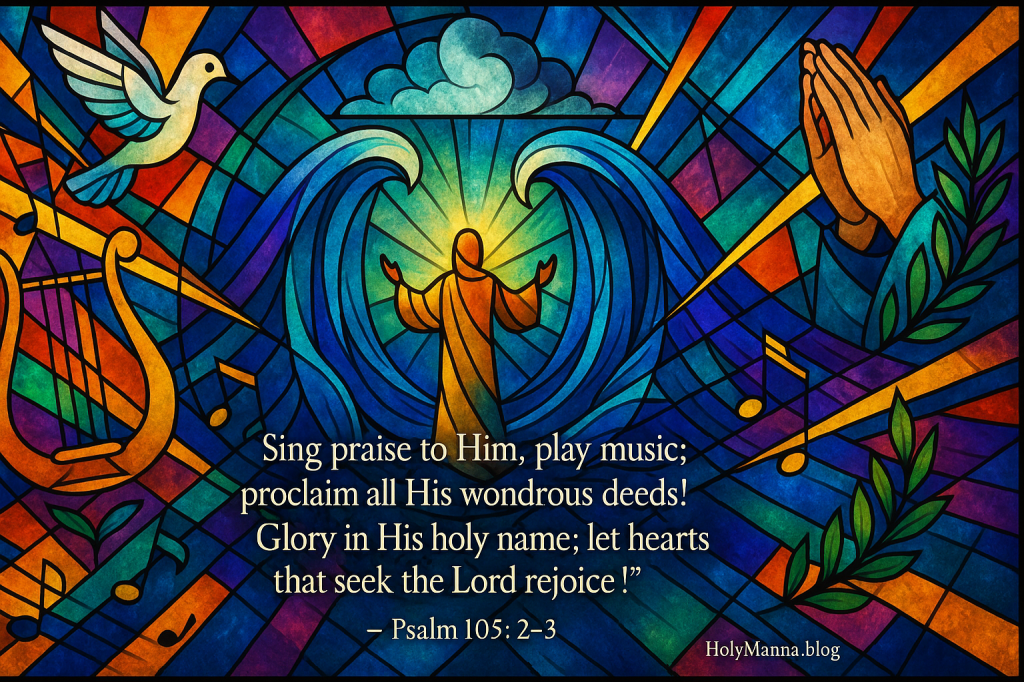
Psalm 105 is a communal hymn that teaches Israel how to remember. It gathers the people to praise the God who acted at the Exodus and to rehearse the holy memory that shapes identity and courage. Ancient Israel did not recall the past to feel nostalgia. The people remembered in order to stand firm in the present and to keep crying out for justice with confidence that the Lord will act again. This fits today’s theme perfectly. God’s faithful Word once split the sea and brought a nation out with joy, so the Church answers with praise, remembrance, and persistent prayer that refuses to grow weary.
Psalm 105:2-3, 5, 36-37, 42-43
New American Bible (Revised Edition)
2 Sing praise to him, play music;
proclaim all his wondrous deeds!
3 Glory in his holy name;
let hearts that seek the Lord rejoice!
5 Recall the wondrous deeds he has done,
his wonders and words of judgment,
36 He struck down every firstborn in the land,
the first fruits of all their vigor.
37 He brought his people out,
laden with silver and gold;
no one among the tribes stumbled.
42 For he remembered his sacred promise
to Abraham his servant.
43 He brought his people out with joy,
his chosen ones with shouts of triumph.
Detailed Exegesis
Verse 2 – “Sing praise to him, play music; proclaim all his wondrous deeds!”
Worship here is both vertical and horizontal. Praise rises to God, and proclamation goes to the community and the world. The psalm links music and mission, because telling God’s works is itself a form of praise. The imperative to proclaim forms a habit of testimony that sustains persevering prayer.
Verse 3 – “Glory in his holy name; let hearts that seek the Lord rejoice!”
To glory in the Lord’s name is to root identity in who God is and in what God has done. Joy is commanded because joy flows from seeking the Lord, not from ease or comfort. This joy strengthens endurance in prayer, especially when answers seem delayed.
Verse 5 – “Recall the wondrous deeds he has done, his wonders and words of judgment,”
Remembrance is the engine of hope. The psalm binds together God’s wonders and God’s judgments, because mercy includes justice against what destroys the poor. Remembered judgments steady hearts to keep praying for right order in families, parishes, and public life.
Verse 36 – “He struck down every firstborn in the land, the first fruits of all their vigor.”
This solemn line evokes the final plague in Egypt. Scripture does not glorify violence, but it does witness to God’s decisive stand against oppression. The memory is sobering. It says that the Holy One confronts evil and will not allow injustice to have the last word.
Verse 37 – “He brought his people out, laden with silver and gold; no one among the tribes stumbled.”
Deliverance is generous and steady. The image of no one stumbling underlines God’s shepherding care for the whole people, including the frail. The wealth carried out shows reversal and vindication. The God who provides for bodies also forms a people able to walk without fear.
Verse 42 – “For he remembered his sacred promise to Abraham his servant.”
The Exodus is grounded in covenant fidelity. God’s memory is not passive. It is active, creative, and personal. When God remembers, history moves. This is why the Church keeps remembering at every Mass, trusting that God’s faithfulness will meet present needs.
Verse 43 – “He brought his people out with joy, his chosen ones with shouts of triumph.”
The finale is joy that cannot be contained. Praise is the right response to liberation, and it trains the soul to keep asking and to keep trusting. Joyful remembrance becomes fuel for persevering prayer in the long haul of discipleship.
Teachings
The Church understands the Psalms as the school of prayer. CCC 2585 affirms, “The Psalms constitute the masterwork of prayer in the Old Testament.” This psalm teaches how to pray by remembering, praising, and proclaiming. The liturgy safeguards this memory not as a distant story but as a living reality. CCC 1363 explains, “In the sense of Sacred Scripture the memorial is not merely the recollection of past events but the proclamation of the mighty works wrought by God for men. In the liturgical celebration of these events, they become in a certain way present and real.” In this light, Psalm 105 is not only history. It is participation in God’s saving acts that shape the Church’s courage to pray constantly. The Catechism also teaches that Christian prayer is thanksgiving and praise woven into petition. In CCC 2647 the Church states that thanksgiving “characterizes the prayer of the Church” as it remembers and proclaims God’s works, which naturally strengthens trust to ask for what is needed. The Exodus memory echoed here also prepares the sacramental reading embraced by the Fathers and the Catechism. As CCC 1221 teaches, the crossing of the Red Sea prefigures Baptism, where the people of God pass from slavery to freedom through water by the power of the Word.
Reflection
This psalm invites a rhythm for daily life. Remember what God has already done, praise Him out loud, and then ask with confidence for present needs. Keeping a short daily litany of remembered mercies builds a heart that does not lose courage in the waiting. Singing a simple hymn or speaking a brief doxology before difficult tasks can reframe the day as worship. Writing down one concrete instance of God’s providence each evening can train the soul to expect help tomorrow. What mercy can be named out loud today to fuel fresh prayer? Which concrete deliverance from the past needs to be placed beside today’s worry? How can praise become the first response before every petition? Where is the Spirit nudging a public proclamation of God’s wonders to encourage another believer to keep praying?
Holy Gospel – Luke 18:1–8
Justice At The Door
The Gospel of Luke places this parable on the road toward Jerusalem, where the Son of Man will vindicate God’s justice through the Paschal Mystery. In first century Judea a widow stood among the most vulnerable. Without a male advocate in a patronage culture, her only leverage was persistence. Judges in some towns were notorious for partiality and bribery, which makes this story sting. Jesus sets an unjust judge against a relentless widow to reveal a greater truth by contrast. If stubborn persistence can wring a verdict from a man who neither fears God nor respects people, how much more will the living God secure justice for His chosen who cry to Him day and night. This directly serves today’s theme. God’s faithful Word once acted in the Exodus and still acts in Christ, so the Church remembers His deeds and prays without losing heart until justice breaks in.
Luke 18:1-8
New American Bible (Revised Edition)
The Parable of the Persistent Widow. 1 Then he told them a parable about the necessity for them to pray always without becoming weary. He said, 2 “There was a judge in a certain town who neither feared God nor respected any human being. 3 And a widow in that town used to come to him and say, ‘Render a just decision for me against my adversary.’ 4 For a long time the judge was unwilling, but eventually he thought, ‘While it is true that I neither fear God nor respect any human being, 5 because this widow keeps bothering me I shall deliver a just decision for her lest she finally come and strike me.’” 6 The Lord said, “Pay attention to what the dishonest judge says. 7 Will not God then secure the rights of his chosen ones who call out to him day and night? Will he be slow to answer them? 8 I tell you, he will see to it that justice is done for them speedily. But when the Son of Man comes, will he find faith on earth?”
Detailed Exegesis
Verse 1 – “Then he told them a parable about the necessity for them to pray always without becoming weary.”
The purpose is stated up front. Prayer here is not occasional inspiration but steady discipline. The verb “always” frames Christian life as continual reliance on the Father. The warning against weariness acknowledges that prayer meets resistance, which prepares for the Catechism’s teaching on the battle of prayer.
Verse 2 – “There was a judge in a certain town who neither feared God nor respected any human being.”
This judge violates Israel’s ideal in Exodus 18:21 and Deuteronomy 16:18–20, where judges must fear God and refuse bribes. His lack of reverence and compassion paints a bleak backdrop. Jesus chooses the worst possible official to sharpen the contrast with God’s goodness.
Verse 3 – “And a widow in that town used to come to him and say, ‘Render a just decision for me against my adversary.’”
The widow embodies covenant vulnerability and covenant faith. She does not ask for privilege, only justice. Her repeated coming signals the shape of persevering prayer. The request “against my adversary” hints at real opposition in a fallen world and points to the deeper spiritual contest named throughout Scripture.
Verse 4 – “For a long time the judge was unwilling, but eventually he thought, ‘While it is true that I neither fear God nor respect any human being,”
Delay is part of the drama. The judge’s interior monologue exposes his moral emptiness. The parable allows disciples to name the experience of delay before God without concluding that God is like the judge.
Verse 5 – “because this widow keeps bothering me I shall deliver a just decision for her lest she finally come and strike me.’”
His motive is self-interest, not conversion. The Greek can imply she will wear him out or even give him a black eye. Her persistence prevails, but the victory only magnifies how unlike this judge the Father is. If a corrupt official yields to steady pressure, the faithful Lord will surely act out of love.
Verse 6 – “The Lord said, ‘Pay attention to what the dishonest judge says.’”
Jesus underlines the argument from lesser to greater. Listen closely, because the conclusion about God’s character will overturn the discouragement that delay can breed.
Verse 7 – “Will not God then secure the rights of his chosen ones who call out to him day and night? Will he be slow to answer them?”
Here is the covenant core. The “chosen ones” are those God has bound to Himself. Their ceaseless cry echoes Israel in Egypt and the Church in every age. The question expects a resounding yes. God’s seeming slowness is not indifference. It is the patience that purifies desire and gathers more into mercy.
Verse 8 – “I tell you, he will see to it that justice is done for them speedily. But when the Son of Man comes, will he find faith on earth?”
“Speedily” points to God’s decisive action, often sudden rather than immediate. The closing question turns the spotlight from God’s timing to human fidelity. The issue is not whether God will act but whether disciples will still be praying when He does.
Teachings
The Church locates this parable within the school of persevering prayer. CCC 2559 teaches with St. John Damascene, “Prayer is the raising of one’s mind and heart to God or the requesting of good things from God.” This widow’s request is honest, humble, and constant. CCC 2725 names the interior contest, “Prayer is both a gift of grace and a determined response on our part. It always presupposes effort. Prayer is a battle.” The parable dignifies that battle and promises it is not in vain. Drawing on the apostolic summons, CCC 2742 highlights continuity of prayer with St. Paul’s words, “Pray constantly.” Perseverance is not mere stamina. It is love that refuses to stop trusting the Father. The Catechism also describes petition as a normal and necessary mode of Christian prayer. CCC 2629 states, “By prayer of petition we express awareness of our relationship with God. We are creatures who are not our own beginning, not the masters of adversity, not our own last end.” Finally, the Gospel’s closing question touches faith itself. CCC 2616 observes Christ’s responsiveness to faith, “Jesus hears the prayer of faith, expressed in words or in silence.” The persistent widow stands with every believer who keeps calling in the night, certain that the Just Judge hears and will act.
Reflection
This Gospel invites a simple pattern that can reshape a day. Set times to pray, however brief, and refuse to negotiate them away. Speak plainly to the Father about the specific adversaries faced, whether fear, sin, or injustice. When answers seem delayed, recall a concrete instance of God’s past deliverance and let that memory anchor hope. Add small acts of mercy to each petition so that prayer and charity walk together. Where has discouragement tempted a quiet surrender in prayer? Which single intention should be brought to God every morning and every night until the answer comes? How can the memory of a past rescue feed today’s cry for justice? What simple commitment will keep faith alive so that when the Son of Man comes, He will find hearts still praying?
Hold Fast in the Night
Today’s Word draws a straight line from God’s mighty acts to a disciple’s everyday perseverance. In Wisdom 18–19 the living Word breaks into the darkness and leads a people through the waters, “Your all-powerful word… leapt into the doomed land”, until creation itself is “made over anew.” In Psalm 105 the Church learns how to stand in that memory with praise, “Recall the wondrous deeds he has done”, because the Lord “brought his people out with joy”. In Luke 18:1–8 Jesus names the way forward with clarity, “pray always without becoming weary.” The arc is simple and strong. God remembers His covenant, so disciples remember His deeds. God acts in justice, so disciples sing in confidence. God invites persistent faith, so disciples keep asking until justice breaks in.
The call to action is concrete. Build the day around short anchors of prayer at morning, midday, and night. Name one specific intention and carry it to the Father daily until an answer comes. Practice remembrance by speaking one line of thanksgiving from Psalm 105 before offering any petition. Let charity accompany prayer with a small act of mercy for someone overlooked, echoing the widow’s courage and trusting the true Judge to act. Which deliverance from the past needs to be placed beside today’s fear? What single intention should be brought to God day and night this week? How can gratitude become the doorway to every request? With the help of grace described in The Catechism (CCC 1363–1364, CCC 2725, CCC 2742), perseverance stops feeling like strain and starts sounding like love. The Just One has not changed. Keep remembering. Keep praising. Keep praying until joy returns.
Engage with Us!
Share your reflections in the comments below and help build a conversation that strengthens faith and hope.
- From Wisdom 18:14–16; 19:6–9: Where is there a “night half spent” in life right now, and how might remembering God’s past deliverance open a new path through it? How does the image of God’s Word leaping into history shape trust when justice feels delayed? What concrete step today could mirror Israel’s praise after crossing the sea, turning fear into worship?
- From Psalm 105:2–3, 5, 36–37, 42–43: Which specific “wondrous deed” of the Lord can be named out loud this week to fuel persevering prayer? How can daily gratitude become the doorway to every petition so that joy strengthens endurance? Who needs to hear a short testimony of God’s faithfulness from you, and when will that be shared?
- From Luke 18:1–8: What single intention should be carried to the Father morning and night until an answer comes, and how will that rhythm be kept? Where has discouragement tempted silence in prayer, and what small act of faith can reopen the conversation with God today? How does the widow’s persistence inspire a decision to keep praying for justice in a specific situation close to home?
Go forward with courage, remember the Lord’s wonders, and live each moment with the love and mercy Jesus taught, so faith grows steady and hope becomes contagious.
Sacred Heart of Jesus, we trust in You!
Immaculate Heart of Mary, pray for us!
Saint Michael the Archangel, defend us in battle!
Follow us on Instagram and Facebook for more insights and reflections on living a faith-filled life.

 Holy Manna!
Leave a comment