The Quiet Architect of Renewal
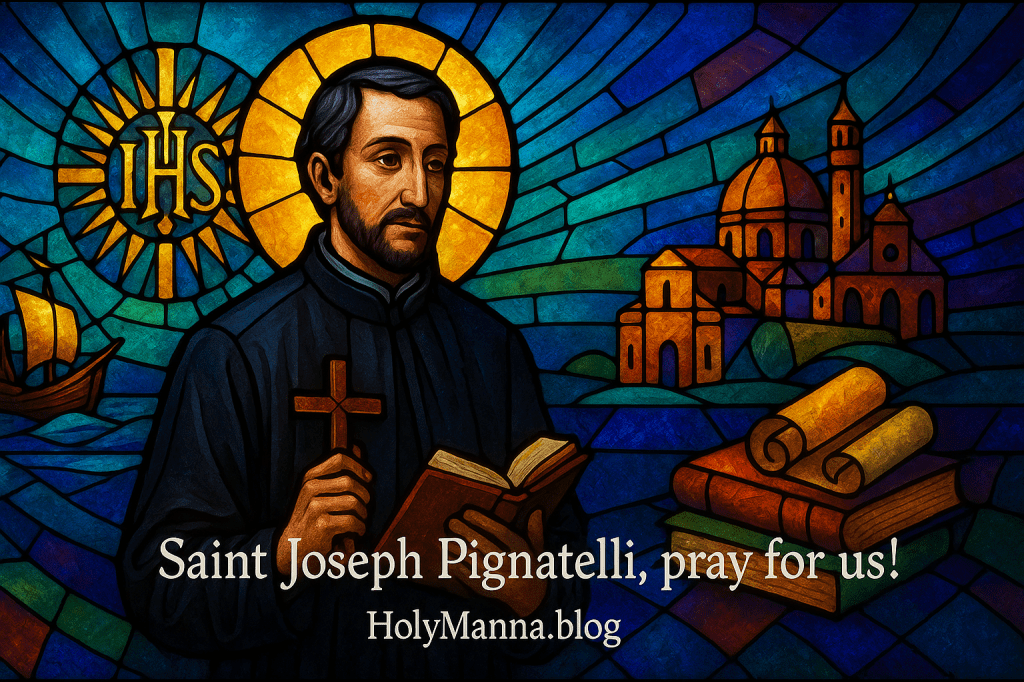
Saint Joseph Pignatelli, SJ, stands out in Christian memory as the steady heart that kept the Society of Jesus alive during its darkest hour. He is often called the restorer and even the second founder of the Jesuits because he protected their fraternity, spirituality, and mission through exile and suppression, then patiently rebuilt the order where lawful openings appeared. His legacy is fidelity to Christ, loving obedience to the Church, and practical charity that shelters the vulnerable. “By canonizing some of the faithful, the Church recognizes the power of the Spirit of holiness within her and sustains the hope of believers by proposing the saints to them as models and intercessors.” Catechism of the Catholic Church, 828. In Pignatelli, that holiness looks like courage without noise and leadership without self focus.
Noble Beginnings, Deeper Belonging
José María Pignatelli was born on December 27, 1737, in Zaragoza, Spain, into a noble family with roots in both Spain and Italy. He lost his parents when young and was educated in Zaragoza, where his prayer life and love for learning deepened. On May 8, 1753, he entered the Jesuit novitiate at Tarragona and embraced the evangelical counsels with quiet joy despite fragile health that trailed him for life. As he moved through Jesuit formation he studied, taught, and served, eventually ministering in Zaragoza, where his calm character and practical wisdom became obvious. In 1766, when civil unrest broke out during a time of scarcity, he helped defuse a near riot and protect public officials, revealing a priest’s instinct to mediate, reconcile, and guard the common good. What he is most known for, however, came soon after. In 1767, King Charles III expelled the Jesuits from Spain. Pignatelli turned down personal exemptions that would have spared him the hardships of exile because he refused to abandon his brothers. That decision to suffer with them, rather than stand apart from them, set the course of his sanctity.
Shepherd in Exile, Builder in the Ruins
The expulsion scattered Spanish Jesuits by the thousands. Pignatelli helped lead a large group that was refused entry at the Papal port of Civitavecchia and finally found temporary refuge in Corsica. He coordinated housing, medical care, studies, and prayer so that common life did not collapse. When political tides shifted again and the exiles were pushed from Corsica, he guided many to Genoa and then Ferrara, always creating order, charity, and hope out of chaos. In 1773, the universal suppression of the Society brought deeper grief. Pignatelli obeyed the decree with the humility the Church expects of her religious, but he did not let the Jesuit spirit die. He preserved records, encouraged former Jesuits to keep praying with the method of the Spiritual Exercises, and stayed attentive to any open door of obedience. That door opened in the 1790s through Jesuits who had survived legally in Russia. With lawful support from Catholic rulers in Italy, Pignatelli entered a new phase of rebuilding: he renewed his vows in 1797, established a novitiate at Colorno in 1799, and helped reconstitute communities in Parma, Naples, Sicily, Rome, Tivoli, and Orvieto. On December 3, 1804, a public restoration of the Society was celebrated in Naples, and many men reentered religious life because his patient shepherding had kept the flame alive. No spectacular miracle stories are tied to his name during life, but the moral miracles are everywhere. He turned fear into fraternity, scattered scholars into a community of prayer, and political storms into occasions of pastoral creativity. If any line summarizes his spirituality, it is the Ignatian pattern he embodied daily: to seek God’s will, to obey the Church, and to serve whoever needs help the most.
A Long Martyrdom of the Heart
There was no martyrdom by the sword, yet his life carried a hidden martyrdom. He endured confiscation of houses, repeated expulsions, long sea voyages, and a patchwork existence shaped by volatile regimes. During the French occupation of parts of Italy he refused oaths that conflicted with ecclesial loyalty and guided others to act with prudence, courage, and charity. He remained unwaveringly joined to the Holy Father even when that fidelity came with real costs. “The Lord made St. Peter the visible foundation of his Church. The bishop of the Church of Rome is the head of the college of bishops, the Vicar of Christ and pastor of the universal Church on earth.” Catechism of the Catholic Church, 936. Pignatelli died in Rome on November 15, 1811, worn out by labor and illness, but confident that God had preserved the charism entrusted to St. Ignatius. Three years later, in 1814, Pope Pius VII restored the Society of Jesus to the universal Church, a fruit to which Pignatelli’s quiet heroism had directly contributed.
Signs After Death and Living Veneration
The Church examines miracles carefully in every canonization cause, and the judgment in Pignatelli’s case was that God confirmed his sanctity by extraordinary favors after his death. Those signs, investigated and approved through the Church’s process, led to his beatification in 1933 and his canonization in 1954. Public summaries rarely highlight the detailed case histories, but the Church’s verdict stands as a reliable witness. His relics are honored in Rome, and Jesuit houses around the world remember him as a father who guarded their identity when it could have been lost. “Being more closely united to Christ, those who dwell in heaven do not cease to intercede with the Father for us.” Catechism of the Catholic Church, 956. Pilgrims who pray through his intercession often ask for fidelity in trials, wisdom in leadership, and patience when rebuilding seems slow.
Lessons for Today’s Disciples
Pignatelli teaches that holiness can look like logistics, paperwork, and showing up every day to serve people the world does not see. He shows how love for the Church means loving the Pope and bishops in concrete ways, not only with words. He also proves that God uses fragile bodies and quiet temperaments to accomplish large things. The takeaways are simple and demanding. Stay rooted in prayer even when plans fall apart. Keep communion with Peter when politics get loud. Practice the works of mercy that stabilize people’s lives, because “charitable actions by which we come to the aid of our neighbor in his spiritual and bodily necessities” are how love becomes flesh, Catechism of the Catholic Church, 2447. Choose hidden fidelity over public drama, and let God decide which stories become famous.
Engage with Us!
Share your thoughts and reflections in the comments below.
- Where do today’s pressures tempt you to give up rather than remain faithful to Christ and his Church?
- How might you practice one concrete work of mercy this week for someone displaced, discouraged, or overlooked?
- What relationships or responsibilities need patient, behind the scenes fidelity rather than dramatic gestures?
- How does communion with the Pope and bishops strengthen your daily discipleship in practical ways?
- Which fruit of the Holy Spirit needs the most cultivation in your life right now, and what step will you take today?
Go forward encouraged. Live a life of faith, and do everything with the love and mercy Jesus taught.
Saint Joseph Pignatelli, pray for us!
Follow us on Instagram and Facebook for more insights and reflections on living a faith-filled life.

 Holy Manna!
Leave a comment