Friday of the Thirty-second Week in Ordinary Time – Lectionary: 495
Heaven’s Homily and the Urgency of the Heart
Step outside and listen to the sky. The psalmist says, “The heavens declare the glory of God” and “day unto day pours forth speech” in Psalm 19:2–5. Today’s readings trace a single path from wonder to worship to watchfulness. Wisdom 13:1–9 confronts the ancient temptation to stop at the beauty of the world and mistake it for divinity. The text was likely composed in a Hellenistic context where cultured pagans revered the elements and the stars, yet it insists that the splendor of creation is a sign that points beyond itself to the Divine Artisan. This conviction stands with the Church’s perennial teaching that reason can know God from the works of creation, as taught in CCC 32–34, and it warns against idolatry in any age, as taught in CCC 2112–2114. Psalm 19 then gives creation a voice that all can hear, a universal sermon without words that fills the earth, inviting hearts to praise the One who set the sun in its course. The Gospel brings this invitation into a decisive moment. In Luke 17:26–37, Jesus looks back to Noah and Lot and exposes the danger of being absorbed in ordinary pursuits while ignoring the ultimate horizon. The call is clear in the Lord’s warning, “Whoever seeks to preserve his life will lose it, but whoever loses it will save it.” The Church reads these words as a summons to conversion, detachment, and readiness for judgment, as taught in CCC 2544 and CCC 1041. Together these passages teach that creation is a bright doorway to God, but it is not the destination, and the wise response to beauty is worship that prepares the soul for the day the Son of Man is revealed. What is creation trying to tell your heart right now?
First Reading – Wisdom 13:1–9
Beauty That Points Beyond Itself
Composed in a Hellenistic Jewish setting, likely in Alexandria, Wisdom 13:1–9 speaks into a cultured world that admired elemental forces and celestial bodies. Philosophers and poets praised fire, wind, stars, and the ordered heavens, while popular religion often slipped into nature worship. This reading honors the splendor of creation yet insists that beauty and power are signposts, not destinations. The sacred author argues that reason, aided by wonder, should rise from visible effects to the invisible Artisan. This aligns with today’s theme that creation is a radiant doorway to the Creator and that the human heart must move from admiration to adoration. It also prepares the soul for the Gospel’s call to vigilance by warning that even good things can distract from the One who is their source and goal.
Wisdom 13:1-9
New American Bible (Revised Edition)
Digression on False Worship
A. Nature Worship
1 Foolish by nature were all who were in ignorance of God,
and who from the good things seen did not succeed in knowing the one who is,
and from studying the works did not discern the artisan;
2 Instead either fire, or wind, or the swift air,
or the circuit of the stars, or the mighty water,
or the luminaries of heaven, the governors of the world, they considered gods.
3 Now if out of joy in their beauty they thought them gods,
let them know how far more excellent is the Lord than these;
for the original source of beauty fashioned them.
4 Or if they were struck by their might and energy,
let them realize from these things how much more powerful is the one who made them.
5 For from the greatness and the beauty of created things
their original author, by analogy, is seen.
6 But yet, for these the blame is less;
For they have gone astray perhaps,
though they seek God and wish to find him.
7 For they search busily among his works,
but are distracted by what they see, because the things seen are fair.
8 But again, not even these are pardonable.
9 For if they so far succeeded in knowledge
that they could speculate about the world,
how did they not more quickly find its Lord?
Detailed Exegesis
Verse 1 – “Foolish by nature were all who were in ignorance of God, and who from the good things seen did not succeed in knowing the one who is, and from studying the works did not discern the artisan.”
The text diagnoses a failure of wisdom. Created goods are meant to be a path to God, but without right judgment the mind stops at the gifts and misses the Giver. The phrase “the one who is” evokes the divine name and affirms God as the self-existent source of all.
Verse 2 – “Instead either fire, or wind, or the swift air, or the circuit of the stars, or the mighty water, or the luminaries of heaven, the governors of the world, they considered gods.”
Here the author catalogs elements and heavenly bodies revered in antiquity. These “governors” mark times and seasons, yet they are creatures. The error is not seeing order but absolutizing it, which the Church names idolatry.
Verse 3 – “Now if out of joy in their beauty they thought them gods, let them know how far more excellent is the Lord than these; for the original source of beauty fashioned them.”
Joy in beauty is good, but wisdom traces beauty back to its fount. The verse introduces a key principle for Christian aesthetics: beauty reflects the more excellent Beauty of God who “fashioned” all things.
Verse 4 – “Or if they were struck by their might and energy, let them realize from these things how much more powerful is the one who made them.”
Power in nature is real, but it is a participated power. Created energies should lead reason to acknowledge a transcendent, uncaused cause whose causality is greater than all effects.
Verse 5 – “For from the greatness and the beauty of created things their original author, by analogy, is seen.”
This is a classic statement of natural theology. By “analogy,” the mind rises from the finite to the infinite, affirming that effects reveal something true about their cause, without collapsing God into the world.
Verse 6 – “But yet, for these the blame is less; for they have gone astray perhaps, though they seek God and wish to find him.”
The inspired author shows pastoral nuance. Those who genuinely seek God in creation may err less culpably. Sincere search softens blame, though it still needs correction by revelation.
Verse 7 – “For they search busily among his works, but are distracted by what they see, because the things seen are fair.”
Attraction to the fair can become distraction. The human heart must learn to enjoy creatures rightly, allowing their beauty to elevate desire rather than eclipse the Creator.
Verse 8 – “But again, not even these are pardonable.”
The text reasserts responsibility. The created order supplies enough light to prompt a further step toward its Maker. Refusing that step remains a moral failure.
Verse 9 – “For if they so far succeeded in knowledge that they could speculate about the world, how did they not more quickly find its Lord?”
If reason can investigate the cosmos, reason can recognize its Lord. Intellectual achievement without worship is incomplete, because wisdom is fulfilled in adoration.
Teachings
CCC 2113 provides a concise definition that illumines this passage: “Idolatry consists in divinizing what is not God.” This clarifies why nature worship, though arising from real awe, misses the mark. CCC 1147 explains the positive path: “God speaks to man through the visible creation.” Creation is a language of God’s wisdom intended to lead to communion, not captivity to creatures. Saint Augustine names the restlessness that results when the heart stops short of God: “You have made us for yourself, and our heart is restless until it rests in you.” Confessions 1.1. Saint Paul echoes Wisdom when he writes, “Ever since the creation of the world his invisible attributes of eternal power and divinity have been understood and perceived in what he has made.” Romans 1:20. These teachings converge on a single conviction. Beauty and power in the world are sacramental hints that summon reason and desire beyond the visible to the living God, who alone satisfies.
Reflection
Creation preaches every day, so the task is to hear its homily and follow where it points. Begin by blessing God aloud when beauty arrests attention, and let gratitude become a habit. Practice detachment by enjoying good things without clinging to them, and choose one small renunciation each day that keeps the heart free for God. Cultivate contemplative wonder by taking a short walk without headphones and letting the sky or a single leaf draw the soul into quiet praise. Make a simple examen at day’s end that names where creatures helped the heart love God more and where they distracted it. When was the last time beauty led the heart to prayer rather than to possession? What good thing might be held too tightly today? How can the language of creation be heard more clearly this week so that worship becomes the natural response?
Responsorial Psalm – Psalm 19:2–5
Creation’s Silent Sermon
Psalm 19:2–5 comes from a hymn that many attribute to David and that unfolds in two movements. The first celebrates the cosmic witness of creation, and the second honors the perfection of the law. In the ancient Near East, cultures often revered the sun and stars as divine. Israel’s worship redirected that awe toward the Lord who made the heavens and set the sun in its course. This psalm gives voice to a universal revelation that reaches every heart without words and prepares for the fuller revelation in the law and the prophets. Within today’s theme, these verses echo the call of Wisdom 13:1–9 to let created beauty lead beyond itself to the Creator and they ready the soul for the Gospel’s summons to live alert and detached. Creation is a teacher, not a rival. Its beauty is a doorway that opens into worship and wise readiness.
Psalm 19:2-5
New American Bible (Revised Edition)
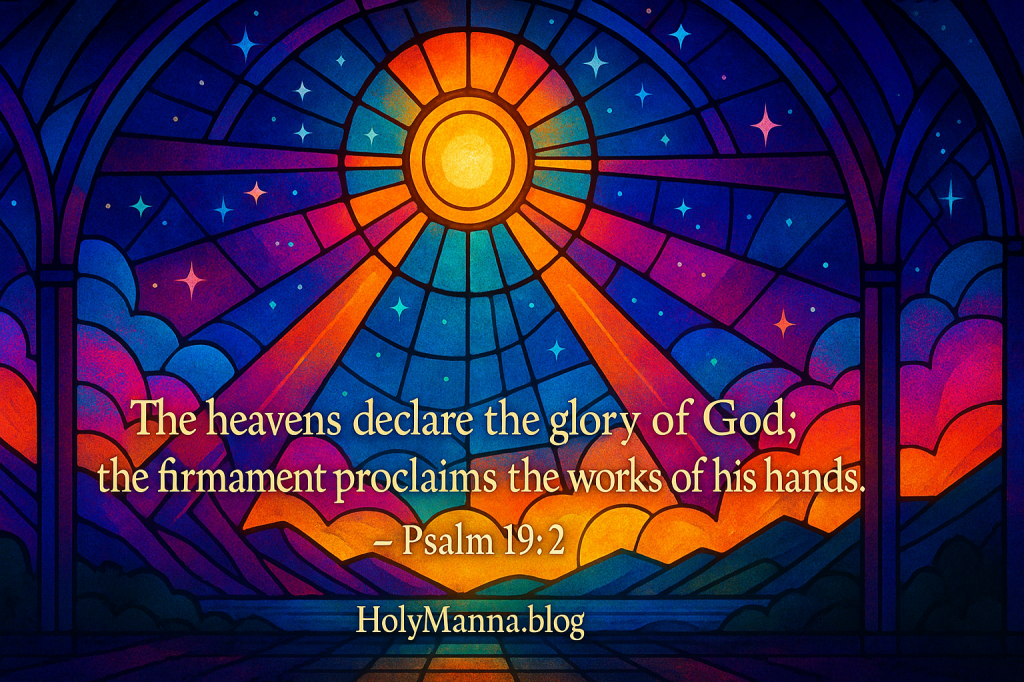
2 The heavens declare the glory of God;
the firmament proclaims the works of his hands.
3 Day unto day pours forth speech;
night unto night whispers knowledge.
4 There is no speech, no words;
their voice is not heard;
5 A report goes forth through all the earth,
their messages, to the ends of the world.
He has pitched in them a tent for the sun;
Detailed Exegesis
Verse 2 – “The heavens declare the glory of God; the firmament proclaims the works of his hands.”
The psalmist personifies the sky as a herald. Glory here names the radiance of God’s presence reflected in the order and splendor of the cosmos. The firmament is not divine. It is a crafted work that points to the divine Craftsman. The verse establishes a theology of nature as sign, which guards against idolatry and invites contemplative praise.
Verse 3 – “Day unto day pours forth speech; night unto night whispers knowledge.”
Time itself becomes a liturgy. Each day hands on a homily to the next. The alternation of day and night is a catechesis in permanence and fidelity. Knowledge here is not secret lore. It is a universally available invitation to recognize providence in the rhythms of creation.
Verse 4 – “There is no speech, no words; their voice is not heard;”
Creation’s testimony is pre-verbal yet intelligible. The paradox is deliberate. Without syllables, the world still communicates. The Church recognizes this sacramental mode of speaking in which visible realities signify and make present invisible truths, orienting the heart to worship.
Verse 5 – “A report goes forth through all the earth, their messages, to the ends of the world. He has pitched in them a tent for the sun;”
The witness is universal and missionary. No land is untouched by this proclamation. The image of a tent for the sun draws from desert life and tabernacle imagery. The sun is portrayed as a servant who runs a course assigned by God, which corrects any tendency to adore the sun itself. The verse anticipates the psalm’s movement from creation to Torah, since the same Lord who orders the heavens also gives the law that enlightens the human path.
Teachings
CCC 1147 clarifies the sacramental logic of this psalm with a direct affirmation: “God speaks to man through the visible creation.” The world is not mute in the economy of revelation. Its beauty and order are meant to be read as signs that lead to praise. The Catechism also warns against misreading the signs. CCC 2113 defines the perennial temptation with precision: “Idolatry consists in divinizing what is not God.” The psalm trains the heart to adore the Maker, not the marvels. Saint Augustine captures the restless desire that creation awakens and rightly orders: “You have made us for yourself, and our heart is restless until it rests in you.” Confessions 1.1. Saint Paul confirms the psalm’s claim about universal witness when he writes, “Ever since the creation of the world his invisible attributes of eternal power and divinity have been understood and perceived in what he has made.” Romans 1:20. These teachings converge to show that creation’s beauty is a real yet partial revelation designed to move the soul from wonder to worship and from admiration to obedience.
Reflection
Let the day preach without words. Begin and end the day with a brief glance at the sky and allow gratitude to rise into simple praise. Name aloud a divine attribute that creation revealed, such as power, wisdom, or fidelity, and let that praise shape the tone of the next task. Practice a small fast from noise during a commute or a walk so that interior hearing can wake up to God’s quiet messages. When beauty appears, trace it back to its Source with a short prayer of adoration before taking a photo or sharing it. Ask for the grace to resist subtle forms of idolatry, such as treating productivity, health, or approval as ultimate goods. What did creation say to the heart today without using words? How might gratitude reshape the next decision so that the Creator, not the creature, is loved first? Where is the Lord inviting a quiet pause to hear the sky’s sermon and to answer with prayer?
Holy Gospel – Luke 17:26–37
Ready Hearts in an Ordinary World
Luke 17:26–37 speaks into a Second Temple Jewish setting where apocalyptic hope ran high under Roman occupation. Jesus invokes Genesis memories of Noah and Lot to expose a spiritual danger that hides in plain sight. People were doing perfectly normal things like eating, marrying, buying, and building, yet they missed the decisive moment. The Lord contrasts ordinary busyness with extraordinary readiness and calls for detachment that fits today’s theme: creation is a sign that should lead to the Creator, not a comfort that seduces the heart into forgetfulness. The title “Son of Man” echoes Daniel 7, and the imagery of housetops, fields, grinding grain, and circling vultures comes from daily life in first century Judea. This Gospel warns that salvation history can arrive suddenly, so wise disciples hold created goods lightly and live alert to the revealing of the Son of Man.
Detailed Exegesis
Verse 26 – “As it was in the days of Noah, so it will be in the days of the Son of Man;”
The comparison frames the end with the beginning. As in the flood narrative of Genesis 6–9, divine judgment comes while life seems normal. The point is not sensational prediction but moral vigilance.
Verse 27 – “They were eating and drinking, marrying and giving in marriage up to the day that Noah entered the ark, and the flood came and destroyed them all.”
Ordinary human goods can lull the heart into spiritual sleep. The ark becomes a figure of salvation that is received through obedience rather than last second scrambling.
Verse 28 – “Similarly, as it was in the days of Lot: they were eating, drinking, buying, selling, planting, building;”
The Sodom story in Genesis 19 supplies a second witness. The catalog of activities is morally neutral, which sharpens the warning. Even good routines can conceal a refusal to heed God.
Verse 29 – “On the day when Lot left Sodom, fire and brimstone rained from the sky to destroy them all.”
Suddenness and finality are emphasized. Departure with God is life. Clinging to the city is death. The imagery anticipates New Testament language about the day of the Lord.
Verse 30 – “So it will be on the day the Son of Man is revealed.”
Revelation here means unveiling. The ordinary is pierced by the presence of the Son of Man, a title that recalls Daniel 7:13 and signals both humility and divine authority.
Verse 31 – “On that day, a person who is on the housetop and whose belongings are in the house must not go down to get them, and likewise a person in the field must not return to what was left behind.”
Flat-roof homes with outside stairs make the picture vivid. Hesitation to retrieve possessions betrays attachment. Readiness requires freedom from the tyranny of things.
Verse 32 – “Remember the wife of Lot.”
This terse command recalls her turning back and becoming a pillar of salt in Genesis 19:26. Looking back reveals a divided heart. Salvation demands an undivided gaze.
Verse 33 – “Whoever seeks to preserve his life will lose it, but whoever loses it will save it.”
This paradox sums up Gospel discipleship. Grasping closes the hand against grace. Surrender opens the hand to receive life.
Verse 34 – “I tell you, on that night there will be two people in one bed; one will be taken, the other left.”
Separation occurs at a deeply intimate and ordinary moment. Proximity to a disciple does not substitute for personal fidelity.
Verse 35 – “And there will be two women grinding meal together; one will be taken, the other left.”
The scene of daily labor reinforces the theme. God’s judgment distinguishes hearts that appear outwardly similar.
Verse 36 – “[Text omitted in this translation; some manuscripts include a line parallel to separation imagery, similar to Matthew 24:40.]”
The textual note highlights an early variant. The surrounding verses already make the point that the Lord’s coming reveals the true state of every heart.
Verse 37 – “They said to him in reply, ‘Where, Lord?’ He said to them, ‘Where the body is, there also the vultures will gather.’”
This proverb signals inevitability and visibility. Just as birds gather where death is present, the revealing of the Son of Man will be unmistakable. The image warns against curiosity about coordinates and urges concern for conversion.
Teachings
CCC 2544 teaches the detachment demanded here with clarity: “Jesus enjoins his disciples to prefer him to everything and everyone, and bids them renounce all that they have for his sake and that of the Gospel.” The Lord’s warnings about housetops and fields are not calls to neglect duties but to interior freedom. CCC 2547 names the danger Jesus exposes: “The Lord grieves over the rich, because they find their consolation in the abundance of goods.” The Gospel’s quick separations reveal that false consolations cannot save. In light of the eschatological horizon, CCC 675 situates discipleship within history’s final trial: “Before Christ’s second coming the Church must pass through a final trial that will shake the faith of many believers.” Jesus therefore calls for a steady fidelity that is not panicked by rumors nor paralyzed by attachments. The title “Son of Man” resonates with Daniel 7, where sovereignty is given to one like a son of man, and the Church reads this as fulfilled in Christ who will be revealed in glory. The suddenness in Luke 17 harmonizes with the Church’s teaching on judgment, which urges continual conversion and hope rather than date setting or fear.
Reflection
This Gospel trains the heart to love the Giver more than the gifts. A simple practice is to choose one attachment each day and hold it before God with open hands, asking for freedom to use it well or to let it go. A brief morning prayer can set the tone by offering time, plans, and possessions to the Lord so that no sudden change becomes a crisis of faith. Spiritual readiness also grows through concrete acts of mercy that loosen self-preservation and cultivate self-gift. When worry about the future rises, a short aspiration from this passage can reorient the mind, such as, “Whoever loses life for the Lord will save it.” What specific comfort or routine most tempts the heart to look back like Lot’s wife? How might detachment today make room for a deeper trust when plans shift without warning? If the Son of Man were revealed this hour, what would be left behind that should have been surrendered already?
From Wonder to Worship to Watchfulness
Today’s readings paint a clear path for the soul. Wisdom 13:1–9 teaches that created beauty is a sign that points to the divine Artisan, not a rival to be adored. Psalm 19:2–5 lets the sky preach a wordless homily that reaches every heart, as the psalmist sings, “The heavens declare the glory of God.” Luke 17:26–37 brings the lesson home by urging readiness for the revealing of the Son of Man, reminding the heart that attachment to passing goods dulls vigilance and divides desire, as the Lord warns, “Whoever seeks to preserve his life will lose it, but whoever loses it will save it.”
Let creation lift the gaze beyond the gifts to the Giver, and let that praise become freedom. Choose gratitude when beauty appears, and let thanksgiving rise into simple adoration. Practice a small daily detachment so that possessions and plans remain servants, not masters. Make room for silence each day so that the heart can hear God’s quiet messages in the ordinary. Offer a concrete act of mercy that loosens self-preservation and trains the soul for generous love. End the day with a brief examen, naming where wonder led to worship and where distractions asked for conversion. Step into this week with eyes open, hands unbound, and a heart ready to meet the Lord who is near.
Engage with Us!
Share your reflections in the comments below and help build a community of prayer, insight, and encouragement. Your perspective matters, and your witness may be the word someone else needs today.
- First Reading, Wisdom 13:1–9. When beauty in creation captures attention, does the heart stop at the gift or rise to the Giver? What concrete practice this week will help trace the goodness of creatures back to God more quickly?
- Responsorial Psalm, Psalm 19:2–5. What did the sky, the sunrise, or the quiet of night say to your soul today without using words? How can gratitude for creation become a daily habit that leads to worship rather than distraction?
- Holy Gospel, Luke 17:26–37. What attachment most tempts the heart to look back like Lot’s wife, and how can detachment open space for trust in Jesus today? If the Son of Man were revealed this hour, what would be surrendered with joy because it was never the ultimate good?
May these questions stir deeper faith, steady hope, and generous love. Live each moment with the mercy and courage that Jesus taught, and let every choice become an act of worship that leads hearts home to God.
Sacred Heart of Jesus, we trust in You!
Immaculate Heart of Mary, pray for us!
Saint Michael the Archangel, defend us in battle!
Follow us on Instagram and Facebook for more insights and reflections on living a faith-filled life.

 Holy Manna!
Leave a comment