Memorial of Saint Leo the Great, Pope and Doctor of the Church – Lectionary: 491
Integrity Under the All-Seeing Spirit
Today’s liturgy gathers around a single call: live transparent righteousness before the God who knows every heart, guard one another from stumbling, and forgive with courageous mercy. Wisdom 1:1-7 opens with a summons to seek God in purity of intention, reminding that “the spirit of the Lord fills the world” and that wisdom will not dwell in a soul plotting evil. Psalm 139 turns that doctrine into awe and comfort, proclaiming that the Lord has searched and knows each path and thought, even before a word is spoken, “Lord, you know it all”. In Luke 17:1-6, the Master forms disciples for real life in the community of faith, insisting on moral seriousness about scandal, the duty of fraternal correction, and the relentless rhythm of reconciliation: “Be on your guard” and “If your brother sins, rebuke him; and if he repents, forgive him”. When this feels beyond human strength, the prayer of the apostles becomes the Church’s daily breath, “Increase our faith”, trusting that even mustard-seed faith can uproot what seems immovable.
This harmony of righteousness, omniscient divine presence, and pastoral mercy shines in the Memorial of Saint Leo the Great, Pope and Doctor. In the mid fifth century, as imperial structures shook and Christological confusion spread, Leo’s preaching and his Tome safeguarded the faithful by clarifying that Christ is one divine Person in two natures, true God and true man, a truth ratified at the Council of Chalcedon in 451. His doctrinal clarity protected the little ones from the grave scandal of error, while his pastoral courage modeled correction and mercy that flowed from Christ’s own heart. The same Spirit who filled the world in Wisdom, who searched the depths in Psalm 139, and who empowers mustard-seed faith in Luke animated Leo’s voice to strengthen the brethren and to heal the Church’s wounds through truth in charity. The Catechism draws these threads together by warning against scandal, urging fraternal correction, and commanding forgiveness that mirrors the Father’s mercy, all animated by the theological virtue of faith (CCC 2284–2287; CCC 1829; CCC 2842–2843; CCC 1814). Where is the Spirit inviting a concrete step of integrity, correction, or forgiveness today, trusting that the hand that encircles also upholds?
First Reading – Wisdom 1:1-7
A pure heart before the God who knows all
In the world of Wisdom, likely composed in Hellenistic Alexandria, the people of God faced a culture that prized cleverness, power, and skeptical testing of the divine. The sacred author responds with a call to moral transparency and interior integrity. The passage insists that wisdom dwells only where righteousness is loved and duplicity rejected, because God’s Spirit fills and searches all things. This speaks directly into today’s theme of righteous integrity under the all-seeing Spirit, the gravity of scandal and correction, and the relentless mercy that only faith can sustain. The Memorial of Saint Leo the Great adds a living portrait of what this looks like in the Church. Leo’s doctrinal clarity and pastoral courage preserved the “little ones” from error and gathered the scattered through truth in charity, the very posture this reading calls forth.
Wisdom 1:1-7
New American Bible (Revised Edition)
Exhortation to Righteousness, the Key to Life
1 Love righteousness, you who judge the earth;
think of the Lord in goodness,
and seek him in integrity of heart;
2 Because he is found by those who do not test him,
and manifests himself to those who do not disbelieve him.
3 For perverse counsels separate people from God,
and his power, put to the proof, rebukes the foolhardy;
4 Because into a soul that plots evil wisdom does not enter,
nor does she dwell in a body under debt of sin.
5 For the holy spirit of discipline flees deceit
and withdraws from senseless counsels
and is rebuked when unrighteousness occurs.
6 For wisdom is a kindly spirit,
yet she does not acquit blasphemous lips;
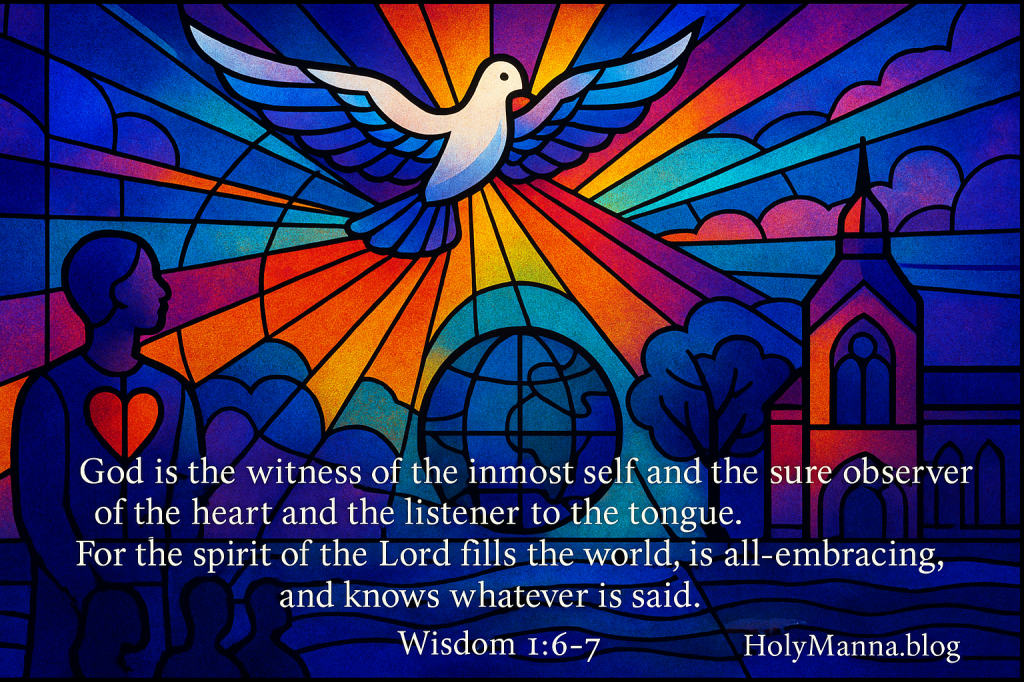
Because God is the witness of the inmost self
and the sure observer of the heart
and the listener to the tongue.
7 For the spirit of the Lord fills the world,
is all-embracing, and knows whatever is said.
Detailed Exegesis
Verse 1 — “Love righteousness, you who judge the earth; think of the Lord in goodness, and seek him in integrity of heart.”
The opening line sets the keynote: love for righteousness is not a cold rule keeping but a delighted allegiance to God’s order. Those who exercise judgment or influence must root their discernment in goodness and a whole heart. Integrity here means undivided intention, the kind of interior unity that welcomes divine wisdom. This anticipates the Gospel’s warning about scandal by insisting that the interior must be right if the community is to be safe and healthy.
Verse 2 — “Because he is found by those who do not test him, and manifests himself to those who do not disbelieve him.”
The text criticizes the posture that puts God on trial. Wisdom is given to the humble who seek rather than to the cynical who demand proofs. Faith unlocks revelation, while willful disbelief closes the door. This harmonizes with the apostles’ plea in Luke 17 and shows that even mustard-seed faith opens space for God’s self-disclosure.
Verse 3 — “For perverse counsels separate people from God, and his power, put to the proof, rebukes the foolhardy.”
Crooked plans fracture communion with God. When the heart chooses twisted strategies, alienation follows. Testing God provokes correction, not because God is thin-skinned but because he loves the soul enough to confront what destroys it. This carries the seed of the Church’s teaching on scandal, since schemes that distort truth inevitably harm others.
Verse 4 — “Because into a soul that plots evil wisdom does not enter, nor does she dwell in a body under debt of sin.”
Wisdom is not mere information. She is God’s gift that refuses to cohabit with malice. Persistent plots against goodness create a moral environment inhospitable to divine light. The language of “debt of sin” echoes the need for purification and conversion so that wisdom may take up dwelling.
Verse 5 — “For the holy spirit of discipline flees deceit and withdraws from senseless counsels and is rebuked when unrighteousness occurs.”
God’s holy Spirit of discipline is personal and holy, not a force to be manipulated. Deception and rash counsel grieve and repel the Spirit’s influence. Discipline here means the loving training by which God forms mature sons and daughters. Where that training is rejected, spiritual confusion multiplies.
Verse 6 — “For wisdom is a kindly spirit, yet she does not acquit blasphemous lips; Because God is the witness of the inmost self and the sure observer of the heart and the listener to the tongue.”
Wisdom is gentle but not indulgent toward evil. God’s knowledge penetrates pretense. The text holds mercy and justice together, reminding that words matter because they reveal and shape the heart. This anticipates the Psalm’s awe before the God who already knows the unspoken word.
Verse 7 — “For the spirit of the Lord fills the world, is all-embracing, and knows whatever is said.”
The climax names the ground of all exhortation: God’s Spirit pervades everything. There is no private realm sealed off from the divine gaze. This is not threat but liberation, because the same hand that encircles also upholds. In the light of this verse, the Gospel’s call to correct and forgive becomes possible, since nothing escapes the Spirit who strengthens faith and heals communities.
Teachings
The reading reveals a moral and spiritual ecology where wisdom dwells only with purity of heart and honesty of life. The Catechism speaks directly to these currents. On purity of heart, it teaches: “The sixth beatitude proclaims, ‘Blessed are the pure in heart, for they shall see God.’ ‘Purity of heart’ refers to those who have attuned their intellects and wills to the demands of God’s holiness, chiefly in three areas: charity; chastity or sexual rectitude; love of truth and orthodoxy of faith.” CCC 2518. On the Holy Spirit’s interior work of revelation, it confesses: “Now God’s Spirit, who reveals God, makes known to us Christ, his Word, his living Utterance, but the Spirit does not speak of himself.” CCC 687. The gravity of scandal that crooked counsel produces is also clear: “Scandal is an attitude or behavior which leads another to do evil. He who uses the power at his disposal in such a way that it leads others to do wrong becomes guilty of scandal and responsible for the evil that he has directly or indirectly encouraged.” CCC 2284. Regarding God’s nearness that searches and supports, the Church professes his intimate presence: “In him we live and move and have our being.” CCC 300.
The Memorial of Saint Leo the Great embodies this passage. In a time of doctrinal confusion and social upheaval, Leo guarded the flock through truth and mercy. His famous Christmas sermon exhorts believers to live their baptismal dignity with unswerving integrity: “Christian, recognize your dignity; and, now that you share in God’s own nature, do not return by sin to your former base condition.” Sermon 1, Nativity. Leo’s clarity mirrors the wisdom that refuses deceit, his charity reflects the kindly spirit that does not acquit blasphemous lips, and his pastoral leadership shows how the Spirit who fills the world strengthens even mustard-seed faith to uproot what harms the little ones.
Reflection
This reading invites a fearless inventory of the heart in the presence of the God who already knows every thought and word. Integrity begins when hidden compromises are named and surrendered, when prayer asks for the Spirit’s discipline to love what God loves and to refuse deceit in even small things. Communities flourish when leaders and friends reject perverse counsel, speak truth in charity, and commit to forgiveness that flows from faith rather than fragile feelings. Concrete steps today could include a brief examen inviting the Spirit to spotlight one pattern of duplicity and one habit of righteousness to cultivate, reconciliation if needed, and a deliberate act of fraternal correction done with humility and hope. What counsel needs to be renounced so that wisdom may dwell more fully? Where is the Spirit asking for a single choice of integrity that welcomes his kindly presence? Who is the brother or sister that needs a courageous word of correction or a generous word of forgiveness today?
Responsorial Psalm – Psalm 139:1-10
Known, surrounded, and upheld by God whose Spirit fills all things
Psalm 139 is a Davidic prayer that springs from Israel’s lived experience of the Lord who is both transcendent and intimately near. In Israel’s worship, this psalm formed hearts to trust the God who searches, knows, and guides his people through exile, danger, and daily life. Its language of divine omniscience and omnipresence speaks directly to today’s theme. Wisdom 1 proclaims that the Spirit fills the world and flees deceit, while the Gospel calls disciples to guard against scandal and to forgive with courageous mercy. The psalm anchors that call by revealing the One before whom no thought is hidden and in whose hand every step is held. Remembering the Memorial of Saint Leo the Great, this psalm also illumines the pastoral courage of a shepherd who taught and protected the flock under the all-seeing gaze of God, a gaze that is never cold surveillance but faithful love.
Psalm 139:1-10
New American Bible (Revised Edition)
The All-knowing and Ever-present God
1 For the leader. A psalm of David.
Lord, you have probed me, you know me:
2 you know when I sit and stand;
you understand my thoughts from afar.
3 You sift through my travels and my rest;
with all my ways you are familiar.
4 Even before a word is on my tongue,
Lord, you know it all.
5 Behind and before you encircle me
and rest your hand upon me.
6 Such knowledge is too wonderful for me,
far too lofty for me to reach.
7 Where can I go from your spirit?
From your presence, where can I flee?
8 If I ascend to the heavens, you are there;
if I lie down in Sheol, there you are.
9 If I take the wings of dawn
and dwell beyond the sea,
10 Even there your hand guides me,
your right hand holds me fast.
Detailed Exegesis
Verse 1 — “Lord, you have probed me, you know me.”
The psalm opens with a confession of God’s intimate knowledge. Divine knowing is not detached analysis but covenantal care. The probing eye of the Lord heals duplicity, which aligns with Wisdom 1 where wisdom refuses to dwell with deceit.
Verse 2 — “You know when I sit and stand; you understand my thoughts from afar.”
Ordinary movements and hidden thoughts lie open to God. Nothing is too small for his notice. This steadies the heart to choose integrity since even interior motives are seen and loved into the truth.
Verse 3 — “You sift through my travels and my rest; with all my ways you are familiar.”
The verb image of sifting suggests discerning care. God separates what is good from what is harmful in the believer’s paths, guiding away from scandalous choices and toward holy counsel.
Verse 4 — “Even before a word is on my tongue, Lord, you know it all.”
Speech reveals the heart, and God knows the word before it forms. The call to watch one’s tongue is rooted in the reality that God listens to the inmost self, as Wisdom 1 also declares.
Verse 5 — “Behind and before you encircle me and rest your hand upon me.”
This is the language of protection and blessing. Encircled by Providence, the faithful gain courage to correct a brother and to forgive, since divine support surrounds both the hard conversation and the healing embrace.
Verse 6 — “Such knowledge is too wonderful for me, far too lofty for me to reach.”
Awe is the fitting response to God’s knowledge. The psalmist acknowledges limits, which purifies pride and creates space for mustard-seed faith to act without demanding control.
Verse 7 — “Where can I go from your spirit? From your presence, where can I flee?”
This rhetorical question affirms the Spirit’s universal reach. It resonates with Wisdom 1:7 and becomes the antidote to hiding, since the only safe place is surrender to the God who already sees.
Verse 8 — “If I ascend to the heavens, you are there; if I lie down in Sheol, there you are.”
From heights to depths, God’s presence holds the believer. Even in places that feel like loss or death, divine companionship does not fail. That assurance empowers mercy toward others who stumble.
Verse 9 — “If I take the wings of dawn and dwell beyond the sea,”
The image of swift dawn wings and distant seas evokes horizons beyond human reach. The psalm teaches that no velocity and no distance outpace God’s love, which frees disciples from anxiety-driven control.
Verse 10 — “Even there your hand guides me, your right hand holds me fast.”
The final line returns to guidance and secure grasp. God’s hand both leads and holds. Under that hand, communities can face sin honestly, offer correction, and practice relentless forgiveness without fear.
Teachings
The Church reads Psalm 139 as a school of trust under the gaze of the living God. God’s searching presence does not crush freedom; it awakens prayer and conversion. The Catechism frames this with a foundational truth: “God calls man first. Man may forget his Creator or hide far from his face; he may run after idols or accuse the deity of having abandoned him; yet the living and true God tirelessly calls each person to that mysterious encounter known as prayer.” CCC 2567. This psalm is that encounter, where hiding gives way to honesty.
Saint Augustine voices the heart’s response to such nearness: “You have made us for yourself, and our heart is restless until it rests in you.” Confessions I, 1. Restless hearts become steady when they accept the God who is already present in every place and moment. Saint Leo the Great presses the moral consequence of being held by God’s hand: “Christian, recognize your dignity; and, now that you share in God’s own nature, do not return by sin to your former base condition.” Sermon 1, On the Nativity. Under the all-seeing Spirit, dignity entails integrity. The God who knows the word before it is spoken calls for words that build up rather than scandalize, and for pastoral courage that protects the little ones.
Reflection
Let this psalm teach a daily habit of living before God’s face with peace rather than fear. Begin and end the day by acknowledging that every thought and step unfolds within his encircling care. When tempted to hide, remember that hiding only isolates, while confession and reconciliation heal. If a difficult conversation or act of correction is needed, trust that the same right hand that holds you fast will steady the tone and guard the outcome. Choose one moment today to pause before speaking, invite the Lord to sift the intention, and let the word that follows be truthful and kind. Where has hiding replaced honest prayer, and what changes when the heart returns to God’s gaze? What is one conversation that needs to be held under the Lord’s hand rather than under fear of rejection? How does remembering that God already knows the word before it is spoken reshape the way you speak to family, friends, and the Church?
Holy Gospel – Luke 17:1-6
Courage against scandal, mercy without limits, and faith that moves what feels immovable
Set on the road toward Jerusalem, Luke 17:1-6 gathers three hard teachings Jesus gives to disciples living shoulder to shoulder in a fragile community. In a world where scandal could shatter faith, Jesus names the gravity of leading little ones into sin. In a culture where honor and shame often fueled payback, he commands fraternal correction and relentless forgiveness. In a moment when duty feels impossible, he calls for real trust in God’s power, not in oneself. These words fit the day’s theme of righteous integrity under the all-seeing Spirit. They also echo the pastoral witness of Saint Leo the Great, whose doctrinal clarity protected the little ones from error and whose charity called the Church to conversion and peace.
Luke 17:1-6
New American Bible (Revised Edition)
Temptations to Sin. 1 He said to his disciples, “Things that cause sin will inevitably occur, but woe to the person through whom they occur. 2 It would be better for him if a millstone were put around his neck and he be thrown into the sea than for him to cause one of these little ones to sin. 3 Be on your guard! If your brother sins, rebuke him; and if he repents, forgive him. 4 And if he wrongs you seven times in one day and returns to you seven times saying, ‘I am sorry,’ you should forgive him.”
Saying of Faith. 5 And the apostles said to the Lord, “Increase our faith.” 6 The Lord replied, “If you have faith the size of a mustard seed, you would say to [this] mulberry tree, ‘Be uprooted and planted in the sea,’ and it would obey you.
Detailed Exegesis
Verse 1 — “He said to his disciples, ‘Things that cause sin will inevitably occur, but woe to the person through whom they occur.’”
Jesus is brutally honest about life in a fallen world. Stumbling blocks will appear, yet personal responsibility is never excused. The term suggests traps that trip others on their way to God. The warning is not fear mongering. It is a sober appeal to integrity so that disciples do not become the occasion of another’s fall.
Verse 2 — “It would be better for him if a millstone were put around his neck and he be thrown into the sea than for him to cause one of these little ones to sin.”
A millstone was massive and impossible to remove once sunk. The image communicates severity, not to promote despair, but to awaken pastoral caution. The “little ones” are the vulnerable and also the newly believing whose faith can be bruised by the hypocrisy or hardness of those they trust. The Master insists that protecting them is worth any personal cost.
Verse 3 — “Be on your guard! If your brother sins, rebuke him; and if he repents, forgive him.”
Watchfulness here means vigilance over one’s own heart and over the bonds of communion. “Rebuke” is not a license to vent but a call to truthful love. Correction is an act of mercy aimed at the brother’s restoration. Forgiveness immediately follows, showing that the goal of correction is communion, not control.
Verse 4 — “And if he wrongs you seven times in one day and returns to you seven times saying, ‘I am sorry,’ you should forgive him.”
Seven points to fullness. The command stretches the heart beyond fairness into the Father’s mercy. The repetition in a single day removes loopholes and pushes the disciple to rely on grace rather than on natural patience. Forgiveness does not deny the offense. It names the sin and then chooses reconciliation again.
Verse 5 — “And the apostles said to the Lord, ‘Increase our faith.’”
The apostles sense that this life is humanly impossible. Their prayer is the perfect response to the Lord’s demands. They do not ask for a technique. They ask for faith, because only trust in God’s presence and power makes correction honest and forgiveness durable.
Verse 6 — “The Lord replied, ‘If you have faith the size of a mustard seed, you would say to [this] mulberry tree, “Be uprooted and planted in the sea,” and it would obey you.’”
A mulberry tree was known for deep roots. Planting it in the sea is absurd on human terms. The Lord’s point is not theatrics but confidence. Even a little faith, rightly placed, unroots patterns that look permanent, including the tangled roots of resentment, fear of confrontation, and habits of scandal.
Teachings
Jesus’ words on scandal receive precise expression in the Catechism of the Catholic Church: “Scandal is an attitude or behavior which leads another to do evil. He who uses the power at his disposal in such a way that it leads others to do wrong becomes guilty of scandal and responsible for the evil that he has directly or indirectly encouraged.” CCC 2284. Fraternal correction and forgiveness flow from charity. The Catechism teaches: “The fruits of charity are joy, peace, and mercy; charity demands beneficence and fraternal correction; it is benevolence; it fosters reciprocity and remains disinterested and generous; it is friendship and communion.” CCC 1829. The Church also names these actions as spiritual works of mercy, rooting them in Christ’s own heart: “The works of mercy are charitable actions by which we come to the aid of our neighbor in his spiritual and bodily necessities. Instructing, advising, consoling, comforting are spiritual works of mercy, as are forgiving and bearing wrongs patiently.” CCC 2447.
Saint Leo the Great embodies this Gospel’s pattern. His preaching and his Tome protected the little ones from the scandal of error and invited return to communion through truth in charity. His famous exhortation captures the moral weight and the mercy of Christian life under grace: “Christian, recognize your dignity; and, now that you share in God’s own nature, do not return by sin to your former base condition.” Sermon 1, On the Nativity. That is fraternal correction spoken to the whole Church with a father’s heart. When the commands to forgive and to guard against scandal feel beyond reach, the answer remains the apostles’ prayer, which the Spirit never ignores.
Reflection
This Gospel invites a concrete way of life in community. Ask for watchfulness over the small choices that could trip another, especially in speech and example. When a brother or sister stumbles, choose the courage to speak honestly and the humility to welcome repentance without keeping score. When hurt repeats, return to the command of Christ and the prayer of the apostles, because the mustard seed must be planted again and again. Consider a simple plan today. Pray briefly before hard conversations. Name the issue without exaggeration. Offer a path back to trust. Commit to forgive when repentance is asked. Invite accountability for patterns that need uprooting. Where might a habit or tone be putting a stumbling block before someone with fragile faith? Who needs a word of correction that is soaked in prayer and aimed at restoration? What resentment needs to be handed to Jesus so that even a mustard seed of faith can begin to unroot it today?
Known, Guarded, and Sent with Saint Leo the Great
Wisdom 1:1-7 calls for a heart that loves righteousness in the sight of the all-seeing Spirit, reminding that “the spirit of the Lord fills the world”. Psalm 139 turns that truth into worshipful confidence, confessing that “even before a word is on my tongue, Lord, you know it all”, and resting in the hand that surrounds and upholds. Luke 17:1-6 brings the doctrine down to street level, commanding vigilance against scandal, honest fraternal correction, and forgiveness that refuses to keep score, then anchoring it all in mustard-seed faith that can uproot what seems unchangeable. The Memorial of Saint Leo the Great gathers these threads in a living witness. Leo guarded the little ones through truth spoken in charity, strengthened the brethren with Christ-centered clarity, and summoned the baptized to live what they profess. His famous line still pierces the heart today: “Christian, recognize your dignity; and, now that you share in God’s own nature, do not return by sin to your former base condition.”
Take this day as an invitation to step into transparent integrity before the God who already knows and loves. Ask the Holy Spirit to search motives, to purify counsel, and to steady any needed act of correction. Choose one deliberate act of mercy, extend forgiveness where the wound still aches, and speak one word that builds rather than breaks. Pray the apostles’ plea with confidence, “Increase our faith”, and trust that the Lord’s right hand will guide and hold. What single choice of integrity can welcome wisdom more deeply today? Who needs a truthful, hopeful conversation that protects rather than shames? Where can a mustard seed of faith begin to uproot resentment and plant reconciliation in its place?
Engage with Us!
Share your reflections in the comments below, and let the Word shape honest conversation, deeper faith, and real mercy in action.
- First Reading – Wisdom 1:1-7: Where is the Holy Spirit inviting a concrete step of integrity today so that wisdom may dwell more fully? What counsel or hidden compromise needs to be renounced in order to welcome a clean heart before God? How can daily habits of prayer and examination of conscience make space for the “holy spirit of discipline” to train the mind and will?
- Responsorial Psalm – Psalm 139:1-10: How does living before God’s all-seeing love change the way you speak, decide, and forgive? What would it look like to rest in the Lord’s encircling hand during a moment of anxiety or conflict this week? Where has hiding replaced honest prayer, and how will a return to God’s gaze bring freedom?
- Holy Gospel – Luke 17:1-6: Who could be helped or harmed by your example, and what simple change would remove a stumbling block for someone with fragile faith? What conversation of fraternal correction needs to happen, and how can it be offered with humility, clarity, and hope for communion? Where is Jesus asking for repeated forgiveness, and what is one mustard-seed act of trust you can take today?
Go forward with courage and peace, choosing integrity, speaking truth in charity, and practicing the forgiveness that reflects the heart of the Father. Live the faith boldly and do everything with the love and mercy Jesus taught.
Sacred Heart of Jesus, we trust in You!
Immaculate Heart of Mary, pray for us!
Saint Michael the Archangel, defend us in battle!
Follow us on Instagram and Facebook for more insights and reflections on living a faith-filled life.

 Holy Manna!
Leave a comment