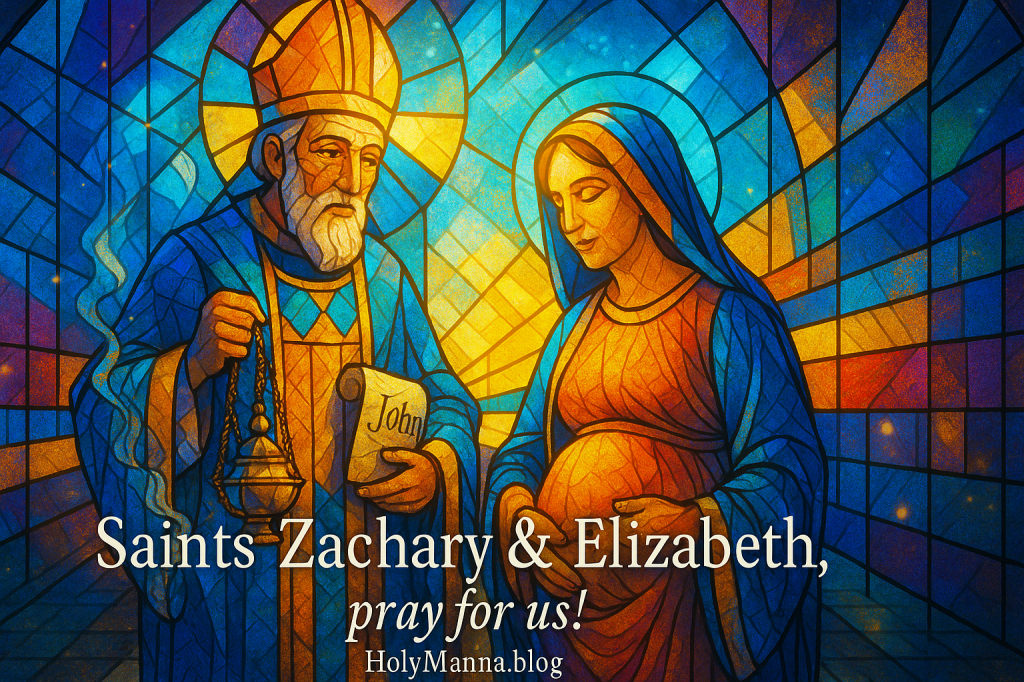
A Household of Hope
Zachary and Elizabeth, sometimes written Zechariah and Elisheva, stand at the hinge of salvation history as the parents of Saint John the Baptist, the forerunner who prepares the way for Jesus. The Gospel of Luke presents them as a married couple who live their covenant faithfully, keep the commandments with integrity, and face the ache of childlessness without bitterness. Their story shows how God loves to begin new chapters of grace inside ordinary homes. When Zachary finally regains his speech, he breaks into the canticle the Church prays every morning, beginning with “Blessed be the Lord, the God of Israel.” Their house becomes a living sign that God keeps His promises and that holiness often looks like steady fidelity in the hidden places.
Priest and Daughter of Aaron
Scripture introduces Zachary as a priest of the division of Abijah, serving in the Temple at Jerusalem, and Elizabeth as “from the daughters of Aaron.” This was a marriage steeped in worship where liturgical rhythms shaped family life. Their names preach a quiet homily of hope. Zechariah means “the Lord has remembered,” and Elizabeth echoes “my God has sworn.” Luke situates them in “the hill country of Judah,” a detail that anchors their life in Israel’s heartland and prepares for the Visitation that will happen in that same hill country. They are known most of all for welcoming the miraculous gift of a son in their old age and for naming him according to God’s command. When others expect a family name, Zachary writes on a tablet, “His name is John.” In that simple obedience, he shows how a father cooperates with God’s plan, even when it confounds custom.
Visited by Heaven
While Zachary offers incense at the altar, the angel Gabriel announces that their long-prayed-for child will be great before the Lord and will go before Him “in the spirit and power of Elijah.” Zachary hesitates and receives a mercy-laced discipline of silence, a season that purifies his faith. Elizabeth then conceives, and grace overflows when Mary arrives. Filled with the Holy Spirit, Elizabeth cries out words that have become the heart of Christian prayer: “Blessed are you among women, and blessed is the fruit of your womb.” She continues with startled humility, “And why is this granted to me, that the mother of my Lord should come to me?” The child in her womb leaps for joy at the presence of the Incarnate Word, a radiant witness that life in the womb is already responsive to God. The home of Zachary and Elizabeth turns into a sanctuary where promise, pregnancy, and praise meet in one unforgettable afternoon.
Waiting in the Dark
Their path is not free of pain. In ancient Israel, barrenness carried social stigma and personal sorrow. Zachary’s sudden muteness adds another layer of humiliation that becomes, in God’s hands, a school of hope. When the time comes to name the child, Zachary chooses obedience over convention and writes, “His name is John,” and immediately his tongue is loosed. He then proclaims the Benedictus, praising God for visiting and redeeming His people, and turns to his infant son with fatherly prophecy: “And you, child, will be called the prophet of the Most High; for you will go before the Lord to prepare His ways.” Their hardships never become excuses to retreat from faith. They become the soil where trust grows deep roots. Scripture does not record persecutions or martyrdom for Elizabeth, and it does not provide a definitive account of Zachary’s death. What stands beyond doubt is the sanctity they lived through obedience, patience, and worship.
Memory That Endures
After their earthly lives, the Church carries Zachary and Elizabeth in her memory and liturgy. The Roman Martyrology commemorates them together on November 5 as the parents of the Precursor. While later traditions offer stories about Zachary’s end, the Church does not require belief in those accounts. What shapes devotion in a stable way are the Gospel scenes that unfold in their home and the holy places that recall them. In the hill country near Jerusalem, long-standing pilgrim sites like the Church of the Visitation and the Church of Saint John the Baptist invite prayerful contemplation of the mysteries that unfolded under their roof. Even without a catalog of posthumous miracles, their intercession has quietly encouraged generations of spouses bearing the cross of infertility, parents praying for their children’s vocations, and believers learning to let God’s timing govern their plans.
Walking the Path Today
Zachary and Elizabeth show how holiness grows in marriages that pray, listen, and obey together. Their life teaches that delays are not denials and that God often answers after faith has been stretched and purified. Their story commends the practice of blessing one another and of welcoming Christ with generous hospitality, as Elizabeth does with Mary. Their home models a pro-life heart that recognizes the dignity and spiritual vitality of the unborn. Their season of silence suggests practical penances that make space for God’s word, and their fidelity to the name God chose for their son encourages a healthy detachment from public opinion. The Catechism of the Catholic Church situates their son’s mission within the outpouring of the Holy Spirit and shows that the same Spirit still prepares hearts in quiet, hidden ways. Their witness invites every family to match prayer with obedience and to let praise be the last word after trials have run their course.
Engage with Us!
- Where is God inviting patient trust in your life, and how might Zachary and Elizabeth’s long waiting strengthen your hope today?
- How can your home become a place where the Holy Spirit is welcomed, as in the Visitation, through prayer, blessing, and hospitality?
- What small act of obedience is God asking of you right now, and how could that unlock a deeper freedom to praise Him like Zachary?
- Whom can you visit or encourage this week so that your greeting becomes, as the Catechism says, a “visit from God” for someone who needs joy?
Live these lessons with confidence. Embrace daily prayer, honor your vocation with love, and let every greeting, decision, and sacrifice be a doorway for God’s mercy. Walk in faith, and do everything with the love and mercy Jesus taught.
Saints Zachary & Elizabeth, pray for us!
Follow us on Instagram and Facebook for more insights and reflections on living a faith-filled life.

 Holy Manna!
Leave a comment