Memorial of Saint Charles Borromeo, Bishop – Lectionary: 486
Filling the Father’s House
The readings paint a single path into the heart of God’s Kingdom: humble trust that becomes zealous service, saying yes to the invitation and spending every gift so that the poor and lowly find a place at the table. In Romans 12:5–16, the Church is revealed as one Body with many charisms, where each member’s grace becomes a concrete act of love for the whole: “Do not grow slack in zeal, be fervent in spirit, serve the Lord.” These gifts are not private talents but the Spirit’s equipment for building up the Body, as taught in The Catechism (CCC 799–801; 1937; 1822–1829). Psalm 131 steadies that outward zeal with a hidden posture of littleness before the Father, “Lord, my heart is not proud”, inviting the soul to rest like a weaned child who trusts the giver more than the gifts (CCC 2559; 1817–1821). In Luke 14:15–24, the parable of the great banquet exposes the tragedy of excuses that prefer fields, oxen, and new comforts over the King’s feast, while revealing the wideness of divine mercy for the poor, the crippled, the blind, and the lame: “Make people come in that my home may be filled.” This is the Church’s Eucharistic horizon, where the foretastes of the Kingdom move hearts toward the final wedding supper (CCC 1402–1405; 2448).
The Memorial of Saint Charles Borromeo places flesh on this call. A bishop formed by the Council of Trent, he poured himself out to renew catechesis, establish seminaries, visit parishes personally, and organize relief during plague so that doctrine, worship, and charity would become a single welcome into the Father’s house (CCC 828; 1547; 1564). His life shows that true reform is pastoral and sacrificial, rooted in the altar and flowing toward the streets and alleys that the Gospel mentions. Today’s liturgy invites hearts to imitate that rhythm: receive humbly, serve fervently, and make room for those most easily overlooked. What excuse needs to be surrendered, and which gift can be offered today so that someone else may take a seat at the banquet of the Lord?
First Reading – Romans 12:5–16
One Body, Many Gifts, One Burning Love
Written to a mixed community of Jewish and Gentile believers in the heart of the empire, Romans 12 moves from high doctrine to daily discipleship. After years of tension in Rome due to the expulsion of Jewish Christians under Claudius and their return under Nero, the Church needed practical unity, not just good intentions. Paul gives that unity a concrete shape by describing the Church as the one Body of Christ, where diverse charisms are given for service, not status. This vision fits today’s theme perfectly. Humble trust before the Father becomes fervent service for one another, and the fruit is a community ready to say yes to God’s invitation and to make room for the lowly. The life of Saint Charles Borromeo mirrors this passage. His prudent leadership, tireless catechesis, and merciful care of the poor showed what happens when gifts are spent for the Gospel. The result is a Church that actually looks like a family gathered for the banquet of the Lord.
Romans 12:5-16
New American Bible (Revised Edition)
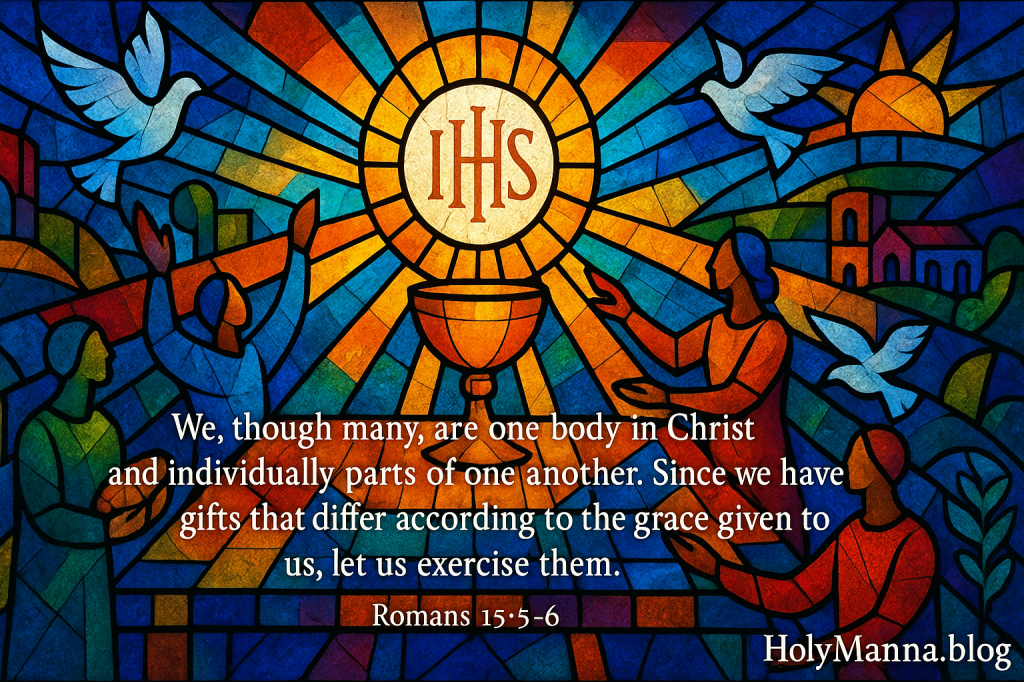
5 so we, though many, are one body in Christ and individually parts of one another. 6 Since we have gifts that differ according to the grace given to us, let us exercise them: if prophecy, in proportion to the faith; 7 if ministry, in ministering; if one is a teacher, in teaching; 8 if one exhorts, in exhortation; if one contributes, in generosity; if one is over others, with diligence; if one does acts of mercy, with cheerfulness.
Mutual Love. 9 Let love be sincere; hate what is evil, hold on to what is good; 10 love one another with mutual affection; anticipate one another in showing honor. 11 Do not grow slack in zeal, be fervent in spirit, serve the Lord. 12 Rejoice in hope, endure in affliction, persevere in prayer. 13 Contribute to the needs of the holy ones, exercise hospitality. 14 Bless those who persecute [you], bless and do not curse them. 15 Rejoice with those who rejoice, weep with those who weep. 16 Have the same regard for one another; do not be haughty but associate with the lowly; do not be wise in your own estimation.
Detailed Exegesis
Verse 5 – “so we, though many, are one body in Christ and individually parts of one another.”
Paul does not present Christian belonging as a club membership. He claims a mystical reality. Baptism grafts believers into Christ so that communion with Him creates communion with each other. The unity is personal and organic. The phrase “parts of one another” means no gift is isolated and no member is disposable.
Verse 6 – “Since we have gifts that differ according to the grace given to us, let us exercise them: if prophecy, in proportion to the faith;”
Charisms differ because grace is personal and purposeful. Prophecy here means speaking God’s word into concrete situations for the building up of the Church. “In proportion to the faith” safeguards discernment. The measure is fidelity to Christ and the apostolic faith, not novelty or self promotion.
Verse 7 – “if ministry, in ministering; if one is a teacher, in teaching;”
Paul names ordinary, necessary ministries that sustain the community. Service and teaching are not secondary tasks. They are essential expressions of charity that steady the Body and pass on the truth in love.
Verse 8 – “if one exhorts, in exhortation; if one contributes, in generosity; if one is over others, with diligence; if one does acts of mercy, with cheerfulness.”
Exhortation strengthens wavering hearts. Generosity supplies material needs. Leadership must be diligent, not domineering. Mercy should be cheerful because it reveals the Father’s face. The spiritual and the practical belong together.
Verse 9 – “Let love be sincere; hate what is evil, hold on to what is good;”
Authentic love rejects pretense. It clings to the good with moral clarity. Christian charity is not vague kindness. It is truthful and courageous, with a real hatred of evil that protects the vulnerable.
Verse 10 – “love one another with mutual affection; anticipate one another in showing honor.”
Family language takes center stage. “Mutual affection” treats members as beloved kin. To “anticipate” honor means racing to prefer the other, a rivalry of reverence that heals envy and status seeking.
Verse 11 – “Do not grow slack in zeal, be fervent in spirit, serve the Lord.”
Zeal is not loud emotion. It is steady fire. The Spirit fans this fire so that service of the Lord becomes the atmosphere of daily life. Sloth suffocates love. Fervor keeps love agile and ready.
Verse 12 – “Rejoice in hope; endure in affliction; persevere in prayer.”
Three short imperatives outline Christian resilience. Joy is rooted in hope, not circumstance. Endurance transforms suffering into witness. Persevering prayer keeps the heart anchored in God when feelings fade.
Verse 13 – “Contribute to the needs of the holy ones, exercise hospitality.”
The communion of saints has a grocery bill. Sharing goods is not an optional extra. Hospitality welcomes Christ Himself by welcoming His members, especially the poor and the stranger.
Verse 14 – “Bless those who persecute [you], bless and do not curse them.”
The Church answers hostility with blessing. This is not weakness. It is Christlike strength that refuses to mirror malice. The Cross teaches how to speak good over evil.
Verse 15 – “Rejoice with those who rejoice, weep with those who weep.”
Empathy becomes a command. Christian love enters the seasons of others. Shared joy multiplies, shared sorrow divides the weight.
Verse 16 – “Have the same regard for one another; do not be haughty but associate with the lowly; do not be wise in your own estimation.”
Humility dissolves class walls and cliques. Wisdom begins where self importance ends. The Church that sits with the lowly becomes the Church that truly resembles her Lord.
Teachings
The Catechism defines charity with disarming clarity: “Charity is the theological virtue by which we love God above all things for his own sake, and our neighbor as ourselves for the love of God.” (CCC 1822). This single sentence illuminates every imperative in Romans 12:5–16. Diverse gifts are given so that charity can take visible shape in teaching, service, leadership, generosity, and mercy. Saint Augustine captures the interior law that guides all the charisms: “Love, and do what you will.” This does not excuse sin. It means that when love is genuine and rightly ordered, every choice seeks God’s glory and the neighbor’s good. The pastoral example of Saint Charles Borromeo shows what ordered love looks like in a bishop. He formed clergy through seminaries, visited parishes personally, and organized relief during plague. His diligence, mercy, and cheerful sacrifice echo Paul’s list of charisms and virtues. History remembers that real reform is Eucharistic and pastoral, grounded in right worship and expressed in concrete works of love.
Reflection
This reading invites hearts to see parish life through the lens of the Body. Gifts are not private hobbies. They are answers to real needs. A teacher explains the faith to a confused teenager. A generous giver pays for a neighbor’s groceries. A leader quietly organizes a meal train. A merciful soul sits with someone who is grieving. A fervent intercessor keeps watch when others are tired. Which gift has the Lord placed in your hands for the good of the Body today? Where is zeal growing slack and how can renewed prayer fan it into flame? Who in the parish feels lowly or invisible and how can a simple visit, invitation, or act of hospitality bring them into the warmth of the family? What excuse is keeping you from saying a ready yes to serve so that the Father’s house may be filled?
Responsorial Psalm – Psalm 131
Small Enough to Trust, Strong Enough to Serve
Composed as a Song of Ascents, Psalm 131 was prayed by pilgrims climbing toward Jerusalem, hearts set on the Lord who dwells with the lowly. In a culture that prized honor, achievement, and public reputation, this brief psalm teaches a countercultural path. The worshiper renounces pride, silences the restless chase for control, and rests like a weaned child with its mother. This humble trust is not passive. It becomes the inner posture that frees disciples to serve with steady zeal. Today’s theme comes into focus here. The Father’s house is filled by hearts that are small before God and therefore big in charity for others. Saint Charles Borromeo lived this psalm in the noise of reform and plague, choosing childlike dependence on God as the wellspring of tireless pastoral love.
Psalm 131
New American Bible (Revised Edition)
Humble Trust in God
1 A song of ascents. Of David.
Lord, my heart is not proud;
nor are my eyes haughty.
I do not busy myself with great matters,
with things too sublime for me.
2 Rather, I have stilled my soul,
Like a weaned child to its mother,
weaned is my soul.
3 Israel, hope in the Lord,
now and forever.
Detailed Exegesis
Verse 1 – “Lord, my heart is not proud; nor are my eyes haughty. I do not busy myself with great matters, with things too sublime for me.”
The psalm opens with a direct confession of humility. The heart, the eyes, and the ambitions are placed under God’s sovereignty. Ancient Israel knew that true wisdom begins with reverent restraint. The line about not chasing what is “too sublime” rejects the vanity that seeks status or control. In light of today’s theme, this verse is the antidote to the excuses in the banquet parable. The disciple lets go of self importance to be available to God and neighbor. The Catechism teaches that prayer begins where pride ends, and this verse sets the interior climate for authentic service.
Verse 2 – “Rather, I have stilled my soul, Like a weaned child to its mother, weaned is my soul.”
The image shifts from renunciation to rest. A weaned child does not cling for milk but rests near the mother in quiet trust. This is mature dependence, not infantile neediness. Israel’s worship learned to rest in God’s presence without bargaining. In the Christian life, such stillness is not escape. It is the interior freedom that allows gifts to be spent cheerfully for the Body. The still soul becomes the steady soul that rejoices in hope, endures in affliction, and perseveres in prayer.
Verse 3 – “Israel, hope in the Lord, now and forever.”
The personal prayer blossoms into a communal call. Humility and rest become a mission for the whole people. Hope is anchored in the Lord’s faithful covenant and stretches from now into forever. This final imperative aligns the psalm with the Church’s Eucharistic horizon. The one who hopes in the Lord is ready to answer the King’s invitation and to welcome the poor, the crippled, the blind, and the lame into the feast.
Teachings
The Catechism names humility as the ground of all true prayer. “Humility is the foundation of prayer. Only when we humbly acknowledge that we do not know how to pray as we ought are we ready to receive freely the gift of prayer. ‘Man is a beggar before God.’” (CCC 2559, italics preserved in the citation). This sentence explains the quiet of Psalm 131. The soul is stilled because it has renounced self reliance and chosen filial trust. On hope, The Catechism teaches with equal clarity. “Hope is the theological virtue by which we desire the kingdom of heaven and eternal life as our happiness, placing our trust in Christ’s promises and relying not on our own strength, but on the help of the grace of the Holy Spirit.” (CCC 1817). That is the voice heard in Verse 3. The call to “hope in the Lord” draws the whole community into confident dependence on God’s promises.
The saints echo the psalm’s heartbeat of holy rest. Saint Augustine opens Confessions with a line that fits Verse 2 like a key fits a lock. “You have made us for yourself, and our heart is restless until it rests in you.” This is not an argument for idleness. It is the source of right action. Saint Charles Borromeo’s reforming energy flowed from this interior poverty before God. He prayed, fasted, and ordered his life so that his ministry would not be driven by ambition but by love. When humility steadies the heart, service becomes cheerful and resilient.
Reflection
The psalm invites a daily decision to step down from the pedestal of self and step into the arms of the Father. That choice changes how time is used, how people are treated, and how parish life is lived. Begin the day by acknowledging God’s greatness and surrendering the urge to control outcomes. Take a concrete pause at midday to quiet the soul in simple prayer. End the day by returning anxieties to the Lord and recalling one grace received. Let that rhythm fuel generous service. Visit someone who is overlooked. Offer hospitality without fuss. Give a hidden gift and tell no one. Where is pride crowding out peace, and what small act of surrender can be made today? What five minute pause could still the soul and reopen the heart to God’s presence? Who needs the calm attention that only a humbled heart can give? How might hope in the Lord reshape decisions so that there is always room at the table for the lowly?
Holy Gospel – Luke 14:15–24
The Banquet Is Ready, So Bring a Ready Yes
Set at a Sabbath meal, this parable speaks into a culture where a shared table meant covenant fellowship and honor. In Israel’s Scriptures the end times are pictured as a feast with God, a promise many would have known from Isaiah 25:6. Jesus takes that longing and turns it into an urgent invitation. The Kingdom is not a distant idea. It is near and ready in Him. Those who make excuses miss the joy, while the poor, the crippled, the blind, and the lame discover they are wanted. The Church hears this as both comfort and commission. There is a place for the lowly, and there is work to go out quickly so the Father’s house may be filled. On the Memorial of Saint Charles Borromeo, the Gospel becomes very concrete. His pastoral reforms, catechesis, and care during plague echo the master’s command to invite widely and welcome the least. Today’s theme comes into focus. Humble trust becomes zealous service, and every gift is spent so that more people find their seat at the banquet of the Lord.
Luke 14:15-24
New American Bible (Revised Edition)
15 One of his fellow guests on hearing this said to him, “Blessed is the one who will dine in the kingdom of God.” 16 He replied to him, “A man gave a great dinner to which he invited many. 17 When the time for the dinner came, he dispatched his servant to say to those invited, ‘Come, everything is now ready.’ 18 But one by one, they all began to excuse themselves. The first said to him, ‘I have purchased a field and must go to examine it; I ask you, consider me excused.’ 19 And another said, ‘I have purchased five yoke of oxen and am on my way to evaluate them; I ask you, consider me excused.’ 20 And another said, ‘I have just married a woman, and therefore I cannot come.’ 21 The servant went and reported this to his master. Then the master of the house in a rage commanded his servant, ‘Go out quickly into the streets and alleys of the town and bring in here the poor and the crippled, the blind and the lame.’ 22 The servant reported, ‘Sir, your orders have been carried out and still there is room.’ 23 The master then ordered the servant, ‘Go out to the highways and hedgerows and make people come in that my home may be filled. 24 For, I tell you, none of those men who were invited will taste my dinner.’”
Detailed Exegesis
Verse 15 – “One of his fellow guests on hearing this said to him, ‘Blessed is the one who will dine in the kingdom of God.’”
A pious refrain expresses Israel’s hope. Jesus will agree, but He will redefine who is truly blessed. The blessing is not automatic. It is received by those who answer the invitation with faith.
Verse 16 – “He replied to him, ‘A man gave a great dinner to which he invited many.’”
The “man” signifies God whose generosity is superabundant. The “many” hints at Israel first, yet already opens toward a wider embrace. The feast is a classic image of salvation. It is about communion, not mere consumption.
Verse 17 – “When the time for the dinner came, he dispatched his servant to say to those invited, ‘Come, everything is now ready.’”
Time has reached fulfillment in Jesus. The servant’s word mirrors the Church’s preaching. Nothing is lacking on God’s side. Grace is prepared. The only question is a free response.
Verse 18 – “But one by one, they all began to excuse themselves. The first said to him, ‘I have purchased a field and must go to examine it; I ask you, consider me excused.’”
Property and projects are good goods, yet they become idols when they outrank the Kingdom. The tragedy is not the field. It is the delay that treats God as secondary.
Verse 19 – “And another said, ‘I have purchased five yoke of oxen and am on my way to evaluate them; I ask you, consider me excused.’”
Work and productivity can mask spiritual sloth. The heart that never has time for God slowly forgets hunger for the feast. The Gospel unmasks busyness that keeps love at arm’s length.
Verse 20 – “And another said, ‘I have just married a woman, and therefore I cannot come.’”
Marriage is holy, yet even holy things can be misused as excuses. The Kingdom orders every vocation toward God. Spouses thrive when God is first because love learns its measure at the banquet.
Verse 21 – “The servant went and reported this to his master. Then the master of the house in a rage commanded his servant, ‘Go out quickly into the streets and alleys of the town and bring in here the poor and the crippled, the blind and the lame.’”
Divine anger is the just sorrow of Love refused. It becomes mercy in motion. The priority shifts to those who have nothing to offer but need. This reveals the Father’s heart and the Church’s preferential love for the poor.
Verse 22 – “The servant reported, ‘Sir, your orders have been carried out and still there is room.’”
Mercy discovers that God’s house is larger than expected. The line “still there is room” fuels mission. The Eucharistic table trains the eyes to see empty places that God wants filled.
Verse 23 – “The master then ordered the servant, ‘Go out to the highways and hedgerows and make people come in that my home may be filled.’”
The highways point beyond Israel to the nations. “Make people come in” means urgent persuasion, not coercion. The Church goes to the margins with patient insistence so that none are missing from the feast.
Verse 24 – “For, I tell you, none of those men who were invited will taste my dinner.”
Refusal has consequences. The sober end of the parable protects freedom and awakens holy urgency. Today is the day to respond. Today is the day to invite another.
Teachings
The Catechism describes Christian hope with clarity that matches the parable’s invitation. “Hope is the theological virtue by which we desire the kingdom of heaven and eternal life as our happiness, placing our trust in Christ’s promises and relying not on our own strength, but on the help of the grace of the Holy Spirit.” (CCC 1817). The feast is the Kingdom given in promise, tasted now in the Eucharist, and fulfilled in glory. The Church’s love must mirror the master’s guest list. “The Church’s love for the poor is a part of her constant tradition.” (CCC 2444). That love does not sentimentalize poverty. It answers it with concrete mercy and inclusion. The Catechism also teaches the interior posture that keeps the invitation fresh. “Humility is the foundation of prayer. Only when we humbly acknowledge that we do not know how to pray as we ought are we ready to receive freely the gift of prayer. ‘Man is a beggar before God.’” (CCC 2559). Humility opens the door that excuses keep shut.
The saints and popes echo the Gospel’s movement from altar to action. Pope Benedict XVI writes with bracing simplicity, “A Eucharist which does not pass over into the concrete practice of love is intrinsically fragmented.” (Deus Caritas Est 14). Saint Augustine reminds the restless heart why the feast matters at all, “You have made us for yourself, and our heart is restless until it rests in you.” The parable, the Catechism, and the witnesses converge. God prepares the banquet. Grace invites. Charity gathers the guests.
Reflection
This Gospel asks for a ready yes that reorders priorities around the Kingdom. Begin by placing the Lord’s Day at the center and letting Sunday Mass shape the week. Make one practical act of hospitality that costs something, like inviting someone who is overlooked to a meal or a parish event. Set a simple rule for screens or work that protects daily prayer so the heart hears the invitation. Practice generous almsgiving that actually changes how money is spent. Learn one person’s name who stands at the margins and treat them as an honored guest. Which excuse most often keeps the heart from the Lord’s table, and what concrete change can be made today? Who in the neighborhood or parish would never expect an invitation, and how can a warm welcome be offered this week? How might the Eucharist lead to one specific act of love that reflects the master’s command to go out quickly?
Take Your Seat and Set the Table
Today’s Word draws a clear picture of a Church that is small before God and strong in love. In Romans 12:5–16, the Body is one and the gifts are many, and the Spirit’s fire turns ordinary service into living worship: “Do not grow slack in zeal, be fervent in spirit, serve the Lord.” In Psalm 131, a quiet heart becomes the wellspring of that zeal, resting like a child in the Father’s care and refusing the pride that crowds out peace. In Luke 14:15–24, the King’s feast is ready and the invitation is urgent, especially for the poor, the crippled, the blind, and the lame: “Make people come in that my home may be filled.” The Memorial of Saint Charles Borromeo shows what this looks like in real time. He prayed humbly, formed clergy faithfully, and loved tirelessly so that parish doors and hearts stayed open to the least.
Here is the call to action. Let the week be ordered around the Eucharist and shaped by daily prayer that stills the soul. Offer your gifts without delay in concrete acts of charity, catechesis, leadership, generosity, and mercy. Choose one intentional act of hospitality for someone on the margins and treat them as an honored guest. Guard a humble heart so that service stays cheerful and steady. Hope in the Lord now and forever, and let that hope move feet and hands toward those who need a place at the table. What excuse needs to be surrendered today so that God’s invitation can be received with a ready yes? Which gift has been waiting on the shelf, and how will it serve the Body this week? Who will be invited, welcomed, and loved so that the Father’s house may be filled?
Engage with Us!
Share your reflections in the comments below and encourage someone else by adding a practical takeaway that blessed you today.
- From Romans 12:5–16, which gift has God placed in your hands for the good of the Body, and what specific act of service will you offer this week to put that gift into motion?
- Praying with Psalm 131, what concrete habit helps you quiet your soul like a weaned child with its mother, and which prideful pattern needs to be surrendered so humble trust can grow?
- Hearing Luke 14:15–24, which excuse most often keeps you from the King’s banquet, and who on the margins will you invite and welcome so that the Father’s house may be filled?
Go forward with courage. Live a life of faith that is small before God and strong in love, and do everything with the love and mercy Jesus taught, so that hearts find their place at His table.
Sacred Heart of Jesus, we trust in You!
Immaculate Heart of Mary, pray for us!
Saint Michael the Archangel, defend us in battle!
Follow us on Instagram and Facebook for more insights and reflections on living a faith-filled life.

 Holy Manna!
Leave a comment