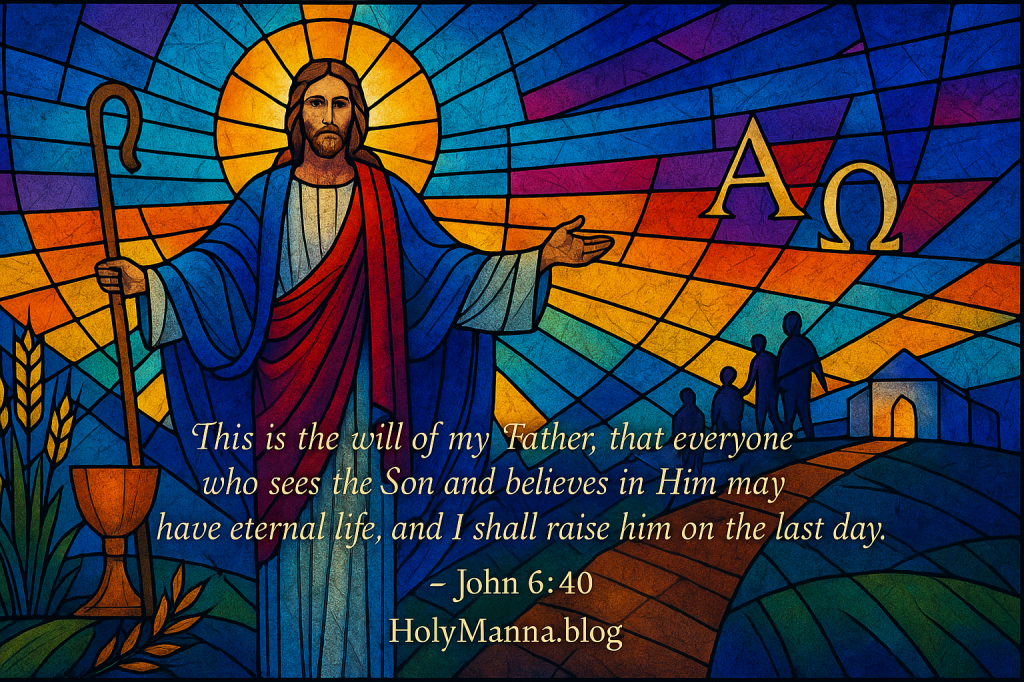
The Commemoration of All the Faithful Departed – Lectionary: 668
Hope for the Faithful Departed
Tonight’s liturgy invites a quiet confidence that looks straight at death and refuses despair, because Jesus Christ has conquered the grave and keeps the faithful in His mercy. The Commemoration of All the Faithful Departed, often called All Souls Day, began in the monastic tradition and spread throughout the Church as a focused day of prayer for those who have died in God’s grace yet are still being purified. Rooted in the communion of saints and the Church’s constant practice of offering suffrages for the dead, this day expresses the teaching of The Catechism that those who die in friendship with God may undergo a merciful purification in preparation for the vision of God, while remaining certain of salvation, as taught in CCC 1030–1032 and CCC 958. The readings form a single arc of hope that steadies the heart. Wisdom 3:1–9 assures that “The souls of the righteous are in the hand of God” and that they are not lost but at peace, even if their passing looks like defeat to the world. Psalm 23 gives the voice of trust that walks through the shadowed valley without fear because the Shepherd is present, “for you are with me”. Romans 6:3–9 explains why Christian hope does not collapse at the graveside, since baptism united believers to Christ’s death so that life in Him truly begins now and flowers into resurrection, “that we too might live in newness of life.” Finally, John 6:37–40 reveals the solid center of this confidence in the will of the Father and the fidelity of the Son, who promises not to lose those given to Him and who declares, “I shall raise him on the last day.” Together these passages teach that death, for the friends of God, is not annihilation but a passage through purification into communion, and that the Eucharist and prayer offered today are acts of real love that aid the faithful departed on their way to glory. Whom is the Lord inviting you to entrust to His Heart today, and how might these readings strengthen that act of faith and love?
First Reading – Wisdom 3:1–9
Tried Like Gold, Kept in God’s Hand
Composed in Greek for a Jewish community shaped by Hellenistic culture, Wisdom speaks to believers who faced scorn for their fidelity and who wrestled with the problem of righteous suffering. Within that world, physical death often looked like failure, yet divine revelation lifts the veil and shows a different story. The passage declares that the righteous dead are secure in God’s care and that their trials serve a purifying purpose, which fits the day’s theme by grounding prayer for the faithful departed in confident hope. The Commemoration of All the Faithful Departed affirms that those who died in God’s friendship may still undergo merciful purification, while remaining assured of eternal communion. This reading reveals that death does not cancel God’s promises, and it prepares hearts to see the cemetery not as an end but as a threshold.
Wisdom 3:1-9
New American Bible (Revised Edition)
The Hidden Counsels of God
A. On Suffering
1 The souls of the righteous are in the hand of God,
and no torment shall touch them.
2 They seemed, in the view of the foolish, to be dead;
and their passing away was thought an affliction
3 and their going forth from us, utter destruction.
But they are in peace.
4 For if to others, indeed, they seem punished,
yet is their hope full of immortality;
5 Chastised a little, they shall be greatly blessed,
because God tried them
and found them worthy of himself.
6 As gold in the furnace, he proved them,
and as sacrificial offerings he took them to himself.
7 In the time of their judgment they shall shine
and dart about as sparks through stubble;
8 They shall judge nations and rule over peoples,
and the Lord shall be their King forever.
9 Those who trust in him shall understand truth,
and the faithful shall abide with him in love:
Because grace and mercy are with his holy ones,
and his care is with the elect.
Detailed Exegesis
Verse 1 – “The souls of the righteous are in the hand of God, and no torment shall touch them.”
The sacred author opens with covenant security. In biblical imagery, God’s hand signifies power, protection, and possession. The statement that no torment touches the righteous refers to ultimate harm, not the absence of earthly suffering. The verse consoles mourners by asserting that the destiny of the just is determined by God’s faithful hold, not by visible defeat.
Verse 2 – “They seemed, in the view of the foolish, to be dead; and their passing away was thought an affliction”
A worldly lens misreads death as loss and affliction. The text contrasts appearances with reality, teaching that faith judges by God’s wisdom rather than by surface impressions. The Church reads this line through the lens of the resurrection, which redefines the meaning of dying in Christ.
Verse 3 – “and their going forth from us, utter destruction. But they are in peace.”
“Going forth” evokes departure language that the New Testament later applies to Christ’s Passover. What appears as annihilation is, in truth, entry into divine peace. Peace here means wholeness and covenant fulfillment, not mere rest from labor.
Verse 4 – “For if to others, indeed, they seem punished, yet is their hope full of immortality;”
Hope anchors the righteous beyond the grave. The phrase “full of immortality” points to participation in God’s undying life. The text does not deny suffering but places it within a horizon where God’s life triumphs.
Verse 5 – “Chastised a little, they shall be greatly blessed, because God tried them and found them worthy of himself.”
Discipline becomes blessing when interpreted within divine pedagogy. God’s trial is not cruel testing but fatherly refinement that proves and strengthens love. The beatitude promised here anticipates the Christian understanding of sanctification that prepares souls for the vision of God.
Verse 6 – “As gold in the furnace, he proved them, and as sacrificial offerings he took them to himself.”
The refiner’s furnace purifies by burning away dross, a striking image for the sanctifying work God accomplishes in faithful souls. The sacrificial language suggests consecration. The righteous are not discarded but received, as offerings set apart for God.
Verse 7 – “In the time of their judgment they shall shine and dart about as sparks through stubble;”
Judgment for the just is vindication. The dazzling imagery echoes Daniel 12:3, where the wise shine like the firmament. Sparks racing through stubble signify the swift and irresistible triumph of God’s justice.
Verse 8 – “They shall judge nations and rule over peoples, and the Lord shall be their King forever.”
Participation in judgment denotes communion with God’s reign. Saint Paul later echoes this mystery when teaching that the saints will judge the world. The verse situates the faithful within Christ’s royal authority, not as independent rulers but as sharers in His kingdom.
Verse 9 – “Those who trust in him shall understand truth, and the faithful shall abide with him in love: Because grace and mercy are with his holy ones, and his care is with the elect.”
Trust opens the mind to truth and the heart to abiding love. The closing cadence gathers the promises of grace, mercy, and divine care, revealing why the Church prays for the dead with confidence. God’s merciful fidelity frames both their purification and their final joy.
Teachings
The Catechism articulates exactly what this passage implies about merciful purification and the efficacy of prayer. “All who die in God’s grace and friendship, but still imperfectly purified, are indeed assured of their eternal salvation; but after death they undergo purification, so as to achieve the holiness necessary to enter the joy of heaven.” (CCC 1030). The Church’s practice follows from this truth. “The Church gives the name Purgatory to this final purification of the elect… The tradition of the Church, by reference to certain texts of Scripture, speaks of a cleansing fire.” (CCC 1031). This is not a second chance but the completion of love. Therefore the living assist the dead through intercession and the Eucharist. “Our prayer for them is capable not only of helping them, but also of making their intercession for us effective.” (CCC 958). The Christian meaning of death is equally clear. “By death the soul is separated from the body, but in the resurrection God will give incorruptible life to our body, transformed by reunion with our soul. Just as Christ is risen and lives forever, so all of us will rise at the last day.” (CCC 1016). The funeral liturgy embodies this faith and prays with hope. “In the Eucharist the Church expresses her efficacious communion with the departed: by offering to the Father in the Holy Spirit the sacrifice of the death and resurrection of Christ, she asks to purify his child of sins and their consequences.” (CCC 1689).
The saints confirm this living tradition. Saint John Chrysostom exhorts believers regarding the departed: “Let us help and commemorate them. If Job’s sons were purified by their father’s sacrifice, why would you doubt that our offerings for the dead bring them some consolation? Let us not hesitate to help those who have died and to offer our prayers for them.” Saint Augustine records the request of his mother, Saint Monica, as the pattern of Catholic memory at the altar: “Lay this body anywhere. Do not let the care of it trouble you at all. This only I ask of you, that you remember me at the Lord’s altar wherever you be.” These witnesses show that the hope of Wisdom 3 has always shaped the Church’s worship and love.
Reflection
This reading steadies grieving hearts and forms daily discipleship. Offer the names of beloved dead to the Lord at Mass and commend them in the Rosary, trusting that God’s hand holds them and His mercy completes what grace began. Choose one concrete work of mercy for the faithful departed each day in November, such as visiting a cemetery to pray Psalm 23, requesting Mass intentions, or making small sacrifices as an offering of love. Allow trials to be lived as refinement rather than as resentment, since the refiner’s fire produces holiness that endures. Whom is God inviting you to entrust to His care today, and what prayer will you offer for that soul by name? How might the image of gold in the furnace reshape the way you carry your present trials so that trust, not fear, defines the journey? What change in daily habits will help you live baptismal hope with clarity, so that peace, not despair, frames your view of life and death?
Responsorial Psalm – Psalm 23
The Shepherd Who Leads Through Death Into Communion
Composed as a royal psalm and prayed for centuries in Israel’s worship, Psalm 23 draws from the daily life of ancient shepherds who guided, protected, and provided for their flocks across rugged terrain. The psalm moves from pasture to valley to banquet, which mirrors the journey of every disciple from baptismal beginnings to trials and finally to communion with God. In the setting of The Commemoration of All the Faithful Departed, this psalm becomes a prayer of confident intercession and a proclamation of hope. The Shepherd does not abandon the sheep at the valley’s entrance. He accompanies them through death and into the house of the Lord. The psalm fits today’s theme by asserting that those who die in God’s friendship are held in His care, are purified by His mercy, and are destined for the banquet of everlasting life.
Psalm 23
New American Bible (Revised Edition)
The Lord, Shepherd and Host
1 A psalm of David.
The Lord is my shepherd;
there is nothing I lack.
2 In green pastures he makes me lie down;
to still waters he leads me;
3 he restores my soul.
He guides me along right paths
for the sake of his name.
4 Even though I walk through the valley of the shadow of death,
I will fear no evil, for you are with me;
your rod and your staff comfort me.
5 You set a table before me
in front of my enemies;
You anoint my head with oil;
my cup overflows.
6 Indeed, goodness and mercy will pursue me
all the days of my life;
I will dwell in the house of the Lord
for endless days.
Detailed Exegesis
Verse 1 – “The Lord is my shepherd; there is nothing I lack.”
The covenant name of God stands at the start, which signals personal relationship rather than abstract fate. To confess that nothing is lacking does not deny real needs or grief. It declares that in God’s providence every necessary grace will be given, including at the hour of death and purification.
Verse 2 – “In green pastures he makes me lie down; to still waters he leads me;”
Green pastures evoke nourishment, while still waters suggest refreshment and safety. The tradition has long seen in these images the life of grace, the Scriptures that feed the soul, and the sacramental waters that restore it. The direction comes from God, which means that guidance is a gift before it is a task.
Verse 3 – “He restores my soul. He guides me along right paths for the sake of his name.”
Restoration implies healing from sin’s damage and strengthening for faithful living. Right paths are moral and spiritual ways that conform a person to God’s holiness. This guidance is given for the sake of His name, which means that God’s own fidelity guarantees the journey’s completion.
Verse 4 – “Even though I walk through the valley of the shadow of death, I will fear no evil, for you are with me; your rod and your staff comfort me.”
The valley is real and not imagined, yet fear does not rule because the Shepherd’s presence becomes immediate. The shift from speaking about God to addressing Him shows intimacy at the point of greatest vulnerability. The rod protects against threats and the staff steadies the unsteady, which together symbolize divine correction and consolation during trial and at the threshold of death.
Verse 5 – “You set a table before me in front of my enemies; You anoint my head with oil; my cup overflows.”
The scene turns to a royal banquet that anticipates the Eucharist and the wedding feast of the Lamb. The anointing evokes both hospitality and consecration. Overflowing cup signals superabundant grace that shames enemies, which include sin, despair, and death itself.
Verse 6 – “Indeed, goodness and mercy will pursue me all the days of my life; I will dwell in the house of the Lord for endless days.”
Goodness and mercy do not merely follow at a distance. The verb pictures determined pursuit, which means divine love actively seeks and secures the sheep. The destination is the house of the Lord, not for a season but for endless days, which expresses the certainty of communion that the Church prays for the faithful departed.
Teachings
The Catechism expresses the hope voiced by the psalm in the Church’s doctrine on purification and intercession for the dead. “All who die in God’s grace and friendship, but still imperfectly purified, are indeed assured of their eternal salvation; but after death they undergo purification, so as to achieve the holiness necessary to enter the joy of heaven.” (CCC 1030). This purification is the final mercy that completes love. “The Church gives the name Purgatory to this final purification of the elect, which is entirely different from the punishment of the damned. The Church formulated her doctrine of faith on Purgatory especially at the Councils of Florence and Trent. The tradition of the Church, by reference to certain texts of Scripture, speaks of a cleansing fire.” (CCC 1031). The communion of saints turns the psalm’s banquet into concrete help for those who have died. “Our prayer for them is capable not only of helping them, but also of making their intercession for us effective.” (CCC 958). The funeral liturgy prays in the key of Psalm 23, asking that the Shepherd’s sacrifice purify and welcome His child. “In the Eucharist the Church expresses her efficacious communion with the departed: by offering to the Father in the Holy Spirit the sacrifice of the death and resurrection of Christ, she asks to purify his child of sins and their consequences.” (CCC 1689). The psalm’s final dwelling finds clarity in the Christian confession of the resurrection. “By death the soul is separated from the body, but in the resurrection God will give incorruptible life to our body, transformed by reunion with our soul. Just as Christ is risen and lives forever, so all of us will rise at the last day.” (CCC 1016).
Reflection
Pray this psalm by name for the faithful departed, especially at the cemetery and before the Eucharist, and entrust them to the Shepherd who never abandons His sheep. Practice small acts of spiritual mercy by offering a decade of the Rosary, a Divine Mercy Chaplet, or a brief fast for a specific soul, and unite that offering to the Mass. Choose a line from the psalm to hold during personal trials, and repeat it as a declaration of trust that reorders fear. Allow correction and consolation to work together by seeking the sacrament of Reconciliation, which steadies the steps along right paths and renews confidence at the edge of the valley. Which line of this psalm most strengthens trust in the Shepherd’s presence today? Whom is the Lord prompting you to name before the altar this week so that goodness and mercy may pursue that soul into the Father’s house? What concrete habit will help this prayer of trust become a daily way of thinking, speaking, and living?
Second Reading – Romans 6:3–9
Buried With Christ, Raised For Newness Of Life
Saint Paul writes to the Christians in Rome, a mixed community of Jewish and Gentile believers living in the heart of the empire, where baptism marked a decisive break with old loyalties and a new allegiance to the crucified and risen Lord. In the early Church, baptism by immersion vividly symbolized being plunged beneath the waters of death with Christ and rising with Him into a new way of life that began now and would be completed in the resurrection. This passage fits today’s theme by showing that death for the friends of God is not annihilation but participation in Christ’s Passover. Those who die in grace remain in His hand as their purification completes what baptism began, and the hope of resurrection stands at the center of Christian mourning and prayer for the faithful departed.
Romans 6:3-9
New American Bible (Revised Edition)
3 Or are you unaware that we who were baptized into Christ Jesus were baptized into his death? 4 We were indeed buried with him through baptism into death, so that, just as Christ was raised from the dead by the glory of the Father, we too might live in newness of life.
5 For if we have grown into union with him through a death like his, we shall also be united with him in the resurrection. 6 We know that our old self was crucified with him, so that our sinful body might be done away with, that we might no longer be in slavery to sin. 7 For a dead person has been absolved from sin. 8 If, then, we have died with Christ, we believe that we shall also live with him. 9 We know that Christ, raised from the dead, dies no more; death no longer has power over him.
Detailed Exegesis
Verse 3 – “Or are you unaware that we who were baptized into Christ Jesus were baptized into his death?”
Paul reminds the Romans that baptism unites believers to the actual saving events of Christ. To be baptized into Jesus is to be joined to His death in a real, sacramental way. This does not mean mere symbolism. It means that grace draws the person into Christ’s self offering so that sin’s reign is broken at the root.
Verse 4 – “We were indeed buried with him through baptism into death, so that, just as Christ was raised from the dead by the glory of the Father, we too might live in newness of life.”
Burial language underscores the finality of the break with the old life. The purpose is clear. The Father’s glory that raised Jesus now empowers a new manner of living. Christian existence is resurrection oriented. Newness is not a fresh coat of paint. It is participation in the risen life that begins on earth and blossoms fully after death.
Verse 5 – “For if we have grown into union with him through a death like his, we shall also be united with him in the resurrection.”
Union with Christ is organic and living. Growth implies process. The promise follows the pattern. Sharing His death guarantees sharing His resurrection. This line grounds the Church’s confident prayer for the dead, since their union with Christ continues and matures toward glory.
Verse 6 – “We know that our old self was crucified with him, so that our sinful body might be done away with, that we might no longer be in slavery to sin.”
The “old self” names the Adamic condition dominated by sin. Crucifixion with Christ signifies the decisive judgment of that regime. Freedom from slavery to sin is the fruit, which means moral renewal is not self help but the effect of grace flowing from the cross and applied in baptism.
Verse 7 – “For a dead person has been absolved from sin.”
Death severs sin’s claim. In baptism the believer dies with Christ, and therefore sin loses legal mastery. The word “absolved” signals acquittal. The baptized are not declared innocent by fiction. They are set free by union with the crucified Lord whose blood justifies truly.
Verse 8 – “If, then, we have died with Christ, we believe that we shall also live with him.”
Faith confesses continuity. Dying with Christ entails living with Christ, both now in grace and finally in glory. This is the heart of Christian hope at the graveside and the reason the Church prays for the departed with trust rather than with despair.
Verse 9 – “We know that Christ, raised from the dead, dies no more; death no longer has power over him.”
Here is the anchor. The resurrection is not a temporary reprieve. It is the definitive victory. Since the baptized belong to Christ, the tyrant death will not have the last word over them. This certainty fuels intercession for the dead and perseverance for the living.
Teachings
The Catechism explains baptism exactly as Paul proclaims in this reading. “This sacrament is called Baptism, after the central rite by which it is carried out: to baptize means to ‘plunge’ or ‘immerse’; the ‘plunge’ into the water symbolizes the catechumen’s burial into Christ’s death, from which he rises up by resurrection with him, as ‘a new creature.’” (CCC 1214). The grace that flows from this immersion is total and liberating. “By Baptism all sins are forgiven, original sin and all personal sins, as well as all punishment for sin.” (CCC 1263). Baptism also re creates the person and seals a new identity. “Baptism not only purifies from all sins, but also makes the neophyte ‘a new creature,’ an adopted son of God, who has become a ‘partaker of the divine nature,’ member of Christ and co heir with him, and a temple of the Holy Spirit.” (CCC 1265). The Church reads death itself through this paschal lens. “Because of Christ, Christian death has a positive meaning. ‘For to me to live is Christ, and to die is gain.’ The saying is sure: if we have died with him, we will also live with him.” (CCC 1010). Therefore, the Church prays with confidence for those who have died in grace. “Our prayer for them is capable not only of helping them, but also of making their intercession for us effective.” (CCC 958).
The Fathers echo Paul’s teaching with striking clarity. Saint Cyril of Jerusalem describes ancient baptismal practice as a living commentary on Romans 6: “You were led to the holy pool of divine Baptism, and each of you was asked whether he believed in the name of the Father and of the Son and of the Holy Spirit. You made that saving confession and descended into the water, and thrice you were immersed and thrice you rose again. By this symbol you were secretly pointing to the burial of Christ for three days.” Saint John Chrysostom presses the moral consequence that flows from this mystery: “What the cross effected in Christ, Baptism effects in us. It puts to death the old man, buries the whole man, and wholly raises him up renewed.” These witnesses make explicit what Paul implies. Baptism is the turning point of existence, and death for the baptized is borne by the One who has destroyed it from within.
Reflection
Live today with baptismal clarity. Choose a small but concrete act that expresses newness of life, such as refusing a pet sin at the first suggestion, making a sincere and complete confession if it has been a while, or renewing baptismal promises slowly and deliberately before a crucifix. Pray for a specific soul among the faithful departed by name and commend that person to the Lord who promised to raise those who belong to Him, and unite that prayer to the Eucharist with quiet trust. Carry a single line from this reading through the day and allow it to shape choices in traffic, at work, and at home. Which phrase from this passage most clearly calls out old habits that need burial with Christ today? What practical change would show that newness of life is more than talk in this season? Whom is God asking to be remembered at Mass so that baptismal hope may become the anchor for grief and the path to peace?
Holy Gospel – John 6:37–40
Kept By The Father, Raised By The Son
In the Bread of Life discourse set in the synagogue at Capernaum during the Passover season, John 6 unveils the generous will of the Father and the unfailing fidelity of the Son. After feeding the five thousand, Jesus speaks not only of bread from heaven but of the divine plan that none who come to Him will be lost. These verses distill the heart of Christian hope for The Commemoration of All the Faithful Departed. The Father gives a people to the Son, the Son receives and keeps them, and He promises to raise them on the last day. This pledge anchors prayer for the dead, since those who died in God’s friendship are held within this will of mercy and are destined for resurrection.
John 6:37-40
New American Bible (Revised Edition)
37 Everything that the Father gives me will come to me, and I will not reject anyone who comes to me, 38 because I came down from heaven not to do my own will but the will of the one who sent me. 39 And this is the will of the one who sent me, that I should not lose anything of what he gave me, but that I should raise it [on] the last day. 40 For this is the will of my Father, that everyone who sees the Son and believes in him may have eternal life, and I shall raise him [on] the last day.”
Detailed Exegesis
Verse 37 – “Everything that the Father gives me will come to me, and I will not reject anyone who comes to me,”
The initiative begins with the Father who gives, which means salvation is gift before it is response. To “come” is to believe and to entrust one’s life to Jesus. The double assurance is striking. All that the Father gives will indeed come, and the Son will not cast out the one who comes. This makes intercession for the faithful departed a bold act of confidence, because divine mercy precedes and sustains every movement toward Christ.
Verse 38 – “because I came down from heaven not to do my own will but the will of the one who sent me.”
Descent language reveals the Incarnation as mission. The Son’s human will is perfectly harmonized with the Father’s saving purpose. The doctrine of Christ’s obedience is not abstract. It guarantees that the work of redemption is carried out to completion. The faithful rest their hope on this perfect filial obedience that never fails.
Verse 39 – “And this is the will of the one who sent me, that I should not lose anything of what he gave me, but that I should raise it [on] the last day.”
Here Jesus states the Father’s will with precision. None of those given to the Son will be lost. The promise of resurrection “on the last day” situates Christian mourning within an eschatological horizon, which means the story of the just does not end at the grave. The pledge to raise what the Father has given forms the foundation for the Church’s prayer that the departed be purified and brought into glory.
Verse 40 – “For this is the will of my Father, that everyone who sees the Son and believes in him may have eternal life, and I shall raise him [on] the last day.”
The circle widens from “all that he gave me” to “everyone who sees and believes.” Eternal life begins now in communion with the Son and culminates in bodily resurrection. The repetition of “I shall raise him on the last day” seals the certainty. Hope for the departed is not wishful thinking. It rests on the declared will of the Father and the sworn fidelity of the Son.
Teachings
The Catechism confirms the scope and certainty of the Father’s saving will in Christ. “The will of our Father is that ‘all men be saved and come to the knowledge of the truth.’ He is ‘forbearing toward you, not wishing that any should perish.’” (CCC 2822–2823). The universal reach of Christ’s offering is explicit. “There is not, never has been, and never will be a single human being for whom Christ did not suffer.” (CCC 605). The Lord’s promise of resurrection “on the last day” is the Church’s steady confession. “When? Definitively ‘at the last day,’ ‘at the end of the world.’” (CCC 1001). Heaven is the goal named in this Gospel. “This perfect life with the Most Holy Trinity… is called ‘heaven.’” (CCC 1024). Personal judgment and the need for purification explain why the Church prays for the dead with confidence. “Each man receives his eternal retribution in his immortal soul at the very moment of his death… either entrance into the blessedness of heaven through a purification or immediate and everlasting damnation.” (CCC 1022). “All who die in God’s grace and friendship, but still imperfectly purified, are indeed assured of their eternal salvation; but after death they undergo purification, so as to achieve the holiness necessary to enter the joy of heaven.” (CCC 1030). The Eucharist expresses this Gospel promise in the Church’s worship. “In the Eucharist the Church expresses her efficacious communion with the departed… she asks to purify his child of sins and their consequences.” (CCC 1689). Read together, these teachings show that the Father gives, the Son preserves, the Spirit sanctifies, and the Church prays in hope until the promised resurrection.
Reflection
Pray today with the certainty that Jesus does not reject those who come to Him, and place the names of beloved dead within that promise at Mass. Practice trust by renewing the act of faith throughout the day, and repeat this Gospel line slowly until it sinks in, “I shall raise him on the last day.” Let this assurance shape concrete choices by visiting a cemetery to pray Psalm 23, requesting a Mass intention, and offering a decade of the Rosary or a Divine Mercy Chaplet for a specific soul by name. When fear whispers that loss is final, answer it with this Gospel and choose to live as someone destined for resurrection through works of mercy, regular confession, and fidelity to daily prayer. Whom is the Lord inviting you to entrust to His Heart under this promise today? Which fear needs to be replaced by the certainty that the Father gives and the Son keeps? What habit will help belief become a steady posture that carries grief with hope until the day of resurrection?
Gathered In Hope
Today’s Word threads a single reassurance through grief and memory. Wisdom 3:1–9 opens the veil and declares that the righteous are not lost to chaos but rest secure, “in the hand of God.” Psalm 23 gives the voice of trust that walks with the Shepherd “through the valley of the shadow of death” and expects a place at His table. Romans 6:3–9 shows why Christian mourning carries courage, since baptism buried believers with Christ so that “we too might live in newness of life.” John 6:37–40 seals the promise as Jesus reveals the Father’s will and pledges, “I shall raise him on the last day.” The Commemoration of All the Faithful Departed gathers these truths into prayer for loved ones who died in God’s friendship, trusting that divine mercy completes what grace began and leads them into the joy of the Father’s house.
Let this day become a concrete act of love. Offer a Mass intention or a Rosary for a particular soul by name, visit a cemetery and pray Psalm 23, and renew baptismal promises with deliberate faith. Choose reconciliation with God and neighbor, and unite small sacrifices to the Eucharist for the faithful departed. Speak the Gospel promise aloud when sorrow rises and let it train the heart to hope. Whom is the Lord inviting you to commend to His mercy today, and what prayer will you offer by name for that soul? Which step will help trust in the Shepherd become a daily habit that carries grief with steady peace until the dawn of resurrection?
Engage with Us!
Share reflections in the comments below and encourage a real conversation of faith and hope.
- First Reading – Wisdom 3:1–9: Which line most strengthens trust that loved ones rest “in the hand of God”, and how does that truth reshape the way prayers are offered for the faithful departed this week? How does the image of gold refined in the furnace inspire a new attitude toward personal trials and the purification God lovingly allows?
- Responsorial Psalm – Psalm 23: Which verse will be carried into prayer each day, and how will that promise steady the heart when grief surfaces unexpectedly? In what concrete way will the Shepherd’s care move from comfort to action, such as offering a Rosary, a Divine Mercy Chaplet, or a visit to the cemetery for someone by name?
- Second Reading – Romans 6:3–9: What habit or attitude needs burial with Christ today so that freedom from slavery to sin becomes visible in daily life? Which single step will express “newness of life,” and how can that step be offered for the benefit of a particular soul among the faithful departed?
- Holy Gospel – John 6:37–40: Whom is the Lord placing on the heart to entrust to His promise, “I shall raise him on the last day”? How will faith in the Father’s will and the Son’s fidelity shape choices this week so that hope becomes a steady practice and not merely a feeling?
Choose to live a life of faith that prays, serves, and remembers with confidence, and do everything with the love and mercy Jesus taught, so that grieving hearts find peace and everyday discipleship shines with hope.
Sacred Heart of Jesus, we trust in You!
Immaculate Heart of Mary, pray for us!
Saint Michael the Archangel, defend us in battle!
Follow us on Instagram and Facebook for more insights and reflections on living a faith-filled life.

 Holy Manna!
Leave a comment