Flame Turned Toward Christ
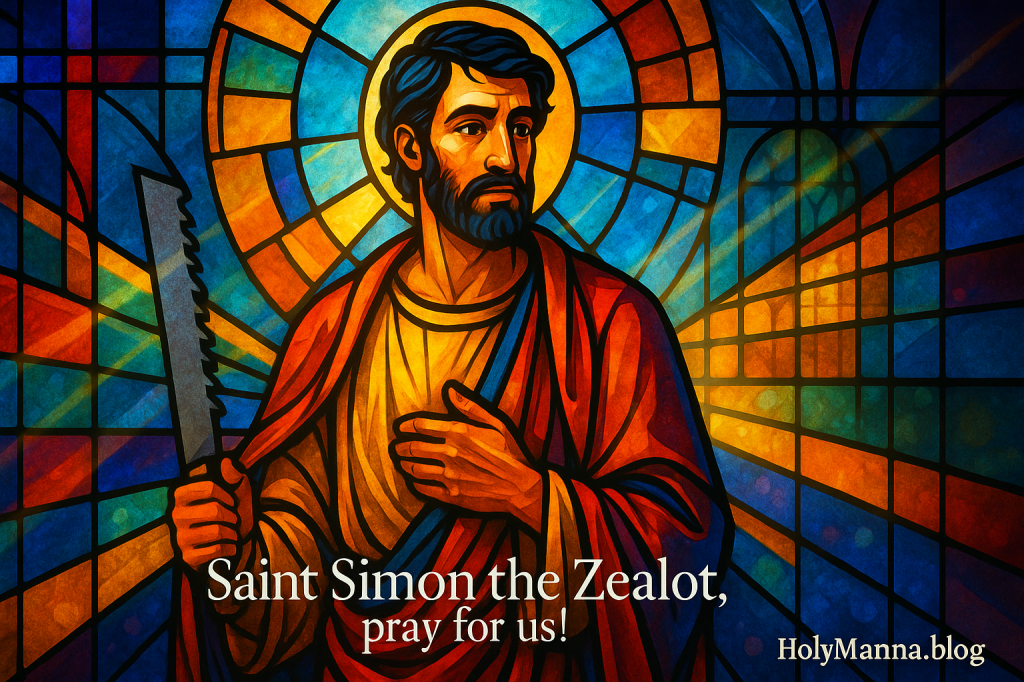
Saint Simon the Zealot stands in the Gospel lists with a name that bursts with intensity. His title signals a heart already burning for God, a fire that Christ purified and aimed at the Gospel. The Church honors him together with Saint Jude on October 28, a pairing that highlights fidelity in friendship and mission. Christian art often shows Simon with a saw, a symbol drawn from ancient traditions about his martyrdom. Even when Scripture says little about his deeds, his significance is unmistakable. The apostolic foundation is the bedrock of the Church’s identity, and the witness of Simon belongs to that foundation. As the Catechism of the Catholic Church teaches, “The Church is apostolic because she is founded on the apostles.” This means that Simon’s yes, hidden and steady, remains part of how Christ continues to teach, sanctify, and shepherd His people. The Catechism adds, “She continues to be taught, sanctified, and guided by the apostles until Christ’s return, through their successors.”
From Zeal to Apostleship
The New Testament does not tell us where Simon was born or who his parents were. What it does give us is his name in the apostolic lists of Matthew, Mark, and Luke, and his presence in the Upper Room in Acts of the Apostles. These texts identify him as “the Zealot,” and Matthew and Mark use “the Cananaean,” which reflects the Aramaic root for zeal rather than a geographic reference. The point is not party membership but passionate devotion. Christ calls men with strong temperaments and then redirects their strength toward the Kingdom. That is what happens with Simon. He learns the rhythm of discipleship by living with Jesus, listening to His teaching, witnessing His miracles, and letting grace reshape his zeal into charity. After the Resurrection he remains with the Eleven, prays with Mary, and receives the Holy Spirit at Pentecost. From that moment his life is defined by mission, not by self-assertion. There are no preserved words of Simon in Scripture or trustworthy early sources, so there are no verified quotations from him. The silence of his voice becomes a lesson of its own. Sometimes the holiest preaching is persevering presence with Christ and His Church.
Sent With Power
The Gospels tell us what Christ gave to every Apostle and therefore to Simon as well. Jesus summoned the Twelve and entrusted them with His own work. “He called to him his twelve disciples and gave them authority over unclean spirits, to cast them out, and to heal every disease and every infirmity.” In Mark we read that He appointed them “to be with him, and to be sent out to preach and to have authority to cast out demons.” That is the shape of Simon’s life, even if the New Testament does not record his particular journeys step by step. Early and venerable traditions say that after preaching in Egypt he later traveled east and labored with Jude in Persia, where the Gospel took root in hard soil. Other early strands place him in Edessa. The details differ, but the picture is consistent. Simon spent himself in places where the name of Jesus had not yet been heard, where the cost of proclaiming the truth could be very high, and where the fruit would be known only to God. While specific miracles tied to Simon alone are not preserved, the apostolic preaching everywhere was confirmed by signs. Simon shared that same Pentecostal power, and his life testifies that miracles are not a spectacle but God’s compassion breaking into human misery.
Trials, Companionship, and the Crown
Apostles seldom walked easy roads. Simon’s title tells you that strength was not foreign to him, and ancient memory links his hardships and final witness closely with Jude. The Roman tradition venerates both as having completed their mission in the lands of Persia, where their bold preaching led many to faith and stirred violent opposition. Iconography associates Simon with a saw, echoing one stream of tradition that he was martyred by being sawn. Other early witnesses, especially in the East, suggest a peaceful death at Edessa. The precise manner of his death cannot be pinned down with certainty, but the Church’s constant voice venerates him as a true Apostle who finished his course in fidelity. In other words, Simon’s zeal did not cool with age. It matured into the kind of courage that endures misunderstanding, danger, and loss, and then hands everything back to Christ.
Afterglow of an Apostle
Centuries of devotion honor the memory of Simon and Jude together at the Vatican Basilica, where the faithful have long venerated their relics. Pilgrims stop at that altar to ask for apostolic courage, clarity in preaching, and a love for the Church that outlasts trends. While recorded miracle lists tied solely to Simon are sparse, the Church’s liturgy and devotion bear quiet witness to graces obtained through his intercession. The fruit often looks ordinary. A father finds the strength to remain patient. A young professional learns to speak the truth at work without being harsh. A parish grows steadier in prayer for its bishop and priests. These are the kinds of hidden miracles that flow from apostolic foundations. They are not flashy, but they are real.
Why Simon Matters Now
Simon’s story tells modern disciples that natural intensity is not the enemy of holiness. Christ does not extinguish strong drives. He purifies them. Zeal becomes charity. Conviction becomes obedience. Courage becomes mercy. The Catechism explains that the apostles remain the shepherds of the Church through their successors. “The apostles’ mission is the Church’s mission.” In daily life that means staying faithful to the teaching handed down from the apostles, worshiping in the sacraments they transmitted, and praying for the bishops who carry their office today. It also means letting the Lord redirect personal passions. If work, politics, or even favorite causes tempt the heart to bitterness, Simon’s title is a check on the soul. Ask Christ to take that energy and plug it back into love of God and neighbor. That is how zeal turns into sanctity.
Walking With Saint Simon Today
To walk with Saint Simon is to keep a steady, apostolic pace. Start with Scripture and savor the places where his name appears in Matthew, Mark, Luke, and Acts of the Apostles. Sit with the moment when Jesus entrusts mission to the Twelve and hear the same call in the baptized life. “He summoned his Twelve and began to send them out two by two.” Live that sending with ordinary courage. Share the Gospel in simple conversations. Offer to pray with a friend who is suffering. Go to Confession regularly so that zeal remains clean. Receive the Eucharist with attention and love because this is where the apostolic Church is most herself. Pray for missionaries and for those who face hostility because they confess the name of Jesus. In short, let Simon teach how to take strong convictions and place them humbly at the feet of the Master.
Engage with Us!
Share your thoughts or experiences with Saint Simon the Zealot in the comments below.
- Where does your natural zeal most need to be redirected toward Christ this week?
- How can obedience to apostolic teaching bring more peace and clarity into your spiritual life right now?
- What concrete act of evangelization can you do in your home, parish, or workplace in honor of Saint Simon?
- When you read the apostolic lists in the Gospels, what stirs you to perseverance in hidden fidelity?
Keep going with confidence. Live the faith with a courageous heart, love people with mercy, and let every action be shaped by the charity that Jesus teaches in His Church.
Saint Simon the Zealot, pray for us!
Follow us on Instagram and Facebook for more insights and reflections on living a faith-filled life.

 Holy Manna!
Leave a comment