Saturday of the Twenty-ninth Week in Ordinary Time – Lectionary: 478
Fruitful Repentance and the Ascent to God
When the soul longs for a fresh start, today’s Scriptures announce that real renewal is possible and invite every disciple to become living proof of it. The central theme is repentance that bears visible fruit through the indwelling of the Holy Spirit, so that a purified heart may stand with confidence in God’s presence. In Romans 8:1–11, Saint Paul speaks to a first century Church learning to live in a pagan world, contrasting the old slavery of the flesh with the new life of the Spirit. The language of “flesh” here reflects not the body as such but the power of sin that draws the heart away from God, and the promise is stunning: “There is now no condemnation for those who are in Christ Jesus.” In Psalm 24:1–6, an ancient entrance liturgy likely sung as Israel approached the sanctuary breaks open the condition for communion with the Holy One, asking, “Who may go up the mountain of the Lord?” and answering with the call to clean hands and a pure heart. In Luke 13:1–9, the Lord addresses tragic headlines from Jerusalem, refusing a blame game and issuing a merciful but urgent summons, “If you do not repent, you will all perish.” The parable of the fig tree draws on a familiar biblical symbol for Israel and, by extension, for every believer, showing a patient Gardener who cultivates barren soil yet still expects fruit.
Taken together, these readings trace a single path. The Gospel names the urgency of conversion, the Psalm describes the purity that prepares for worship, and Romans reveals the source and power that make holiness more than wishful thinking. This is not moralism and it is not self help. It is grace. As The Catechism teaches, conversion is first a movement of the heart stirred by God’s grace, and the Spirit restores the likeness lost by sin, see CCC 1427–1433 and CCC 1989–1995. The invitation is clear and hopeful. Turn from what is useless. Welcome the Spirit. Let a cleansed heart ascend the Lord’s mountain and let a renewed life prove that the Gardener’s work has taken root. Where might the Lord be cultivating barren ground in your life right now so that real fruit can grow?
First Reading – Romans 8:1–11
Life in the Spirit
Written to a mixed community of Jewish and Gentile believers in mid first century Rome, Romans addresses a Church learning to live holy lives within an empire saturated with idolatry and moral confusion. In this pivotal section, Paul contrasts the enslaving regime of sin, which he names “the flesh,” with the liberating reign of the Holy Spirit poured out through Christ. The apostle is not condemning the human body but exposing a whole way of life turned inward and away from God. Against that dark backdrop, the Gospel bursts with hope. God has acted decisively in Christ, not merely to excuse sin but to condemn sin itself and to impart a new principle of life within the believer. This reading fits today’s theme by showing how repentance becomes fruitful only because the Spirit indwells the heart, purifies intention, and empowers real obedience. The question from Psalm 24—“Who may go up the mountain of the Lord?”—finds its answer here: those whom the Spirit has made clean of hands and pure of heart, and whose lives now bear the fruit Jesus seeks in Luke 13.
Romans 8:1-11
New American Bible (Revised Edition)
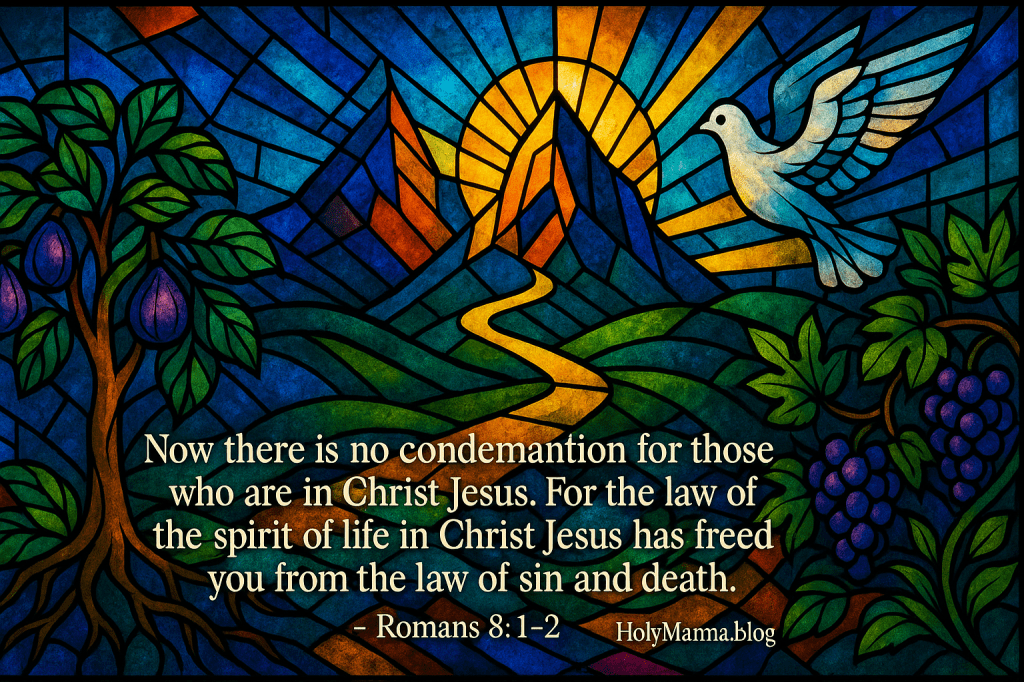
The Flesh and the Spirit. 1 Hence, now there is no condemnation for those who are in Christ Jesus. 2 For the law of the spirit of life in Christ Jesus has freed you from the law of sin and death. 3 For what the law, weakened by the flesh, was powerless to do, this God has done: by sending his own Son in the likeness of sinful flesh and for the sake of sin, he condemned sin in the flesh, 4 so that the righteous decree of the law might be fulfilled in us, who live not according to the flesh but according to the spirit. 5 For those who live according to the flesh are concerned with the things of the flesh, but those who live according to the spirit with the things of the spirit. 6 The concern of the flesh is death, but the concern of the spirit is life and peace. 7 For the concern of the flesh is hostility toward God; it does not submit to the law of God, nor can it; 8 and those who are in the flesh cannot please God. 9 But you are not in the flesh; on the contrary, you are in the spirit, if only the Spirit of God dwells in you. Whoever does not have the Spirit of Christ does not belong to him. 10 But if Christ is in you, although the body is dead because of sin, the spirit is alive because of righteousness. 11 If the Spirit of the one who raised Jesus from the dead dwells in you, the one who raised Christ from the dead will give life to your mortal bodies also, through his Spirit that dwells in you.
Detailed Exegesis
Verse 1 – “Hence, now there is no condemnation for those who are in Christ Jesus.”
Paul announces a juridical and existential change. Those united to Christ by faith and baptism live under a new verdict. The condemnation attached to sin has been nullified, not by denying justice but by God’s righteous act in Christ. This is the ground of Christian confidence and the seed of interior peace.
Verse 2 – “For the law of the spirit of life in Christ Jesus has freed you from the law of sin and death.”
“Law” here means a power or operative principle. The Spirit communicates the risen life of Christ and liberates from the old bondage described in Romans 7. Freedom is not mere permission. It is the power to love God and choose the good.
Verse 3 – “For what the law, weakened by the flesh, was powerless to do, this God has done: by sending his own Son in the likeness of sinful flesh and for the sake of sin, he condemned sin in the flesh,”
The Mosaic Law could diagnose sin but could not heal it because human nature, wounded by sin, lacked the strength to fulfill the law. God sends the Son truly in our condition, “in the likeness of sinful flesh,” without sin, to pass sentence on sin itself in his own flesh on the Cross. The enemy is not the body but sin’s tyranny, which God judges and overthrows in Christ.
Verse 4 – “so that the righteous decree of the law might be fulfilled in us, who live not according to the flesh but according to the spirit.”
God’s purpose is fulfilled humans who actually live the law’s intent through grace. The law’s “righteous decree” is realized in lives animated by the Spirit. Holiness is not external compliance but interior transformation that issues in obedience.
Verse 5 – “For those who live according to the flesh are concerned with the things of the flesh, but those who live according to the spirit with the things of the spirit.”
Orientation determines occupation. A flesh-bound life fixates on passing goods, status, and self-assertion. A Spirit-led life seeks God’s will, worship, and charity. Interior attention reveals allegiance.
Verse 6 – “The concern of the flesh is death, but the concern of the spirit is life and peace.”
Paul states outcomes plainly. The flesh’s mindset culminates in spiritual death and relational fracture. The Spirit’s mindset yields life that shares in Christ’s risen vitality and peace that reconciles with God and neighbor.
Verse 7 – “For the concern of the flesh is hostility toward God; it does not submit to the law of God, nor can it;”
Flesh, as a power of sin, resists God’s sovereignty. Left to itself, it cannot submit. Human effort alone cannot bridge this hostility. Grace must heal the will and illumine the mind.
Verse 8 – “and those who are in the flesh cannot please God.”
Pleasing God requires more than good intentions. It requires new life. The verse humbles pride and prepares the heart to receive the Spirit’s gift.
Verse 9 – “But you are not in the flesh; on the contrary, you are in the spirit, if only the Spirit of God dwells in you. Whoever does not have the Spirit of Christ does not belong to him.”
Paul turns to identity. Belonging to Christ means being indwelt by the Spirit of God. The Spirit’s presence is the decisive mark of Christian life, making the Church a temple and each believer a living sanctuary.
Verse 10 – “But if Christ is in you, although the body is dead because of sin, the spirit is alive because of righteousness.”
Even amid mortal frailty and the ongoing effects of sin, Christ’s indwelling brings real righteousness and life to the inner person. The new life has begun, awaiting its bodily fulfillment.
Verse 11 – “If the Spirit of the one who raised Jesus from the dead dwells in you, the one who raised Christ from the dead will give life to your mortal bodies also, through his Spirit that dwells in you.”
Eschatological hope crowns the passage. The very Spirit who raised Jesus will vivify mortal bodies. Salvation is holistic. God intends the resurrection of the body, not an escape from it, uniting creation’s goodness with redemptive glory.
Teachings
Paul’s teaching in Romans 8:1–11 stands at the heart of Catholic doctrine on grace, justification, and sanctification. The Church insists that conversion is first interior and wrought by grace, not by outward signs alone. The Catechism states, “Jesus’ call to conversion and penance, like that of the prophets before him, does not aim first at outward works, ‘sackcloth and ashes’, but at the conversion of the heart, interior conversion.” CCC 1430. This interior conversion is the Spirit’s first work and it restores communion with God, as treated in CCC 1987–1995, where justification is taught as both the remission of sins and the sanctification of the inner person through the indwelling Spirit. The resurrection promise of verse 11 accords with the Church’s constant confession of “the resurrection of the body,” articulated in The Catechism’s treatment of Christian hope and the final resurrection, see CCC 988–1019.
The Fathers echo Paul’s insistence on grace that heals freedom and bears fruit. St. Augustine reminds the faithful, “He who created you without you will not justify you without you.” This maxim captures synergy between divine initiative and human response. The end of life in the Spirit is the vision of God, described by St. Irenaeus with luminous brevity, “The glory of God is man fully alive, and the life of man is the vision of God.” Against Heresies 4.20.7. Read in light of today’s Gospel, the Spirit’s interior work is the very cultivation the Gardener gives to the barren tree, making possible the fruit God rightfully expects. In the language of Psalm 24, the Spirit forms clean hands and a pure heart, preparing worship that pleases God.
Reflection
Life in the Spirit begins with honest surrender and continues through daily choices that align thought, desire, and action with Christ. Begin the day by inviting the Holy Spirit to govern imagination and intention. When tempted to indulge resentment, impurity, or pride, name the movement of the flesh, renounce it aloud, and ask for the opposite virtue. Unite small acts of self-denial to prayer for someone in need, since charity is the clearest fruit of the Spirit. Examine conscience each evening with gratitude, contrition, and a concrete resolution for tomorrow, trusting that the Gardener never tires of cultivating the soil. Where has the mindset of the flesh been stealing life and peace? What habit can be surrendered today so that the Spirit’s life might grow? How might the hope of bodily resurrection change the way the body is treated, defended, and offered in worship?
Responsorial Psalm – Psalm 24:1–6
Who May Ascend?
Composed as an entrance liturgy for Israel, Psalm 24 likely accompanied a solemn procession into the sanctuary, evoking the Ark’s ascent to Zion and the community’s approach to God’s holy presence. The psalm opens with a sweeping claim about God’s universal lordship, then poses the question of access to the temple, and finally answers with the moral and spiritual qualities that fit a people for worship. In today’s theme, this psalm names the fruit that sincere repentance must bear. Romans 8 reveals how the Spirit makes holiness possible from within, and Luke 13 warns that God’s patience seeks real fruit. The question “Who may go up the mountain of the Lord?” becomes an examination of conscience that prepares hearts for life in the Spirit.
Psalm 24:1-6
New American Bible (Revised Edition)
The Glory of God in Procession to Zion
1 A psalm of David.
The earth is the Lord’s and all it holds,
the world and those who dwell in it.
2 For he founded it on the seas,
established it over the rivers.
3 Who may go up the mountain of the Lord?
Who can stand in his holy place?
4 “The clean of hand and pure of heart,
who has not given his soul to useless things,
what is vain.
5 He will receive blessings from the Lord,
and justice from his saving God.
6 Such is the generation that seeks him,
that seeks the face of the God of Jacob.”
Selah
Detailed Exegesis
Verse 1 – “The earth is the Lord’s and all it holds, the world and those who dwell in it.”
Worship begins with truth about reality. Everything belongs to God by right of creation, including every person. Adoration, obedience, and stewardship flow from this claim. The psalm grounds morality in God’s dominion rather than in human preference.
Verse 2 – “For he founded it on the seas, established it over the rivers.”
Ancient Israel hears an echo of God’s victory over chaos, where the waters symbolize forces hostile to life. God’s creative act secures the world and makes it a temple. Approaching worship recognizes that the Creator has already acted to uphold creation and to invite it into order and praise.
Verse 3 – “Who may go up the mountain of the Lord? Who can stand in his holy place?”
Zion, the holy mountain, signifies access to God’s presence. The liturgical question invites self examination before worship. Standing in the holy place is not a right claimed by birth or status. It is a gift that requires fitting dispositions of heart and life.
Verse 4 – “The clean of hand and pure of heart, who has not given his soul to useless things, what is vain.”
Clean hands refer to outward conduct aligned with God’s law. A pure heart names interior integrity, the unification of desire and action under love of God. Refusing “useless” and “vain” things rejects idolatry in all forms, including self worship, status seeking, and the many distractions that fragment attention. The verse links holiness with undivided love.
Verse 5 – “He will receive blessings from the Lord, and justice from his saving God.”
Worshipers who approach rightly receive blessing as gift, not as wage. “Justice” here means God’s saving righteousness poured out for the faithful. The liturgy does not flatter human effort. It announces divine generosity toward the converted.
Verse 6 – “Such is the generation that seeks him, that seeks the face of the God of Jacob.” “Selah.”
A people formed by desire for God’s face is the true congregation. “Seeking the face” is biblical language for intimate communion. “Selah” invites a prayerful pause, a liturgical breath that lets the truth descend from the mind to the heart.
Teachings
The Catechism articulates the posture that Psalm 24 demands at the threshold of worship. “Adoration is the first act of the virtue of religion.” CCC 2096. Adoration flows from the recognition expressed in verses 1 and 2 and moves the whole person toward God. This adoration has a concrete confession of who God is: “To adore God is to acknowledge him as God, as the Creator and Savior, the Lord and Master of everything that exists, as infinite and merciful love.” CCC 2097. Prayer itself springs from this adoring heart and becomes the soul’s ascent up the holy mountain: “Prayer is the raising of one’s mind and heart to God or the requesting of good things from God.” CCC 2559. The moral interiority named by “pure of heart” aims at nothing less than union with God, which the tradition describes as blessed rest in Him. St. Augustine gives words to that longing: “You have made us for yourself, O Lord, and our heart is restless until it rests in you.” Confessions 1.1. Read together with today’s readings, the psalm shows how liturgical worship and moral life are inseparable. Clean hands and a pure heart are the lived expression of repentance, and the Spirit given in Romans 8 is the power that makes such purity possible.
Reflection
Approach God’s presence with the honesty of this psalm and let the question become a daily examen. Begin each day by acknowledging God’s sovereign claim with a simple act of adoration. Choose concrete renunciations of “useless things,” such as idle scrolling, gossip, or petty self promotion, and replace them with acts of charity and focused prayer. Ask the Holy Spirit to unite intention and action so that clean hands flow from a purified heart. End the day by seeking the Lord’s face in quiet gratitude and contrition, confident that blessing is gift for those who ask. What “vain” attachments keep the heart divided and distracted from God’s presence? Where might clean hands need to be restored through reconciliation with God and neighbor? How can the desire to seek God’s face shape time, attention, and conversation today?
Holy Gospel – Luke 13:1–9
Repentance That Must Bear Fruit
Set within Jesus’ journey to Jerusalem, Luke 13:1–9 meets a crowd disturbed by fresh tragedies and a lingering question about guilt. Roman brutality under Pontius Pilate had a bloody history, and the collapse of the tower at Siloam was a local disaster that shocked Jerusalem. Many in first century Judaism assumed a tight link between suffering and personal sin, but Jesus refuses that simplistic equation. He calls every listener to urgent conversion while revealing the patient mercy of God in a parable about a barren fig tree. In today’s theme, this Gospel names the necessity of repentance, clarifies that disaster is not a scoreboard of sin, and shows that the Father’s patience is ordered to real fruit, which Romans 8 says only the indwelling Spirit can produce and Psalm 24 describes as purity that fits a soul for worship.
Luke 13:1-9
New American Bible (Revised Edition)
A Call to Repentance. 1 At that time some people who were present there told him about the Galileans whose blood Pilate had mingled with the blood of their sacrifices. 2 He said to them in reply, “Do you think that because these Galileans suffered in this way they were greater sinners than all other Galileans? 3 By no means! But I tell you, if you do not repent, you will all perish as they did! 4 Or those eighteen people who were killed when the tower at Siloam fell on them—do you think they were more guilty than everyone else who lived in Jerusalem? 5 By no means! But I tell you, if you do not repent, you will all perish as they did!”
The Parable of the Barren Fig Tree. 6 And he told them this parable: “There once was a person who had a fig tree planted in his orchard, and when he came in search of fruit on it but found none, 7 he said to the gardener, ‘For three years now I have come in search of fruit on this fig tree but have found none. [So] cut it down. Why should it exhaust the soil?’ 8 He said to him in reply, ‘Sir, leave it for this year also, and I shall cultivate the ground around it and fertilize it; 9 it may bear fruit in the future. If not you can cut it down.’”
Detailed Exegesis
Verse 1 – “At that time some people who were present there told him about the Galileans whose blood Pilate had mingled with the blood of their sacrifices.”
The report references a grim act of sacrilege by Pilate, who was known for heavy handedness. The crowd implicitly asks whether the victims’ fate was a judgment on their sin. The scene sets up Jesus’ correction of a common retributive mindset.
Verse 2 – “He said to them in reply, ‘Do you think that because these Galileans suffered in this way they were greater sinners than all other Galileans?’”
Jesus targets the assumption that exceptional suffering signals exceptional guilt. He invites examination of conscience rather than speculation about others. The question prepares for a universal call to conversion.
Verse 3 – “By no means! But I tell you, if you do not repent, you will all perish as they did!”
The Lord rejects a blame narrative and redirects the moment toward personal repentance. “Perish” warns of final loss, not merely temporal death. The remedy is immediate metanoia, a change of mind and life that aligns with God.
Verse 4 – “Or those eighteen people who were killed when the tower at Siloam fell on them, do you think they were more guilty than everyone else who lived in Jerusalem?”
A second example strengthens the point. Accidents and structural failures occur in a fallen world. Jesus refuses to let tragedy feed curiosity or self righteousness. The question again turns the spotlight toward the heart.
Verse 5 – “By no means! But I tell you, if you do not repent, you will all perish as they did!”
The repetition doubles the urgency. Divine patience is real, but time is limited. Repentance is not a suggestion. It is the narrow path to life.
Verse 6 – “And he told them this parable: ‘There once was a person who had a fig tree planted in his orchard, and when he came in search of fruit on it but found none,’”
In Scripture the fig tree often symbolizes Israel and, by extension, the disciple community. God seeks fruit that matches the grace given. The absence of fruit raises the question of stewardship and response.
Verse 7 – “‘he said to the gardener, ‘For three years now I have come in search of fruit on this fig tree but have found none. [So] cut it down. Why should it exhaust the soil?’’”
“Three years” evokes the span of Jesus’ public ministry and hints that adequate time and care have already been given. Justice asks why a fruitless tree should continue to drain resources. The tension rises between rightful judgment and offered mercy.
Verse 8 – “‘He said to him in reply, ‘Sir, leave it for this year also, and I shall cultivate the ground around it and fertilize it;’”
The gardener intercedes. Many readers see in him a figure of Christ, who pleads and labors for the barren to become fruitful. Cultivation and fertilizer suggest preaching, sacraments, discipline, and providential trials that soften hardened hearts.
Verse 9 – “‘it may bear fruit in the future. If not you can cut it down.’’”
Mercy does not cancel judgment. It defers it for the sake of conversion. The open ending places responsibility on the listener. Fruit must follow.
Teachings
The Catechism describes conversion as God’s grace moving a person to turn fully toward Him: “Interior repentance is a radical reorientation of our whole life, a return, a conversion to God with all our heart, an end of sin, a turning away from evil, with repugnance toward the evil actions we have committed. At the same time it entails the desire and resolution to change one’s life, with hope in God’s mercy and trust in the help of his grace.” CCC 1431. This interior work is what Jesus calls for when He twice warns of perishing without repentance. The Church also clarifies the priority of the heart over mere exterior signs: “Jesus’ call to conversion and penance, like that of the prophets before him, does not aim first at outward works, ‘sackcloth and ashes’, fasting and mortification, but at the conversion of the heart, interior conversion. Without this, such penances remain sterile and false; however, interior conversion urges expression in visible signs, gestures, and works of penance.” CCC 1430. God’s patience is not apathy but merciful delay for salvation, as Scripture affirms: “The Lord does not delay his promise, as some regard ‘delay,’ but he is patient with you, not wishing that any should perish but that all should come to repentance.” 2 Peter 3:9. The fruit Jesus seeks is a life transformed by grace and restored to friendship with God, which the Church locates in the sacrament of reconciliation: “The whole power of the sacrament of Penance consists in restoring us to God’s grace and joining us with him in an intimate friendship.” CCC 1468. The tradition keeps together divine initiative and human cooperation. As St. Augustine memorably teaches, “He who created you without you will not justify you without you.” Sermon 169, 11. The gardener’s patient cultivation and the owner’s just expectation mirror this synergy. Grace offers time and help. The disciple must consent and bear fruit.
Reflection
The Lord’s question today is not why bad things happen to certain people. The question is how a heart will respond to the time and grace being given now. Receive the gardener’s care by letting the Word cut through excuses and by seeking reconciliation where sin has hardened the soil. Embrace simple disciplines that loosen the roots of vanity and self-absorption, such as fasting from idle media, reconciling quickly with those who have been offended, and setting aside daily time for prayer. Ask the Holy Spirit to make repentance concrete in works of mercy that bless neighbors. Trust that God’s patience is aimed at freedom, not delay. Where has curiosity about others’ faults replaced serious attention to one’s own need for conversion? What specific act of repentance can be made today that invites the Spirit’s cultivation to take deeper root? If the Lord came looking for fruit this week, what would He find, and how might that change the next choice being made right now?
Cultivated by Mercy, Climbing the Holy Mountain
Today’s Word gathers into a single call: repent, live by the Spirit, and bear real fruit that fits the presence of God. In Romans 8:1–11 the Church hears the liberating verdict, “there is now no condemnation for those who are in Christ Jesus,” and learns that the Spirit breaks the old slavery of sin to make holiness possible from the inside out. In Psalm 24:1–6 the faithful remember that the earth and every life belong to the Lord and that access to His presence requires integrity, captured in the question, “Who may go up the mountain of the Lord?” In Luke 13:1–9 the Lord refuses to turn tragedies into a blame game and twice insists on conversion with the sober warning, “If you do not repent, you will all perish.” Yet the parable of the fig tree reveals urgent mercy, where the divine Gardener cultivates barren soil so that a new season can finally yield fruit.
The message is simple to state and serious to live. God’s patience is real and it is meant to save. The Spirit given in Romans answers the Psalm’s call for clean hands and a pure heart and supplies the very life that produces the fruit Jesus seeks in the Gospel. Take courage and make repentance concrete. Return to prayer with focus, seek reconciliation where relationships are strained, choose confession without delay, fast from distractions that dull the soul, and practice works of mercy that train the heart to love. The Father delights to bless a people who seek His face, and the Spirit stands ready to make what is commanded become possible and joyful.
Where is the Spirit inviting a decisive turn from what is useless toward what gives life and peace? What one step today will help clean hands flow from a purified heart? If the Gardener visited the orchard of the last week, what fruit would He find, and how will the next choice answer His patient mercy?
Engage with Us!
Share your reflections in the comments below and let this community help one another grow in grace and truth. Consider these questions as a way to pray with today’s Scriptures and to encourage deeper conversation.
- First Reading – Romans 8:1–11: Where is the Holy Spirit inviting a concrete turn from the mindset of the flesh toward life and peace today? Which attachment or habit most resists the Spirit’s gentle lead, and what practical step can be taken before the day ends? How does hope in the resurrection shape the way the body is honored, guarded, and offered to God in daily worship?
- Responsorial Psalm – Psalm 24:1–6: What “vain” or “useless” things most distract the heart from seeking the Lord’s face, and how can they be replaced with prayer and works of mercy this week? In what area is “clean hands and a pure heart” calling for reconciliation with God or with a neighbor? How can adoration of the Lord’s sovereignty over “the earth and all it holds” inspire better stewardship at home, at work, and in the parish?
- Holy Gospel – Luke 13:1–9: If the divine Gardener examined the orchard of this week, what fruit would He find, and what one change would help more fruit grow? Where has curiosity about others’ sins overshadowed repentance for one’s own, and what specific act of conversion can be made today? How will time be used differently this week to welcome Jesus’ cultivation through prayer, confession, and charity?
May the Spirit strengthen every step toward holiness, and may each choice be made with the love and mercy Jesus taught, so that real fruit may glorify the Father.
Sacred Heart of Jesus, we trust in You!
Immaculate Heart of Mary, pray for us!
Saint Michael the Archangel, defend us in battle!
Follow us on Instagram and Facebook for more insights and reflections on living a faith-filled life.

 Holy Manna!
Leave a comment