Friday of the Twenty-ninth Week in Ordinary Time – Lectionary: 477
Reading the Weather of the Soul
If a gray cloud can signal rain, a restless conscience can signal grace. Today’s readings pull back the curtain on the interior struggle, the saving power of Christ, and the urgency of acting on God’s prompts while there is still time. In Romans 7:18-25, Saint Paul names the tug of war that every honest heart recognizes, confessing “I do not do the good I want”, then crying out for rescue and answering with hope, “Thanks be to God through Jesus Christ our Lord.” In Psalm 119:66, 68, 76-77, 93-94, Israel’s great hymn to the Torah responds with a humble prayer for wisdom, mercy, and life in God’s commandments, affirming “You are good and do what is good; teach me your statutes.” In Luke 12:54-59, Jesus points to weather patterns every villager in first century Galilee would have known, where a cloud from the Mediterranean promised rain and a south wind warned of heat, and He presses a spiritual lesson with a legal image familiar to daily life, urging settlement with an adversary on the road before standing before the judge, “Why do you not know how to interpret the present time?”
The shared theme is clear: God’s law reveals the path, grace supplies the power, and the present moment is the arena for conversion and reconciliation. Paul’s diagnosis of the wounded will reflects the human condition after the fall described in The Catechism (CCC 1707, 405, 409), yet he refuses despair because sanctifying grace heals and elevates the heart (CCC 1996-2001). The psalm’s love for the commandments shows that God’s moral law is not a cage but a roadmap to life and beatitude (CCC 1950-1974). Jesus then insists that conscience must read the signs and render a right judgment now (CCC 1776-1785), since putting off reconciliation risks a real accounting before God, who judges with justice and mercy (CCC 678-679). In the background stands the world of village courts and debtor prisons that made Jesus’ image concrete, and the post exilic devotion to the Torah that shaped Psalm 119, all converging to say that God’s mercy is available today and should be embraced today. What signs is God placing before your eyes right now, and what step of reconciliation needs to happen before the day ends?
First Reading – Romans 7:18-25
The War Within and the Rescue Only Christ Can Give
Written to a mixed community of Jewish and Gentile believers in mid first century Rome, Romans addresses the universal human condition under sin and the superabundant grace offered in Jesus Christ. In the Greco Roman world, moral philosophers wrestled with the rift between knowing the good and doing the good, while Second Temple Judaism honored the Law as God’s gracious gift that formed a holy people. Paul gathers both currents and names the interior battle with stark honesty, then anchors the solution not in stronger resolve but in a stronger Redeemer. This passage fits today’s theme by exposing the heart’s divided will, celebrating the goodness of God’s law, and insisting that the present moment is the time to welcome the grace that reconciles and frees.
Romans 7:18-25
New American Bible (Revised Edition)
18 For I know that good does not dwell in me, that is, in my flesh. The willing is ready at hand, but doing the good is not. 19 For I do not do the good I want, but I do the evil I do not want. 20 Now if [I] do what I do not want, it is no longer I who do it, but sin that dwells in me. 21 So, then, I discover the principle that when I want to do right, evil is at hand. 22 For I take delight in the law of God, in my inner self, 23 but I see in my members another principle at war with the law of my mind, taking me captive to the law of sin that dwells in my members. 24 Miserable one that I am! Who will deliver me from this mortal body? 25 Thanks be to God through Jesus Christ our Lord. Therefore, I myself, with my mind, serve the law of God but, with my flesh, the law of sin.
Detailed Exegesis
Verse 18 – “For I know that good does not dwell in me, that is, in my flesh. The willing is ready at hand, but doing the good is not.”
Paul uses “flesh” to describe fallen human nature weakened by sin, not the body as such. Desire for the good remains, yet execution falters. The verse reveals concupiscence as a weakening of the will that requires healing by grace, not mere self help.
Verse 19 – “For I do not do the good I want, but I do the evil I do not want.”
The classic description of moral dissonance lays bare the gap between intention and action. Paul’s realism prevents naïveté about human effort and prepares the heart to seek mercy. This verse resonates with the Church’s teaching that the will is wounded and inclined to sin, yet still capable of responding to grace.
Verse 20 – “Now if [I] do what I do not want, it is no longer I who do it, but sin that dwells in me.”
Paul personifies sin as an intruder that inhabits the fallen self. He does not deny responsibility, but highlights sin’s enslaving power when grace is absent. The point is not excuse, but diagnosis that points beyond self reliance.
Verse 21 – “So, then, I discover the principle that when I want to do right, evil is at hand.”
Good intention meets immediate opposition. The nearness of evil underlines the need for ongoing vigilance and a power greater than human resolve. The spiritual life is not a neutral field but contested ground.
Verse 22 – “For I take delight in the law of God, in my inner self,”
The interior person, renewed by God’s initiative, loves the divine law as a gift. Delight signals that the law is not a burden but a light to the path and a promise of life. Love for the law anticipates the fuller gift of the Spirit who writes God’s law on the heart.
Verse 23 – “but I see in my members another principle at war with the law of my mind, taking me captive to the law of sin that dwells in my members.[a]”
The battlefield is interior, where competing “laws” or powers clash. Captivity imagery shows why redemption must be more than instruction; it must be liberation. The mind recognizes the good, yet the disordered appetites pull toward sin until grace restores harmony.
Verse 24 – “Miserable one that I am! Who will deliver me from this mortal body?”
The cry is not despair but a hinge toward hope. “Mortal body” names the condition marked by death and weakness. True prayer begins when self sufficiency ends and the heart pleads for a Deliverer.
Verse 25 – “Thanks be to God through Jesus Christ our Lord. Therefore, I myself, with my mind, serve the law of God but, with my flesh, the law of sin.”
The answer arrives as a doxology. Deliverance is personal and Christ centered. Until glory, a real tension remains, yet thanksgiving announces that in Christ the decisive victory has begun. Grace does not erase the battle overnight, but it reorders the heart for faithful combat and growth in virtue.
Teachings
The Church names the wound and the remedy with clarity in The Catechism. “Our justification comes from the grace of God.” (CCC 1996). This grace heals and elevates a fallen nature that cannot save itself. On the enduring effects of the fall, The Catechism teaches, “Human nature has not been totally corrupted: it is wounded in the natural powers proper to it, subject to ignorance, suffering and the dominion of death, and inclined to sin.” (CCC 405). Concerning the very beginning of conversion, it adds, “The preparation of man for the reception of grace is already a work of grace.” (CCC 2001). Regarding moral discernment that delights in God’s law, the Church explains conscience with precision: “Conscience is a judgment of reason whereby the human person recognizes the moral quality of a concrete act that he is going to perform, is in the process of performing, or has already completed.” (CCC 1778).
The saints echo Paul’s realism and hope. Saint Augustine captures the split will: “For the mind commands the body and is instantly obeyed; the mind commands itself and is resisted.” (Confessions, Book 8). He also names the deeper longing that only grace can satisfy: “You have made us for yourself, and our heart is restless until it rests in you.” (Confessions, Book 1). The Council of Trent, received in The Catechism, affirms that concupiscence remains after Baptism as a field of combat, yet does not condemn the baptized who resist with Christ’s help, highlighting that growth in holiness unfolds through grace empowered struggle.
Historically, Paul speaks into a Roman culture proud of Stoic self mastery and into a Jewish reverence for the Law as covenant gift. By setting both within the economy of grace, he shows that moral effort and the Law reach their fulfillment in Jesus Christ, who liberates from sin’s dominion and enables true obedience from the heart.
Reflection
The honest admission of weakness is not the end of the story. It is the key that opens the door to grace. Interpret the present time by naming where intention and action do not match, then invite Christ into that exact fault line. Choose concrete acts that cooperate with grace today. Return to confession if there is grave sin. Build small daily habits that align desire with action, such as a brief morning offering, a midday examination, and an evening act of contrition. Feed the mind with God’s law by praying a short portion of Psalm 119 and asking for the Spirit’s help. Where is the intention to do good currently collapsing in practice? What would it look like to ask Jesus for help in that moment before the choice is made? Which single habit, begun today, would most directly join desire for the good with action in the good?
Responsorial Psalm – Psalm 119:66, 68, 76-77, 93-94
Learning to Love the Law that Gives Life
Composed as a grand acrostic hymn after the exile, Psalm 119 formed Israel to cherish the Torah as God’s gracious teaching that restores a scattered people to covenant life. In a culture where wisdom literature trained hearts to live skillfully before God, this psalm offered language for trust, repentance, and perseverance. The selected verses ask for wisdom, confess God’s goodness, and seek mercy, which fits today’s theme by showing how delight in God’s law cooperates with grace to heal the fractured will and to move quickly toward reconciliation. The psalmist models a heart that reads the signs of the time and responds at once, choosing the path that leads to life.
Psalm 119:66, 68, 76-77, 93-94
New American Bible (Revised Edition)
66 Teach me wisdom and knowledge,
for in your commandments I trust.
68 You are good and do what is good;
teach me your statutes.
76 May your mercy comfort me
in accord with your promise to your servant.
77 Show me compassion that I may live,
for your law is my delight.
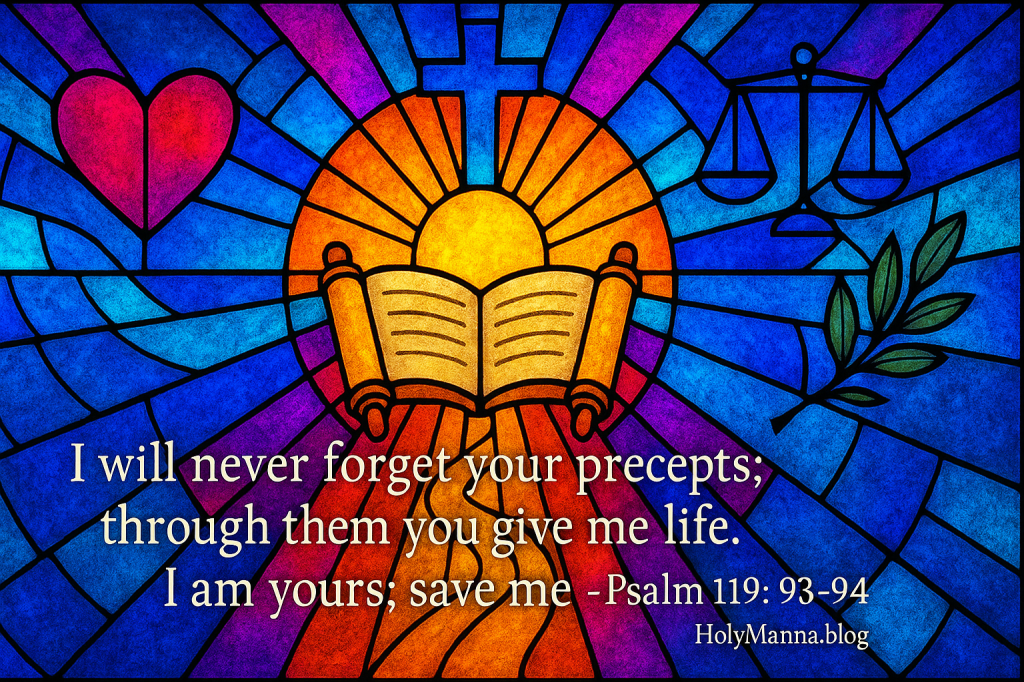
93 I will never forget your precepts;
through them you give me life.
94 I am yours; save me,
for I cherish your precepts.
Detailed Exegesis
Verse 66 – “Teach me wisdom and knowledge, for in your commandments I trust.”
Wisdom in Scripture is practical and relational. It is not mere data, it is the art of living in covenant with God. Trust in the commandments reveals that divine law is received as guidance from a Father who loves His children, not as a cold code. The verse prepares the soul to interpret the present moment with clarity and to act on that light.
Verse 68 – “You are good and do what is good; teach me your statutes.”
The psalmist anchors obedience in God’s character. Because God is good and acts for the good, His statutes communicate goodness, not restriction. Asking to be taught signals humility and continual conversion. The heart seeks formation that shapes desire to match divine goodness.
Verse 76 – “May your mercy comfort me in accord with your promise to your servant.”
Mercy here is covenant love that binds God to His promises. Comfort is not sentiment, it is strength given to the weak so they can walk again. The psalmist appeals to God’s fidelity, which steadies the soul amid interior conflict and urges swift reconciliation.
Verse 77 – “Show me compassion that I may live, for your law is my delight.”
Compassion and life belong together because sin wounds and grace heals. Delighting in the law reveals that true freedom is found in loving what is good. The verse frames obedience as joy and medicine, not as mere duty.
Verse 93 – “I will never forget your precepts; through them you give me life.”
Memory keeps covenant alive. Remembering the precepts guards the heart from drift and equips quick discernment. God communicates life through His word, which forms the conscience to judge rightly when decisions press for attention.
Verse 94 – “I am yours; save me, for I cherish your precepts.”
Belonging precedes behaving. The psalmist confesses identity first, then asks for rescue, and only then highlights love for the precepts. This order reflects grace that claims the person and then empowers obedience. The plea for salvation moves the reader toward timely reconciliation.
Teachings
The Church frames the psalm’s love for God’s law within the larger pedagogy of grace. The Catechism teaches, “The moral law is the work of divine Wisdom. Its biblical meaning can be defined as fatherly instruction, God’s pedagogy.” (CCC 1950). Because this law is written into creation and clarified by revelation, its dignity safeguards human flourishing: “The natural law… expresses the dignity of the person and determines the basis for his fundamental rights and duties.” (CCC 1955). Conscience receives and applies this instruction: “Conscience is a judgment of reason whereby the human person recognizes the moral quality of a concrete act that he is going to perform, is in the process of performing, or has already completed.” (CCC 1778). Growth in holiness flows from stable habits formed by grace: “A virtue is a habitual and firm disposition to do the good.” (CCC 1803). Even the first movement toward God depends on His initiative: “The preparation of man for the reception of grace is already a work of grace.” (CCC 2001).
The saints echo this harmony of law and grace. Saint Augustine prays, “Give what you command, and command what you will.” (Confessions, Book 10), which captures the psalmist’s twin pleas for instruction and mercy. Saint Thomas Aquinas explains the new obedience made possible in Christ, “The New Law is chiefly the grace of the Holy Spirit given to the faithful.” (Summa Theologiae, I II, q.106, a.1). These teachings illuminate why Psalm 119 delights in the commandments. The law is life giving because God gives Himself, and His Spirit writes the law on the heart so that wisdom becomes worship and duty becomes delight.
Reflection
Receive the psalmist’s posture as today’s blueprint. Ask for wisdom at the start of the day, then act on the light that God provides in concrete choices. Choose one verse from this passage to memorize and repeat during moments of temptation, since memory strengthens discernment and speeds reconciliation. When interior conflict rises, claim identity first with the psalmist’s confession, then ask for mercy, and then choose the good that is known. Integrate a brief evening examination that recalls God’s goodness, identifies lapses, and makes a simple plan for tomorrow’s fidelity. Which verse from this psalm will be carried in the heart today as a shield and a guide? Where is God inviting a shift from duty to delight in obedience? What small practice will help remember the precepts before the next decision arrives?
Holy Gospel – Luke 12:54-59
Reading the Signs and Reconciling Before the Judge
Set along Jesus’ journey to Jerusalem, Luke 12:54-59 addresses a crowd that could read the sky with ease but struggled to read the spiritual moment standing in front of them. In first century Palestine a cloud rising from the Mediterranean meant rain, and a south wind from the Negev meant heat. Local courts expected disputing neighbors to reconcile before arriving at the magistrate, since delay usually ended with a costly sentence and a stay in debtor’s prison. Jesus uses both the weather and the courtroom to call for timely moral judgment and urgent reconciliation. This fits today’s theme by pressing hearts to interpret the present time, cooperate with grace, and settle with God and neighbor now rather than risk facing judgment unprepared.
Luke 12:54-59
New American Bible (Revised Edition)
54 He also said to the crowds, “When you see [a] cloud rising in the west you say immediately that it is going to rain—and so it does; 55 and when you notice that the wind is blowing from the south you say that it is going to be hot—and so it is. 56 You hypocrites! You know how to interpret the appearance of the earth and the sky; why do you not know how to interpret the present time?
Settlement with an Opponent. 57 “Why do you not judge for yourselves what is right? 58 If you are to go with your opponent before a magistrate, make an effort to settle the matter on the way; otherwise your opponent will turn you over to the judge, and the judge hand you over to the constable, and the constable throw you into prison. 59 I say to you, you will not be released until you have paid the last penny.”
Detailed Exegesis
Verse 54 – “When you see a cloud rising in the west you say immediately that it is going to rain, and so it does.”
Jesus begins with common sense observation. People can predict the weather because they have learned its patterns. The Lord implies that the patterns of grace are at least as legible. When the works and words of Jesus appear, the right response is faith and conversion, not delay.
Verse 55 – “And when you notice that the wind is blowing from the south you say that it is going to be hot, and so it is.”
A hot south wind was a familiar sign. By pairing two obvious forecasts, Jesus exposes a selective literacy. People can read creation but ignore the Creator’s visitation. The Gospel invites a coherent life where natural prudence is joined to supernatural discernment.
Verse 56 – “You hypocrites! You know how to interpret the appearance of the earth and the sky; why do you not know how to interpret the present time?”
The rebuke targets refusal, not intelligence. The “present time” is the kairos, the decisive hour of salvation in Christ. Hypocrisy here is a will that pretends confusion to avoid conversion. The call is to recognize God’s action and respond with obedience now.
Verse 57 – “Why do you not judge for yourselves what is right?”
Jesus appeals to conscience. Moral judgment is not outsourcing decisions to the crowd but rendering a truthful verdict before God. The question summons each person to take responsibility for reading the signs and choosing the good promptly.
Verse 58 – “If you are to go with your opponent before a magistrate, make an effort to settle the matter on the way; otherwise your opponent will turn you over to the judge, and the judge hand you over to the constable, and the constable throw you into prison.”
The legal image is practical wisdom with eternal stakes. Reconciliation along the road avoids a harsher outcome in court. Spiritually, this urges immediate repentance, concrete restitution, and peacemaking while the door of mercy stands open.
Verse 59 – “I say to you, you will not be released until you have paid the last penny.”
The “last penny” signals the real consequences of postponed reconciliation. Justice requires satisfaction. The line hints at the need to repair the damage of sin and to accept purifying love rather than carry unresolved debt into judgment.
Teachings
The Catechism clarifies the role of conscience and the urgency of formation. “Conscience is a judgment of reason whereby the human person recognizes the moral quality of a concrete act that he is going to perform, is in the process of performing, or has already completed.” (CCC 1778). It adds the path for training this judgment: “In the formation of conscience the Word of God is the light for our path; we must assimilate it in faith and prayer and put it into practice. We must also examine our conscience before the Lord’s Cross. We are assisted by the gifts of the Holy Spirit, aided by the witness or advice of others and guided by the authoritative teaching of the Church.” (CCC 1785).
Jesus’ warning about the judge highlights real judgment. “Following in the steps of the prophets, Jesus announced the judgment of the Last Day in his preaching.” (CCC 678). “Christ is Lord of eternal life. Full right to pass definitive judgment on the works and hearts of men belongs to him as Redeemer of the world.” (CCC 679).
The imagery of paying the last penny points to the need for satisfaction and purification. “Absolution takes away sin, but it does not remedy all the disorders sin has caused.” (CCC 1459). Thus penance includes efforts to repair harm done and to be healed of sin’s effects. Regarding final purification, the Church teaches, “All who die in God’s grace and friendship, but still imperfectly purified, are indeed assured of their eternal salvation; but after death they undergo purification, so as to achieve the holiness necessary to enter the joy of heaven.” (CCC 1030).
The saints echo the call to timely moral judgment. Blessed John Henry Newman writes, “Conscience is the aboriginal Vicar of Christ in the soul.” (Letter to the Duke of Norfolk). Sacred Scripture reinforces the urgency: “Now is the acceptable time, behold, now is the day of salvation.” (2 Corinthians 6:2). Together these voices urge a swift, concrete response to grace through reconciliation with God and neighbor.
Reflection
Read the signs of the soul with the same honesty used to read the sky. If there is conflict with a family member or colleague, take the first step toward peace today. If there is grave sin, prepare for sacramental confession and include specific acts of restitution where harm was done. Practice a nightly examination of conscience that looks at the day in the light of the Cross, then choose one concrete amendment for tomorrow. Pray for the humility to recognize the kairos moments when the Holy Spirit prompts an apology, a phone call, or a firm no to temptation. What sign of grace has God placed in front of your eyes that needs a response today? Who needs an apology or restitution before another day passes? How will a simple daily examen train your conscience to judge what is right and to act on it promptly?
Choose While the Road Is Open
Today’s Word brings a clear summons into focus. Romans 7:18-25 exposes the war within and ends in hope with the cry, “Thanks be to God through Jesus Christ our Lord.” Psalm 119:66, 68, 76-77, 93-94 answers with a teachable heart that delights in God’s commands and asks for mercy and wisdom. Luke 12:54-59 insists that the present time must be read rightly and that reconciliation must happen before judgment, “Why do you not know how to interpret the present time?” Together they teach that grace is offered now, God’s law lights the path now, and the call to make peace with God and neighbor is meant to be embraced now.
The invitation is simple and strong. Ask the Holy Spirit for wisdom at the start of the day. Examine the heart honestly and choose concrete reconciliation where there has been conflict or sin. Return to the Sacrament of Reconciliation if needed and make real steps of restitution. Pray a short line from Psalm 119 during moments of temptation and let love for God’s law shape choices. End the day with a brief examen so that judgment is practiced in mercy and truth while the road is still open. What sign of grace is God placing before your eyes today? What step toward reconciliation can be taken before the sun sets? How will God’s commandments become a delight that leads to life this week?
Engage with Us!
Share reflections in the comments below and encourage a friend to pray with today’s Word. Let the conversation help hearts respond to grace with wisdom and courage.
- First Reading — Romans 7:18-25: Where do intention and action pull apart in daily life right now, and how is Jesus inviting real surrender in that exact place? What practical habit could help cooperate with grace so that love for the good becomes action in the good? How does gratitude to Christ reshape the way temptation is faced this week?
- Responsorial Psalm — Psalm 119:66, 68, 76-77, 93-94: Which verse from this psalm will be memorized today, and why does it speak to the heart? How does believing that God is good and does what is good change the way His commandments are received? Where is mercy needed, and what concrete step will keep that need before the Lord each day?
- Holy Gospel — Luke 12:54-59: What sign of grace is most visible right now, and what immediate response is the Holy Spirit prompting? Who needs an apology, restitution, or a peacemaking phone call before the day ends? How will a simple nightly examen train the conscience to judge what is right and to act on it promptly?
Go forward with confidence. Live a life of faith that listens, repents, reconciles, and chooses the good with joy. Do everything with the love and mercy Jesus taught, and trust that His grace will finish what it begins.
Sacred Heart of Jesus, we trust in You!
Immaculate Heart of Mary, pray for us!
Saint Michael the Archangel, defend us in battle!
Follow us on Instagram and Facebook for more insights and reflections on living a faith-filled life.

 Holy Manna!
Leave a comment