Saturday of the Twenty-seventh Week in Ordinary Time – Lectionary: 466
The Dawn of True Blessedness
Come and linger at the threshold where God’s justice meets human freedom, where judgment becomes the doorway to joy, and where true blessedness is revealed in obedient love. Today’s readings sketch a single horizon: the Lord reigns as Judge and King, and those who listen to His voice and live it find light, shelter, and gladness. In Joel 4:12-21, the prophet summons the nations to the Valley of Jehoshaphat, a name that means “the Lord judges,” and he paints the Day of the Lord with harvest and winepress imagery that Israel knew well from prophetic language about decisive accountability and covenant fidelity. The darkening of sun, moon, and stars signals a cosmic courtroom, yet the same voice that shakes heaven and earth becomes a refuge for His people and a spring that waters a renewed land. Psalm 97 sings an enthronement hymn for the universal King, proclaiming that “The Lord is king”, and teaching that justice and right are the foundation of His throne. For the just, light dawns, which means that God’s rule does not crush the faithful, it illuminates their path. Into this royal and judicial frame steps the Lord Jesus in Luke 11:27-28, redirecting a well intentioned acclamation about His mother toward the deeper grace of discipleship: “Rather, blessed are those who hear the word of God and observe it.” In first century culture, praising motherhood honored a person’s lineage and status, yet Jesus lifts the conversation to obedience of faith, the very quality that made Mary blessed in the first place. The Church reads these texts as a coherent call to conversion and perseverance: God judges with perfect justice and extends merciful shelter, and our true beatitude is found in hearing and doing His Word (CCC 143; CCC 678-679; CCC 1730-1733). Where is the Lord inviting you today to move from hearing to doing so that His light may dawn more fully in your life?
First Reading – Joel 4:12-21
The Valley Where Justice Becomes Shelter
Joel writes into Israel’s trembling awareness of the Day of the Lord, a prophetic motif that gathers history to a single point of decision. The “Valley of Jehoshaphat” likely evokes the Kidron valley beside Jerusalem and literally means “the Lord judges,” which signals a covenant courtroom rather than a mere battlefield. In Israel’s memory, harvest and winepress were familiar images of divine reckoning and restoration. As nations converge for judgment, the Lord’s roar shakes creation, yet He simultaneously promises to be a refuge for His people. This passage fits today’s theme by showing that divine judgment and divine mercy are not rivals but two facets of God’s kingship. The wicked are sifted, while the faithful are sheltered and renewed with living water and enduring inheritance. Within the Church’s living memory, this scene invites not speculation but conversion, so that hearing God’s Word becomes doing God’s will, the path into His light and protection.
Joel 4:12-21
New American Bible (Revised Edition)
12 Let the nations rouse themselves and come up
to the Valley of Jehoshaphat;
For there I will sit in judgment
upon all the neighboring nations.
13 Wield the sickle,
for the harvest is ripe;
Come and tread,
for the wine press is full;
The vats overflow,
for their crimes are numerous.
14 Crowds upon crowds
in the Valley of Decision;
For near is the day of the Lord
in the Valley of Decision.
15 Sun and moon are darkened,
and the stars withhold their brightness,
16 The Lord roars from Zion,
and from Jerusalem raises his voice,
The heavens and the earth quake,
but the Lord will be a shelter for his people,
a fortress for the people of Israel.
A Secure Future for Judah
17 Then you will know that I the Lord am your God,
dwelling on Zion, my holy mountain;
Jerusalem will be holy,
and strangers will never again travel through her.
18 On that day
the mountains will drip new wine,
and the hills flow with milk,
All the streams of Judah
will flow with water.
A spring will rise from the house of the Lord,
watering the Valley of Shittim.
19 Egypt will be a waste,
Edom a desolate wilderness,
Because of violence done to the Judahites,
because they shed innocent blood in their land.
20 But Judah will be inhabited forever,
and Jerusalem for all generations.
21 I will avenge their blood,
and I will not acquit the guilt.
The Lord dwells in Zion.
Detailed Exegesis
Verse 12: “Let the nations rouse themselves and come up to the Valley of Jehoshaphat; For there I will sit in judgment upon all the neighboring nations.”
Joel frames a universal summons. God is Judge for all peoples, not only Israel. The image of God “sitting” evokes the enthroned King who judges with equity. The moral order of the world is not an abstraction. It is personally guaranteed by the Lord who vindicates the oppressed and calls the violent to account.
Verse 13: “Wield the sickle, for the harvest is ripe; Come and tread, for the wine press is full; The vats overflow, for their crimes are numerous.”
Harvest and winepress transpose moral reality into agrarian imagery. Ripe grain and overflowing vats signify a fullness of deeds that now bear consequences. Sin ripens when unrepented, and judgment is not arbitrary but the unveiling of what we have freely chosen. The prophetic register underscores that God’s justice answers accumulated wrongs with measured truth.
Verse 14: “Crowds upon crowds in the Valley of Decision; For near is the day of the Lord in the Valley of Decision.”
The repetition intensifies urgency. The “Valley of Decision” is not fate crushing freedom. It is the arena where human freedom finally meets God’s definitive verdict. The nearness of the day urges watchfulness and immediate conversion, since delay itself is a decision.
Verse 15: “Sun and moon are darkened, and the stars withhold their brightness,”
Cosmic dimming renders visible the gravity of sin and the grandeur of God. Creation participates in the drama of redemption. Light recedes to reveal that human self sufficiency is an illusion. Only God’s light can dawn after the reckoning.
Verse 16: “The Lord roars from Zion, and from Jerusalem raises his voice, The heavens and the earth quake, but the Lord will be a shelter for his people, a fortress for the people of Israel.”
The roaring Judge is also the shielding Fortress. Judgment and mercy converge in the same Lord. For those who belong to Him, the earthquake does not destroy. It dislodges false securities and presses them into the safety of the covenant.
Verse 17: “Then you will know that I the Lord am your God, dwelling on Zion, my holy mountain; Jerusalem will be holy, and strangers will never again travel through her.”
The purpose of judgment is covenant knowledge. God’s dwelling presence sanctifies Zion, and holiness implies both consecration and protection. The exclusion of hostile “strangers” signals the end of profanation, not a denial of mission. The holy city becomes wholly God’s.
Verse 18: “On that day the mountains will drip new wine, and the hills flow with milk, All the streams of Judah will flow with water. A spring will rise from the house of the Lord, watering the Valley of Shittim.”
Abundance answers devastation. New wine, milk, and ever flowing water evoke Eden restored and the temple as the fountain of life. From God’s dwelling a spring renews even distant places. Grace does not remain bottled in the sanctuary. It runs outward to heal the land.
Verse 19: “Egypt will be a waste, Edom a desolate wilderness, Because of violence done to the Judahites, because they shed innocent blood in their land.”
Named enemies represent the entire logic of injustice. The Lord’s sentence is not tribal vengeance but moral recompense for blood guilt. Innocent blood cries out, and heaven hears. History is not closed against the pleas of victims.
Verse 20: “But Judah will be inhabited forever, and Jerusalem for all generations.”
Here the oracle shifts from crisis to permanence. God’s people receive stable dwelling as a covenant gift. The promise suggests more than geopolitical continuity. It gestures toward eschatological security under God’s unshakable reign.
Verse 21: “I will avenge their blood, and I will not acquit the guilt. The Lord dwells in Zion.”
The concluding line ties justice to presence. God’s dwelling guarantees both mercy and moral clarity. To abide with God is to live within truth. The avenging of blood is the rectification of reality. The final word is not annihilation but communion secured by justice.
Teachings
The Church confesses that judgment belongs to Christ the Redeemer and that divine justice safeguards the dignity of victims and the moral stakes of freedom. The Catechism articulates this clearly. “Justice is the moral virtue that consists in the constant and firm will to give their due to God and neighbor.” (CCC 1807). “Freedom is the power, rooted in reason and will, to act or not to act, to do this or that, and so to perform deliberate actions on one’s own responsibility.” (CCC 1731). “Christ is Lord of eternal life. Full right to pass definitive judgment on the works and hearts of men belongs to him as Redeemer of the world. He ‘acquired’ this right by his cross. The Father has given ‘all judgment to the Son.’” (CCC 679). Joel’s “Valley of Decision” harmonizes with these teachings. Judgment reveals the truth of our choices, while the spring from the house of the Lord prefigures the superabundance of grace that flows from God’s presence in the new covenant. Saint Augustine captures the synergy of grace and freedom with lapidary clarity: “He who created you without you will not justify you without you.” The prophetic promise of abiding security in Zion points forward to the Church’s hope for the heavenly Jerusalem, where justice and peace will kiss and where God’s dwelling with humanity is the final gift.
Reflection
This reading invites decisive trust and practical obedience. Choose to live under God’s shelter by letting His Word judge your thoughts and guide your actions before the great Day does. Confess any violence of speech or deed, however subtle, and seek reconciliation quickly. Advocate for the innocent and the vulnerable with courage and humility. Draw from the spring that flows from God’s house by frequenting the sacraments and by cultivating daily prayer that opens your heart to grace. Practice justice today by giving God His due in worship and neighbor their due in truth telling, generosity, and fidelity. Where is the Lord asking you to move from delay to decision so that His light may dawn in you? What concrete act of justice can you offer today that lets His shelter become visible through your life? How can you keep close to the wellspring of grace so that your words and choices flow from His presence rather than from fear?
Responsorial Psalm – Psalm 97:1-2, 5-6, 11-12
The King’s Whose Justice Turns Darkness into Dawn
Psalm 97 belongs to the enthronement psalms, a temple liturgy that proclaims the Lord’s universal kingship and invites creation itself to respond. Ancient Israel sang these lines to confess that the God who chose Zion also rules the nations and the cosmos. The imagery of clouds, fire, melting mountains, and dawning light places worship within a cosmic courtroom where God’s justice is not abstract but alive, personal, and saving. In today’s theme, the psalm is the hinge between Joel’s Valley of Decision and the Lord’s promise of shelter. It teaches that joy rises where God’s reign is welcomed and that light breaks for the just who hear and do the Word.
Psalm 97:1-2, 5-6, 11-12
New American Bible (Revised Edition)
The Divine Ruler of All
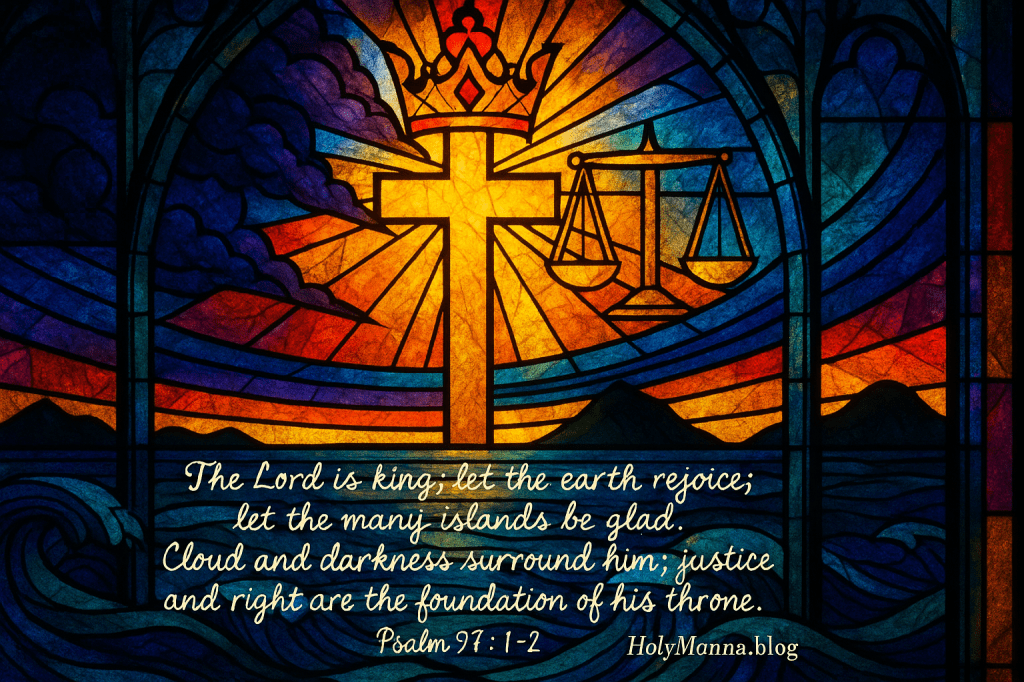
1 The Lord is king; let the earth rejoice;
let the many islands be glad.
2 Cloud and darkness surround him;
justice and right are the foundation of his throne.
5 The mountains melt like wax before the Lord,
before the Lord of all the earth.
6 The heavens proclaim his justice;
all peoples see his glory.
11 Light dawns for the just,
and gladness for the honest of heart.
12 Rejoice in the Lord, you just,
and give thanks at the remembrance of his holiness.
Detailed Exegesis
Verse 1: “The Lord is king; let the earth rejoice; let the many islands be glad.”
The psalm opens with a royal acclamation that crosses borders. “Islands” or distant coastlands signal the farthest peoples. Joy is the proper response to God’s rule because His kingship is not tyranny but justice and mercy. The universality here prepares us to hear Joel’s summons to all nations as a movement toward truth under the one King.
Verse 2: “Cloud and darkness surround him; justice and right are the foundation of his throne.”
The Sinai memory lingers in the cloud that both conceals and reveals. God’s transcendence humbles presumption, yet the foundation of His throne is accessible to the heart: justice and right. This is covenant language. God’s judgments are faithful and ordered to setting things right, which is why the righteous can draw near without fear.
Verse 5: “The mountains melt like wax before the Lord, before the Lord of all the earth.”
Mountains symbolize what seems immovable. Before the Creator, even the solid yields. The line teaches holy fear. Obstacles that resist conversion soften in the heat of divine presence. What is unyielding in us can become pliable when exposed to the Lord’s nearness.
Verse 6: “The heavens proclaim his justice; all peoples see his glory.”
Creation evangelizes. The sky itself becomes a witness stand for God’s rectitude. Justice and glory are paired because when God’s order is manifested, His beauty shines. This anticipates the nations gathered in Joel and hints that true vision of glory belongs to those who accept God’s judgments as light.
Verse 11: “Light dawns for the just, and gladness for the honest of heart.”
Dawn answers the earlier cloud and darkness. The just are not spared the night, but they are granted the sunrise. Honesty of heart means integrity before God. Gladness here is not shallow positivity. It is the fruit of living in right relation to the King.
Verse 12: “Rejoice in the Lord, you just, and give thanks at the remembrance of his holiness.”
The final imperative calls for Eucharistic memory. To remember God’s holiness is to praise Him for who He is. Joy and thanksgiving are not optional moods. They are fitting acts when we stand before a holy Judge who is also our refuge.
Teachings
The Catechism clarifies what the psalm proclaims about justice and freedom before God. “Justice is the moral virtue that consists in the constant and firm will to give their due to God and neighbor.” (CCC 1807). The throne founded on justice calls us to render God worship and our neighbor love. Freedom is not license but the capacity to choose the good that God reveals. “Freedom is the power, rooted in reason and will, to act or not to act, to do this or that, and so to perform deliberate actions on one’s own responsibility.” (CCC 1731). Psalmic joy arises when freedom and justice meet in obedience. Saint Augustine names the interior goal of such obedience with unforgettable simplicity: “You have made us for yourself, O Lord, and our heart is restless until it rests in you.” (Confessions I, 1). The Church’s worship echoes this psalm whenever she proclaims God’s kingship and begs for the light that dawns for the just, so that the world may see His glory in a people who rejoice in His holiness.
Reflection
Choose to stand joyfully under the Lord’s reign today. Begin with an act of adoration, acknowledging God as King and asking that His justice become the foundation of your thoughts and choices. Practice justice concretely by keeping your word, paying what you owe, speaking truth without flattery, and giving thanks for the gifts you have received. When darkness or confusion surrounds you, remember that dawn is promised to the honest of heart, and persevere in prayer until light breaks. Where might you need to let the heat of God’s presence soften a hardened place in your life so that it yields to His will? How can you let creation’s silent proclamation of God’s glory move you to praise and to concrete works of justice today? What act of thanksgiving will help you remember His holiness and rejoice in Him with integrity?
Holy Gospel – Luke 11:27-28
Hearing and Keeping the Word
In Luke 11:27-28, a voice from the crowd offers a traditional blessing that honors a mother through the greatness of her son, a common expression in first century Jewish culture where lineage and maternal honor were prized. Jesus receives that praise and lifts it to a higher register by identifying the deeper source of blessedness, which is the obedience of faith. This moment does not diminish Mary. It reveals why she is truly blessed, because she heard the Word of God and kept it from the Annunciation through the Cross. Within today’s theme, this Gospel clarifies what it means to stand in the Valley of Decision from Joel 4. The decisive choice is to hear God’s Word and to observe it, which is the path by which the Lord’s kingship in Psalm 97 becomes light and gladness for the just.
Luke 11:27-28
New American Bible (Revised Edition)
27 While he was speaking, a woman from the crowd called out and said to him, “Blessed is the womb that carried you and the breasts at which you nursed.” 28 He replied, “Rather, blessed are those who hear the word of God and observe it.”
Detailed Exegesis
Verse 27: “While he was speaking, a woman from the crowd called out and said to him, ‘Blessed is the womb that carried you and the breasts at which you nursed.’”
The woman’s cry reflects a cultural beatitude that exalts motherhood by association with a notable son. It is sincere and good, and it recognizes Jesus’ uniqueness. Luke places this acclamation after teachings on spiritual warfare and integrity of the heart, which suggests that even rightful honor can be purified and elevated. The Church sees here a pointer to Mary’s true greatness. She is honored not only because she bore Jesus physically, but because she first welcomed the Word in faith.
Verse 28: “Rather, blessed are those who hear the word of God and observe it.”
Jesus redirects attention from physical maternity to spiritual discipleship. The adverb “rather” signals a clarification, not a contradiction. He teaches that authentic blessedness flows from listening to God and doing what He says. Mary is the exemplar of this beatitude, since her fiat is the fullest hearing and keeping of the Word. The verse also anticipates the mystery of the Church, in which believers become Christ’s kindred by obedience to the Father’s will. In the context of judgment and kingship, Jesus defines the criteria of joy and security. Those who receive and obey God’s Word dwell under His shelter.
Teachings
The Catechism names this response to God “the obedience of faith,” grounding Jesus’ teaching in the heart of Christian life. “To obey (from the Latin ob-audire, to ‘hear or listen to’) in faith is to submit freely to the word that has been heard, because its truth is guaranteed by God, who is Truth itself.” (CCC 144). Mary is held before the Church as the perfect embodiment of this beatitude. “The Virgin Mary most perfectly embodies the obedience of faith.” (CCC 148). The Lord who pronounces this beatitude is also Judge and King, which situates our hearing and doing within the final truth of things. “Christ is Lord of eternal life. Full right to pass definitive judgment on the works and hearts of men belongs to him as Redeemer of the world. He ‘acquired’ this right by his cross. The Father has given ‘all judgment to the Son.’” (CCC 679). The Fathers echo this luminous priority. Saint Augustine writes of Mary, and of every disciple in her pattern, “She conceived him in her mind before she conceived him in her womb.” This is the Gospel’s claim in brief. True kinship with Christ is formed by hearing and keeping the Word.
Reflection
Choose the blessedness Jesus offers by letting His Word move from your ears to your will. Begin each day with a simple prayer of availability to God and a brief reading of Scripture, then carry a single verse to observe in action. When praise or criticism comes, let it drive you deeper into obedience rather than into self preoccupation. Honor Mary by imitating her readiness to say yes, and ask her intercession for a heart that listens and does. What word of God have you recently heard that now asks for concrete obedience rather than further delay? Where can you practice this today with a small, faithful act that no one sees but God? How might you make room for a daily habit of hearing and keeping the Word, so that your life becomes a quiet yes that bears Christ into the world?
Choose the Blessed Path Today
Today’s Word brings us from the Valley of Decision to the light of true blessedness. In Joel 4:12-21, the Lord gathers the nations for judgment, yet He reveals Himself as a shelter and a spring that renews the land. In Psalm 97, the Church sings the enthronement of the King whose justice melts every false mountain and whose glory fills the heavens, so that light dawns for the just and gladness for the honest of heart. In Luke 11:27-28, Jesus names the heart of blessedness with piercing simplicity: “Rather, blessed are those who hear the word of God and observe it.” Hearing and doing the Word is how God’s kingship becomes our joy, how judgment becomes mercy, and how darkness yields to dawn. This is the obedience of faith that The Catechism describes as a free submission to the truth because God is Truth itself (CCC 144), and it is the path secured by Christ who judges and saves (CCC 679). Choose this blessed path today. Open the Scriptures and carry one verse to live. Seek reconciliation where there is strain. Practice justice in your speech and decisions. Give thanks for God’s holiness until gratitude reshapes your heart. Ask Mary, the first disciple who heard and kept the Word, to intercede for a steadfast yes in you. Where is the Lord inviting you to move from hearing to doing so that His light may dawn more fully in your life? What single act of obedience can you offer today that places you under His shelter and lets others glimpse His glory?
Engage with Us!
Share your reflections in the comments below. Your insights can encourage others to choose the blessed path of hearing and doing God’s Word.
- Joel 4:12-21: Where is God inviting you to make a concrete decision for justice and mercy today? How does the image of the Lord as a shelter reshape your fears or anxieties? What step can you take to let His living water flow into a dry place in your life or community?
- Psalm 97:1-2, 5-6, 11-12: What would it look like for you to rejoice in the Lord’s kingship in a practical way this week? Where might God’s presence be melting a “mountain” that once felt immovable? How can thanksgiving become a daily habit that opens you to the light that dawns for the just?
- Luke 11:27-28: What specific word of God are you being called to observe today rather than only admire? In what area of life can you imitate Mary’s yes with a quiet and faithful act of obedience? How will you create space each day to hear and keep the Word with attentiveness and love?
Go in peace and live a life of faith. Do everything with the love and mercy that Jesus has taught us, trusting that His light will dawn for the honest of heart.
Sacred Heart of Jesus, we trust in You!
Immaculate Heart of Mary, pray for us!
Saint Michael the Archangel, defend us in battle!
Follow us on Instagram and Facebook for more insights and reflections on living a faith-filled life.

 Holy Manna!
Leave a comment