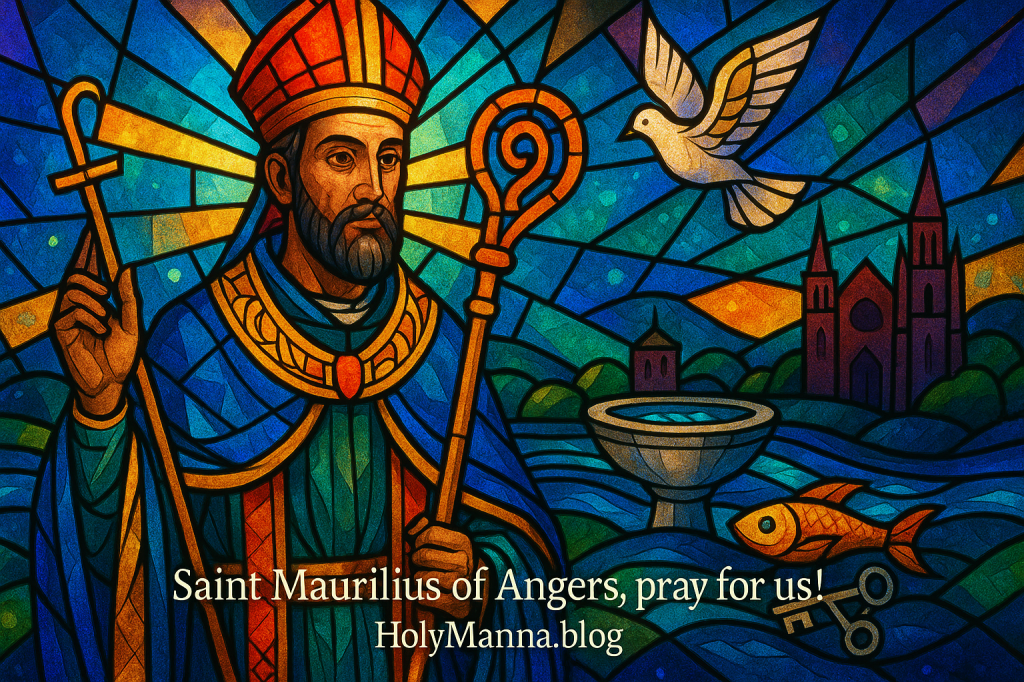
A Bishop Formed by Mercy and Mission
Saint Maurilius of Angers, revered in western France since late antiquity, is remembered as a bishop whose pastoral heart set whole communities on fire for Christ. He served during the twilight of Roman Gaul, when the Church was consolidating the faith of newly evangelized peoples. His reputation rests on courageous preaching, tender care for the suffering, deep love for the sacraments, and a humility that did not fear public repentance. He is honored on September 13 and held up as a model of bishops who teach, sanctify, and govern by serving first.
From Northern Italy to the Fields of Gaul
Ancient tradition locates Maurilius’ origins near Milan, where he grew within a living Christian culture shaped by the great bishops of northern Italy. Drawn by missionary fervor that radiated across Gaul, he journeyed north and eventually settled among the faithful in the Loire valley. Early sources describe him as prayerful, ascetical, and wholly given to the Gospel, which made him the obvious choice when Angers needed a bishop. He accepted the office not as an honor but as a burden for souls. While some medieval storytellers link him to the missionary spirit associated with Saint Martin of Tours, the Church remembers him most clearly as a fifth century pastor who embodied that same evangelical energy in his own time and place. No authenticated writings of Saint Maurilius have come down to us, and there are no verified quotations that can be attributed to him with certainty.
A Pastor with Fire in His Heart
Maurilius’ daily ministry was simple and relentless. He taught the creed to catechumens, instructed families in the life of prayer, and urged the newly baptized to live as citizens of heaven. He defended the poor and reconciled the estranged. He fostered reverence for the Eucharist and insisted on careful preparation for Baptism, since new Christians were to be not only converted but rooted in charity. Hagiographic memories of the region preserve healings of the sick, deliverance from demonic oppression, and conversions that followed his preaching. These accounts portray a bishop whose miracles flowed from a life already charged with faith, a man who spent long hours in prayer before he went out to preach. Even when he corrected error, he did so with the patience of a father. The people of Angers remembered him not first for marvels, but for a steadfast love that did not grow tired.
The Bishop Who Wept
The most famous and sobering episode in Maurilius’ life concerns a child who was near death while the bishop celebrated the sacred liturgy. According to venerable local tradition, by the time he arrived to anoint and pray over the child, the child had died. Maurilius’ conscience was pierced. He withdrew in tears, convinced that a shepherd must be ready at every moment for the needs of the least of his flock. Another beloved tradition tells that, during this period of penitence, a providential sign urged his return. Fishermen brought forth a fish in whose belly the lost keys of the cathedral were found, a striking image of the Lord who brings back what is lost and restores a shepherd to his people. These memories do not present a martyr’s death, since Maurilius died in peace, but they do present a martyrdom of the heart. He was a pastor who let his own pride die so that charity might live more fully in him.
A Legacy That Would Not Fade
After his death, devotion to Saint Maurilius grew around Angers and spread through the Anjou region. Christians visited his tomb to ask the Lord’s help through the saint’s intercession, and the memory of favors received was kept alive in local registers and oral tradition. Pilgrims came for healing of body and soul, and parents sought prayers for their children, inspired by the themes of mercy, Baptism, and new life that mark his story. Churches and chapels invoked his name, and local calendars faithfully preserved his feast. A cherished Angevin tradition also connects Maurilius with Saint René of Angers. After the bishop’s penitential return, he prayed at the child’s tomb, the child was restored to life, and he was baptized Renatus, later becoming a bishop himself. The Church presents this as a local tradition rather than a historical conclusion, but it bears the unmistakable fragrance of the Gospel. It proclaims repentance, mercy, and rebirth in Christ.
Learning Zeal and Mercy at the Font
Saint Maurilius hands on two burning convictions. First, salvation is a gift that God truly offers through the sacraments, which is why the Church is urgent about Baptism. The Catechism of the Catholic Church teaches: “The Lord himself affirms that Baptism is necessary for salvation.” (CCC 1257). Second, God’s mercy is deeper than our failures, and we entrust to that mercy all we cannot mend. The Catechism also teaches: “As regards children who have died without Baptism, the Church can only entrust them to the mercy of God.” (CCC 1261). Maurilius stands at this intersection of urgency and trust. He calls us to prepare seriously for the sacraments and to act promptly in love, yet he also teaches us to surrender what we cannot control to the Heart of Jesus. Consider renewing your baptismal promises at home, learning the simple form of emergency Baptism as taught by your parish or diocese for cases of necessity, and offering intercession for families who grieve. Let Maurilius’ tears purify our own zeal, so that our words and works spring from a heart conformed to Christ. How is the Holy Spirit inviting you to love more promptly and to trust more deeply today?
Engage with Us!
- Where is the Lord inviting you to combine zeal with mercy in your daily life?
- How does the Church’s teaching on Baptism and God’s mercy shape your approach to evangelization and family life?
- What concrete act of reparation or service can you offer this week in the spirit of Saint Maurilius?
Go forth encouraged. Live your faith with courage, tenderness, and joy, and do everything with the love and mercy that Jesus taught us.
Saint Maurilius of Angers, pray for us!
Follow us on Instagram and Facebook for more insights and reflections on living a faith-filled life.

 Holy Manna!
Leave a comment